
Handmade vs Pressed Sink:
Which One Should Buyers Choose?
Handmade sinks and pressed sinks are not simply “premium vs cheap.” They are two different manufacturing paths for different product programs. This page helps buyers compare process, cost, MOQ, customization, appearance, batch consistency, and sourcing risk before choosing a sink line.
The Fast Buyer Answer
If your sink line needs premium design, flexible sizes, deeper bowls, or workstation details, handmade sinks are usually easier to develop. If your program needs stable volume, repeatable dimensions, and controlled cost, pressed sinks are often more practical.
Choose Handmade Sinks If You Need Design Flexibility
Best for:
- ✓ premium sink lines
- ✓ custom sizes & deeper bowls
- ✓ workstation ledges
- ✓ tighter corner appearance
- ✓ low-to-medium volume OEM programs
Buyer takeaway: Handmade sinks give buyers more freedom in size, depth, structure, and product positioning.
Choose Pressed Sinks If You Need Stable Volume
Best for:
- ✓ standard sink ranges
- ✓ apartment projects
- ✓ retail boxed programs
- ✓ cost-sensitive markets
- ✓ repeatable dimensions & high-volume
Buyer takeaway: Pressed sinks help buyers control cost, repeatability, and standard SKU supply.
See the Difference in Production
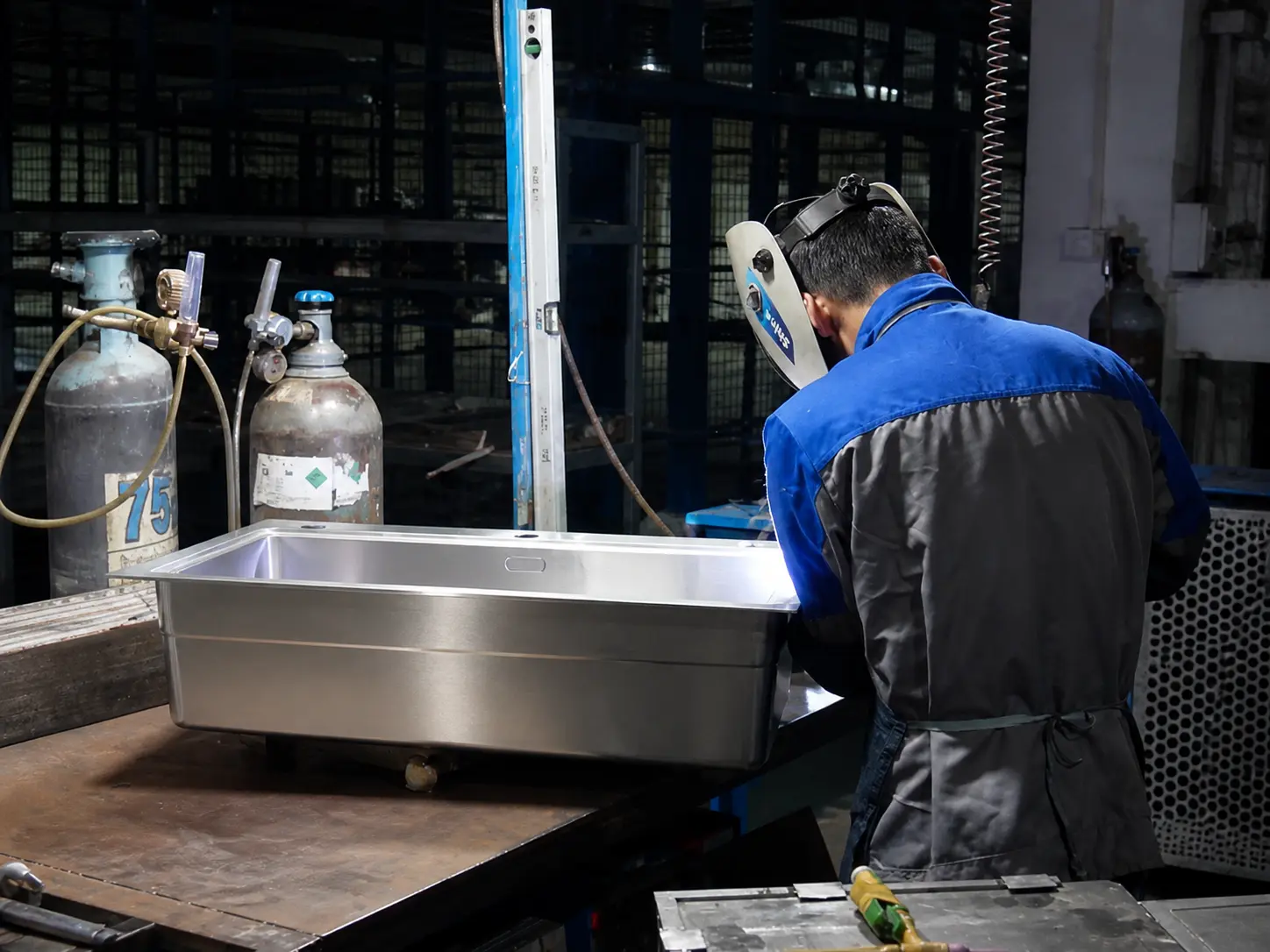
The easiest way to understand the difference is to watch how the sink body is made. Handmade sinks rely more on cutting, bending, welding, polishing, and finishing. Pressed sinks rely more on sheet preparation, mold drawing, trimming, and repeatable forming.
Handmade Sink Manufacturing
A handmade sink is built through cutting, bending, welding, polishing, and finishing. This gives more flexibility for custom sizes, deeper bowls, workstation ledges, and premium sink programs.
Explore Handmade SinksPressed / Drawn Sink Production
A pressed or drawn sink is formed by mold. This supports repeatable dimensions, stable output, and cost-controlled programs for retail, wholesale, and project supply.
Explore Pressed SinksHow Handmade and Pressed Sinks Are Made
The production process decides more than the shape. It affects cost, lead time, customization, thickness control, appearance consistency, and after-sales risk.
Handmade Sink Process
Cut stainless steel sheet
Buyer note: More flexible size planning.
Bend and form the sink body
Buyer note: Better for deeper bowls and special structures.
Weld corners and seams
Buyer note: Welding quality affects strength and appearance.
Polish and brush the surface
Buyer note: Finishing control affects final visual consistency.
Inspect dimensions and packing
Buyer note: Important for OEM and repeat orders.
Pressed / Drawn Sink Process
Prepare stainless steel sheet
Buyer note: Material and thickness must match forming needs.
Draw or press by mold
Buyer note: Mold controls shape and repeatability.
Trim edge and opening
Buyer note: Edge accuracy affects installation.
Brush and finish surface
Buyer note: Surface marks and forming marks must be controlled.
Inspect batch consistency
Buyer note: Stable molds help repeatable supply.
Handmade vs Pressed Sink: Buyer Comparison Table
For B2B buyers, the real question is not only “which one looks better.” The right comparison should include cost, MOQ, tooling, size flexibility, batch consistency, inspection focus, and sales channel.
| Buyer Question | Handmade Sink | Pressed / Drawn Sink | What It Means for Buyers |
|---|---|---|---|
| How is it made? | Cut, bent, welded, polished, and finished with more manual process control. | Formed by mold drawing or pressing, then trimmed and finished. | The process affects flexibility, cost, and repeatability. |
| Which looks more premium? | Straighter lines, sharper corners, and modern rectangular appearance. | Softer radius and more familiar formed shape. | Handmade often works better for premium visual positioning. |
| Which is easier to customize? | More flexible for size, depth, ledges, radius, and special structures. | More dependent on existing molds or new mold development. | For custom OEM, handmade usually gives faster flexibility. |
| Which controls cost better? | Higher labor and finishing cost. | More cost-efficient for standard volume programs. | Pressed often fits entry-level, retail, and project channels. |
| Which is better for high volume? | Works for flexible OEM and medium-volume programs. | Better for repeatable high-volume production. | Choose based on forecast, SKU plan, and supply rhythm. |
| Which has lower tooling pressure? | Less dependent on expensive molds. | Existing molds help; new custom shapes may need tooling investment. | Pressed is efficient when the mold already fits your range. |
| Which has better batch consistency? | Depends on welding, polishing, and operator control. | Depends on mold stability and forming control. | Both need QC, but the inspection focus is different. |
| Which is better for workstation sinks? | Usually easier for ledges, deeper bowls, and accessory matching. | Possible, but more restricted by mold structure. | Handmade usually offers more workstation flexibility. |
| What should buyers inspect? | Welding, corner finishing, dimensions, polishing, ledges, packaging. | Thickness after forming, surface marks, edge trimming, mold consistency. | Inspection checklist must match the process. |
| Which is better overall? | Better for premium, custom, and design-driven programs. | Better for stable, cost-controlled, repeatable programs. | The better choice depends on the product strategy. |
How is it made?
Which looks more premium?
Which controls cost better?
What should buyers inspect?
Which is better overall?
Choose by Product Program, Not by Slogan
A sink process should match the buyer’s real business model. A premium showroom line, an apartment project, and a retail boxed range do not need the same sink structure.
Premium Kitchen Sink Brand
You may need deeper bowls, sharper lines, workstation functions, custom sizes, and better visual differentiation.
Apartment or Project Buyer
You may need stable dimensions, controlled cost, simple replacement, and repeatable supply across many units.
Wholesale Distributor
Use pressed sinks for fast-moving standard SKUs and handmade sinks for higher-value or showroom-focused products.
Private-Label Brand
A good private-label program often needs entry-level, mid-range, and premium options instead of one process for every SKU.
Commercial or Utility Project
Commercial and utility use should consider bowl size, support structure, cleaning needs, welding, edge design, and installation method.
Pros, Limits, and What to Inspect
A practical checklist for B2B buyers to evaluate both manufacturing processes.
Handmade Sink
⊕ Pros
- • More flexible size and depth
- • Better for workstation ledges
- • Stronger premium appearance
- • Suitable for custom OEM programs
- • Easier to build differentiated SKUs
⊖ Limitations
- • Higher labor and finishing cost
- • More dependent on welding control
- • Needs strict dimension checking
- • Not always ideal for low-cost volume programs
Inspection focus
- Corner welding
- Bowl dimensions
- Surface brushing
- Radius consistency
- Ledge accuracy
- Sound pad placement
- Packaging protection
Pressed / Drawn Sink
⊕ Pros
- • Better cost control for standard SKUs
- • Stable output with existing molds
- • Suitable for high-volume supply
- • Familiar appearance for many markets
- • Practical for projects and retail
⊖ Limitations
- • Less flexible for custom depth and shape
- • New molds may increase cost
- • Forming marks need control
- • Thin material may reduce perceived value
Inspection focus
- Thickness after drawing
- Surface forming marks
- Edge trimming
- Drain hole position
- Rim flatness
- Batch consistency
- Packaging fit
The Biggest Risk Is Not Choosing Handmade or Pressed
It is choosing a sink that looks good in the sample but fails in repeat orders.
Many buyers focus on handmade vs pressed, but the real sourcing risk often hides in material grade, actual thickness, welding control, polishing consistency, and batch repeatability. A beautiful sample does not guarantee a stable product program.
“304 stainless steel” only on paper
If the material is not verified, a buyer may receive lower-grade stainless steel that looks acceptable at first but performs poorly in humid or demanding kitchen environments.
Buyer should ask:
Can you provide material reports or support material verification?
Thickness before production vs after finishing
A sink may be quoted as 1.2 mm or 1.5 mm, but buyers should know whether thickness is checked after forming, polishing, and finishing.
Buyer should ask:
Where and when is the thickness measured?
The sample is good, but bulk order changes
The first sample may look clean, while the bulk order may show different polishing, weak packing, inaccurate dimensions, or inconsistent accessories.
Buyer should ask:
How do you control repeat orders and batch inspection?
Before approving a sink supplier, check:
- ✓ material grade verification
- ✓ thickness after finishing
- ✓ drain position tolerance
- ✓ welding and corner control
- ✓ polishing consistency
- ✓ sound pad and coating quality
- ✓ accessory fit
- ✓ carton and protection design
- ✓ batch inspection records
- ✓ photo/video inspection before shipment
Matrix Helps Buyers Build the Right Sink Program
Matrix supports both handmade and pressed stainless steel sink programs. Instead of pushing one process, we help buyers match the process to their market, price level, order volume, installation type, finish, accessory plan, and packaging needs.
For Handmade Sink Programs
Suitable for custom sizes, deeper bowls, workstation structures, premium appearance, finish options, logo support, and private-label packaging.
Explore Handmade Sinks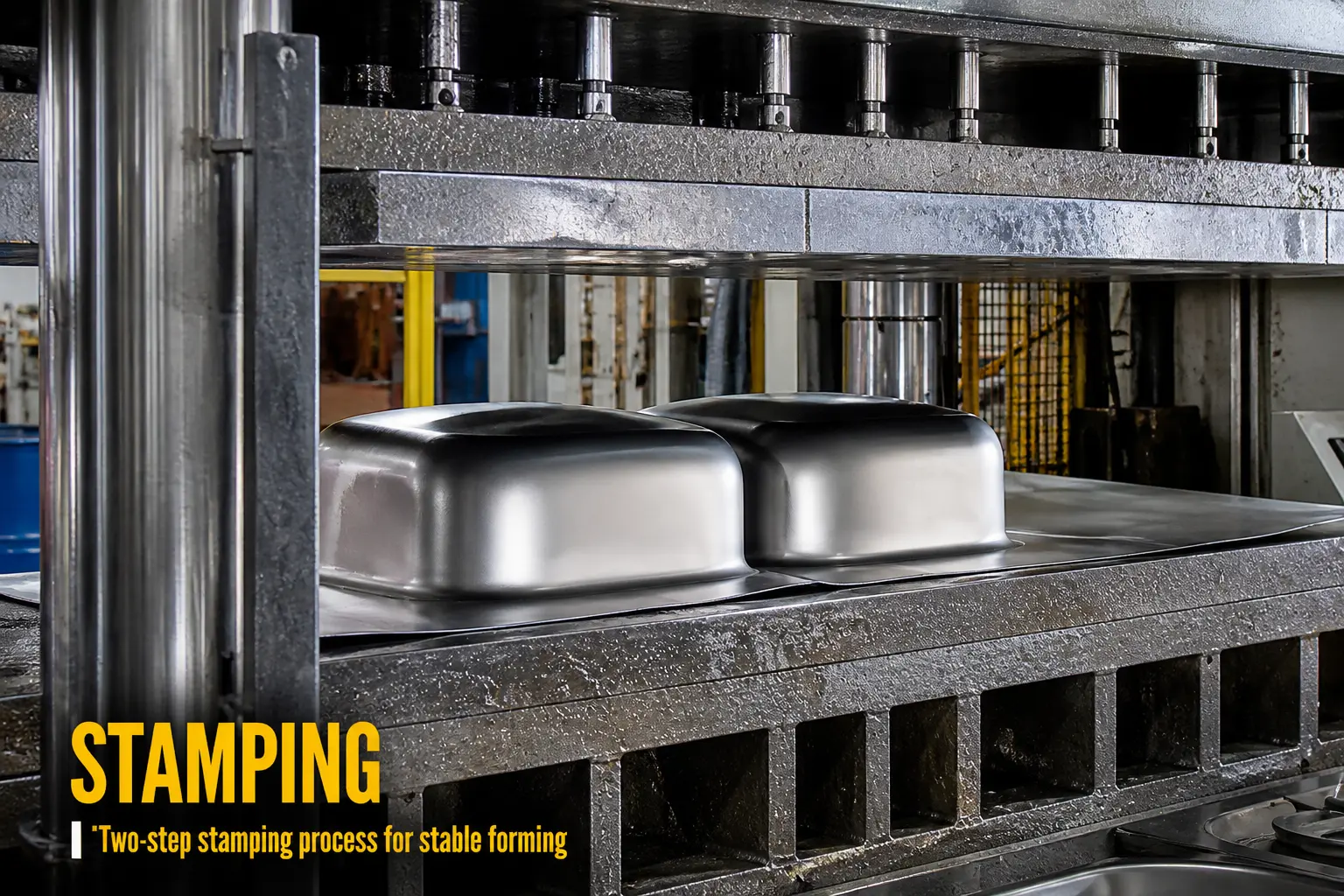
For Pressed / Drawn Sink Programs
Suitable for standard sizes, stable volume, project supply, retail packaging, cost control, and repeatable production.
Explore Pressed Sinks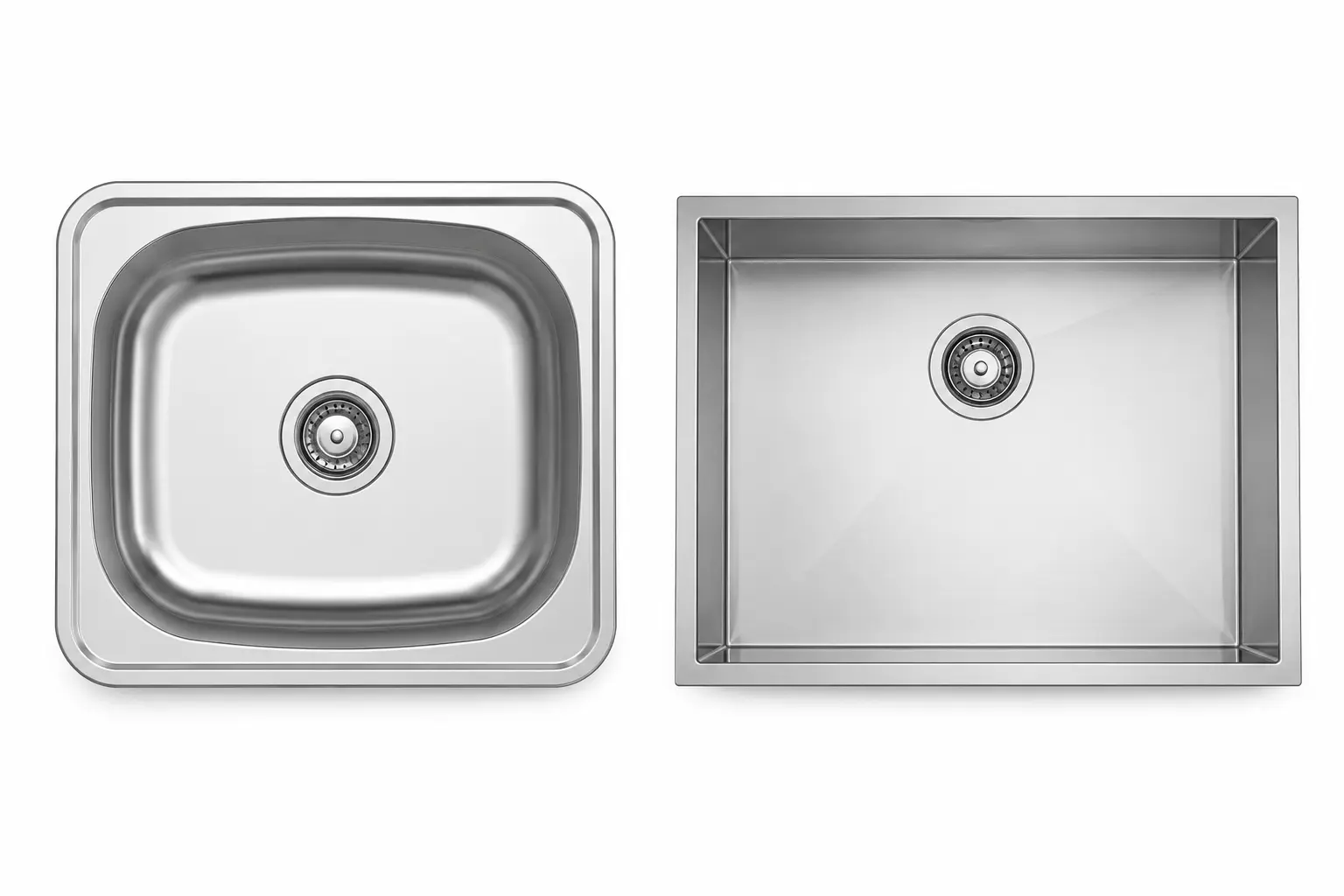
For Mixed Product Ranges
Use pressed sinks for standard SKUs and handmade sinks for premium SKUs. Matrix can help create a clear product ladder for your market.
Request Product Program AdviceMatrix can support:
FAQ: Handmade vs Pressed Sink
Is a handmade sink always better than a pressed sink?
What is the main difference between handmade and pressed sinks?
Which sink type is better for OEM customization?
Which sink is better for high-volume orders?
Which sink type is better for premium product lines?
Which sink is better for apartment or project supply?
Can Matrix supply both handmade and pressed sinks?
How can buyers avoid 201 stainless steel being sold as 304?
Should I choose one process for my entire product range?
What information should I send before asking for a quote?
Not Sure Which Sink Process Fits Your Market?
Send us your target market, price level, installation type, size, finish, quantity, and packaging needs. Matrix can help you compare handmade, pressed, or mixed sink programs before you build the product line.
tenly@matrixsink.com
+18520999956
Jianye Road, Nantou town, Zhongshan, Guangdong, China
Request Sink Program Advice
Tell us your target sink type, market, size, finish, quantity, and packaging requirement. Matrix will help review whether handmade, pressed, or a mixed product line fits your program better.