Custom Kitchen
Sink Programs
Build a market-ready stainless steel kitchen sink product line with practical guidance on sink type, size, gauge, installation, finish, accessories, logo, and export packaging. Matrix helps brands, importers, distributors, and new sellers configure the right sink program for their market.
Start with the Market, Not the Sink
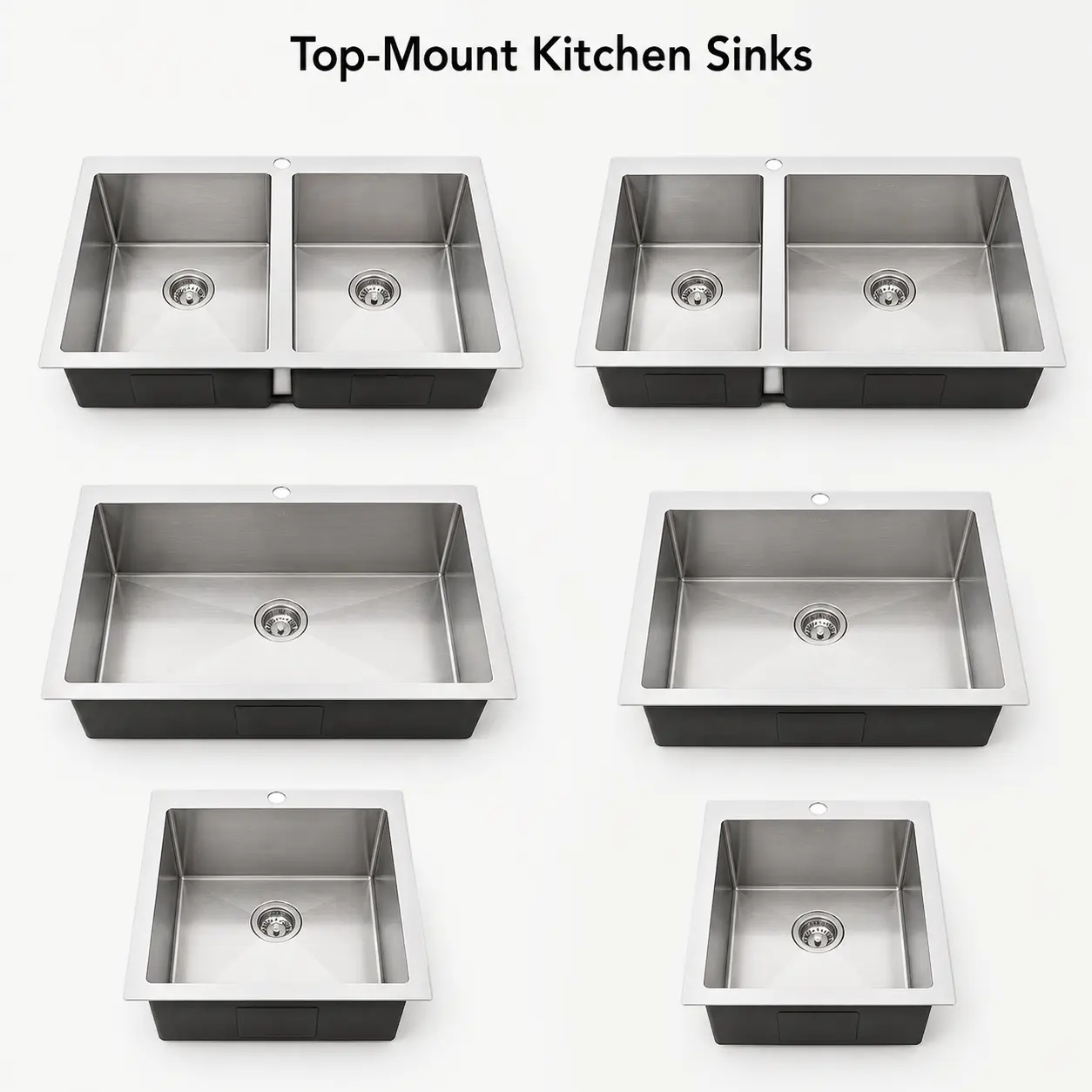
Many new sellers start by asking for a catalog. A better way is to first define the market, sales channel, price range, and customer type. Matrix helps buyers configure sink programs based on how the products will be sold, installed, packed, and positioned.
Retail / Wholesale Sellers
Focus on standard sizes, reliable packing, balanced cost, and repeatable supply.
Recommended Direction:
- • Pressed / drawn sinks
- • Top mount or undermount
- • 18 gauge balanced option
- • Standard brushed finish
Private Label Brands
Focus on product differentiation, finish consistency, accessory sets, and branded packaging.
Recommended Direction:
- • Handmade sinks
- • Workstation sinks
- • PVD / colored options
- • Logo and carton branding
Project Buyers
Focus on dimensions, installation compatibility, durability, packing control, and delivery stability.
Recommended Direction:
- • Handmade or pressed
- • Custom size review
- • Strong packing
- • Drawing confirmation
Cabinet Suppliers
Focus on installation fit, countertop opening, rim design, bowl depth, and size consistency.
Recommended Direction:
- • Undermount / Top mount
- • Custom cabinet-fit dimensions
- • Clear installation templates
- • Stable repeated sizes
Online / E-Commerce Sellers
Focus on complete product sets, visual finish, accessories, carton protection, and SKU clarity.
Recommended Direction:
- • Workstation sinks
- • Complete accessory sets
- • Individual drop-test carton
- • Product label and barcode
How to Configure a Kitchen Sink Program
A custom kitchen sink program should be configured step by step. Before changing size or adding a logo, buyers should first decide product positioning, manufacturing method, installation type, finish, accessory set, and packing method.
Choose Sink Type
Handmade or Pressed
Size & Bowl Layout
Material Thickness
Installation Type
Finish & Color
Build Accessory Set
Logo & Branding
Packing Method
Trial Order
Choose the Right Sink Type
The sink type determines product cost, production method, customization flexibility, and target customer. For new sellers, it is usually safer to start with a focused selection instead of building a large and complicated catalog from the beginning.
| Sink Type | Best For | New Seller Advice |
|---|---|---|
| Pressed / Drawn Sink | Standard retail and wholesale programs | Good starting point for price-sensitive markets and repeat orders. |
| Handmade Sink | Higher-value product lines and custom programs | Better for differentiation, deeper bowls, and private label collections. |
| Workstation Sink | E-commerce, retail, and higher-value kitchen sets | Stronger perceived value when bundled with accessories. |
| Deep Kitchen Sink | Family kitchens, practical use, and project supply | Easy to understand and useful for broad markets. |
| Apron Front / Farmhouse | Farmhouse-style and design-driven markets | Better for selected markets, not always the first SKU. |
| Outdoor Sink | Outdoor kitchens, patio kitchens, and special projects | Good niche product with SEO value and less direct competition. |
| RV / Camper Sink | Compact mobile kitchen applications | Suitable for special channels and lightweight sink programs. |
| Commercial / Utility Sink | Projects, laundry, restaurant, and utility use | More specification-driven and less decorative. |
Professional Note: For new sellers, Matrix usually recommends starting with 2–3 clear sink types and testing market response before expanding into a larger product line.
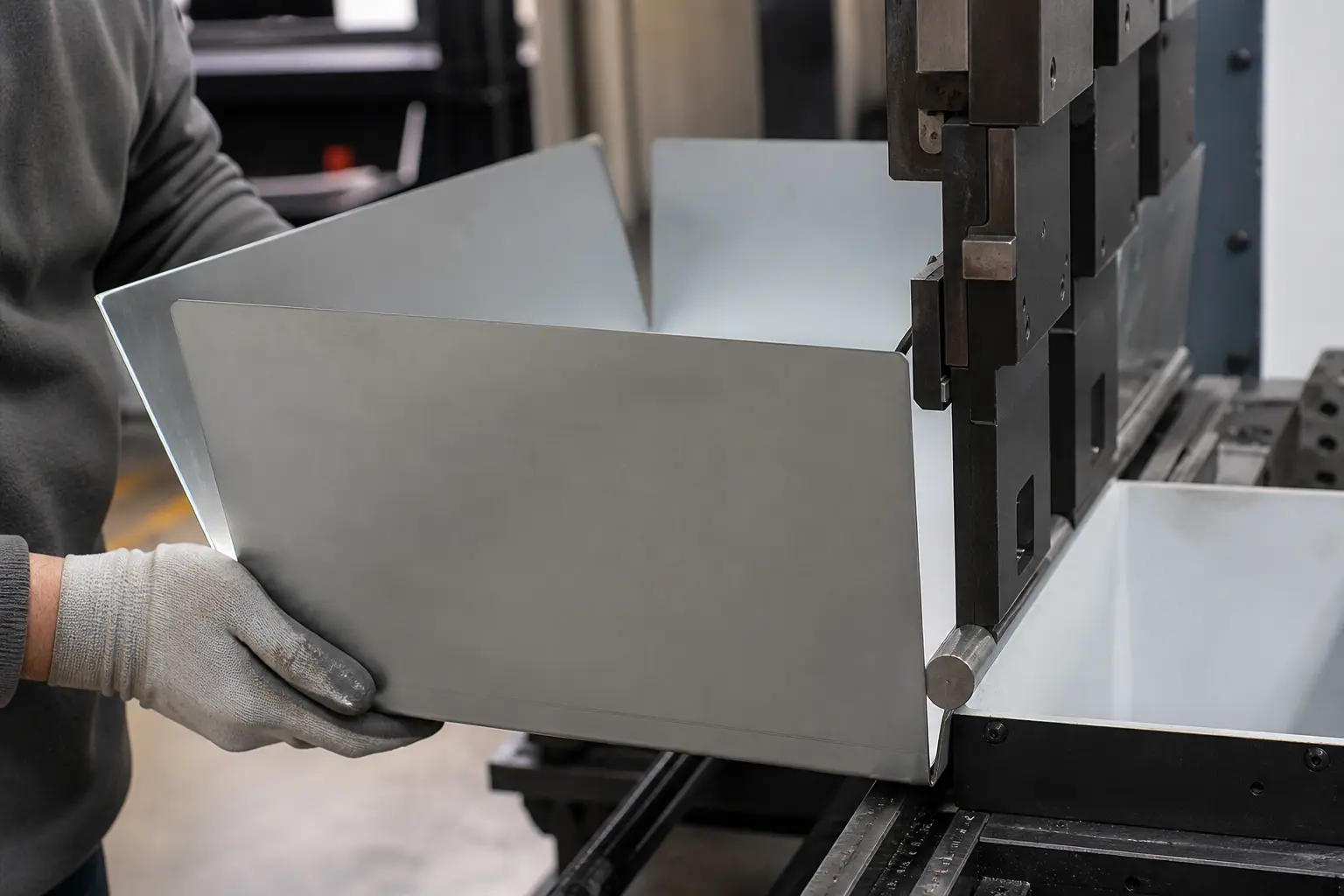
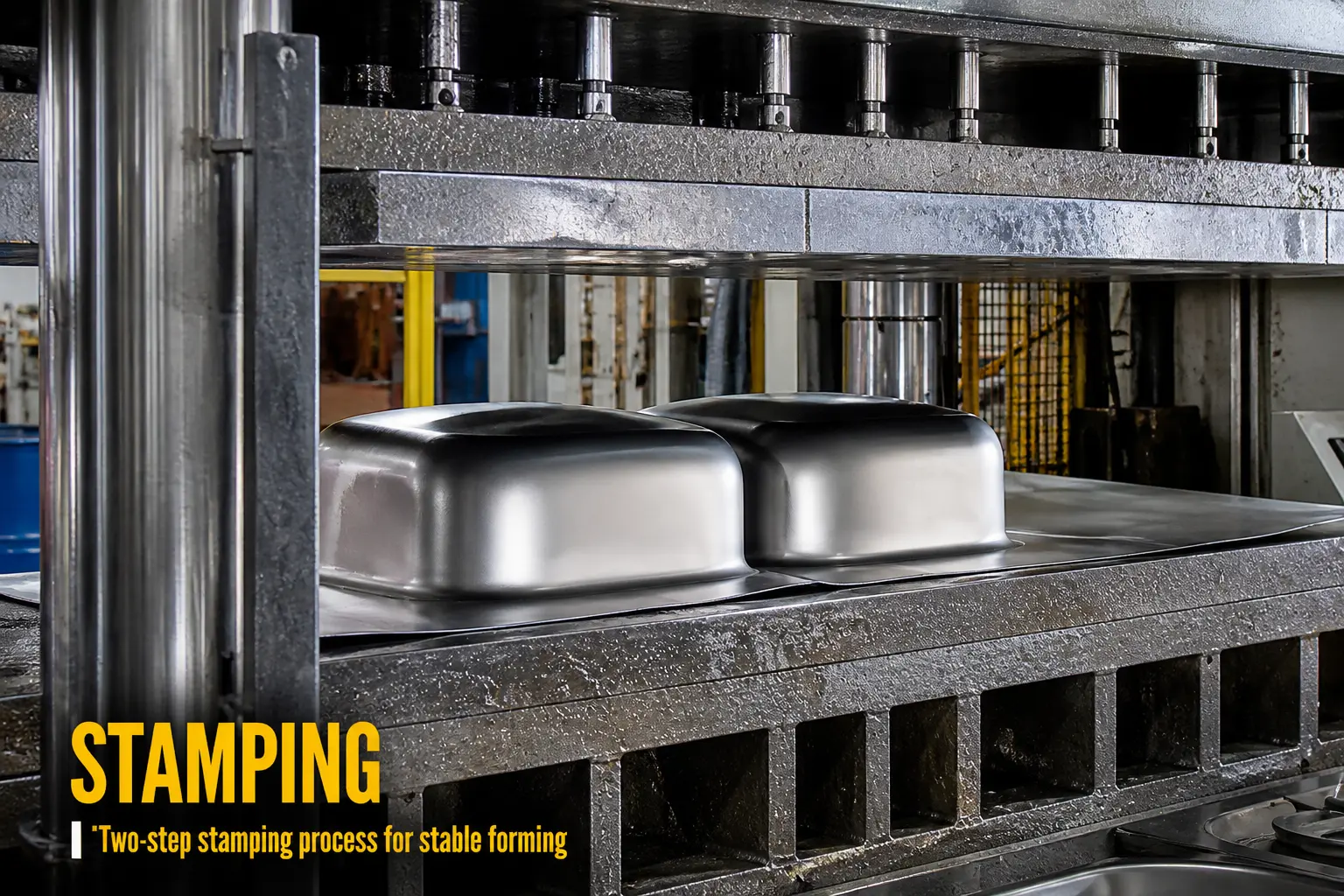
Decide Between Handmade and Pressed Manufacturing
Handmade and pressed sinks serve different business goals. The right choice depends on customization needs, cost target, product positioning, order quantity, and market expectation.
| Consideration | Handmade Sink | Pressed / Drawn Sink |
|---|---|---|
| Do you need custom size? | More suitable | Limited by mold |
| Do you need lower cost? | Usually higher cost | More cost-efficient |
| Do you need volume supply? | Possible but slower | More suitable |
| Higher-value appearance? | Strong advantage | Depends on model & finish |
| Standard retail SKUs? | Good for selected models | Strong choice |
| Workstation design? | Very suitable | Limited depending on mold |
If your market needs differentiation, deeper bowls, workstation functions, or private label positioning, handmade sinks are usually more flexible. If your market needs standard models, stable quantity, and competitive pricing, pressed / drawn sinks may be a better starting point.
Select Sink Size and Bowl Layout
Size is not only about length and width. Buyers should consider cabinet size, countertop opening, bowl depth, rim width, drain position, and local cooking habits.
Overall Dimensions
Define length, width, depth, rim width, and countertop opening requirements.
- Overall length & width
- Bowl depth & inner size
- Rim width
- Countertop cut-out
Bowl Layout
Choose a configuration based on cooking habits, cabinet size, and positioning.
- Single / Double bowl
- Equal / Unequal split
- Multi-compartment
- Workstation ledge layout
Project Fit
Match sink dimensions to real application needs.
- Cabinet & Countertop systems
- Apartment standards
- RV / Camper dimensions
- Commercial utility needs
Choose Material Thickness Based on Product Level
Material thickness affects product weight, cost, durability, shipping cost, and market positioning. New sellers should choose gauge based on target price, customer expectation, sink type, and local market competition.
| Gauge | Common Positioning | Seller Advice |
|---|---|---|
| 16 Gauge | Higher-value handmade sinks, workstation sinks, selected project sinks | Good for premium positioning, private label collections, and stronger product feel. |
| 18 Gauge | Mainstream kitchen sink programs | Often a practical starting point for many markets because it balances cost and strength. |
| 20 Gauge | Cost-sensitive models or selected pressed sinks | Use carefully when price is the main driver and product structure is suitable. |
Note: Do not choose the thickest material only for marketing. Choose the thickness that matches your sales channel, price range, shipping cost, and buyer expectation. Actual thickness availability depends on sink structure and manufacturing method.
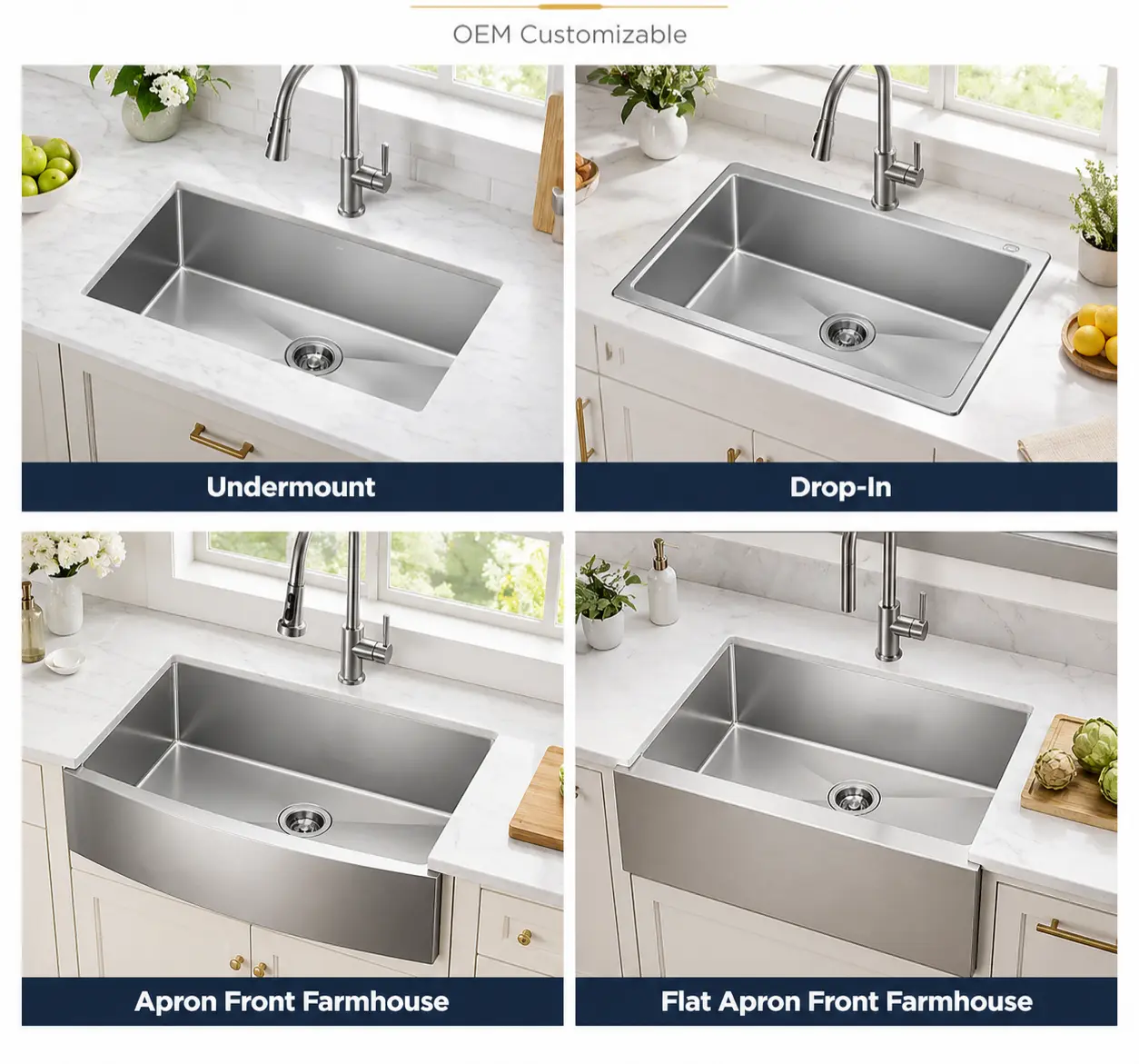
Match Installation Type with Your Market
Installation type affects countertop compatibility, cabinet structure, installer preference, and customer acceptance. A good sink program should match how the sink will be installed in the local market.
| Installation Type | Best For | Seller Advice |
|---|---|---|
| Undermount | Modern kitchens, stone countertops, higher-end projects | Strong option for developed kitchen markets and cabinet-related channels. |
| Top Mount / Drop-In | Easy installation, replacement market, broad retail | Good beginner-friendly SKU because installation is easier to explain. |
| Apron Front | Design-driven kitchens and farmhouse style | More niche and better for selected collections rather than a first broad program. |
| Flush Mount | Minimal kitchen design and precise countertop work | Requires more accurate installation and clearer technical communication. |
| Wall-Mounted | Commercial, utility, laundry, or special-use sinks | More project-driven and specification-based. |
Choose Finish and Color Carefully
Finish selection affects product appearance, price perception, market positioning, and customer expectation. Standard stainless steel finishes are usually safer for first programs.
Safer Starting Options
- Brushed stainless steel
- Satin finish
- Matte stainless finish
These finishes are practical for first sink programs, wholesale supply, project use, and broad market acceptance.
Differentiation Options
- Black stainless steel / Gunmetal
- Gold / Rose gold
- PVD colored finish
Colored finishes help create a more distinctive product line, especially for private label brands and e-commerce sellers.
Decorative Texture Options
- Honeycomb texture
- Embossed texture
- Anti-scratch visual texture
Decorative textures can improve visual differentiation, but sample confirmation is recommended before bulk orders.
Build the Right Accessory Set
Accessories can turn a basic sink into a higher-value product set. However, too many accessories can also increase cost, carton size, and after-sales risk.
Basic Set
Wholesale & Project
- • Strainer / drainer
- • Drain kit
- • Installation clips
- • Template / instruction
Retail Value Set
Retail & Online Sellers
- • Strainer
- • Bottom grid
- • Roll-up drying rack
- • Cutting board
- • Individual carton
Workstation Set
Higher-Value Lines
- • Cutting board
- • Colander
- • Roll-up drying rack
- • Bottom grid
- • Drain kit
Private Label Set
Brands & Market-Ready
- • Selected accessories
- • Branded instruction sheet
- • Product sticker & Barcode
- • Branded accessory packaging
Plan Logo and Branding
Logo customization is not only about putting a mark on the sink. For private label buyers, branding can include the sink surface, carton, product label, accessory box, instruction sheet, barcode, and SKU system.
Sink Logo Options
- Laser logo
- Printed logo
- Etched logo
- Method based on finish and model
Package Branding
- Branded carton
- Product sticker & SKU label
- Barcode label
- Accessory packaging
Sales Support Materials
- Instruction sheet
- Installation guide
- Product card
- Private label documentation
Choose the Right Packing Method
Packing affects damage rate, customer experience, storage, shipping cost, and retail presentation. A custom sink program should define packing before bulk production.
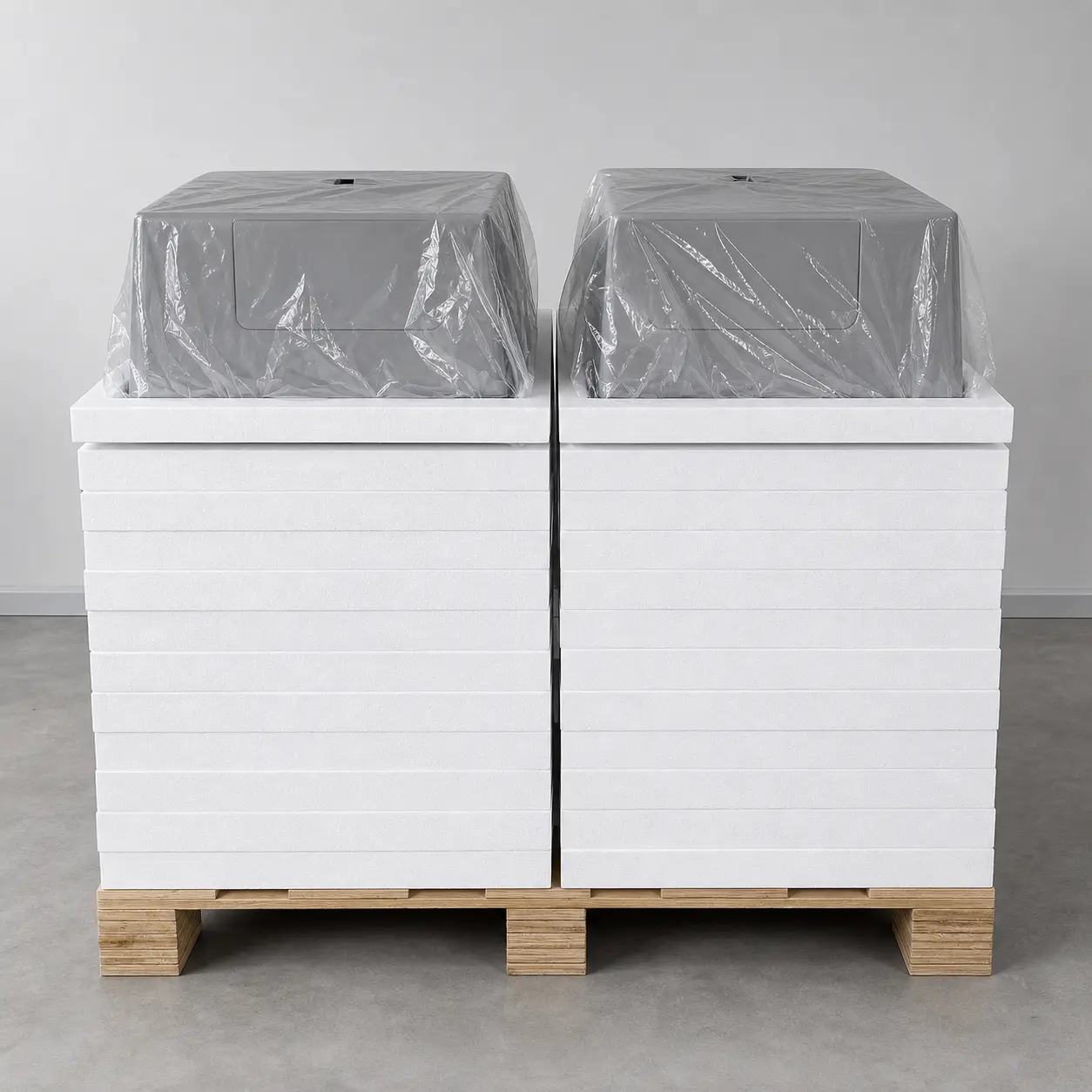
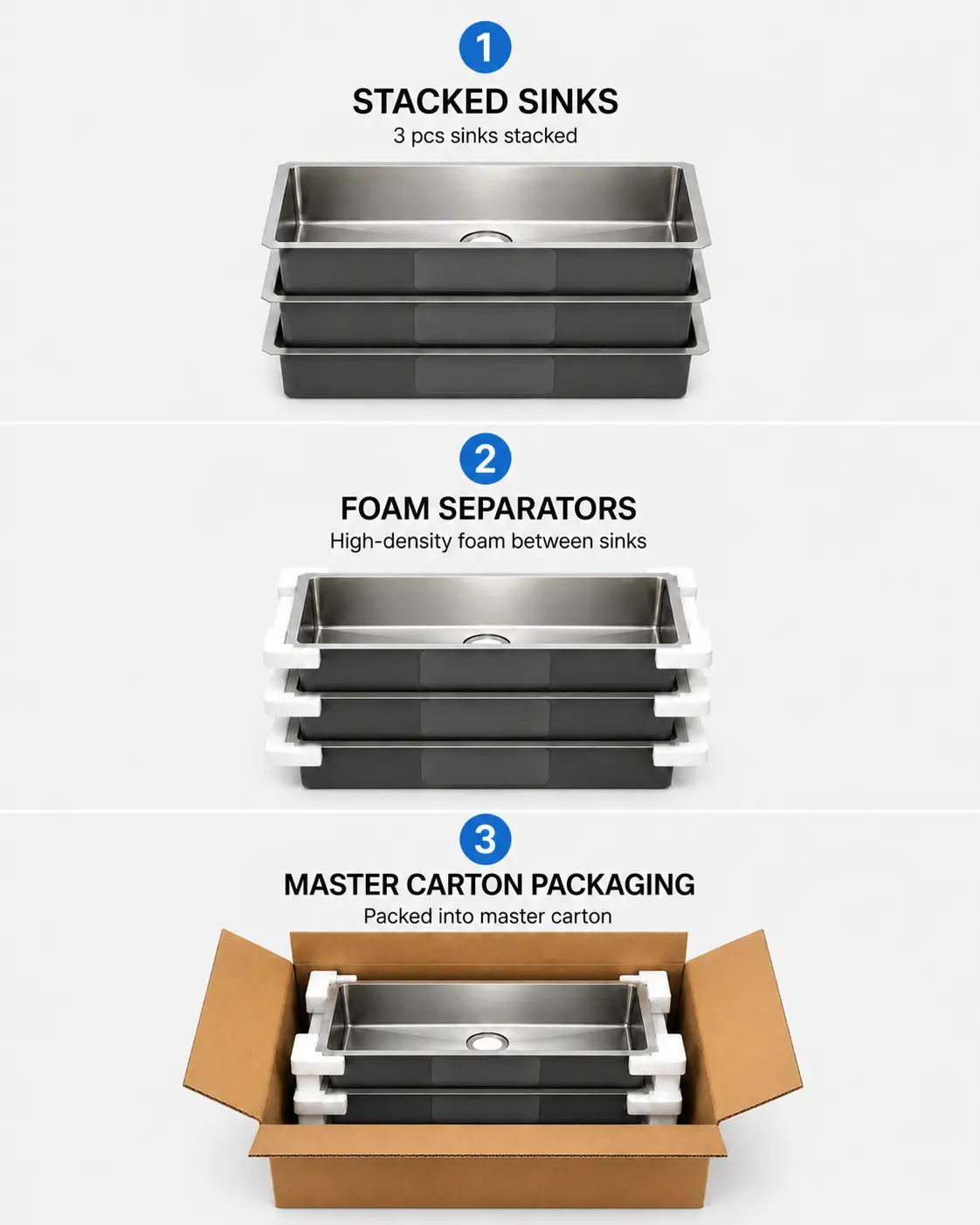
Standard Export Packing
General wholesale & project
- • Protective wrapping
- • Foam edge protection
- • Stacked packing with separation
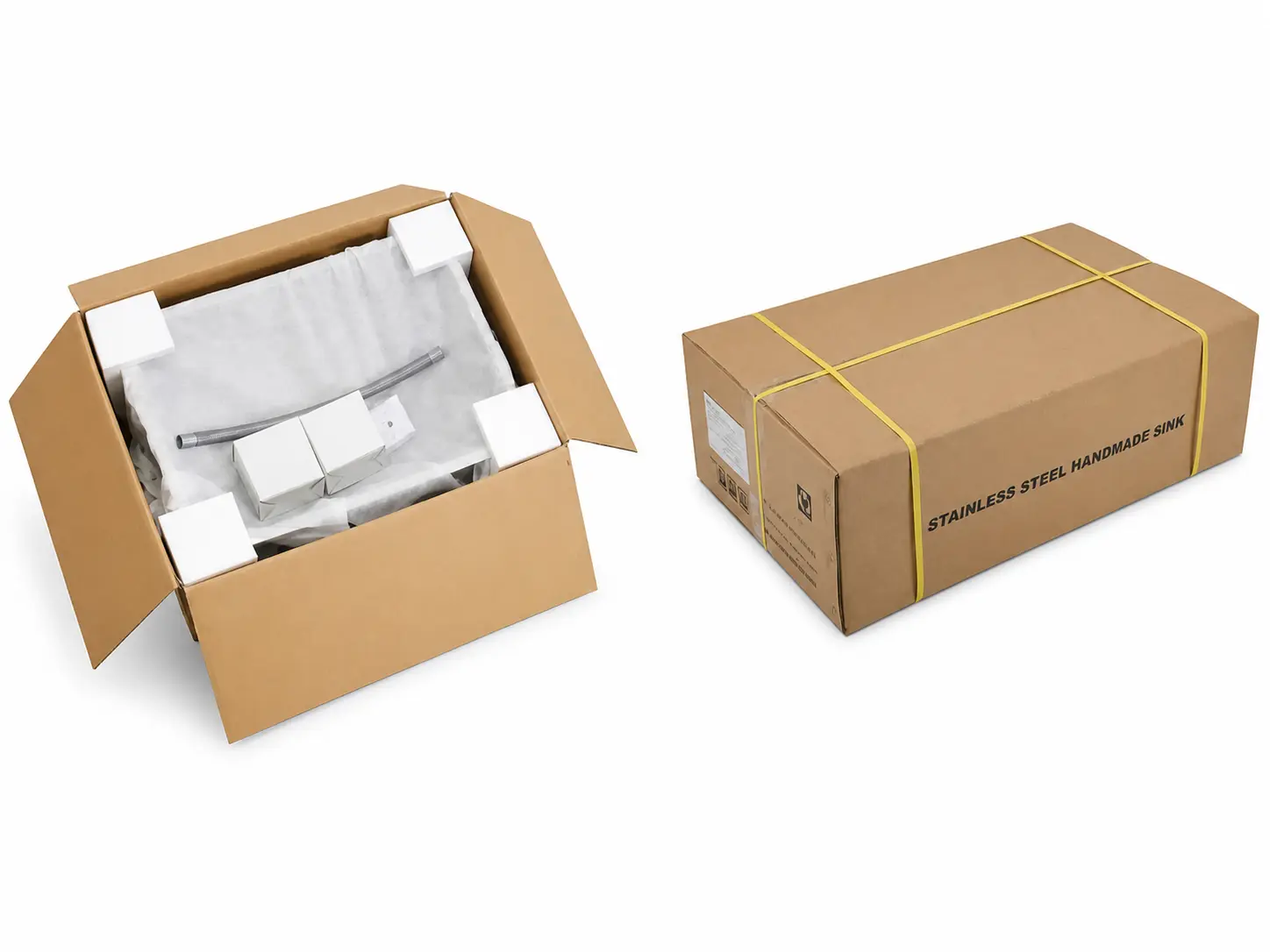
Retail / Private Label
Brands & distributors
- • Individual branded carton
- • Product label
- • Accessory inner box
E-Commerce Packing
Online sellers (Drop-test)
- • Stronger individual carton
- • Extra corner protection
- • Clear SKU & Barcode
Project Packing
Apartments & contractors
- • Model-based label
- • Batch packing
- • Pallet packing if needed
Start Small, Then Scale
New sellers do not need to build a large sink catalog from the first order. A safer way is to test a focused selection before expanding into a full sink program.
01.Define Market and Channel
Clarify where and how the sinks will be sold.
02.Select 2–3 Starting Sink Types
Choose a focused product direction instead of too many random models.
03.Confirm Configuration
Review size, gauge, finish, installation type, accessories, logo, and packing.
04.Review Sample or Existing Model
Check available models, drawings, or samples before confirming production.
05.Start Trial Order
Test product quality, packing, customer response, and sales potential.
06-07.Feedback & Expand
Review which models perform better and add more SKUs based on real demand.
Matrix can help buyers start with existing models, modified specifications, or sample-based development before moving into larger OEM or private label programs.
Recommended Starter Sink Programs
If you are new to kitchen sink sourcing, these starter programs can help you build a clearer first product line instead of selecting random models from a catalog.
Balanced Wholesale Program
Suitable for: Distributors, wholesalers, importers
- • Pressed / drawn sinks (Top & Undermount)
- • Single and double bowl
- • 18 gauge mainstream option
- • Brushed stainless steel finish
- • Basic drain kit & Standard export packing
Why it works: Practical starting program for markets that need stable supply, reasonable cost, and easy product explanation.
Private Label Workstation
Suitable for: Brands, online sellers, retail channels
- • Handmade workstation sinks (16 or 18 gauge)
- • Deep single bowl (Brushed, black, or gunmetal)
- • Cutting board, roll-up rack, bottom grid, colander
- • Logo and branded carton
Why it works: Stronger differentiation program for buyers who want higher perceived value and better presentation.
Project Supply Program
Suitable for: Apartments, hotels, cabinet suppliers
- • Undermount or top mount sinks
- • Standardized dimensions
- • 18 gauge or project-based thickness
- • Clear model labels, stable packing, drawing confirmation
Why it works: Specification-driven program for buyers who need consistency, installation fit, and delivery control.
Niche Application Program
Suitable for: Outdoor kitchens, RVs, utility buyers
- • Outdoor, RV, Laundry, or Bar/Prep sinks
- • Compact or special sizes
- • Selected accessory kits
- • Project or channel-specific packing
Why it works: Focused program to avoid crowded standard sink competition and target specific use cases.
OEM and Private Label Support from Matrix
Instead of asking buyers to select randomly from a catalog, Matrix helps review which sink models, finishes, accessories, and packing methods are more suitable for the buyer’s target market and business stage.
FAQ About Custom Kitchen Sink Programs
I am new to selling kitchen sinks. Where should I start?
Should I choose handmade sinks or pressed sinks for my first order?
What gauge should I choose for my sink program?
Should I add accessories to my first sink program?
Is PVD or colored finish suitable for a new seller?
Can I use my own logo and packaging?
What packing method should I choose?
Do I need to open a new mold for a custom sink?
Can I start with a trial order?
What information should I send before asking for a quote?
Build Your Custom Kitchen Sink Program with Matrix
Whether you are starting a new sink business, building a private label collection, or developing a project-specific kitchen sink solution, Matrix can help you review the right sink type, size, gauge, installation, finish, accessories, logo, and packing method before production.
tenly@matrixsink.com
+18520999956
Jianye Road, Nantou town, Zhongshan, Guangdong, China