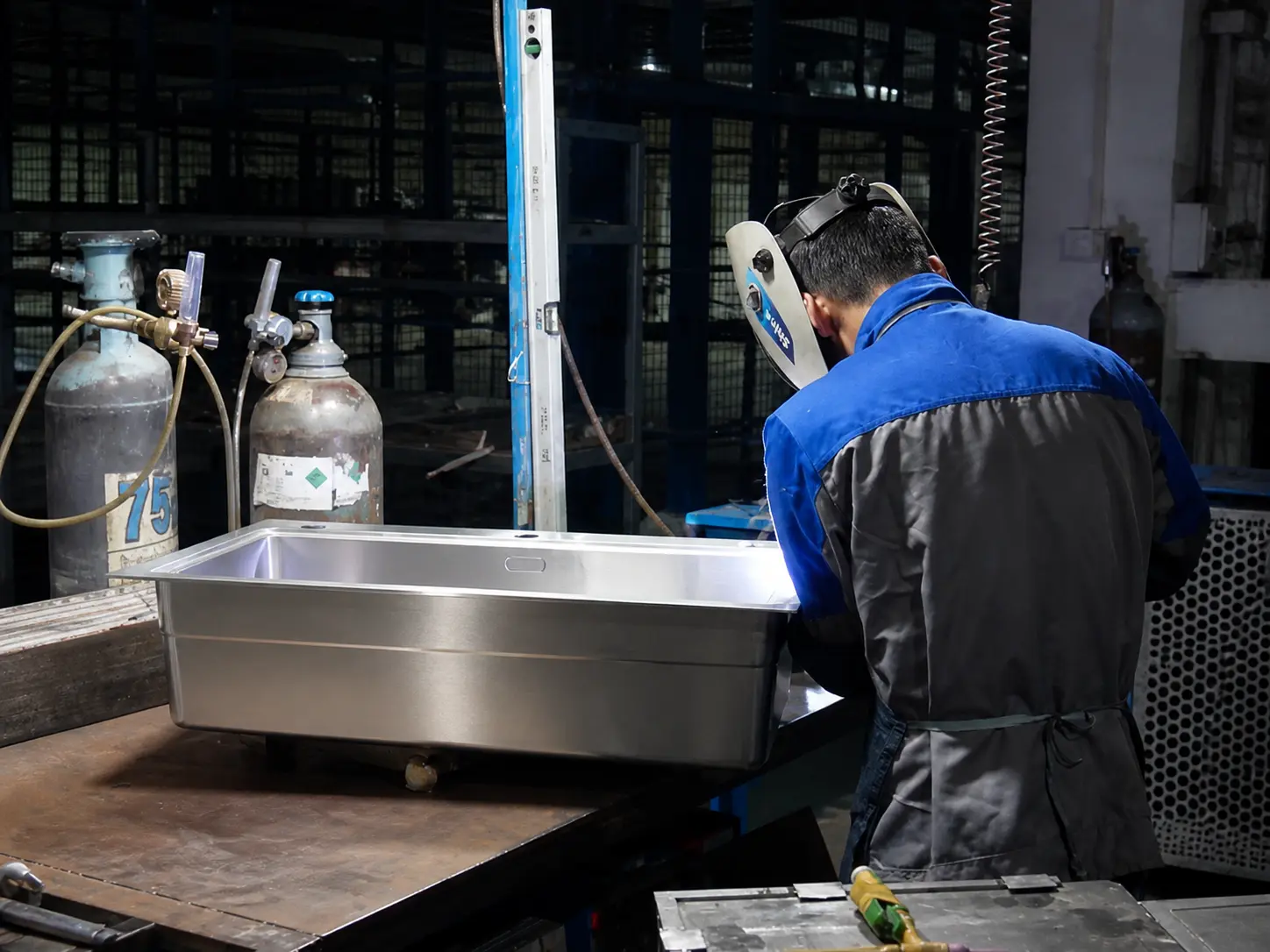
Double Bowl Kitchen Sinks
Stainless steel double bowl kitchen sinks with equal, 60/40, and custom bowl options for OEM, wholesale, and project supply.

Matrix Manufacture Co., Ltd
Specialized in stainless steel sink configurations
Double Bowl Kitchen Sinks Supplier & Manufacturer
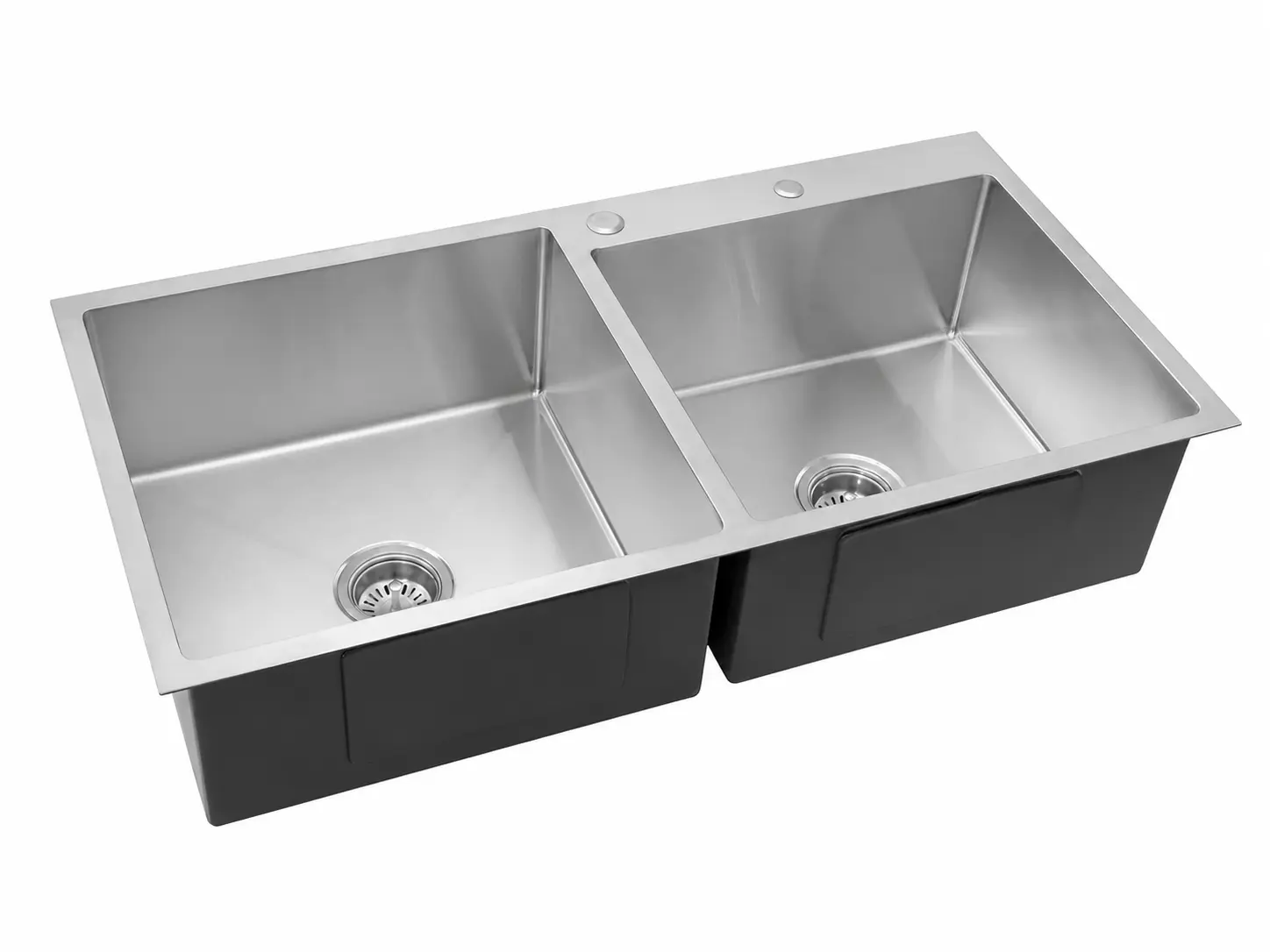
Matrix supplies and manufactures stainless steel double bowl kitchen sinks for kitchen brands, importers, wholesalers, retail programs, project buyers, and OEM customers. A double bowl sink is not one fixed product type. It can be handmade or pressed / drawn, undermount or top mount, equal-bowl or offset-bowl, full-divider or low-divider.
For buyers, the key is not only choosing “two bowls.” Bowl ratio, divider height, left/right drain layout, cabinet width, installation type, surface finish, accessory fit, packaging, and repeat-order consistency all affect the final product program.
Manufacturing Flexibility
Handmade and pressed / drawn double bowl options
Specification Control
Bowl ratio, depth, and divider confirmation
Plumbing Integration
Dual-drain layout and installation review
Supply Chain Reliability
Export packing and batch order support
What Is a Double Bowl Kitchen Sink?
A double bowl kitchen sink has two separate basins instead of one continuous bowl. This layout allows users to separate washing, rinsing, soaking, food prep, or cleaning tasks. Double bowl sinks are commonly used in traditional kitchens, apartment projects, rental housing, wholesale programs, and markets where users prefer divided work zones.
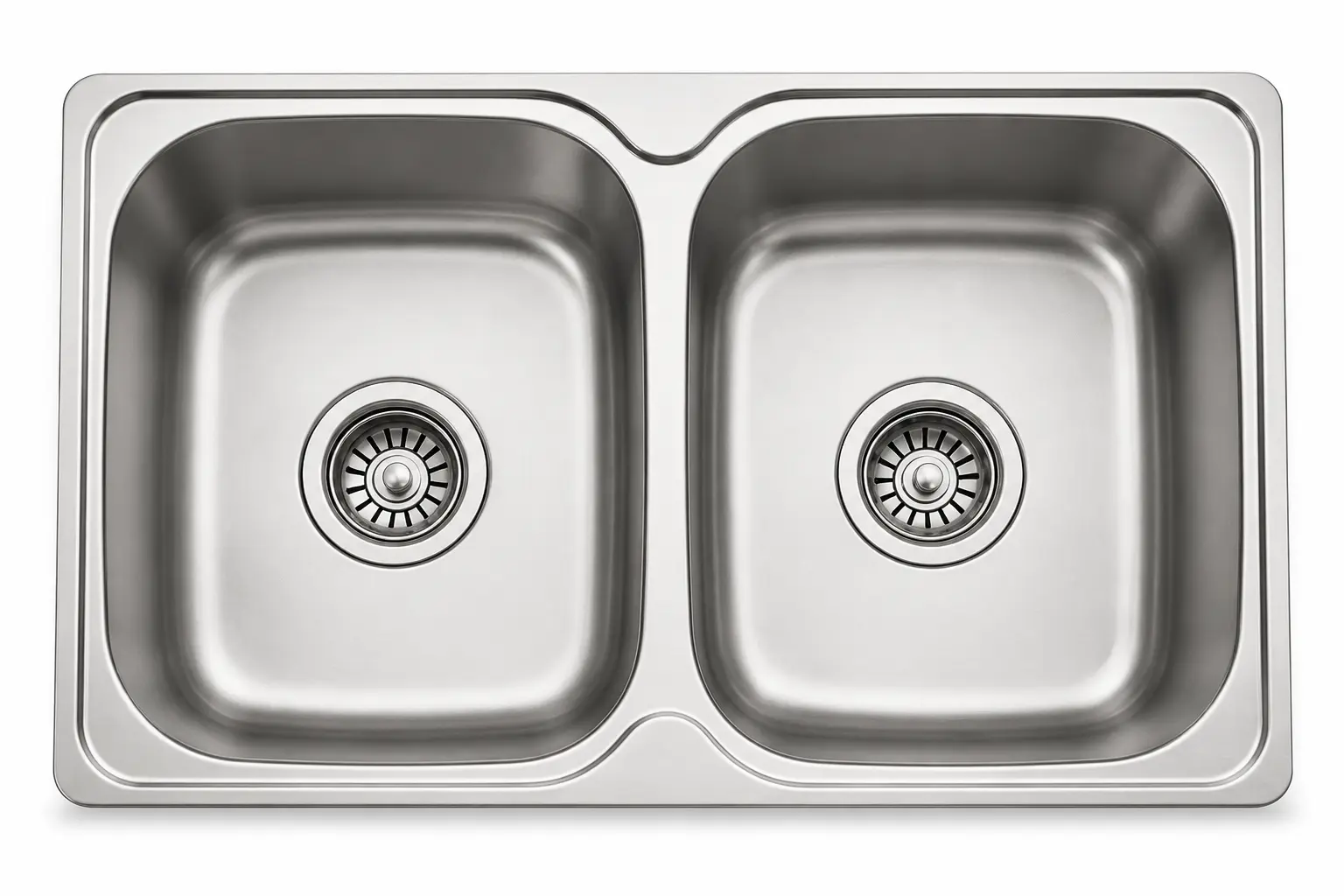
Professional Note: Double bowl does not mean one fixed product. It is a two-basin layout that should be selected together with manufacturing method, bowl split, divider height, drain layout, installation type, and target market.
Configuration Variables
For B2B buyers, double bowl should be understood as a configuration choice that can be combined with different variables:
- Handmade or pressed / drawn
- Undermount or top mount
- Equal bowl, 60/40, or 70/30 bowl split
- Full divider or low divider
- Standard depth or deep bowl
- Brushed stainless steel, black, PVD, or Honeycomb
Key Parts to Confirm
How Buyers Should Choose a Double Bowl Sink
For professional buyers, choosing a double bowl kitchen sink should start with the target market and user workflow. A double bowl sink for a retail replacement program may need different bowl split, faucet hole layout, and rim design than a handmade undermount double bowl sink for a premium kitchen line.
Confirm Market Need
Some markets still prefer separated washing and rinsing zones. Others are moving toward larger single bowl layouts. Confirm whether double bowl fits local kitchen habits, retail demand, and project requirements.
Choose Manufacturing
Select handmade if your program needs flexible bowl ratio, sharper lines, deeper bowls, or custom sizes. Select pressed / drawn if your program needs stable volume and better cost control.
Choose Bowl Split
Equal bowl designs work well for balanced washing. Offset designs (60/40 or 70/30) are useful when one larger bowl is needed for cookware and one smaller bowl for rinsing or prep.
Confirm Divider Height
A full divider creates stronger separation. A low divider makes it easier to handle larger cookware across both basins while still keeping two working zones.
Dual-Drain Planning
Drain positions affect under-sink storage, garbage disposal placement, P-trap layout, and accessory fit. Each bowl should be reviewed separately.
Confirm Packing
For wholesale and project supply, carton label, SKU control, accessory packing, and pallet plan should be confirmed before shipment to ensure smooth logistics.
Bowl Split Options for Double Bowl Sinks
The bowl split is one of the most important decisions for a double bowl kitchen sink. It affects user workflow, cabinet planning, product positioning, and market fit.
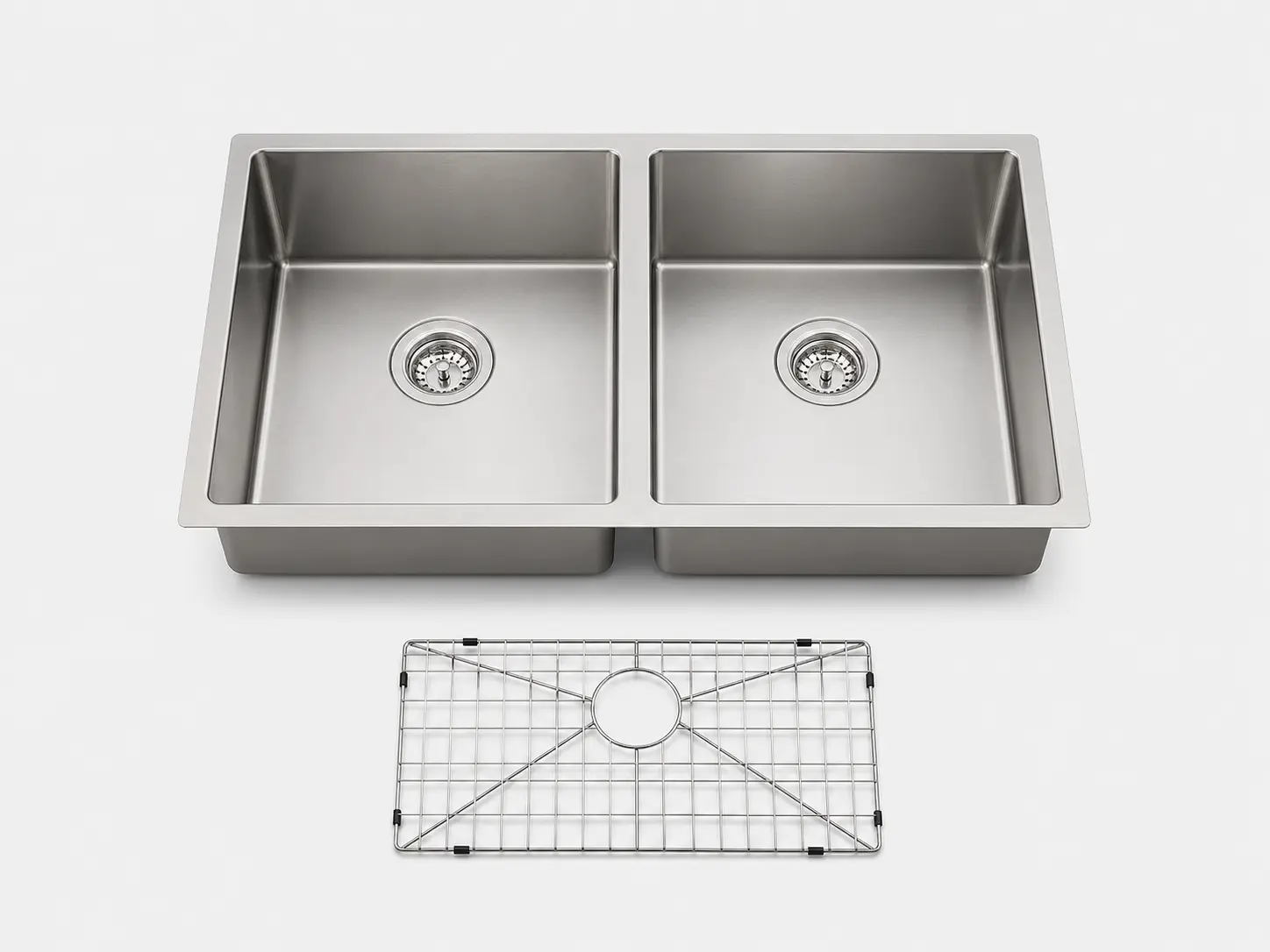
Equal Bowl Design
Two basins are similar in size. Suitable for markets where users prefer balanced washing and rinsing areas.
Best For:
- • Traditional kitchen layouts
- • Apartment projects
- • Retail replacement
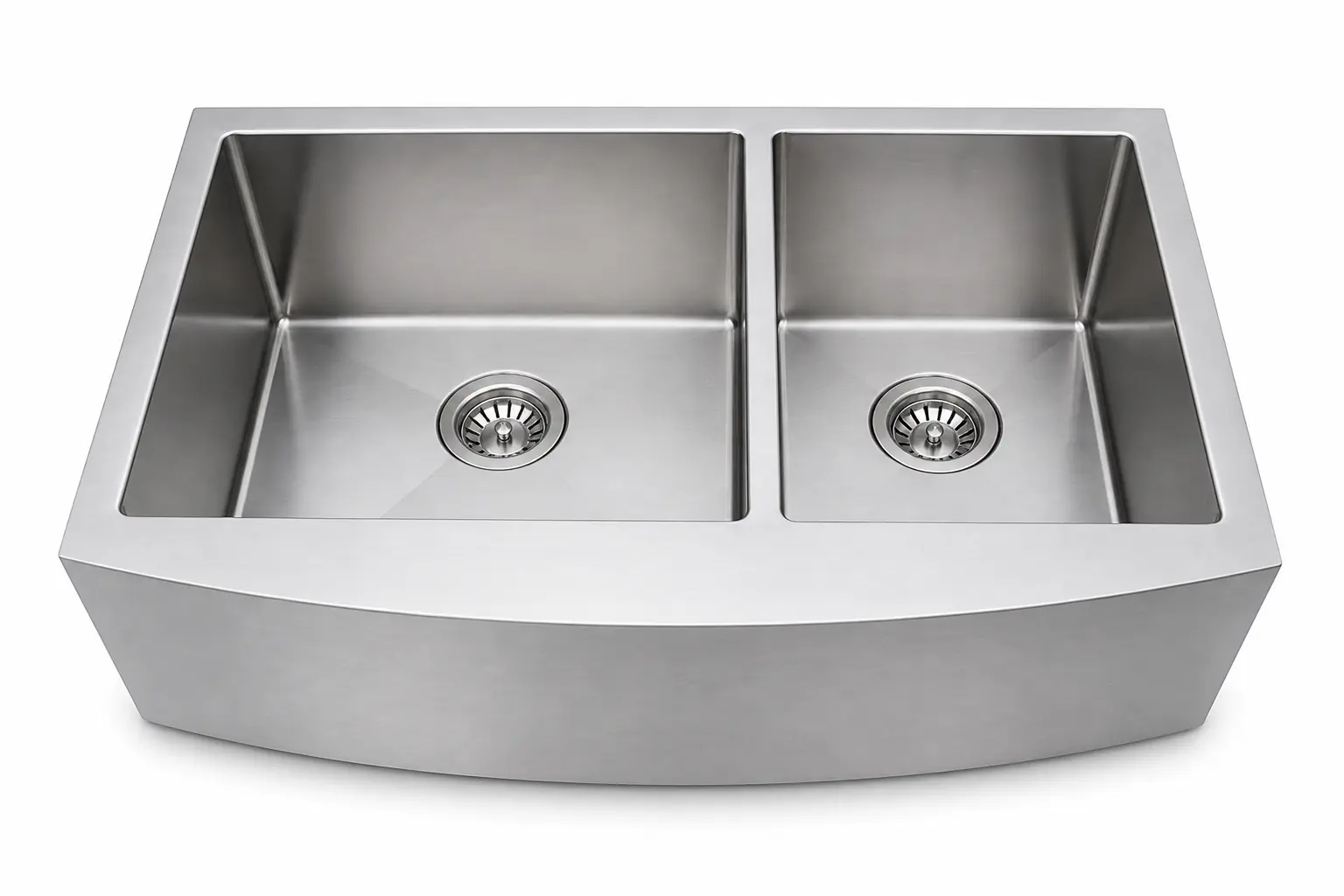
60/40 Double Bowl
One bowl is larger, while the other is smaller. Gives more space for cookware while keeping a separate prep zone.
Best For:
- • Modern traditional kitchens
- • Larger working bowl needs
- • Mid-to-premium programs
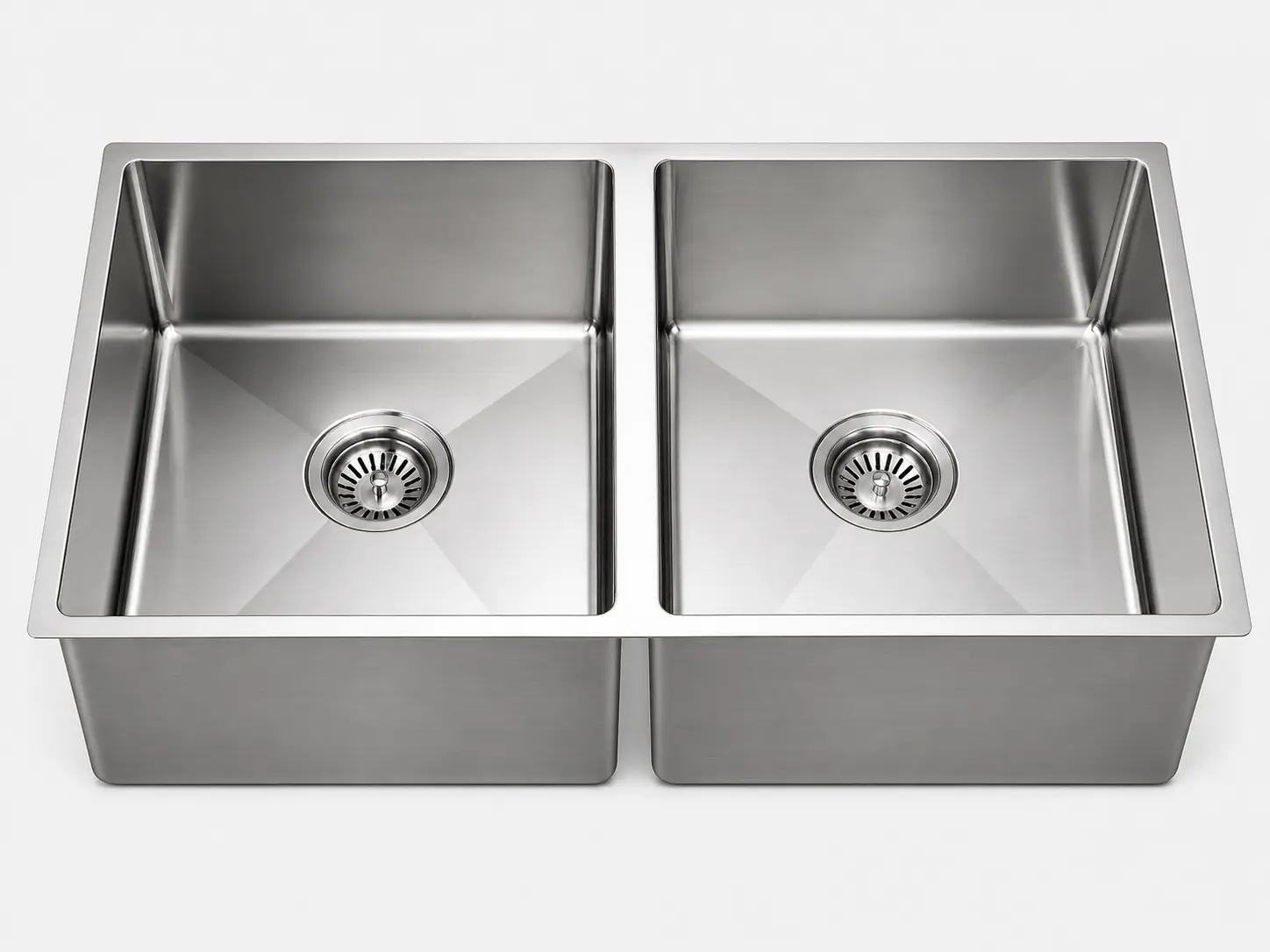
70/30 Double Bowl
A larger main bowl paired with a compact secondary bowl. Supports larger cookware with a small rinsing zone.
Best For:
- • Premium design collections
- • Larger kitchen layouts
- • Main bowl + secondary function
Custom Bowl Ratio
For handmade double bowl sinks, custom bowl ratios may be available depending on size, structure, MOQ, and project requirements.
Explore OEM Options →Divider Height and User Workflow
Divider height changes how a double bowl sink feels in daily use. Buyers should not treat the divider as a small design detail. It affects water separation, cookware handling, cleaning workflow, and market preference.
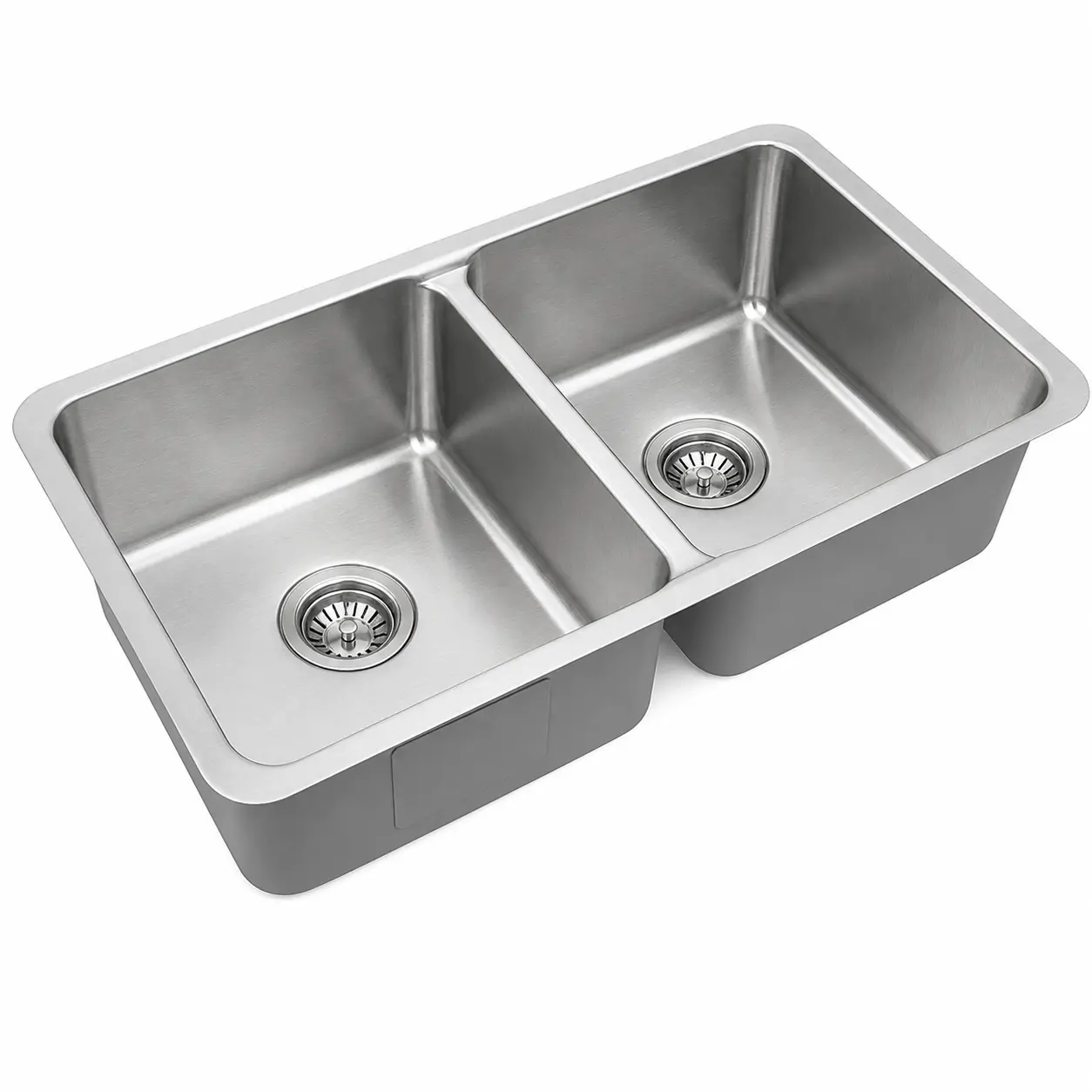
Full Divider Double Bowl Sink
A full divider creates stronger separation between the two basins. It is suitable for users who prefer clear washing and rinsing zones.
Best For:
- • Traditional double bowl use
- • Separated washing and rinsing
- • Classic layout markets
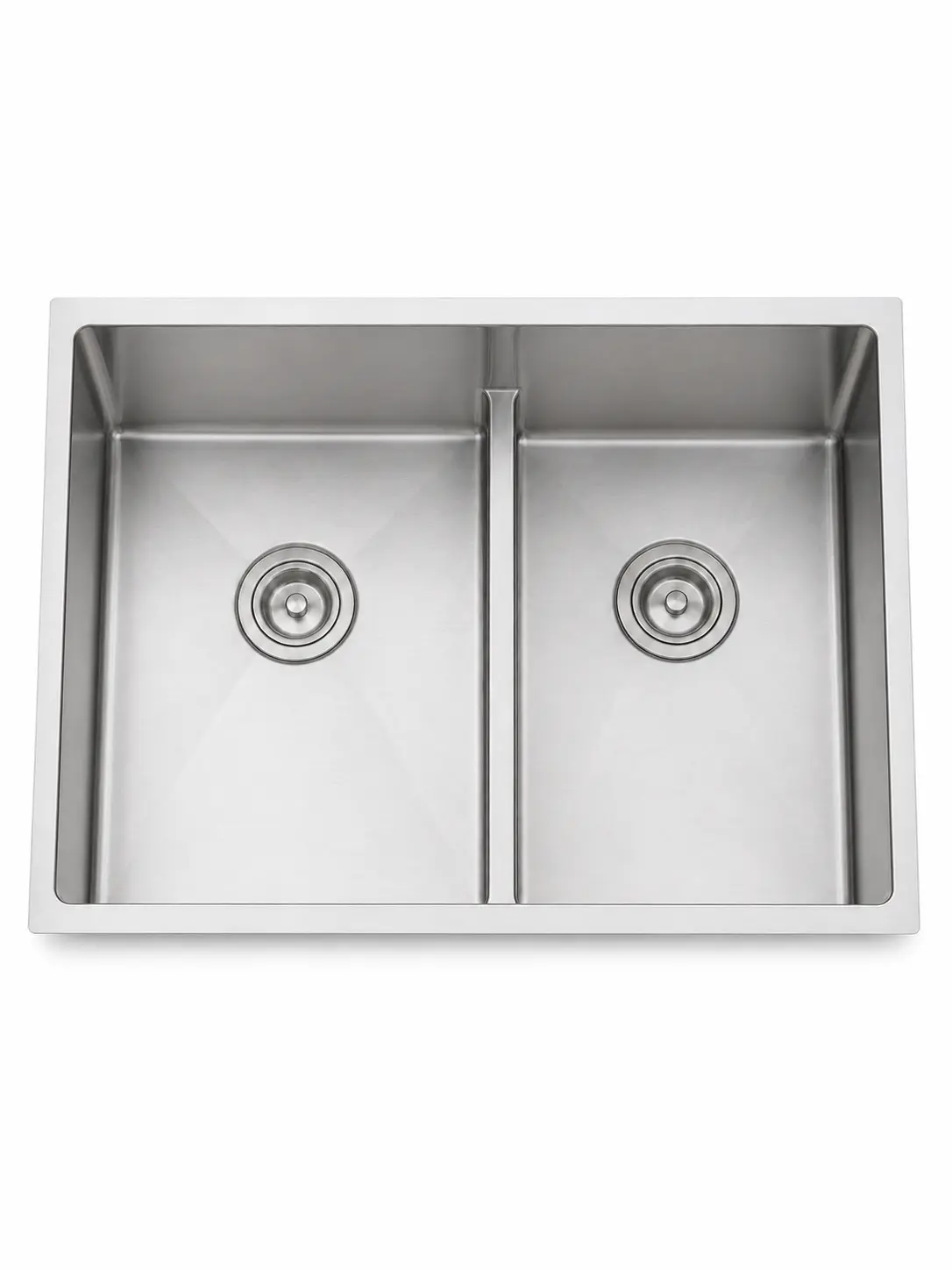
Low Divider Double Bowl Sink
A low divider keeps two working zones but makes it easier to handle larger cookware, trays, and pans across both bowls.
Best For:
- • Flexible double bowl function
- • Larger cookware handling
- • Modern double bowl programs
Note: Divider height should be confirmed with bowl depth, drain layout, and target user habits before production.
Handmade and Pressed / Drawn Double Bowl Options
Matrix can supply double bowl kitchen sinks through both handmade fabrication and pressed / drawn forming. The right choice depends on product positioning, order volume, bowl ratio, divider design, customization needs, and cost target.
Handmade Double Bowl Kitchen Sinks
Handmade double bowl sinks are fabricated from stainless steel panels, welded, polished, and finished into a precise sink structure. They are suitable for premium collections, custom bowl ratios, deeper bowls, sharper design lines, workstation features, and OEM programs that need more design freedom.
Best For:
- • Premium kitchen collections
- • Custom 60/40 or 70/30 split
- • Low-divider designs
- • Deep double bowl sinks
- • Workstation models
- • OEM sink programs
Key Points to Confirm:
- • Welding & polishing quality
- • Divider alignment
- • Radius consistency
- • Bowl depth & ratio
- • Accessory ledge accuracy
Pressed / Drawn Double Bowl Kitchen Sinks
Pressed or drawn double bowl sinks are formed through molds. They are suitable for stable-volume orders, retail replacement programs, apartment projects, wholesale channels, and cost-controlled sink programs where repeatable size, bowl shape, and divider structure are important.
Best For:
- • Wholesale sink programs
- • Retail replacement lines
- • Apartment projects
- • Standard double bowl SKUs
- • Cost-controlled volume
- • Project supply
Key Points to Confirm:
- • Mold availability
- • Formed thickness
- • Divider shape consistency
- • Rim and edge profile
- • Repeat-order consistency
Available Double Bowl Sink Configurations
Important Note: These are not mutually exclusive categories. A double bowl sink can combine several options (e.g., double bowl + undermount + handmade + 60/40 split).
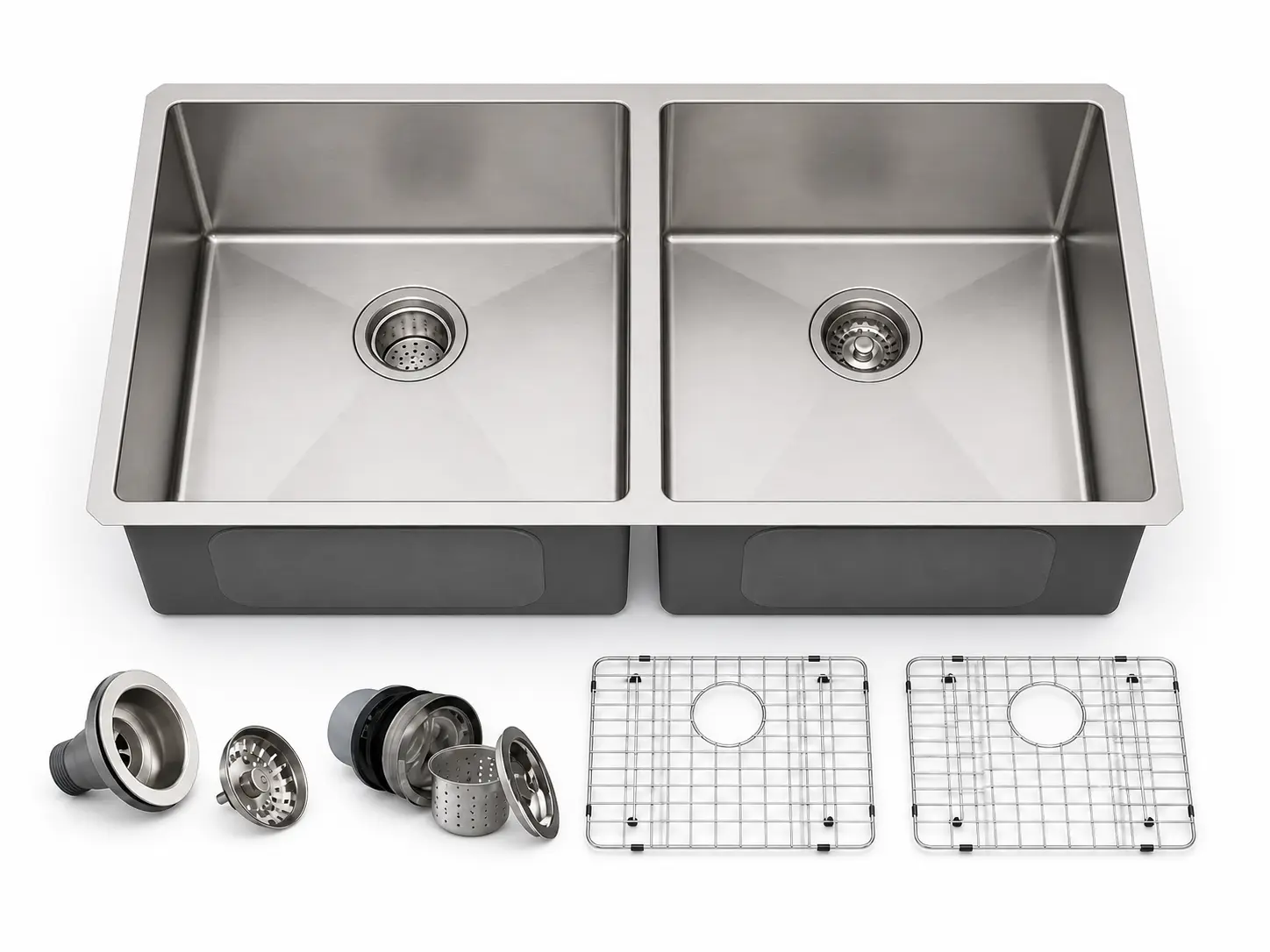
Double Bowl Undermount Sinks
Create a clean countertop transition, commonly used with stone, quartz, granite, marble. Rim flatness, cutout size, cabinet width, and drain layout should be confirmed.
View Undermount Sinks →
Top Mount / Drop-In Sinks
Practical for replacement programs, rental housing, apartments, retail channels, and renovation projects where easier installation and rim coverage matter.
View Top Mount Sinks →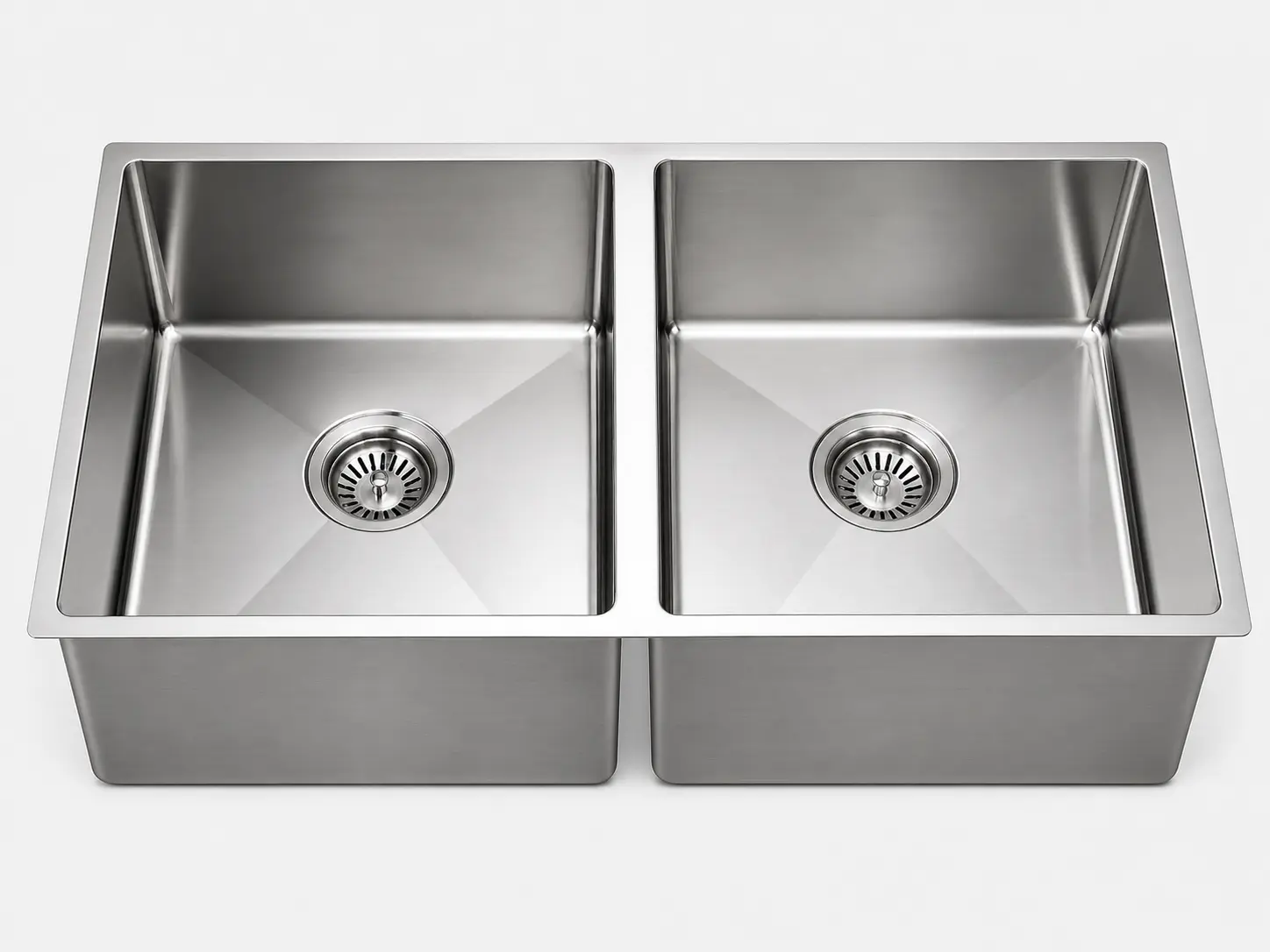
Deep Double Bowl Kitchen Sinks
Provide more washing capacity. Bowl depth should be reviewed with cabinet width, divider height, drain height, plumbing space, and market expectation.
View Deep Sinks →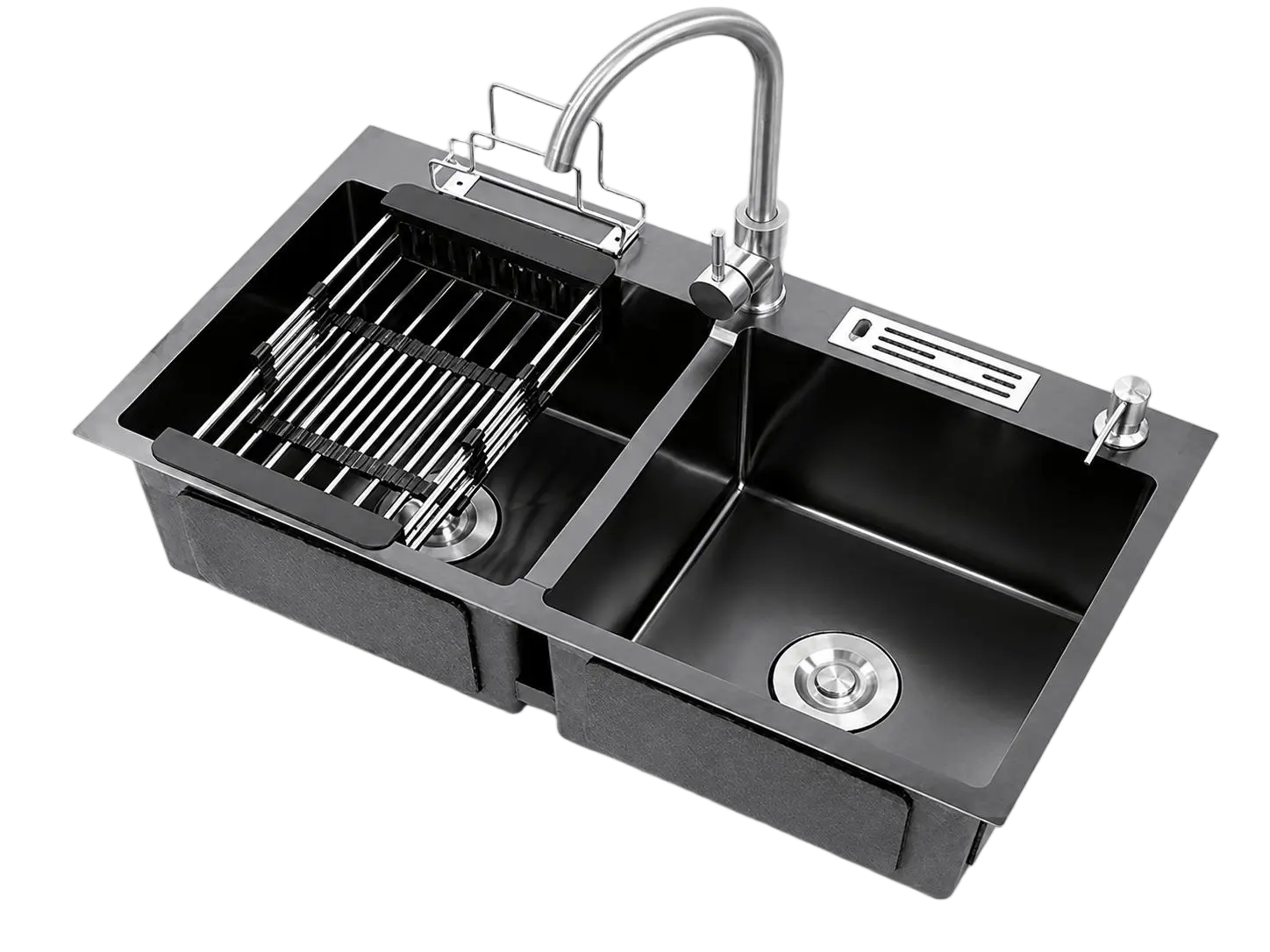
Double Bowl Workstation Sinks
Can support accessories, but accessory fit is complex if bowls have different sizes. Ledge accuracy, divider position, and clearance must be checked together.
View Workstation Sinks →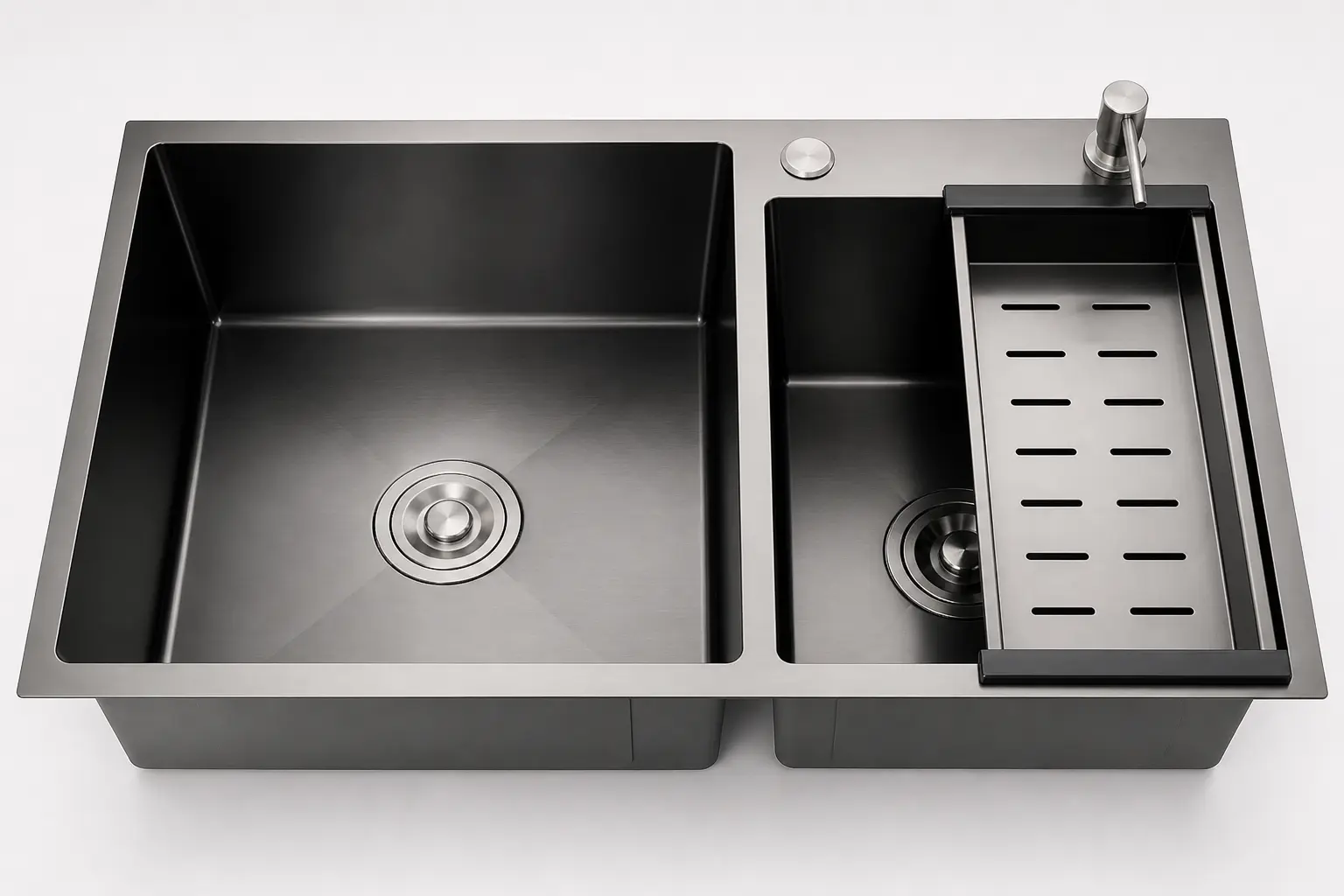
Black Double Bowl Stainless Sinks
Support differentiated retail and design-led collections. Finish consistency, scratch protection, and packing should be confirmed before repeat orders.
View Black Sinks →Handmade or Pressed Double Bowl Sink — Which One Fits Your Program?
| Buyer Need | Handmade Double Bowl Sink | Pressed / Drawn Double Bowl Sink |
|---|---|---|
| Design flexibility | Higher | More limited by mold |
| Bowl ratio | Easier to customize | Usually based on mold |
| Divider design | More flexible | More standardized |
| Bowl depth | Easier to adjust | Usually standardized |
| Cost structure | Higher | More cost-controlled |
| Order volume | Suitable for OEM and premium lines | Strong for repeat volume |
| Best for | Premium, custom, workstation, deep sink programs | Wholesale, retail, apartment, replacement programs |
If your market needs custom bowl ratios, low-divider designs, deeper bowls, sharper corners, workstation details, or flexible sizes, a handmade double bowl sink may be more suitable. If your program needs stable volume, standard sizing, and cost control, a pressed or drawn double bowl sink may be the better choice.
How Matrix Handmade Sinks & Pressed / Drawn Sinks Are Made
Watch two real production videos to compare how Matrix stainless steel kitchen sinks are made — from handmade welding and polishing to pressed / drawn forming, inspection, and packing.
For B2B buyers, the manufacturing method affects cost, design flexibility, bowl structure, finish expectation, MOQ, and the final product line. These videos help buyers compare both options before sampling or bulk orders.
Handmade Stainless Steel Sink Production
See how Matrix handmade stainless steel sinks are produced through sheet preparation, laser cutting, bending, hand welding, grinding, polishing, drain hole checking, sound pad, coating, accessory fitting, and final packing.
- Hand welding and corner details
- Bowl structure and radius control
- Surface grinding and brushing direction
- Drain hole checking and accessory fitting
- Sound pad, coating, and export packing
Pressed / Drawn Stainless Steel Sink Production
See how Matrix pressed / drawn stainless steel sinks are formed with molds for consistent shapes, stable bowl structure, cost-efficient production, and high-volume sink programs.
- Mold forming and bowl consistency
- Rim shape and installation edge
- Surface treatment and visible finish
- Drain position and size control
- Packing method for volume orders
Which Manufacturing Type Fits Your Market?
Handmade sinks are often used for deeper bowls, custom sizes, workstation designs, and premium product lines. Pressed / drawn sinks are commonly used for retail, apartment, project, and high-volume programs where consistency and cost control matter.
When Double Bowl Sinks Still Fit the Market
Some modern kitchen programs are moving toward large single bowl sinks, but double bowl sinks still make sense in specific market segments.
Traditional Kitchen Habits
In markets where users are used to washing and rinsing separately, double bowl sinks remain a familiar choice.
Retail Replacement Demand
Many replacement buyers look for sink layouts similar to what they already have, making double bowl SKUs useful.
Apartment & Rental Housing
Double bowl sinks can support practical, familiar kitchen layouts for multi-unit projects and rental housing.
Balanced Utility
Two basins can separate washing, rinsing, soaking, and prep tasks without requiring a larger workstation design.
Dual-Drain Planning and Plumbing Layout
Drain planning is more complex for double bowl sinks than single bowl sinks. Each bowl may need its own drain position, and the final layout can affect under-sink storage, garbage disposal placement, P-trap layout, plumbing complexity, and installation time.
Drain Options:
- • Centered drains
- • Rear drains
- • Offset drains
- • Aligned left/right drains
- • Separate positions
Checklist:
- • Distance between drains
- • Cabinet width
- • Garbage disposal clearance
- • P-trap layout
- • Accessory clearance
Professional Note: For project supply, dual-drain layout should be confirmed before bulk order approval. A small change affects cabinet space and plumbing. Learn about drain positions.
Material, Gauge, and Surface Options
The right choice should consider target channel, expected use, price range, installation type, bowl ratio, and market preference.
Material & Gauge Options
Surface Finish Options
Accessory-Matched Double Bowl Sink Sets
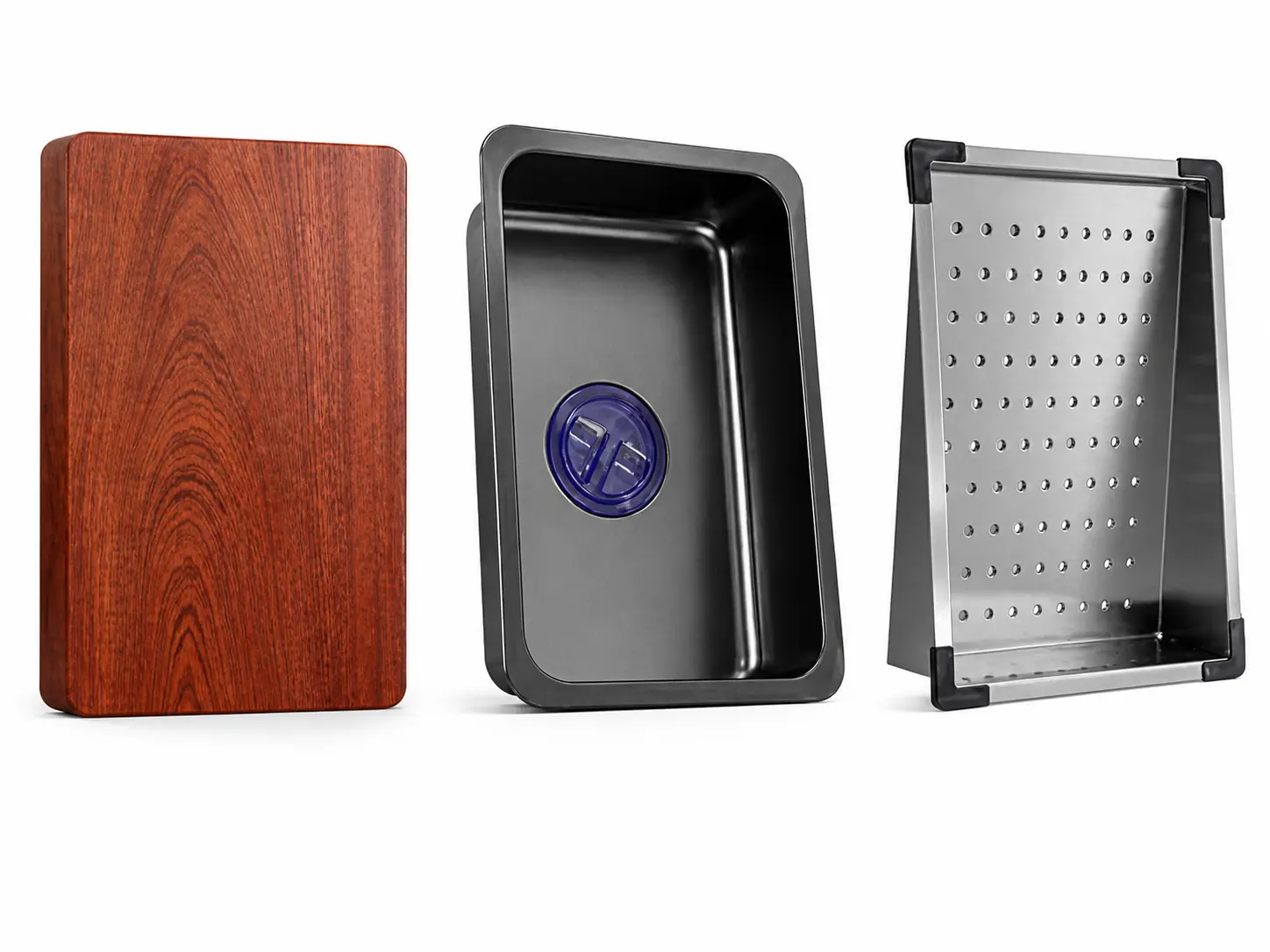
Accessory fit should be checked against each bowl size, inner radius, divider position, and drain position. Accessories that fit a larger bowl may not fit the smaller bowl in an offset double bowl design.
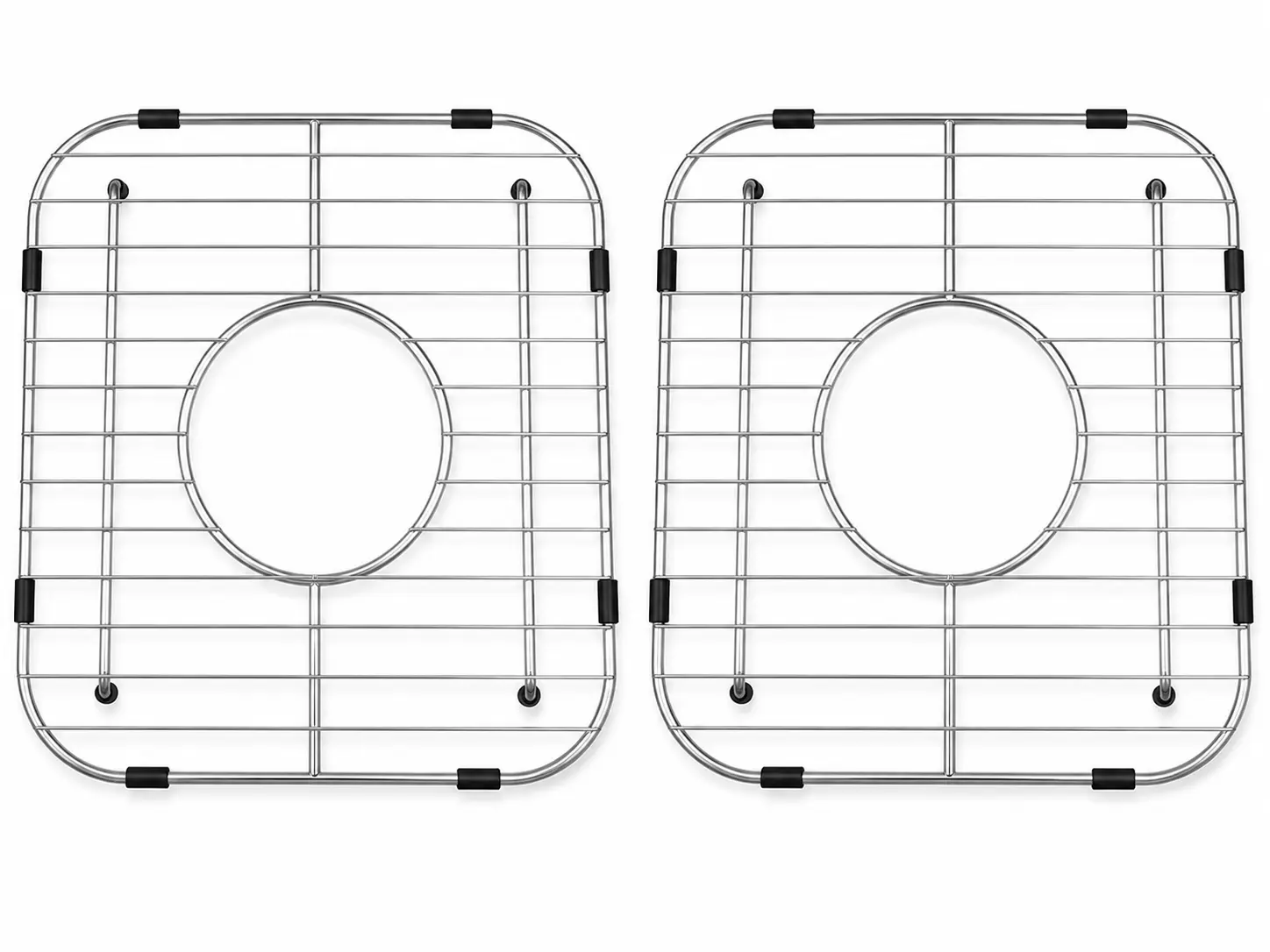
Bottom Grids
Must fit left/right bowl sizes
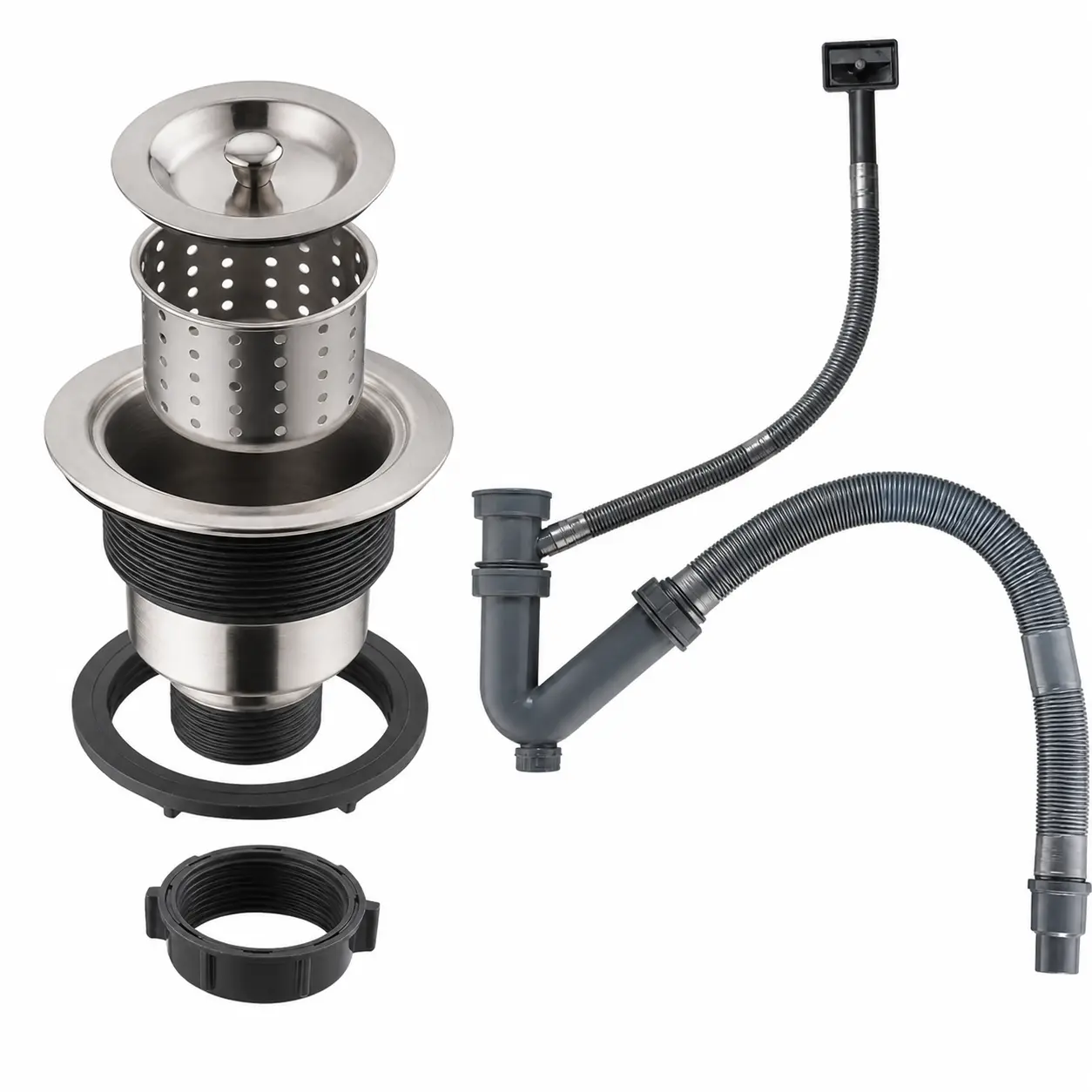
Drainer / Strainer
Standard for both bowls
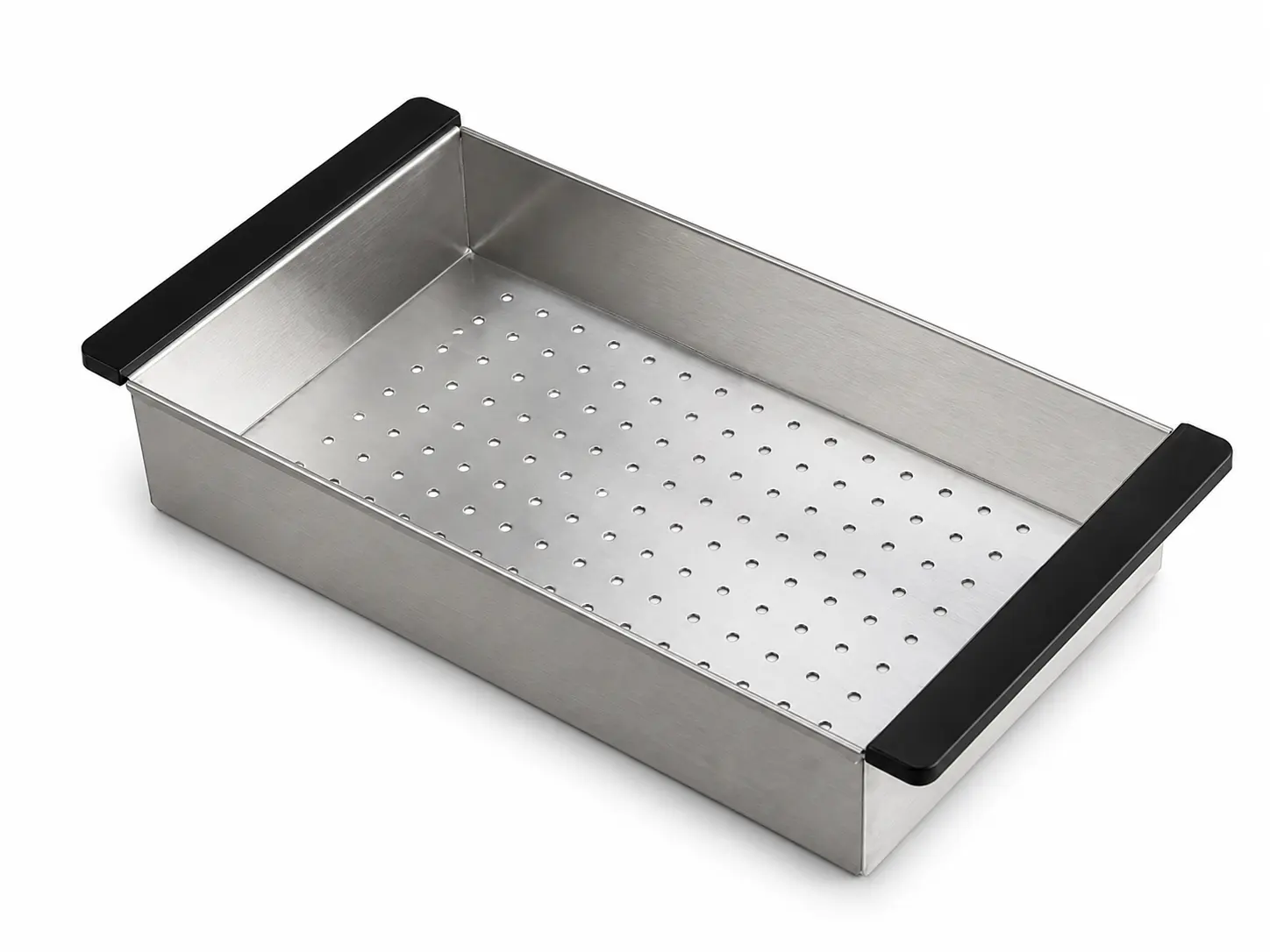
Colander / Basket
Fits specific bowl width
Workstation Specific
Chopping boards and roller shutters should only be planned for workstation models with accessory ledges.
Where Double Bowl Kitchen Sinks Are Commonly Used
Traditional Residential Kitchens
For markets where separated washing and rinsing areas remain a preference.
Apartments & Multi-Unit
For projects where repeatable sink size, bowl layout, and packing are important.
Retail & Wholesale
For channels needing recognizable layouts, repeatable SKUs, and clear specs.
Rental & Renovation
For replacement programs where a familiar layout and practical installation matter.
Utility & Secondary
For spaces where separated cleaning functions are useful.
OEM Options for Double Bowl Sinks
Matrix supports OEM programs based on existing models or custom specifications. Bowl split, divider height, and dual-drain layout change how users interact with the sink and plumbing.
Custom Options:
- • Handmade or pressed structure
- • Sink size & bowl depth
- • 60/40, 70/30, or custom ratio
- • Full or low divider
- • Drain positions & faucet holes
- • Surface finish & Logo
- • Custom carton & packaging
QC Points Before Shipment
Inspection focuses on details affecting installation, appearance, use, and repeat-order consistency.
General Checks:
Overall size, left/right bowl sizes, depth, divider alignment/height, rim flatness, drain positions, sound pad adhesion, accessory fit.
Handmade vs Pressed:
Handmade: Welding, polishing, corner consistency.
Pressed: Formed thickness, mold shape consistency, edge profile.
Packaging for Export & Projects
Packaging must protect the rim, bowl surface, divider area, and accessories. Carton labels and SKU control affect the supply experience.
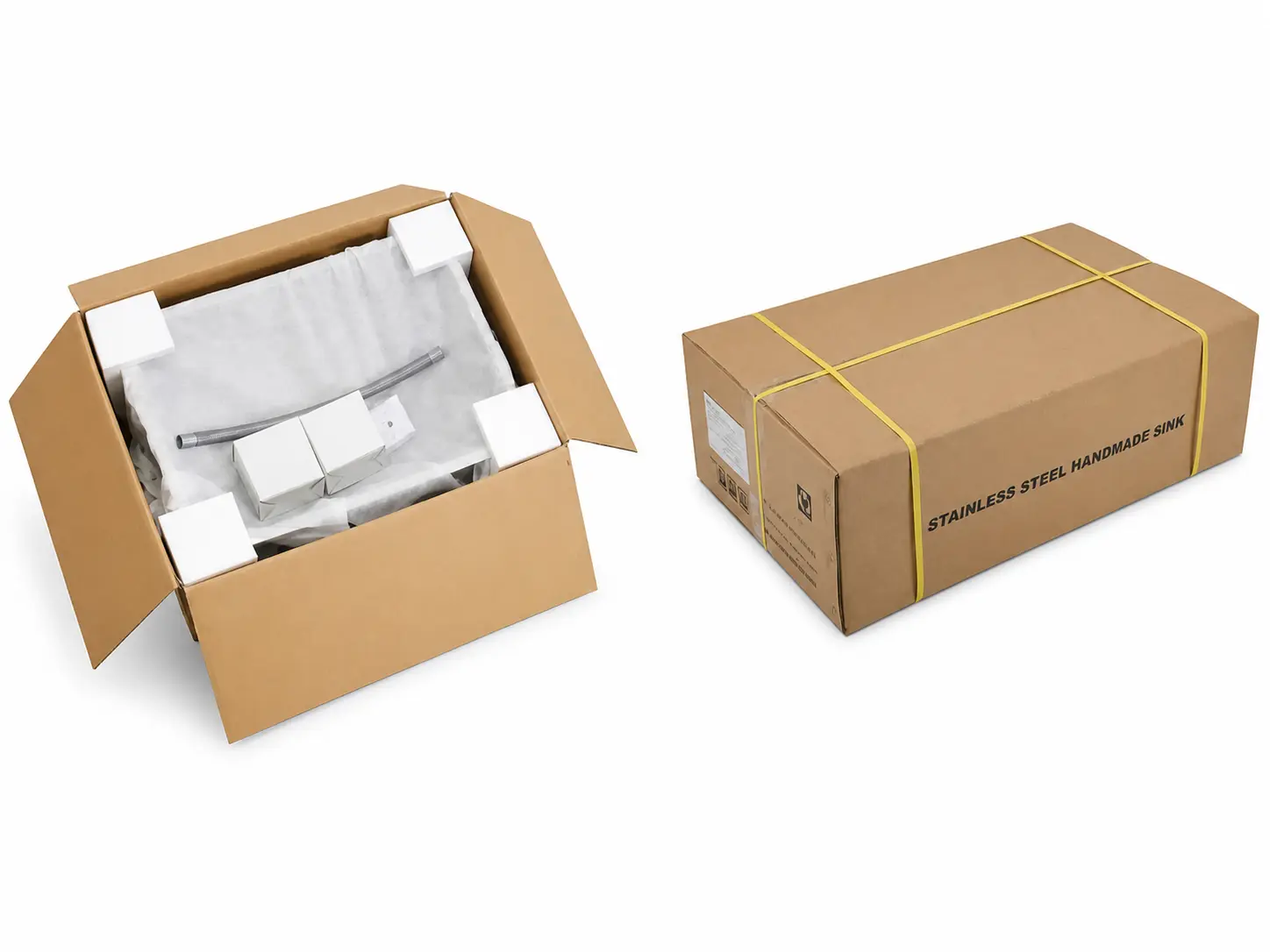
- • Individual carton or Master carton
- • Surface protection film
- • Foam/corner & divider protection
- • Pallet packing & SKU labels
Double Bowl Sink or Single Bowl Sink — Which One Fits Your Market?
| Buyer Need | Double Bowl Sink | Single Bowl Sink |
|---|---|---|
| Separated washing/rinsing | Strong | Less separated |
| Open washing space | More divided | Strong |
| Large cookware handling | More limited | Easier |
| Drain & plumbing layout | More complex | Simpler |
| SKU planning | More variations by bowl split | Simpler around one basin layout |
| Best for | Traditional layouts, separate washing needs, familiar retail | Modern kitchens, large cookware, workstation sets |
Double Bowl Kitchen Sink FAQ
What is a double bowl kitchen sink?
Is double bowl a manufacturing type?
What is the difference between equal bowl and offset bowl designs?
What is the difference between full divider and low divider?
When should buyers choose a handmade vs pressed double bowl sink?
What should buyers confirm before ordering double bowl sinks?
Need a Double Bowl Sink Program for Your Market?
Tell us your target market, preferred manufacturing type, installation method, bowl ratio, divider height, sink size, bowl depth, drain positions, accessory plan, and order volume. Matrix can help review whether a handmade or pressed / drawn sink is more suitable for your program.
tenly@matrixsink.com
+18520999956
Jianye Road, Nantou town, Zhongshan, Guangdong, China