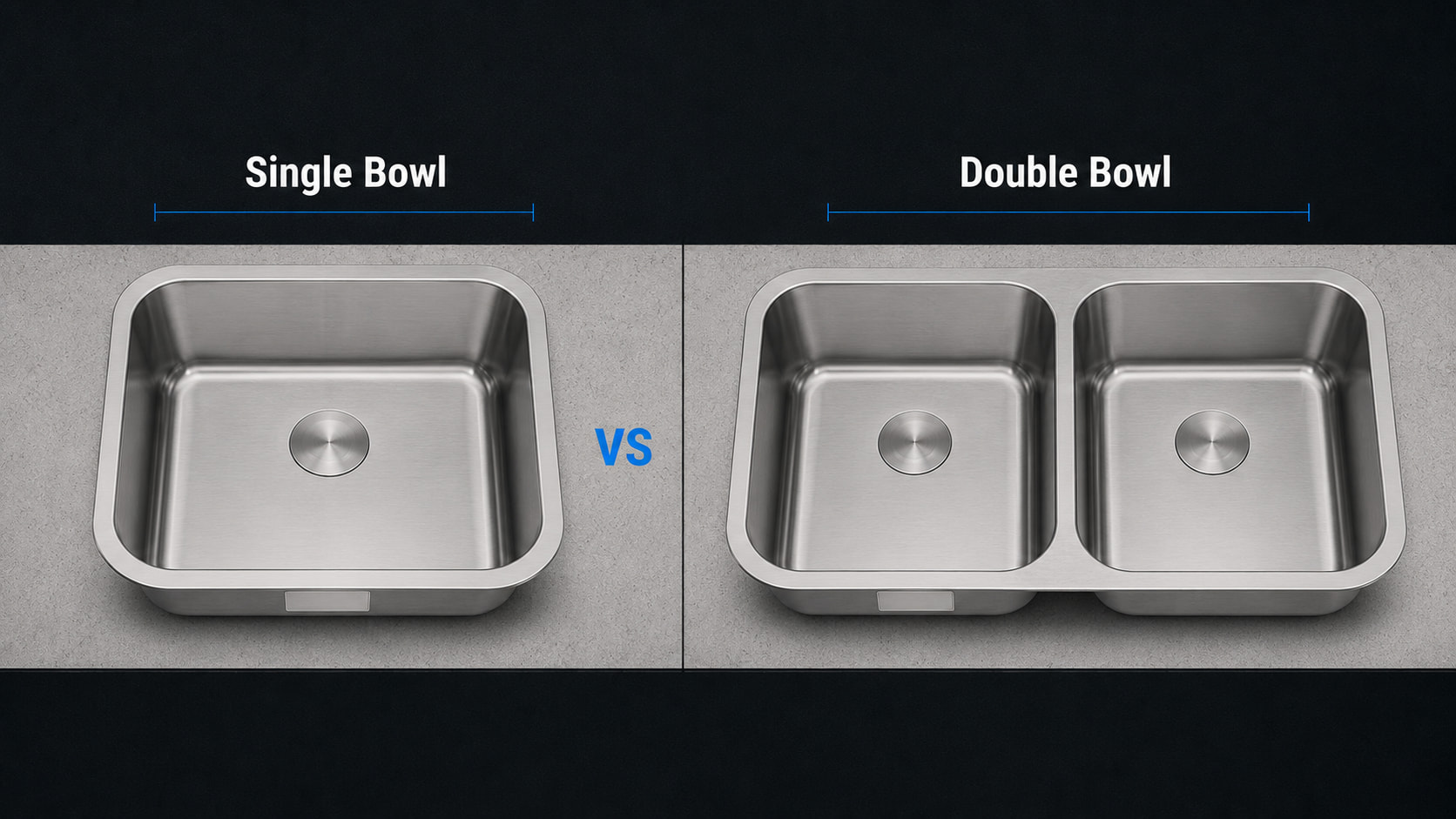
A single bowl kitchen sink is usually better for washing large cookware, using workstation accessories and keeping the plumbing simple. A double bowl kitchen sink is usually better for hand-washing, separating food preparation from cleanup and keeping one bowl available while the other is occupied.
But bowl count alone does not decide which sink will work better.
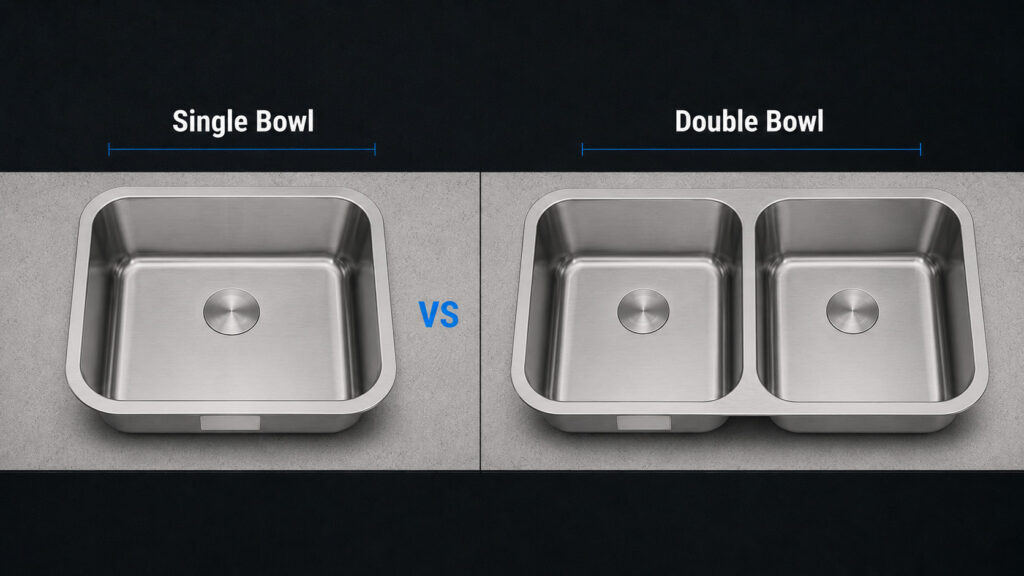
The right choice depends on five practical questions:
- What is the largest item you regularly wash?
- Do you need two active sink zones at the same time?
- How much cabinet and countertop space is available?
- Where will the drain, garbage disposal and plumbing go?
- Will the faucet, bowl depth and accessories work together?
The most useful rule is this:
Choose a single bowl for uninterrupted space. Choose a double bowl for permanent separation.
Single Bowl vs Double Bowl: Quick Answer
| Kitchen Requirement | Better Choice | Why |
|---|---|---|
| Washing baking sheets and large pans | Single bowl | No divider blocks the cookware |
| Washing most dishes by hand | Double bowl | Separate washing and rinsing zones |
| Using a dishwasher regularly | Usually single bowl | More space for items that cannot go in the dishwasher |
| Two people working at the sink | Usually double bowl | Each person can use a separate bowl |
| Installing workstation accessories | Usually single bowl | Larger continuous ledge and working area |
| Keeping a garbage disposal available | Double bowl | Disposal can be installed in one bowl |
| Maximizing space inside a compact cabinet | Usually single bowl | No divider consumes bowl width |
| Simplifying drain plumbing | Single bowl | One drain and fewer connections |
| Soaking dishes while using the sink | Double bowl | The second bowl remains available |
| Cleaning the sink quickly | Single bowl | No divider and only one drain |
| Creating flexible work zones | Single workstation bowl | Removable accessories create temporary zones |
| Keeping work zones permanently separated | Double bowl | The separation is built into the sink |
There is no universal winner. A large double bowl can be highly practical, while a poorly sized double bowl can leave you with two basins that are both too small.
The Real Question Is Not “One Bowl or Two?”
The better question is:
Do you need one large object to fit, or two smaller tasks to happen at the same time?
This distinction explains most of the difference.
A single bowl prioritizes object size. It gives you one continuous space for cookware, trays, racks and accessories.
A double bowl prioritizes task separation. It allows washing, rinsing, soaking, preparation or waste disposal to happen in different areas.
Before comparing sink styles, think about what causes the most frustration in your current kitchen.
- Are large pans difficult to fit?
- Do soaking dishes block the entire sink?
- Do two people compete for the same working space?
- Is the garbage disposal unavailable when the sink is full?
- Does the divider prevent baking trays from lying flat?
- Is one bowl of your existing double sink rarely used?
Your answers are more useful than a general list of pros and cons.
Test 1: Measure the Largest Item You Wash
The most reliable way to choose between a single and double bowl sink is to measure the largest item that must fit inside it.
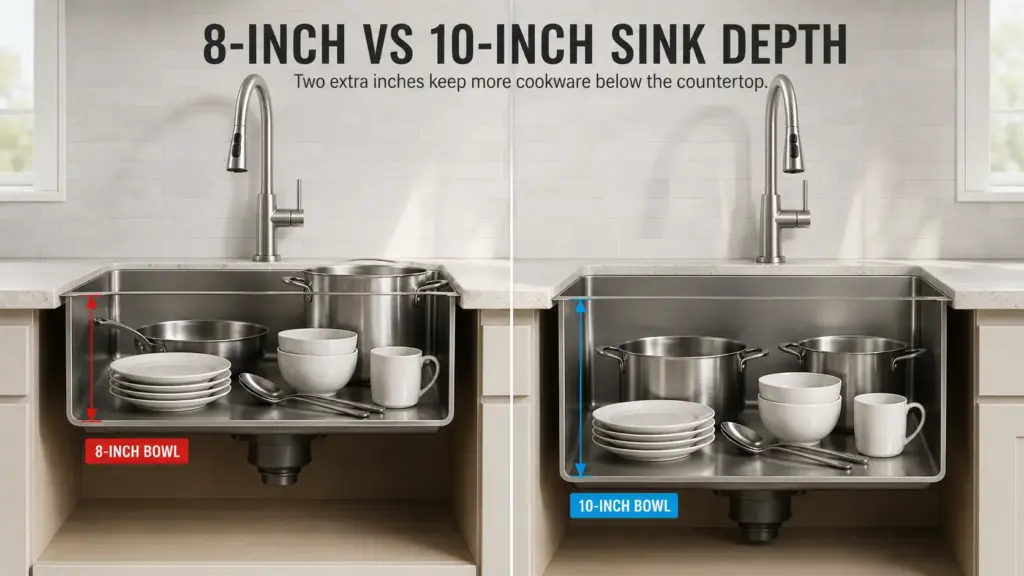
Common examples include:
- Baking sheets
- Roasting trays
- Woks
- Stockpots
- Cast-iron pans
- Air-fryer baskets
- Refrigerator shelves
- Barbecue racks
- Large cutting boards
Do not compare the cookware only with the sink’s external dimensions. You need the internal dimensions of the usable bowl.
Check These Measurements
- Internal bowl width at the top
- Internal bowl width near the bottom
- Front-to-back bowl dimension
- Corner radius
- Bowl-wall angle
- Drain and strainer projection
- Divider position
- Bottom-grid clearance
A sink may measure 33 inches from outside edge to outside edge, but its usable bowl will be smaller. In a double bowl, that internal space is divided again.
Large corner radii and sloped walls also reduce the flat bottom area. This is why two sinks with the same advertised size may handle cookware very differently.
The Flat-Fit Test
Measure the length and width of your largest pan or baking tray. Then compare those measurements with the flat usable area inside the bowl.
Ask:
- Can the item lie flat?
- Can it sit below the countertop?
- Can it rotate for cleaning?
- Can the faucet reach all sides?
- Will the handles strike the bowl walls or divider?
If the answer is no for both bowls of a double sink, one large single bowl will normally be more practical.
Test 2: Decide Whether You Need Two Permanent Work Zones
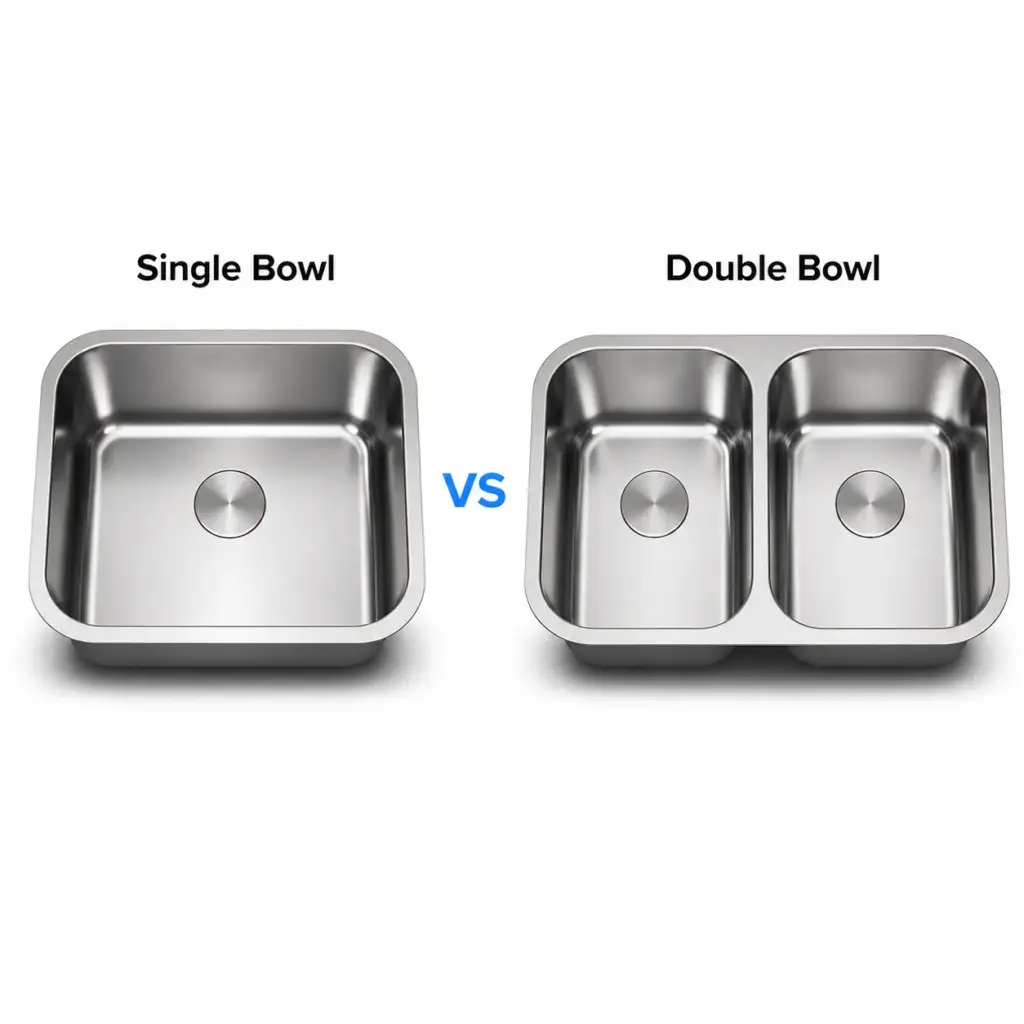
A double bowl is valuable only when both bowls have a clear job.
For example:
- Wash in one bowl and rinse in the other
- Soak cookware in one bowl and keep the other drain open
- Prepare vegetables in one bowl and handle dirty dishes in the other
- Install a garbage disposal in one bowl and use the other for washing
- Allow two people to work simultaneously
If you rarely perform two sink tasks at the same time, the divider may consume space without adding meaningful function.
A Single Bowl Can Create Temporary Zones
A single bowl can be divided temporarily with:
- A removable wash basin
- A fitted colander
- A drying rack
- A workstation cutting board
- A drain basket
- A roll-up rack
This leads to an important difference:
A single bowl can temporarily behave like a divided sink. A conventional double bowl cannot become one uninterrupted basin.
That does not make a single bowl universally better. It means that single bowls provide flexible separation, while double bowls provide permanent separation.
Test 3: Check the Cabinet and Countertop Before Choosing
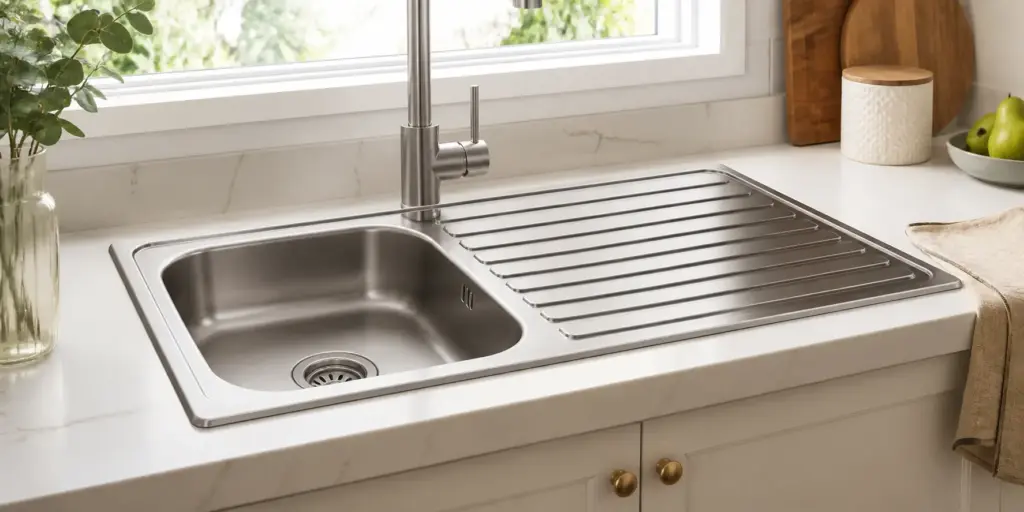
Personal preference cannot override physical space.
The sink must fit:
- The sink base cabinet
- The countertop cutout
- The mounting system
- The drain and disposal
- The faucet and accessories
- Any pull-out storage below
External Size Is Not Enough
Confirm all of the following:
- Sink external width
- Sink external front-to-back dimension
- Minimum cabinet width
- Mounting rim width
- Countertop cutout
- Clip or support clearance
- Bowl depth
- Drain center position
- Plumbing clearance
Minimum cabinet width is not universal. An undermount sink needs room around its rim for mounting hardware or support. Cabinet walls, braces, drawer rails and internal frames can reduce the actual space available.
A sink may physically enter the cabinet but still leave too little room for safe mounting.
Replacement Projects Need Extra Care
When replacing an existing sink, the countertop opening may control the decision.
A new sink must either:
- Match the existing opening
- Safely cover the existing opening
- Allow the countertop to be modified without weakening it
A smaller top-mount sink may not cover the old cutout. A larger undermount sink may leave insufficient countertop material for support.
Do not choose a bowl configuration until the existing cutout and cabinet have been measured.
Test 4: Plan the Drain, Disposal and Cabinet Interior
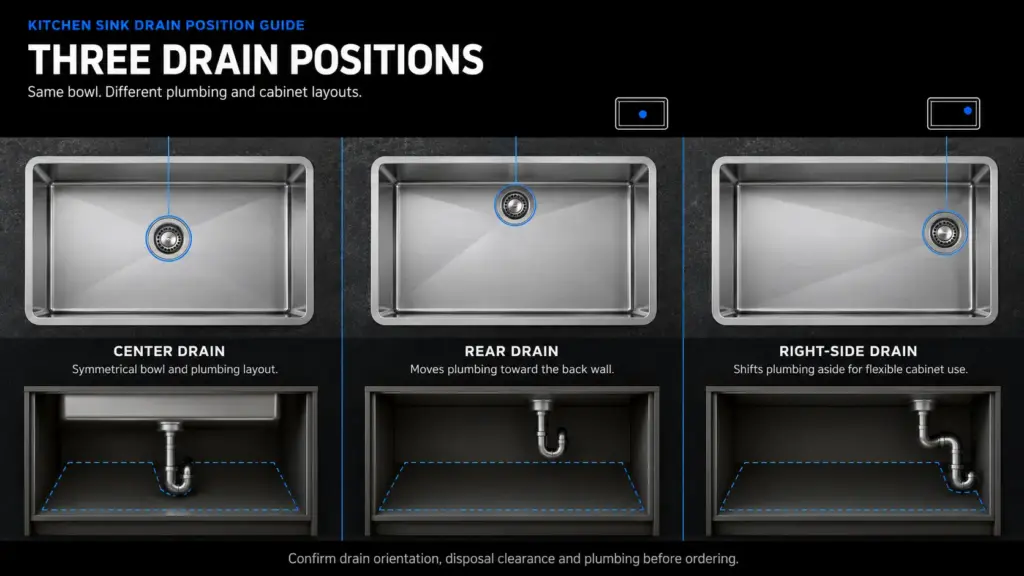
The visible bowl is only half of the sink system. The space below it must also work.
Single Bowl Plumbing
A single bowl usually has:
- One drain opening
- One strainer or garbage disposal
- A simpler waste connection
- Fewer joints that can leak
- More freedom to position other cabinet equipment
A rear or offset drain may leave more open storage space near the front or center of the cabinet.
The limitation is that the only drain may become unavailable while dishes or cookware are soaking.
Double Bowl Plumbing
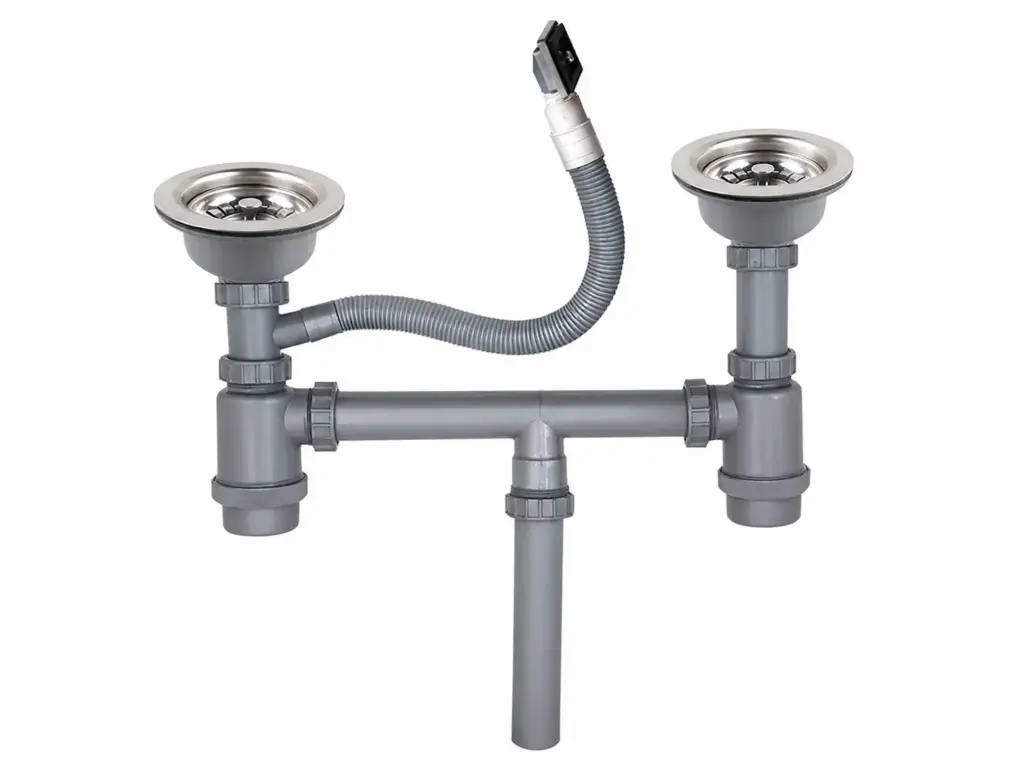
A double bowl normally requires:
- Two drain assemblies
- A connection between the bowls
- Additional fittings
- More horizontal and vertical plumbing space
- More coordination with the garbage disposal
A double bowl can keep one drain available while the other bowl is full. This is useful when the garbage disposal is installed in one bowl.
However, the additional plumbing may compete with:
- Water filters
- Pull-out waste bins
- Faucet hoses
- Faucet counterweights
- Soap-dispenser bottles
- Instant hot-water systems
- Cleaning-product storage
Which Bowl Should Get the Garbage Disposal?
The disposal is often installed in the smaller bowl of an unequal double sink, leaving the larger bowl open for washing cookware.
That is not a universal rule.
The correct position depends on:
- How the user scrapes and rinses dishes
- Dishwasher position
- Existing waste connection
- Available cabinet space
- Drain height
- Local installation practices
- Whether the smaller bowl is large enough for food preparation
The disposal should be planned before the countertop and plumbing are finalized.
Test 5: Check Bowl Depth, Faucet Reach and Accessories Together
A sink should not be selected independently from the faucet.
Effective Working Depth
Advertised bowl depth is measured from the top of the sink to the bottom of the bowl. For an undermount sink, the countertop thickness increases the user’s reaching distance.
For example, a deep undermount bowl below a thick countertop may feel significantly deeper than the same bowl installed as a top mount.
A deeper sink can:
- Contain splashes
- Hold larger cookware
- Hide dirty dishes
- Increase bowl capacity
But it may also:
- Require more bending
- Reduce clearance above the P-trap
- Conflict with a garbage disposal
- Reduce cabinet storage
- Feel uncomfortable for shorter users
The deepest sink is not automatically the most ergonomic sink.
Faucet Reach
The faucet water stream should land in a useful area without striking a flat surface that produces excessive splash.
For a single bowl, check whether the faucet reaches:
- The drain area
- The front and rear of the bowl
- The corners
- Workstation accessories
For a double bowl, the faucet must rotate far enough to serve both bowls. A fixed spout that works well with one bowl may not adequately cover the second.
Check:
- Spout reach
- Spout rotation
- Overall faucet height
- Spray-hose length
- Backsplash clearance
- Handle clearance
- Counterweight movement below the sink
A pull-down faucet improves coverage, but it does not fix poor basic positioning.
Single Bowl Kitchen Sink: Advantages
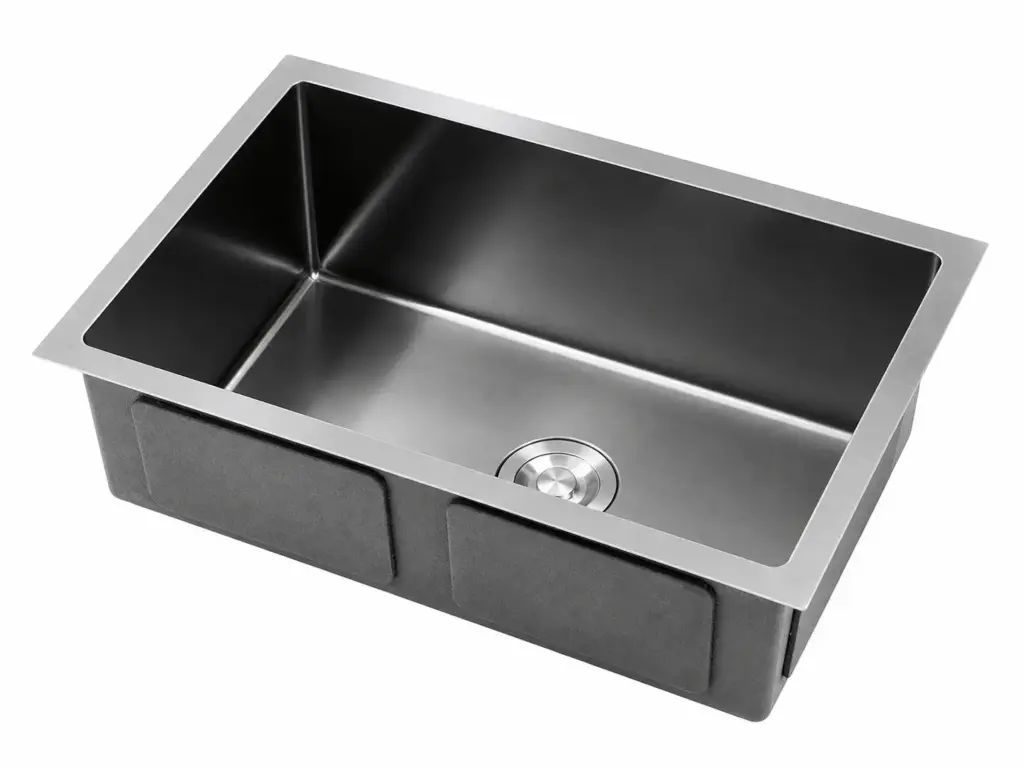
A single bowl kitchen sink has one continuous basin without a fixed divider.
1. More Space for Large Cookware
This is the main advantage. Baking trays, pans and refrigerator shelves can lie flatter and rotate more easily during cleaning.
2. Better Use of Compact Width
Without a divider, more of the sink’s internal width remains available for washing.
This can make a single bowl practical in both small kitchens and large premium kitchens.
3. Easier Cleaning
A single bowl normally has:
- One drain
- No central divider
- Fewer corners
- Fewer plumbing connections
- A larger uninterrupted wiping area
Corner radius and surface finish still affect cleaning, but the overall structure is simpler.
4. Strong Workstation Compatibility
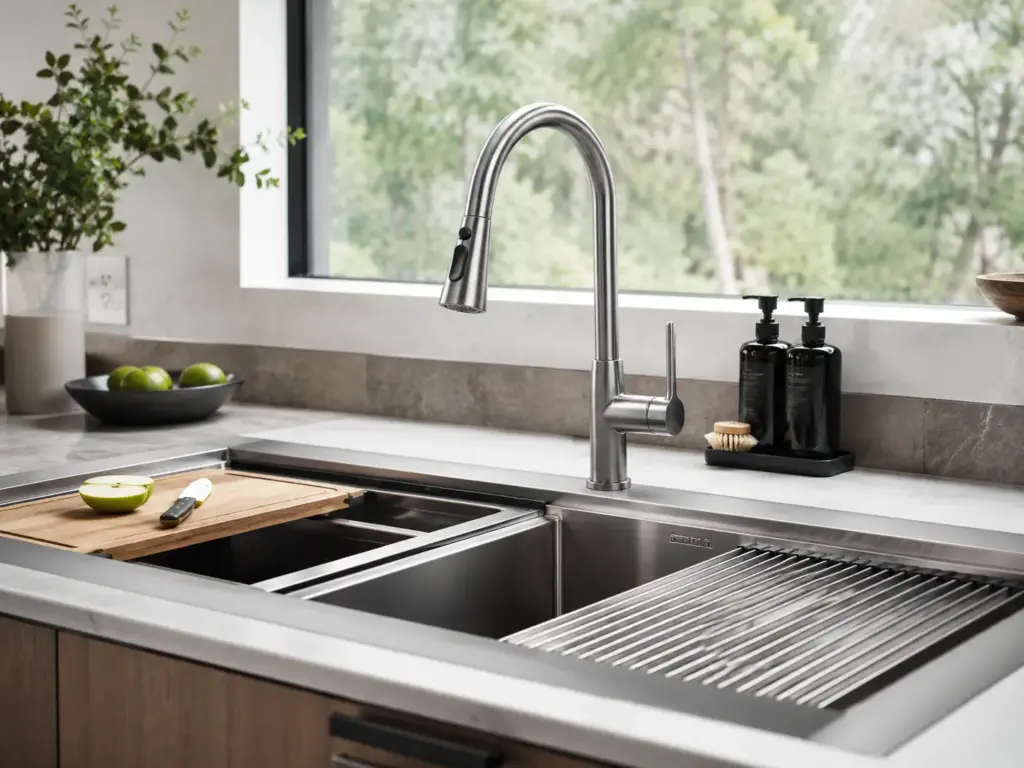
Single bowls work particularly well with sliding or removable accessories.
A workstation kitchen sink can hold cutting boards, colanders, drying racks and baskets above the bowl, creating temporary work zones without permanently dividing the sink.
5. Simpler Under-Sink Layout
One drain generally requires fewer pipes and fittings, leaving more flexibility for storage, filters and waste systems.
Single Bowl Kitchen Sink: Disadvantages
1. No Permanent Separation
Washing, rinsing, soaking and preparation all share the same basin unless removable accessories are used.
2. Soaking Can Block the Entire Sink
A large pot or group of dishes may occupy the only available working area.
3. The Disposal May Become Unavailable
If dishes are soaking over the only drain, the garbage disposal cannot be used easily.
4. Two Users Share One Zone
A large sink can accommodate two people physically, but their tasks are not separated.
5. Large Flat Bottoms Need Good Drainage Design
A wide single bowl must have a controlled path toward the drain. A large bowl that looks spacious but has poor slope or local low spots may retain water.
Double Bowl Kitchen Sink: Advantages
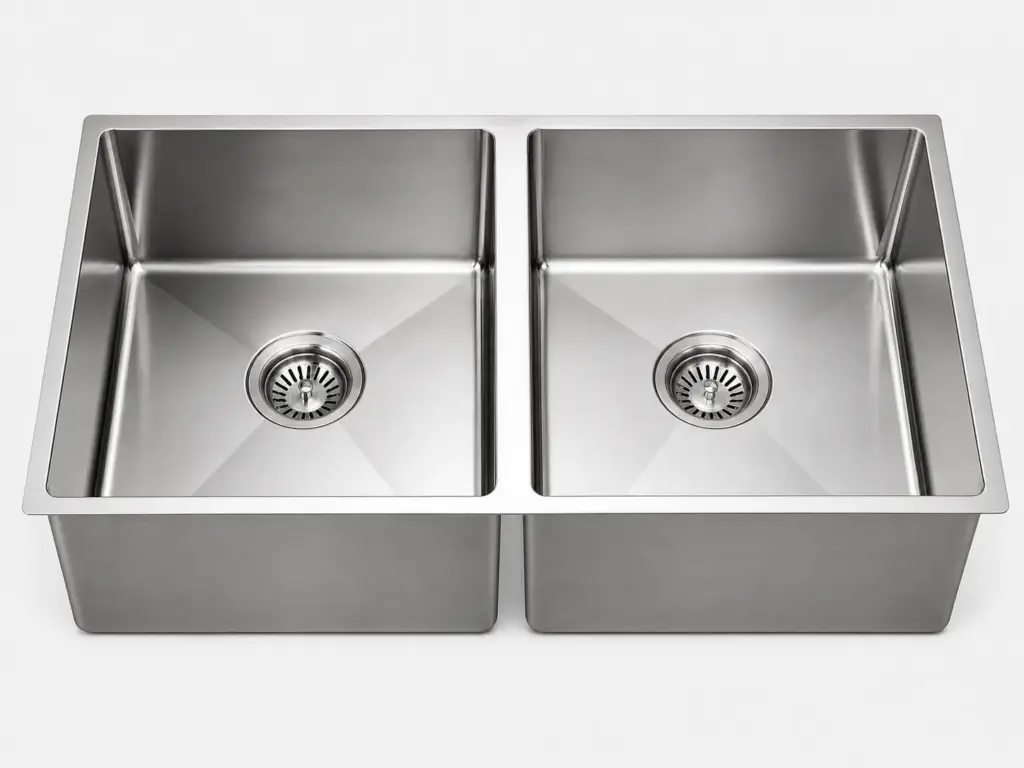
A double bowl kitchen sink contains two separate basins.
1. Better Task Separation
The two bowls can support different activities without removable dividers.
2. More Convenient for Hand-Washing
Users can keep washing water in one bowl and rinse in the other.
3. One Bowl Can Remain Available
Soaking cookware does not have to block the entire sink.
4. Better for Two-Person Workflows
Two users can perform separate tasks with less interference.
5. Flexible Disposal Placement
A garbage disposal can be installed in one bowl while the second bowl retains a standard drain.
Double Bowl Kitchen Sink: Disadvantages
1. Each Bowl Is Smaller
The combined sink may be wide, but neither individual bowl may accommodate large cookware.
2. The Divider Consumes Space
The divider reduces continuous bowl width and can interfere with baking sheets and pan handles.
3. More Surfaces to Clean
A double bowl adds:
- A divider
- A second drain
- Additional inside corners
- More plumbing connections
4. More Cabinet Space May Be Used
Two drain assemblies and their connecting pipes can reduce storage space.
5. Accessories Are More Complicated
Each bottom grid must match its own bowl. Workstation accessories must also account for the divider, bowl ratio and ledge configuration.
50/50 vs 60/40 vs 70/30 Double Bowl Sinks
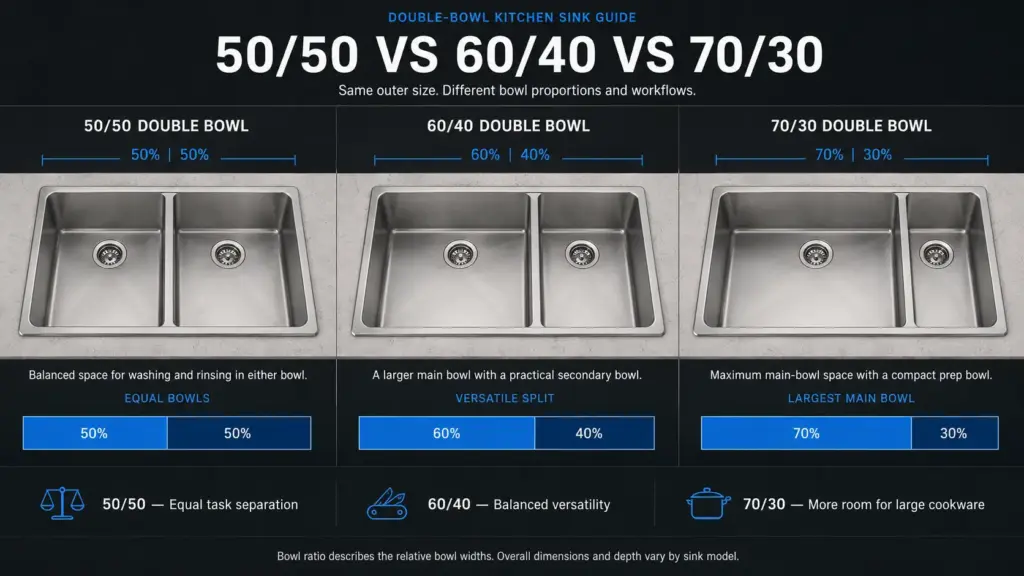
Not all double bowl sinks serve the same workflow.
50/50 Double Bowl
Both bowls are approximately equal.
Best for:
- Traditional washing and rinsing
- Two users performing similar tasks
- Balanced visual design
- Standardized replacement or project programs
Main limitation:
Neither bowl may be large enough for oversized cookware.
60/40 Double Bowl
One bowl is moderately larger.
Best for:
- Washing cookware in the main bowl
- Rinsing or disposal use in the smaller bowl
- Households that want separation without two equally small basins
This is often a practical compromise, but the exact internal dimensions matter more than the stated ratio.
70/30 Double Bowl
One large main bowl is paired with a compact secondary bowl.
Best for:
- Users who want a mostly single-bowl experience
- A dedicated disposal or preparation bowl
- Kitchens that need a clear secondary function
The small bowl may be unsuitable for general washing. Buyers should confirm what it will actually be used for.
Is a Low-Divide Sink the Best Compromise?
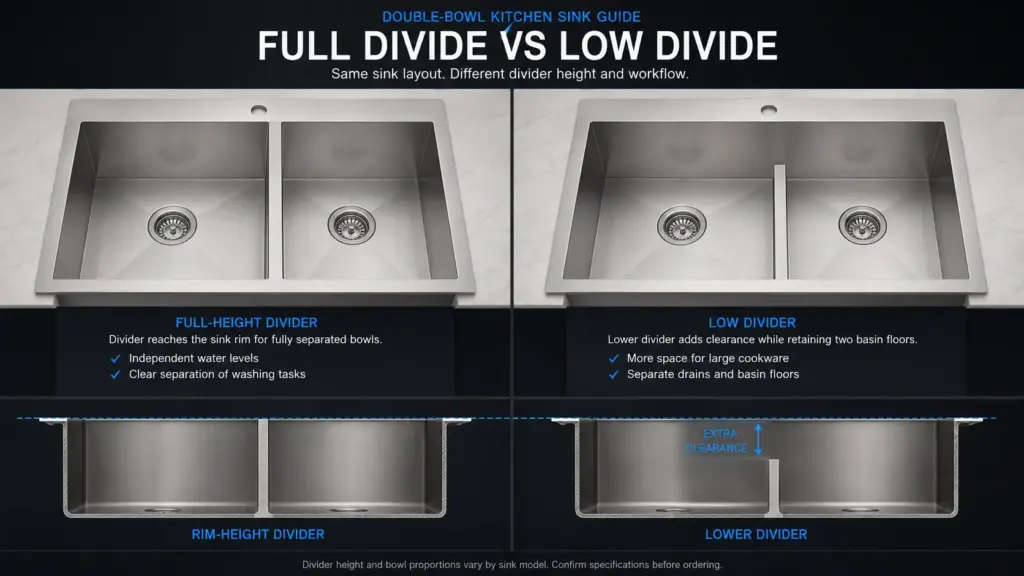
A low-divide sink has two bowls, but the divider stops below the top rim.
This provides:
- Separate drain areas
- Partial wash-and-rinse separation
- More clearance for long pans
- Easier movement of large cookware across the sink
A low divider can work well for users who dislike the restriction of a full-height divider but still want two drains.
However, it is not identical to a single bowl. The bottom remains divided, and large cookware may still not sit flat.
A low divider can also allow water to pass between bowls when the water level rises above it. That may be helpful or undesirable depending on the intended workflow.
How Dishwasher Use Changes the Decision
Dishwasher use is one of the strongest indicators.
If You Use a Dishwasher Regularly
A single bowl is often more practical because the sink mainly handles:
- Large cookware
- Knives
- Wooden utensils
- Produce
- Baking trays
- Items that cannot enter the dishwasher
One continuous basin gives these objects more room.
If You Wash Most Dishes by Hand
A double bowl may provide a more organized sequence:
- Scrape or rinse
- Wash in the first bowl
- Rinse in the second bowl
- Move items to the drying area
A single bowl can recreate this arrangement with a removable basin, but a double bowl provides it permanently.
If You Use the Dishwasher but Still Soak Cookware
Do not assume that dishwasher ownership automatically means single bowl.
If cookware frequently soaks for long periods, a second bowl may keep the sink usable. A 60/40 or low-divide configuration may provide a better balance.
Which Sink Is Better for a Small Kitchen?
A single bowl often uses limited cabinet width more efficiently because it does not divide the available space.
But the largest possible sink is not always the best solution.
A very wide or deep sink may:
- Reduce countertop workspace
- Conflict with the cabinet structure
- Leave insufficient faucet deck space
- Limit under-sink storage
- Create an uncomfortable reaching distance
For a compact kitchen, compare:
- Cabinet width
- Countertop workspace
- Largest cookware
- Dishwasher availability
- Need for a drying area
- Accessory storage
A smaller workstation single bowl may provide more total function than a larger conventional sink because the accessories create preparation and drying space above the bowl.
Which Sink Is Better for Two Cooks?
A double bowl can help two people work independently, but only if both bowls are usable.
Two very small bowls may create more congestion, not less.
For a two-cook kitchen, consider:
- One large double bowl with clearly assigned zones
- A large single workstation sink with multiple accessories
- A main kitchen sink plus a separate bar or prep sink
The best solution depends on whether the two users need separate water zones or simply more preparation space.
Does Material Change the Single vs Double Bowl Decision?
Bowl configuration and sink material should be considered together.
Stainless Steel Sinks
Stainless steel can support:
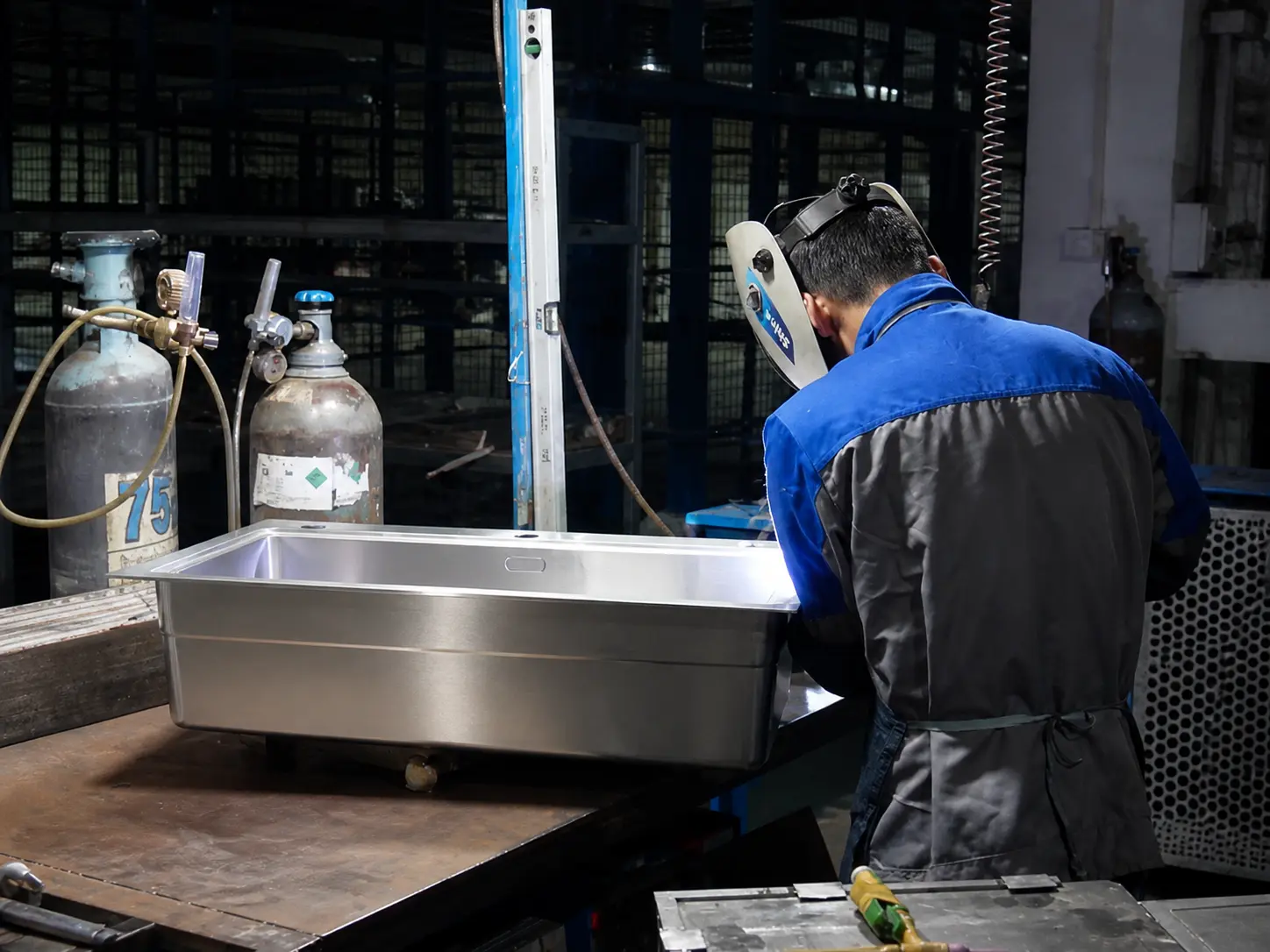
- Handmade or pressed construction
- Single or double bowls
- Thin dividers
- Different bowl ratios
- Workstation ledges
- Multiple drain positions
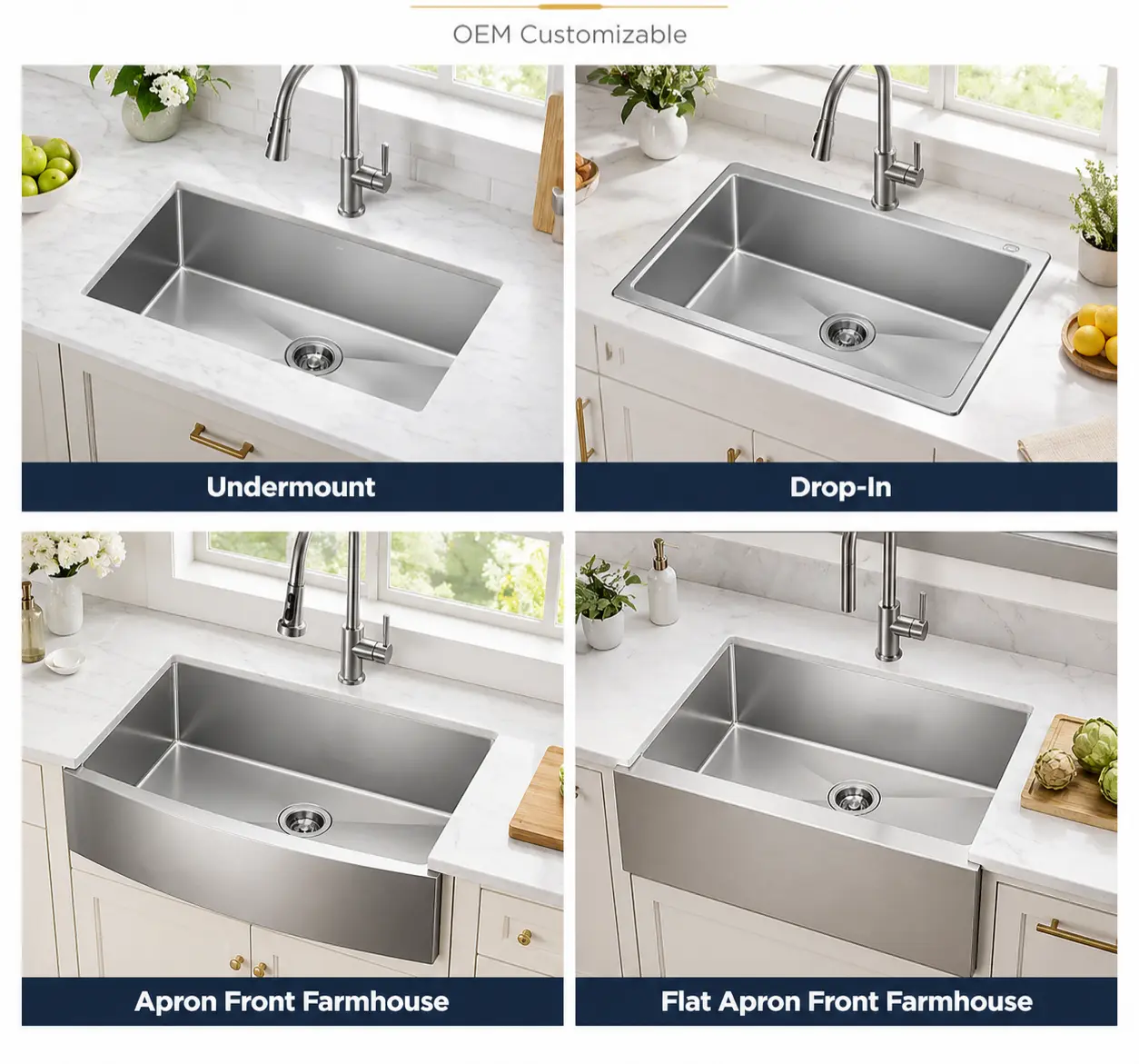
- Undermount, top-mount and apron-front installation
Because stainless steel walls and dividers can be relatively thin, more of the external sink width may remain available internally.
Granite Composite Sinks
Granite composite sinks are available in single and double bowl designs, but walls and dividers are usually thicker than stainless steel.
This means that internal dimensions require careful attention. A composite double bowl with the same external width as a stainless steel model may provide less usable space inside each bowl.
Composite sinks are also heavier, so cabinet support, packaging and installation handling should be reviewed.
Handmade vs Pressed Stainless Steel
Handmade sinks generally provide more flexibility in:
- Bowl size
- Depth
- Corner radius
- Divider position
- Drain location
- Workstation ledges
Pressed or drawn sinks are more dependent on existing molds but may provide efficient, repeatable production for retail, apartment and volume programs.
The manufacturing method should match the product positioning and order plan—not just the desired appearance.
Real-Kitchen Decision Examples
| Kitchen Situation | Recommended Starting Point | Reason |
| Frequent baker with a dishwasher | Large single bowl | Baking trays need uninterrupted space |
| Household that hand-washes everything | Double bowl | Permanent wash-and-rinse zones |
| Small apartment with limited counter space | Single workstation bowl | Open basin plus removable work surfaces |
| Two people cook together | Double bowl or workstation single | Depends on whether they need water separation or prep space |
| Large cookware plus garbage disposal | 60/40 or 70/30 double bowl | Large main bowl with dedicated disposal bowl |
| Minimalist kitchen with simple plumbing | Single bowl | One drain and a clean visual layout |
| Traditional replacement project | Match existing cutout and plumbing first | Compatibility is more important than preference |
| Frequent soaking but occasional large pans | Low-divide or 60/40 double | Separation with more cookware clearance |
| Retail boxed sink set | Single workstation bowl | Strong accessory and presentation value |
| Apartment project | Standardized single or double pressed sink | Repeatable dimensions and installation |
Common Myths
Myth 1: A Double Bowl Has More Capacity
Not necessarily.
A double bowl creates more zones, but the divider reduces continuous usable space. Total volume does not tell you whether a pan will fit.
Myth 2: A Single Bowl Cannot Support Multitasking
A removable basin, colander, drying rack or workstation accessory can create temporary zones.
Myth 3: A Dishwasher Makes a Double Bowl Unnecessary
Not always. A second bowl can still be useful if cookware soaks frequently or two people use the sink together.
Myth 4: The Disposal Should Always Be in the Smaller Bowl
Often, but not automatically. Disposal position must match plumbing, user workflow and cabinet space.
Myth 5: A Deeper Sink Is Always Better
A deep bowl improves capacity but may reduce comfort, storage and drain clearance.
Myth 6: A 33-Inch Double Bowl Is Spacious
The external size may be large while the individual bowls remain too small for the user’s cookware.
Myth 7: Bowl Ratio Tells You the Exact Bowl Size
A 60/40 label describes proportion, not usable dimensions. Wall thickness, radius and divider width still affect the result.
Consumer Checklist Before Buying
Before ordering a single or double bowl kitchen sink, confirm:
- External sink dimensions
- Internal bowl dimensions
- Flat bottom dimensions
- Minimum cabinet width
- Countertop cutout
- Installation method
- Bowl depth
- Divider height and ratio
- Drain position
- Garbage disposal position
- Faucet spout reach
- Spray-hose coverage
- Under-sink plumbing clearance
- Bottom-grid size
- Workstation accessory fit
- Countertop and mounting compatibility
If replacing an existing sink, measure the cabinet and countertop opening before selecting the bowl configuration.
For Brands, Distributors and Project Buyers
For B2B buyers, single versus double bowl is a product-line decision rather than a personal preference.
The product mix should reflect:
- Target country
- Sales channel
- Common cabinet sizes
- Dishwasher adoption
- Typical cookware
- Replacement market requirements
- Preferred installation method
- Retail price position
- Garbage disposal use
- Accessory expectations
- Packaging and shipping method
Channel-Based Product Planning
| Sales Channel | Common Product Direction | Important Specification Points |
| Premium retail | Handmade single bowl, workstation or unequal double bowl | Finish, gauge, accessories and packaging |
| Replacement retail | Top-mount single or double bowl | Cutout coverage, faucet holes and rim flatness |
| Apartment projects | Standardized pressed single or double bowl | Repeatable size, installation and carton labels |
| E-commerce | Single bowl workstation sets | Accessory completeness and transit protection |
| Kitchen showrooms | Handmade, apron-front or colored sinks | Visible finish, faucet matching and presentation |
| Wholesale distribution | Balanced range of single and double bowl SKUs | Stable specifications and repeat-order control |
| Hospitality kitchenettes | Compact single or offset double bowl | Cabinet, faucet and plumbing compatibility |
These are starting points, not universal rules. Local sales data and existing cabinet standards should guide the final assortment.
B2B Sample Approval Checklist
Before approving a single or double bowl sink sample, record:
Dimensions
- Overall sink size
- Individual bowl size
- Usable bottom dimensions
- Bowl depth
- Divider width and height
- Corner radius
- Mounting-rim width
- Drain center position
- Faucet-hole layout
- Countertop cutout
Material and Structure
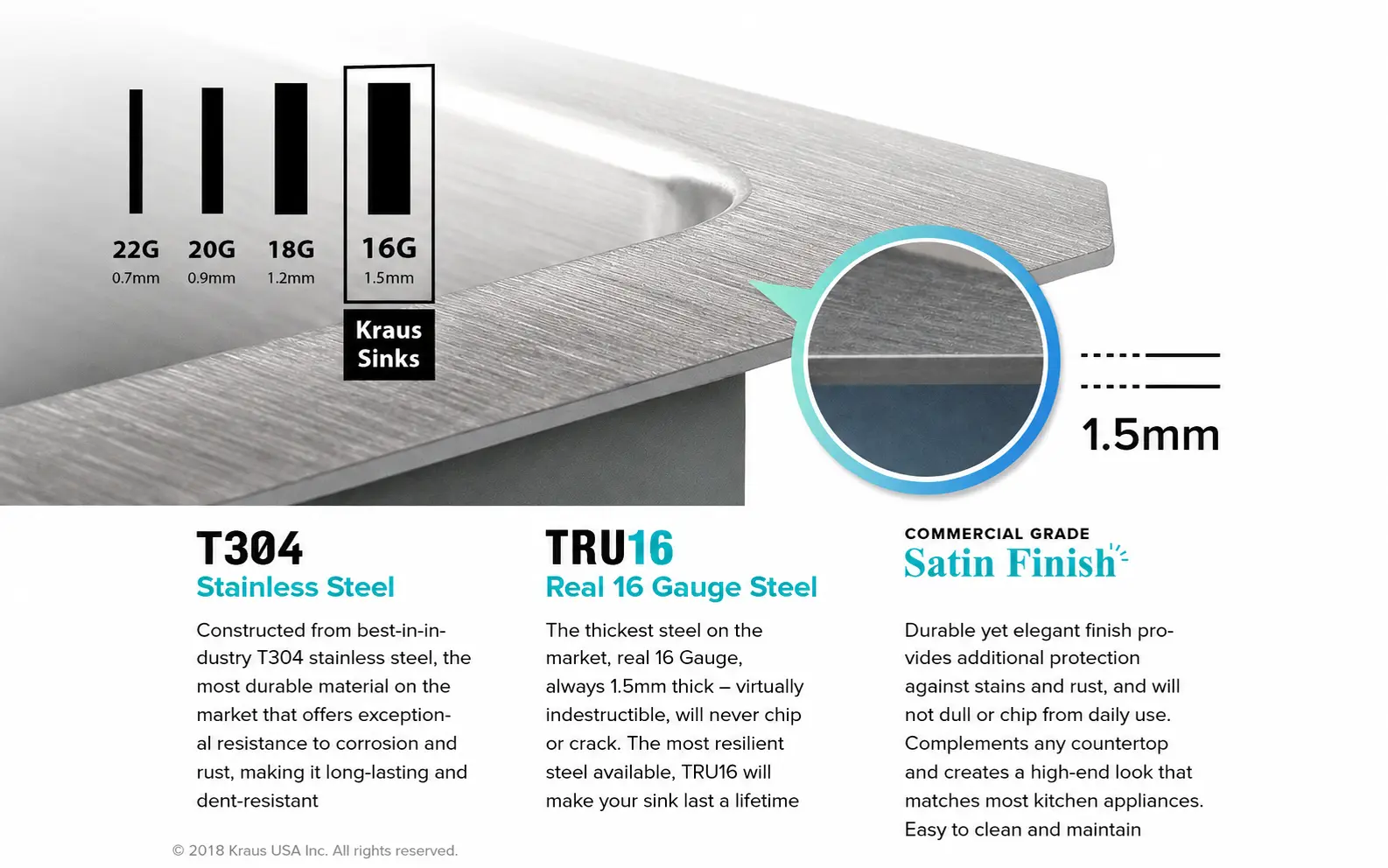
- Stainless steel grade
- Specified material thickness
- Formed or finished thickness where relevant
- Handmade or pressed construction
- Weld and polishing condition
- Rim flatness
- Divider alignment
- Bowl symmetry
Performance
- Drainage pattern
- Installed levelness
- Drain-flange seating
- Sound-pad coverage
- Undercoating condition
- Disposal clearance
- Faucet coverage
- Accessory fit
Appearance
- Brushing direction
- Surface consistency
- Visible scratches
- Corner finishing
- Color or PVD sample
- Bowl-to-bowl finish consistency
Packaging
- Rim protection
- Surface protection
- Accessory separation
- Model label
- Bowl-ratio identification
- Carton marking
- Installation information
- Repeat-order specification record
A product photograph cannot confirm these requirements. They should be documented in the drawing, approved sample and order specification.
Matrix supplies single bowl kitchen sinks, double bowl kitchen sinks and workstation sinks in handmade and pressed or drawn stainless steel configurations.
For OEM, wholesale and project programs, the Matrix custom kitchen sink program can support reviews of bowl size, bowl ratio, depth, drain position, installation method, finish, accessories, private-label details and export packaging.
Frequently Asked Questions
Is a single or double bowl kitchen sink better?
A single bowl is better when large cookware and uninterrupted space are the main priorities. A double bowl is better when washing, rinsing, soaking or food preparation must happen in separate areas.
Is a single bowl sink better with a dishwasher?
Usually, because the sink mainly handles cookware and items that cannot enter the dishwasher. However, a second bowl may still be useful if cookware soaks frequently.
Is a double bowl sink better without a dishwasher?
Often, because it creates permanent washing and rinsing zones. The individual bowls must still be large enough for the user’s cookware.
Is a 60/40 sink better than a 50/50 sink?
A 60/40 sink provides a larger main bowl and a smaller secondary bowl. It is often better for cookware. A 50/50 sink is more suitable when both bowls perform similar tasks.
Can a single bowl sink have a garbage disposal?
Yes. The disposal attaches to the single drain. Check the disposal height, drain position, P-trap and cabinet clearance before installation.
Can a double bowl sink use one garbage disposal?
Yes. The disposal is installed under one bowl, while the other bowl connects through the waste plumbing. The complete layout must be planned to avoid clearance and drainage problems.
Which type is easier to clean?
A single bowl is generally easier because it has no divider and only one drain. Corner radius, surface finish and accessories also affect cleaning.
Which type is better for a workstation sink?
Single bowls usually provide more uninterrupted ledge and accessory space. Double-bowl workstation sinks can work well, but the divider and bowl ratio make accessory fitting more complex.
Is a low-divide sink a single or double bowl?
It is a double bowl with a divider that stops below the top rim. It provides separate lower bowls while allowing more clearance for long cookware.
Does a double bowl need a larger cabinet?
Not always, but two useful bowls generally require enough total width. A compact double bowl may fit a smaller cabinet while leaving each bowl too narrow for large cookware.
Final Verdict
Choose a single bowl kitchen sink if you:
- Wash large cookware
- Use a dishwasher regularly
- Want workstation accessories
- Prefer simple cleaning and plumbing
- Need maximum continuous space
Choose a double bowl kitchen sink if you:
- Wash most dishes by hand
- Need permanent task separation
- Frequently soak cookware
- Want one drain to remain available
- Have two people using the sink at the same time
Choose a 60/40, 70/30 or low-divide sink if you want separation without giving up as much large-bowl capacity.
The final decision should be based on internal bowl dimensions, not the number printed on the product title. Measure the largest cookware, confirm the cabinet and cutout, plan the drain and disposal, and check the faucet and accessories as one complete system.
For custom single bowl, double bowl or workstation sink programs, contact the Matrix team.