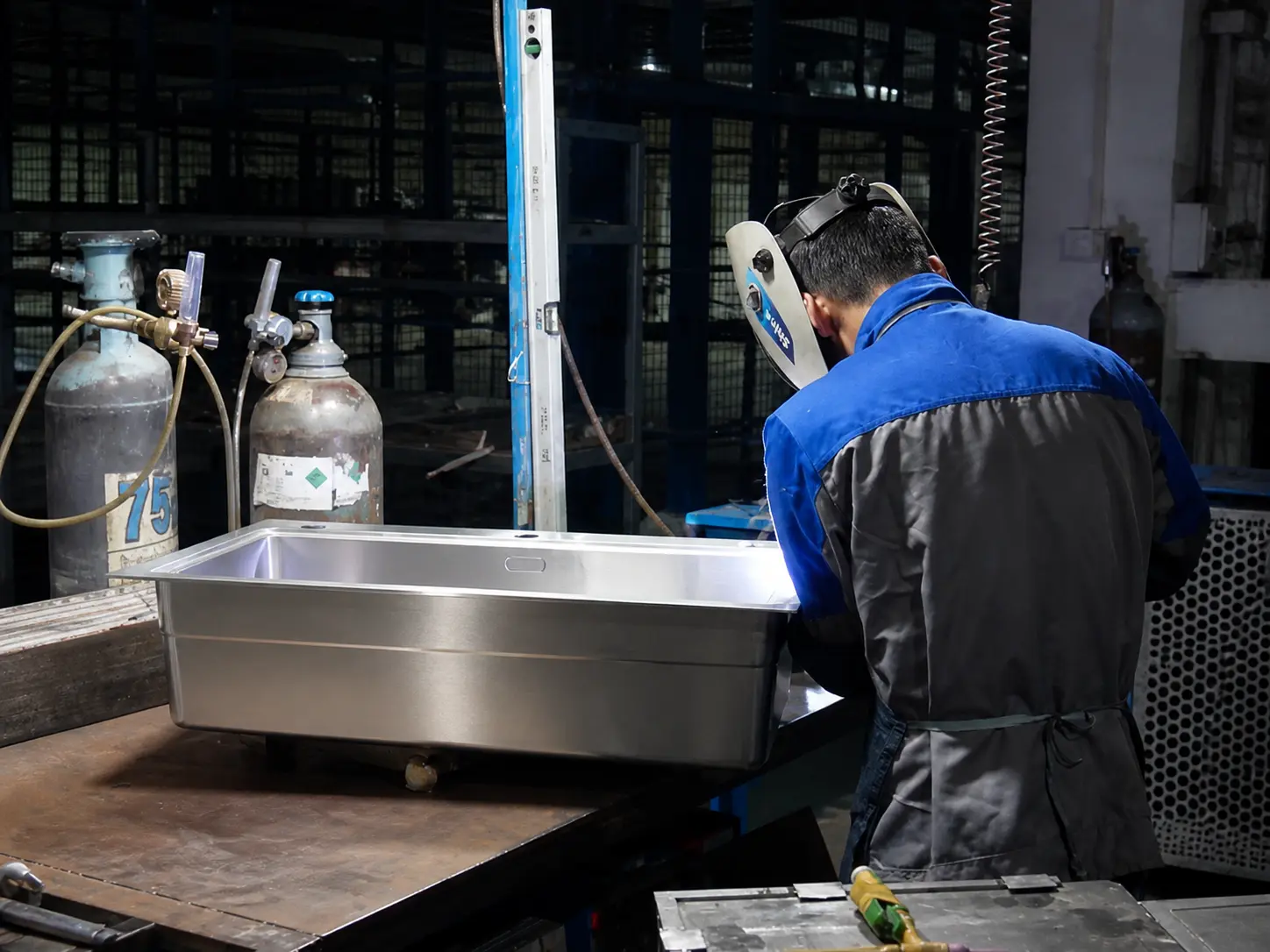
Kitchen Sink OEM
Buying Guide
A practical decision system for brands, importers, distributors and project buyers sourcing stainless steel kitchen sinks.
Material, thickness, geometry, manufacturing route, samples, QC and repeat orders should not be evaluated independently.
"A sink specification is not one number. A reliable OEM program is a chain of decisions that must stay aligned from RFQ to repeat order."
Eight Decisions Behind a Reliable Sink Program
A buyer does not need more product descriptions. The important question is which variables actually control the finished product and repeat-order result.
Material
Grade name does not prove material identity.
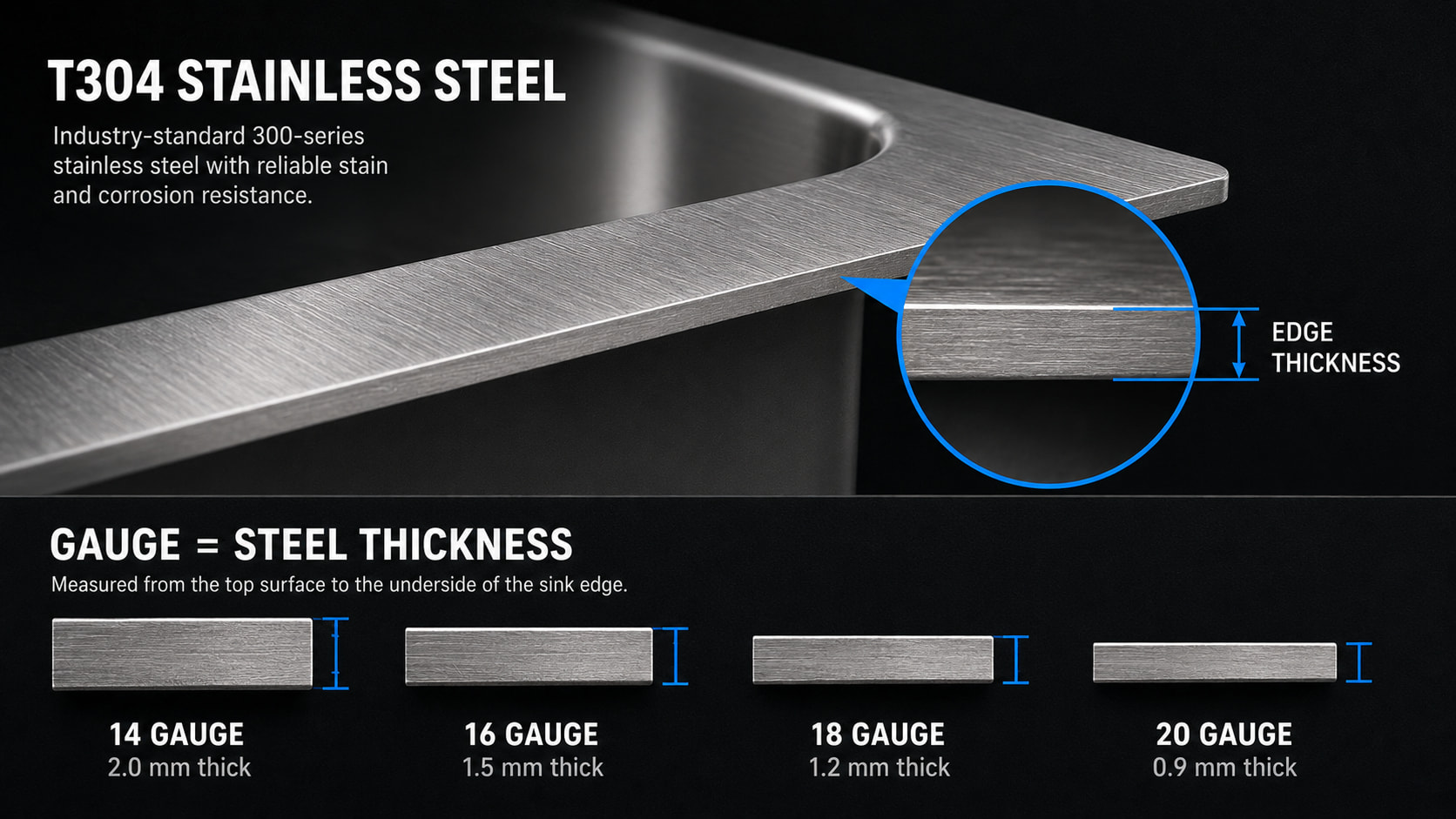
Thickness
Gauge does not prove minimum finished thickness.
Geometry & Installation
Overall size does not prove installation fit.
Manufacturing Route
Handmade is not automatically better than pressed.
Sample & Change Approval
An approved sample does not freeze every future component.
QC & Claims
One visible defect does not automatically identify the root cause.
Repeat Orders
The same drawing does not guarantee the same repeat-order SKU.
Supplier Comparison
The same RFQ wording does not guarantee the same quotation basis.
Material Decisions
"SUS304 is a material specification. It is not, by itself, proof of material identity or finished-product performance."
Can a Magnet Test Prove SUS304?
No. Genuine SUS304 can show localized magnetic response after forming, bending or welding, so magnetism alone cannot confirm or reject the grade.
Is a Stainless Steel Sink Magnetic? →How Should Buyers Verify SUS304?
Material verification should focus on specification, traceability and appropriate material testing rather than magnetism alone.
Stainless Steel Sink Quality Control & Inspection →When Does SUS316 Actually Make Sense?
SUS316 makes sense when the actual corrosion environment justifies the additional alloy cost, not simply because it is a more expensive grade.
View Factory Capabilities →Material & Incoming Inspection
See how Matrix connects approved material specifications with incoming and finished-product inspection.
View Inspection ProcessThickness Is More Than Gauge
"Gauge is a nominal material category. A finished sink is a three-dimensional product with location-dependent thickness."
How Should Thickness Be Written in an RFQ?
If thickness matters commercially, define the material in millimeters and clarify whether the requirement refers to incoming sheet thickness or finished-sink measurement.
How to Specify Stainless Steel Sink Thickness in an RFQ →Does Press Forming Change Sink Thickness?
Yes. Forming redistributes material, so a rim measurement cannot represent every finished location.
Pressed Sink Forming & Stainless Steel Thickness →Is "SUS304 + 18 Gauge" a Complete Sink Specification?
No. Material grade and nominal gauge define two inputs. They do not define the finished sink geometry, thickness distribution, finish, accessories, installation interface or QC standard.
Kitchen Sink RFQ Checklist →Can Sink Weight Prove Minimum Thickness?
No. Weight can help identify broad batch or configuration differences, but it cannot prove minimum local thickness.
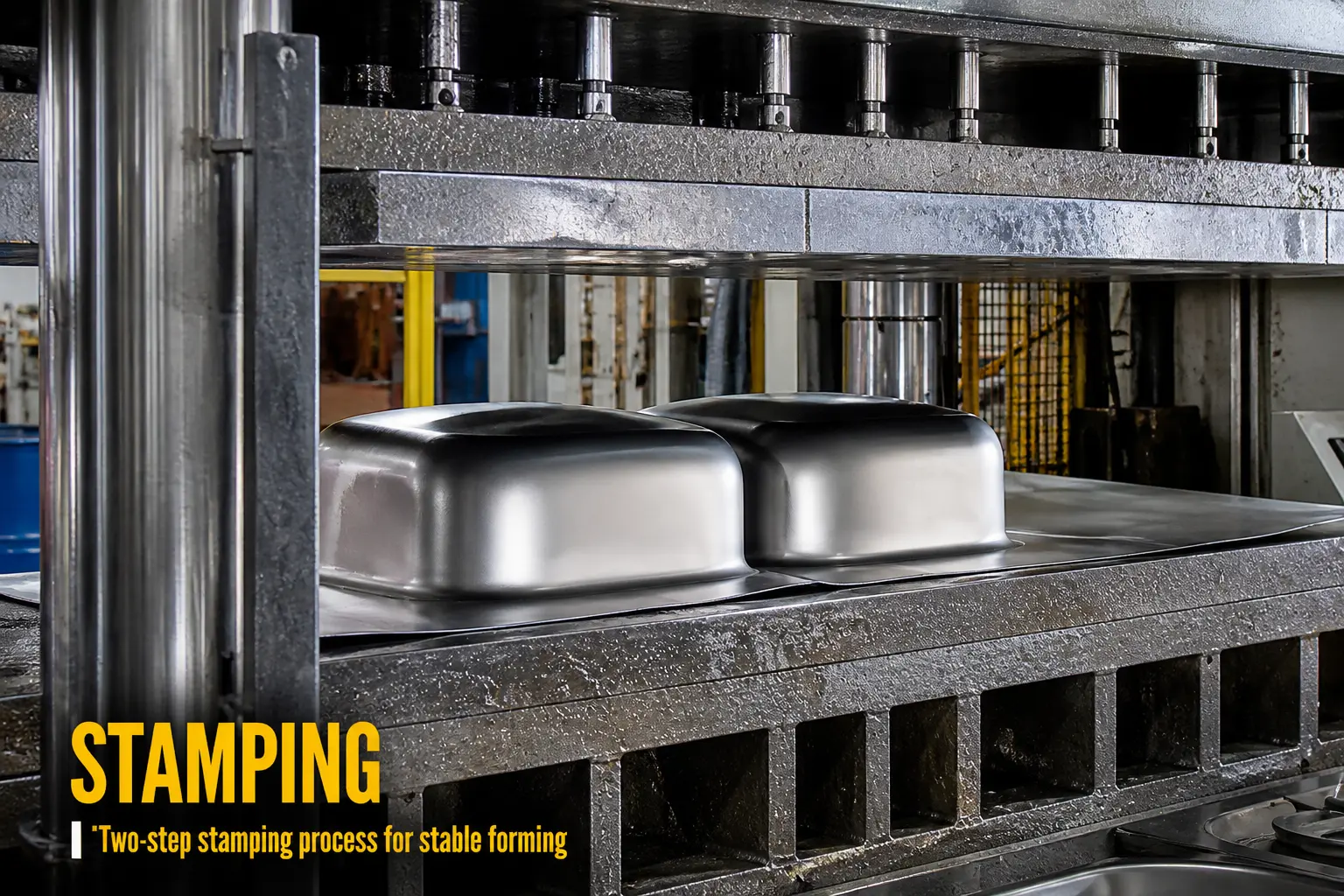
Pressed Sink Thickness Measurement
Visual evidence showing actual sink incoming thickness, measurement tools, maps, and actual readings.
Detailed report coming soonGeometry & Installation
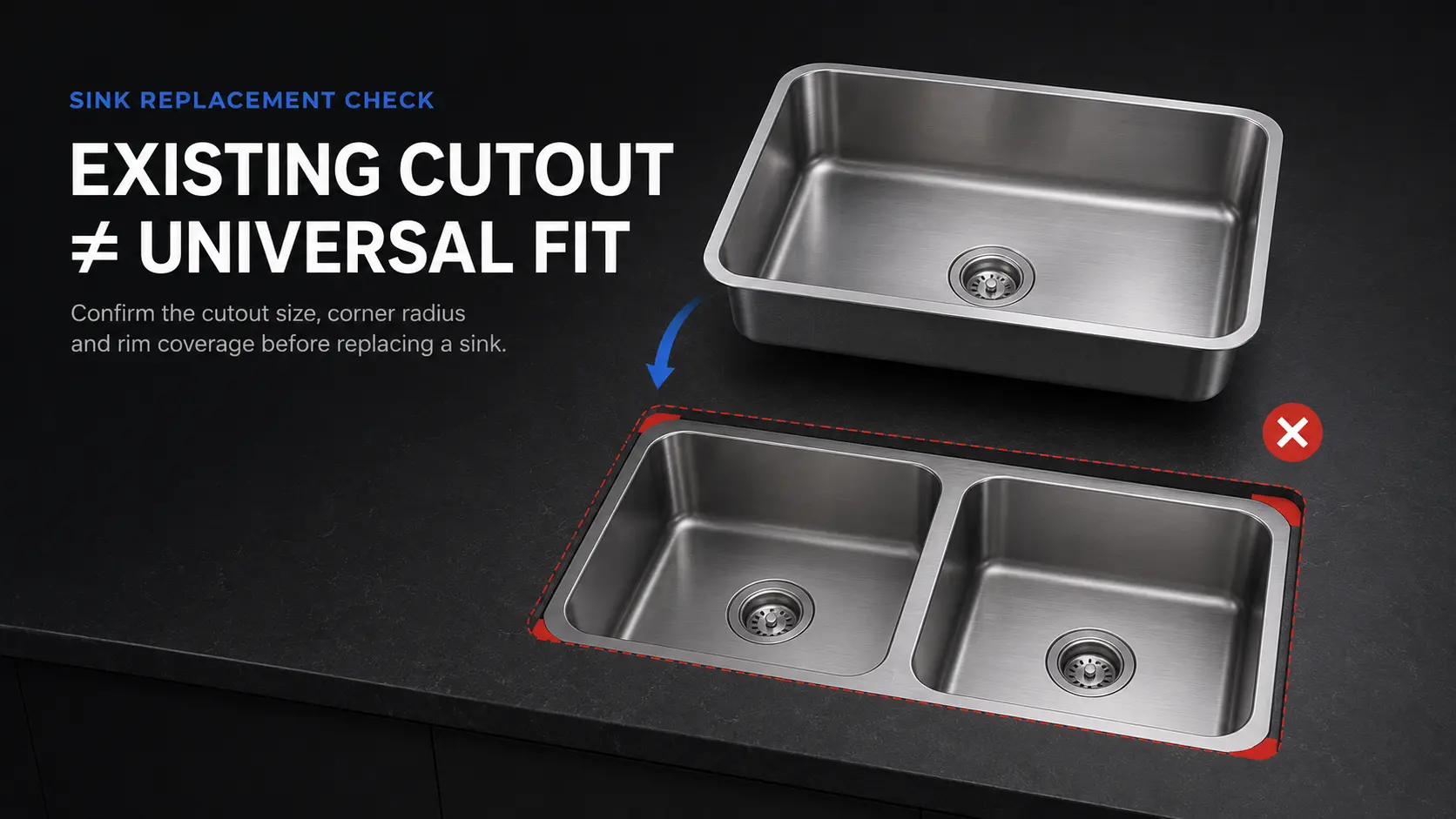
"A sink can match the nominal size and still fail the installation interface."
What Actually Determines Whether a Sink Will Fit?
Fit depends on the relationship between sink geometry, countertop opening, cabinet space and installation method.
Why Can More Bowl Depth Create Installation Problems?
More bowl depth also consumes more under-counter vertical space and can affect drain, disposal, trap and cabinet clearance.
Deep Kitchen Sinks →Does Rim Flatness Matter Even if Length and Width Pass?
Yes. Dimensional accuracy and rim flatness are different quality requirements.
Quality Control & Inspection →Custom Top-Mount Replacement Sink for an Existing U.S. Countertop
See how Matrix developed a custom top-mount replacement sink around an existing countertop opening instead of selecting the product only by nominal outer size.
"Outer sink size tells you how large the sink is. Cutout clearance and rim overlap determine whether a top-mount replacement will actually fit."
Choosing the Manufacturing Route
"Handmade and pressed sinks are not premium-versus-cheap alternatives. They solve different manufacturing problems."
When Is Handmade More Practical Than Pressed?
Handmade production is more practical when geometry needs flexibility and the project does not justify new tooling.
Pressed production is more practical when an existing mold matches the required geometry and production volume supports tooling-based manufacturing.
Sample & Change Approval
"A sample proves one approved configuration. It does not automatically freeze every future component, supplier or process."
What Should Be Re-Approved When a Component Changes?
Re-approval should follow the effect of the change.
- Geometry changes require dimensional review.
- Functional changes require functional verification.
- Appearance changes require visual re-approval.
- Packaging changes require packing validation.
When Does a Change Require a New Physical Sample?
A physical sample is most useful when the change affects fit, visible appearance, installation, accessory compatibility or critical geometry.
What Should a Golden Sample Actually Freeze?
A golden sample should be linked to the approved drawing, specification, accessories, finish and packing references.
Golden Sample Approval Checklist"Documents define what the product should be. Physical samples show what the product actually becomes."
QC & Claim Diagnosis
"A visible defect tells you what happened to the product. It does not automatically tell you when or why it happened."
What Should Be Checked Before Shipment?
Inspection should be tied to the approved order specification and should cover the product attributes that actually affect fit, function, appearance and shipment condition.
Stainless Steel Sink Quality Control & Inspection →When Is a Defect a Batch Problem?
Defect count matters, but repeated defect type, repeated location and shared production conditions often provide stronger evidence of a systematic problem.
Manufacturing Damage or Shipping Damage?
Repeated damage in the same location can point toward a repeated manufacturing or packing condition, while random impact combined with damaged cartons points in a different direction.
Does Standing Water Automatically Mean the Sink Is Defective?
No. Local low spots, drain flange height, bowl geometry and installation level should be separated before identifying root cause.
Why Water Pools in a Kitchen Sink →Repeat Orders Are a Different Quality Test
"A good first sample proves capability. A good repeat order proves control."
Can Repeat Orders Change Even When the Drawing Does Not?
Yes. A drawing mainly controls geometry. The complete SKU also depends on material, finish, accessories, packaging and approved references.
Can Workstation Accessories Fit the Sample but Fail Later?
Yes. One matched sample proves compatibility between two pieces. Repeat-order control must prove interchangeability across production.
Workstation Kitchen Sinks →Why Can Finish Change Between Batches?
Material consistency and surface-finish consistency are different controls.
RFQ & Supplier Comparison
"Before comparing prices, make sure suppliers are quoting the same product definition."
Why Can Two Quotations With the Same Specification Have Different Prices?
The same "SUS304 + 18 Gauge + Satin" wording can still hide different thickness tolerance, finish process, geometry, accessories, packing and QC assumptions.
What Actually Determines Kitchen Sink MOQ?
The sink body is not always what sets the MOQ. The least flexible part of the complete program can become the real minimum.
What Should Buyers Send for a Quote?
A useful RFQ should define the product sufficiently for suppliers to quote the same commercial requirement.
Kitchen Sink RFQ ChecklistFrom Buyer Decisions to Manufacturing Evidence
"Advice is useful. Evidence shows whether a manufacturer can actually execute it."
What Can Matrix Physically Manufacture?
Review production routes, equipment, customization scope and manufacturing capacity.
How Are Stainless Steel Sinks Actually Made?
See how Matrix connects material preparation, handmade fabrication, pressed production, finishing and inspection.
How Are Approved Specifications Verified?
See how dimensions, thickness, flatness, finish, accessories and packing are checked against the approved reference.
What Has Matrix Actually Executed?
Review real custom sink projects where product specifications were translated into manufacturing and QC requirements.
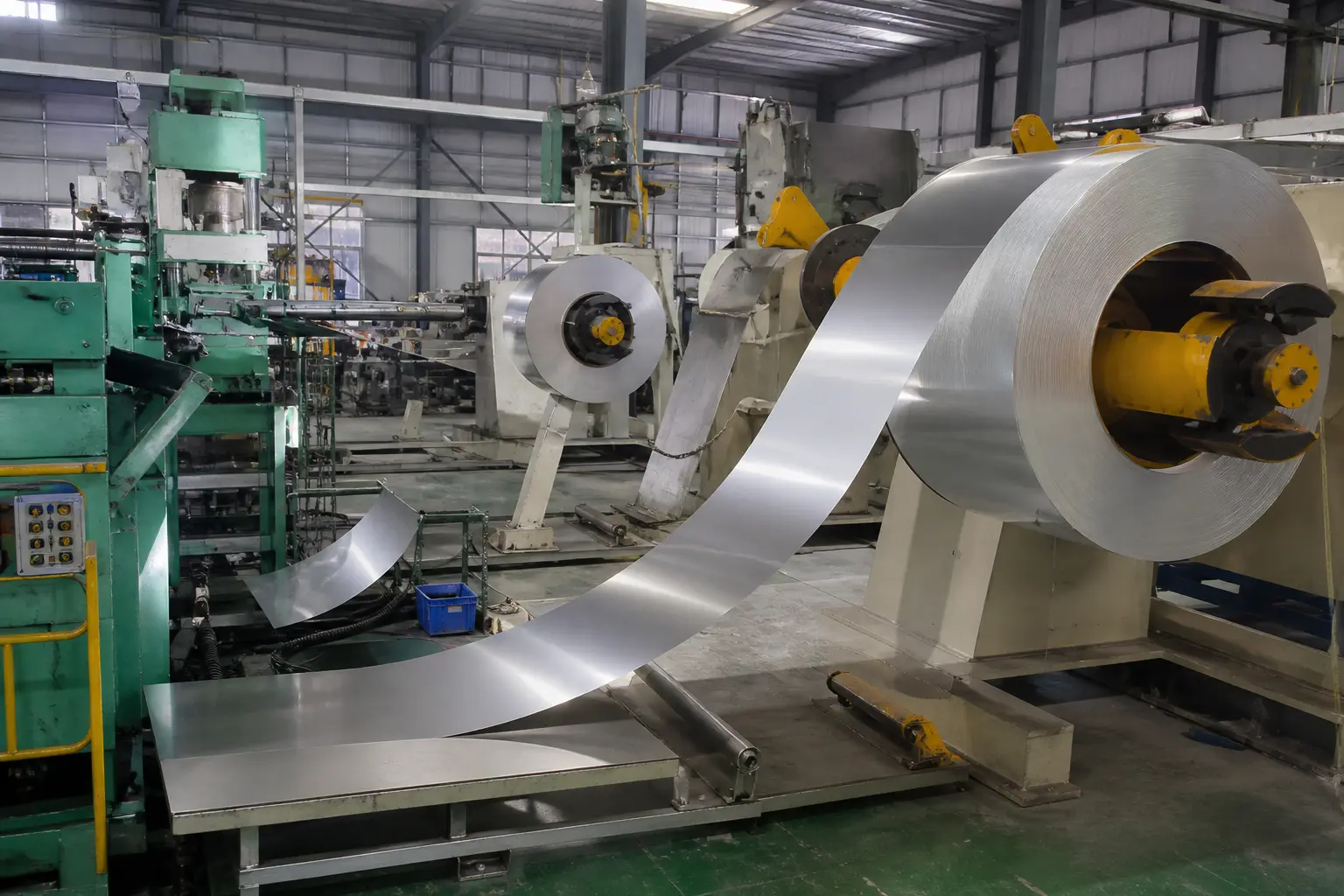
Material Thickness Check
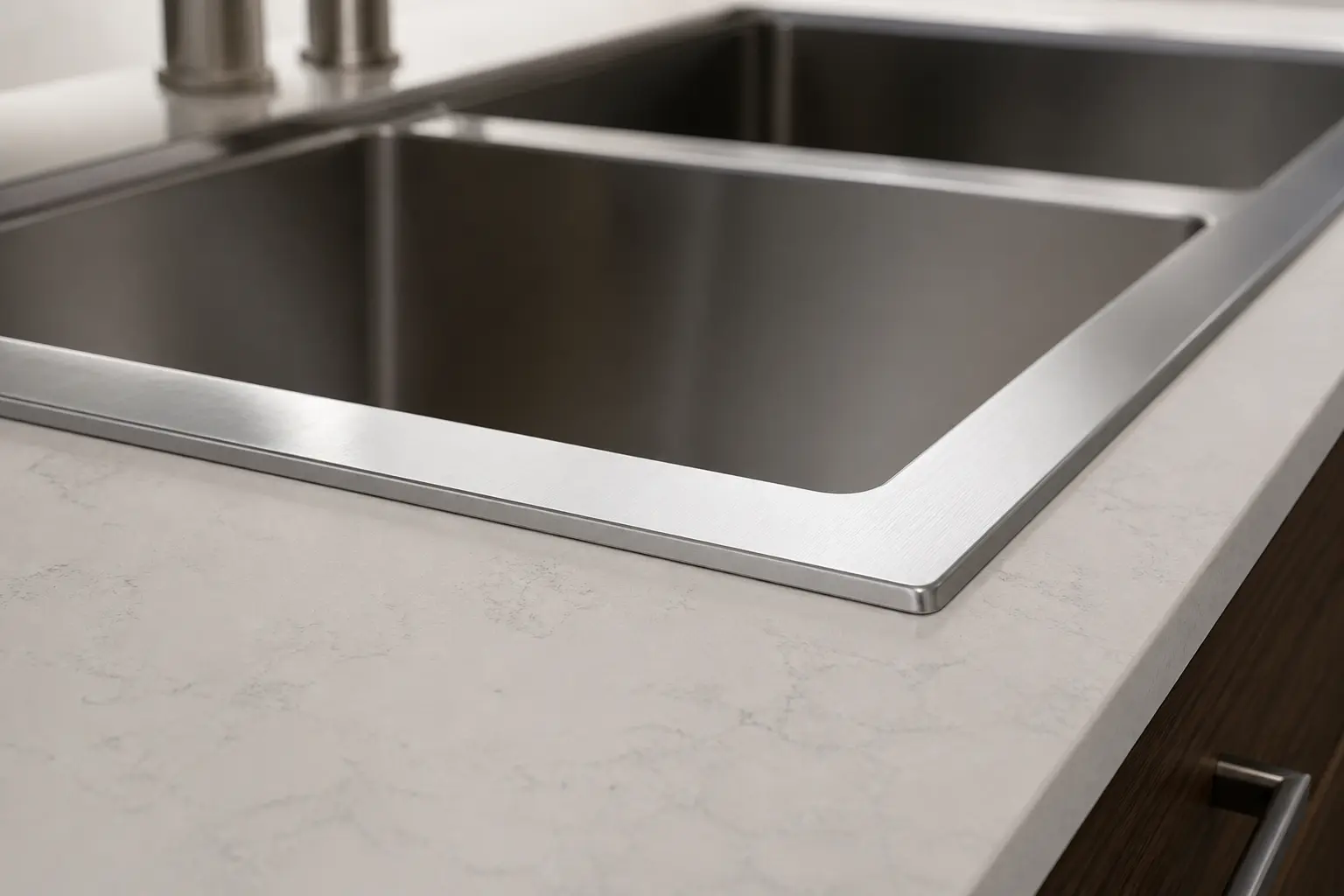
Rim Flatness Inspection
Top-Mount Replacement Project
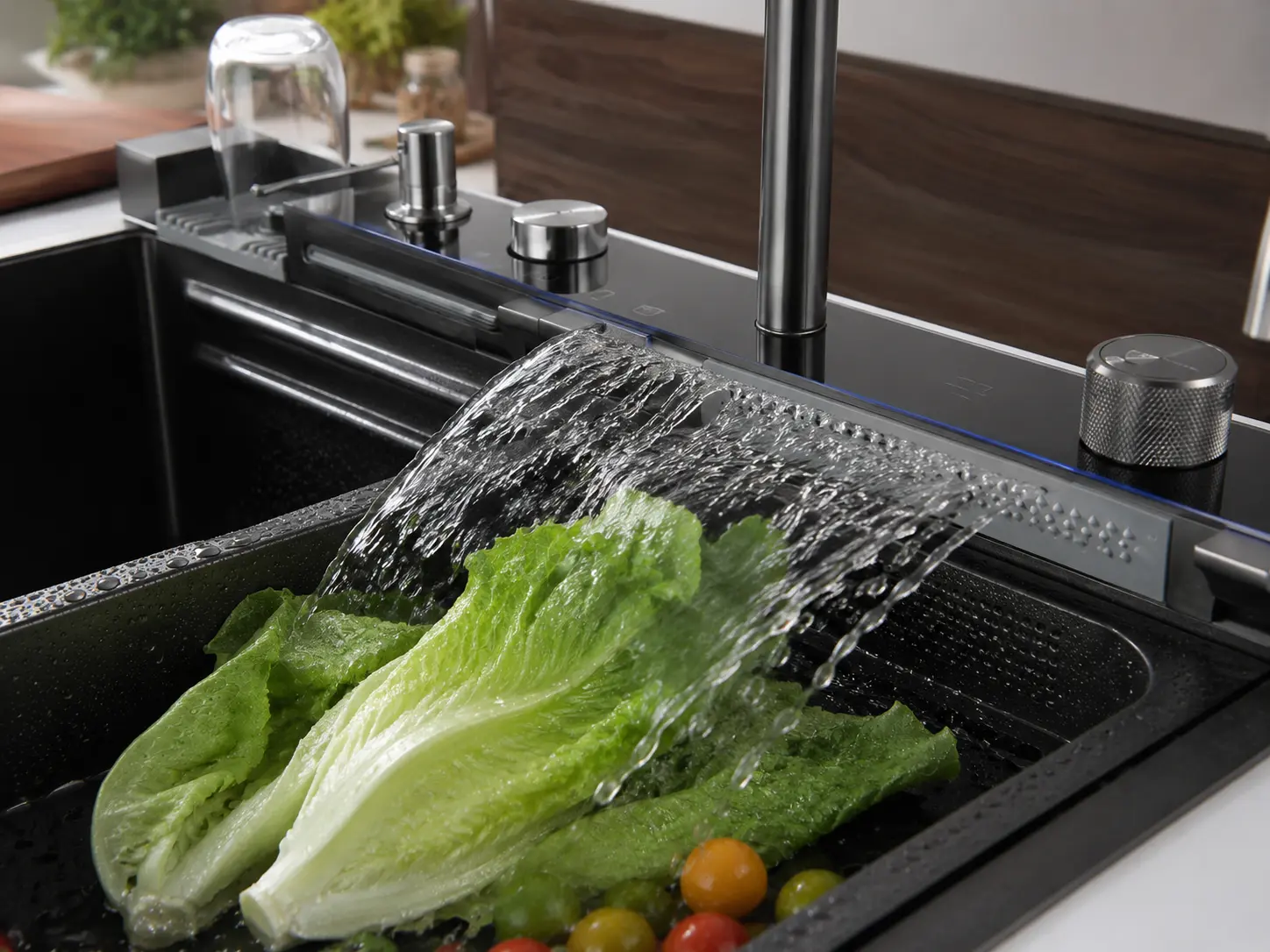
Workstation Accessory Fit
Questions OEM Buyers Commonly Need to Resolve
Quick reference for structuring sourcing decisions.
Is SUS304 + 18 gauge enough to define a kitchen sink?
No. It defines material grade and nominal thickness, but not finished geometry, local thickness, surface finish, installation interfaces, accessories or QC requirements.
Is handmade always better than pressed?
No. Handmade provides greater geometric flexibility. Pressed production is often more practical when existing tooling and volume economics fit the program.
Can two suppliers quote the same specification and still be quoting different sinks?
Yes. Material tolerance, surface finishing, components, packaging and inspection assumptions can differ behind the same headline wording.
Does one approved sample guarantee repeat-order consistency?
No. Repeat-order consistency also depends on controlled material, finish, components, packaging and revision references.
Can a sink pass dimensions and still fail installation?
Yes. Rim flatness, cutout relationship and installation geometry can create problems even when nominal length and width pass.
What should buyers compare before negotiating unit price?
First align the material, geometry, production route, finish, accessories, packing and QC basis. Then compare price.
Have a Sink Program to Review?
Send the target market, sink type, dimensions, material, quantity and drawing or reference product. Matrix can review the practical production route before quotation.
Phone
+18520999956Address
Jianye Road, Nantou town, Zhongshan, Guangdong, China