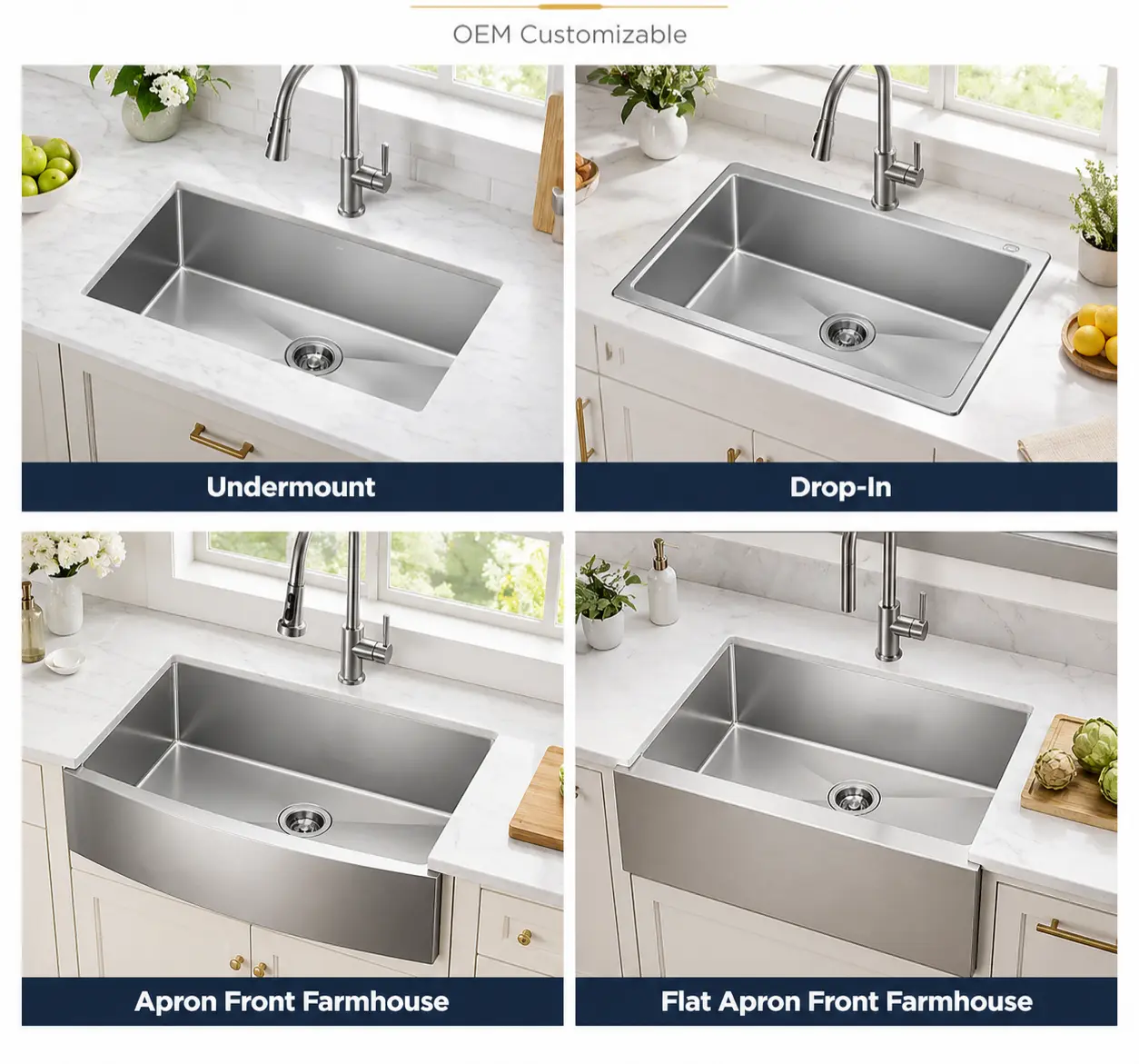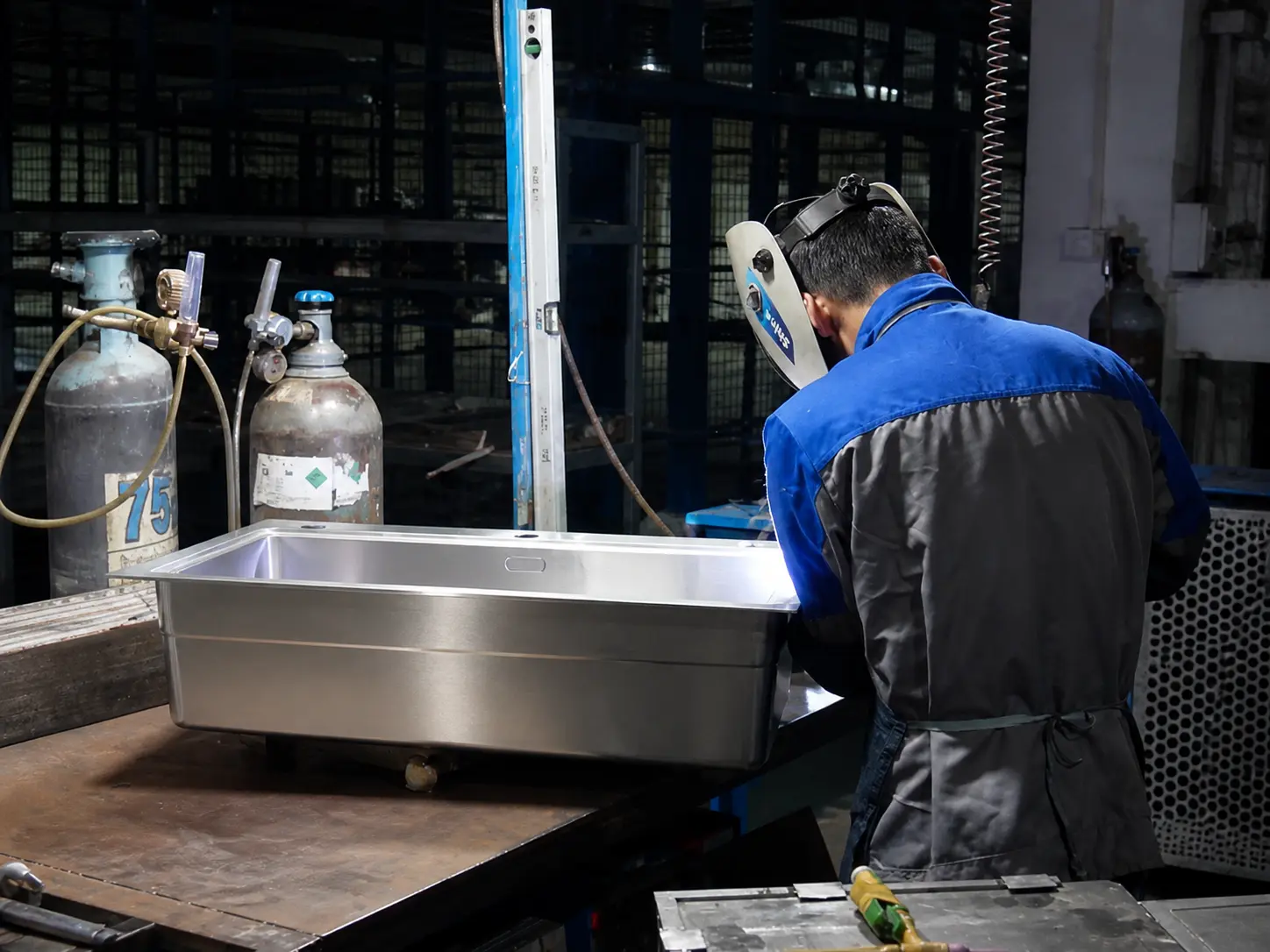
A nano-coated kitchen sink is usually a stainless steel sink with an additional surface treatment intended to change its color, water repellency, fingerprint visibility, cleanability or wear behavior.
However, “Nano” is not one standardized sink material or one universally defined coating process.
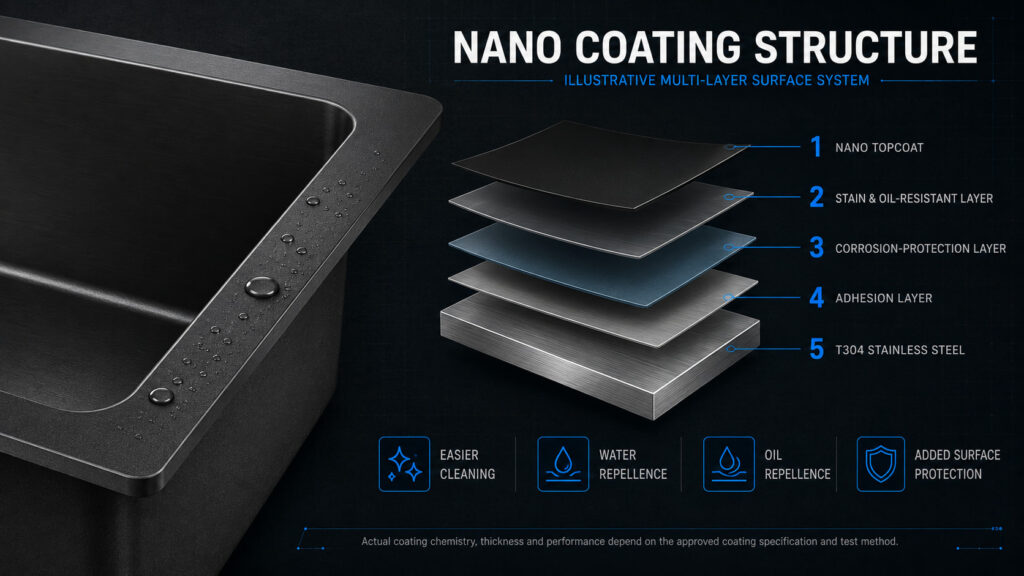
Depending on the product, Nano may describe:
- A hydrophobic topcoat
- A PVD color layer with an additional clear topcoat
- An organic–inorganic coating
- A ceramic- or silica-containing treatment
- A sprayed decorative coating
- A textured surface combined with a coating
- A supplier-specific commercial finish name
For consumers, this means two sinks described as “Nano black” may have completely different surface structures and durability.
For B2B buyers, “Nano coating” is not a complete purchase specification. The actual layer structure, base steel, finish process, test method and acceptable wear must be defined separately.
Quick Answer
A well-designed nano-coated sink may:
- Make water bead more easily
- Reduce fingerprint visibility
- Make light residue easier to wipe
- Create black, grey or other decorative colors
- Improve some types of surface wear
- Support a differentiated product appearance
It does not automatically:
- Make the sink scratch-proof
- Prove that the steel is 304
- Prevent dents
- Prevent every water spot
- Eliminate cleaning
- Guarantee antibacterial performance
- Make the surface permanently hydrophobic
- Make every cleaner safe
- Mean the same thing as PVD
- Make 201 stainless steel perform like 304
The correct question is not:
Is this a Nano sink?
The better question is:
What is the complete surface system, and which performance claims have been tested on the finished sink?
“Nano” Is a Scale, Not a Performance Guarantee
Nanotechnology generally refers to materials or structures engineered at an extremely small scale, commonly around 1 to 100 nanometers.
At this scale, a material may show useful changes in:
- Surface energy
- Wettability
- Optical behavior
- Chemical activity
- Hardness
- Friction
- Adhesion
But the word Nano does not identify which of these properties has actually been changed.
A coating can contain nanoscale particles and still perform poorly if:
- The stainless steel was not cleaned correctly.
- Surface preparation was inconsistent.
- The coating did not bond properly.
- The film is too brittle.
- The curing process was uncontrolled.
- The finished sink was damaged during packing.
- The cleaner used in the kitchen attacks the top layer.
“Contains nanotechnology” is therefore a description—not evidence of durability.
What Is Under the Nano Coating?
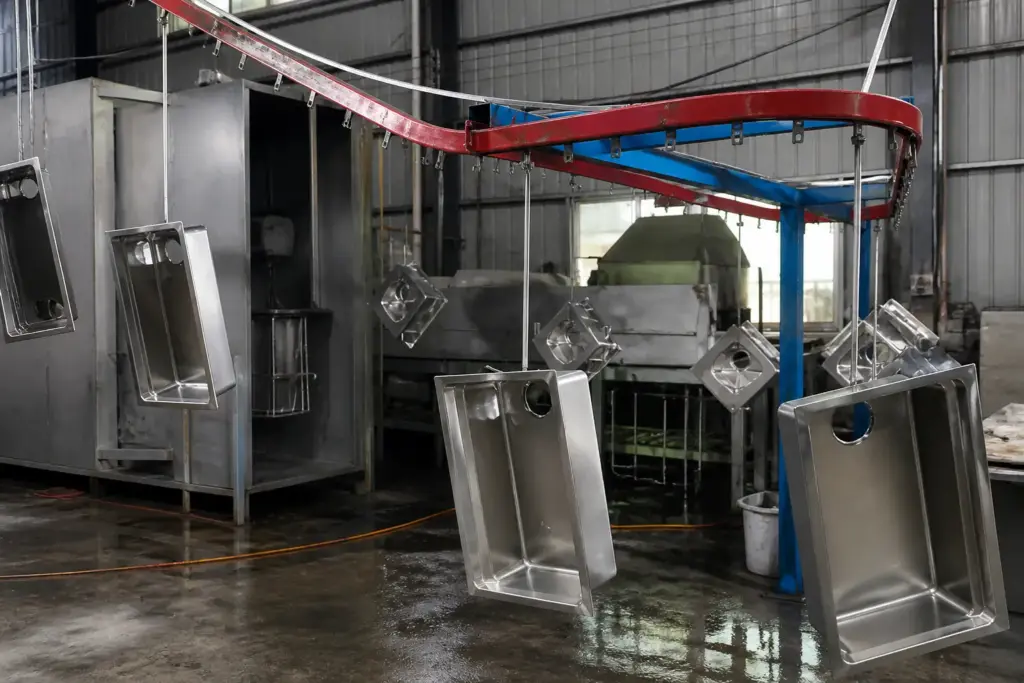
Most nano-coated stainless steel sinks should be understood as a layered system.
Layer 1: Stainless Steel Body
The sink body may use:
- 201 stainless steel
- 304 stainless steel
- 316 stainless steel
- Another specified grade
The base steel controls:
- Underlying corrosion resistance
- Forming behavior
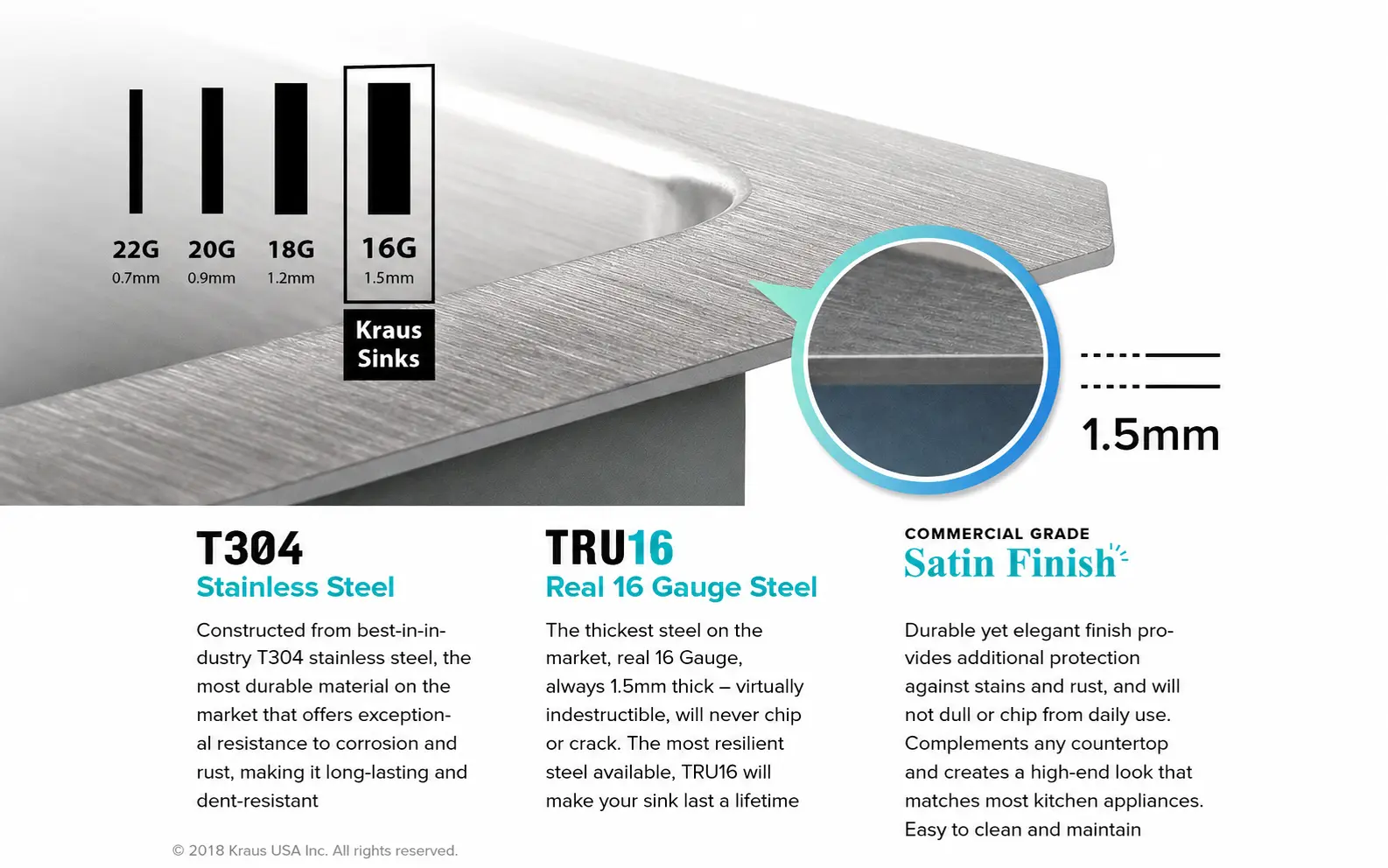
- Structural performance
- Weldability
- Reaction after deep surface damage
A Nano coating does not change the steel grade below it.
If the substrate is 201 stainless steel, adding a coating does not turn it into 304. If a deep scratch reaches the base material, the exposed area behaves according to the actual substrate.
Layer 2: Mechanical Surface Finish
Before coating, the steel may be:
- Brushed
- Satin-finished
- Polished
- Sandblasted
- Bead-blasted
- Embossed
- Honeycomb-textured
This layer affects the final sink’s:
- Reflection
- Color depth
- Grain direction
- Scratch visibility
- Coating adhesion
- Cleaning behavior
The same black coating can look very different over brushed, satin and embossed stainless steel.
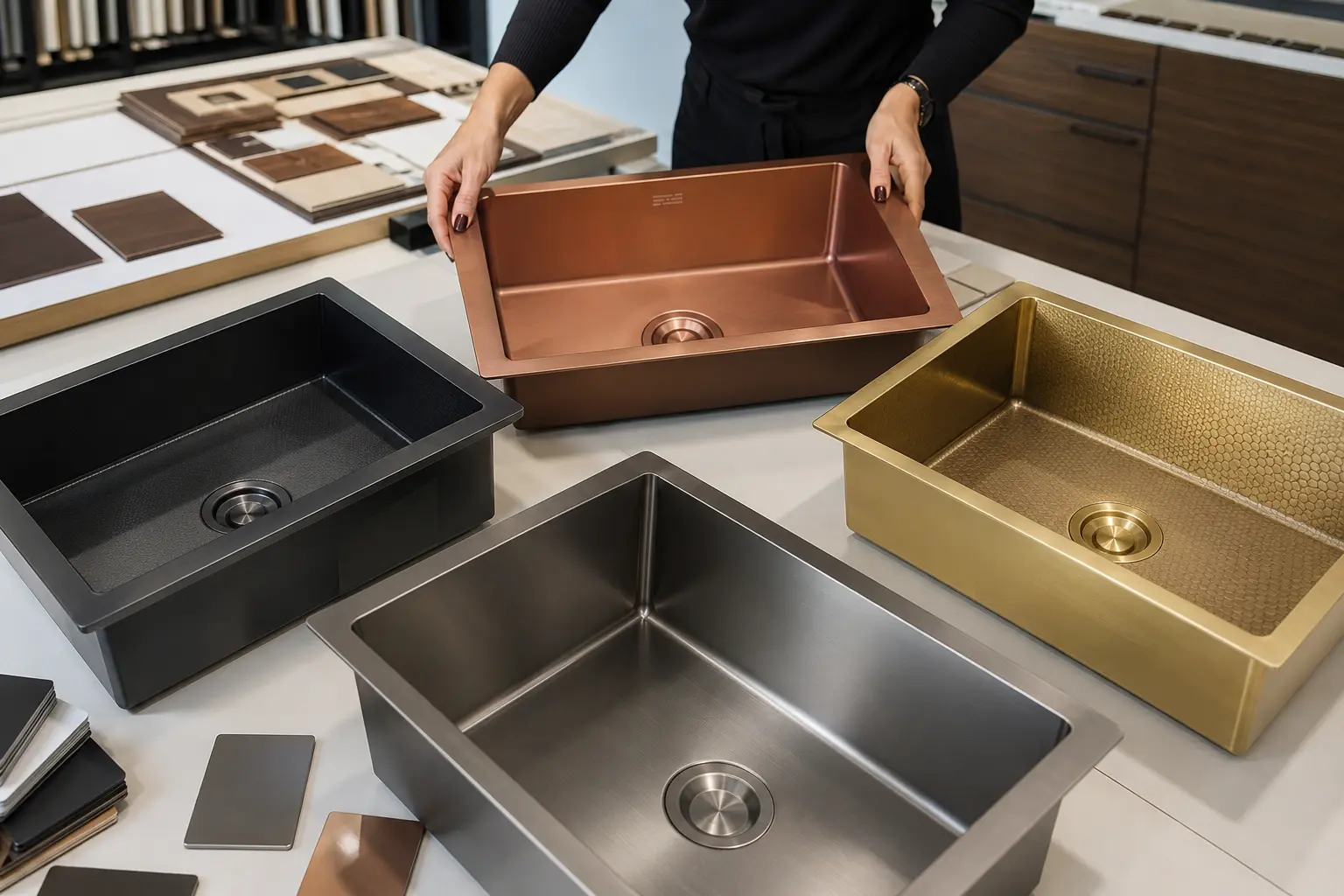
Layer 3: Decorative or Functional Color Layer
Some colored sinks use PVD or another color-creating process below the Nano topcoat.
This layer may provide:
- Black
- Gunmetal
- Gold
- Rose gold
- Champagne
- Grey
- Bronze
Not every black Nano sink uses PVD. Some may use another sprayed, deposited or electrochemical color system.
Layer 4: Nano or Functional Topcoat
A final transparent or semi-transparent layer may be added to modify:
- Water contact
- Fingerprint visibility
- Oil adhesion
- Cleanability
- Gloss
- Chemical resistance
- Wear behavior
This top layer is often what the market calls “Nano,” even when the complete finish system contains several different processes.
Five Different Products May All Be Sold as “Nano Sinks”
1. Brushed Stainless Steel with a Clear Hydrophobic Layer
The sink retains a silver stainless steel appearance, but a transparent top layer changes how water contacts the surface.
2. PVD-Colored Stainless Steel with a Nano Topcoat
The PVD process provides the color, while a separate outer layer may improve fingerprint or water-repellent behavior.
3. Sprayed Colored Coating with Nano Additives
The color and functional particles may be part of one applied coating. Its wear and damage behavior can differ significantly from PVD.
4. Embossed or Honeycomb Steel with a Functional Coating
The texture helps reduce the visual contrast of scratches, while the top treatment changes wettability or color.
The embossing and the coating must be evaluated separately.
5. Commercially Named “Nano” Finish
Some products use Nano as a market name without clearly identifying the coating chemistry, layer structure or nanoscale feature.
This does not automatically mean the product is bad. It means the buyer needs a more complete specification.
Nano vs PVD vs Brushed Stainless Steel
| Feature | Brushed Stainless Steel | PVD-Colored Stainless Steel | Nano-Coated Stainless Steel |
|---|---|---|---|
| Base material | Stainless steel | Stainless steel | Usually stainless steel |
| Main purpose | Directional metal finish | Decorative metallic color | Varies: color, water repellency, cleanability or fingerprint reduction |
| Extra surface layer | Usually no decorative coating | Thin deposited color layer | May be clear, colored, PVD plus topcoat or another system |
| Color options | Mainly silver | Black, gold, gunmetal and other metallic colors | Depends on coating system |
| Water beading | Depends on surface condition | Depends on PVD and any top layer | May be intentionally increased |
| Scratch behavior | Fine scratches may blend with grain | Deep scratch may reveal silver steel | Depends on complete layer structure |
| Local repair | Sometimes possible by regraining | Difficult without color mismatch | Usually difficult |
| Main specification risk | Grain and gloss inconsistency | Color and coating consistency | “Nano” does not define the actual process |
PVD and Nano are not mutually exclusive.
A sink may use:
Stainless steel + surface texture + PVD color + Nano topcoat.
Another product may use:
Stainless steel + sprayed Nano coating without PVD.
Calling both products “Nano black sinks” hides an important technical difference.
What Can a Nano Coating Realistically Improve?
1. Water Repellency
A hydrophobic surface has a higher resistance to wetting. Water tends to form droplets rather than spreading into a thin film.
This can make the surface:
- Easier to rinse
- Easier to wipe dry
- Less likely to show a continuous wet film
- More visually distinctive during demonstrations
However, water beading is only one surface property.
It does not show:
- Coating thickness
- Adhesion
- Abrasion resistance
- Chemical resistance
- Long-term durability
- Performance after repeated cleaning
A fresh coating may show strong water beading and then gradually lose it through wear or chemical exposure.
2. Fingerprint Reduction
A suitable outer layer can reduce the visibility or adhesion of skin oils.
“Fingerprint-resistant” should not be interpreted as “fingerprint-proof.”
Results depend on:
- Finish color
- Gloss
- Lighting
- Finger moisture and oil
- Surface texture
- Cleaning history
- Coating wear
Dark glossy surfaces usually reveal fingerprints more clearly than textured or low-gloss surfaces.
3. Easier Cleaning
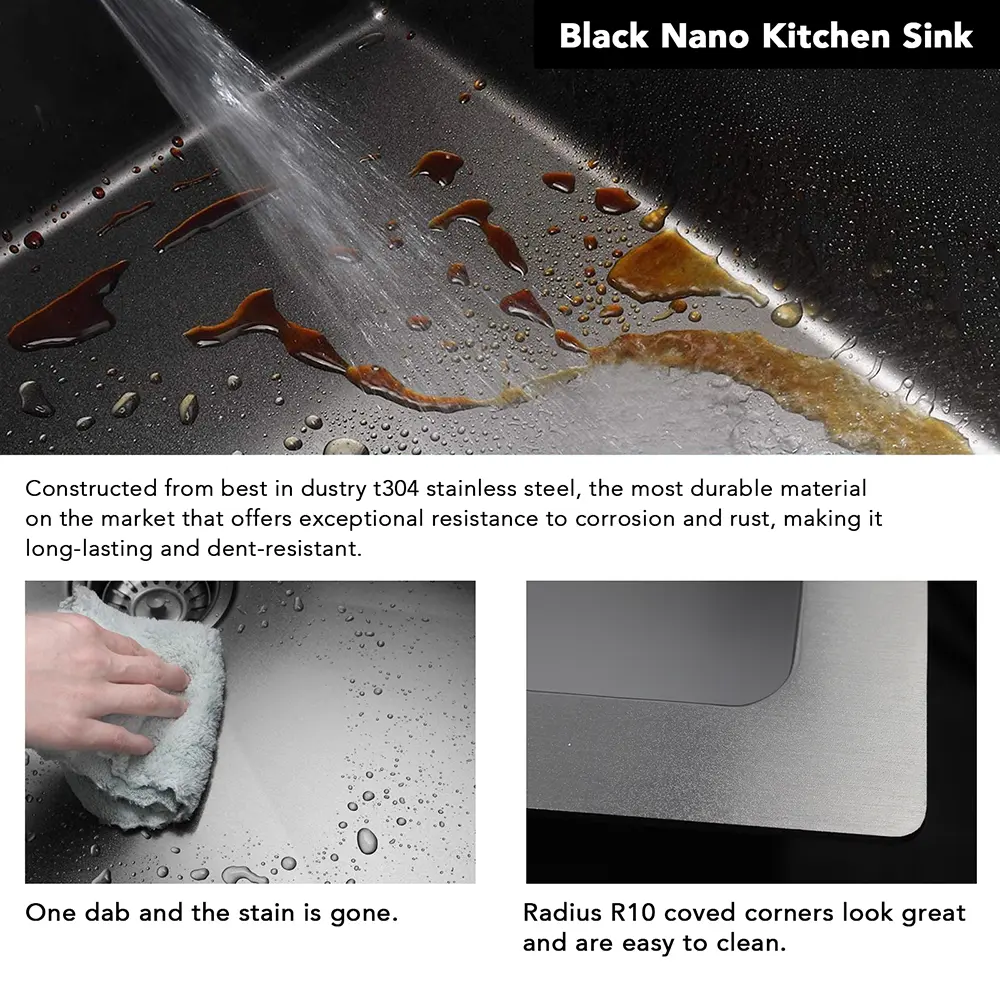
A lower-adhesion surface may allow some grease, water and light food residue to be removed more easily.
But cleanability also depends on the sink’s:
- Corner radius
- Drain design
- Bowl slope
- Surface texture
- Accessory ledges
- Water hardness
- Approved cleaners
A highly water-repellent sink with poor drainage can still leave droplets and residue in the bowl.
4. Decorative Color
Nano-coated sinks are commonly associated with black and gunmetal colors.
The coating can help create a product that coordinates with:
- Black faucets
- Gunmetal drains
- Dark appliances
- Modern countertops
- Design-led kitchen collections
Color consistency requires a physical master sample. Words such as black, grey and gunmetal do not define tone, gloss or texture precisely.
5. Some Surface-Wear Improvement
A properly designed coating may resist certain controlled forms of abrasion or marking better than an uncoated comparison surface.
That does not mean it resists every object encountered in a kitchen.
Different damage mechanisms include:
- Sliding abrasion
- Sharp-point scratching
- Impact
- Metal transfer
- Cleaner damage
- Thermal exposure
- Coating delamination
- Repeated bottom-grid contact
One test result cannot represent all of these conditions.
The Counterintuitive Problem: More Water Beading Can Still Leave Water Spots
A hydrophobic surface makes water form beads.
If those beads are wiped away, the sink may be easier to keep dry.
If they remain and evaporate, minerals in the water are concentrated into smaller areas. This can leave visible rings or white spots—especially on black and gunmetal finishes.
Therefore:
Water-repellent does not mean water-spot-proof.
Water spots depend on:
- Mineral content
- Droplet size
- Drying time
- Sink color
- Surface gloss
- Cleaning habits
The best hard-water performance is not simply the surface with the roundest water droplets. It is a system that allows water to drain, can be cleaned safely and does not make remaining mineral deposits excessively visible.
What Nano Coating Does Not Mean
Nano Does Not Mean Scratch-Proof
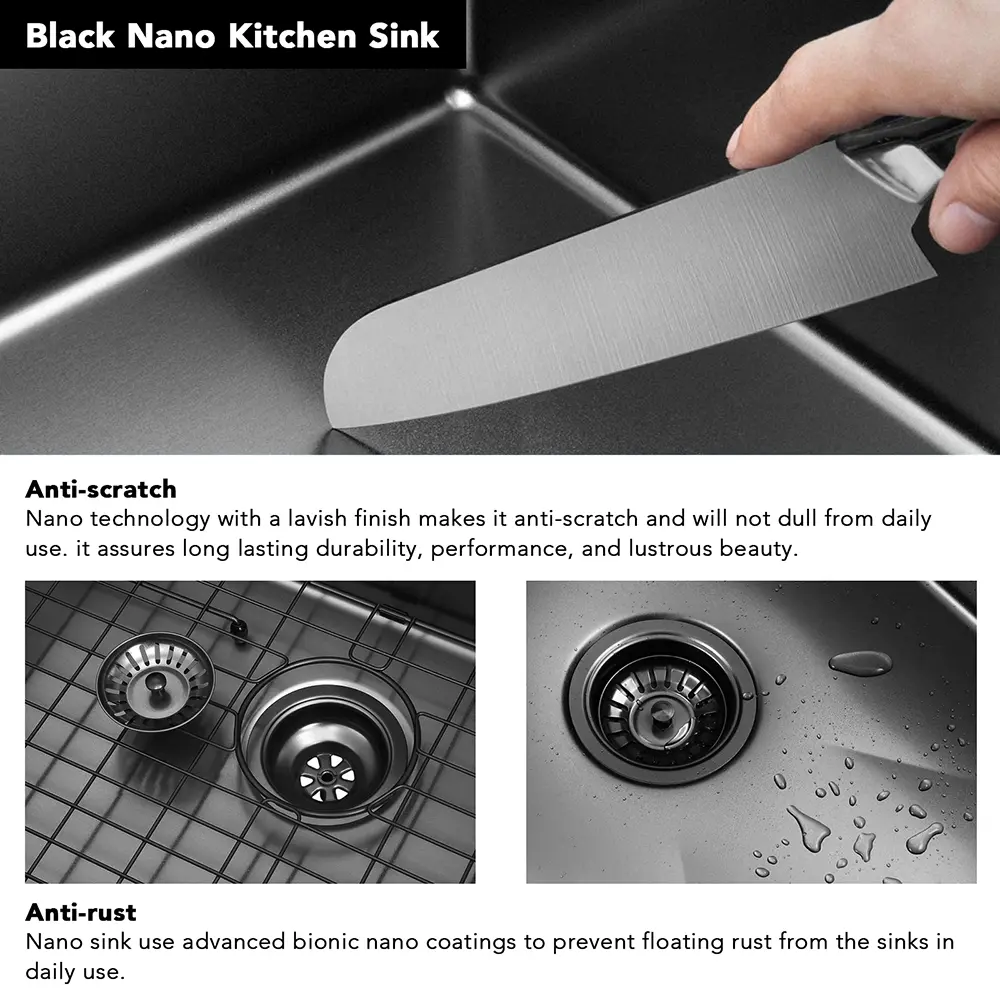
No working kitchen sink is scratch-proof.
Possible damage sources include:
- Knives
- Cast-iron cookware
- Ceramic pan bases
- Metal grids
- Trapped sand or grit
- Sharp utensils
- Installation tools
- Metal accessories moving in the carton
A coating may change scratch resistance or scratch visibility, but it cannot eliminate mechanical damage.
A deep scratch on a dark coating can reveal bright silver stainless steel. The contrast can make the damage more noticeable even if the coating itself has useful hardness.
Nano Does Not Prove 304 Stainless Steel
Coating descriptions and steel grades are separate specifications.
A black Nano sink may use 201, 304, 316 or another declared stainless steel grade.
Color, water beading and magnetic behavior cannot prove the base material. Buyers should verify the substrate separately.
Explore the Matrix stainless steel kitchen sink range for the distinction between base material, construction and surface finish.
Nano Does Not Prevent Dents
Dent resistance depends primarily on:
- Material thickness
- Sink geometry
- Forming
- Reinforcement
- Impact force
- Installation support
A surface film does not turn thin sheet metal into thick sheet metal.
Nano Does Not Guarantee Rust Prevention
A coating can provide an additional surface barrier, but rust or corrosion risk still depends on:
- Base stainless steel grade
- Exposed edges
- Deep scratches
- Iron contamination
- Chloride exposure
- Cleaning chemicals
- Weld condition
- Trapped moisture
If the coating is damaged, the exposed steel behaves according to the substrate and environment.
Nano Does Not Automatically Mean Antibacterial
Water repellency and antibacterial performance are different properties.
A surface may repel water without actively reducing microorganisms.
An antibacterial claim should identify:
- Active mechanism
- Test method
- Organisms tested
- Contact time
- Reduction criteria
- Test conditions
- Whether the finished sink or only a flat sample was tested
Without this information, “antibacterial Nano” is an incomplete marketing claim.
Nano Does Not Mean Maintenance-Free
The finish can still be affected by:
- Abrasive pads
- Steel wool
- Metal polish
- Strong acids
- Chloride-containing chemicals
- Aggressive alkaline cleaners
- Long chemical contact
- Hard-water deposits
Maintenance instructions must match the actual coating system.
Why a “9H” Claim Does Not Mean Knife-Proof
The term 9H often comes from a pencil-hardness test used for coating films.
In a controlled pencil test, pencils of different hardness are moved across a coating under defined conditions. The result helps compare film hardness.
It does not mean:
- The coating has a universal hardness of 9.
- It is equivalent to a gemstone hardness scale.
- A kitchen knife cannot scratch it.
- A cast-iron pan cannot damage it.
- The complete sink passed an impact or abrasion test.
- The coating will keep the same hardness after years of cleaning.
Results can also vary with:
- Pencil manufacturer
- Pencil batch
- Test load
- Pencil preparation
- Coating thickness
- Substrate
- Operator
- Failure definition
Before accepting a 9H claim, ask:
- Which coating layer was tested?
- Which method was followed?
- Was the result gouge hardness or scratch hardness?
- Was the sample a flat coupon or finished sink?
- What substrate was used?
- What counted as failure?
- Was the test repeated after aging or abrasion?
A 9H claim without test conditions is not a complete purchasing specification.
How to Diagnose Marks on a Nano Sink
Not every mark means the coating has failed.
| What you see | Possible cause | First response |
| White circular spots | Hard-water minerals | Clean using the approved non-abrasive method |
| Cloudy white film | Cleaner residue or limescale | Rinse and dry before judging |
| Grey metallic streak | Material transferred from cookware | Check whether it lifts without polishing |
| Fine line visible under side light | Surface micro-mar | Inspect under normal viewing conditions |
| Bright silver line | Deep scratch may have reached base steel | Stop aggressive rubbing and assess depth |
| Dull patch | Abrasive cleaning changed gloss or topcoat | Compare texture with an unused area |
| Peeling edge | Possible adhesion failure | Stop use of strong cleaners and request assessment |
| Blister or bubble | Possible contamination, moisture or coating defect | Check whether the film is lifting |
| Color difference near weld | Substrate or coating-process variation | Compare with approved sample |
| Orange-brown particles | Iron contamination or corrosion | Diagnose material, water and exposure separately |
Do not begin with metal polish.
A polish designed for bare stainless steel may remove or alter a colored or functional topcoat.
How to Clean a Nano-Coated Sink Safely
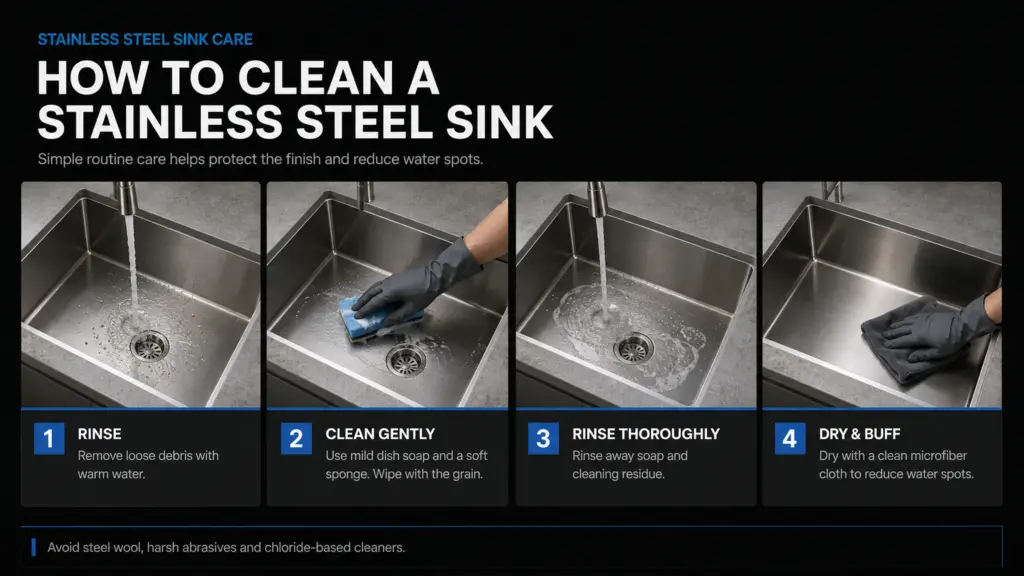
Because Nano systems vary, the supplier’s care instructions should take priority.
A conservative routine is:
- Rinse away loose particles.
- Use warm water and mild dish detergent.
- Clean with a soft cloth or non-abrasive sponge.
- Rinse thoroughly.
- Dry using a clean microfiber cloth.
- Remove trapped grit from bottom grids and accessories.
Avoid unless specifically approved:
- Steel wool
- Wire brushes
- Abrasive powders
- Metal polishing compounds
- Coarse scouring pads
- Strong acids
- Chloride-rich cleaners
- Long chemical soaking
- Scraping with a blade
Do not assume a cleaner suitable for bare brushed stainless steel is safe for a Nano or PVD finish.
A Five-Minute Showroom Test—and Its Limits
Consumers can use a few simple observations when comparing samples.
Water-Drop Test
Place equal drops of clean water on each sample.
Observe:
- Bead shape
- Spreading
- Movement when tilted
- Residue after drying
This demonstrates initial water behavior only. It does not prove long-term durability.
Fingerprint Test
Touch the dry sample under normal lighting and wipe it with a soft cloth.
Observe:
- Fingerprint contrast
- Ease of removal
- Smearing
- Gloss change
Soft-Cleaning Test
Use the approved cleaner and cloth on a small sample area.
Confirm that cleaning does not leave:
- Haze
- Streaks
- Color change
- Sticky residue
- Different gloss
Side-Light Inspection
View the sample under angled light to reveal:
- Uneven coating
- Polishing lines
- Cloudy areas
- Color variation
- Overspray
- Dust inclusions
These tests help compare appearance and immediate maintenance. They cannot replace controlled coating tests.
How B2B Buyers Should Specify a Nano Sink
“304 Nano black sink” leaves too many unanswered questions.
A better specification should define the complete system.
1. Base Sink
Specify:
- Stainless steel grade
- Nominal thickness
- Thickness tolerance
- Handmade or pressed construction
- Sink dimensions
- Installation method
- Bowl depth
- Corner radius
2. Substrate Finish
Specify:
- Brushed, satin, blasted, polished or embossed
- Grain direction
- Roughness reference, if relevant
- Appearance around welds and corners
- High-risk areas that must remain uniform
3. Coating Structure
Identify:
- Whether PVD is used
- Whether a separate Nano topcoat is applied
- General coating family
- Number and sequence of functional layers
- Which layer provides color
- Which layer provides water repellency
- Whether the coating is applied before or after fabrication
The exact formulation may remain proprietary, but the buyer still needs enough information to define performance and replacement consistency.
4. Visual Standard
Approve:
- Physical master sample
- Color
- Gloss
- Texture
- Grain direction
- Acceptable variation
- Lighting and viewing conditions
- Limits for spots, streaks and haze
Do not approve black or gunmetal color from a phone photograph alone.
5. Coating Thickness
If thickness is relevant to the selected coating system, agree on:
- Target range
- Measurement method
- Test locations
- Substrate effect
- Number of readings
- Acceptance criteria
A thickness value without a measurement method is incomplete.
6. Wettability
If the product claims hydrophobic performance, define:
- Test liquid
- Surface preparation
- Contact-angle method
- Test temperature
- Number of measurement locations
- Initial requirement
- Requirement after cleaning or wear
A high initial contact angle should not be the only acceptance criterion.
7. Adhesion
The test method must suit the actual coating.
A tape or cross-cut test may be useful for some organic coating systems, but it is not automatically suitable for every thin, hard or multilayer finish.
Define:
- Test method
- Cut spacing, if relevant
- Tape type
- Application and removal procedure
- Evaluation rating
- Whether the test is performed before or after aging
- Whether the finish can be tested on a coupon or finished sink
8. Scratch and Abrasion Performance
Test sharp damage and repeated wear separately.
Scratch Test
Define:
- Tool
- Tip geometry
- Load
- Travel distance
- Number of passes
- Failure criteria
Abrasion Test
Define:
- Abrasive material
- Contact load
- Cycle count
- Movement path
- Cleaning between stages
- Color and gloss evaluation
- Wear-through criteria
A bottom grid moving repeatedly is an abrasion problem. A knife point is a scratch problem. They should not be represented by the same test.
9. Chemical Resistance
Use cleaners relevant to the target market.
Define:
- Chemical
- Concentration
- Contact time
- Temperature
- Rinsing
- Drying
- Evaluation after exposure
Inspect for:
- Color change
- Gloss change
- Softening
- Staining
- Blistering
- Adhesion loss
- Hydrophobicity loss
10. Finished-Sink Testing
Flat test panels are useful for process control, but the finished sink contains more difficult areas:
- Corners
- Welds
- Drain recess
- Rim
- Workstation ledges
- Embossed peaks
- Embossed recesses
- Apron edges
- Bowl bottom
A coating that performs well on a flat coupon may be thinner or less uniform around complex geometry.
The Durability Test Most Buyers Miss
Many buyers test a new coating once and stop.
A more useful sequence is:
- Measure the new surface.
- Complete repeated approved-cleaning cycles.
- Apply controlled abrasion.
- Expose the surface to agreed chemicals.
- Rinse and condition the sample.
- Measure water behavior, color and gloss again.
- Inspect for lifting, haze and wear-through.
The important question is not whether a new coating repels water.
It is whether the useful property remains after realistic cleaning and wear.
Nano Sink QC Checklist
| Control point | Required decision |
| Base steel | Grade and thickness |
| Construction | Handmade or pressed |
| Substrate | Brushed, satin, blasted, polished or embossed |
| Finish identity | PVD, Nano topcoat, sprayed coating or multilayer system |
| Color layer | Process and approved master sample |
| Functional layer | Claimed water, oil or fingerprint behavior |
| Coating thickness | Method, locations and range where relevant |
| Wettability | Initial and post-wear requirement |
| Hardness | Test method and limitations |
| Adhesion | Method appropriate to coating system |
| Scratch resistance | Controlled tool, load and failure definition |
| Abrasion | Material, load, cycles and evaluation |
| Chemical resistance | Approved cleaners and exposure conditions |
| Finished-sink areas | Drain, corners, welds, rim, ledges and bowl bottom |
| Accessories | Contact and movement risk |
| Packaging | Surface separation and movement control |
| Care instructions | Product-specific cleaning guidance |
| Repeat orders | Master sample and process-change control |
Packaging Risks for Nano and Colored Sinks

A sink can pass production inspection and still arrive damaged.
High-risk items include:
- Bottom grids
- Strainers
- Cutting boards
- Colanders
- Metal baskets
- Faucets
- Mounting clips
- Drain parts
If these move against the sink during transport, they can create scratches or polished patches.
Packaging should include:
- Soft surface protection
- Isolated metal parts
- Stable accessory positions
- Edge and corner protection
- Protection for the apron and rim
- Clear component identification
- Inspection after representative transport handling
A Nano finish does not compensate for poor packaging.
More Accurate Product Claims
Avoid
- Scratch-proof
- Never stains
- Never shows fingerprints
- Permanent hydrophobic surface
- Self-cleaning sink
- Rust-proof Nano coating
- 9H means knife-proof
- Antibacterial without defined evidence
- Maintenance-free
- Nano 304 as if it were one material grade
Better Language
- Designed to reduce fingerprint visibility
- Hydrophobic performance tested under stated conditions
- Easier to wipe using the approved cleaning method
- Improved resistance to specified forms of surface wear
- Colored stainless steel with a defined coating system
- Scratch-resistant under controlled testing, not scratch-proof
- Water-repellent finish requiring normal cleaning and drying
- Performance depends on care, exposure and use
Accurate claims reduce returns because they set realistic expectations.
How Matrix Supports Nano and Colored Sink Programs
Matrix supports stainless steel sink programs for brands, wholesalers, importers and project buyers.
For Nano, PVD or colored sink directions, buyers can review:
- Stainless steel substrate
- Sink thickness
- Handmade or pressed construction
- Brushed, satin or textured base finish
- PVD or other color direction
- Functional topcoat requirements
- Physical master sample
- Scratch and cleaning expectations
- Drain and faucet finish matching
- Workstation accessory contact
- Packaging protection
- Repeat-order consistency
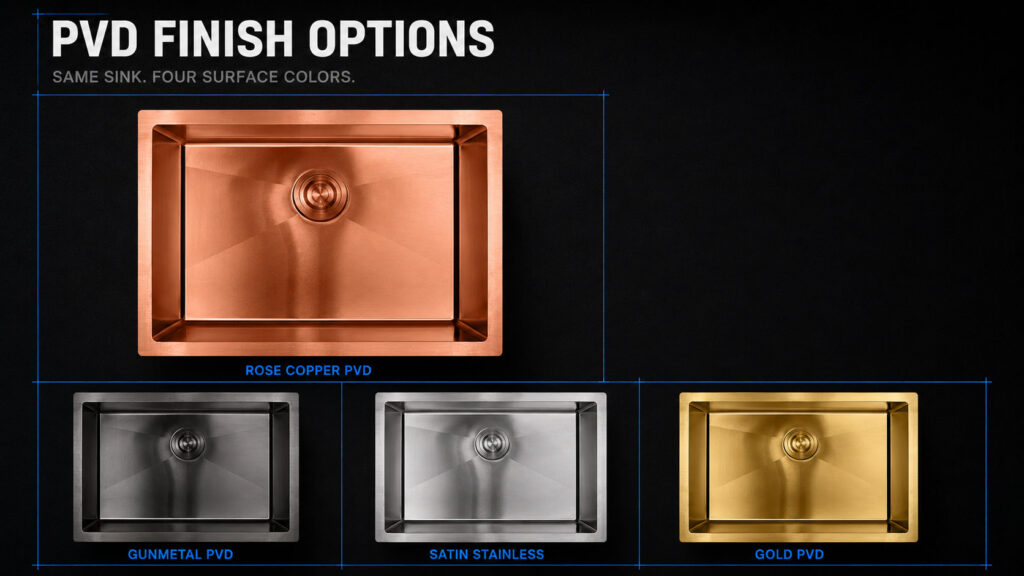
Buyers can explore the Matrix PVD and colored stainless steel sink range and the detailed guide to black PVD sink durability.
For custom color, texture, accessory or private-label requirements, review the Matrix custom kitchen sink program or contact the Matrix team with the intended finish, target market, product claims and testing expectations.
Frequently Asked Questions
What is a Nano kitchen sink?
It is usually a stainless steel sink with an additional surface treatment intended to improve properties such as color, water repellency, fingerprint resistance or cleanability. The exact coating system varies by supplier.
Is a Nano sink made from a different type of stainless steel?
Not necessarily. The body may still use 201, 304, 316 or another stainless steel grade. Nano describes the surface treatment, not the base steel.
Is Nano coating the same as PVD?
No. PVD is a specific physical vapor-deposition process commonly used to create metallic colors. Nano may refer to a separate topcoat, another coating system or a commercial finish name. Some sinks use both PVD and a Nano topcoat.
Are Nano sinks scratch-proof?
No. They may resist certain marks or controlled abrasion, but sharp utensils, cookware, trapped grit and moving accessories can still damage them.
Do Nano sinks show water spots?
They can. A hydrophobic coating makes water bead, but minerals remain when the droplets evaporate. Black finishes can make the resulting spots more visible.
Are Nano sinks easier to clean?
Some are easier to wipe because residue adheres less strongly. Results depend on the actual coating, surface texture, water quality and approved cleaning method.
How long does Nano coating last?
There is no universal lifespan. Durability depends on coating chemistry, surface preparation, adhesion, thickness, cleaning, abrasion, chemicals, temperature and daily use.
Can a Nano coating peel?
Some coating systems can peel or delaminate if adhesion is poor or the surface is damaged. Thin PVD-type layers may show wear differently from thicker organic coatings. The failure mode depends on the actual system.
Does 9H mean the sink cannot be scratched?
No. A 9H pencil-hardness result describes a coating’s response to a specific pencil test. It does not represent resistance to knives, ceramic cookware, impact or repeated grid movement.
Is a Nano sink antibacterial?
Not automatically. Water repellency is not the same as antibacterial activity. A valid antibacterial claim requires a defined mechanism and test conditions.
Can Nano coating prevent rust?
It may provide an additional surface barrier, but rust resistance still depends on the base steel, exposed areas, contamination, chlorides, cleaning and coating condition.
Can scratches in a Nano sink be polished out?
Usually not without risk. Polishing may remove more of the coating or create a different gloss and color. Follow the finish-specific repair guidance before using any abrasive.
What should a B2B buyer request?
Request the base steel specification, coating structure, physical master sample, test methods, cleaning instructions, high-risk-area inspection, packaging plan and repeat-order control.
Final Verdict
Nano coating can be a useful surface technology, but “Nano” alone does not tell a buyer what the sink is made from or how it will perform.
A good Nano sink is defined by:
- A suitable stainless steel substrate
- Controlled surface preparation
- A clearly identified coating system
- Reliable adhesion
- Realistic wear and cleaning claims
- Testing on the finished sink
- Protective packaging
- Repeatable production
Consumers should choose a Nano sink for a specific benefit such as color, easier wiping or lower fingerprint visibility—not because the word sounds advanced.
B2B buyers should remove the word Nano from the center of the specification and replace it with measurable requirements.
The real product is not the label.
It is the complete combination of steel, surface texture, color layer, functional topcoat, manufacturing control and daily-use performance.