Quick Answer
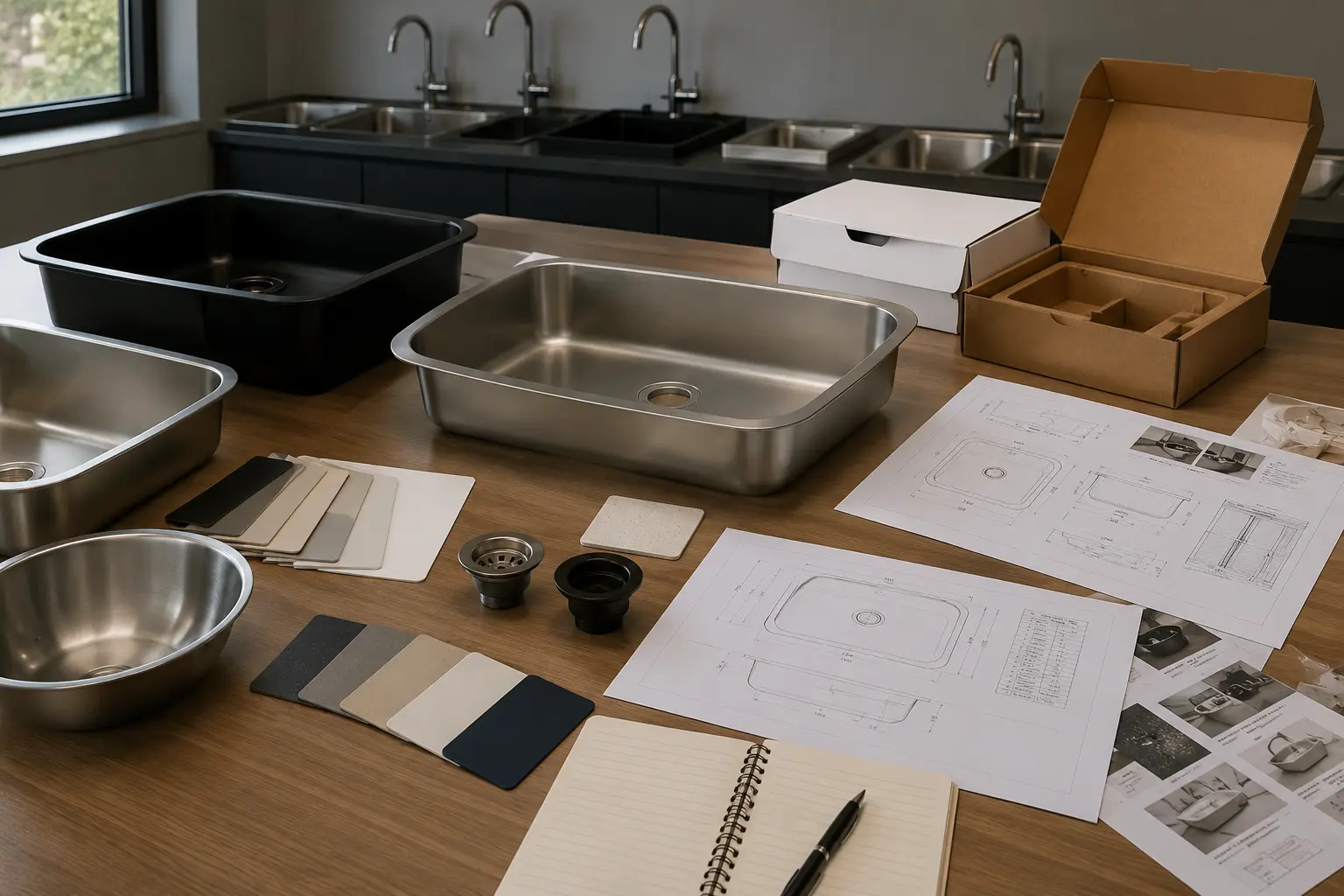
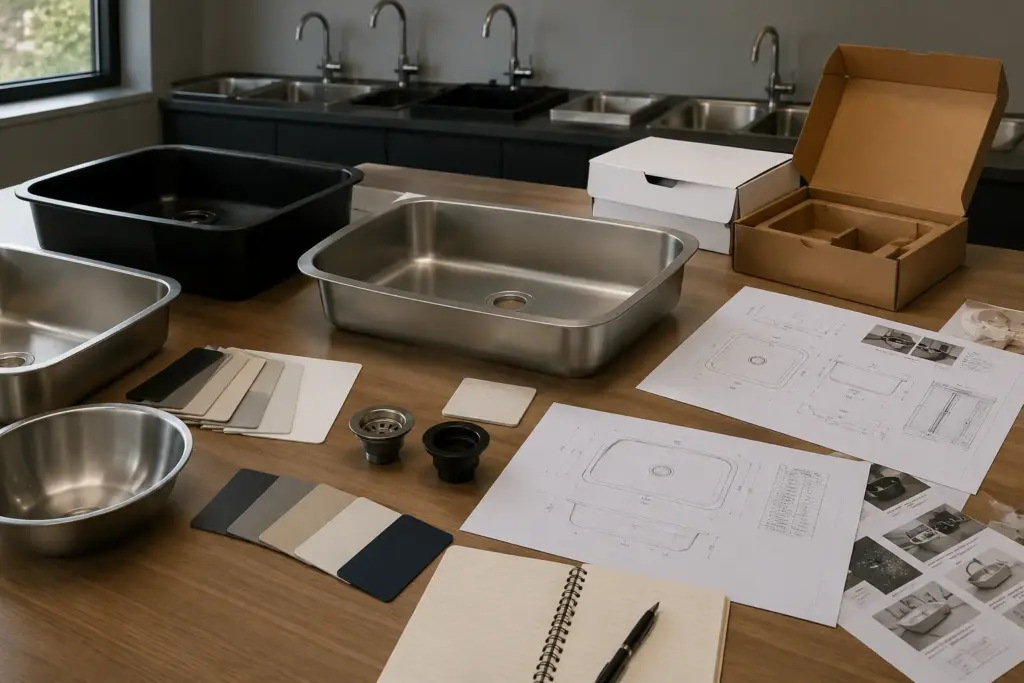
A kitchen sink golden sample approval should freeze more than the physical sink.
Before mass production, confirm:
- drawing revision
- overall and bowl dimensions
- bowl depth
- material grade
- thickness
- installation structure
- drain and faucet-hole positions
- surface finish
- logo
- accessories
- sound pads and undercoating
- labels and barcode
- carton and internal packing
- approved deviations, if any
The physical sample is only one reference.
For repeat production, the stronger control is:
Golden Sample + Approved Drawing + Specification Record + Packing Reference
If only the sample is approved and the written specification remains unclear, repeat orders can still drift.
1. Start with the Drawing Revision
The first item to freeze is not the sink.
It is the drawing.
The approved drawing should clearly show:
- revision number
- overall dimensions
- bowl dimensions
- depth
- corner radius
- rim / flange structure
- drain position
- faucet holes
- workstation ledge if applicable
For example:
Drawing Rev.03 — Approved for Production
is much safer than:
Same as sample.
If dimensions change later, the revision number shows exactly which version was approved.
2. Record the Critical Dimensions
A golden sample should be measured, not approved by appearance alone.
Typical items include:
- overall length
- overall width
- bowl length
- bowl width
- bowl depth
- corner radius
- flange width
- drain position
- faucet-hole position
For custom undermount projects, opening and flange dimensions may also need to be recorded separately.
The purpose is simple:
the next production batch should have measurable references.
3. Confirm Material and Thickness
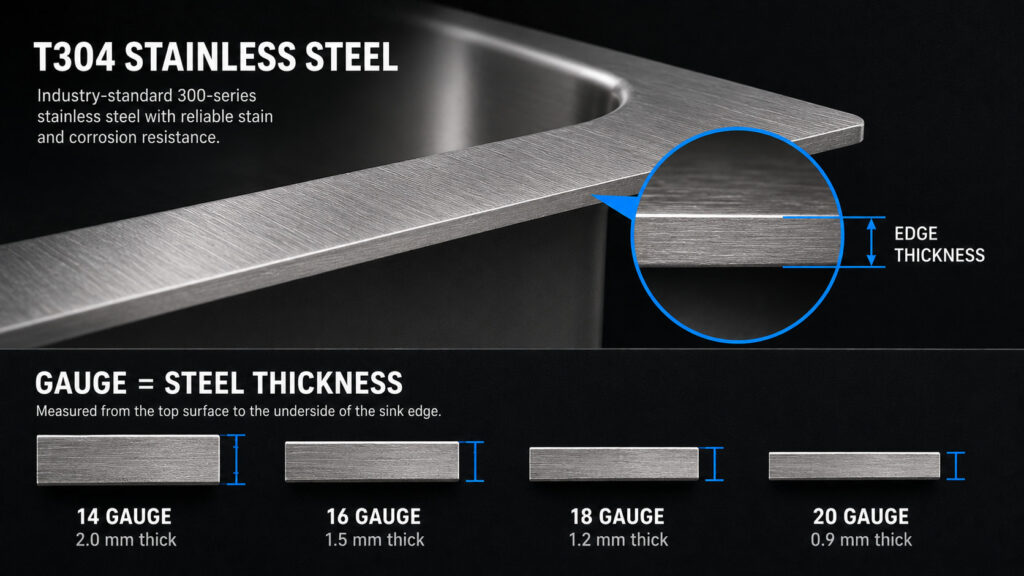
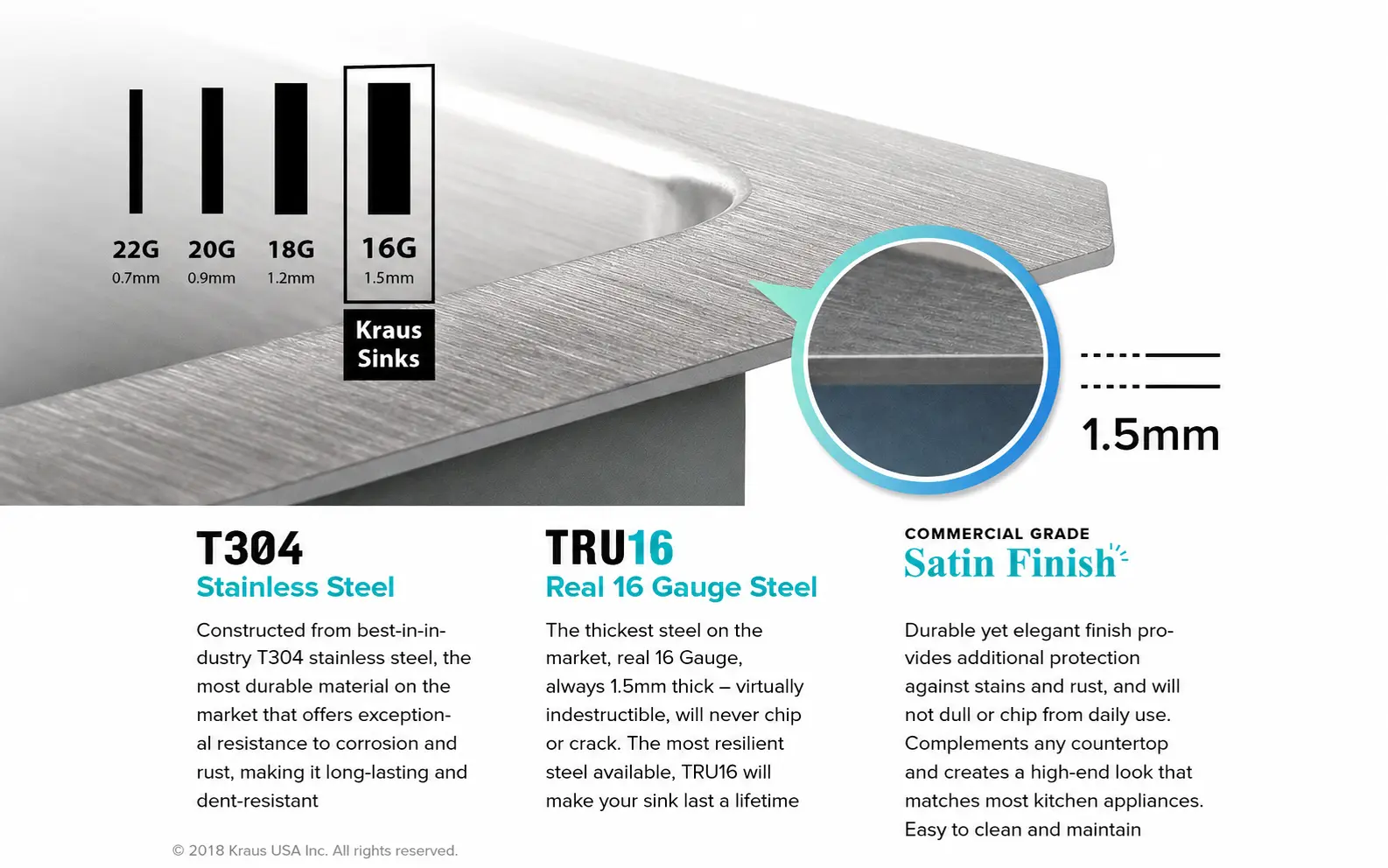
Record the actual material requirement:
SUS304
rather than simply:
stainless steel.
Then freeze the thickness specification.
For handmade sinks, define separate parts if necessary:
Bowl: 1.0 mm
Upper Rim: 3.0 mm
For pressed sinks, clarify whether the approved thickness refers to:
- incoming sheet
- finished thickness
- minimum finished thickness
- specific measurement points
See:
How to Specify Stainless Steel Sink Thickness in an RFQ
for a more detailed thickness specification method.
4. Confirm the Installation Structure
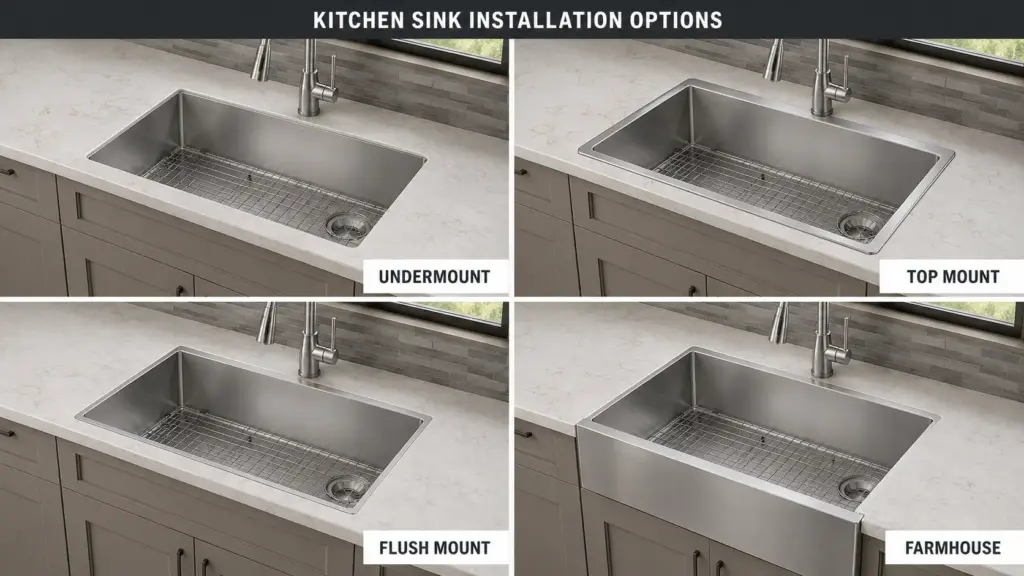
Installation details should be frozen before mass production.
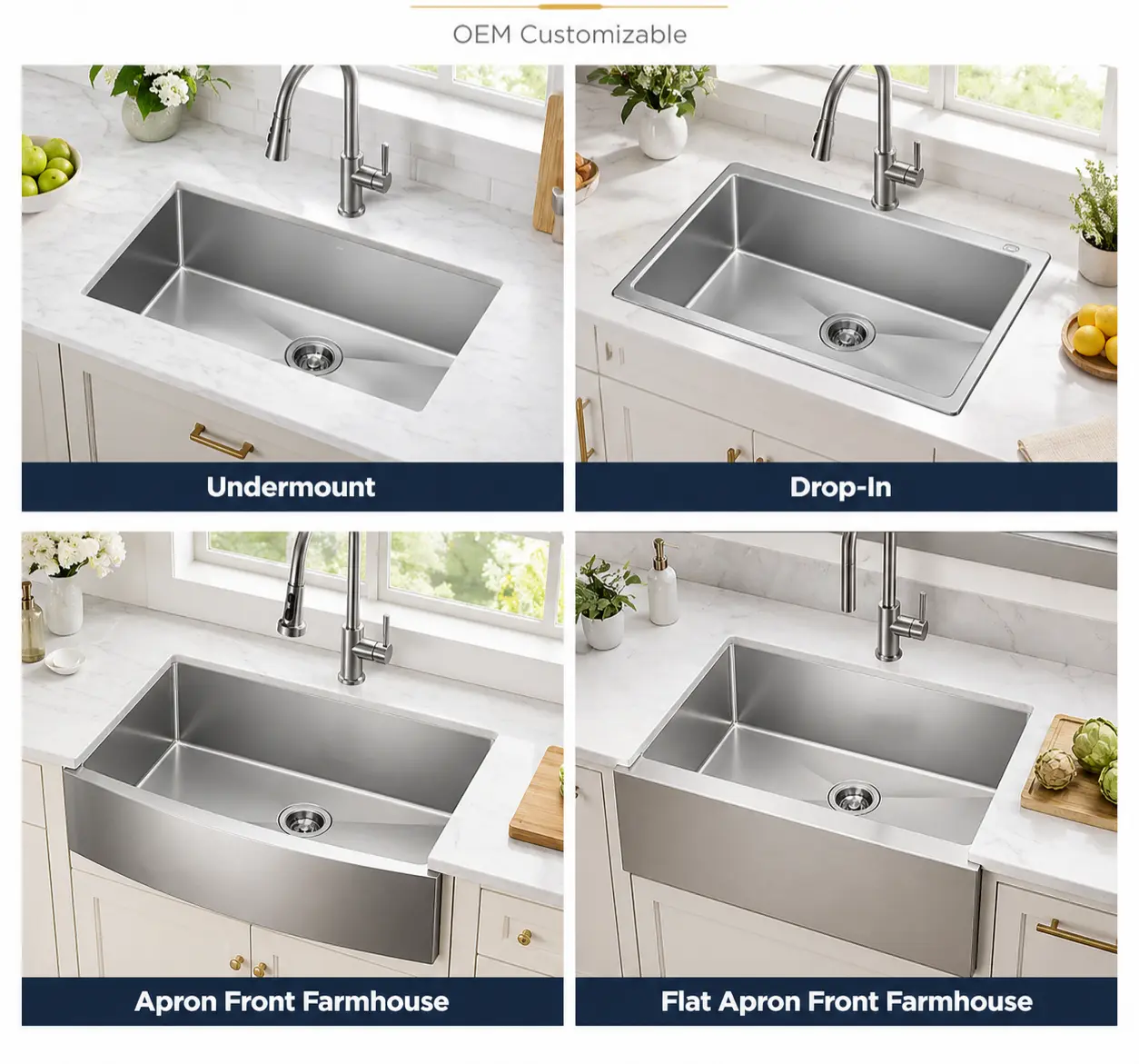
Typical types include:
- undermount
- top mount / drop-in
- flush mount
- apron front
Do not approve only the bowl.
Check the rim and installation geometry that interacts with the countertop.
For replacement projects, this becomes especially important because the new sink may need to fit an existing opening.
5. Freeze Drain and Faucet-Hole Positions
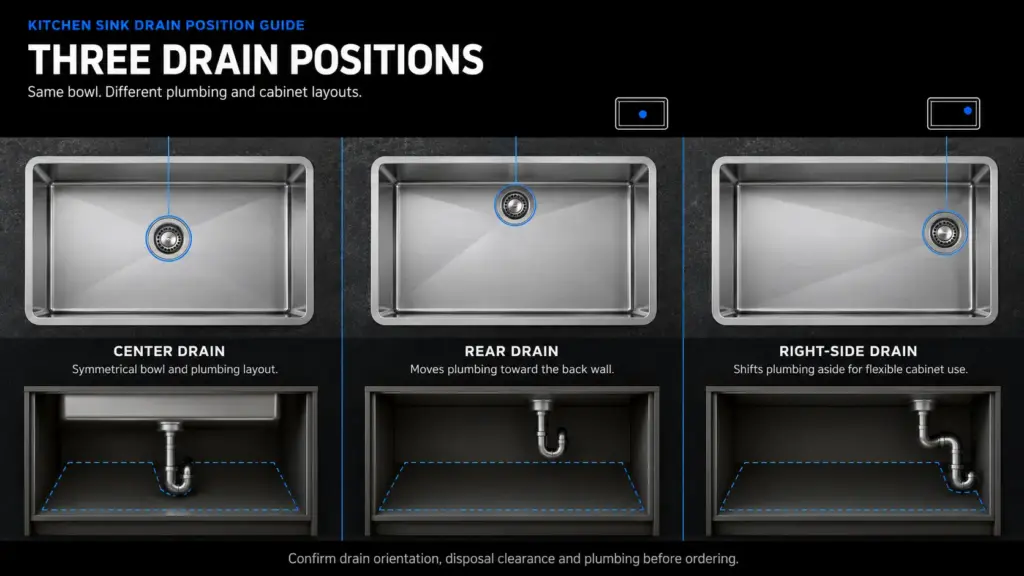
Drain position affects more than plumbing.
It can also change:
- usable bowl space
- cabinet clearance
- bottom grid geometry
- workstation accessories
- disposal installation
The approved sample and drawing should therefore clearly record:
center drain
rear center
rear offset
or the actual dimensional location.
Faucet holes should also record:
- quantity
- diameter
- position
Do not leave these as verbal instructions.
6. Approve the Surface Finish Under a Defined Reference
“Brushed” or “black” is not enough for repeat production.
Record:
- finish type
- brushing direction
- surface texture
- color reference
- visible appearance standard
For PVD or colored sinks, keep a physical approved reference where practical.
Surface finish can vary between production batches if the buyer and supplier do not retain the same reference.
7. Logo Approval Should Include Position and Size
Do not approve only the logo artwork.
Freeze:
- logo method
- size
- position
- orientation
- visibility
- color if applicable
For example:
Laser logo, inside upper bowl wall, centered, 35 mm width
is much clearer than:
Add customer logo.
For private-label programs, review:
Private Label Product Programs.
8. Accessories Are Part of the Golden Sample
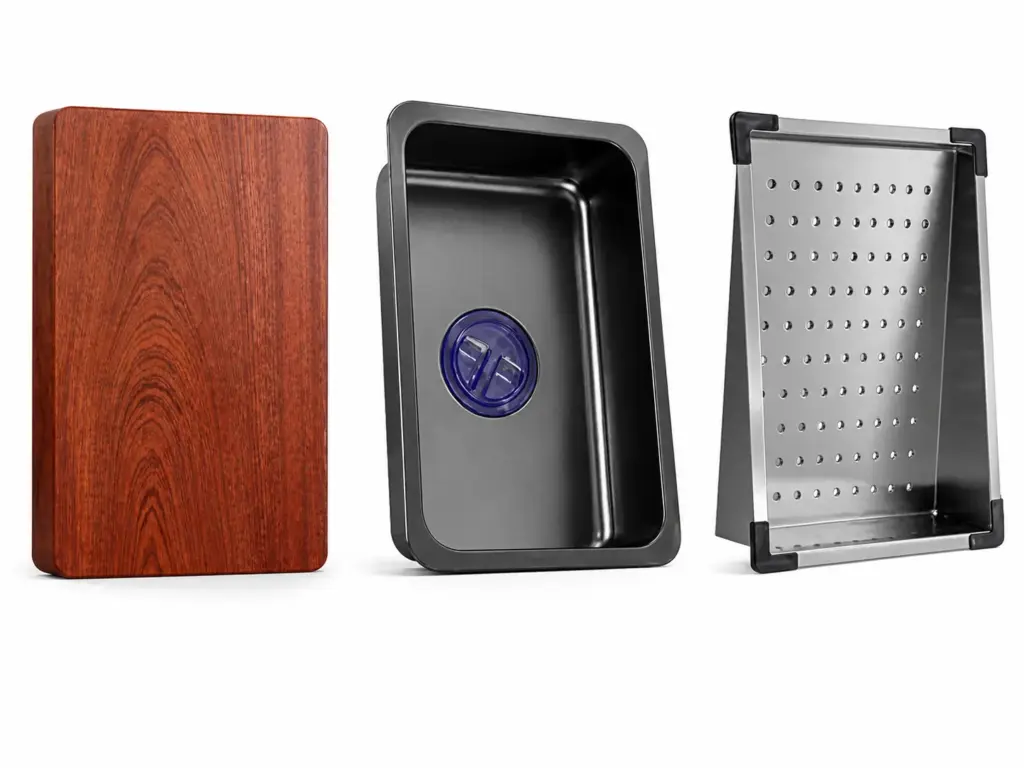
This is especially important for workstation and multifunction sinks.
Approve the complete accessory set:
- drain
- bottom grid
- roll-up rack
- colander
- cutting board
- basket
- soap dispenser
- installation clips
For each relevant accessory, confirm:
- material
- size
- finish
- fit
- quantity
A sink can remain unchanged while an accessory changes between orders.
That can still create a customer claim.
9. Check Workstation Accessory Fit
For workstation sinks, test the accessories on the actual sample.
Check:
- ledge width
- ledge height
- cutting board fit
- colander movement
- roll-up rack position
- grid clearance
- drain interference
The question is not only:
Are the accessories included?
It is:
Do they fit the approved sink correctly?
10. Freeze Sound Pads and Undercoating
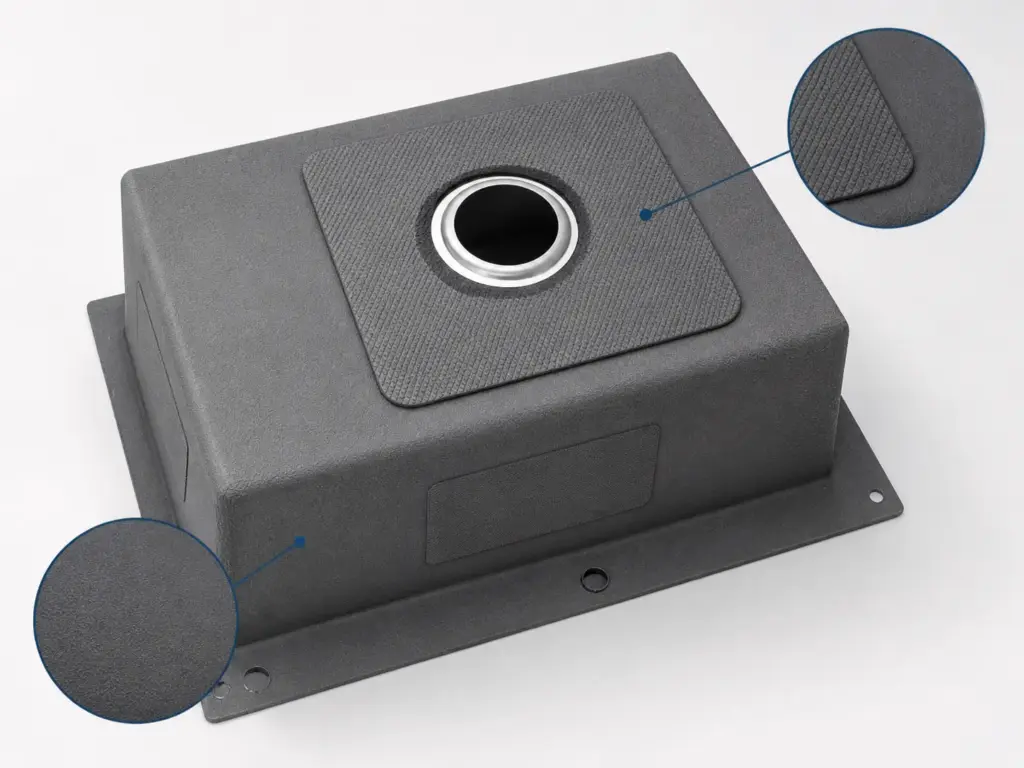
Underside details are easy to overlook during sample approval.
Record:
- sound-pad quantity
- pad position
- approximate coverage
- undercoating area
- visible application requirement
If the first sample has large sound pads but repeat production uses smaller ones, the sink may still look identical from the top.
The golden sample should therefore include underside references as well.
11. Packaging Must Be Approved with the Product
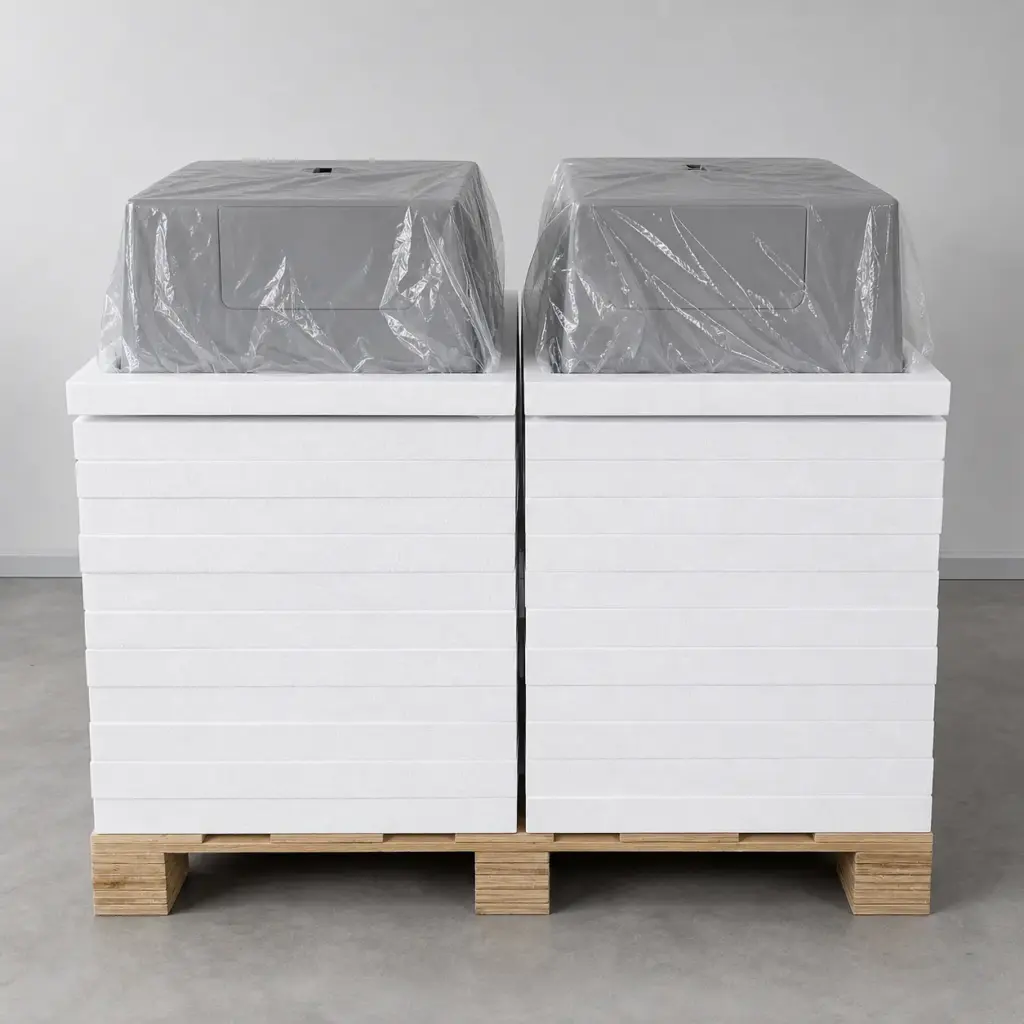
A golden sample approval should not end before the carton is reviewed.
Confirm:
- pcs per carton
- foam type
- foam thickness
- surface protection
- rim protection
- accessory position
- inner box
- outer carton
- shipping mark
- product label
- barcode
For private-label products, also approve:
- carton artwork
- brand logo
- SKU
- care instructions where required
Packaging is part of the final SKU, not an afterthought.
12. Record Approved Deviations
Sometimes the sample does not match the first drawing exactly.
For example:
Target bowl depth: 220 mm
Approved sample: 219 mm
If the buyer accepts the sample, record the approved value.
Otherwise the supplier may not know whether the next order should follow:
original drawing
or
approved physical sample.
Any accepted deviation should therefore be written into the approval record.
13. Take Reference Photos
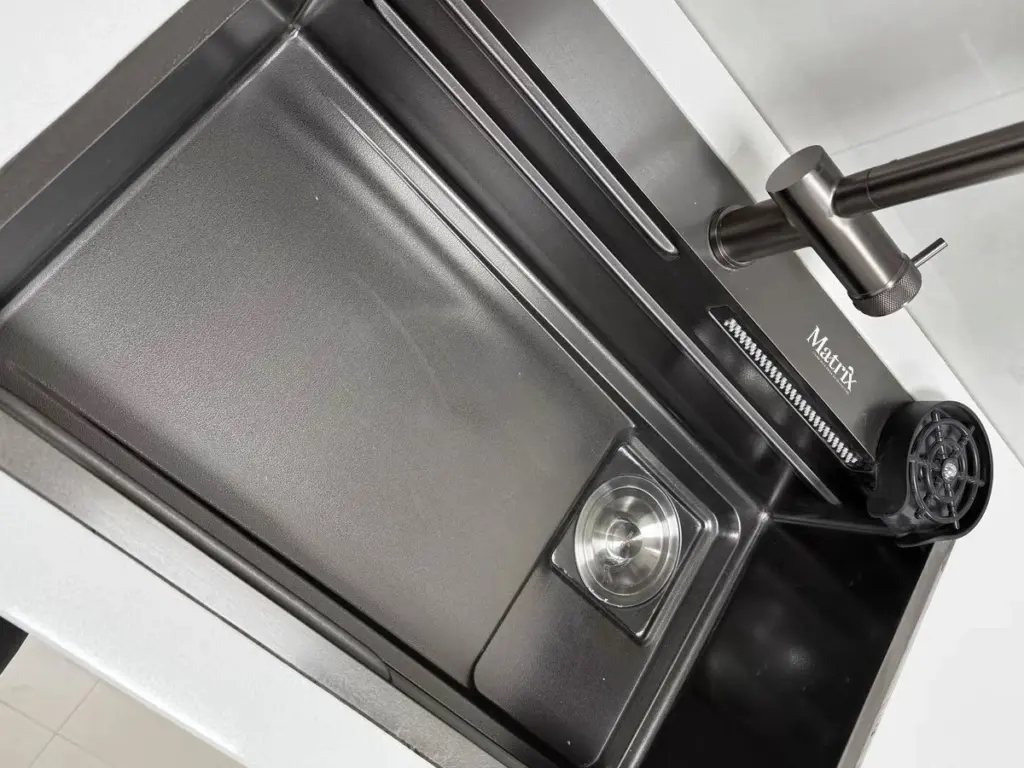
Photographs are useful for details that are difficult to describe numerically.
Useful reference photos include:
- full sink
- drain position
- logo
- surface finish
- sound pads
- undercoating
- accessories
- accessory arrangement
- packing
- carton label
Photo filenames can even follow the model and revision:
KS-8050-Rev03-Logo.jpg
KS-8050-Rev03-Packing.jpg
This makes repeat-order reference much easier.
14. What Should the Golden Sample Approval Record Contain?
A practical approval sheet can look like this:
| Item | Approved Reference |
|---|---|
| Model | X-XXXX |
| Style | Handmade made single bowl |
| Material | SUS304 |
| Thickness | 3.0 mm for top part, 1.0mm for bowl |
| Overall Size | 800 × 500 mm |
| Bowl Size | 720 × 400 mm |
| Depth | 220 mm |
| Radius | R10 |
| Installation | Undermount |
| Drain | Rear Center |
| Finish | Brushed |
| Logo | Laser / Approved Position |
| Accessories | Approved List |
| Sound Pads | Approved Sample |
| Undercoating | Approved Sample |
| Carton | Artwork Rev.02 |
| Packing | Approved Layout |
| Approval Date | YYYY-MM-DD |
Add:
- buyer approval
- supplier approval
- sample ID
- inspection photos
where your project requires them.
15. Golden Sample vs Approved Specification
Do not rely on only one.
Physical Golden Sample
Useful for:
- appearance
- feel
- surface
- accessory fit
- real structure
Approved Drawing
Useful for:
- dimensions
- geometry
- drain
- hole positions
Specification Record
Useful for:
- material
- thickness
- accessories
- finish
- packaging
Inspection Report
Useful for:
- actual measurements
- PASS / review records
Together, these create a stronger repeat-order reference than a physical sample alone.
Buyer Takeaway
A golden sample should answer one question:
What exactly must the factory reproduce in the next production batch?
If the answer exists only in someone’s memory, the approval is incomplete.
Freeze:
Drawing → Dimensions → Material → Finish → Logo → Accessories → Packing
and keep the physical sample as supporting evidence.
That is what makes the sample useful for repeat production.
FAQ
What is a golden sample in kitchen sink manufacturing?
It is an approved physical sample used as a reference for mass and repeat production. It should be supported by an approved drawing and written specification.
Is a signed physical sample enough?
Usually not. Dimensions, material, thickness, accessories, logo and packaging should also be recorded so production does not depend only on visual comparison.
Should packaging be included in golden sample approval?
Yes. Packing method, carton, labels and accessory arrangement can affect both product claims and repeat-order consistency.
Should accessories be approved separately?
They should be clearly recorded as part of the complete SKU, especially for workstation and multifunction sinks.
What happens if the sample differs from the drawing?
Any accepted deviation should be documented. Otherwise future production may not know whether to follow the drawing or physical sample.
Preparing a Sink Sample for Approval?
Use the Kitchen Sink RFQ Checklist to define the product before development.
For inspection references, see:
Kitchen Sink Quality Control & Inspection
and for OEM branding and packaging: