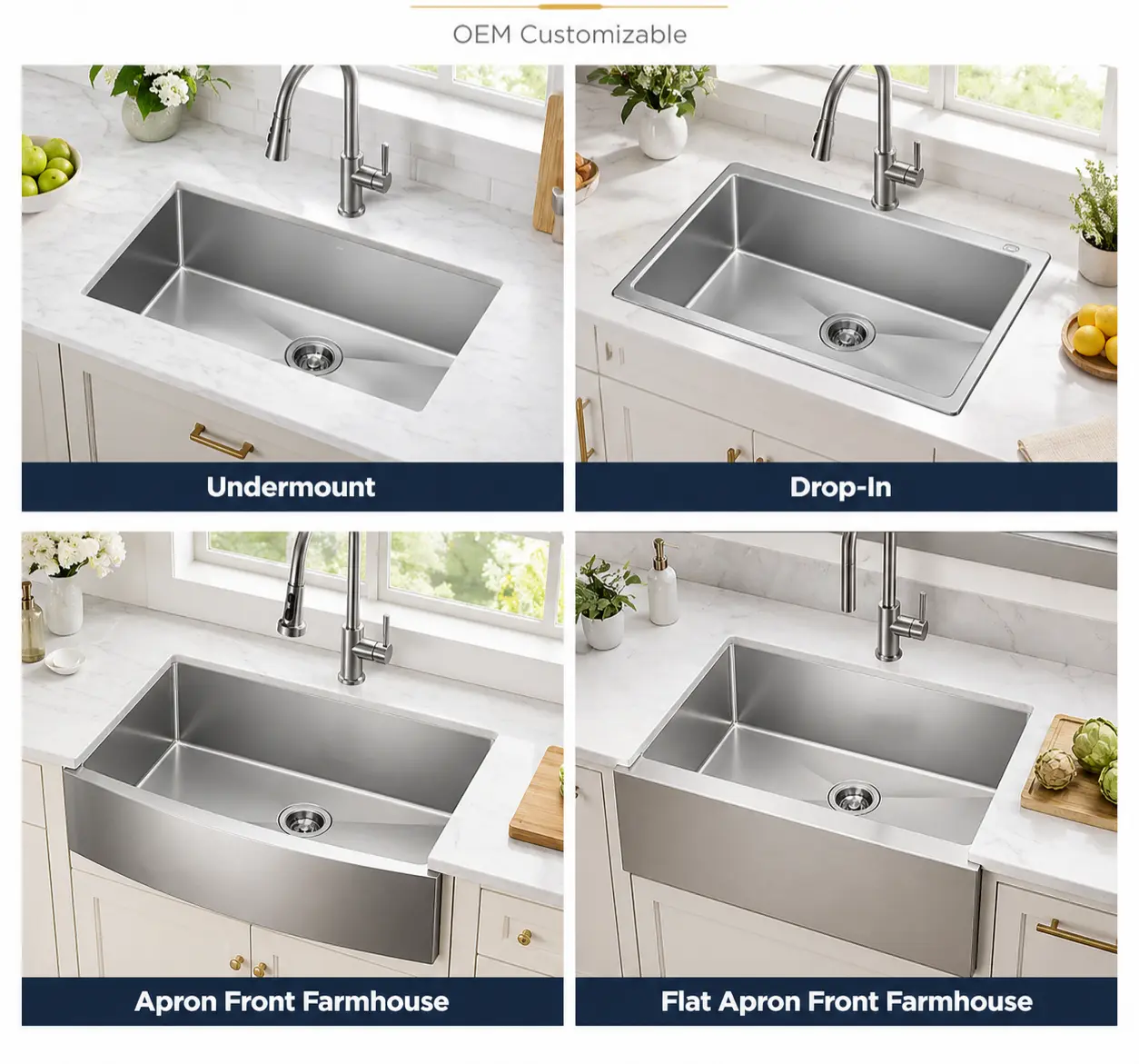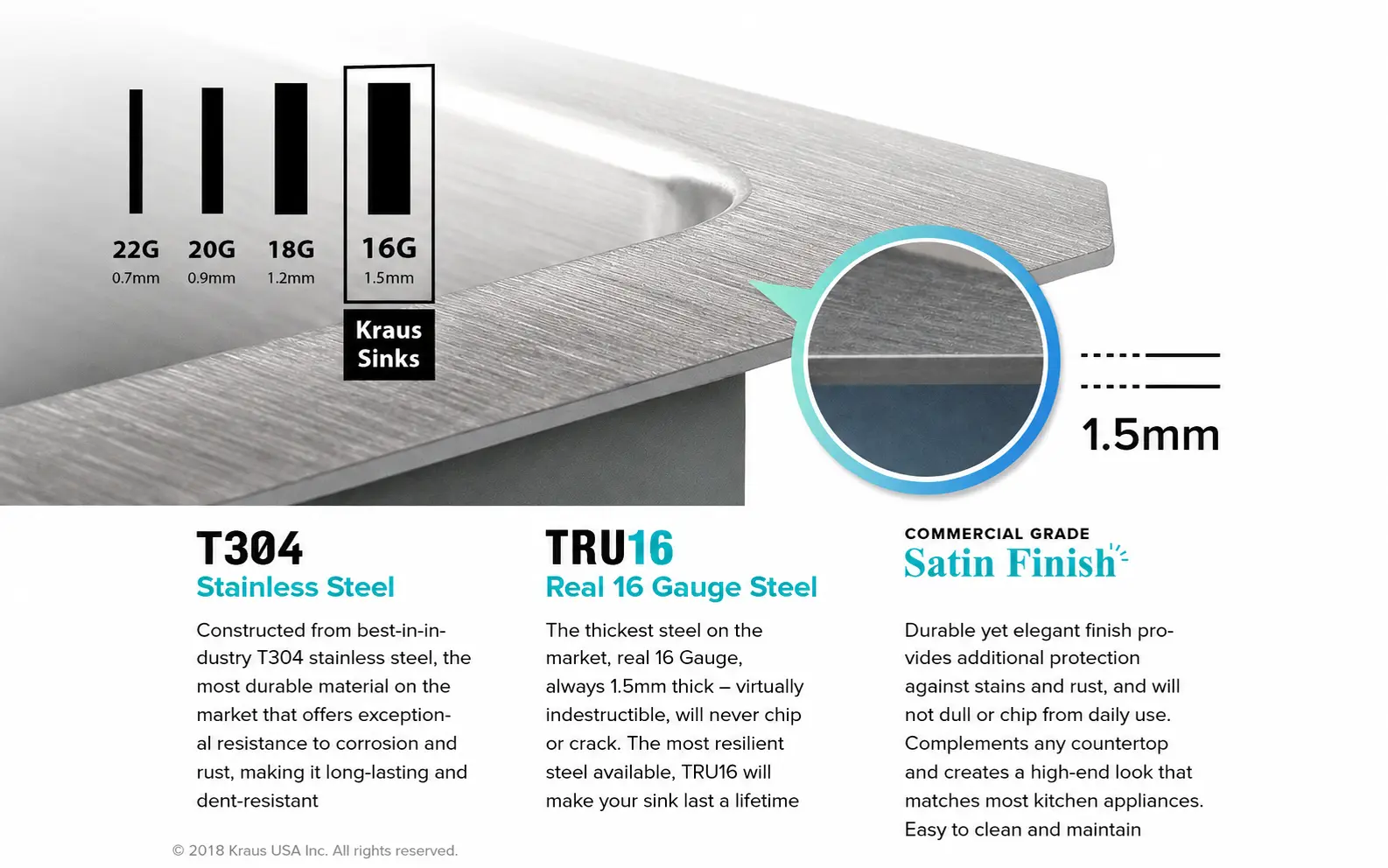
The same stainless steel grade does not guarantee the same surface appearance.
Two SUS304 sinks can use the same nominal material and still look different because a brushed finish depends on much more than the steel grade itself.
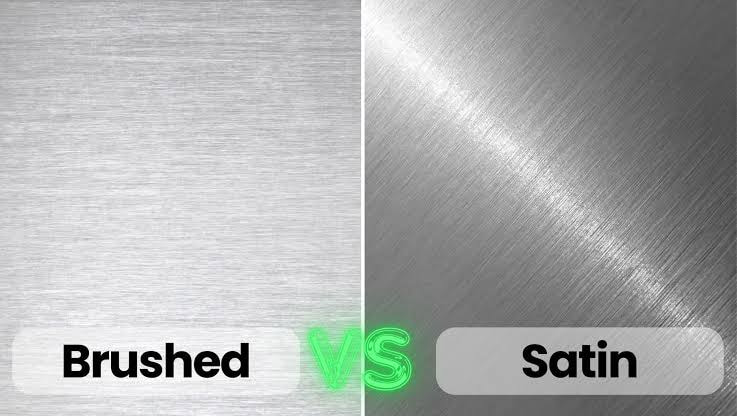
Visual differences can come from:
- brushing direction
- abrasive condition
- surface preparation
- polishing sequence
- grinding around welded areas
- brushing pressure
- surface roughness
- viewing angle
- lighting
- batch-to-batch finishing control
For OEM and repeat-order programs, the real question is not:
“Is this still SUS304?”
It is:
“Does the production surface match the approved finish reference?”
Quick Answer
A brushed stainless steel sink can look different between batches even when the material grade and nominal specification are unchanged.
The main reasons are:
- Brushing direction — changes how light reflects from the surface.
- Abrasive condition — new and worn abrasive belts do not always create the same visual texture.
- Surface preparation — grinding and polishing before brushing affect the final grain.
- Local finishing — welded corners and repaired areas can reflect light differently from broad flat surfaces.
- Lighting and viewing angle — the same surface can appear lighter, darker or more reflective depending on how it is viewed.
- Batch reference control — if production is not compared against the same approved physical sample, visual drift can occur.
“Brushed” describes a finish type. It does not, by itself, define one exact visual appearance.
Why Two Brushed SUS304 Sinks Can Look Different
SUS304 tells you the alloy grade.
It does not define:
- grain length
- grain density
- surface roughness
- brushing direction
- reflectivity
- visual brightness
So two sinks can both be:
SUS304 / Brushed Finish
while still appearing different under the same showroom lighting.
This is why material grade and surface finish should be treated as separate specifications.
1. Brushing Direction Changes Light Reflection
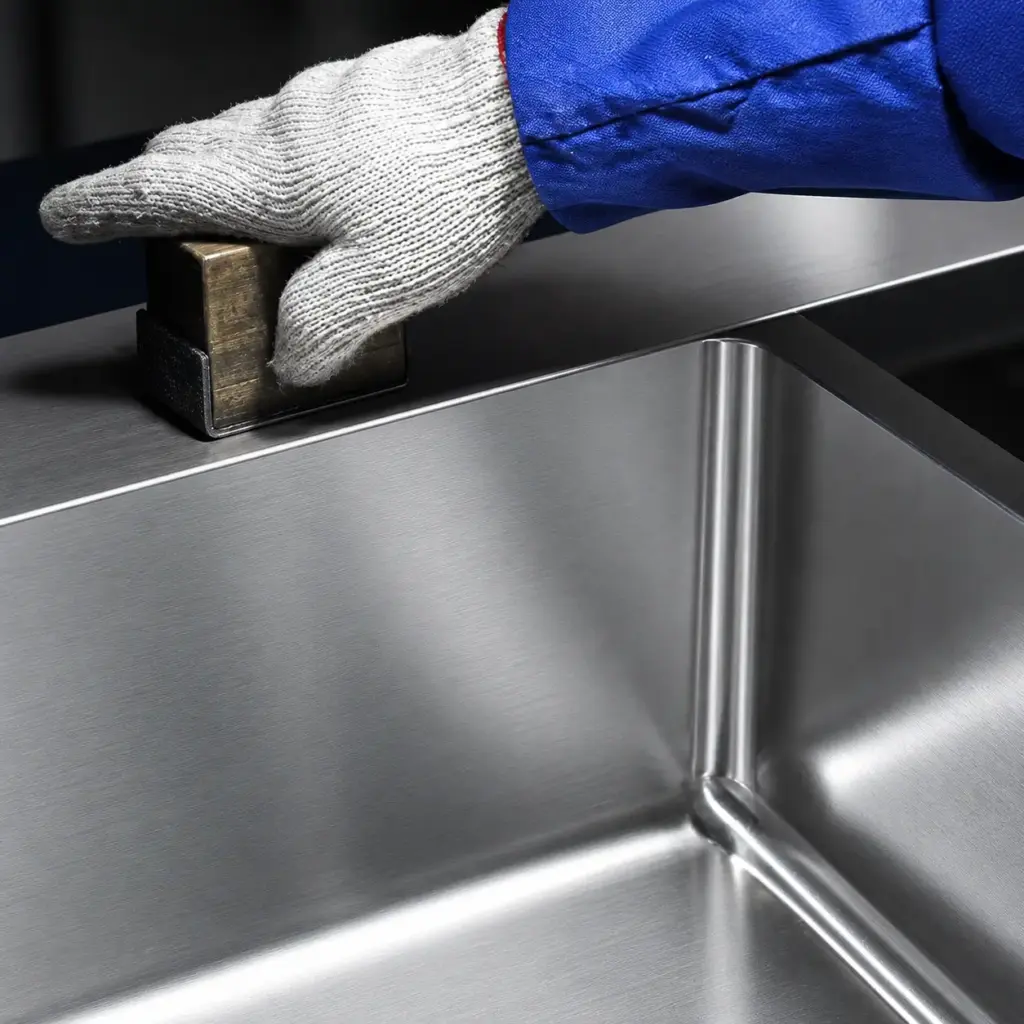
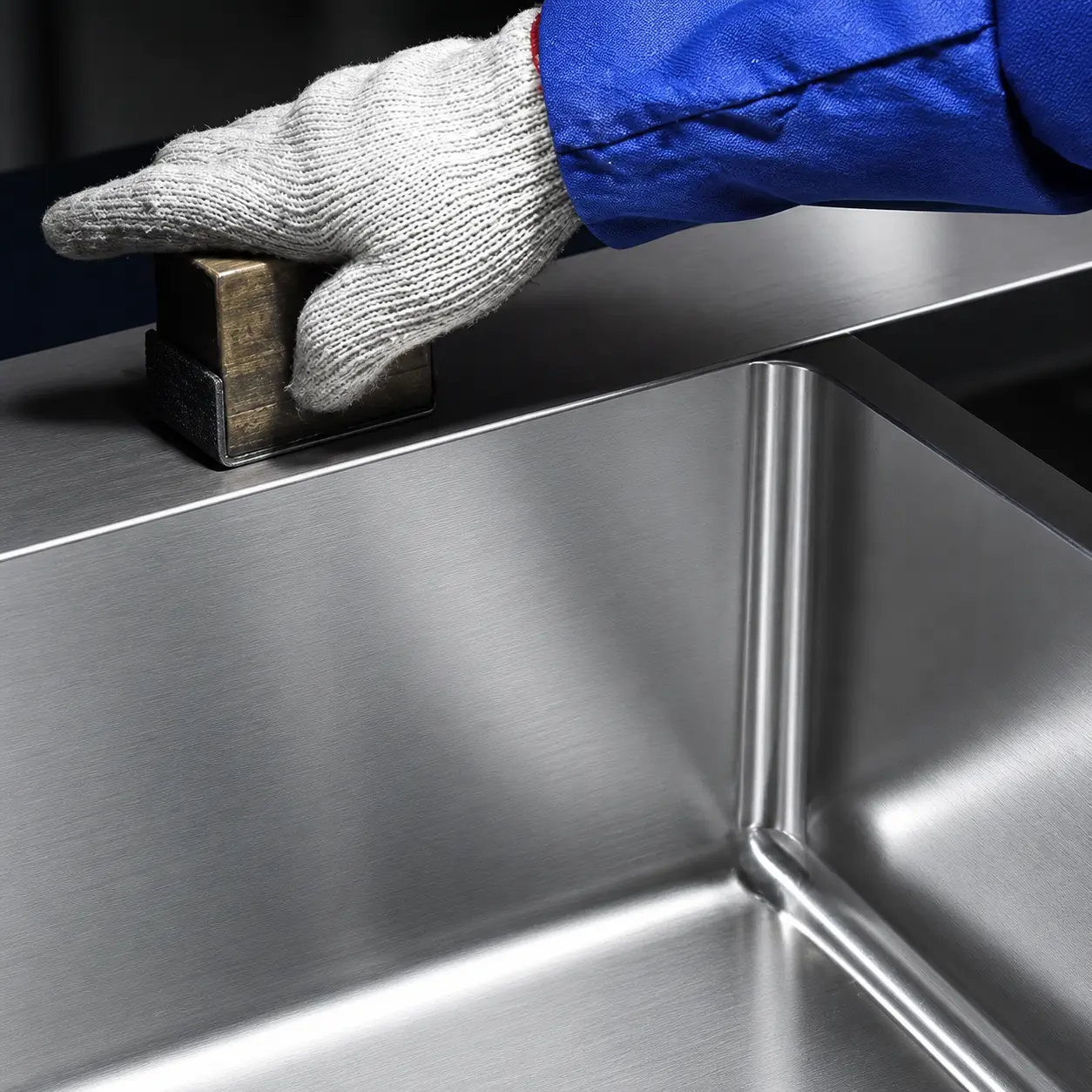
A brushed stainless steel surface contains many fine directional lines.
These lines reflect light differently depending on:
- viewing direction
- light source
- sink orientation
For example, the same surface can appear:
- darker from one side
- brighter from another
- more matte at a shallow angle
- more reflective under direct light
This means:
visual appearance is partly directional.
A finish should therefore be compared under reasonably consistent lighting and viewing conditions.
2. Grain Direction Should Remain Consistent
For a professional-looking sink, visible brushed surfaces should follow the intended grain direction.
If one batch is brushed:
front-to-back
and another appears:
slightly diagonal
the difference can be noticeable even if the surface roughness is similar.
This is especially important on:
- large bowl bottoms
- apron fronts
- wide rims
- workstation ledges
where the brushed pattern is visually exposed over a larger area.
3. Abrasive Condition Can Change the Surface Texture
Brushed finishes are created using abrasive media.
As abrasive belts or wheels wear, their cutting effect changes.
A fresher abrasive may create:
- sharper grain
- more defined lines
while a more worn abrasive may create:
- softer grain
- smoother appearance
- lower visual contrast
That means two batches processed with different abrasive conditions can look different even when the same nominal finishing process is used.
4. Surface Preparation Before Brushing Matters
Brushing is not always the first finishing step.
Depending on the sink and manufacturing route, the surface may first go through:
- welding
- grinding
- blending
- polishing
These earlier steps affect the final brushed appearance.
A polished surface that is smoother before brushing can produce a different visual result from a surface with more aggressive grinding marks underneath.
5. Handmade Sink Corners Are More Sensitive
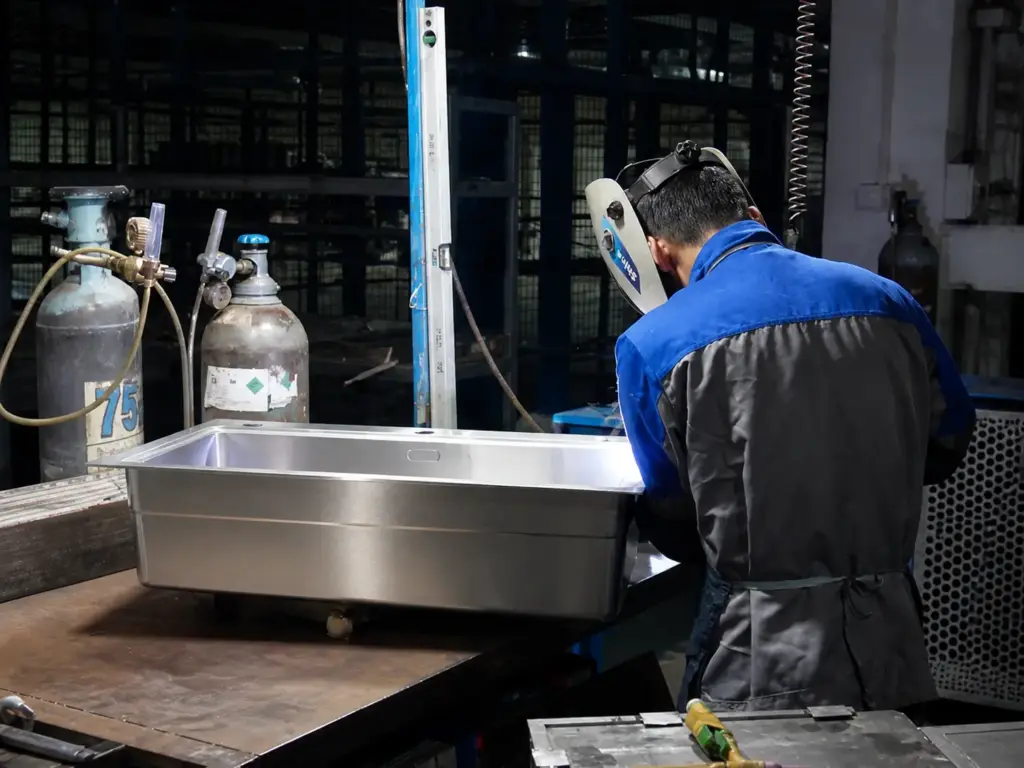
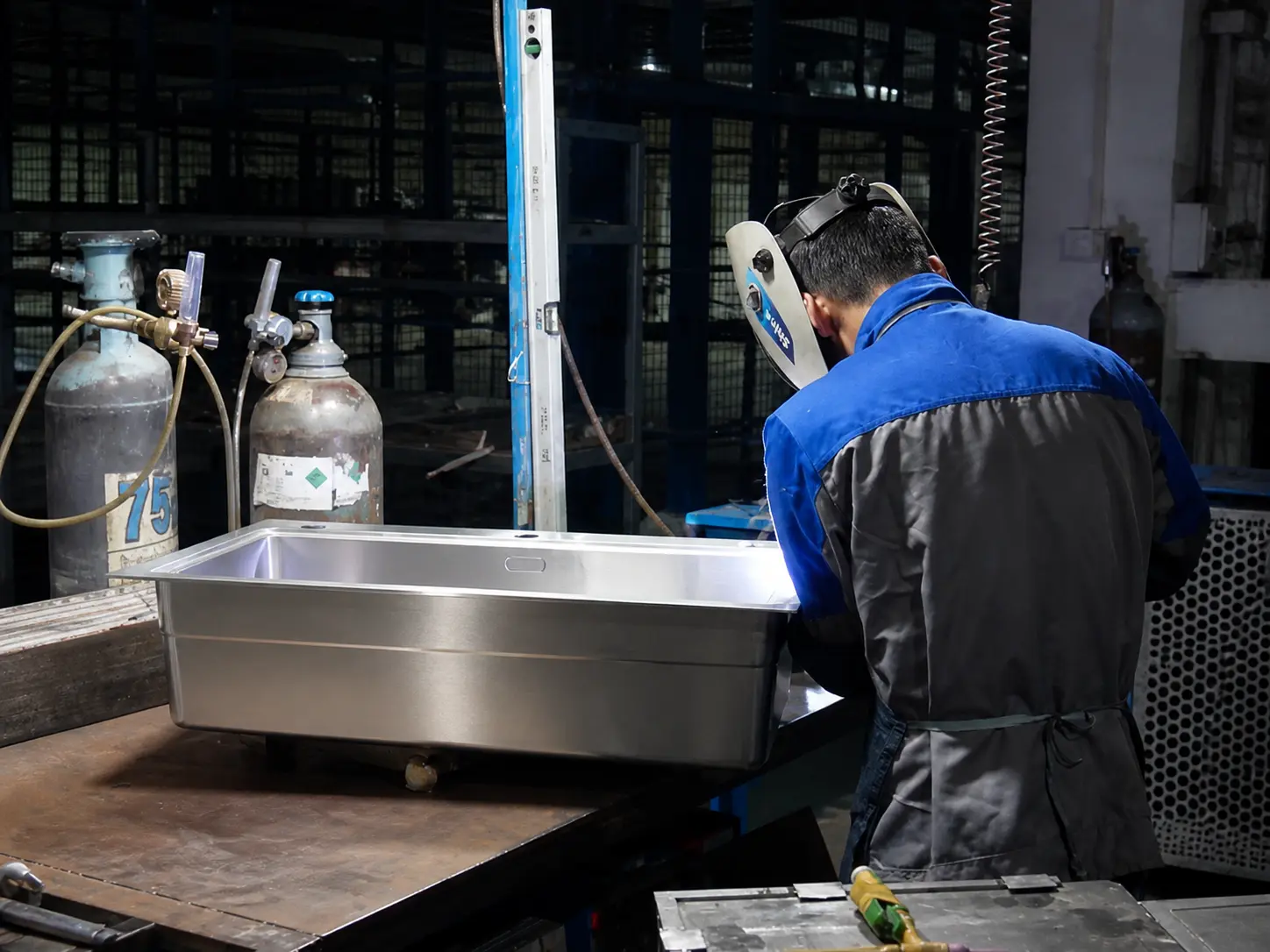
Handmade sinks contain welded and ground areas.
A broad flat panel and a hand-finished corner do not have exactly the same manufacturing history.
Around welded corners, the surface may go through:
welding → grinding → blending → polishing → brushing
while the main flat sheet may require less corrective finishing.
This can create slight visual differences in:
- grain density
- brightness
- corner transition
- reflection
Matrix’s Handmade Kitchen Sinks page shows this real production sequence, including welding, grinding, polishing and R-angle polishing.
6. Large Flat Areas Make Differences Easier to See
Small surface differences are more noticeable on:
- large single-bowl bottoms
- apron-front panels
- wide drainboards
- workstation ledges
because broad flat areas reflect light continuously.
A minor change in grain direction or surface texture can therefore appear more obvious than on a small or heavily curved surface.
7. Pressed and Handmade Sinks Can Show Different Surface Behavior
The production route matters.
Handmade Sink
The surface may include:
- sheet preparation
- welding
- grinding
- corner blending
- polishing
- final brushing
This creates more locally finished areas.
Pressed / Drawn Sink
The bowl is formed from a sheet before final surface finishing.
Forming can change:
- local geometry
- reflection angle
- surface stretch
So even with the same brushing process, a curved pressed bowl may visually reflect light differently from a flatter handmade structure.
8. Lighting Can Create a False “Color Difference”
Stainless steel itself does not need to change color for two sinks to look different.
Different lighting can make the same finish appear:
- warmer
- cooler
- brighter
- darker
Common causes include:
- showroom LED color temperature
- warehouse lighting
- daylight
- phone camera white balance
- reflection from cabinets or walls
So a photo comparison alone can be misleading.
9. Phone Photos Are Poor Finish References
A supplier may send one batch photo under:
factory white light
while a buyer compares it to a sample photo taken under:
warm showroom lighting.
The surfaces may look different even if the physical finish is quite close.
For repeat-order approval, a physical reference is usually more useful than:
“same as the previous photo.”
10. “Brushed” Is Too Broad for Repeat-Order Control
A quotation that says only:
Brushed stainless steel
does not fully define:
- grain direction
- roughness
- visual reflectivity
- corner treatment
- sample reference
For standard products, that may be sufficient.
For a private-label program where appearance matters, it may not be enough.
Why an Approved Physical Sample Matters
A physical sample gives both buyer and factory a common visual reference.
That reference can help compare:
- grain direction
- overall reflectivity
- corner finish
- visible polishing
- surface consistency
The sample does not replace measurable specifications, but it is very useful for appearance control.
Matrix’s Private-Label Product Programs already treats sample approval and repeat-order standards as part of the private-label process, not just logo or carton customization.
What Should Be Compared Between Batches?
For repeat-order visual consistency, compare:
- the same sink model
- the same material grade
- the same surface finish
- the same brushing direction
- the same visible areas
- the same approved reference
- similar lighting conditions where practical
Comparing two unrelated models under different lighting creates little useful information.
How QC Should Check a Brushed Surface
A practical visual inspection can look at:
- grain direction
- grain continuity
- visible polishing marks
- scratch condition
- corner transition
- large flat-area consistency
- obvious batch variation
The surface should be checked against:
- approved sample
- approved finish reference
- customer specification where defined
rather than against an inspector’s memory.
Matrix’s Quality Control & Inspection separates surface inspection from material, dimensions and accessories, which is important because finish consistency is its own QC question.
Why Repeat Orders Are Harder Than One Good Sample
Producing one attractive sample is different from repeating the same appearance over several production batches.
Repeat-order consistency depends on controlling:
- surface preparation
- finishing process
- abrasive condition
- brushing direction
- approved visual reference
- operator / process consistency
The challenge is not:
making one sink look good.
It is:
making the next batch look acceptably similar to the approved one.
Does a Different Brushed Appearance Mean the Material Changed?
Not necessarily.
A finish difference does not automatically mean:
- SUS304 changed to SUS201
- thickness changed
- wrong material was used
Material grade and surface appearance should be verified separately.
If the material itself is in doubt, see:
How Can Buyers Verify SUS304 Without Relying on a Magnet?
Is Brushed the Same as Satin?
Not always.
These terms are sometimes used broadly in commercial descriptions, but different suppliers may use them differently.
The safest approach for an OEM project is not to rely only on the finish name.
Confirm the actual appearance through:
- sample
- product photo reference
- physical finish reference
Matrix’s Handmade Kitchen Sinks page currently lists brushed / satin and other surface options for custom programs.
What About PVD or Colored Sinks?
The same principle becomes even more important with colored sinks.
PVD or colored finishes can be influenced by:
- substrate condition
- surface texture
- finish batch
- matching accessories
- lighting
For buyers developing gold, gunmetal, black or other colored products, see Matrix’s Kitchen & Bath Product Programs for PVD / colored sink options.
Brushed Finish Diagnostic Table
| Observation | More Relevant Cause |
|---|---|
| Entire batch looks slightly darker | Surface texture / abrasive / lighting |
| Grain direction looks different | Brushing direction |
| Corners look brighter | Grinding / polishing transition |
| Flat bowl bottom looks more reflective | Surface preparation / brushing texture |
| Photos differ but physical samples look close | Lighting / camera |
| Only one sink looks different | Local finishing variation |
| Many units show same change | Batch finishing process |
| Material grade is suspected | Verify separately; appearance alone is insufficient |
Does Surface Roughness Matter?
Yes.
A rougher surface scatters light differently from a smoother surface.
That changes:
- brightness
- matte appearance
- visible grain
- reflection
Two surfaces can therefore use the same stainless steel grade but look different because the final surface texture is not identical.
Common Misunderstandings
“Same SUS304 means the finish should look identical.”
No.
SUS304 defines the material grade, not the final brushed texture.
“If the second batch looks darker, the material must be different.”
Not necessarily.
Surface roughness, abrasive condition and lighting can change appearance.
“A photo is enough to approve the finish.”
For rough reference, yes.
For appearance-sensitive repeat orders, a physical approved sample is stronger.
“Brushed finish is one universal standard.”
No.
The word describes a general finish type, but the final appearance can still vary.
“If the sink dimensions pass, the finish is acceptable.”
Dimensional QC and surface QC are separate questions.
What Does This Mean for OEM and Private-Label Orders?
For appearance-sensitive sink programs, the important control is not simply:
“Brushed finish required.”
A stronger repeat-order reference can include:
- approved physical sample
- brushing direction
- visible surface expectation
- agreed corner finish
- repeat-order comparison
This is especially useful when the product is sold under the same:
- brand
- SKU
- retail listing
- project specification
because customers expect the product to look consistent between orders.
Buyer Takeaway
When two brushed stainless steel sink batches look different, do not start with:
“Did the factory change the stainless steel?”
Start with:
“Did the surface preparation and finishing reference change?”
The most useful comparison is:
Material Grade → Surface Preparation → Brushing Direction → Abrasive Condition → Approved Sample → Repeat Batch
The key distinction is:
Material consistency and finish consistency are related, but they are not the same thing.
Frequently Asked Questions
Why does my repeat-order stainless steel sink look darker than the sample?
Possible causes include surface roughness, brushing direction, abrasive condition, polishing sequence and lighting.
Can two SUS304 sinks have different brushed finishes?
Yes. SUS304 defines the alloy grade, not the final surface texture.
Does brushing direction affect appearance?
Yes. Directional grain changes how light reflects from the stainless steel.
Why do handmade sink corners sometimes look different from the flat surface?
Corners often go through additional welding, grinding, blending and polishing before final brushing.
Can lighting make two identical sinks look different?
Yes. Color temperature, viewing angle and surrounding reflections can significantly affect stainless steel appearance.
Should buyers approve brushed finish using a photo?
Photos are useful for reference, but appearance-sensitive OEM programs are better controlled with a physical approved sample or clearly defined finish reference.
Is brushed the same as satin?
Not always. Commercial naming can vary, so the actual finish appearance should be confirmed rather than relying only on the name.
Developing a Brushed Stainless Steel Sink Program?
Matrix supports brushed and satin finishes across custom stainless steel sink programs, including handmade sinks, private-label branding and repeat-order specifications.

See Handmade Kitchen Sinks for finish and customization options, or review Private-Label Product Programs for sample approval, branding and repeat-order control.