A handmade sink can match the drawing and still look different from the approved sample.
The reason is simple:
A drawing controls dimensions.
It does not fully describe every visual detail created by:
- welding
- grinding
- corner blending
- polishing
- brushing
- manual finishing
For OEM buyers, the real question is not:
“Is every corner mathematically identical?”
It is:
“Does the mass-production workmanship remain within the appearance and geometry approved in the sample?”
Quick Answer
Handmade sink corners can vary between sample and mass production because the corner is created through several fabrication and finishing steps.
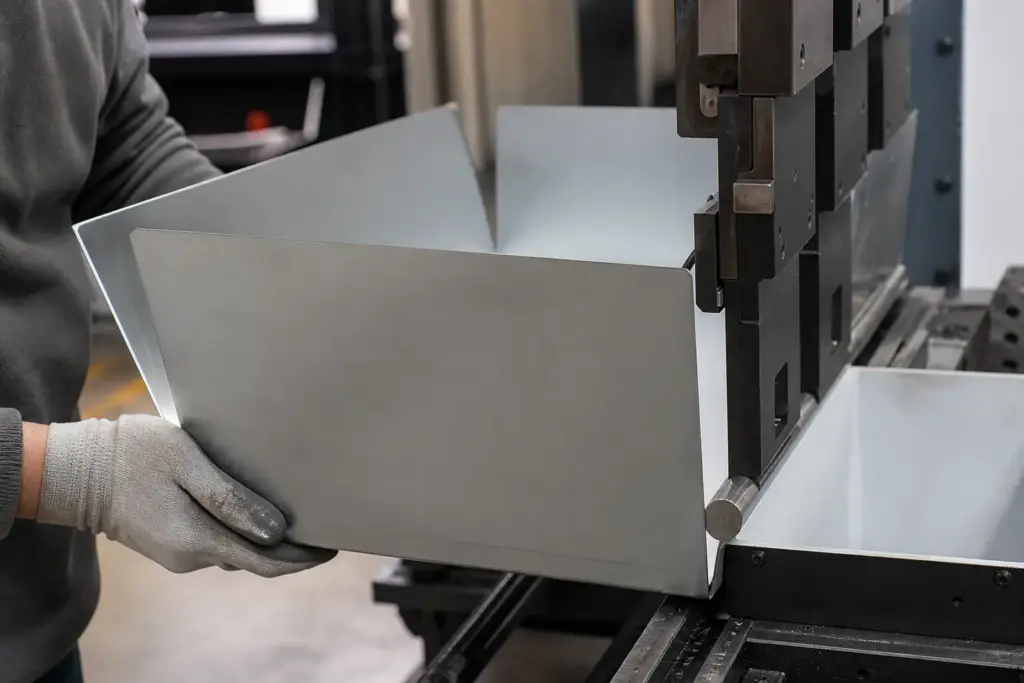
A typical sequence is:
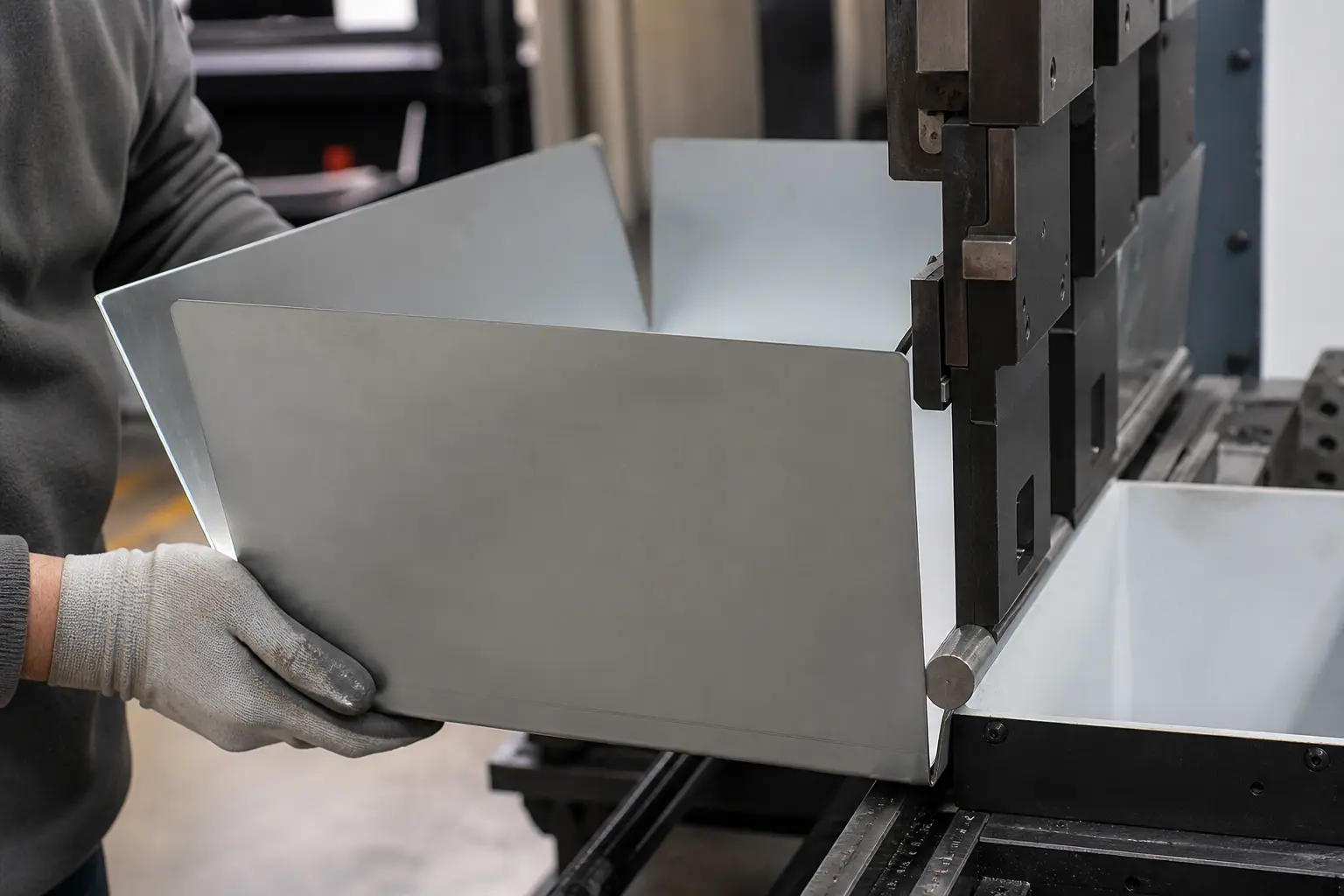
Panel Forming
→ Welding
→ Grinding
→ Corner Blending
→ Polishing
→ Brushing
Small differences in any of these steps can change:
- visible corner radius
- sharpness of the transition
- weld-line visibility
- reflection
- brushing continuity
- apparent symmetry
This does not automatically mean the sink is dimensionally wrong.
But for private-label and repeat-order programs, visible corner workmanship should be controlled against an approved reference rather than left to operator judgment alone.
Why Handmade Sink Corners Are More Sensitive Than Flat Surfaces
A large flat wall starts from relatively uniform stainless steel sheet.
A handmade corner does not.
The corner is where several processes meet:
- bent sheet
- welded joint
- ground weld
- blended surface
- final brushing
That means the corner has a much more complex manufacturing history than the center of the bowl.
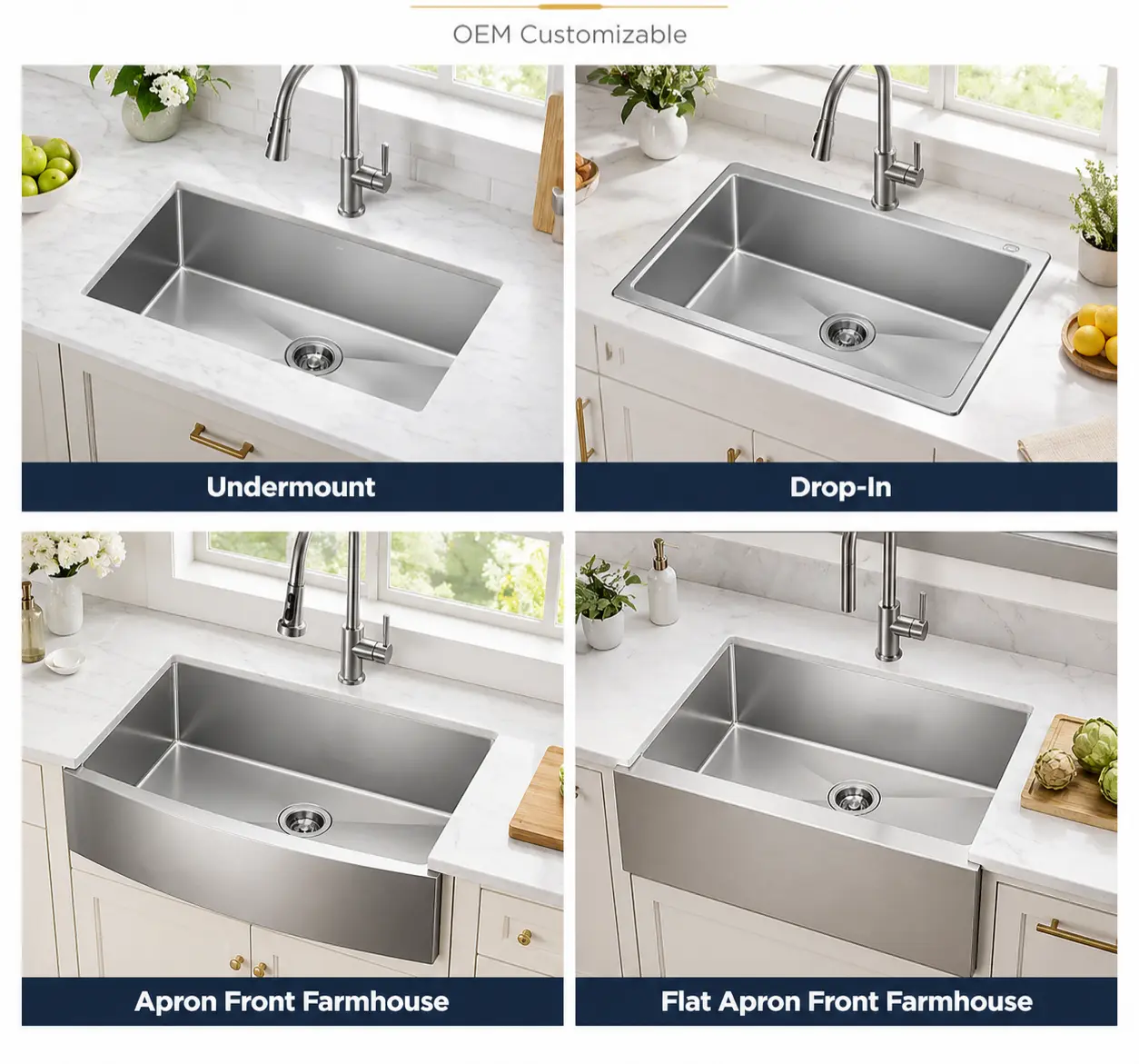
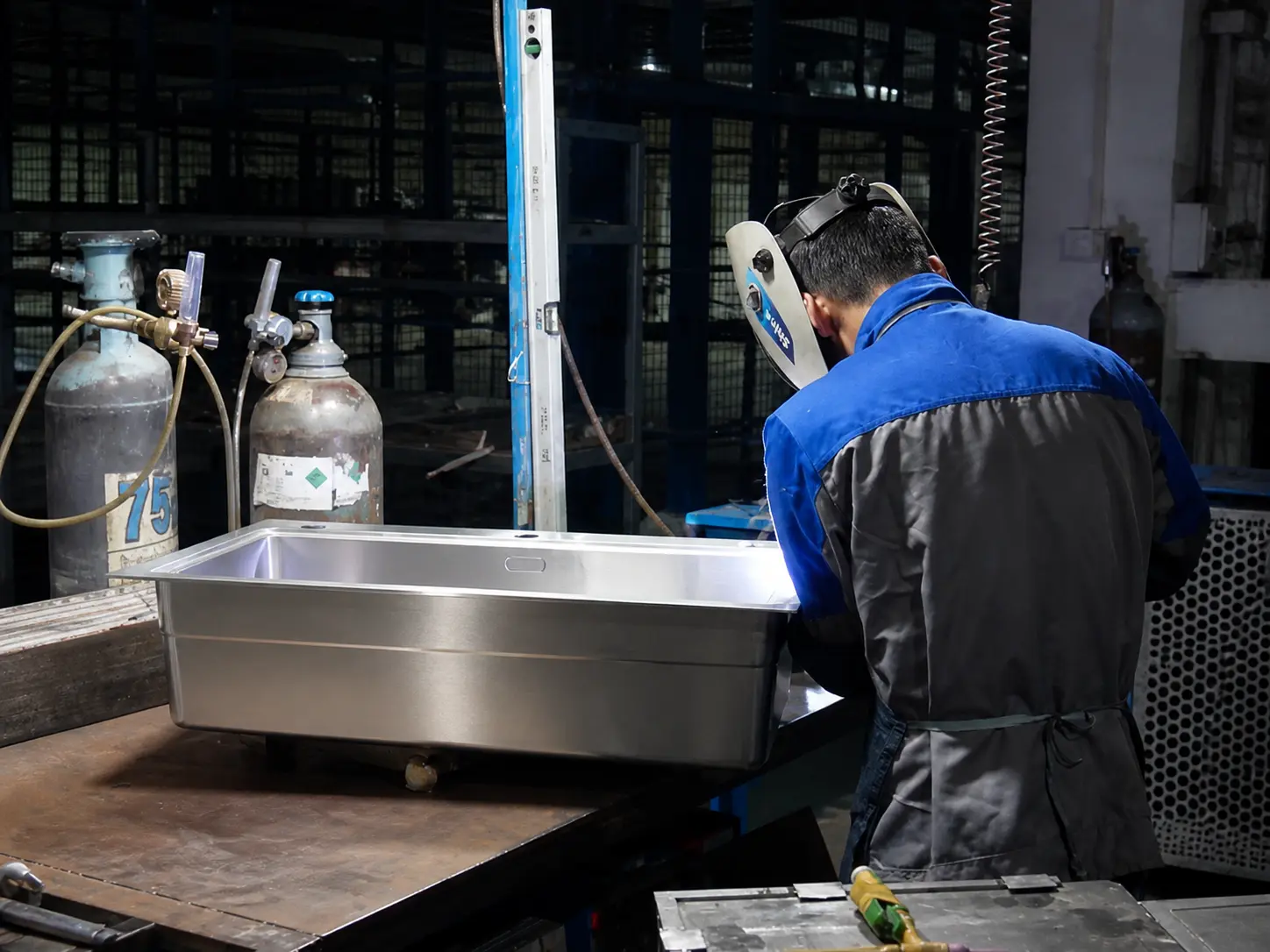
Matrix’s Handmade Kitchen Sinks shows the handmade production route, including welding, grinding, polishing and corner finishing.
This is why visual consistency should be evaluated separately at the corners.
1. Welding Creates the Corner, but Finishing Defines How It Looks
For many handmade sink structures, panels are formed and joined by welding.
The weld creates the structural connection.
But the final visible corner is created after the weld is:
- ground down
- blended
- polished
- brushed
So two corners with equally sound welds can still look different after finishing.
Weld quality and final corner appearance are related, but they are not the same inspection item.
2. Grinding Can Change the Apparent Radius
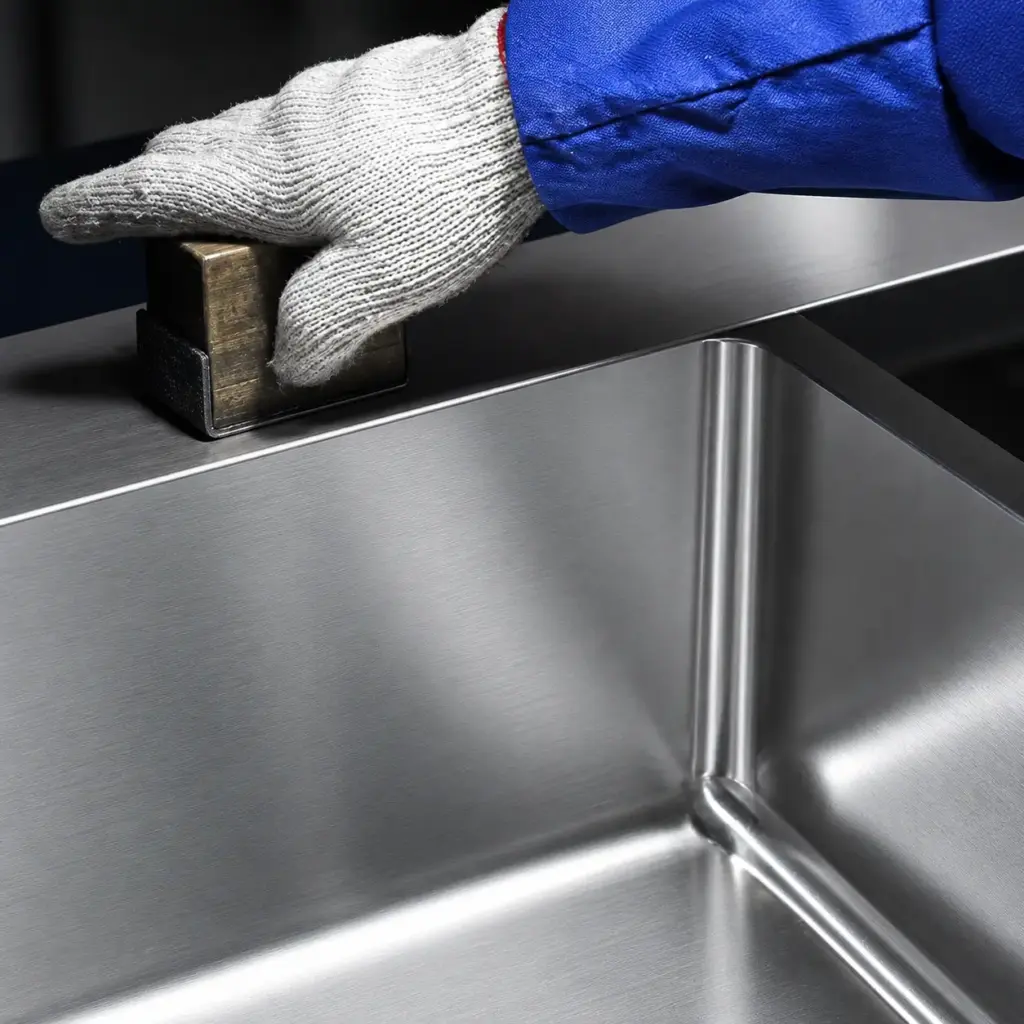
After welding, excess weld material must be removed.
If grinding is:
- more aggressive
- more localized
- extended farther into the adjacent wall
the corner can appear softer or larger.
If less material is removed, the corner may appear:
- sharper
- more defined
This means the visible R-angle is influenced not only by the original forming geometry, but also by the finishing process.
3. The Same Nominal R-Angle Can Still Look Different
Two sinks may both be specified as:
R10
or another nominal corner radius.
But visual appearance can still differ because of:
- grinding transition
- polishing width
- brushing direction
- weld blending
A radius value on a drawing describes geometry.
It does not completely describe the visual appearance of the finished corner.
4. Corner Symmetry Matters More on Large Single-Bowl Sinks
On a large single-bowl handmade sink, the four corners are visible at the same time.
That makes small inconsistencies easier to notice.
For example:
- one corner appears sharper
- another appears more polished
- one reflects more light
- one has a wider blended area
Individually, each corner may look acceptable.
But when viewed together, inconsistency becomes obvious.
This is why visual QC should compare:
corner-to-corner consistency
not only whether each corner has no obvious defect.
5. Brushing Direction Can Make the Same Geometry Look Different
Stainless steel appearance is highly directional.
A corner can appear:
- darker
- brighter
- sharper
- softer
depending on how the brushed grain transitions from:
- bowl wall
- bottom
- corner
If the brushing direction changes too abruptly, the corner can look visually inconsistent even when the geometry is correct.
This is closely related to the finish-consistency issue discussed in:
Why Brushed Stainless Steel Sink Finishes Look Different Between Batches
6. Polishing Can Hide One Problem and Create Another
Additional polishing can make a weld area look cleaner.
But excessive polishing can also:
- soften the corner
- widen the transition area
- change reflectivity
- create a different surface texture
So:
more polishing is not automatically better.
The goal is not maximum material removal.
The goal is a consistent finished transition.
7. Sample Production Can Receive More Manual Attention
This is one of the most important OEM realities.
A development sample is usually produced in:
- very small quantity
- slower production conditions
- closer engineering supervision
Mass production is different.
It involves:
- repeated operations
- multiple pieces
- production efficiency
- more operator cycles
Therefore, a visually excellent sample does not automatically guarantee identical workmanship in every mass-production unit.
This is why sample approval should create a repeatable production reference, not simply a one-time approval.
8. The Approved Sample Should Define More Than Dimensions
For appearance-sensitive handmade sinks, the approved sample can be used to confirm:
- corner sharpness
- visible R transition
- grinding width
- brushing continuity
- weld-area appearance
- rim finish
- overall workmanship
Matrix’s Private-Label Product Programs uses sample approval as part of the repeat-order control process.
This is especially important when the product will remain under the same:
- SKU
- brand
- retail listing
- project specification
9. A Drawing Alone Cannot Fully Control Workmanship
A technical drawing is strong at controlling:
- length
- width
- depth
- corner radius
- drain position
- flange dimensions
But terms such as:
smooth corner
clean polishing
good workmanship
are too subjective.
For visible handmade details, the stronger control combination is:
Drawing
+
Approved Physical Sample
+
Finish Reference
+
Inspection Criteria
10. What Differences Are Usually More Important?
Not every tiny visual variation should become a quality claim.
Buyer attention should focus on differences that affect:
Product Appearance
- obvious asymmetry
- inconsistent corner transition
- visible grinding marks
- strong reflection difference
Product Geometry
- radius visibly different from design
- corner intrudes into usable bowl area
- wall transition becomes uneven
Cleaning / Use
- rough weld area
- sharp edge
- difficult-to-clean transition
Repeat-Order Consistency
- one batch looks materially different from the approved SKU reference
11. What Can Be Normal Handmade Variation?
Because handmade sinks include manual fabrication and finishing, very small visual differences can exist.
For example:
- tiny variation in brushing transition
- slight reflection differences
- minor polishing differences visible only at certain angles
These are different from:
- obvious corner distortion
- inconsistent radius
- exposed weld marks
- severe grinding marks
- sharp or rough transitions
The commercial question is therefore not:
“Is there any variation?”
It is:
“Is the variation still within the approved workmanship standard?”
12. How Should QC Inspect Handmade Corners?
A practical inspection should consider:
- corner geometry
- corner-to-corner consistency
- weld visibility
- grinding marks
- polishing transition
- brushing continuity
- sharp edges
- surface scratches
Matrix’s Quality Control & Inspection separates dimensional inspection from surface and workmanship checks because a sink can pass dimensions while still showing a visible finishing problem.
13. Compare Under Consistent Lighting
Brushed stainless steel changes appearance with:
- light direction
- viewing angle
- camera settings
So one corner can look darker in a photo without actually having a different finish.
For meaningful comparison:
- use similar lighting
- use similar viewing angle
- compare the same sink orientation
- compare physical products where possible
This is particularly important when approving a claim from photographs.
14. Do Not Use Only One Close-Up Photo
A close-up can show:
- grinding marks
- weld transition
- scratches
But it cannot always show whether the four corners are visually consistent.
For OEM inspection, use both:
Close-Up
To evaluate local workmanship.
Full-Bowl View
To evaluate overall symmetry and consistency.
15. Sample vs Production Should Be Compared as a System
For a repeat order, compare:
Approved Drawing
→ geometry
Approved Sample
→ workmanship
Finish Reference
→ surface appearance
Production Inspection
→ repeatability
A buyer who controls only the drawing may still receive a product that is technically dimensionally correct but visually inconsistent.
Handmade Corner Comparison Table
| Observation | More Relevant Cause |
|---|---|
| Corner looks softer than sample | Additional grinding / polishing |
| One corner looks sharper | Uneven blending |
| Corner reflects more light | Surface texture / brushing |
| Weld line remains visible | Incomplete grinding / blending |
| Four corners look different | Process consistency |
| Radius measures correctly but appearance differs | Finishing transition |
| Difference appears only in photos | Lighting / viewing angle |
| Corner is rough or sharp | Workmanship issue |
Why This Matters More for Private-Label Products
For a generic project sink, a small cosmetic variation may have limited commercial impact.
For a private-label product sold repeatedly under the same SKU, buyers usually expect:
Sample
≈ First Order
≈ Repeat Order
If visible corners change significantly between orders, the product can appear inconsistent even though:
- material is correct
- dimensions pass
- packaging is unchanged
That makes corner workmanship a repeat-order control issue, not only a factory finishing issue.
What Should Be Frozen Before Mass Production?
For appearance-sensitive handmade sinks, confirm:
- drawing
- corner radius
- bowl geometry
- finish
- brushing direction
- corner workmanship reference
- approved sample
- critical cosmetic acceptance criteria
For custom programs, Matrix’s Custom Kitchen Sink Programs can be used as the project reference point for dimensions, structure and finish requirements.
Common Misunderstandings
“If the dimensions match, the corners should look identical.”
No.
Dimensions and visual workmanship are different controls.
“The R-angle on the drawing fully defines the finished corner.”
No.
Grinding, polishing and brushing still affect the final appearance.
“More polishing always improves the corner.”
No.
Excessive polishing can soften the transition and change reflectivity.
“The approved sample only proves the dimensions.”
For OEM programs, it can also serve as a workmanship and finish reference.
“Any small visual difference means the batch is defective.”
Not necessarily.
The important question is whether the difference exceeds the approved visual standard.
Buyer Takeaway
Do not evaluate handmade sink corners using:
Drawing dimensions only.
A better control chain is:
Drawing
→ Welding
→ Grinding
→ Polishing
→ Brushing
→ Approved Sample
→ Mass-Production Inspection
The key distinction is:
A drawing defines the intended geometry. The approved sample helps define how that geometry should look after real fabrication and finishing.
Frequently Asked Questions
Why do handmade sink corners look different between sample and production?
Because the final corner appearance is influenced by welding, grinding, polishing, brushing and manual finishing.
Can two R10 corners look different?
Yes. The nominal geometry can be similar while finishing transition and surface reflection differ.
Is corner variation normal on handmade sinks?
Minor visual variation can occur, but obvious asymmetry, rough transitions or strong differences from the approved sample should be reviewed.
Why do sink corners sometimes look brighter after polishing?
Polishing changes surface texture and therefore how stainless steel reflects light.
Should the approved sample be used for corner QC?
For appearance-sensitive OEM programs, yes. It provides a practical workmanship reference in addition to the technical drawing.
Can a sink pass dimensions but fail visual QC?
Yes. Dimensional accuracy and workmanship are separate inspection categories.
Developing a Handmade Sink Program?
Matrix manufactures Handmade Kitchen Sinks with customizable bowl geometry, radius, dimensions and surface finish.
For OEM and repeat-order control, see Private-Label Product Programs and Quality Control & Inspection.