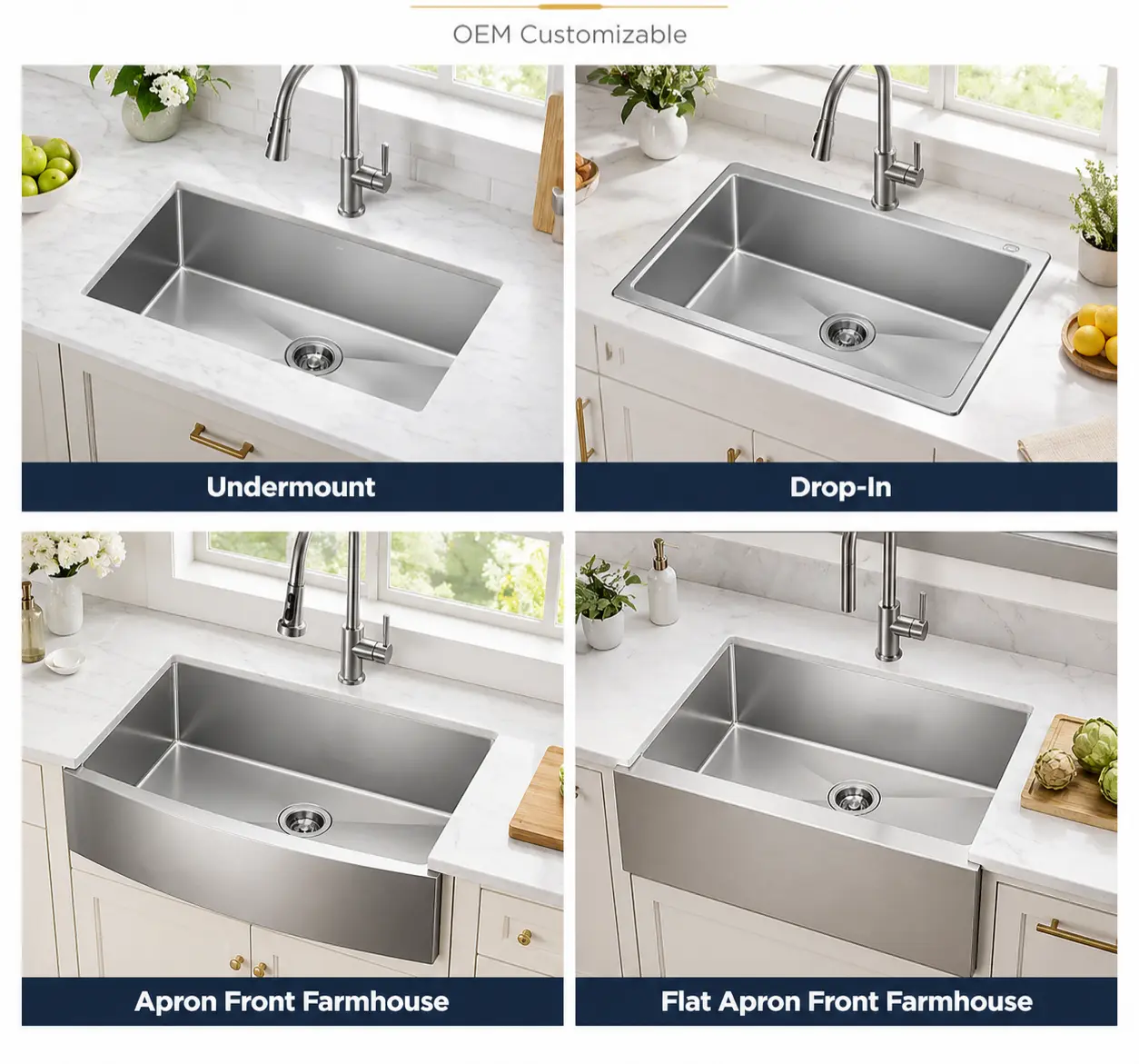
A damaged sink does not automatically mean the factory produced it that way.
The same visible problem can come from very different causes.
For example:
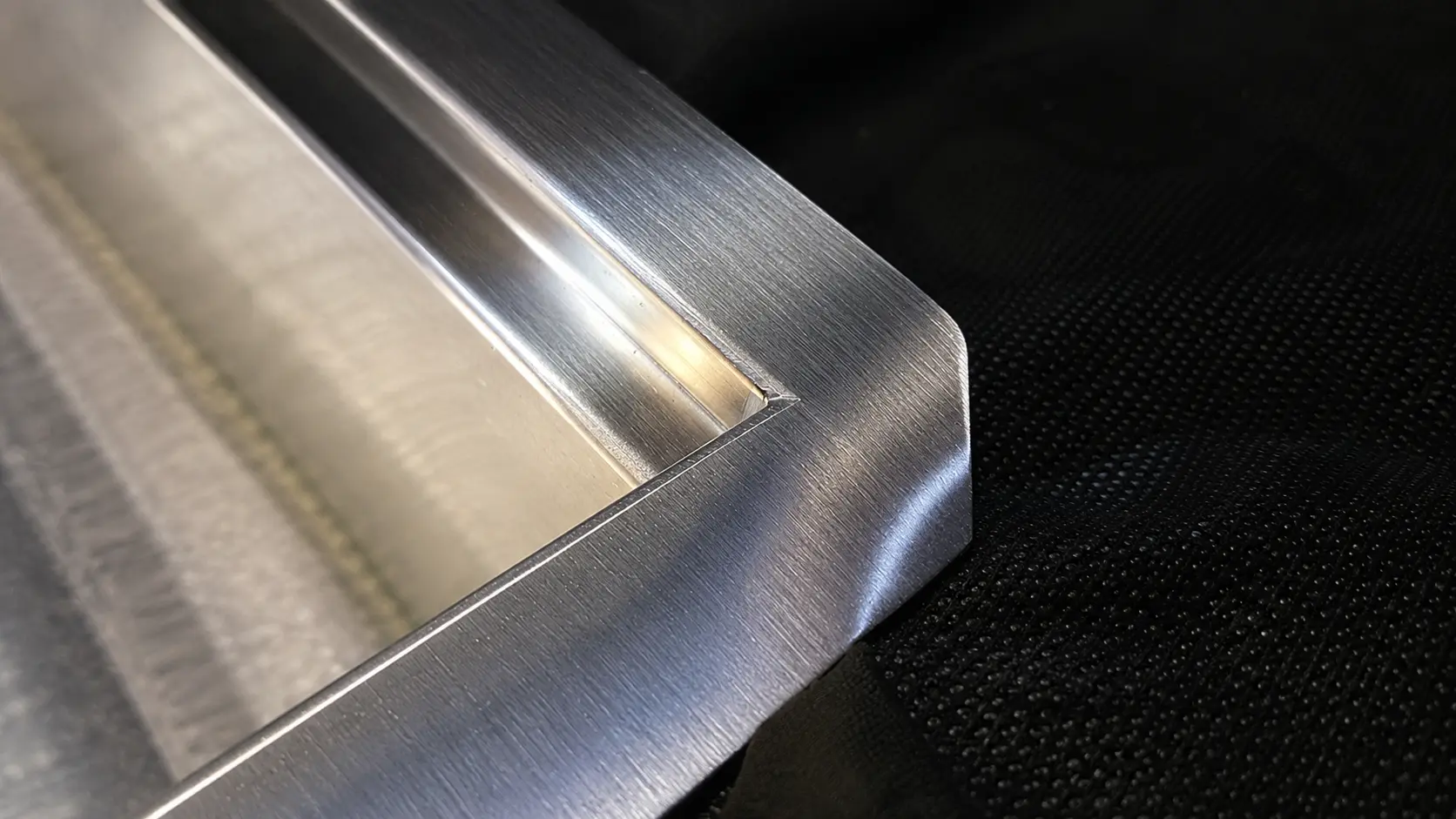
- bent rim
- dented corner
- scratched surface
- distorted apron
- damaged drain area
may result from:
Manufacturing
or
Packing
or
Transport
or
Installation
For buyers and QC teams, the important question is not:
“Who should take responsibility first?”
It is:
“What evidence shows when and where the damage most likely occurred?”
Quick Answer
Manufacturing damage and shipping damage often show different patterns.
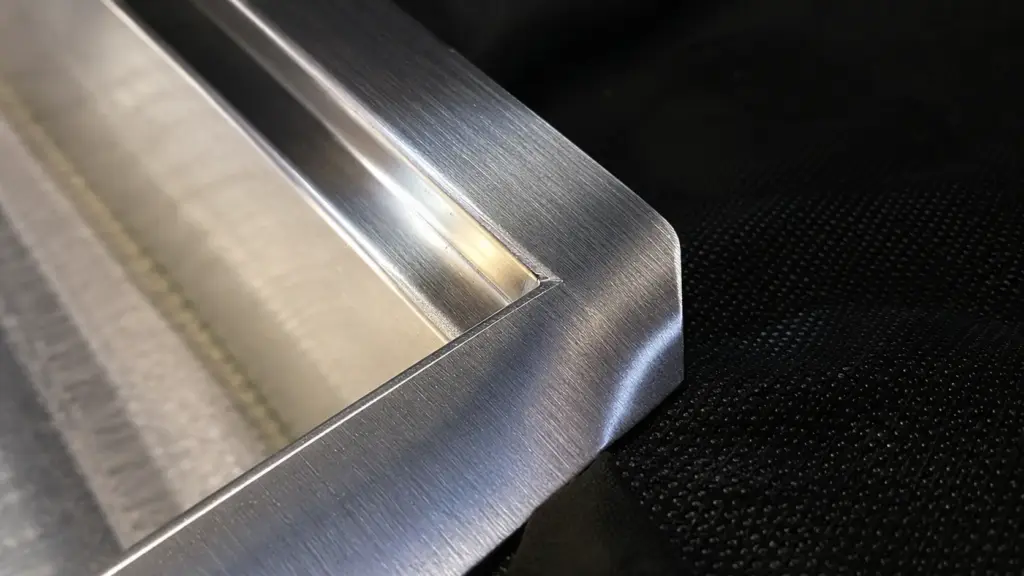
Manufacturing-related issues are more likely to:
- repeat across multiple units
- appear in the same location
- follow the same production geometry
- remain visible before packing
- correlate with welding, forming, grinding or finishing
Shipping-related damage is more likely to:
- be random
- appear at carton contact points
- affect outer corners or exposed rims
- correspond with carton crushing or impact
- vary from unit to unit
The strongest investigation uses:
Damage Pattern
→ Damage Location
→ Batch Comparison
→ Pre-Shipment Evidence
→ Packaging Condition
→ Receiving Evidence
A visible defect shows what happened to the sink. The pattern and evidence help show when it happened.
1. Start With the Damage Pattern
The first question should be:
Is the same defect repeating?
Repeating Pattern
If many sinks show:
- the same bent corner
- the same grinding mark
- the same rim distortion
- the same surface defect
in the same location, the issue is more likely linked to:
- production
- tooling
- fixture
- finishing
- packing method
A repeated location usually points toward a repeated process.
Random Pattern
If damage appears:
- on different corners
- at different rim positions
- on only a few cartons
shipping or handling becomes more likely.
2. Location Gives Important Clues
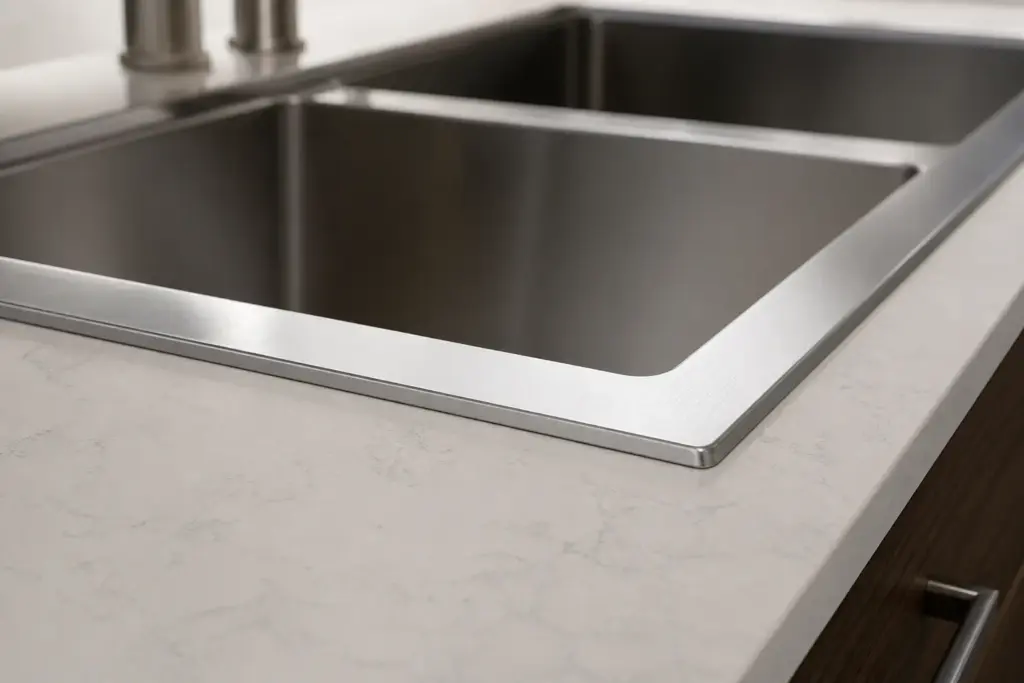
Certain damage locations are more exposed during transport.
These include:
- outer rim corners
- apron edges
- top flanges
- carton-contact surfaces
Damage concentrated on these points can indicate:
- impact
- compression
- insufficient protection
- carton movement
By contrast, defects deep inside the bowl may be less likely to come from normal carton impact.
3. Bent Rim: Manufacturing or Shipping?
A bent rim can come from both.
Possible Manufacturing Causes
- welding distortion
- forming distortion
- poor flatness control
- excessive grinding
- incorrect handling before packing
Possible Shipping Causes
- carton compression
- edge impact
- stacked load
- unsupported rim
- product movement inside carton
So a bent rim should not be classified by appearance alone.
4. Check Whether the Rim Was Flat Before Packing
This is where pre-shipment QC becomes important.
If rim flatness was checked before packing and the product passed, but the receiving inspection finds deformation, the investigation shifts toward:
- packing
- transport
- unloading
- storage
Matrix’s Quality Control & Inspection separates dimensional and flatness checks from surface and packing inspection, which helps create this evidence chain.
5. Dented Corners Often Point to Impact
Corner dents are common transport-related damage because corners concentrate impact force.
Typical signs include:
- localized indentation
- crushed carton corner
- damaged foam
- deformation matching the carton edge
If the carton shows corresponding impact, shipping damage becomes more likely.
6. Repeated Corner Deformation May Point Back to Packing Design
However, if the same corner is damaged across many cartons, the problem may not be random transport.
It may indicate:
- insufficient foam thickness
- weak corner protection
- too much movement inside the carton
- incorrect product orientation
- poor stacking design
In this case, the damage occurs during shipping, but the root cause may still be packaging design.
That distinction matters.
Shipping damage and packaging failure are not always the same commercial responsibility.
7. Surface Scratches Need Pattern Analysis
A scratch can come from:
- polishing
- handling
- accessories
- packing materials
- carton movement
- installation
Look at:
- direction
- depth
- repetition
- location
- nearby contact points
A long repeated scratch in the same bowl area may suggest production or packing contact.
Random scratches near edges may suggest handling or transport.
8. Accessories Inside the Carton Can Create Damage
Accessories such as:
- bottom grids
- drains
- colanders
- cutting boards
- clips
can damage the sink if they are not isolated properly.
Possible results include:
- scratching
- dents
- coating marks
- edge impact
This is especially relevant for workstation sinks, where one carton may contain several loose or semi-rigid accessories.
9. PVD or Colored Sinks Need More Care
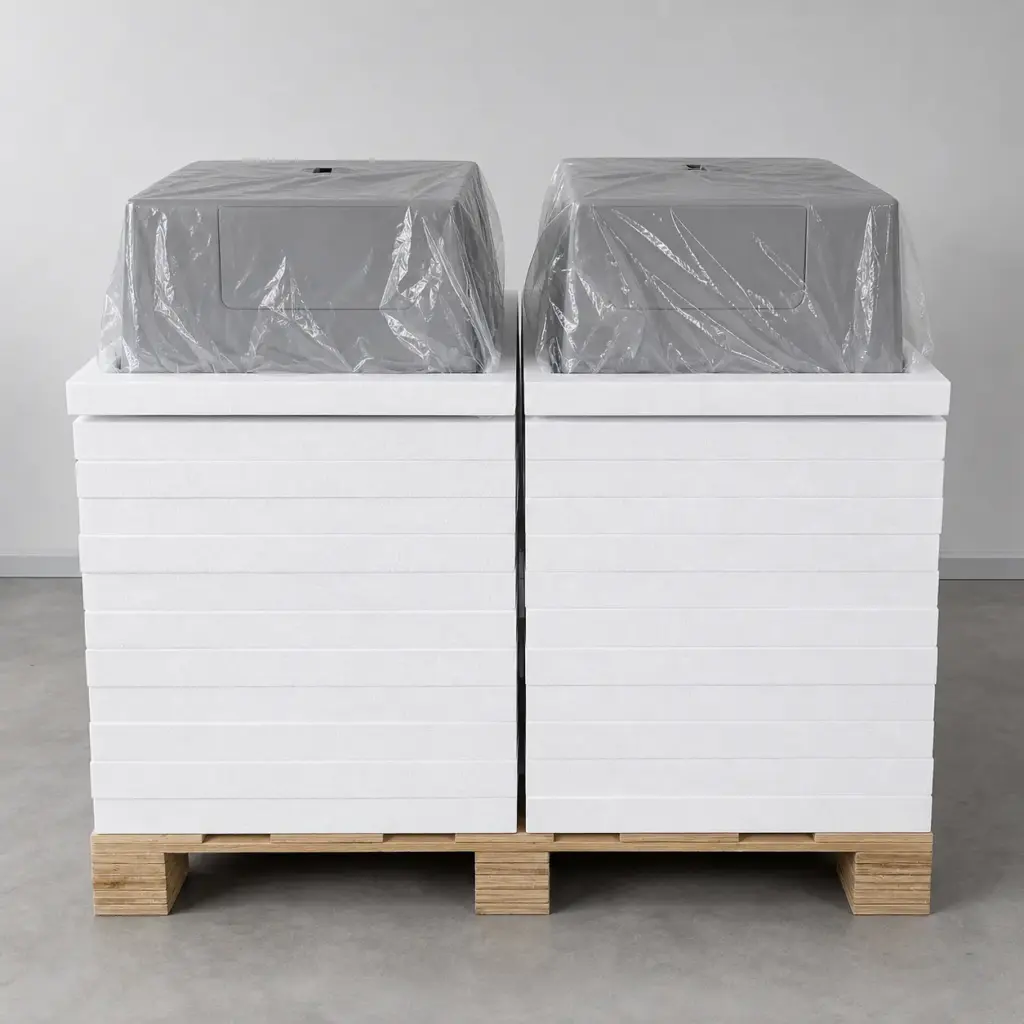
Surface damage is more visible on:
- black
- gunmetal
- gold
- other colored finishes
A small contact mark that is almost invisible on brushed stainless steel may become obvious on a colored sink.
For these programs, packing contact points should be reviewed together with the actual finished product, not only the carton specification.
10. Manufacturing Marks Usually Follow the Process
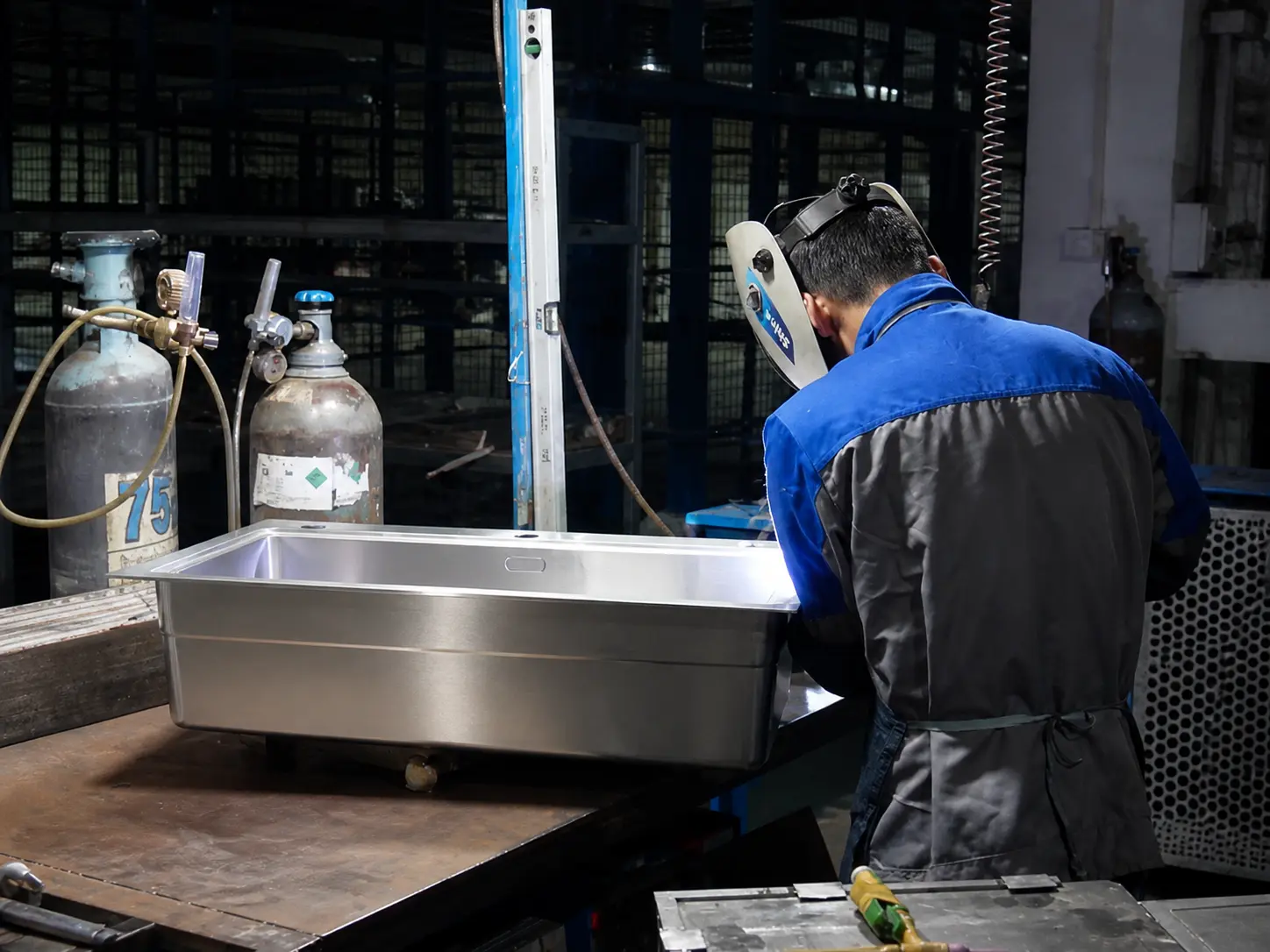
Some defects can often be linked to a production step.
Examples:
Grinding Marks
Usually follow welded or repaired areas.
Forming Marks
Often follow pressed geometry or tooling-contact areas.
Welding Distortion
Usually relates to fabricated joints.
Polishing Variation
Often follows corner transitions or local repair.
Matrix’s Handmade Kitchen Sinks and Pressed Kitchen Sinks use different production routes, so the expected defect patterns are also different.
11. Shipping Damage Usually Follows Contact and Force
Transport damage is often linked to:
- impact
- compression
- vibration
- movement
- stacking
The damaged location often corresponds with:
- carton edge
- pallet contact
- unsupported area
- accessory contact
- compressed foam
12. Compare Multiple Units Before Making a Claim
Do not diagnose one sink in isolation if the shipment contains many units.
Compare:
- affected units
- unaffected units
- carton condition
- damage location
- batch pattern
For example:
Case A
20 sinks show the same left rear corner deformation.
More likely:
repeated production or packing issue
Case B
3 out of 200 sinks show random corner dents with crushed cartons.
More likely:
transport impact
13. Pre-Shipment Photos Are Useful — but Limited
Pre-shipment photos can help confirm:
- general product condition
- packing method
- carton condition
But one photo cannot prove every hidden surface was defect-free.
More useful evidence includes:
- QC records
- random inspection photos
- rim-flatness checks
- packing photos
- carton labels
- shipment batch identification
14. Receiving Photos Should Show More Than the Defect
A close-up of a dent is not enough.
Useful receiving evidence should include:
- full carton
- damaged carton area
- internal protection
- full sink
- close-up of damage
- carton label
- quantity affected
This helps connect:
external damage
to:
internal product damage.
15. Packaging Condition Is Part of the Diagnosis
If the sink is damaged but the carton is perfect, that does not automatically prove manufacturing damage.
Possible explanations still include:
- hidden internal movement
- accessory contact
- insufficient internal support
- pre-packing damage
But an obviously crushed or punctured carton provides much stronger evidence of external impact.
16. One Damage Type Can Have Multiple Root Causes
For example:
Bent Rim
Could result from:
- welding distortion
- poor flatness
- carton compression
- impact
Scratch
Could result from:
- polishing
- handling
- accessory contact
- packing movement
Dented Apron
Could result from:
- production handling
- insufficient packing support
- transport impact
This is why defect name alone is not enough.
17. Use a Root-Cause Matrix
| Observation | More Likely Direction |
|---|---|
| Same defect, same location, many units | Manufacturing / repeated packing |
| Random dents, damaged cartons | Shipping |
| Scratch near loose accessory | Packing / accessory contact |
| Rim flatness passed before shipment, bent on arrival | Shipping / packing |
| Grinding mark around weld | Manufacturing |
| Repeated carton-corner damage | Packaging design / transport |
| One isolated sink, no carton damage | Local handling / unclear |
| Same apron deformation across batch | Manufacturing / packing fixture |
18. Do Not Confuse Responsibility With Root Cause
This is important.
A problem may occur during shipping but still be linked to poor packaging design.
Or:
A sink may be dimensionally correct but damaged before it was packed.
So the investigation should first identify:
root cause
before deciding:
commercial responsibility
19. What Should Buyers Ask the Supplier to Provide?
For a serious claim, request:
- shipment batch reference
- pre-shipment QC record
- packing photos
- product inspection photos
- carton specification
- affected quantity
- defect pattern comparison
For private-label programs, Matrix’s Private-Label Product Programs use repeat-order product and packing references so the shipment can be compared against the approved standard.
20. What Should Be Checked at Receiving?
For larger orders, a receiving check should review:
- pallet condition
- carton condition
- impact marks
- water exposure
- random sink inspection
- accessories
- quantity of affected units
The earlier evidence is collected, the easier the root cause is to investigate.
Manufacturing vs Shipping Damage Checklist
More Likely Manufacturing
- repeated location
- repeated pattern
- weld / forming / grinding relationship
- no external carton evidence
- appears across many units
- matches process geometry
More Likely Shipping / Handling
- random location
- crushed carton
- corner impact
- compression
- limited number of units
- damage matches contact point
More Likely Packaging Design
- repeated damage at same carton contact point
- product movement inside carton
- accessory contact
- weak foam support
- compression without enough structural protection
Common Misunderstandings
“If the carton is damaged, every sink defect is shipping damage.”
No.
The product may already have had a manufacturing issue.
“If the carton looks fine, the defect must be from the factory.”
No.
Internal movement or accessory contact can still create damage.
“A repeated defect always means production failure.”
Not necessarily.
A repeated packaging contact point can create the same defect repeatedly.
“Photos are enough to prove responsibility.”
Not always.
Pattern, quantity, batch evidence and QC records are stronger.
“Shipping damage is outside the supplier’s control.”
Not completely.
Packaging design is part of shipment protection.
Buyer Takeaway
Do not classify sink damage using:
Defect Appearance Only
Use:
Pattern
→ Location
→ Batch Comparison
→ Pre-Shipment Evidence
→ Packing Condition
→ Receiving Evidence
The key distinction is:
The damage tells you what happened to the sink. The evidence chain helps determine when and why it happened.
Frequently Asked Questions
How can I tell if a sink dent happened during shipping?
Check whether the dent aligns with carton damage, foam compression or impact points, and whether similar dents appear randomly or repeatedly.
Does a bent rim mean the factory made it incorrectly?
Not necessarily. Bent rims can result from welding distortion, packing compression or transport impact.
Can accessories scratch a sink during shipping?
Yes. Poorly isolated drains, grids, colanders or cutting boards can move and damage the sink surface.
What evidence should I collect for a sink shipping claim?
Photograph the carton, internal packing, full sink, defect close-up, carton label and affected quantity.
If many sinks have the same damage, is it a manufacturing problem?
It may be, but repeated packaging contact or stacking pressure can also create the same pattern.
Should packaging be part of sink QC?
Yes. Product condition and shipment protection should be reviewed separately.
Reviewing a Sink Claim or Packaging Program?
Matrix’s Quality Control & Inspection covers product, workmanship and packing checks before shipment.
For custom and repeat-order programs, see Private-Label Product Programs and Custom Kitchen Sink Programs.