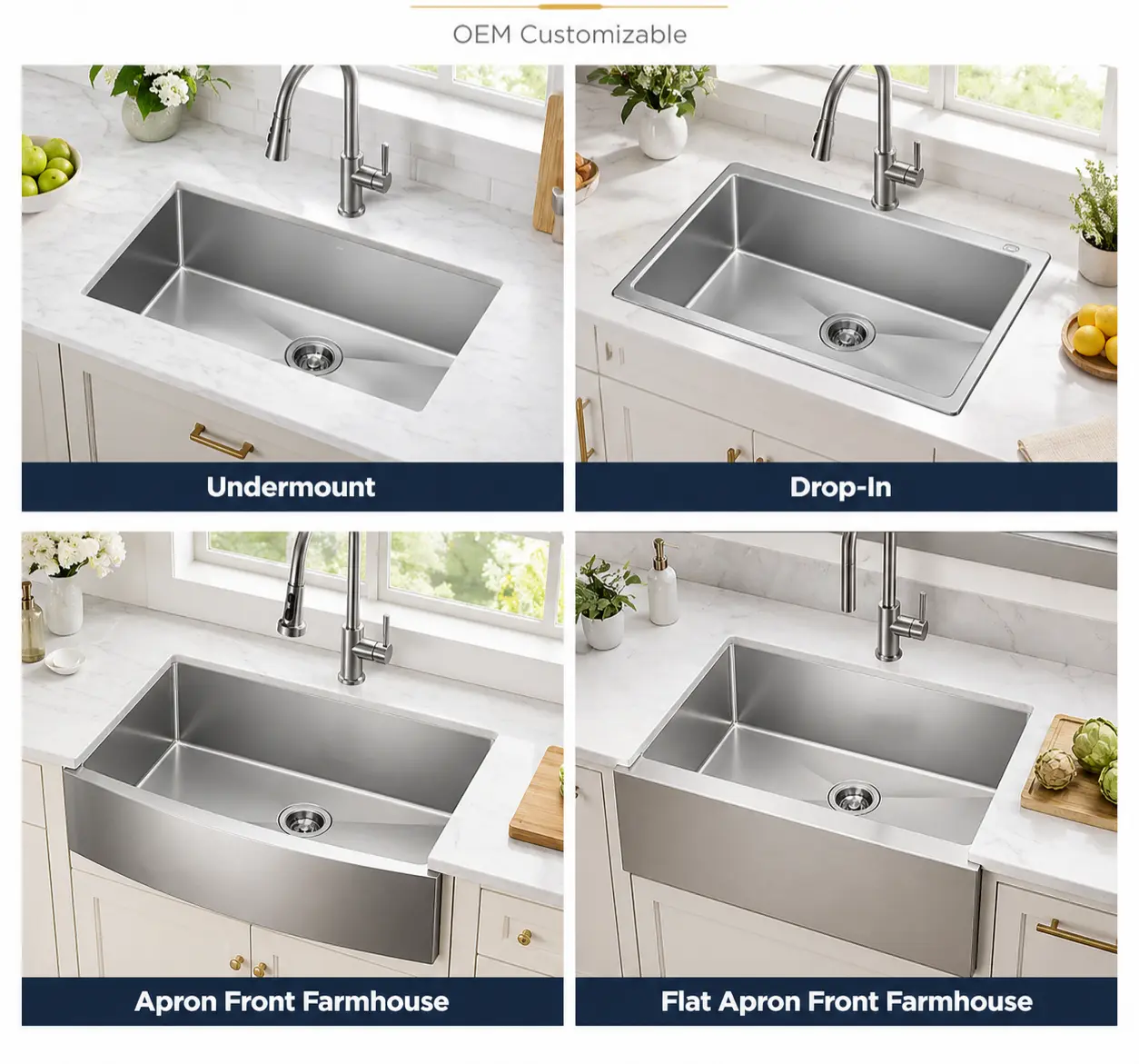
An unchanged drawing does not guarantee an unchanged product.
A kitchen sink drawing can control:
- length
- width
- depth
- drain position
- corner radius
- flange
- hole location
But a repeat order also depends on things the drawing may not fully define:
- surface finish
- corner workmanship
- polishing
- accessory fit
- packaging
- component supplier
- production process
- QC reference
So a second or third order can still look or behave differently even when the drawing revision has not changed.
For OEM buyers, the more useful question is not:
“Did the drawing change?”
It is:
“Did any production reference, component, finish or process behind the drawing change?”
Quick Answer
Repeat-order kitchen sinks can differ even with the same drawing because the drawing is only one part of the product definition.
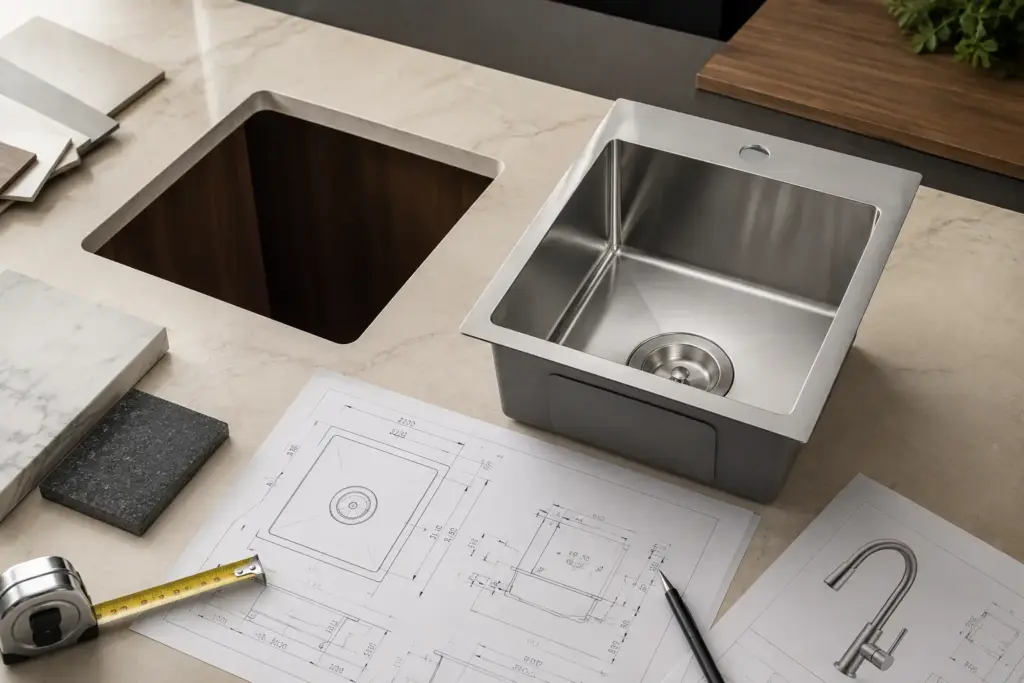
Repeat consistency depends on:
Drawing
- Approved Sample
- Material Specification
- Finish Reference
- Accessory Specification
- Process Control
- Packaging Standard
- QC Criteria
If any of these changes, the product may change without the drawing number changing.
A drawing controls geometry. A repeat-order standard controls the complete product.
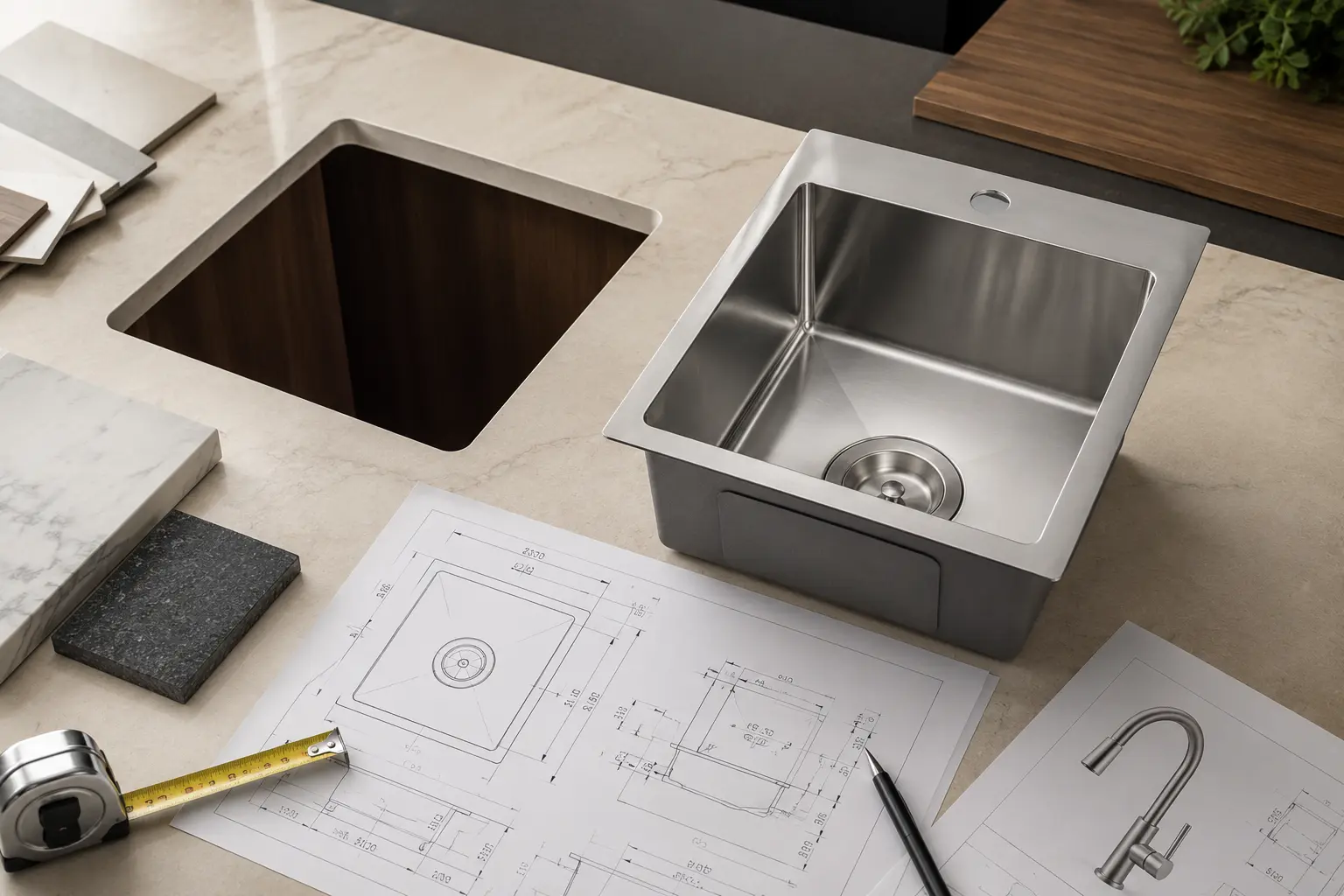
1. A Drawing Is Strong at Controlling Geometry
Technical drawings are useful for controlling measurable features such as:
- overall dimensions
- bowl dimensions
- depth
- radius
- drain position
- flange size
- faucet holes
These are critical.
But the drawing is not always detailed enough to fully define:
- brushed appearance
- polishing transition
- weld visibility
- accessory feel
- carton protection
- visual workmanship
That is why a repeat-order program should not rely on drawing alone.
2. Surface Finish Can Drift Without Any Drawing Change
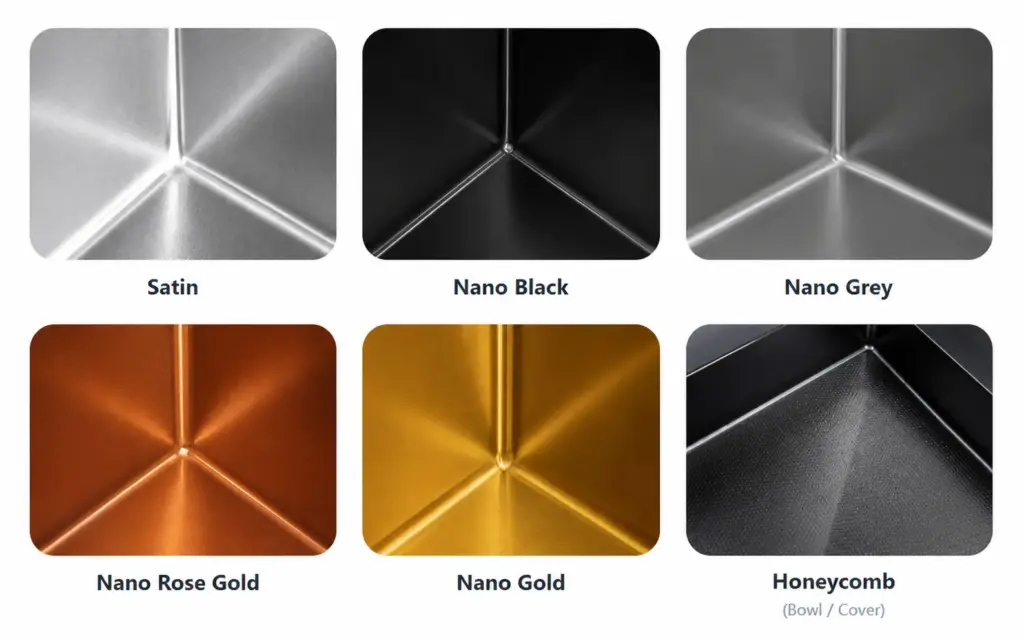
Imagine the drawing still says:
SUS304 / Brushed
Nothing has changed on paper.
But the next batch may look:
- darker
- brighter
- rougher
- more reflective
- slightly different around corners
because finish appearance also depends on:
- abrasive condition
- brushing direction
- surface preparation
- polishing sequence
- approved reference
For this issue, see:
Why Can Brushed Stainless Steel Sink Finishes Look Different Between Batches?
The drawing can remain unchanged while the visual result changes.
3. The Golden Sample Controls What the Drawing Cannot Fully Describe
A physical approved sample can capture details such as:
- corner appearance
- brushing direction
- polishing level
- visual proportion
- accessory fit
- overall workmanship
This makes the golden sample especially important for private-label and repeat-order programs.
Matrix’s Private-Label Product Programs use sample approval as part of repeat-order reference control.
The drawing tells the factory:
what the geometry should be.
The approved sample helps show:
what the finished product should look and feel like.
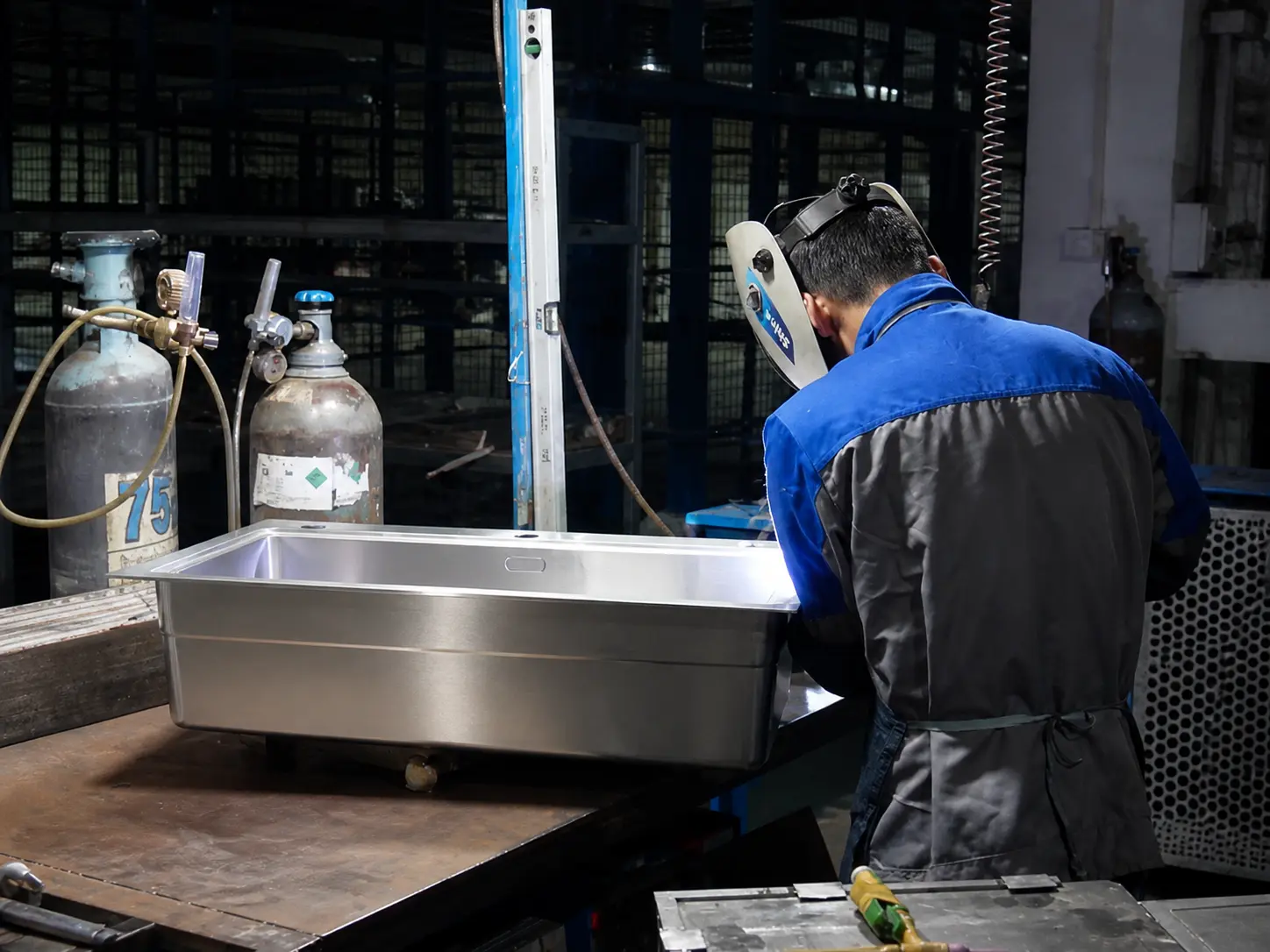
4. Handmade Workmanship Can Change Even When Dimensions Pass
Handmade sinks depend on several fabrication steps:
Bending
→ Welding
→ Grinding
→ Polishing
→ Brushing
A repeat-order sink can still pass:
- length
- width
- depth
- radius
while the visible corner looks different.
Possible differences include:
- softer corner
- wider polishing area
- stronger reflection
- visible grinding transition
Matrix’s Handmade Kitchen Sinks show this fabrication route.
This is why dimensional approval and workmanship approval should be treated separately.
5. Pressed Sinks Can Drift Through Tooling or Forming Conditions
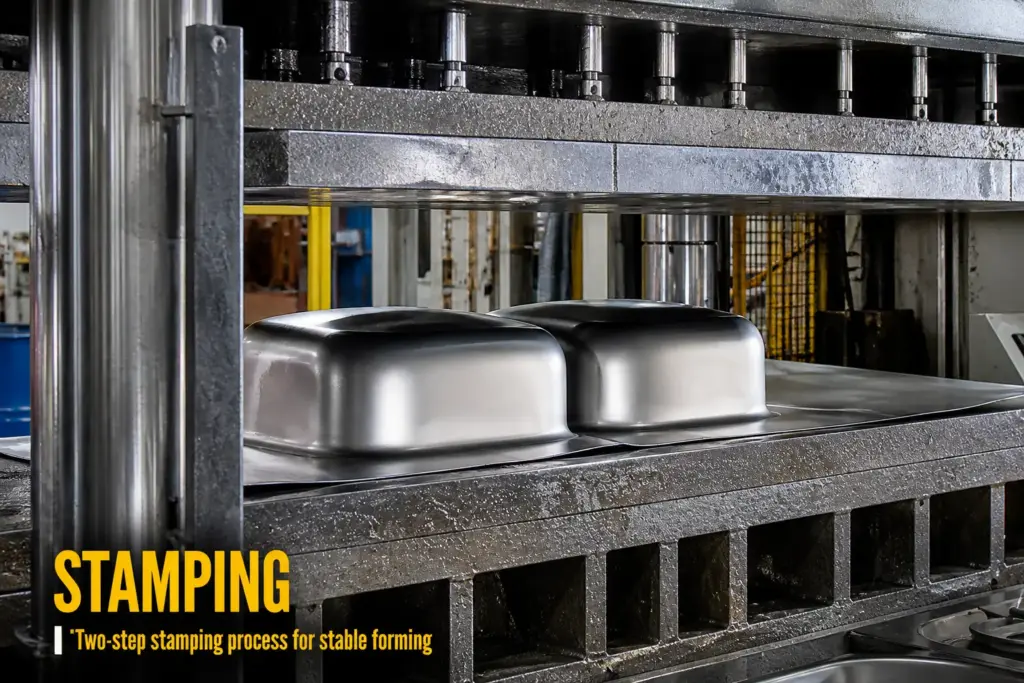
Pressed sinks depend more strongly on:
- tooling
- forming sequence
- material flow
- trimming
- forming condition
The drawing can remain unchanged while the actual production process shifts slightly.
Possible results include:
- local geometry change
- flange variation
- surface forming marks
- thickness variation
- springback-related dimensional shift
Matrix’s Pressed Kitchen Sinks use a tooling-based production route, so process consistency matters in addition to drawing control.
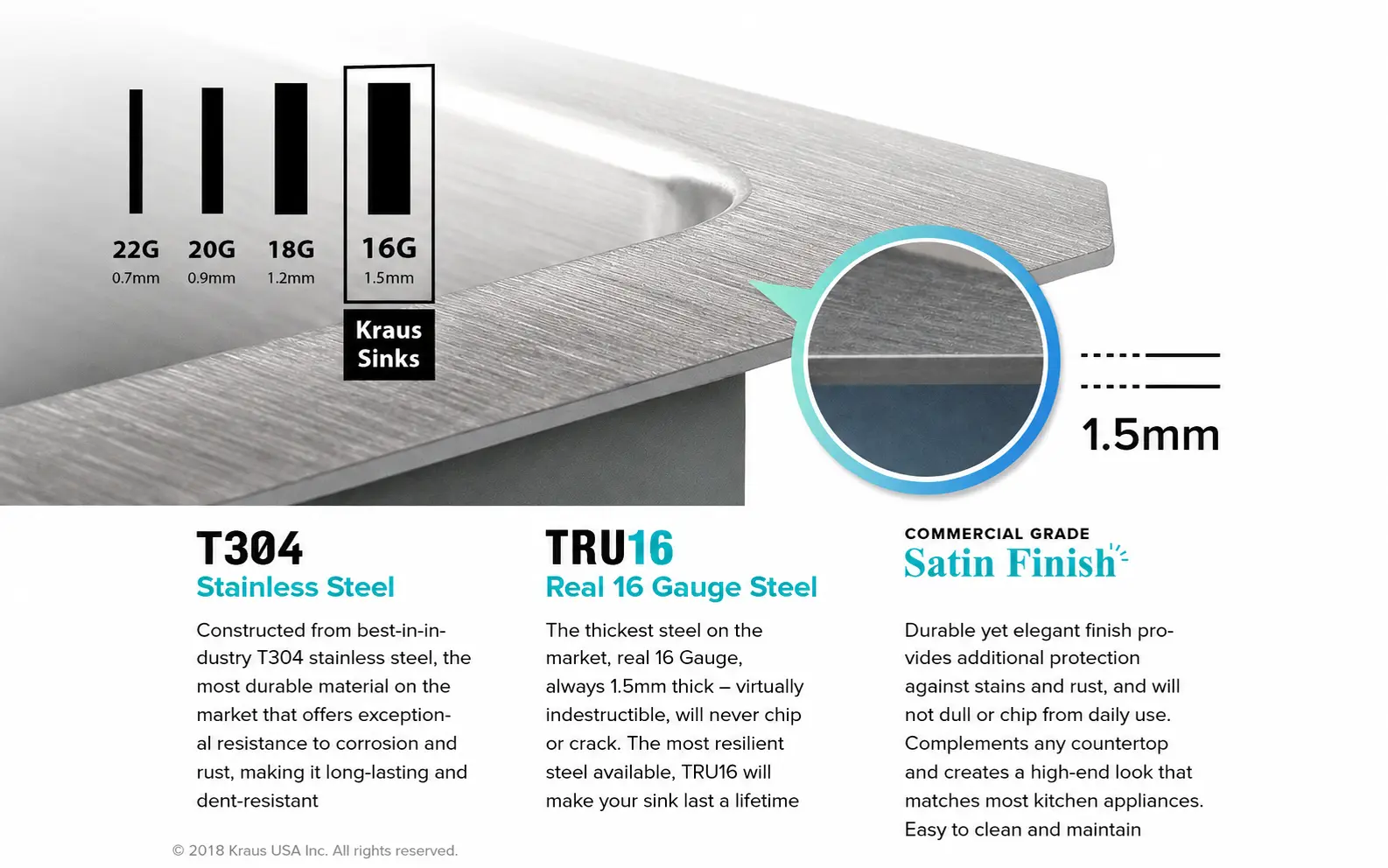
6. Material Specification Can Stay the Same While the Material Batch Changes
The drawing may continue to specify:
SUS304 / 1.2 mm
but a new production order still uses a different raw-material batch.
That means repeat production should still control:
- material grade
- incoming thickness
- surface condition
- traceability
The drawing tells you what material is required.
It does not prove which material batch was actually used.
7. Accessories Can Change Without Changing the Sink Drawing
This is common with workstation sinks.
The sink drawing may not change at all.
But the accessory supplier may change:
- cutting board
- colander
- bottom grid
- drain
- clips
Then the buyer may see:
- different fit
- different finish
- different dimensions
- different feel
This is why accessory configuration should be controlled separately from the main sink drawing.
See:
Why Can Workstation Sink Accessories Fit the Sample but Not the Repeat Order?
8. The Same Accessory Name Does Not Guarantee the Same Component
A BOM may say:
stainless steel colander
or:
wood cutting board
but that description may still be too broad.
A supplier change can alter:
- dimensions
- material
- finish
- color
- fit
- packaging
For repeat-order control, accessories should be defined by more than a generic name.
9. Drain Components Can Create Repeat-Order Differences
The main sink geometry may stay identical.
But a different drain can change:
- flange fit
- finish appearance
- gasket
- installation behavior
This becomes especially important when the sink is sold as a complete retail SKU.
For drain-interface issues, see:
Why Can a Kitchen Sink Leak Around the Drain Even When the Sink Body Passes QC?
10. Packaging Can Change the Delivered Product
A repeat order can leave the factory correctly but arrive differently because the packaging changed.
Examples:
- thinner foam
- different carton strength
- accessory placement changed
- corner protection changed
- stacking changed
The drawing remains identical.
The delivered condition does not.
This is why packing should be treated as part of the approved product program rather than only a logistics detail.
11. Operator or Process Changes Can Affect Visual Workmanship
Manual operations can be influenced by:
- operator technique
- grinding pressure
- polishing method
- brushing execution
That does not mean manual production is uncontrolled.
It means the factory needs a stable reference and inspection standard for visible workmanship.
Without that reference, operators may interpret:
“acceptable finish”
differently.
12. Supplier Changes Can Create Hidden Product Changes
A repeat order may involve a change in:
- stainless steel supplier
- drain supplier
- accessory supplier
- carton supplier
- coating supplier
The sink drawing can stay unchanged through all of these changes.
So buyers should not assume:
same drawing = same supply chain.
13. Approved Sample and Drawing Must Stay Linked
A common control problem happens when:
- drawing revision is current
- sample reference is old
or:
- sample is approved
- later drawing changes
- sample is not updated
Now the factory has two conflicting references.
The better approach is to keep:
Drawing Revision
+
Approved Sample
+
Finish Reference
+
Accessory Specification
aligned to the same product version.
14. Repeat Orders Need Version Control, Not Only Drawing Control
For a private-label SKU, the product definition may include:
- sink drawing revision
- accessory version
- logo artwork
- label
- carton artwork
- finish reference
- packaging instruction
If one changes, the product version changes even if the sink drawing does not.
This is why repeat-order control is closer to:
product version control
than:
drawing control only.
15. QC Criteria Can Also Drift
Another hidden source of variation is inspection itself.
For example:
First order:
- corner checked closely
- surface compared with sample
- accessory fit tested
Repeat order:
- only dimensions checked
The factory may still use the same drawing, but the effective acceptance standard has changed.
Matrix’s Quality Control & Inspection separates:
- dimensions
- workmanship
- surface
- accessories
- packing
because these are different control areas.
16. The Best Repeat-Order Standard Is a Reference Set
For an appearance- and fit-sensitive OEM sink, a stronger reference set can include:
Geometry
Approved drawing
Appearance
Golden sample / finish reference
Material
Material specification
Accessories
Approved accessory list
Packaging
Approved packing standard
Inspection
Critical QC criteria
Together, these define the product more completely than the drawing alone.
17. Why This Matters More for Private-Label SKUs
For a one-time project, small variation may be manageable.
For a private-label SKU sold repeatedly, buyers expect:
Order 1 ≈ Order 2 ≈ Order 5
because the product may use the same:
- SKU
- photos
- specification
- retail page
- packaging
- customer promise
A repeat-order difference can therefore create:
- customer complaints
- review issues
- installation problems
- mixed inventory
- inconsistent retail presentation
18. Same Specification Does Not Mean Identical Piece
This distinction is important.
Industrial production always includes some variation.
The goal is not:
every sink must be visually identical at microscopic level.
The goal is:
variation remains within the approved specification and workmanship standard.
That is the correct repeat-order expectation.
Repeat-Order Variation Diagnostic Table
| Difference Found | More Relevant Reference |
|---|---|
| Dimensions changed | Drawing / measurement |
| Brushed finish changed | Finish reference / sample |
| Corner looks different | Workmanship sample |
| Accessory no longer fits | Accessory drawing / interface |
| Drain looks different | BOM / approved component |
| Carton damage increased | Packing standard |
| Logo changed | Artwork revision |
| Same drawing but overall feel changed | Golden sample + full product review |
What Should Buyers Compare on a Repeat Order?
A useful repeat-order review includes:
- drawing revision
- material specification
- critical dimensions
- approved finish
- corner workmanship
- accessory list
- accessory fit
- drain configuration
- logo / label
- packing method
Do not compare only:
PO number + drawing number.
What Should Be Frozen Before the First Mass Order?
For an OEM program, freeze the relevant references before mass production:
- technical drawing
- material grade
- thickness
- finish
- golden sample
- accessories
- drain
- branding
- packing
- critical QC items
Matrix’s Custom Kitchen Sink Programs and Private-Label Product Programs are designed around these kinds of specification and repeat-order requirements.
Common Misunderstandings
“If the drawing did not change, the product cannot change.”
Incorrect.
The drawing controls only part of the finished product.
“A golden sample is unnecessary if the drawing is detailed.”
Not always.
A drawing cannot fully capture every visual workmanship detail.
“Same material grade means the next batch will look identical.”
No.
Material grade and surface finish are different controls.
“If dimensions pass, repeat-order consistency is confirmed.”
No.
Finish, accessories, branding and packing can still differ.
“Repeat-order control means eliminating all variation.”
No.
The goal is to keep variation within the approved standard.
Buyer Takeaway
Do not control repeat orders using:
Drawing Revision Only
Use:
Drawing
→ Material
→ Golden Sample
→ Finish Reference
→ Accessories
→ Packaging
→ QC Criteria
The key distinction is:
A drawing defines the product geometry. A repeat-order reference system defines the complete SKU.
That is why two orders can use the same drawing and still produce different commercial results.
Frequently Asked Questions
Why does my repeat-order sink look different even though the drawing is unchanged?
Because finish, workmanship, materials, accessories or production references may have changed outside the drawing.
Is a drawing enough to control private-label sink production?
For geometry, it is essential. For complete product consistency, buyers may also need approved samples, finish references, accessories and packaging standards.
Why does the same sink SKU have different accessories in a repeat order?
The accessory supplier, BOM or component version may have changed even if the sink drawing did not.
Can the sink dimensions pass but the repeat order still be inconsistent?
Yes. Surface, workmanship, fit and packaging are separate controls.
What is a golden sample used for?
It provides a physical reference for appearance, workmanship and fit that a drawing may not fully describe.
Should repeat orders be compared with the first approved sample?
For appearance- and fit-sensitive private-label programs, maintaining a controlled approved reference is useful.
Managing a Repeat-Order Sink Program?
Matrix supports Custom Kitchen Sink Programs and Private-Label Product Programs with defined product specifications, accessories and repeat-order references.
For inspection logic, see Quality Control & Inspection, and for handmade / pressed product routes see Handmade Kitchen Sinks and Pressed Kitchen Sinks.