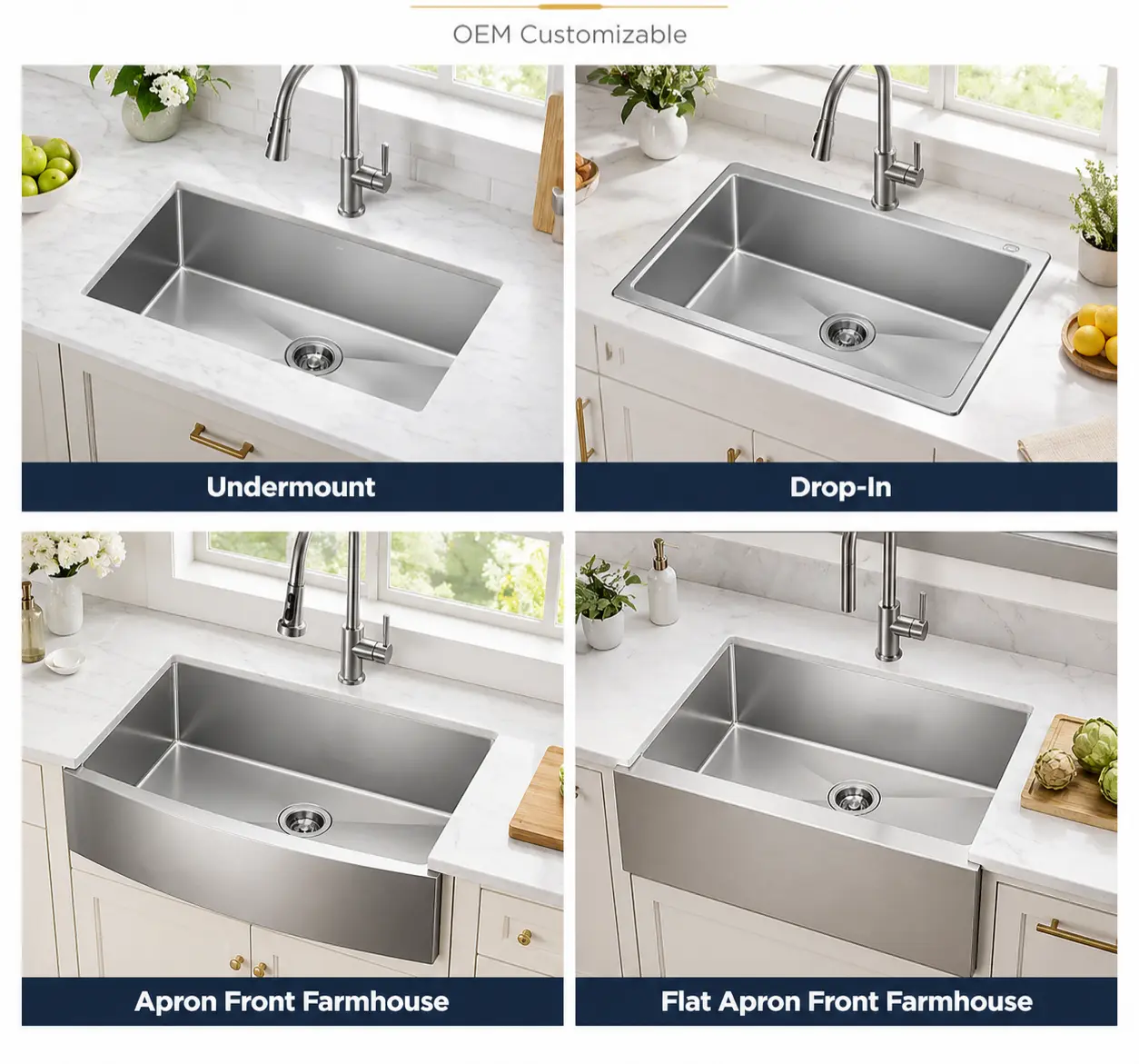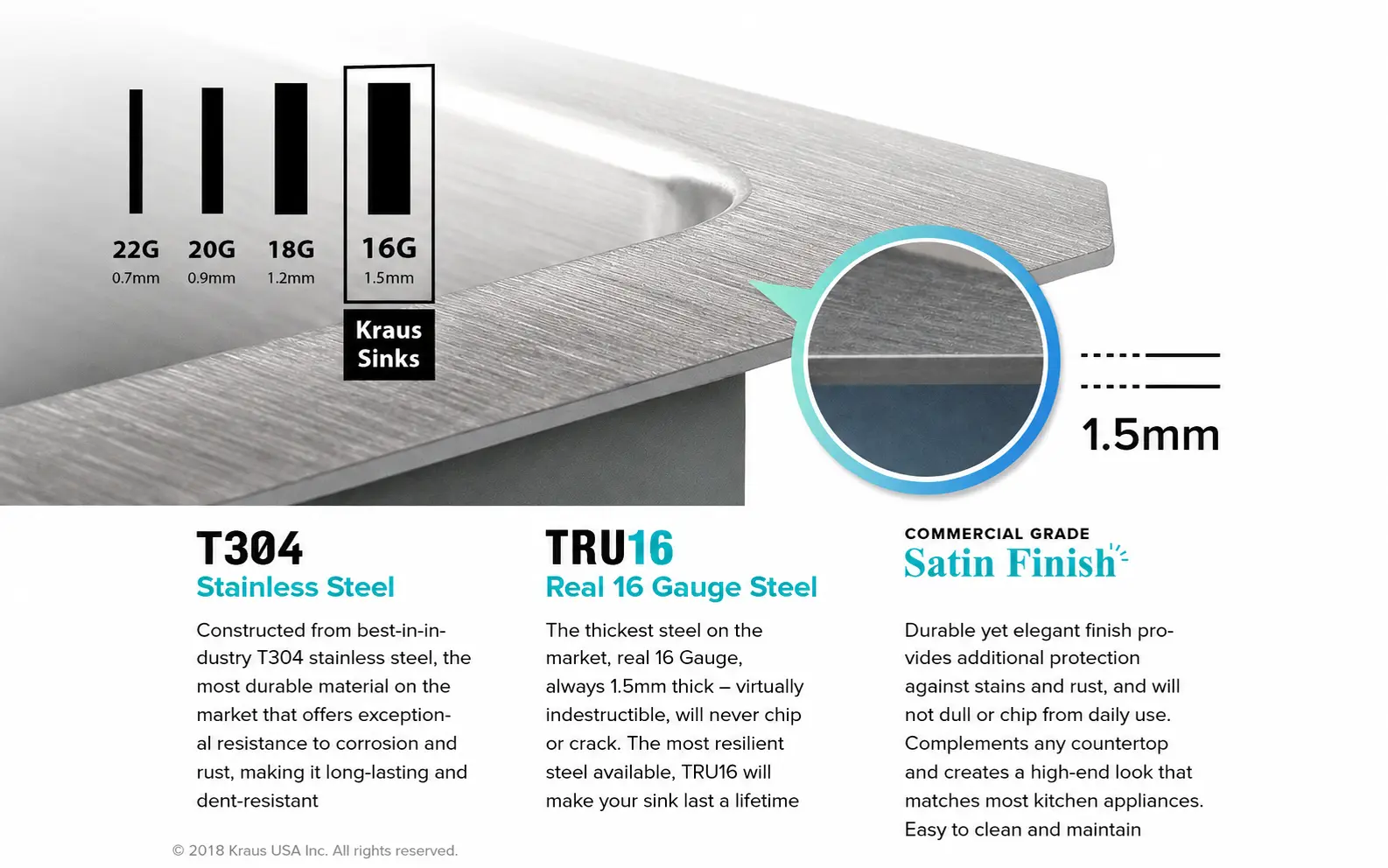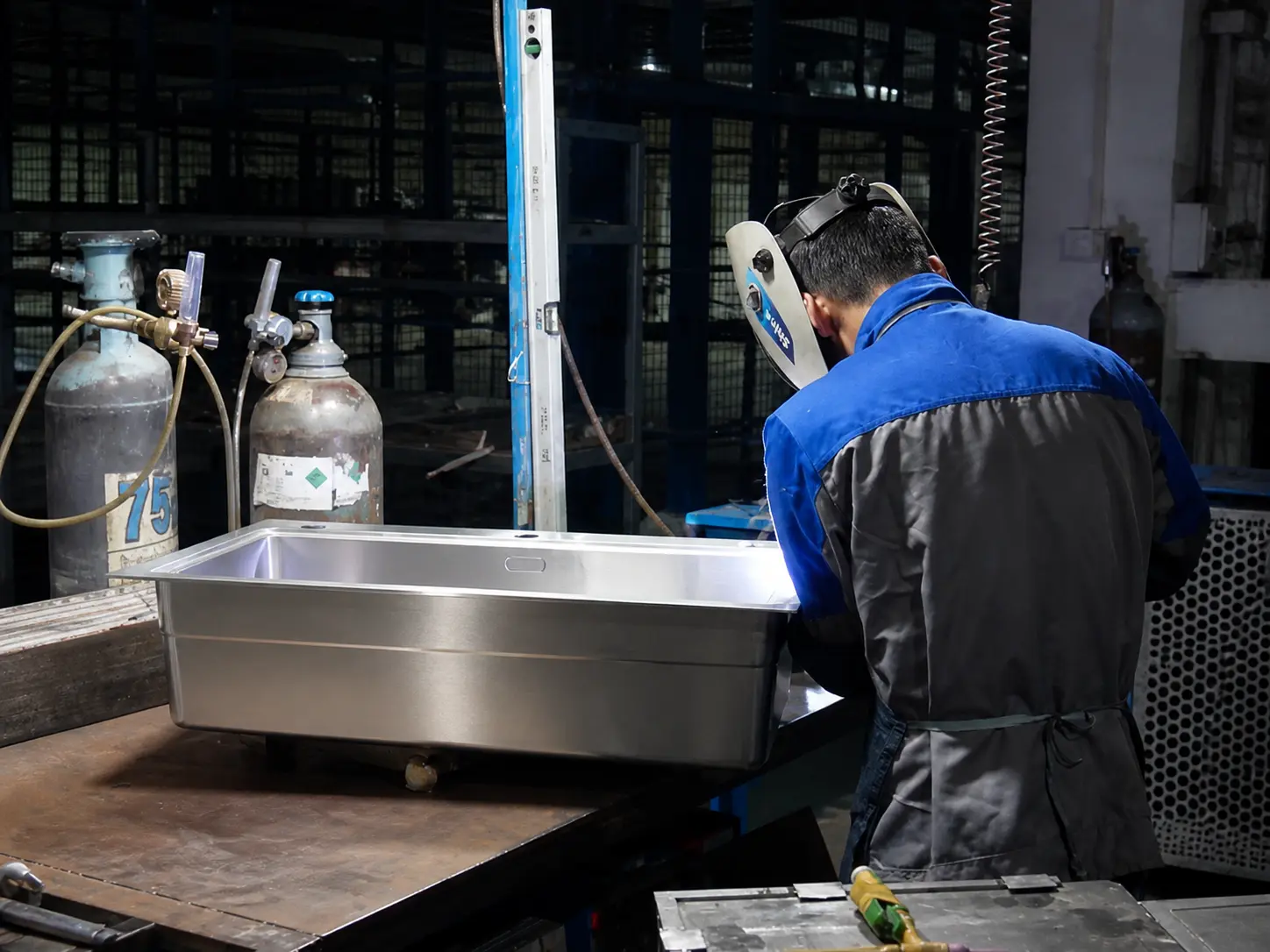
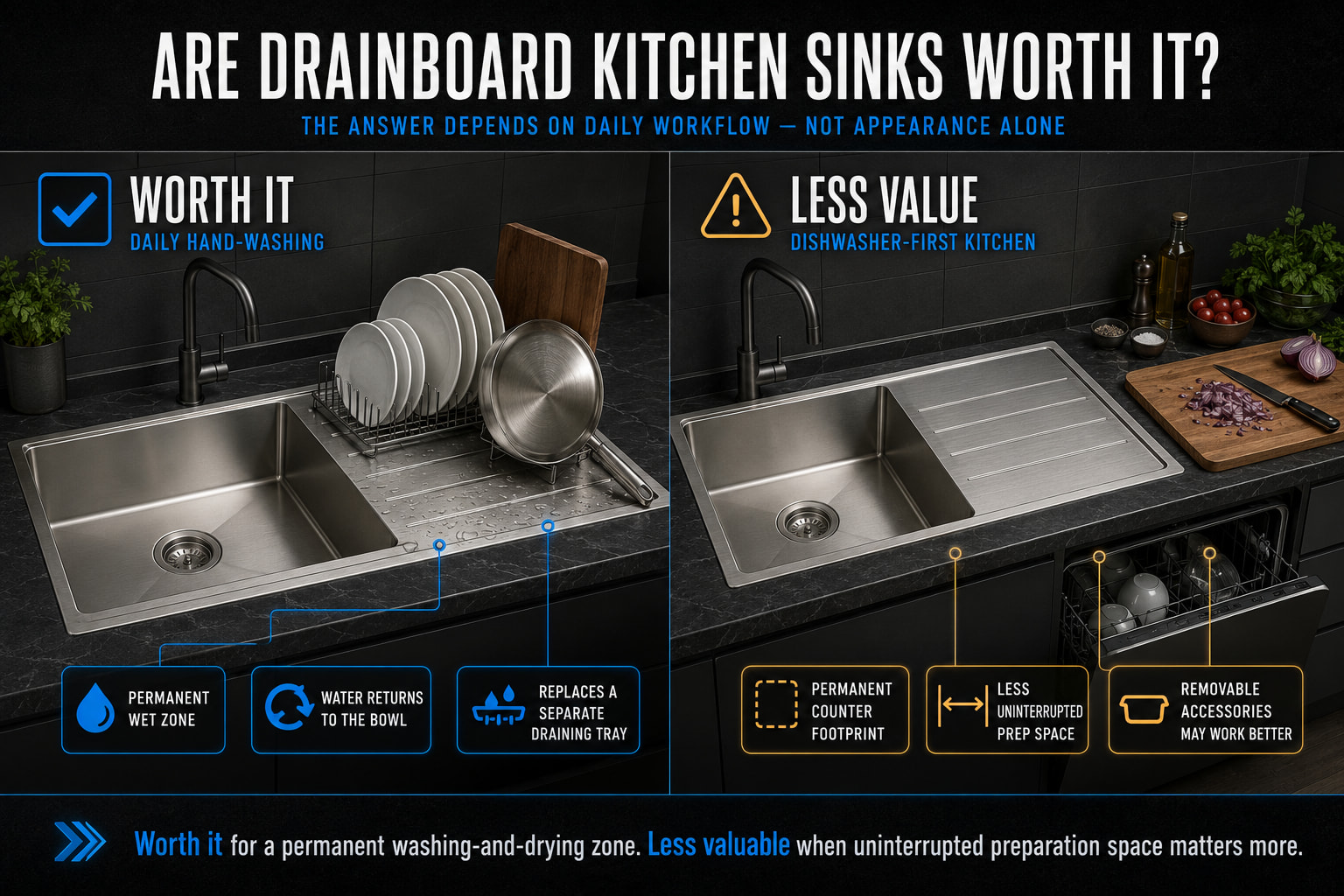
A drainboard kitchen sink combines a washing bowl with a built-in sloped surface for drying dishes, rinsing produce or placing wet cookware.
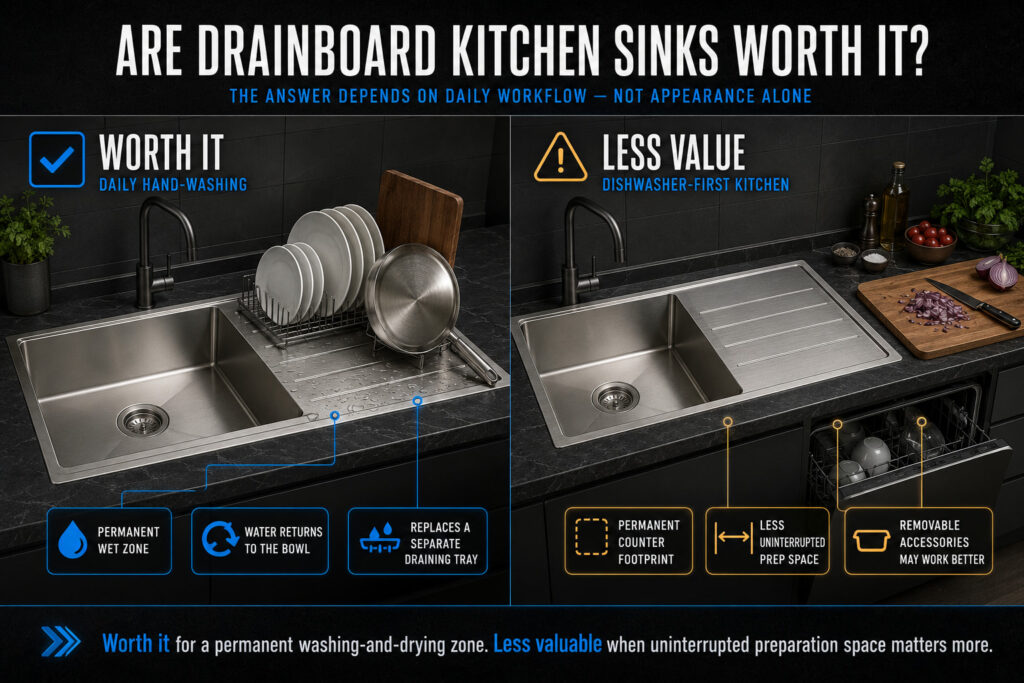
It can keep water away from the surrounding countertop and reduce the need for a separate drying tray. But the drainboard permanently occupies part of the kitchen worktop, and a poorly designed one may simply become a large surface that collects water spots and clutter.
The practical answer is:
A drainboard sink is worth it when you regularly hand-wash dishes or need a permanent wet working area. It is less valuable when most dishes go directly into a dishwasher and uninterrupted preparation space is more important.
The decision should be based on workflow and space allocation—not appearance alone.
Quick Decision
A drainboard sink is usually worth considering if:
- You hand-wash dishes every day
- You do not have a dishwasher
- You wash large pots, trays or cooking tools
- Water frequently collects around the current drying rack
- The countertop material needs additional protection from standing water
- You need a permanent washing-and-drying zone
- You have enough countertop length for an adequate bowl and drainboard
A standard or workstation sink may be better if:
- You mainly use a dishwasher
- Your available countertop run is very short
- You want the largest possible bowl
- You need a smooth, uninterrupted preparation surface
- You prefer removable rather than permanent drying accessories
- You frequently change the kitchen layout or sink function
- The required drainboard direction does not suit the workflow
What Is a Drainboard Kitchen Sink?
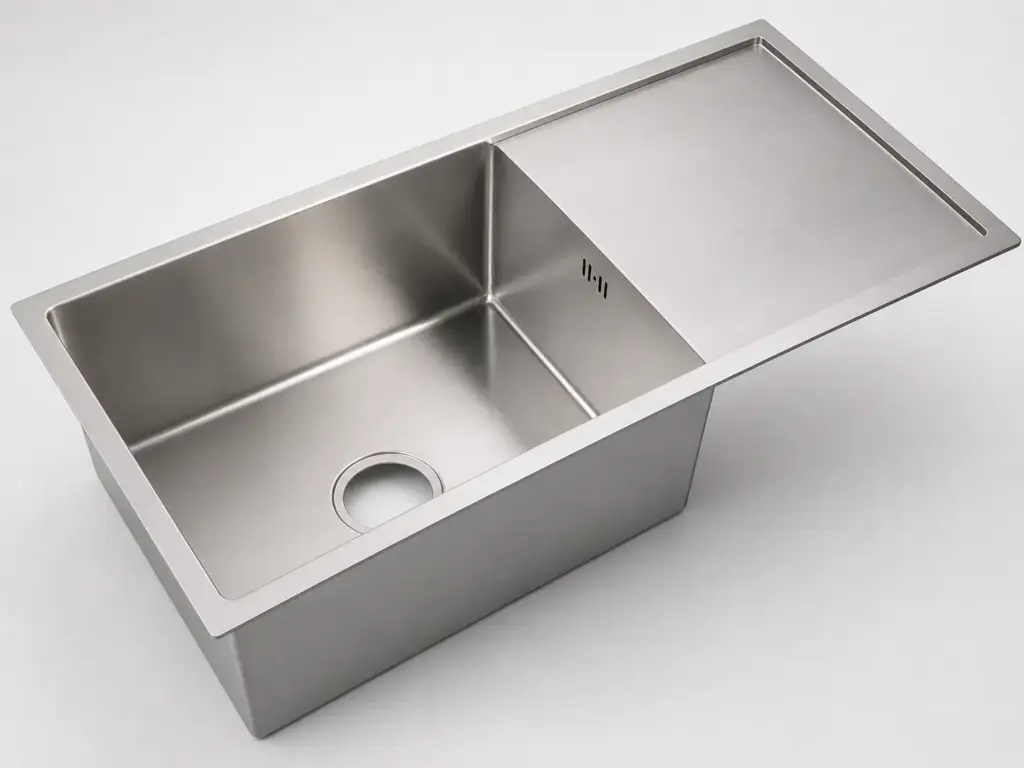
A drainboard sink has a draining surface manufactured as part of the sink body.
The surface is normally positioned beside the bowl and slightly inclined so that water returns toward the sink.
Common designs include:
- Single bowl with one drainboard
- Double bowl with one drainboard
- Single bowl with drainboards on both sides
- Left-hand drainboard
- Right-hand drainboard
- Reversible drainboard
- Top-mount or drop-in drainboard sink
- Sit-on sink top
- Undermount or flush drainboard designs
- Freestanding utility or commercial-style sink
- Stainless steel drainboard sink
- Granite composite drainboard sink
A true drainboard sink is different from a removable plastic tray, roll-up rack or several grooves cut into the countertop.
The Counter-Space Paradox
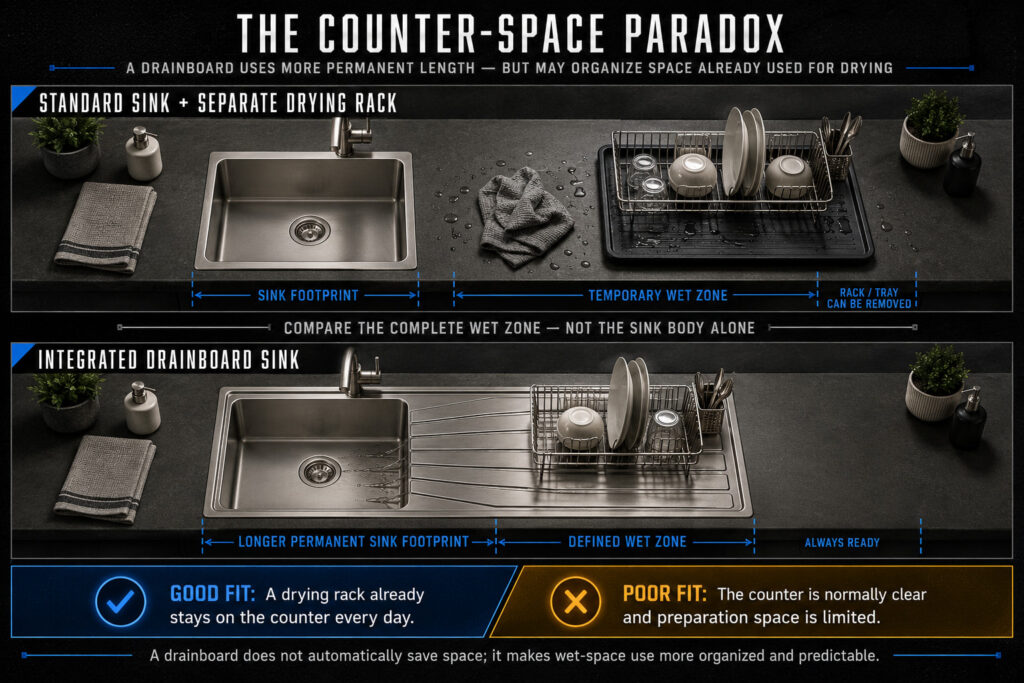
Drainboard sinks are often described as space-saving products. That statement is only partly correct.
A drainboard sink usually takes up more permanent countertop length than a standard sink. However, it can replace:
- A separate dish rack
- A plastic drainage tray
- Towels placed beside the sink
- An improvised wet zone
- Countertop space already occupied by drying dishes
Therefore, a drainboard sink does not necessarily reduce the size of the sink area.
It makes the area more organized and predictable.
The real question is:
Is part of the countertop already being used as a wet drying area?
If the answer is yes, an integrated drainboard may use that space more effectively.
If the countertop is normally clear and most dishes go into a dishwasher, the drainboard may become permanent dead space.
Main Advantages of a Drainboard Sink
1. Water returns toward the sink
A correctly sloped drainboard guides water from dishes and cookware back into the bowl instead of allowing it to spread across the countertop.
This can be particularly valuable around:
- Laminate countertop seams
- Timber or butcher-block countertops
- Cabinet joints
- Wall and backsplash connections
- Countertop-mounted faucet holes
The drainboard does not make these areas waterproof, but it can reduce their exposure to routine dripping.
2. It creates a permanent wet working zone
A drainboard can be used for more than drying plates.
It provides a controlled place for:
- Rinsed vegetables
- Wet cookware
- Washed cutting boards
- Cleaning brushes
- Defrosting packaged food
- Filling or draining containers
- Temporary placement of hot cookware when the material permits
Items containing raw food should still be handled according to normal food-safety practices. The drainboard must be cleaned between different tasks.
3. It reduces dependence on a separate tray
Removable drying trays can shift, overflow or collect water beneath them. An integrated drainboard has no loose tray edge between the drying area and sink.
A separate dish rack may still be used on top of the drainboard, but the water beneath it has a designed return path.
4. It is always available
A roll-up rack or workstation accessory must be found, unfolded and positioned. An integrated drainboard is permanently ready for use.
This is useful in busy kitchens, rental properties, laundry rooms and utility spaces where function is more important than visual minimalism.
5. It can improve hand-washing workflow
A logical washing sequence may be:
Dirty dishes → washing bowl → rinsing area → drainboard
The drainboard keeps clean wet items separate from the dirty side of the sink.
6. It can protect a vulnerable countertop
An integrated stainless steel or composite draining surface may tolerate routine water exposure better than some countertop joints and unfinished edges.
This is one reason drainboard sinks remain useful in utility kitchens, apartments, laundries and high-use renovation projects.
Main Disadvantages
1. It permanently occupies countertop length
Unlike a removable drying rack, the drainboard cannot be put away when it is not needed.
Although it can hold ingredients or cookware temporarily, its ridges and slope may make it unsuitable as a primary cutting or rolling surface.
2. The bowl may become smaller
When the overall sink width is fixed, adding a drainboard means the available length must be divided between:
- The bowl
- The drainboard
- The rim and transition area
A compact sink with a large drainboard may leave an undersized washing bowl.
Check whether the main bowl can still hold the largest roasting tray, frying pan or stockpot used in the kitchen.
3. It may require a longer sink installation
Keeping a large bowl and adding a useful drainboard increases the overall sink length.
This may interfere with:
- Corner cabinets
- Tall appliance panels
- Countertop seams
- Window positions
- Dishwashers
- Drawers
- Existing plumbing
- Short countertop runs
4. Grooves and ridges require cleaning
Drainboard patterns can collect:
- Food particles
- Grease
- Soap residue
- Hard-water deposits
- Moisture beneath dish racks
A shallow, open pattern is generally easier to wipe than deep, narrow grooves.
5. Water spots can be more visible
The drainboard is a broad, exposed surface that repeatedly becomes wet and dries.
Water spots may be particularly visible on:
- Polished stainless steel
- Dark PVD finishes
- Black composite sinks
- Low-slope areas
- Surfaces exposed to hard water
A drainboard reduces uncontrolled water on the countertop; it does not eliminate drying marks.
6. Handedness can create ordering mistakes
A left-hand drainboard and a right-hand drainboard are different products unless the model is genuinely reversible.
Incorrect direction can create conflicts with:
- Dishwasher position
- Wall location
- Faucet holes
- Plumbing
- Cabinet layout
- Washing sequence
For B2B orders, direction must be shown clearly on drawings, cartons and product labels.
7. Replacement can be more difficult
A long or unusually shaped top-mount sink creates a specific countertop opening.
Replacing it later may be harder than replacing a common rectangular sink. The new model must cover the existing cutout while fitting the cabinet and plumbing.
How Much Space Does a Drainboard Sink Need?
There is no single standard drainboard sink size.
The required space depends on:
- Bowl number
- Bowl width and depth
- Drainboard length
- Installation type
- Sink material
- Faucet platform
- Countertop depth
- Base cabinet construction
- Support method
Current market dimensions commonly include configurations such as:
| General configuration | Typical overall size direction* |
|---|---|
| Compact single bowl with drainer | Approximately 30–34 in. or 760–860 mm long |
| Single bowl with full drainboard | Approximately 34–40 in. or 860–1,000 mm long |
| 1.5-bowl sink with drainboard | Approximately 39–43 in. or 1,000–1,100 mm long |
| Double bowl with drainboard | Approximately 43–48 in. or 1,100–1,200 mm long |
| Large or double-drainboard design | Approximately 48–60+ in. or 1,200–1,525+ mm long |
*These are broad market examples, not guaranteed standard sizes. Always use the exact product drawing.
Many European- and Australian-style drainboard sinks are approximately 500 mm from front to back. North American products may use different countertop and cabinet dimensions.
Do You Need a Base Cabinet as Wide as the Whole Sink?
Not always.
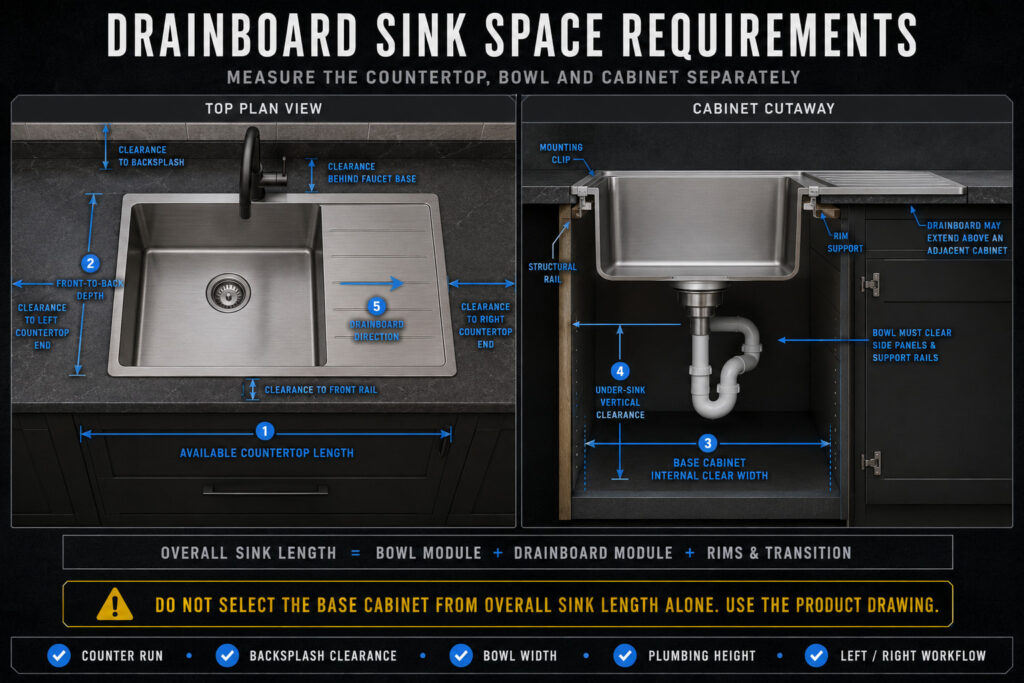
For some top-mount drainboard sinks, only the bowl extends deeply into the cabinet. The drainboard may rest on the countertop above an adjacent cabinet.
This means a 1,000 mm-long sink does not automatically require a 1,000 mm-wide sink base cabinet.
However, the installation still requires enough space for:
- The bowl body
- Mounting clips
- Rim support
- Faucet connections
- Waste fittings
- Cabinet side panels
- Countertop cutout
- Structural rails
- Drainboard support
The minimum cabinet width should come from the sink manufacturer’s technical drawing.
Do not calculate it from the overall sink length alone.
Five Measurements to Take Before Ordering
1. Available countertop length
Measure the uninterrupted countertop run where the complete sink will sit.
Account for:
- Walls
- Tall cabinets
- Appliance panels
- Countertop joints
- Cooktops
- Existing cutouts
- Required structural edge material
The sink must fit physically without leaving a fragile strip of countertop at either end.
2. Countertop front-to-back depth
Measure from the finished front edge to the wall or backsplash.
Confirm there is room for:
- The sink rim
- Faucet platform
- Faucet base
- Backsplash clearance
- Mounting clips
- Front countertop rail
A sink may match the countertop width but still leave insufficient space behind the faucet.
3. Base cabinet internal clear width
Measure inside the cabinet—not across the outer doors or face frame.
Account for:
- Cabinet side walls
- Face-frame projections
- Support rails
- Drawers
- Hinges
- Internal partitions
The bowl must pass between these obstructions.
4. Under-sink vertical clearance
Check whether the bowl depth conflicts with:
- Garbage disposal
- P-trap
- Wall drain
- Pull-out waste bins
- Water filter
- Hot-water tank
- Dishwasher hose
- Cabinet shelf
The drainboard itself may use little space below the countertop, but the bowl and plumbing still require full clearance.
5. Drainboard direction
Stand in front of the planned sink position and map the actual workflow.
Ask:
- Where will dirty dishes arrive from?
- On which side is the dishwasher?
- Which hand normally holds the dish brush?
- Is one side against a wall?
- Where is the main preparation area?
- Where should clean dishes dry?
- Can a cabinet or appliance door open beside the drainboard?
Choose the direction from this layout—not simply from whether the user is left- or right-handed.
A Simple Space-Planning Formula
The total sink length can be understood as:
Overall sink length = Bowl module + Drainboard module + Rims and transition
The countertop must accommodate the complete overall length.
The cabinet must accommodate the parts that project below the countertop, plus the required installation and service clearances.
This distinction explains why two drainboard sinks with the same overall size may require different base cabinets.
One may have a compact bowl and long surface-mounted drainboard. Another may have two bowls extending beneath almost the entire sink.
Drainboard Size vs Bowl Size
A useful drainboard should hold the items the user regularly dries.
However, the bowl should not be sacrificed beyond practical use.
A short drainboard
Best for:
- Cups
- Cutlery
- Rinsed vegetables
- Small apartments
- Occasional hand washing
Possible limitation:
- Not enough room for a full dish rack or large cookware
A full drainboard
Best for:
- Daily hand washing
- Families without a dishwasher
- Large pots and pans
- Utility and laundry tasks
- Rental or project kitchens
Possible limitation:
- Requires more overall countertop length
Double drainboards
Best for:
- Separating dirty and clean items
- High-use utility areas
- Commercial-style workflows
- Large shared kitchens
Possible limitation:
- Very large permanent footprint
Is a Drainboard Sink Good for a Small Kitchen?
Sometimes—but not automatically.
It can work well in a small kitchen when it replaces a drying rack that would otherwise remain on the counter all day.
A compact single-bowl drainboard sink creates two defined zones:
- A washing bowl
- A wet drying surface
However, it may be a poor choice if the kitchen has very little uninterrupted preparation space and the drainboard is rarely used.
For a small kitchen, compare three layouts:
- Compact drainboard sink
- Standard sink with removable drying rack
- Workstation sink with an over-bowl roll-up rack
The best option is the one that preserves the most useful workspace during normal daily use.
Drainboard Sink vs Workstation Sink
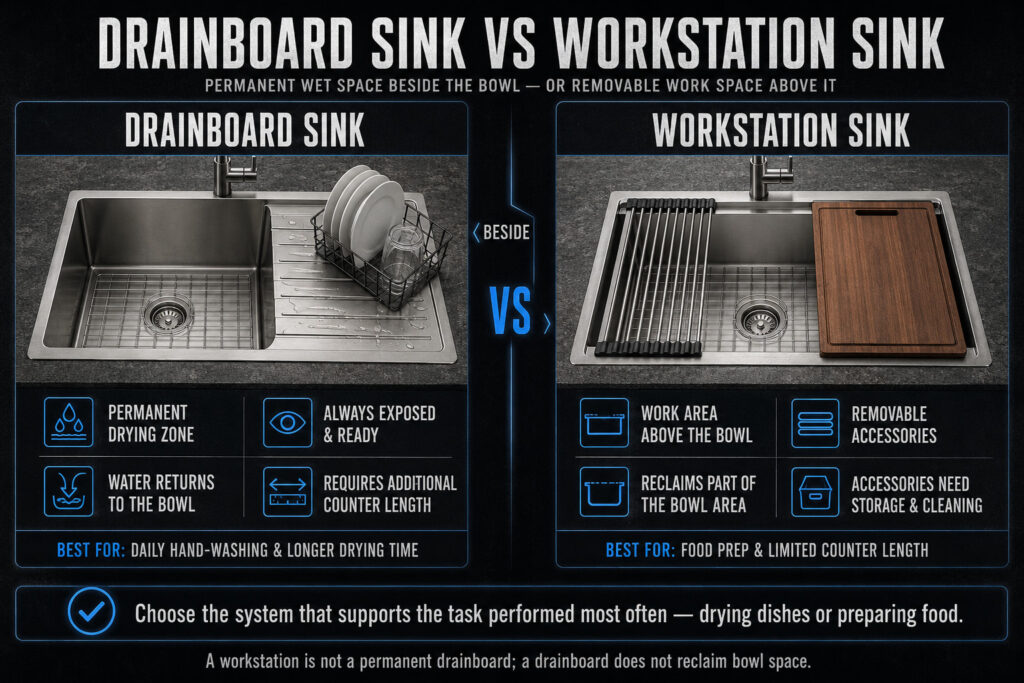
These products solve different problems.
| Feature | Drainboard sink | Workstation sink |
| Main benefit | Permanent drying and wet area | Integrated preparation system |
| Working area | Beside the bowl | Usually above the bowl |
| Accessories | Optional dish rack | Cutting board, colander, rack and baskets |
| Availability | Always exposed and ready | Accessories must be installed or stored |
| Countertop use | Occupies additional length | Can reclaim part of the bowl area |
| Cleaning | Drainboard grooves and surface | Ledges and removable accessories |
| Best for | Hand washing and drying | Food preparation and multifunction use |
A workstation sink can be more efficient when counter length is limited because its accessories work over the bowl.
A drainboard sink is often better when wet dishes must remain beside the bowl for extended drying.
Explore Matrix workstation kitchen sinks for an accessory-based alternative.
Drainboard Sink vs Double-Bowl Sink
A double-bowl sink separates activities inside the sink. A drainboard separates drying from washing.
Choose a double bowl when the priority is:
- Washing and rinsing simultaneously
- Separating food preparation from dirty dishes
- Soaking in one bowl while keeping another available
Choose a drainboard when the priority is:
- Drying dishes
- Protecting the countertop
- Staging wet cookware
- Keeping clean items outside the washing bowl
A double-bowl drainboard sink combines all three functions, but it requires considerably more length or smaller individual bowls.
Does the Drainboard Really Drain?
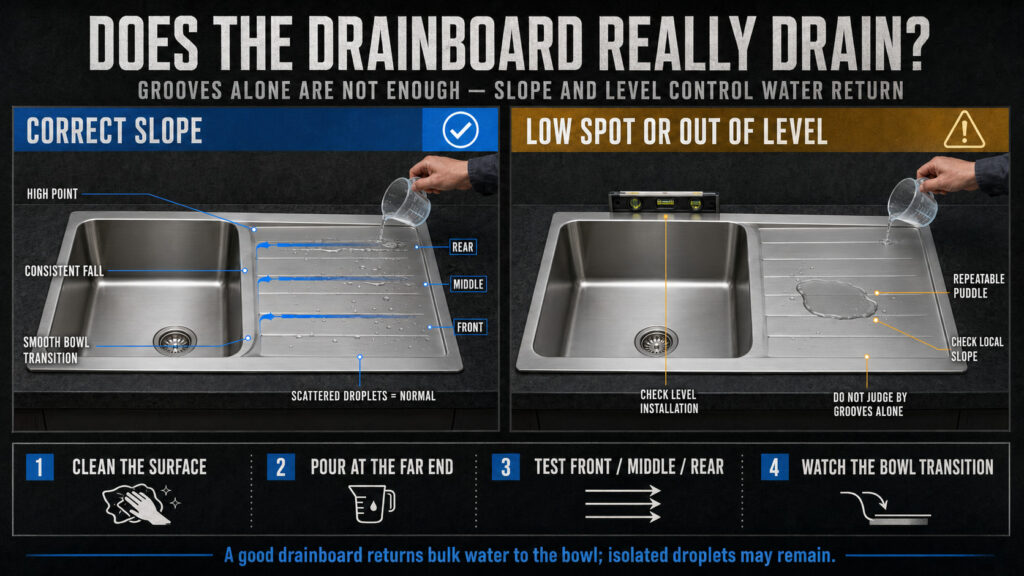
A surface with grooves does not necessarily drain correctly.
Actual performance depends on:
- Overall slope toward the bowl
- Consistency of that slope
- Absence of localized low spots
- Direction and depth of the surface pattern
- Transition between the board and bowl
- Level installation
- Rim and body flatness
For products evaluated under EN 13310, the draining area is included in the water-drainage requirement. The test applies water at the high part of the draining surface and checks whether it reaches the bowl or outlet. Small amounts remaining because of surface tension are permitted.
This distinction is important:
- Scattered droplets are normal.
- A repeatable puddle in the middle or outer end may indicate poor slope, distortion or incorrect installation.
A Simple Drainboard Water Test
Before approving the installation:
- Confirm the sink rim is supported and level.
- Clean grease and protective-film residue from the drainboard.
- Pour water at the outermost practical point.
- Observe whether it travels toward the bowl.
- Repeat the test at the front, middle and rear areas.
- Check the transition where the drainboard meets the bowl.
- Look for repeatable puddles rather than individual droplets.
- Inspect the countertop rim for leakage.
For B2B sample approval, use a fixed water quantity, test position, observation time and acceptance limit.
“Drainboard with good slope” is not a sufficiently measurable purchase specification.
Material Comparison
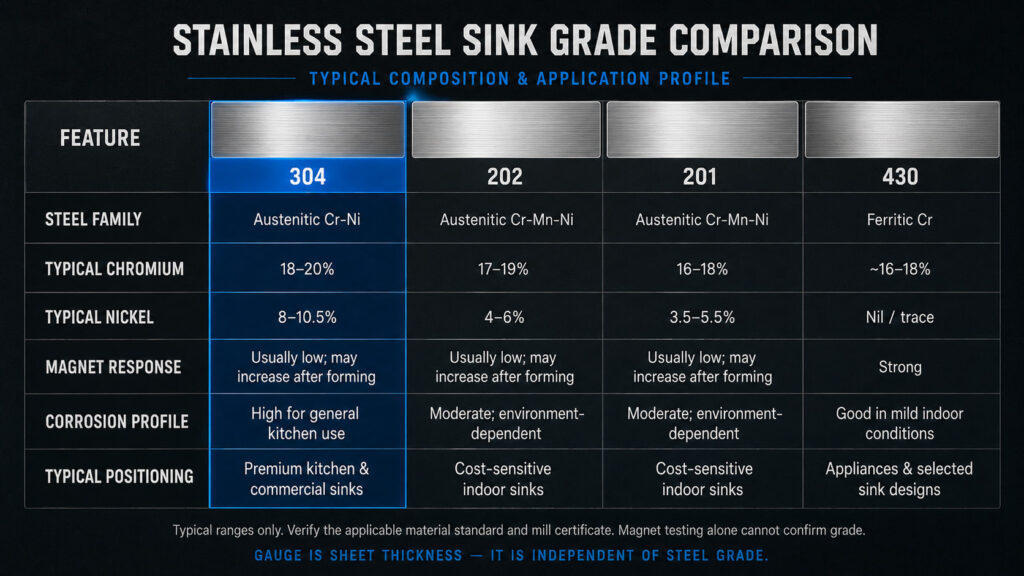
Stainless steel drainboard sinks
Advantages:
- Relatively lightweight
- Suitable for pressed and handmade construction
- Heat tolerant in normal kitchen use
- Practical for wholesale and project supply
- Available in large and custom sizes
- Easier to coordinate with utility applications
Buyer considerations:
- Scratches may be visible on the broad drainboard
- Thin surfaces may flex
- Long rims require flatness control
- Brushing direction should remain consistent
- Water spots are visible on some finishes
- Export packaging must protect the extended surface
Granite composite drainboard sinks
Advantages:
- Matte, stone-like appearance
- Multiple color options
- Solid visual integration between bowl and drainboard
- Suitable for showroom and design-led product lines
Buyer considerations:
- Heavier product and packaging
- Cabinet support requirements
- Color consistency
- Surface texture and cleaning
- Water-mark visibility on dark colors
- Edge and corner protection during shipping
Cast iron, fireclay and ceramic-style drainboard sinks
Advantages:
- Traditional or heritage appearance
- Rigid surface
- Strong visual character
Buyer considerations:
- High weight
- Cabinet support
- Chipping risk
- Limited model availability
- More difficult replacement
- Higher transport and handling demands
Countertop drain grooves
Grooves machined into a stone or solid-surface countertop are not the same as an integrated drainboard sink.
They may provide a minimal appearance but depend heavily on:
- Countertop material
- Machining depth
- Surface slope
- Sealing
- Water resistance
- Fabricator accuracy
Several shallow grooves cannot replace a properly sloped recessed draining area when a large volume of hand-washed dishes is involved.
Cleaning and Maintenance
A drainboard should be cleaned as part of the sink rather than treated as a permanent storage shelf.
Recommended routine:
- Remove dishes after they are dry
- Clean beneath the dish rack
- Wipe along grooves and ridges
- Rinse food and detergent residue into the bowl
- Dry the surface when water spotting is a concern
- Avoid harsh tools that scratch across the finish
- Clean stainless steel in the direction of the grain
- Follow the care instructions for composite or coated finishes
Do not allow wet cloths, steel cookware or carbon-steel tools to remain on stainless steel for long periods. Transferred iron particles may create orange surface staining that is mistaken for sink corrosion.
B2B Sample-Approval Checklist
Drainboard sinks create additional sourcing risks because they are longer and more direction-sensitive than many standard sinks.
Dimensions and fit
- Overall length and width
- Bowl dimensions and depth
- Minimum cabinet size
- Countertop cutout
- Rim width
- Faucet-hole position
- Drain position
- Clip and support clearance
Drainboard function
- Left, right or reversible direction
- Slope direction
- Water-return test
- Surface pattern
- Transition into the bowl
- Localized low spots
- Usable rack area
Product construction
- Pressed, handmade or composite
- Material specification
- Rim and drainboard flatness
- Welding and polishing quality
- Surface finish direction
- Edge strength
- Soundproofing position
Installation
- Full rim support
- Drainboard support
- Faucet and backsplash clearance
- Cabinet-partition interference
- Dishwasher position
- Plumbing and disposal clearance
- Installation instructions
Packaging
- Protection for the full visible surface
- Long-edge protection
- Corner guards
- Separation of metal accessories
- Left/right model label
- Carton orientation
- Pallet overhang control
- Replacement-part identification
A small finish sample cannot represent the complete product. The approved sample should include the actual bowl, drainboard slope, surface pattern and packaging method.
Matrix develops drainboard kitchen sinks for brands, wholesalers and project buyers. Options include pressed and handmade stainless steel, selected granite composite models, left- or right-hand layouts, reversible designs and custom project dimensions.
Questions to Ask Before Buying
Use these questions as a final decision filter:
- How many items are hand-washed each day?
- Is a drying rack already permanently occupying the counter?
- Can the drainboard hold the normal dish rack?
- Is the remaining bowl large enough for the biggest cookware?
- Does the complete sink fit the available countertop run?
- Does the bowl fit inside the base cabinet?
- Is the drainboard on the correct side for the workflow?
- Does water return from the far end without pooling?
- Is the drainboard easy to wipe and clean?
- Can the same cutout be serviced or replaced later?
- Is the product packaged to protect the long rim and visible surface?
- Would a removable workstation rack use the space more efficiently?
Frequently Asked Questions
Are drainboard sinks outdated?
No. Their appearance can be traditional, but the underlying function remains useful. Modern models are available in stainless steel, granite composite and contemporary flush or top-mount designs.
Do drainboard sinks save counter space?
They can replace the space already used by a drying rack. However, the sink itself normally occupies more permanent countertop length than a standard sink.
Can I cut food directly on the drainboard?
It is generally better to use a cutting board. Cutting directly on stainless steel can scratch the finish and dull knives. Grooved surfaces are also not ideal for stable knife work.
Can the drainboard go over another cabinet?
On some top-mount designs, yes. The bowl may sit inside the sink base while the drainboard rests on the countertop above an adjacent cabinet. The complete cutout, support and cabinet layout must still be checked.
Which side should the drainboard be on?
Choose the side that supports the washing sequence, dishwasher location, available counter space and wall clearances. It is not determined only by whether the user is left- or right-handed.
Is a reversible drainboard sink truly reversible?
Only if the bowl, faucet holes, overflow, drainboard pattern, clips and branding support installation in both directions. “Reversible” should be verified on the technical drawing.
Can drainboard sinks be undermounted?
Some can, but top-mount, drop-in and sit-on installations are more common. An undermount drainboard can require a larger countertop opening and more extensive structural support.
Do drainboard sinks collect water?
A correctly sloped drainboard should return bulk water to the bowl. Small droplets may remain because of surface tension. Defined puddles suggest insufficient slope, a low spot or out-of-level installation.
Is a drainboard sink suitable for a dishwasher kitchen?
Yes, if large pots, knives and delicate items are still regularly hand-washed. If almost everything goes into the dishwasher, the permanent drainboard may provide less value.
Are drainboard sinks good for laundry rooms?
Yes. They provide space for rinsing and drying cleaning tools, hand-washed garments or wet household items. Bowl depth, surface cleaning and cabinet support should match the intended use.
Final Verdict
A drainboard kitchen sink is worth it when the kitchen needs a permanent, water-controlled drying and rinsing area.
Its strongest applications include:
- Kitchens without dishwashers
- Households that hand-wash cookware
- Apartments and rental projects
- Utility and laundry rooms
- Water-sensitive countertop areas
- Markets where integrated drainers are familiar and expected
It is less suitable when:
- Countertop preparation space is extremely limited
- The drainboard will rarely be used
- The user wants the largest possible bowl
- A removable drying rack provides enough function
- Replacement flexibility is a priority
Do not judge a drainboard sink only by its total length. Confirm how that length is divided between the bowl and drainboard, which parts need cabinet clearance and whether the water actually returns to the bowl.
For B2B buyers, the most important controls are direction, slope, overall dimensions, bowl capacity, installation fit, finish consistency and packaging protection.
To review a drainboard sink for a wholesale, private-label or project program, contact the Matrix team with the target size, bowl layout, drainboard direction, material and installation requirements.