Quick Answer
Use an existing pressed-sink mold when the available size, bowl depth, radius, rim and drain layout are already close to your target product.
Open new tooling when those dimensions or product geometry are important enough that an existing mold would require too many compromises.
The decision usually comes down to:
- target dimensions
- bowl depth and shape
- corner radius
- drain position
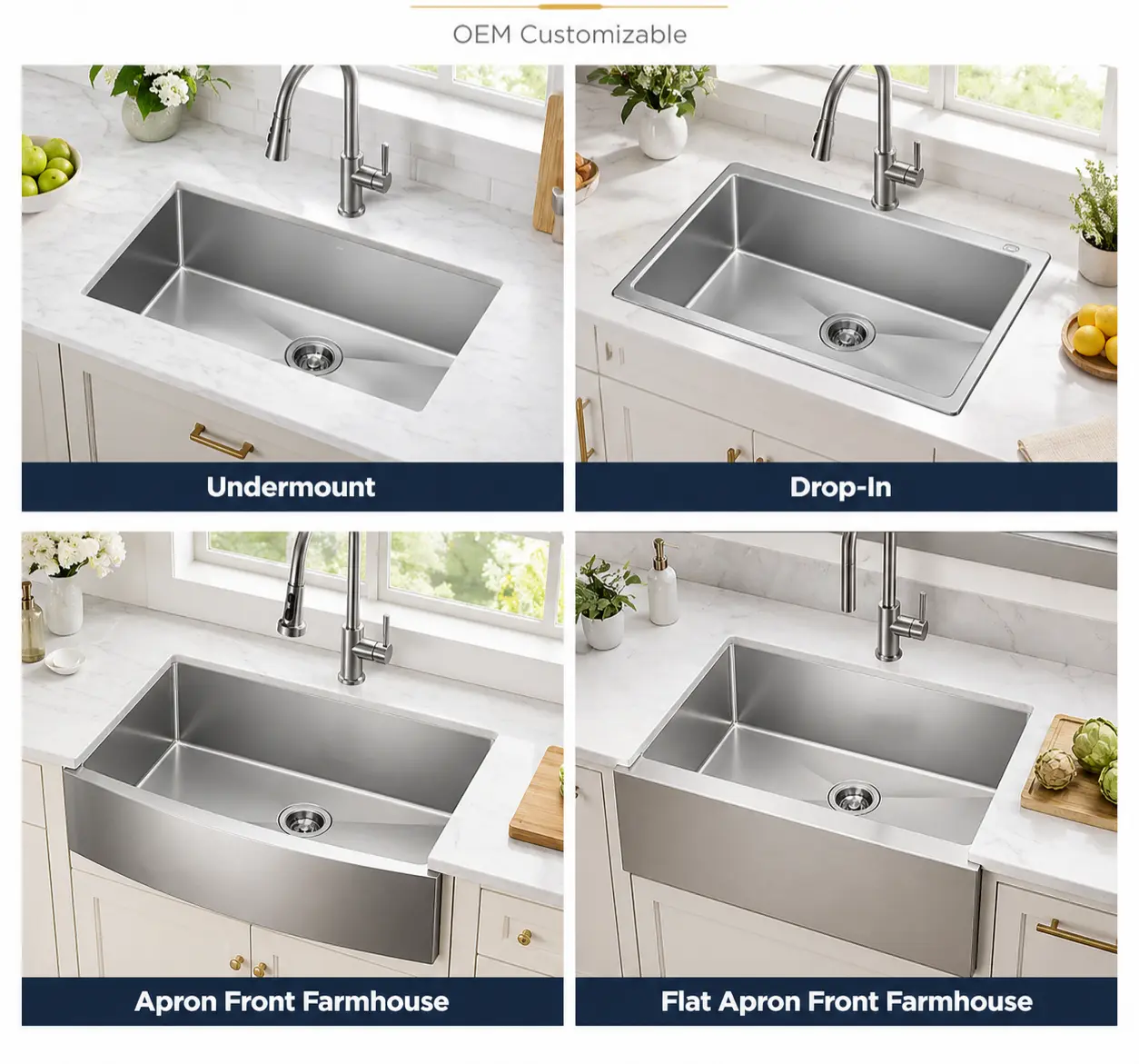
- installation structure
- expected quantity
- MOQ
- tooling investment
- development time
- expected product life
Existing molds usually reduce development cost and make smaller initial programs easier.
New tooling gives more control over the product, but only makes commercial sense when the differentiation and expected volume justify it.
1. An Existing Mold Is More Than “A Similar Size”
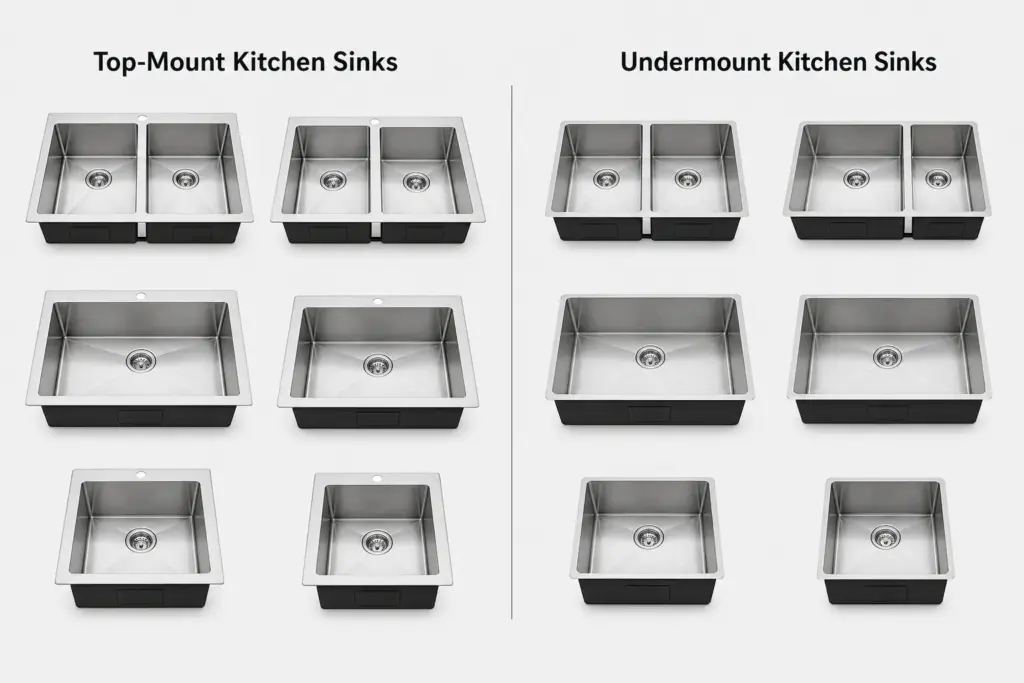
A mold should not be selected only because the catalog says:
800 × 500 mm
Two 800 × 500 mm pressed sinks can still differ in:
- bowl opening
- bowl depth
- corner radius
- rim width
- drain position
- faucet deck
- installation profile
- overflow design
- bottom geometry
So the real question is not:
Do you have an 800 × 500 mold?
It is:
Do you have an existing mold whose complete geometry fits our product requirement?
2. When an Existing Mold Makes Sense
An existing mold is usually the practical choice when the buyer is flexible on product geometry.
Typical situations include:
- standard retail sink sizes
- wholesale programs
- initial market testing
- price-sensitive SKUs
- lower-volume programs
- products where differentiation comes mainly from finish, accessories or branding
The main advantage is that the forming geometry already exists.
This can reduce:
- tooling investment
- development work
- trial forming
- project risk
It can also make sample development more straightforward if the required model is already in production.
3. But Existing Mold Does Not Mean “No Customization”
A common misunderstanding is:
Existing mold = fixed finished SKU.
Not necessarily.
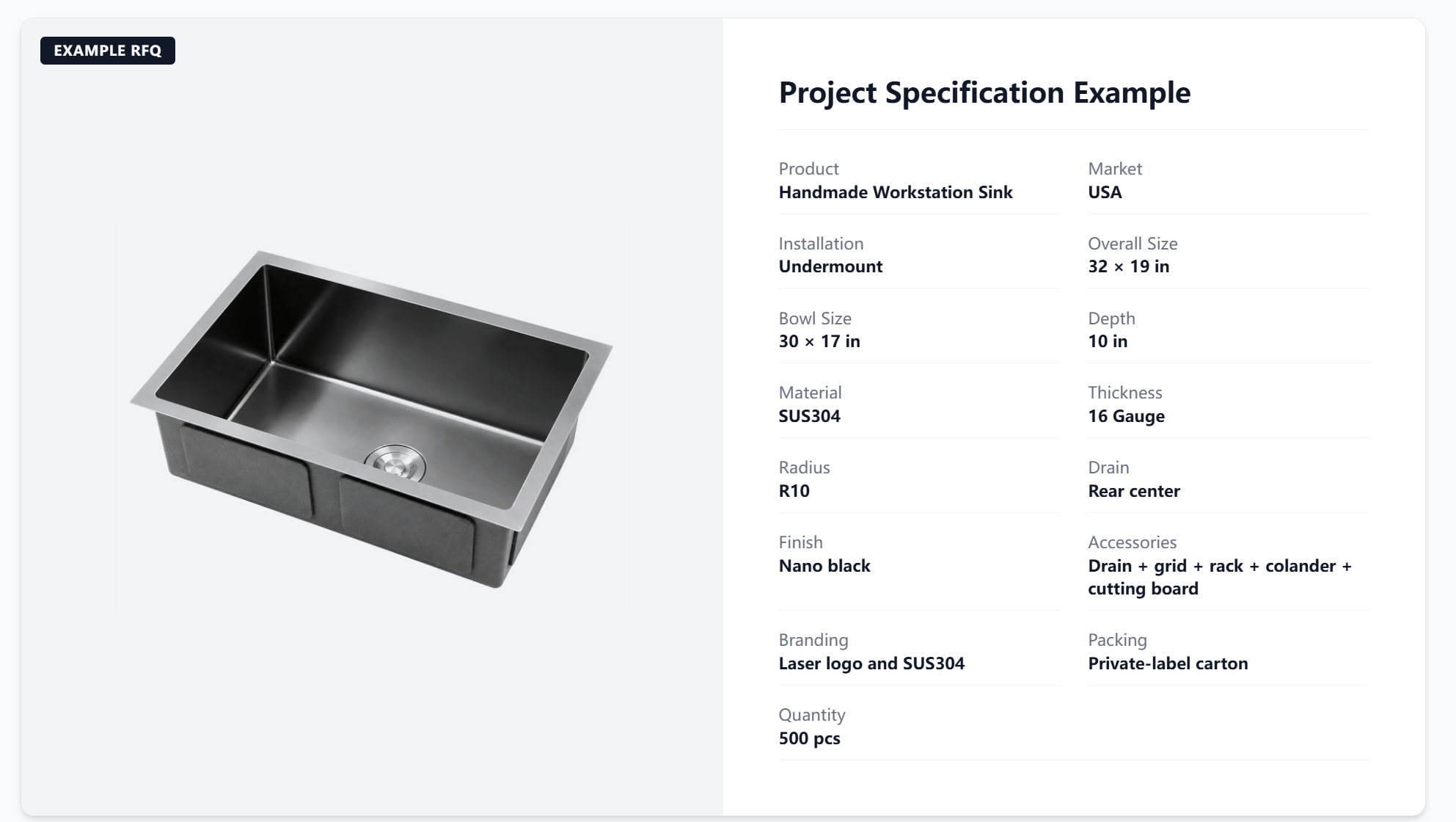
Depending on the model and production route, buyers may still be able to customize:
- finish
- drain components
- faucet holes
- sound pads
- undercoating
- logo
- accessories
- labels
- carton
- private-label packaging
What normally remains less flexible is the main formed geometry:
- bowl shape
- depth
- major radius
- rim structure
- overall forming profile
This is why an existing mold can still work well for a private-label program.
See Matrix’s Private Label Product Programs for the elements that can be defined beyond the sink body.
4. When New Tooling Becomes Necessary
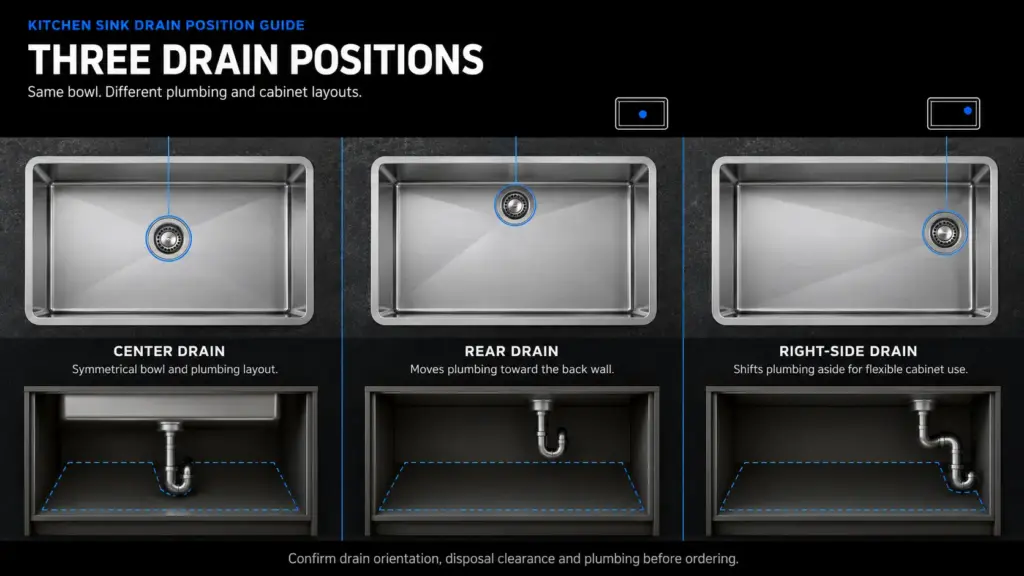
New tooling should be considered when the product cannot be achieved properly from an existing mold.
Typical reasons include:
Different Overall Geometry
The required length, width or bowl proportion does not match an available mold.
Different Bowl Depth
A deeper or shallower bowl changes the forming geometry.
Different Radius
Corner radius is part of the mold design, not simply a finishing adjustment.
Different Drain Structure
A major change in drain location or bottom geometry may require tooling changes.
Different Rim / Installation Design
Top-mount, undermount and other installation structures may require different formed edges.
Product Differentiation
The buyer wants a proprietary size or appearance rather than another standard market model.
If several of these points are critical, forcing the project into an existing mold usually creates more compromise than value.
5. New Tooling Changes the Development Process
A new pressed sink is not developed like a custom handmade sink.
The route may include:
- product specification
- drawing review
- tooling feasibility
- mold design
- mold manufacturing
- trial forming
- dimension review
- forming adjustment
- sample approval
- mass production
That means the buyer should evaluate more than the mold price.
Also consider:
- development time
- trial quantity
- revision risk
- sample approval
- expected order volume
A new mold is a product-development decision, not simply another line item on the quotation.
6. MOQ Is Part of the Tooling Decision
Suppose two options are available:
Option A — Existing Mold
No new tooling
Higher flexibility for an initial order
Standard geometry
Option B — New Mold
Tooling investment required
Higher development commitment
Custom geometry
The right answer depends heavily on expected volume.
For a small trial order, opening new tooling may make little commercial sense.
For a long-term SKU expected to run repeatedly, the tooling cost may become much less significant when spread across future production.
7. Do Not Compare Only the First-Order Price
Consider a simplified example:
| Item | Existing Mold | New Tooling |
|---|---|---|
| Tooling Cost | None / Low | Required |
| Development | Lower | Higher |
| Geometry Flexibility | Limited | High |
| Sample Route | Faster in many cases | Tooling first |
| MOQ | Usually easier | 1000~1500pcs for pressed sink |
| Product Differentiation | Lower | Higher |
| Long-Term Fit | Depends on model | Designed for program |
The existing-mold option may be cheaper for the first order.
The custom-tooling option may make more sense over several years.
Neither is automatically better.
8. Ask for the Existing Mold Drawing Before Deciding
Do not choose from a product photo alone.
Ask the manufacturer for enough information to compare:
- overall size
- bowl opening
- depth
- radius
- drain location
- rim structure
- installation type
If possible, compare the existing mold drawing directly with your target specification.
This makes the compromise visible before samples are produced.
9. Small Differences Can Matter
A buyer may think:
Our target is 750 × 450 mm. The factory has 760 × 450 mm. Close enough.
Sometimes it is.
Sometimes it is not.
A 10 mm difference can affect:
- cabinet fit
- countertop cutout
- accessory size
- carton
- existing product range
- retail specification
The decision should depend on the application, not only the percentage difference.
10. When Handmade May Be a Better Alternative
If the target quantity is relatively small and the product requires:
- custom dimensions
- custom depth
- unusual drain position
- special rim structure
a handmade sink may be commercially more practical than opening a new pressed mold.
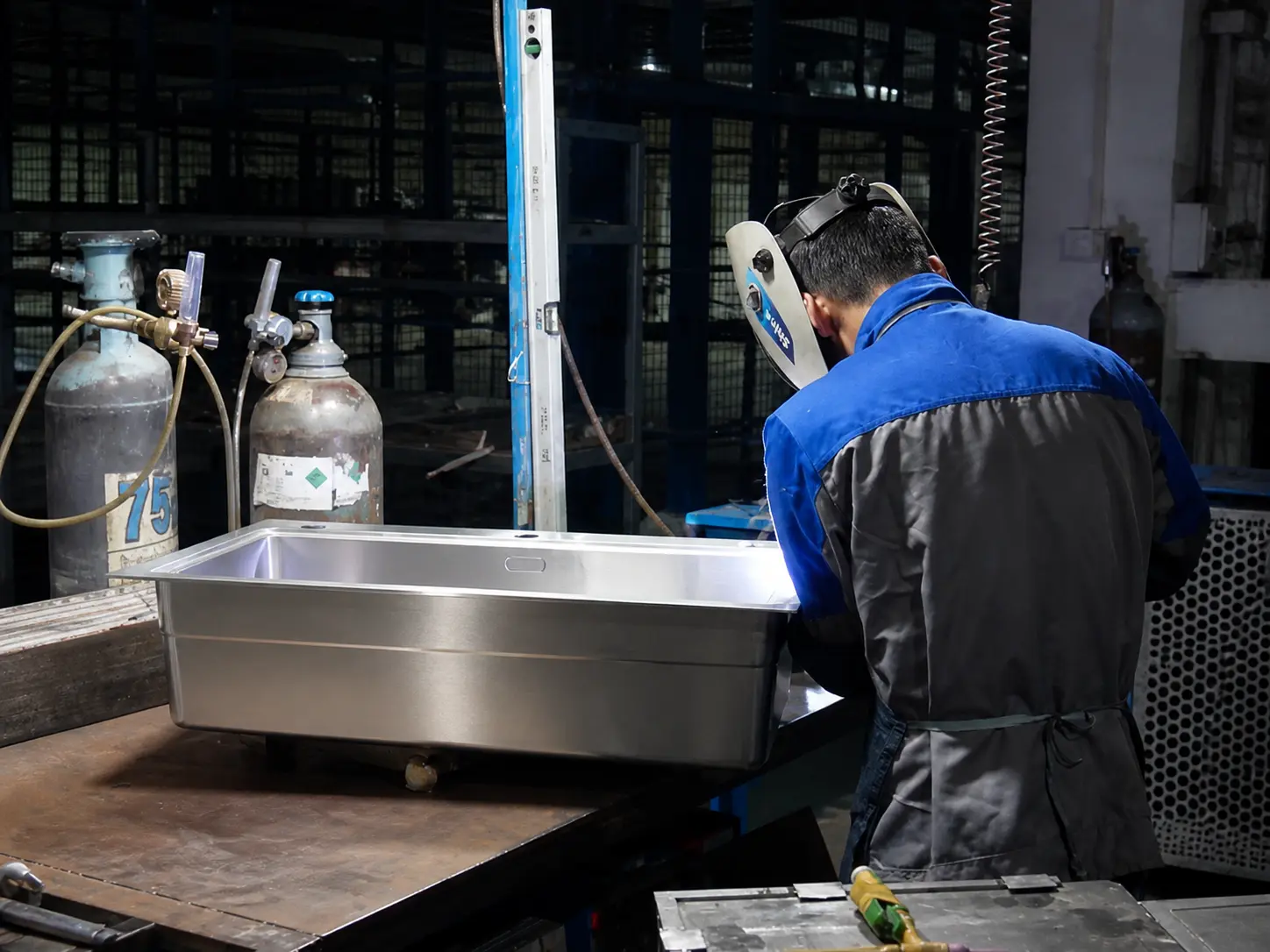
Handmade fabrication does not rely on the same full bowl-forming tooling.
That does not make handmade universally better.
It simply gives the buyer another production route when customization is more important than high-volume forming efficiency.
Compare the options on:
and
11. What Buyers Should Ask Before Approving New Tooling
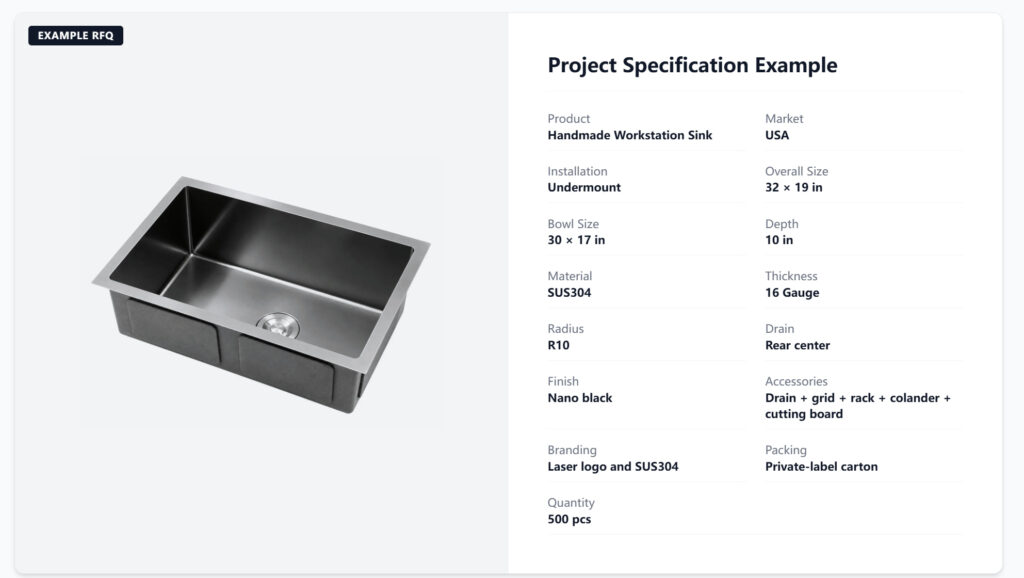
Before paying for a new mold, confirm:
- final drawing
- overall size
- bowl dimensions
- depth
- radius
- drain geometry
- installation structure
- material and starting thickness
- expected MOQ
- mold development time
- sample approval process
- tooling cost
- tooling ownership if commercially important
- expected annual quantity
Do not open tooling while the product geometry is still changing.
Existing Mold vs New Tooling: Decision Guide
Choose an existing mold when:
- the geometry is already suitable
- speed matters
- initial volume is limited
- differentiation can come from finish, accessories or branding
Consider new tooling when:
- dimensions are product-critical
- existing molds require too much compromise
- the SKU needs meaningful differentiation
- expected repeat volume can support the investment
Buyer Takeaway
Do not ask only:
How much does a new mold cost?
Ask:
What product compromise do we accept by using the existing mold, and is avoiding that compromise worth the tooling investment?
That is the real sourcing decision.
FAQ
Can a pressed sink size be changed without a new mold?
Major changes to bowl geometry, depth or overall formed structure generally depend on the mold. Smaller secondary operations may be adjustable depending on the model.
Is an existing mold always cheaper?
It normally avoids new tooling cost, but the existing geometry may not match the target product. Commercial fit should be evaluated together with unit price and expected volume.
Can I customize an existing pressed sink model?
Yes. Finish, branding, packaging, accessories and some secondary operations may still be customized even when the main sink geometry comes from an existing mold.
When should I open a new sink mold?
When the required geometry or product differentiation is important enough to justify the added tooling cost, development time and production commitment.
Should I consider handmade production instead?
For lower-volume custom programs, handmade fabrication can be worth evaluating before investing in new pressed tooling.
Reviewing a New Sink Program?
Start with the Kitchen Sink RFQ Checklist so the manufacturer can compare your target specification against existing molds.
You can also review Matrix’s Kitchen Sink Factory Capabilities before deciding between handmade production, existing pressed tooling and new mold development.