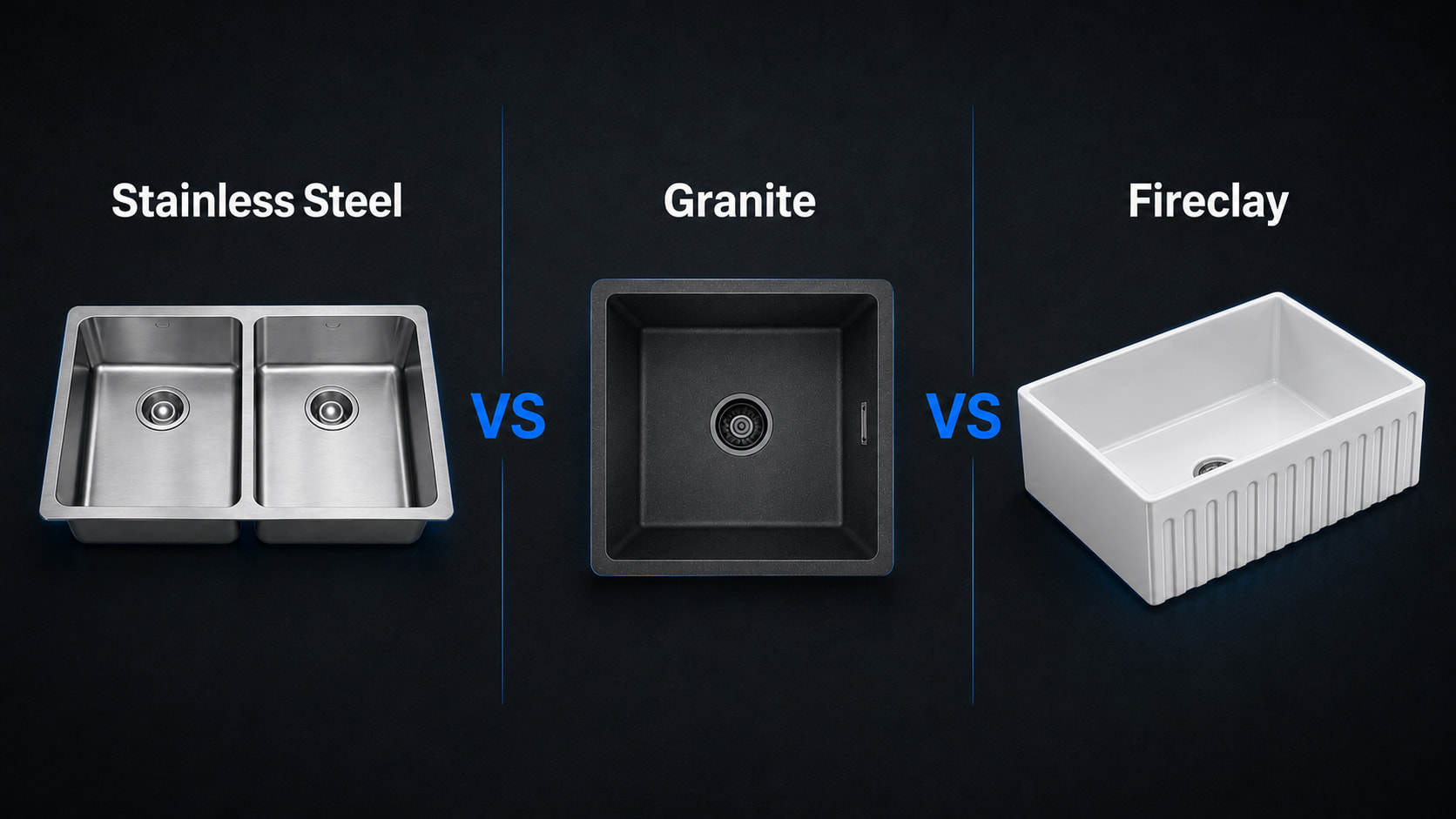
Fireclay is usually better for buyers who want a solid, traditional farmhouse appearance and a glossy surface that resists everyday scratching.
Stainless steel is usually better for high-use kitchens, large cookware, easier installation, lower shipping risk and broader size or configuration options.
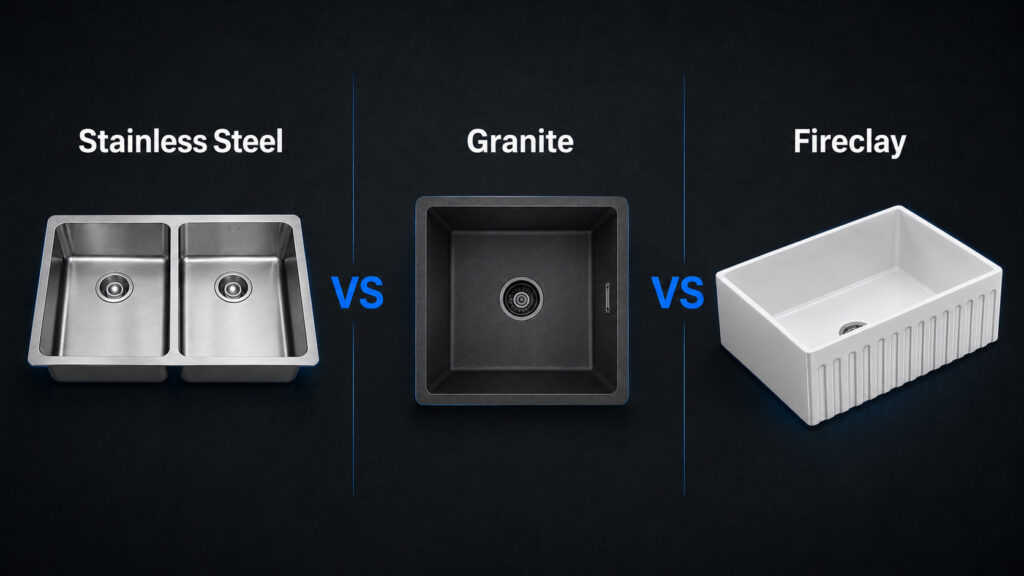
The real difference is how the two materials age.
- Fireclay resists fine surface wear but can chip when struck by a heavy object.
- Stainless steel develops scratches and water spots but normally bends or dents instead of cracking.
- Fireclay is heavy and may vary slightly in finished dimensions.
- Stainless steel is lighter, more impact-tolerant and easier to specify across repeated projects.
The better sink is therefore not the one with the fewest disadvantages.
It is the sink whose long-term wear, installation requirements and failure risks fit the buyer’s kitchen or sales channel.
Fireclay vs Stainless Steel: Quick Comparison
| Buying Factor | Fireclay Sink | Stainless Steel Sink |
|---|---|---|
| Visual style | Traditional, substantial, farmhouse-focused | Modern, commercial or transitional |
| Fine scratch visibility | Usually low | Fine scratches are expected |
| Heavy-impact response | May chip or crack | May dent but normally will not chip |
| Water spots | Depends on color and water quality | More visible on reflective surfaces |
| Weight | Heavy | Relatively light |
| Cabinet support | Usually requires substantial support | Still needs support, but imposes less load |
| Dimensional consistency | May vary because of firing | Generally easier to control |
| Countertop fabrication | Actual sink should be measured | Verified drawing or template is often usable |
| Installation difficulty | Higher | Usually lower |
| Shipping damage risk | Higher | Lower |
| Noise | Naturally quiet because of mass | Depends on pads, coating and structure |
| Heat resistance | Good, subject to product care guidance | Good and tolerant of rapid temperature changes |
| Available configurations | More concentrated in farmhouse styles | Wide range of installation and bowl types |
| Workstation options | Available but less common | Widely available |
| Custom sizes | More difficult | More practical with fabricated stainless steel |
| Replacement flexibility | May require cabinet or countertop adjustment | Usually easier with controlled dimensions |
| B2B landed cost | Higher handling, packing and installation cost | Broader price and logistics options |
The Most Important Difference: Hardness vs Toughness
Fireclay and stainless steel respond differently to impact.
Fireclay is hard. Stainless steel is tough.
These terms are not interchangeable.
Fireclay Is Hard but Less Forgiving
Fireclay is produced from clay and mineral materials fired at high temperature with a glazed outer surface.
The finished material resists:
- Everyday surface scratching
- Household stains
- Fading
- Normal kitchen heat
- General cleaning
However, a hard material may not absorb a sharp impact well.
A heavy cast-iron pan, metal tool or other dense object can chip the glazed surface. A severe impact may damage the sink body.
Minor metal marks on the glaze may be removable. A true chip is different: part of the glazed surface or body has been physically lost.
Stainless Steel Is More Impact-Tolerant
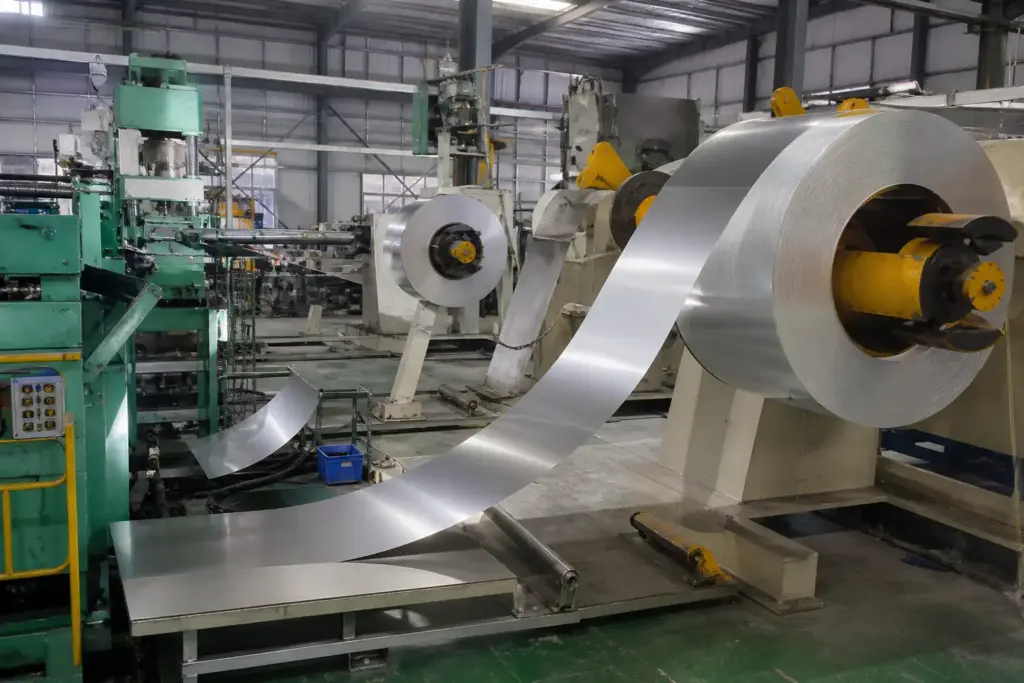
Stainless steel is ductile. It can flex or deform slightly under force instead of fracturing like a ceramic material.
A severe impact may cause:
- A dent
- A localized deformation
- A scratch
- A visible scuff
But it normally will not create the chipped edge associated with a brittle glazed material.
This distinction matters in kitchens that regularly handle:
- Cast-iron cookware
- Heavy stockpots
- Large baking trays
- Commercial utensils
- Barbecue parts
- Kitchen equipment
If the sink will receive frequent heavy impact, stainless steel is generally the more forgiving material.
Choose the Wear You Can Accept
No frequently used kitchen sink remains visually untouched.
The buyer should decide which type of aging is acceptable.
How Fireclay Ages
A well-maintained fireclay sink can retain its glossy appearance for years.
Possible visible changes include:
- Metal transfer marks
- Local staining
- Abrasion on heavily used areas
- Fine glaze lines on some products
- Small chips after impact
- Changes around the drain or exposed edges
A white or light-colored fireclay sink may hide some water residue but can reveal dark marks. Dark fireclay may show mineral deposits more clearly.
How Stainless Steel Ages
A stainless steel sink normally develops fine scratches during use.
This does not automatically indicate poor quality. Cookware, cutlery, metal grids, abrasive particles and cleaning tools all contact the surface.
Over time, fine marks may blend into a more uniform patina.
Possible visible changes include:
- Fine directional scratches
- Water spots
- Mineral deposits
- Local scuffing
- Dents after severe impact
- Surface discoloration from unsuitable chemicals
- Rust-colored contamination from external iron particles
A brushed or satin finish generally hides ordinary wear better than a highly polished finish.
The practical difference is:
Fireclay may stay visually cleaner until a localized chip occurs. Stainless steel changes more gradually across the entire surface.
Which Material Is Better for a Busy Family Kitchen?
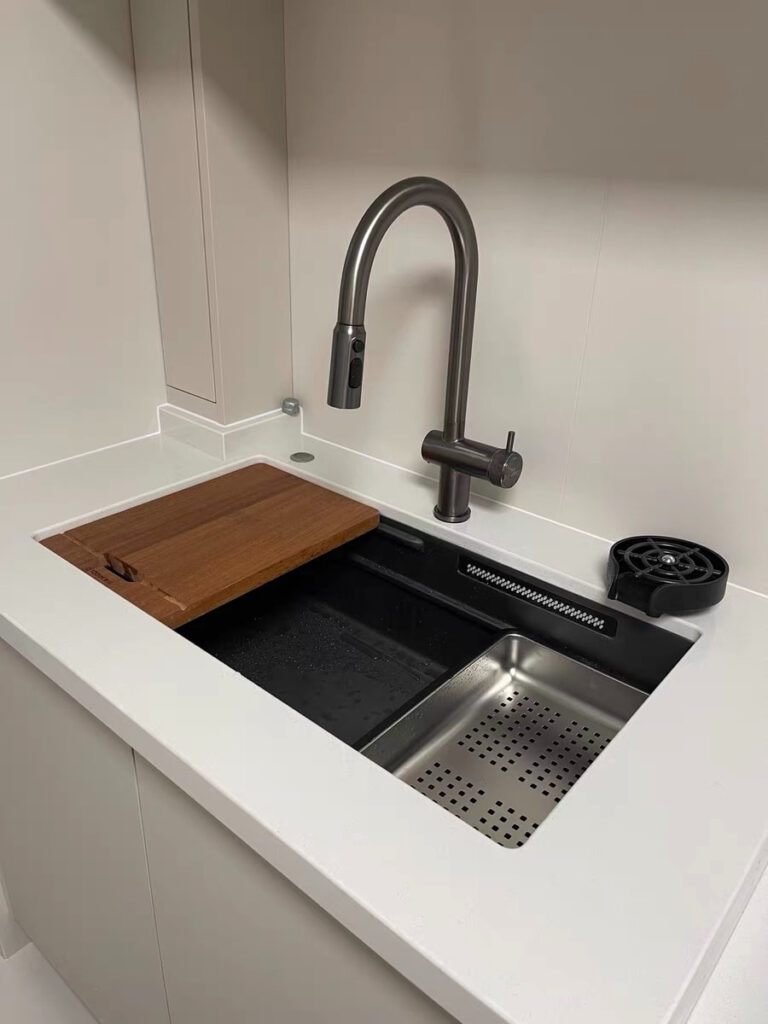
Stainless steel is generally the safer choice for a busy kitchen.
It is more suitable when:
- Heavy cookware is used frequently
- Children help with dishes
- Baking trays and racks are washed in the sink
- The sink is used for activities beyond normal dishwashing
- Visual scratches are acceptable
- Easy replacement matters
- The kitchen needs a workstation system
Fireclay may be better when:
- Traditional appearance is the priority
- The sink is a central design feature
- Users handle heavy cookware carefully
- The buyer accepts custom cabinet preparation
- The glossy surface is preferred over a brushed metal surface
- The additional installation and shipping cost is acceptable
Which Material Is Better for Farmhouse Sinks?
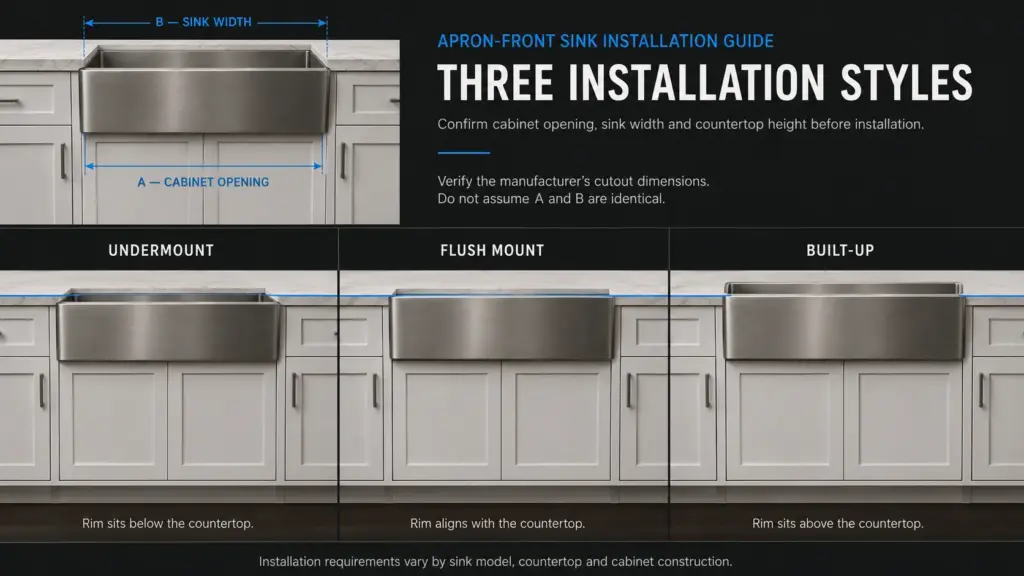
Fireclay is strongly associated with farmhouse and apron-front kitchens. Its thick body, glazed surface and substantial appearance work naturally with traditional cabinetry.
But farmhouse is an installation style—not a material.
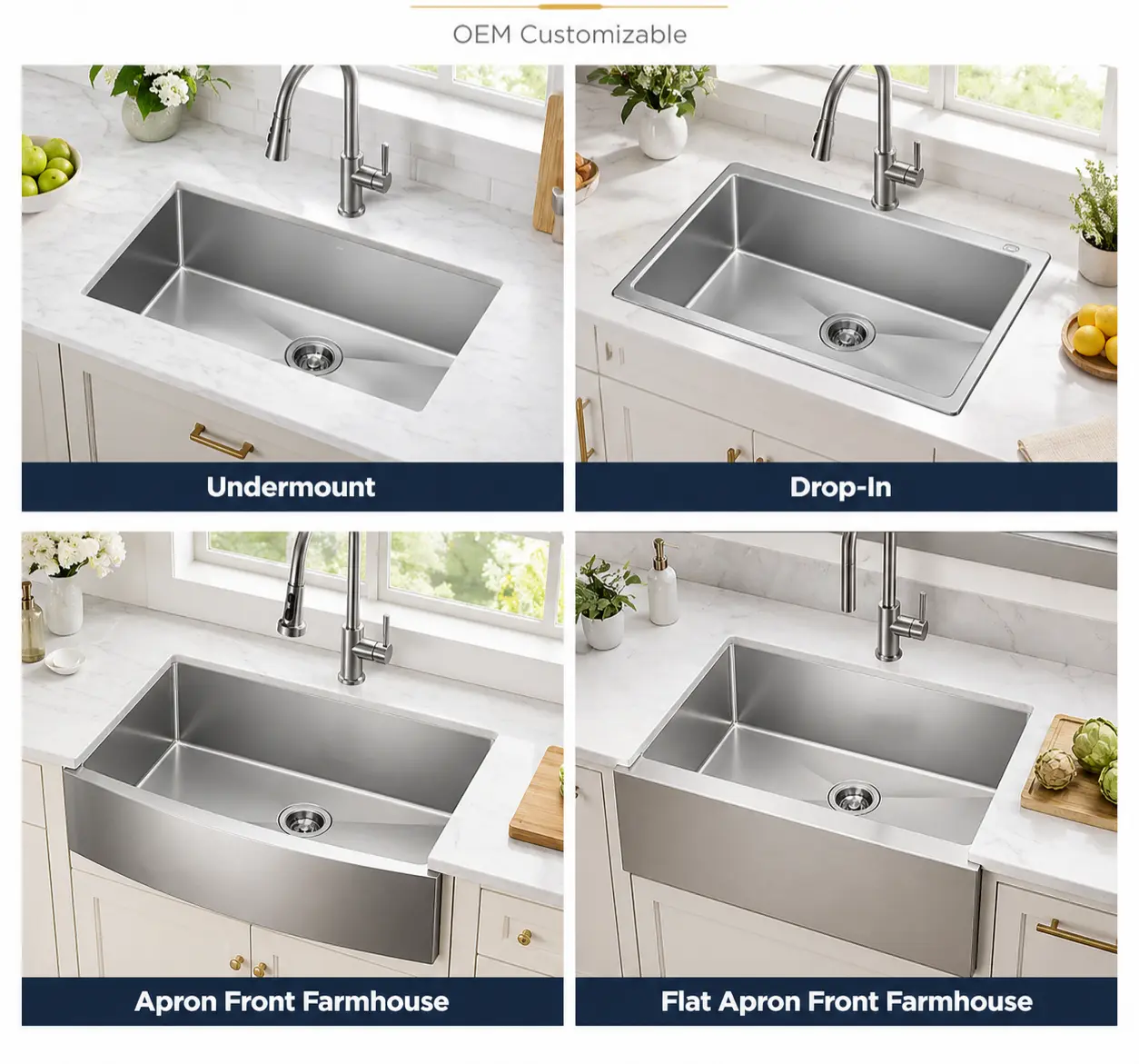
A stainless steel apron-front kitchen sink can provide the same exposed-front structure with different performance characteristics.
Choose a Fireclay Farmhouse Sink When:
- A thick, traditional apron is essential
- White or glazed color is part of the kitchen design
- The buyer accepts material and dimensional variation
- The cabinet can support the sink’s weight
- The actual sink will be available before final cabinet fabrication
- Shipping and jobsite handling can be controlled
Choose a Stainless Steel Farmhouse Sink When:
- A lighter sink is preferred
- Heavy cookware is used frequently
- Custom bowl dimensions are required
- A workstation ledge is needed
- Modern or industrial styling is preferred
- Installation consistency matters across multiple kitchens
- Lower transport breakage risk is important
Do not compare a thin entry-level stainless steel drop-in sink with a premium fireclay farmhouse sink. Compare products intended for the same installation, cabinet and price position.
Weight Changes the Entire Installation
Fireclay sinks are significantly heavier than stainless steel sinks.
The installation must account for:
- Empty sink weight
- Water inside the bowl
- Cookware and dishes
- Garbage disposal weight
- Downward force during use
- Cabinet movement over time
A fireclay farmhouse sink should normally rest on a strong internal support structure. The countertop edge should not be expected to carry the entire load.
The cabinet may require:
- Support rails
- Cross braces
- A platform
- Adjustable framing
- A modified front opening
- Reinforcement around the apron
The support should be planned before the cabinet is completed.
Stainless steel is lighter, but an undermount stainless steel sink still requires proper clips, rails, brackets or a support frame. Sealant should not automatically be treated as the only structural support.
Fireclay Dimensions Require a Different Workflow
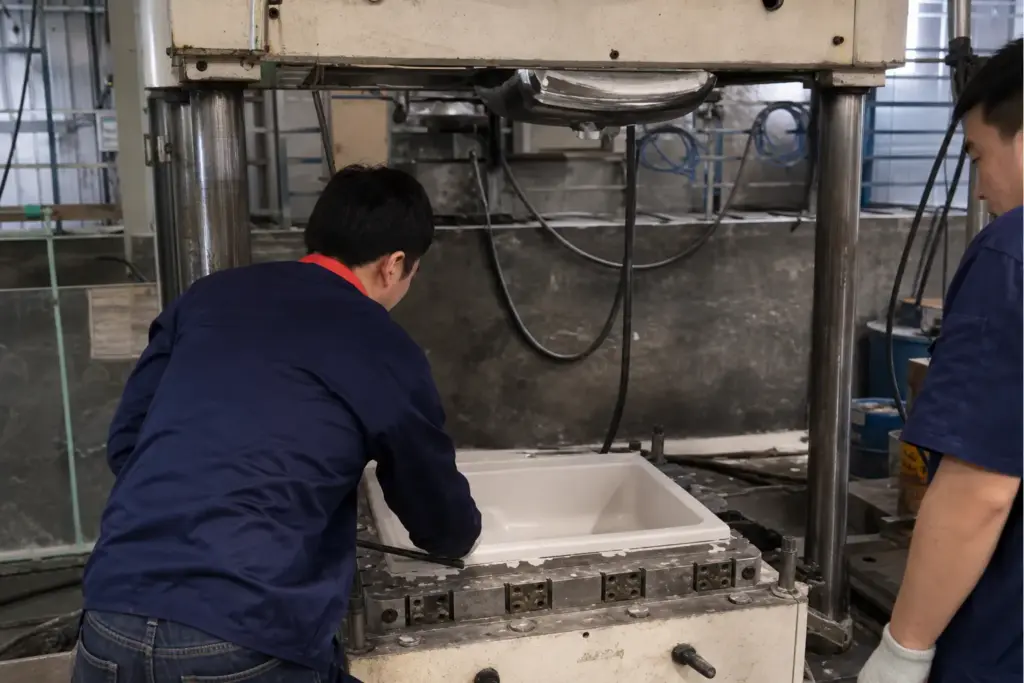
Fireclay is formed and fired. The process can produce small dimensional differences between the nominal drawing and the finished sink.
Possible variations include:
- Overall width
- Apron height
- Side-wall angle
- Top-rim flatness
- Bowl opening
- Front-panel profile
For this reason, cabinet and countertop teams often need the actual fireclay sink before making the final cutout and apron opening.
The safe sequence is:
- Receive and inspect the sink.
- Measure the actual unit.
- Build or modify the support frame.
- Adjust the cabinet opening.
- Fabricate the countertop around the approved sink.
- Complete the final installation.
Ordering cabinets and cutting the countertop only from nominal fireclay dimensions creates avoidable risk.
Stainless Steel Dimensions Are Easier to Repeat
Stainless steel sinks can be manufactured as pressed or fabricated products.
Pressed sinks use production tooling and are useful for:
- Standard sizes
- Retail programs
- Apartment projects
- Replacement lines
- Repeat-volume orders
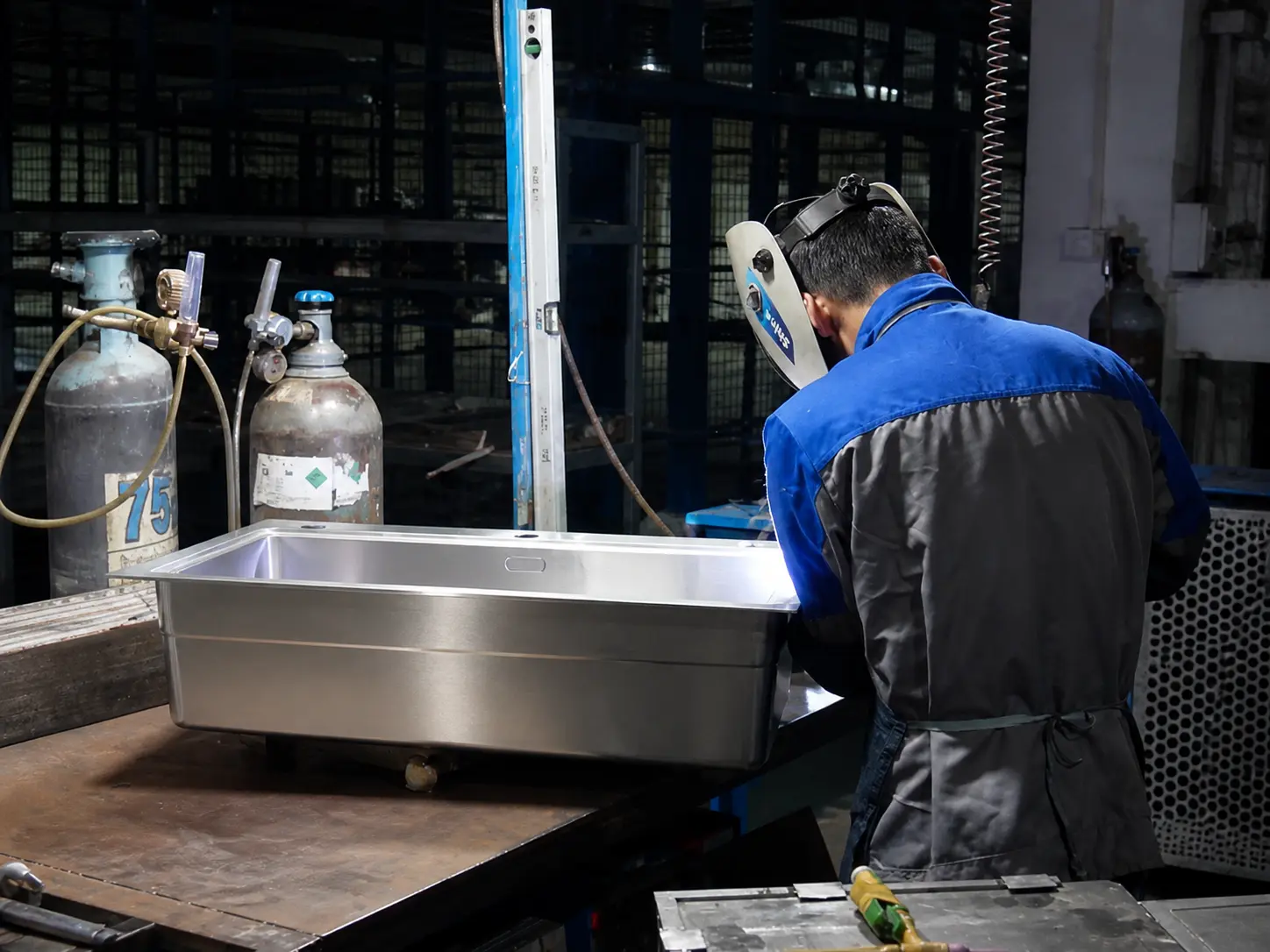
Handmade stainless steel sinks are cut, bent, welded and finished. They are useful for:
- Custom dimensions
- Deeper bowls
- Workstation ledges
- Apron-front designs
- Custom drain positions
- Premium product programs
Neither method eliminates the need for tolerances or sample inspection. However, stainless steel is generally easier to control across a repeated sink program than a fired ceramic material.
For B2B projects, the drawing should still state:
- Overall dimensions
- Bowl dimensions
- Rim width
- Corner radius
- Bowl depth
- Drain position
- Apron height
- Installation type
- Permitted tolerances
Which Is Easier to Install?
Stainless steel is generally easier.
Its lower weight simplifies:
- Handling
- Cabinet positioning
- Undermount alignment
- Replacement
- Jobsite adjustment
- Shipping and delivery
Fireclay installation is more dependent on the exact physical sink. It may require more people, stronger cabinet preparation and greater coordination between the sink supplier, cabinet maker, countertop fabricator and installer.
Installation Comparison
| Installation Issue | Fireclay | Stainless Steel |
| Two-person handling | Often necessary | Depends on size, but usually easier |
| Custom cabinet support | Common | Required for some designs, but generally lighter |
| Actual sink before fabrication | Strongly recommended | Still useful, but verified templates are more practical |
| Jobsite adjustment | Limited | More flexible |
| Apron opening | Must match the physical front | Easier to control through drawings |
| Replacement | May require modification | Usually more manageable |
| Shipping to jobsite | Requires careful handling | More impact-tolerant |
Which Is Quieter?
Fireclay is naturally quiet because its thick, dense body does not resonate like thin sheet metal.
Stainless steel noise depends on:
- Material thickness
- Bowl shape
- Flat-panel area
- Sound-pad size
- Pad location
- Undercoating
- Cabinet construction
- Garbage disposal vibration
A properly designed stainless steel sink with effective sound-dampening pads and undercoating can be significantly quieter than an uncoated sink.
Do not judge acoustic performance by gauge alone.
A thicker sink with poorly placed pads may still sound louder than a well-designed sink with effective damping coverage.
Which Is Better for Large Cookware?
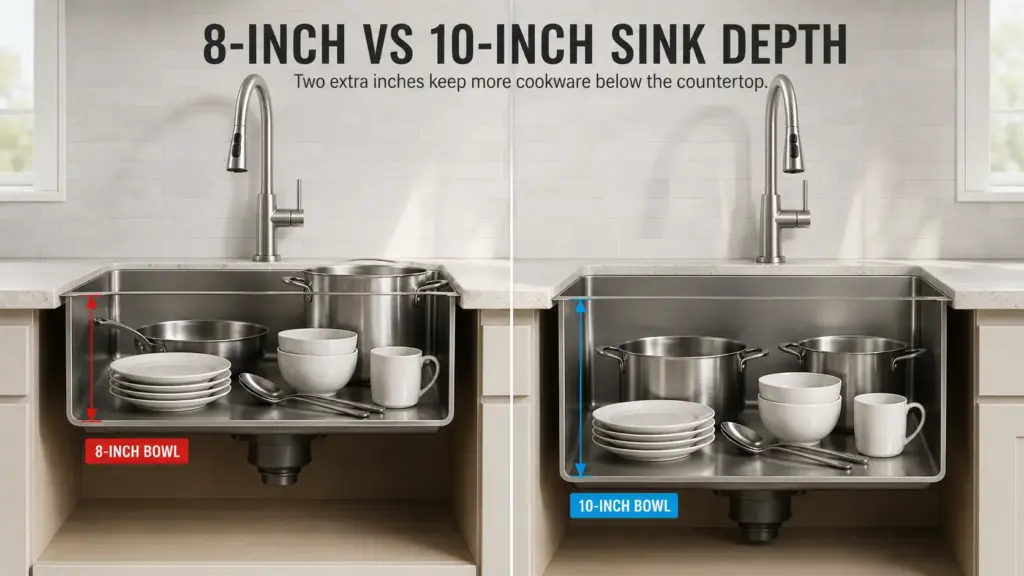
Stainless steel usually provides more design flexibility for large cookware.
It is widely available in:
- Large single bowls
- Deep bowls
- Workstation sinks
- Low-divide sinks
- 60/40 double bowls
- Custom fabricated sizes
Fireclay sinks are available in large bowls, but the thick walls reduce some internal space. The material also provides a harder landing surface for delicate dishes and glassware.
A bottom grid can help protect either material, but it must fit the actual bowl, corner radius and drain position.
For frequent wok, stockpot or baking-tray use, compare the usable internal dimensions—not only the external width.
Which Is Easier to Clean?
Both can be easy to clean when cared for correctly.
Fireclay Cleaning
Fireclay usually has a smooth glazed surface.
Routine cleaning should generally use:
- Mild detergent
- Soft cloth
- Non-abrasive sponge
- Clean water
- Regular rinsing
Avoid aggressive abrasive tools that can dull or damage the glaze. Care requirements vary by product, so the sink’s actual instructions should take priority.
Stainless Steel Cleaning
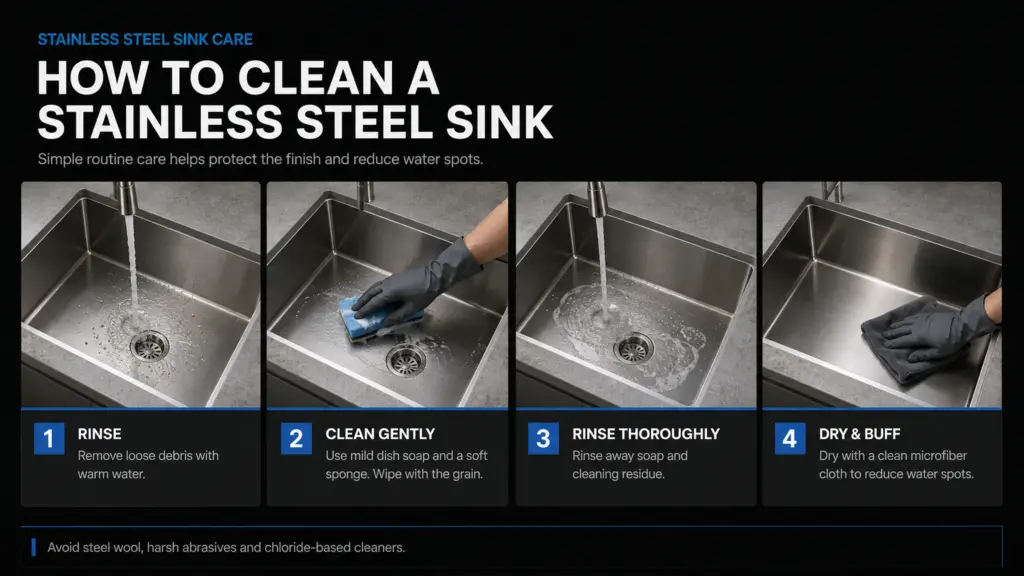
Stainless steel should generally be cleaned:
- In the direction of the grain
- With a soft cloth or non-abrasive sponge
- Using mild detergent
- Followed by thorough rinsing
- With drying when water spots matter
Avoid steel wool, uncontrolled abrasive polishing and prolonged contact with chlorine-based chemicals.
Neither material is maintenance-free. The difference is whether the user prefers maintaining a glazed surface or accepting the developing patina of brushed stainless steel.
Which Is Better in Hard-Water Areas?
Hard water can leave mineral deposits on both materials.
On stainless steel, deposits may appear as:
- White spots
- Cloudy areas
- Rings around the drain
- Streaks after drying
On fireclay, visibility depends on the sink color. White deposits may be less noticeable on a white sink but more obvious on black or dark fireclay.
Hard-water resistance should not be judged only by material. Regular rinsing and drying have a major effect on appearance.
Which Handles Heat Better?
Both materials can tolerate normal kitchen heat, but their thermal behavior differs.
Stainless steel conducts heat quickly and generally tolerates rapid temperature changes well.
Fireclay is fired at high temperature and is heat-resistant, but care instructions may still warn against extreme thermal shock or placing exceptionally hot cookware directly on the surface.
The safer practice for either material is to avoid treating the sink as a permanent hot-pan stand.
What About a Garbage Disposal?
A garbage disposal can work with either material when the sink and drain are designed for it.
For fireclay, check:
- Drain-opening compatibility
- Sink thickness around the outlet
- Disposal flange fit
- Total support load
- Vibration transfer
- Cabinet clearance
For stainless steel, check:
- Drain-hole size
- Flange seating
- Material around the drain
- Disposal weight
- Vibration
- Sound damping
- Plumbing clearance
A disposal adds both weight and operating vibration. It should be included in the support plan rather than installed as an afterthought.
Which Costs More?
Fireclay often has a higher total installed cost, but the sink price is only one part of the comparison.
Fireclay Cost Can Include:
- Heavier transport
- Stronger packaging
- Higher breakage risk
- Custom cabinet support
- Additional handling
- More precise cabinet fitting
- Potential jobsite replacement cost
Stainless Steel Cost Can Vary By:
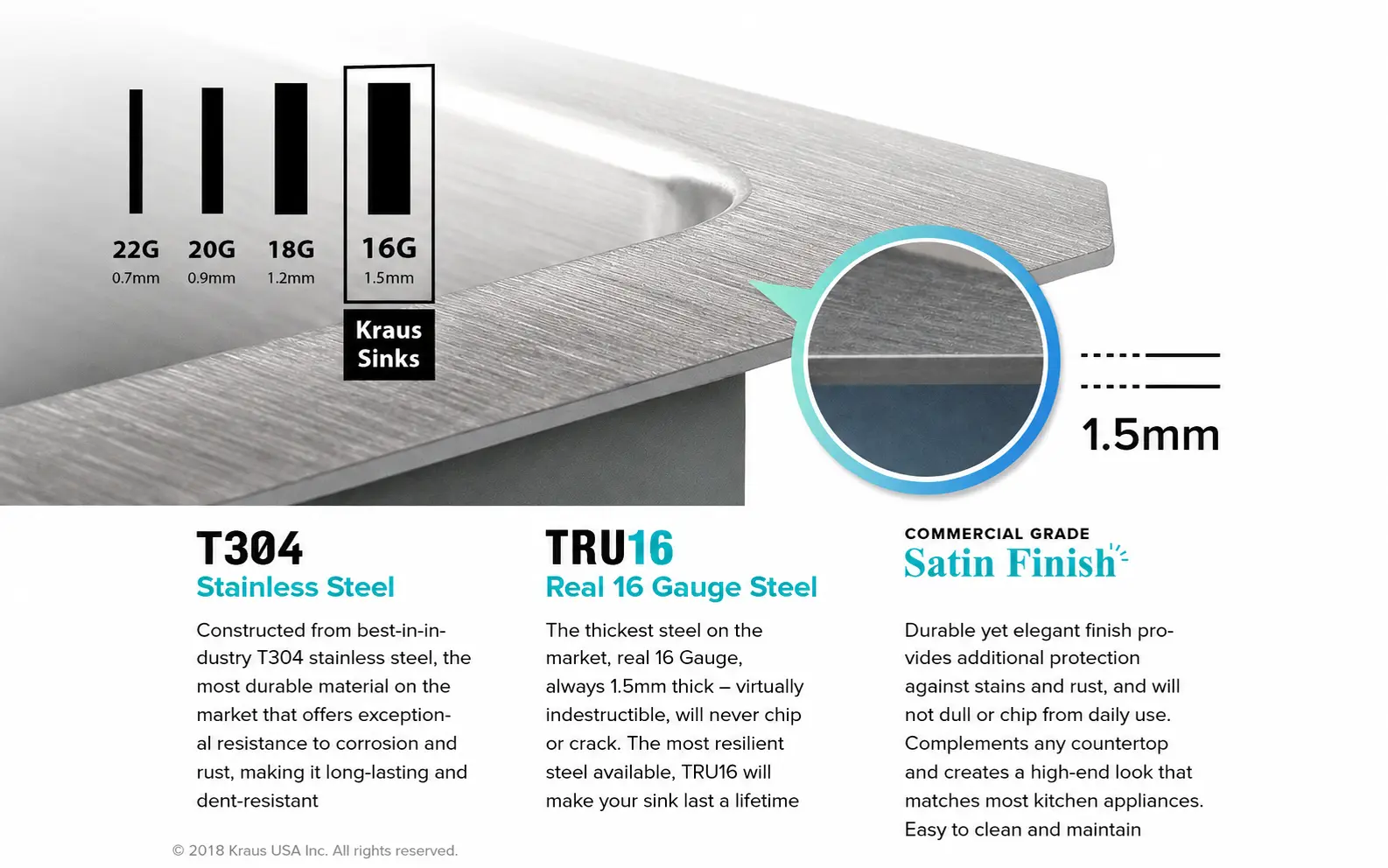
- Steel grade
- Material thickness
- Handmade or pressed construction
- Bowl size
- Surface finish
- Workstation features
- Sound pads and coating
- Accessory package
- Packaging quality
A less expensive sink that causes more breakage, installation problems or returns may have the higher true cost.
Which Material Is Better for Different Buyers?
| Buyer or Application | Better Starting Point | Main Reason |
| Busy family kitchen | Stainless steel | More impact-tolerant |
| Traditional farmhouse kitchen | Fireclay | Strong visual character |
| Frequent cast-iron cookware use | Stainless steel | Lower chip risk |
| Premium white apron-front design | Fireclay | Classic glazed appearance |
| Workstation sink program | Stainless steel | More accessory and ledge options |
| Apartment project | Stainless steel | Easier dimensional repeatability |
| Rental property | Stainless steel | Lower handling and impact risk |
| Kitchen showroom | Either | Depends on design position |
| E-commerce shipping | Stainless steel | Lower transit breakage exposure |
| Custom-size project | Stainless steel | More fabrication flexibility |
| Buyer who dislikes scratches | Fireclay | Fine scratches are less visible |
| Buyer who fears chips | Stainless steel | Metal does not have a brittle glaze |
Common Buying Myths
Myth 1: Fireclay Cannot Be Damaged
Fireclay is durable, but a heavy impact can chip the glaze or damage the body.
Scratch resistance and impact resistance are not the same.
Myth 2: Stainless Steel Scratches Mean Poor Quality
Fine scratches are normal on frequently used stainless steel surfaces.
Poor material, finish inconsistency and severe shipping damage are separate issues.
Myth 3: A Heavier Sink Is Always Better
Weight may create a substantial feel, but it also increases cabinet, shipping and installation requirements.
Myth 4: A Thicker Stainless Steel Sink Is Automatically Quieter
Gauge affects structure, but sound pads, undercoating, bowl geometry and installation also affect noise.
Myth 5: Fireclay Dimensions Always Match the Drawing Exactly
Fired products may have dimensional variation. The actual sink should be checked before final cabinet and countertop fabrication.
Myth 6: Stainless Steel Is Only for Modern Kitchens
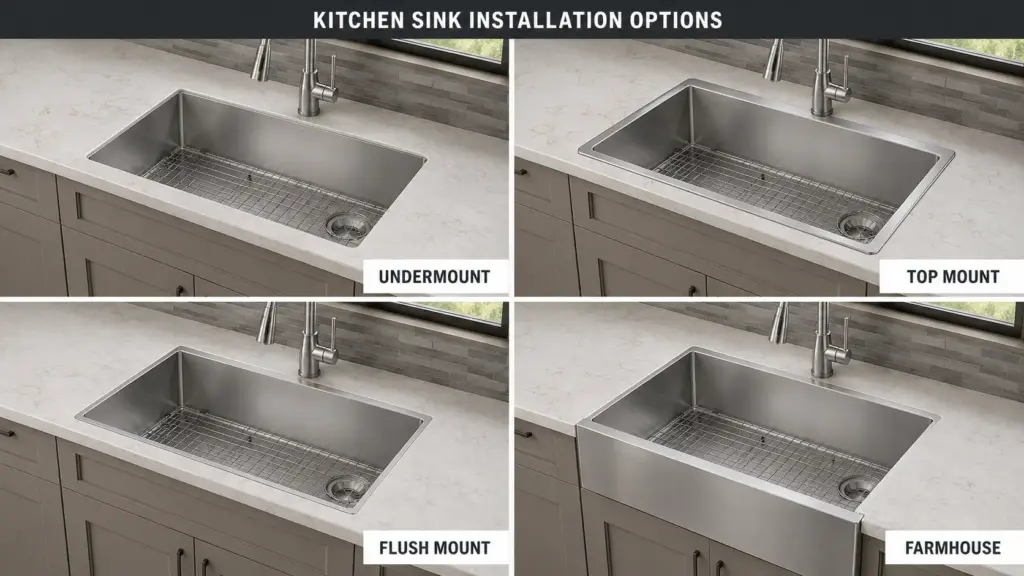
Stainless steel is available in undermount, top-mount, workstation and apron-front configurations. Its style depends on the sink structure and surrounding kitchen.
Myth 7: Fireclay Is Always Easier to Maintain
It may hide fine scratches better, but chips, metal marks and hard-water residue still require attention.
Consumer Checklist Before Buying
Before choosing either material, confirm:
- Installation type
- Cabinet width
- Cabinet support
- Countertop material
- Actual sink dimensions
- Bowl dimensions
- Bowl depth
- Sink weight
- Largest cookware size
- Drain-hole compatibility
- Garbage disposal requirement
- Faucet position
- Bottom-grid availability
- Cleaning expectations
- Replacement access
- Delivery and jobsite handling
For fireclay, ask whether the cabinet and countertop will be fabricated around the actual delivered sink.
For stainless steel, ask about grade, thickness, surface finish, rim flatness, sound pads and coating.
B2B Comparison: Product Risk Is Different
Brands, importers, distributors and project buyers should compare the full supply chain.
Fireclay Buyer Risks
- Dimensional variation
- Apron and rim variation
- Glaze pinholes or surface defects
- Color consistency
- Chipping
- Cracking
- Transport breakage
- Heavy handling
- Custom cabinet support
- Replacement difficulty
Stainless Steel Buyer Risks
- Incorrect material grade
- Thickness inconsistency
- Rim distortion
- Welding or grinding defects
- Surface scratches
- Finish inconsistency
- Poor sound-pad adhesion
- Incomplete coating
- Drain-position errors
- Weak packaging around rims and corners
The materials require different inspection plans. A fireclay checklist should not be reused unchanged for stainless steel, and vice versa.
B2B Sample Approval Checklist
For Fireclay Sinks
Confirm:
- Actual overall dimensions
- Bowl dimensions
- Apron height and width
- Rim condition
- Front-panel shape
- Glaze consistency
- Color
- Pinholes
- Surface marks
- Chips and cracks
- Drain opening
- Sink weight
- Cabinet-support drawing
- Packaging protection
For Stainless Steel Sinks
Confirm:
- Stainless steel grade
- Material thickness
- Formed or finished thickness where relevant
- Overall dimensions
- Bowl dimensions
- Bowl depth
- Rim flatness
- Corner radius
- Drain position
- Weld and polish condition
- Brushing direction
- Sound pads
- Undercoating
- Accessory fit
- Surface and rim protection
Shipping and Packaging Matter More Than Buyers Expect
Fireclay and stainless steel should not use the same packaging logic.
Fireclay Packaging Priorities
- Full body cushioning
- Apron and corner protection
- Movement control inside the carton
- Strong outer carton
- Pallet stability
- Careful warehouse handling
- Clear fragile-product instructions
Stainless Steel Packaging Priorities
- Rim-flatness protection
- Surface film
- Corner protection
- Separation of metal accessories
- Protection from grid or drain movement
- SKU labeling
- Nested packing control when used
- Pallet protection
Fireclay is more vulnerable to breakage. Stainless steel is more vulnerable to cosmetic damage and rim deformation.
Both types can arrive unusable if the packaging is designed only to minimize carton cost.
Which Material Is Better for B2B Product Programs?
Fireclay can work well for:
- Premium farmhouse collections
- Traditional showroom programs
- Design-led residential brands
- High-value individual SKUs
- Markets that accept careful handling and custom installation
Stainless steel can work well for:
- Wholesale distribution
- Apartment and hospitality projects
- E-commerce
- Retail replacement
- Workstation sink sets
- Custom-size programs
- Private-label product ranges
- High-volume repeated orders
For most broad sink programs, stainless steel offers more flexibility in price position, size, installation, bowl configuration and accessories.
Fireclay is often better used as a focused design category rather than the only material in a complete sink range.
How Matrix Supports Stainless Steel Sink Programs
Matrix supplies stainless steel kitchen sinks for brands, importers, wholesalers, countertop programs and project buyers.
Product directions include:
- Handmade sinks
- Pressed or drawn sinks
- Undermount sinks
- Top-mount sinks
- Apron-front sinks
- Single and double bowls
- Workstation sinks
- Deep sinks
- Brushed and selected colored finishes
- Matched drains, grids and accessories
For buyers comparing fireclay with stainless steel farmhouse sinks, Matrix can support stainless steel apron-front sink programs with reviews of:
- Sink dimensions
- Apron height
- Cabinet opening
- Bottom support
- Bowl depth
- Drain position
- Surface finish
- Accessory fit
- Private-label packaging
- Repeat-order specifications
The final material decision should reflect the target user, channel and acceptable after-sales risk—not only the showroom appearance.
Frequently Asked Questions
Is fireclay better than stainless steel?
Fireclay is better for a traditional glazed appearance and low visibility of fine scratches. Stainless steel is better for impact tolerance, lighter installation, workstation options and broader product configurations.
Which sink lasts longer?
Both can last many years when correctly installed and maintained. Their damage patterns differ: fireclay may chip, while stainless steel normally develops scratches or dents.
Does fireclay scratch?
Fireclay resists many ordinary scratches, but abrasive cleaning and metal contact may leave marks. Scratch resistance does not make the sink immune to chipping.
Do stainless steel sinks scratch easily?
Fine scratches are expected with regular use. A brushed finish can help them blend into a more uniform patina over time.
Can fireclay sinks crack from hot water?
Fireclay is heat-resistant, but the exact product’s care instructions should be followed regarding extreme temperature changes and hot cookware.
Which sink is quieter?
Fireclay is naturally quiet because of its mass. Stainless steel noise depends on thickness, bowl geometry, sound pads, coating and installation.
Which is better for a garbage disposal?
Either can work when compatible with the disposal and correctly supported. Fireclay requires careful load planning; stainless steel requires appropriate drain fit and vibration control.
Which is easier to install?
Stainless steel is generally easier because it is lighter and more dimensionally repeatable. Fireclay often requires the actual sink to be measured before cabinet and countertop fabrication.
Which is better for a farmhouse kitchen?
Fireclay provides the traditional glazed farmhouse appearance. Stainless steel apron-front sinks are better when the buyer wants lower weight, custom sizes, workstation options or stronger impact tolerance.
Which material is better for resale?
There is no universal answer. Material alone does not determine value. Kitchen design, installation quality, condition and local buyer preference matter more.
Final Verdict
Choose fireclay if you want:
- A substantial traditional appearance
- A glossy farmhouse sink
- Low visibility of fine scratches
- Natural sound absorption
- A design-focused centerpiece
Be prepared for:
- Greater weight
- Custom support
- Possible dimensional variation
- More difficult shipping
- Chip and breakage risk
Choose stainless steel if you want:
- Better impact tolerance
- Lighter installation
- Large or custom bowl options
- Workstation accessories
- More installation types
- Easier project repetition
- Lower transport breakage risk
Be prepared for:
- Fine scratches
- Water spots
- Possible denting
- The need for effective sound damping
For most busy kitchens, apartment projects, retail programs and broad product ranges, stainless steel is the more flexible choice.
For a design-led farmhouse kitchen where appearance matters more than shipping, weight and impact tolerance, fireclay can be the better choice.
To discuss stainless steel undermount, top-mount, workstation or apron-front sink programs, contact the Matrix team.