Quick Answer
To verify whether a kitchen sink supplier is a real manufacturer, check whether its factory evidence matches the production method it claims to offer.
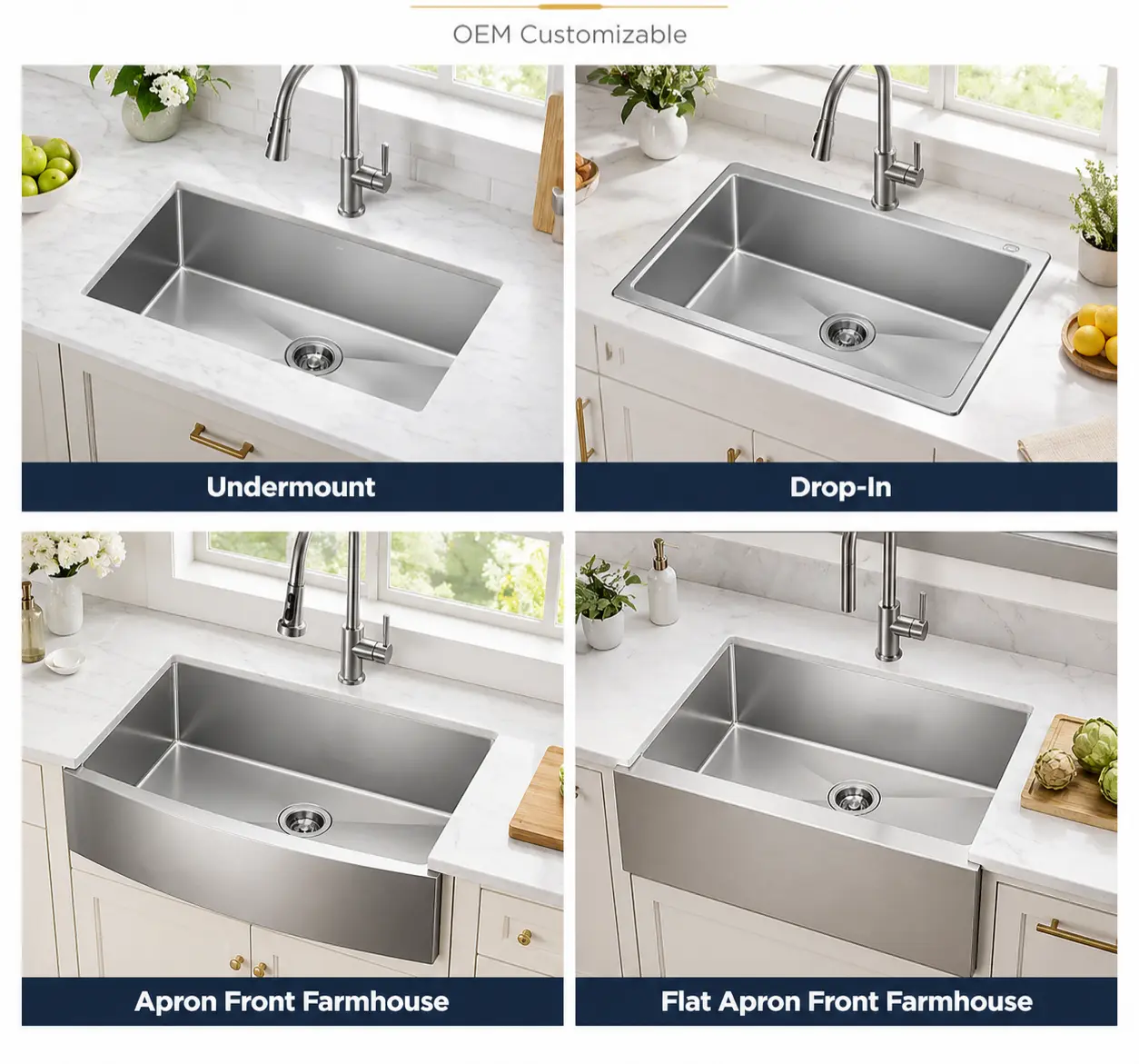
For stainless steel sinks, verify:
- handmade production equipment
- pressed / drawn sink equipment
- welding and polishing areas
- stainless steel material control
- mold ownership or mold access
- in-process measurement
- finished-product inspection
- accessory and packing control
- production records
- approved samples and drawings
The key question is not:
Does the factory look busy?
It is:
Can the equipment, materials, people and records you see actually produce the sinks being quoted to you?
1. Start with the Products Being Quoted
Do not audit a sink factory using a generic checklist first.
Start with your own RFQ.
If the supplier is quoting:
custom handmade workstation sinks
you should expect to see evidence of:
- sheet cutting
- bending
- welding
- grinding
- polishing
- custom dimension control
If the supplier is quoting:
pressed / drawn sinks
you should expect:
- hydraulic presses
- sink molds
- forming operations
- trimming
- edge processing
- model-based production records
The factory evidence should match the product you are buying.
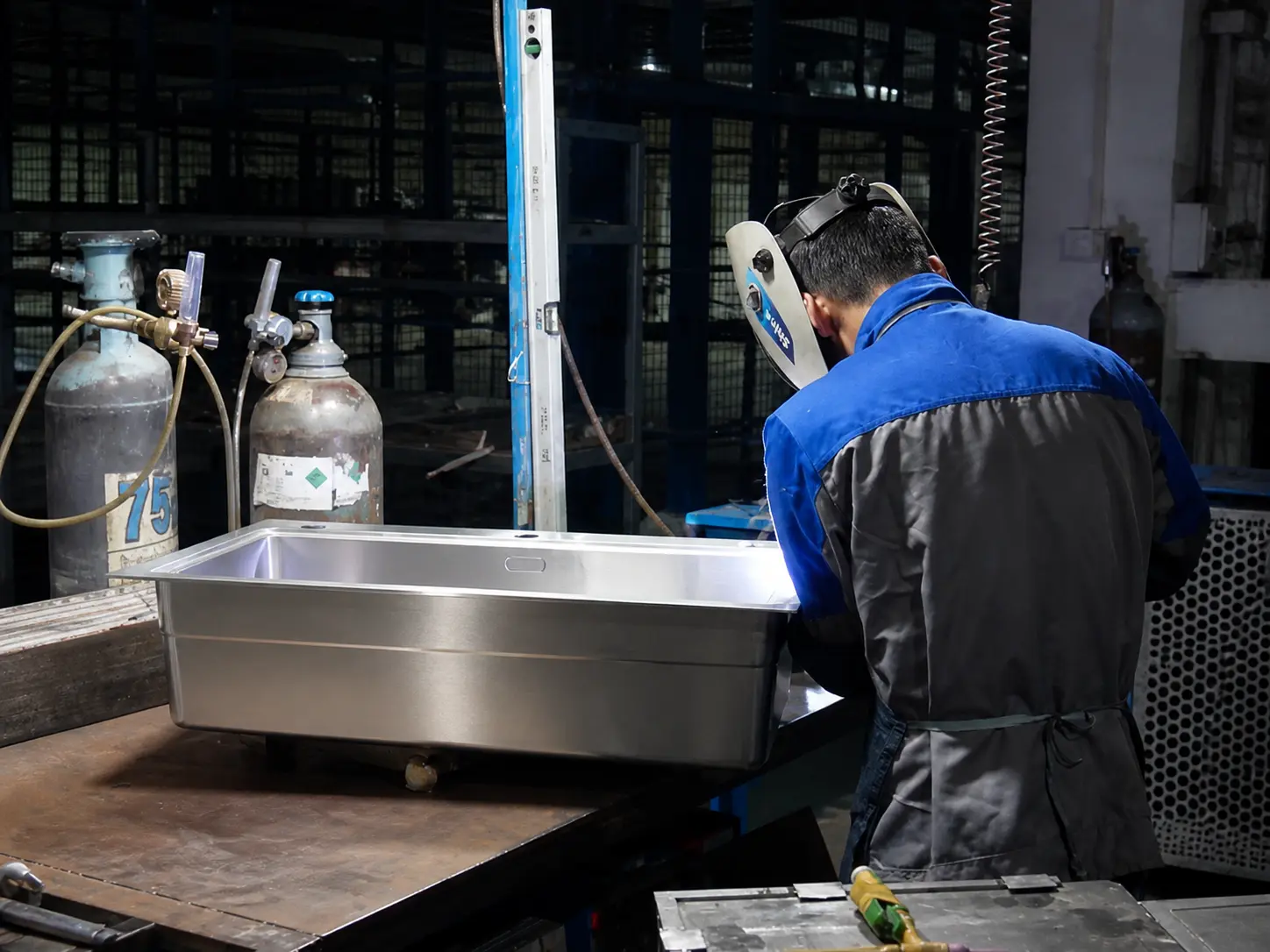
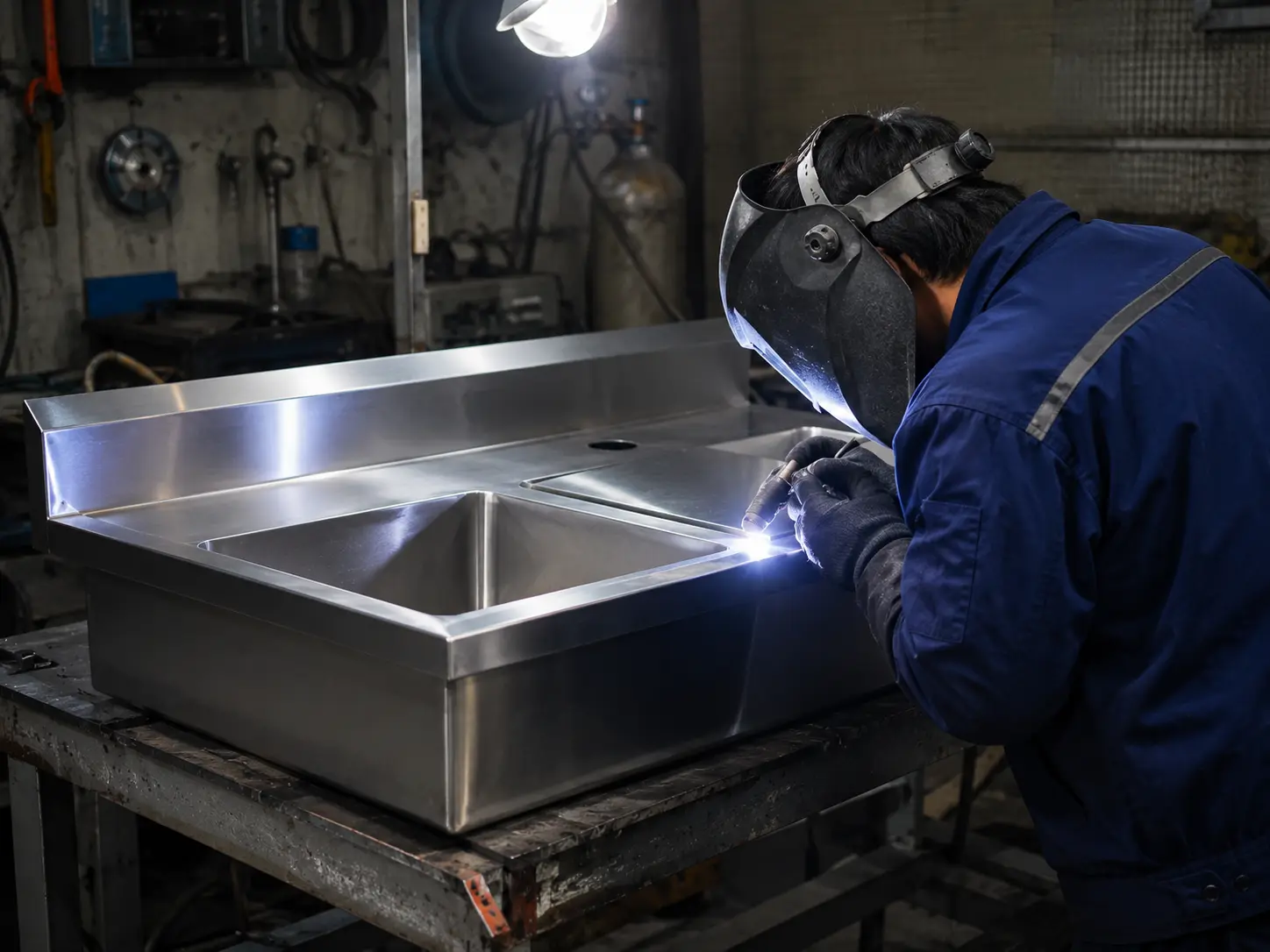
2. Verify Handmade Sink Production
A handmade sink factory should normally have production capability for:
- stainless steel sheet preparation
- laser or other accurate cutting
- bending
- welding
- grinding
- polishing
- drain / faucet-hole processing
- final assembly
Ask to follow one actual sink through the production area.
You should be able to connect:
drawing
→ cut sheet
→ bent bowl
→ welded sink
→ polished product
If a supplier claims strong handmade customization but cannot show how dimensions are transferred from drawing to fabrication, that deserves more questions.
See the Stainless Steel Sink Manufacturing Process for the typical production differences between handmade and pressed sinks.
3. Verify Pressed / Drawn Sink Production Separately
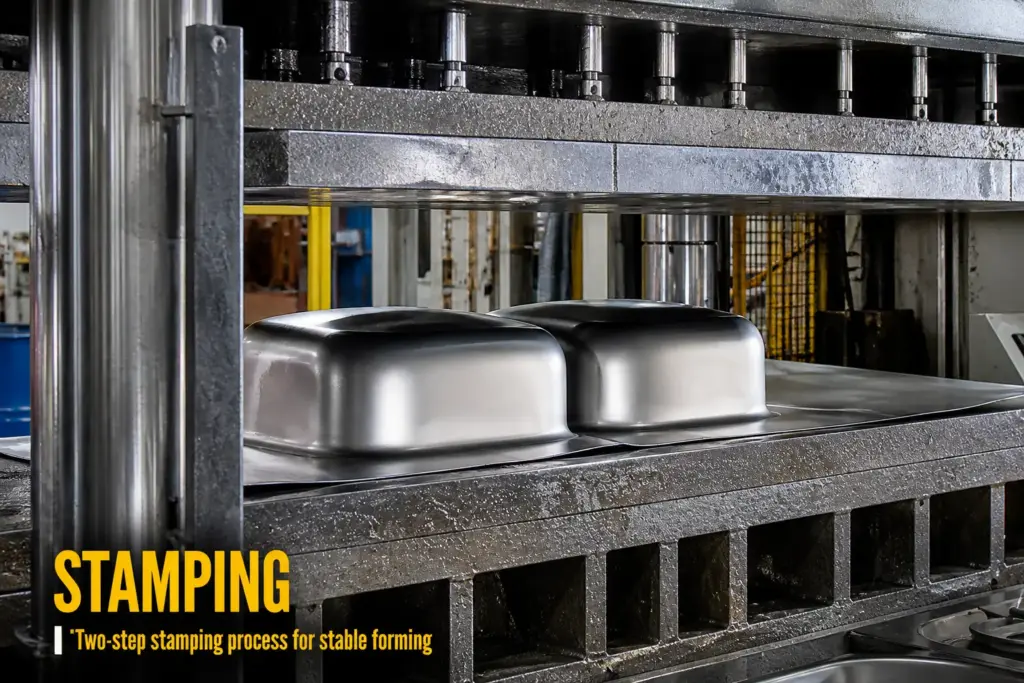
Pressed sinks require different evidence.
Look for:
- hydraulic drawing presses
- model-specific molds
- trimming equipment
- edge-forming operations
- hole processing
- polishing
- formed sink WIP
Do not accept:
We have many molds
as enough evidence.
Ask to see actual molds or a mold list linked to the models being quoted.
For a specific pressed sink RFQ, confirm:
- mold size
- bowl depth
- radius
- drain geometry
- installation structure
A factory may genuinely manufacture pressed sinks but still not have the mold needed for your exact product.
4. Check Whether Equipment Matches the Claimed Capability
Equipment quantity matters less than whether the equipment fits the process being sold.
For example:
Handmade
Look for:
- cutting capability
- bending equipment
- welding stations
- grinding / polishing stations
Pressed
Look for:
- hydraulic presses
- forming molds
- trimming
- secondary forming
Both
If the factory claims:
Handmade + Pressed production
you should be able to see two distinct manufacturing routes.
A brochure saying “full manufacturing capability” is not a substitute for this.
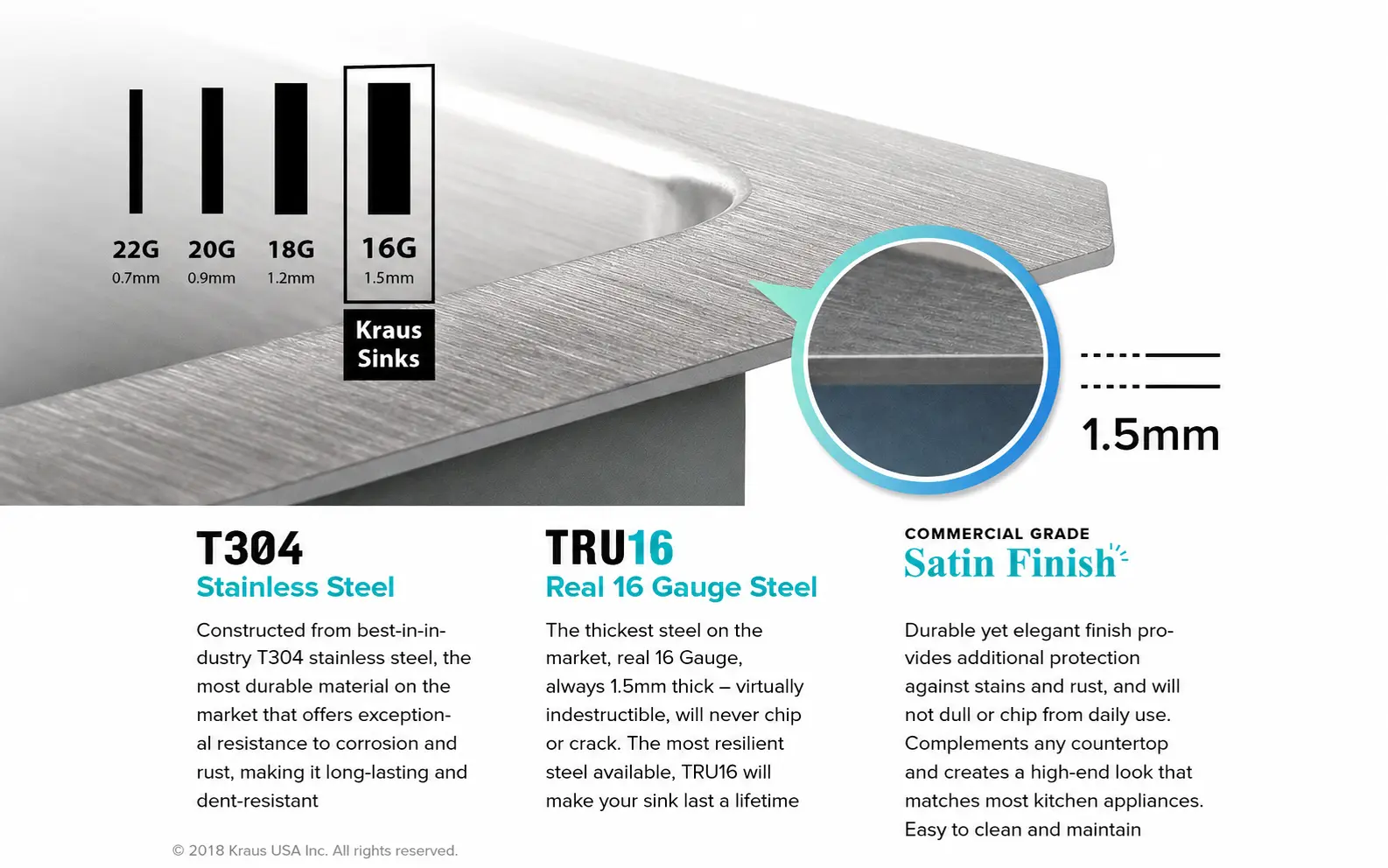
5. Inspect the Stainless Steel Material Area
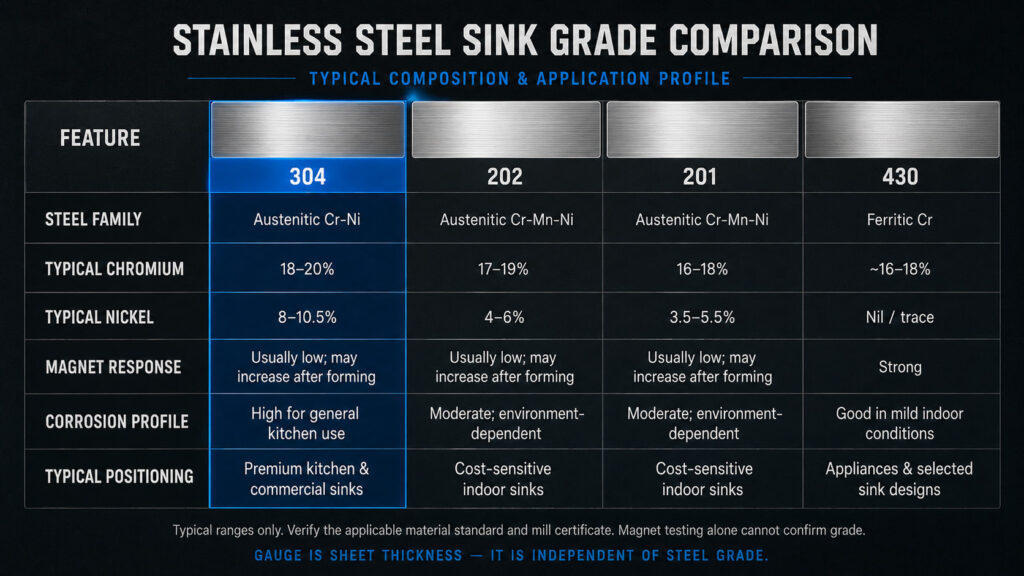
Check how stainless steel sheets are identified and stored.
Useful questions include:
- How is SUS304 separated from other grades?
- How is thickness identified?
- Are material specifications linked to production orders?
- Is the sheet surface protected?
- How is incoming thickness checked?
For thickness-sensitive programs, ask to see an actual measurement.
Do not rely only on:
material label says 304.
The production team should also know which grade and thickness belongs to the current order.
6. Ask How Thickness Is Defined
This is especially important for pressed sinks.
Ask:
Is the quoted thickness incoming sheet thickness or finished thickness?
Then ask where the finished sink is measured.
A useful audit should show whether the supplier understands the difference between:
- starting sheet thickness
- rim thickness
- formed sidewall thickness
- bowl-bottom thickness
If the answer is simply:
This is 18 gauge.
without a measurement basis, the specification is still incomplete.
See How to Specify Stainless Steel Sink Thickness in an RFQ.
7. Review the Mold System
For pressed sinks, molds are part of the factory’s real commercial capability.
Ask:
- Which molds are currently active?
- Which models use them?
- What are the dimensions?
- What bowl depth do they produce?
- Are they owned by the factory or customer-specific?
- What requires new tooling?
A structured mold list is more useful than hundreds of product photos.
It tells the buyer which products can realistically move into production without opening new tooling.
8. Watch an Actual Measurement
Do not stop at the QC room.
Ask the team to measure a real sink.
Useful checks include:
- overall length
- overall width
- bowl size
- depth
- drain position
- flange / rim
- thickness
Then ask:
What is this measurement compared against?
The best answer is something specific:
Drawing Rev.03
or:
Approved sample + inspection specification
not simply:
our standard.
9. Check Handmade Welding and Rim Flatness
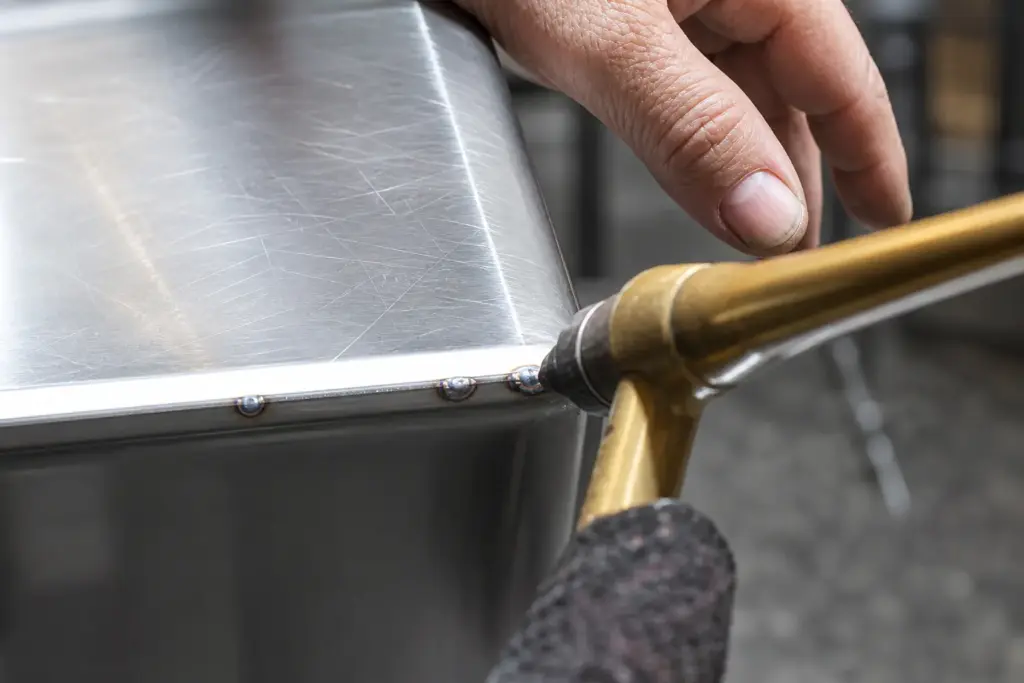
For handmade sinks, pay particular attention to:
- weld continuity
- corner transition
- grinding
- polishing
- rim flatness
- bowl alignment
A sink can look good from the top and still create installation problems if the rim is distorted.
For top-mount and undermount products, inspect the part that actually contacts or aligns with the countertop.
10. Check Pressed Sink Forming Quality
For pressed sinks, look for:
- wrinkles
- cracks
- abnormal stretch marks
- uneven forming
- rim distortion
- inconsistent depth
Also compare several sinks from the same batch.
A single good sample tells you less than:
whether the process can reproduce the same geometry repeatedly.
11. Review Surface Finishing
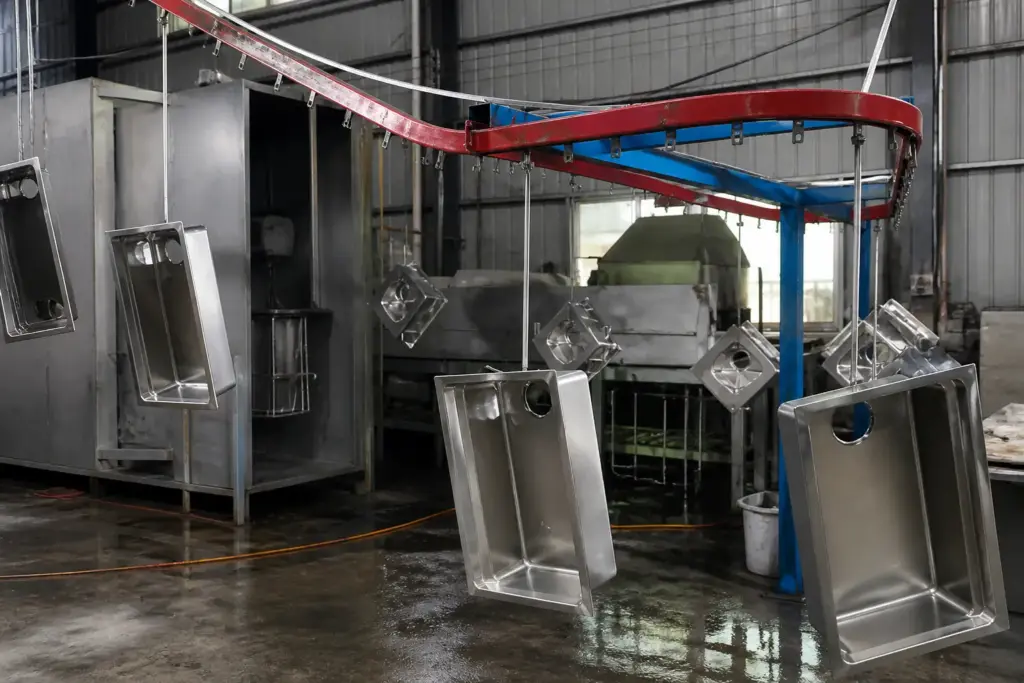
Check finished sinks under normal inspection lighting.
Look for:
- brushing consistency
- polishing marks
- scratches
- corner appearance
- welding visibility
- PVD / colored finish consistency where applicable
Ask what the factory uses as the approval reference.
For repeat orders, the answer should not depend entirely on memory.
12. Do Not Ignore the Underside
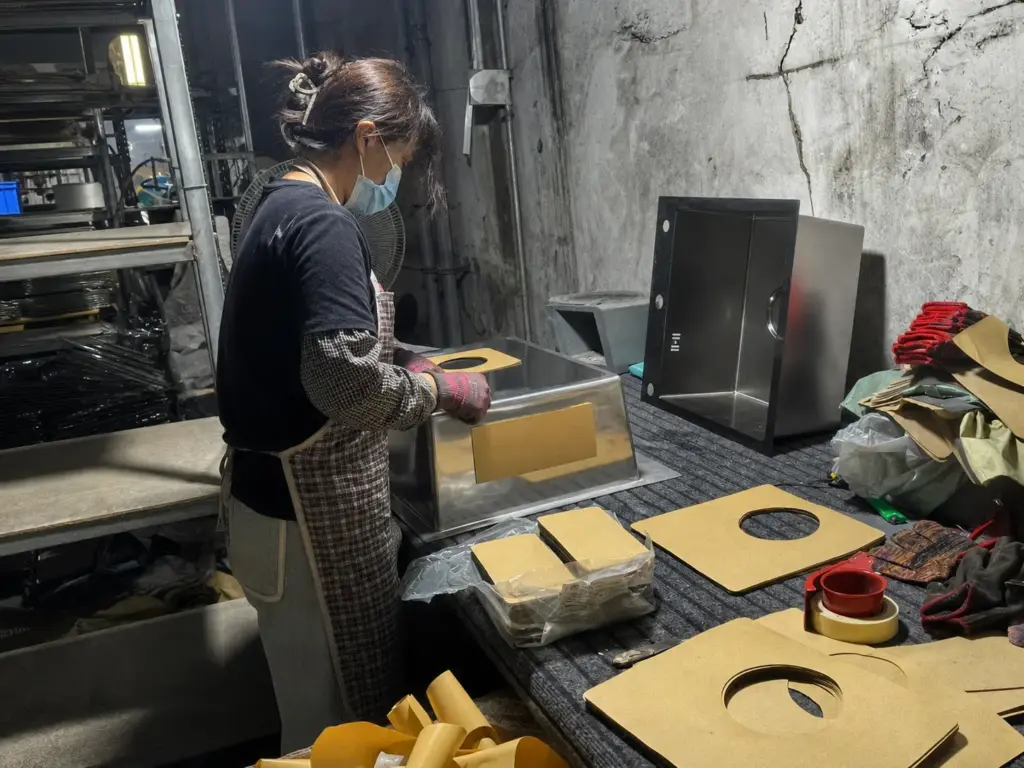
Turn the sink over.
Check:
- sound-pad position
- pad coverage
- adhesion
- undercoating
- drain area
- mounting components
These details are easy to miss during a showroom audit because they are not visible after installation.
They are also common sources of cost difference between quotations.
13. Check Accessories on the Actual Sink
For workstation sinks, do not inspect accessories separately on a table.
Put them on the sink.
Check:
- grid fit
- cutting board fit
- colander movement
- rack position
- drain clearance
- accessory quantity
The issue is not only whether the factory can buy the accessory.
It is whether:
the accessory fits the approved sink correctly.
14. Walk Through the Packing Area
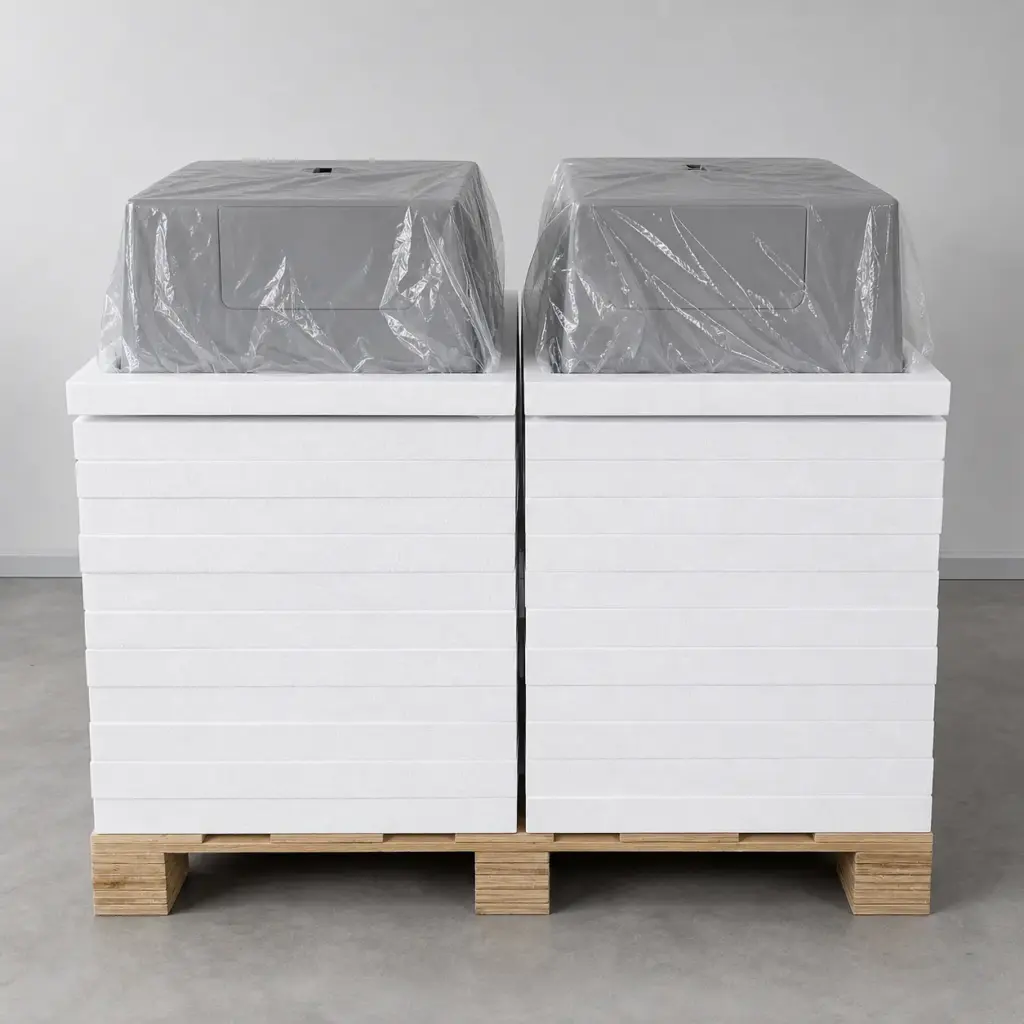
Packing tells you a lot about how the supplier handles finished SKUs.
Check:
- surface protection
- foam
- rim protection
- accessory separation
- carton quantity
- labels
- barcode
- shipping marks
Then compare the packing with the quotation.
If the quotation says:
private-label carton
you should understand what that actually includes.
15. Ask for Records, Not Only Production Photos
A factory audit becomes much stronger when the supplier can connect the physical product to records.
Useful examples include:
- production drawing
- drawing revision
- material specification
- sample approval
- inspection report
- accessory list
- packing specification
- production order
This is especially important for repeat orders.
A factory may know how to make one good sample.
The harder question is:
Can it reproduce the approved specification six months later?
16. Check How Repeat Orders Are Controlled
Ask:
If we reorder this SKU next year, what will production follow?
A useful system may include:
- latest approved drawing
- golden sample
- finish reference
- accessory list
- logo file
- carton artwork
- packing record
If the answer is:
The production manager remembers it.
that is a repeat-order risk.
17. Check What Is Actually In-House
Not every process has to be in-house.
But the answer should be clear.
Ask specifically about:
- PVD
- specialty coatings
- accessories
- cartons
- drains
- soap dispensers
If a process is outsourced, ask:
- who controls the specification
- how incoming quality is checked
- how repeat batches are matched
A transparent partner process is better than an inaccurate claim of “100% in-house.”
18. Compare the Factory Audit with the Quotation
Before leaving, return to the RFQ.
Ask:
- Is the quoted model handmade or pressed?
- Which production area will make it?
- Which mold will be used?
- What material thickness is quoted?
- Which accessories are included?
- What packing is included?
- What QC references will apply?
If the physical factory evidence matches the quotation, the audit has done its job.
Factory Audit Checklist
| Area | What to Verify |
|---|---|
| Company | Legal name, location, manufacturing activity |
| Handmade | Cutting, bending, welding, polishing |
| Pressed | Hydraulic press, molds, trimming, forming |
| Material | Grade, thickness, storage, identification |
| Tooling | Existing molds, dimensions |
| Dimensions | Actual measurement against drawing |
| Welding | Seam, grinding, rim flatness |
| Pressing | Forming consistency, defects |
| Finish | Brushing, polishing, color reference |
| Accessories | Fit, quantity, specification |
| QC | Inspection items and records |
| Packing | Protection, carton, labels |
| Repeat Orders | Drawing, sample, finish, accessory records |
Buyer Takeaway
A real factory audit should connect four things:
RFQ → Equipment → Production → Records
If the supplier says it can manufacture a specific sink, you should be able to trace that claim through the actual equipment, tooling, material, inspection and documentation used for the product.
A clean showroom proves very little.
A production route that matches your specification proves much more.
FAQ
How can I verify whether a kitchen sink supplier is a real manufacturer?
Check whether the factory has equipment and active production that match the sinks being quoted, then review materials, molds, QC and production records.
What should I check in a handmade sink factory?
Focus on cutting, bending, welding, grinding, polishing, dimension control and rim flatness.
What should I check in a pressed sink factory?
Check hydraulic presses, active molds, forming, trimming, finished thickness, forming consistency and model records.
Is having many machines enough?
No. The machines should match the products and production methods being quoted to you.
What records should I ask for?
Useful references include drawings, revision numbers, material specifications, inspection records, approved samples, accessory lists and packing requirements.
Reviewing a Sink Supplier?
See Matrix’s Kitchen Sink Factory Capabilities and Stainless Steel Sink Factory Profile for a structured view of manufacturing capability.
For inspection details, see Kitchen Sink Quality Control & Inspection.