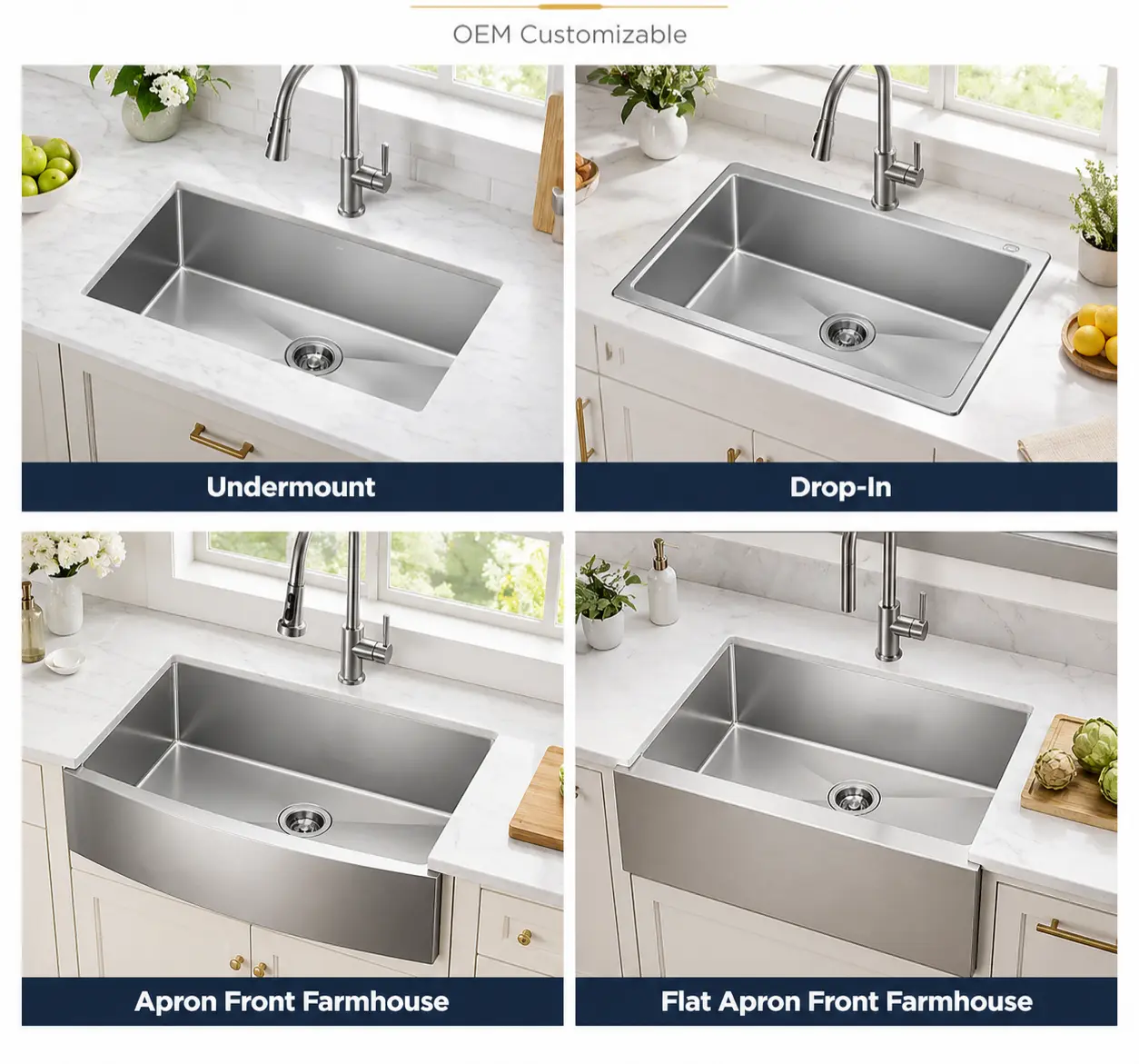
A kitchen sink can meet its overall length, width and bowl dimensions and still create an installation claim.
The missing inspection point is often rim flatness.
Quick Answer: Why Does a Sink Not Sit Flat Even When the Dimensions Are Correct?
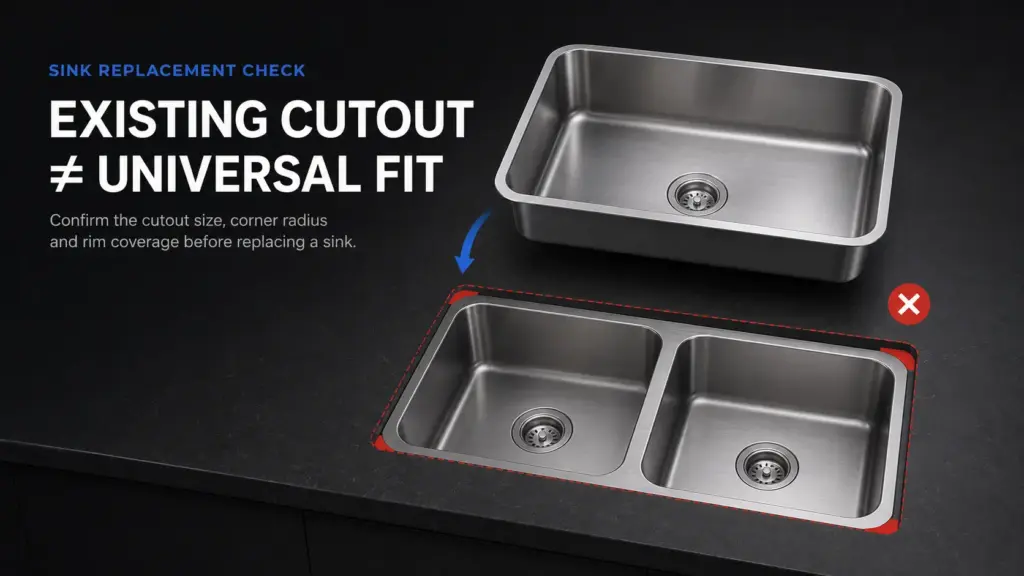
Because overall dimensions and rim flatness measure different things.
A sink can measure:
- correct overall length
- correct overall width
- correct bowl depth
- correct drain position
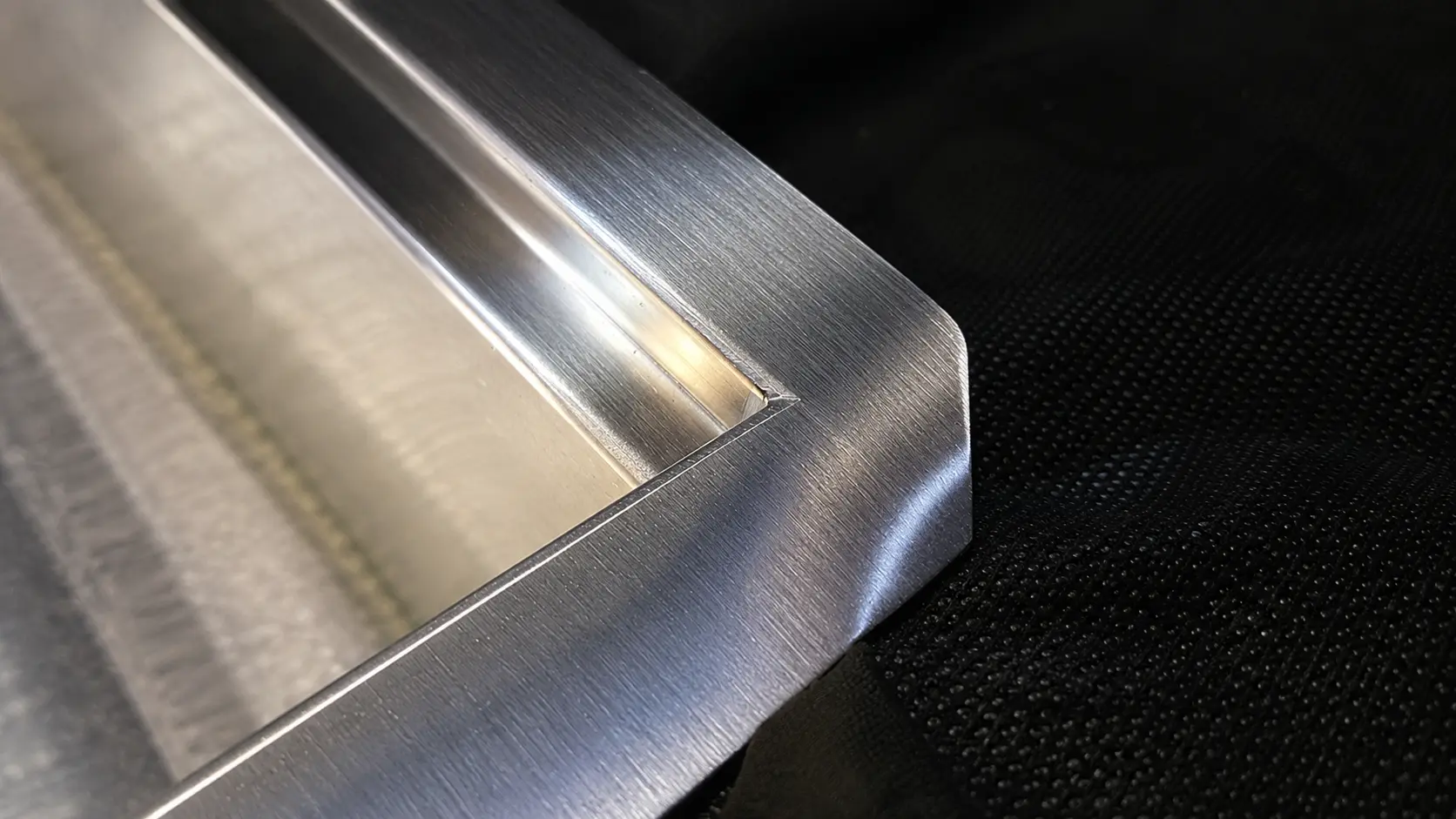
and still have a rim or flange that is:
- bowed
- twisted
- locally raised
- distorted near a welded or polished area
That can cause:
- visible gaps on a top-mount sink
- uneven contact with the countertop
- rocking
- difficult undermount alignment
- uneven sealing pressure
Correct dimensions do not automatically mean correct installation geometry.
For installation-sensitive sinks, rim flatness should be treated as a separate CTQ rather than assumed from length and width inspection.
Overall Size and Flatness Are Different Measurements
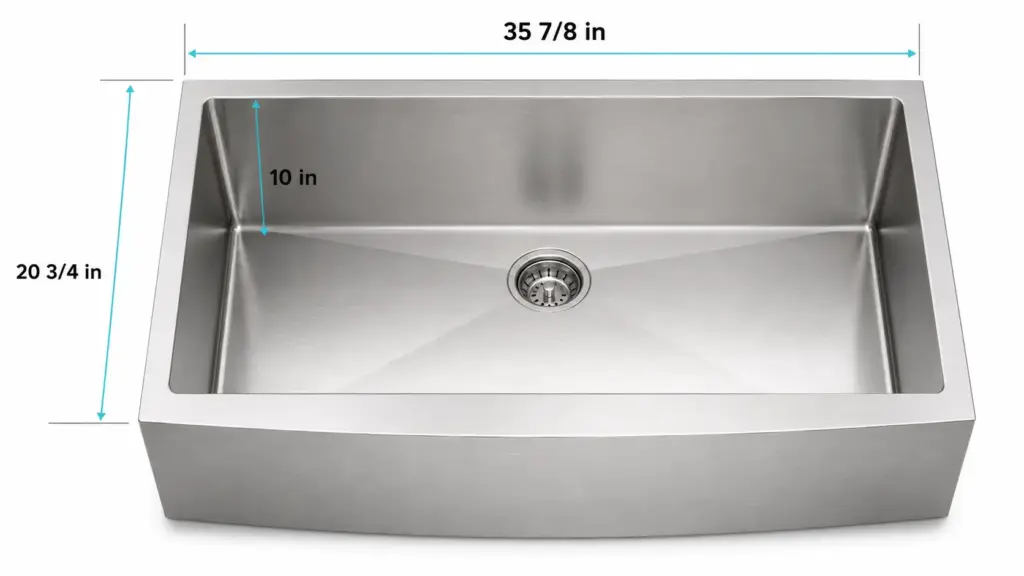
Suppose a sink is specified as:
800 × 500 mm
QC measures:
Length: PASS
Width: PASS
That tells you the outer dimensions are within the approved range.
It does not tell you whether all points of the rim lie in the same plane.
A rim can still be slightly twisted while the overall length and width remain correct.
This is why a simple tape or caliper inspection cannot fully evaluate installation condition.
Why Rim Flatness Matters for Top-Mount Sinks
A top-mount sink relies on the upper rim to sit on the countertop.
If the rim is not flat, buyers may see:
- gaps between sink and countertop
- uneven silicone line
- rocking before fastening
- excessive clamping force
- visible corner lift
The installer may be able to force part of the sink down.
But that does not mean the rim geometry is correct.
Using installation force to hide a distorted rim can create:
- uneven stress
- seal inconsistency
- visual complaints
For top-mount products, flatness is therefore directly connected to the customer-visible installation result.
Why Rim Flatness Matters for Undermount Sinks
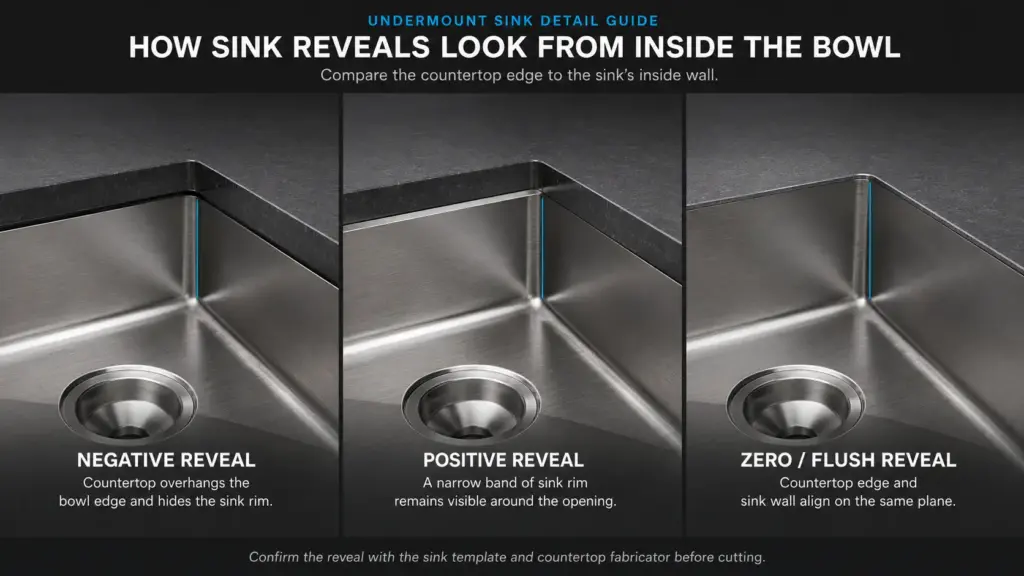
Undermount sinks do not show the rim in the same way, but the flange still provides the mounting interface.
Uneven flange geometry can affect:
- alignment with the countertop opening
- reveal consistency
- adhesive contact
- mounting clips
- support position
A sink may still be installable, but the installer may need extra adjustment.
For project supply or replacement sinks, this can become a significant installation cost.
Matrix’s Kitchen Sink Installation Guides explain why flange geometry and countertop interface should be reviewed together.
What Causes Rim Distortion on Handmade Sinks?
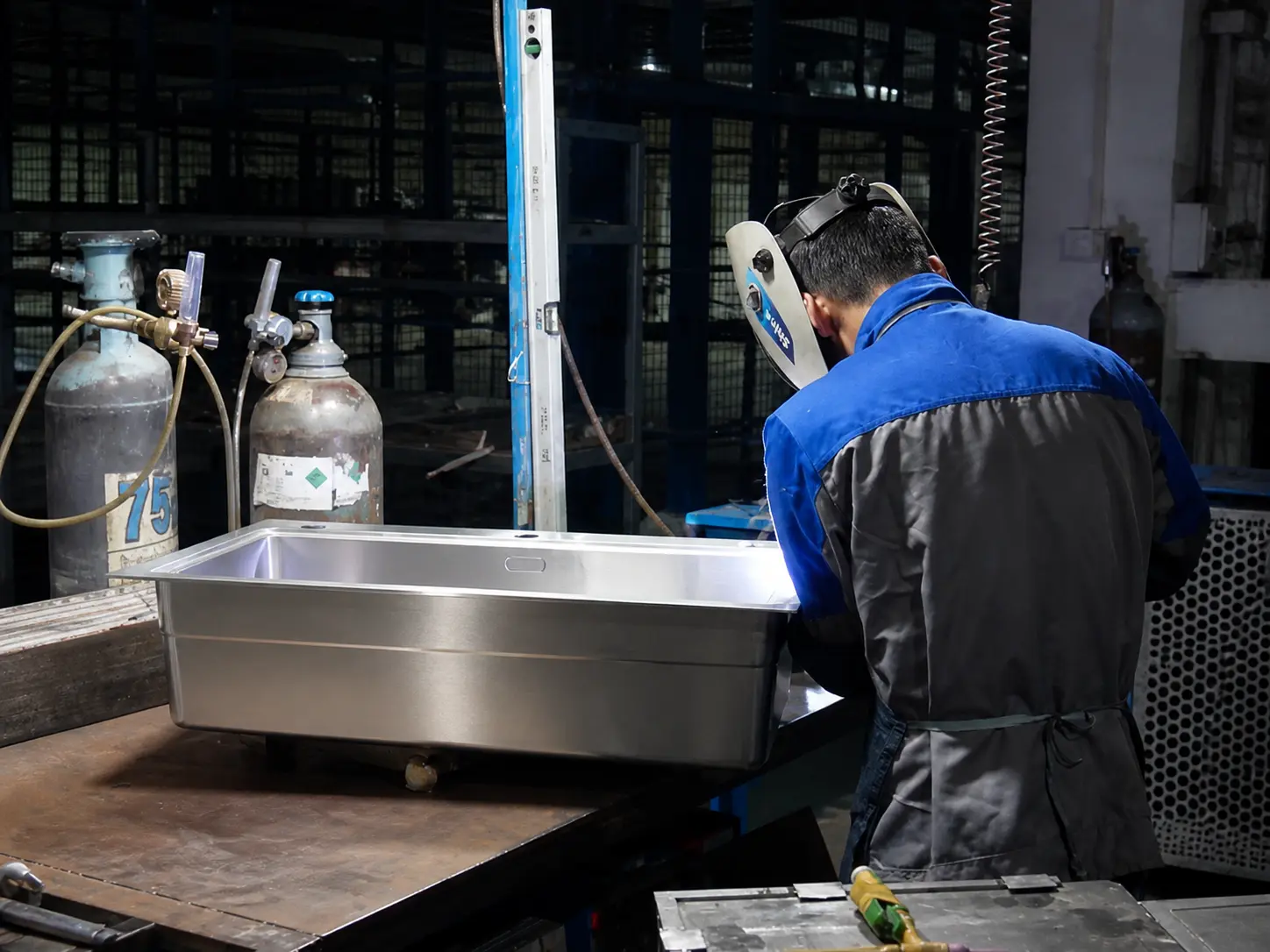
Handmade sinks go through fabrication steps such as:
- cutting
- bending
- welding
- grinding
- polishing
Several of these steps can influence flatness.
Welding Heat
Welding introduces localized heat.
As the metal heats and cools, shrinkage can create distortion.
Grinding and Finishing
Removing material or applying uneven finishing pressure can change the local stress condition.
Fabrication Sequence
If the bowl and upper structure are not assembled evenly, the finished rim can develop twist or bow.
Handling
Large handmade sinks can also be distorted during:
- stacking
- handling
- packing
- transport
This is why rim flatness should be checked on the finished sink, not assumed from the original sheet.
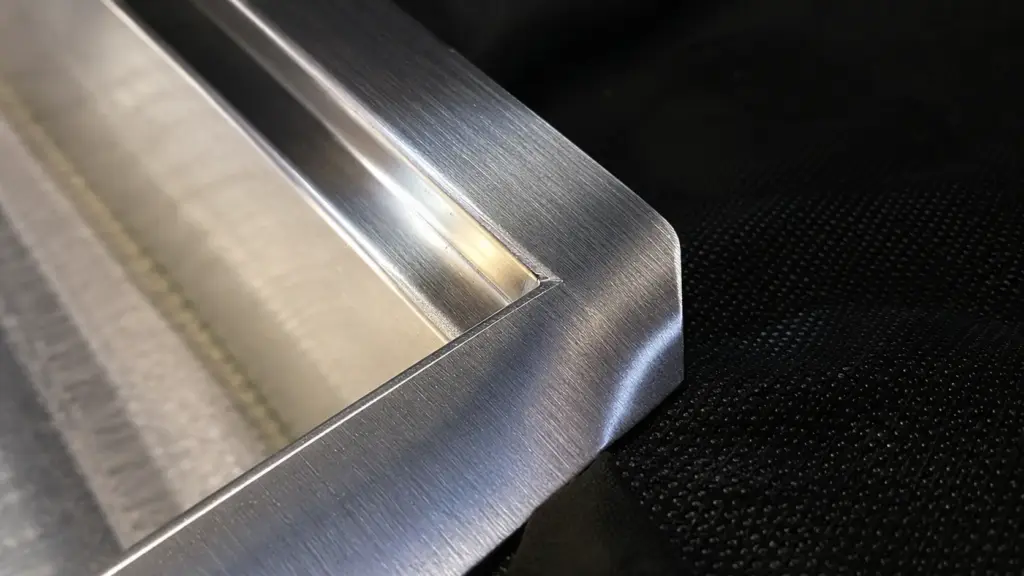
What Causes Rim Distortion on Pressed Sinks?
Pressed / drawn sinks have different risks.
Possible influences include:
- residual forming stress
- trimming
- flange forming
- springback
- secondary operations
- handling
If the issue repeats in the same location across multiple units, investigate:
- tooling
- forming
- trimming
- production setup
If only one unit is affected, investigate:
- handling
- packing
- transport damage
For the broader difference between handmade and pressed production, see Stainless Steel Sink Manufacturing.
Large and Deep Sinks Need More Attention
Rim flatness becomes more sensitive when the product is:
- large
- deep
- long and narrow
- workstation style
- built with a wide flange
- heavily welded
A larger structure provides more opportunity for twist or bow to become visible.
That does not mean large sinks are inherently problematic.
It means the inspection method should reflect the geometry.
Workstation Sinks Can Be More Sensitive
A workstation sink already has multiple critical interfaces:
- rim / flange
- bowl
- workstation ledge
- accessories
- drain
If the upper structure distorts, it can affect more than countertop fit.
It may also influence:
- ledge alignment
- accessory fit
- visual symmetry
For this reason, workstation sinks should not be approved using only overall dimensions and accessory checks.
How Should Rim Flatness Be Checked?
The exact method depends on the product and buyer requirement, but inspection should use a defined reference.
Possible approaches include:
- checking on a known flat surface
- using a straightedge across defined directions
- checking visible gaps
- checking rocking
- measuring local deviation where the project requires a numerical limit
The important point is consistency.
If the sample is checked one way and bulk production another way, the results are difficult to compare.
Do Not Invent a Universal Flatness Tolerance
There is no one flatness value that automatically applies to every kitchen sink.
The acceptable condition depends on:
- sink size
- installation method
- rim width
- manufacturing process
- countertop interface
- customer requirement
A small deviation on a large undermount flange may have a different consequence from the same deviation at the visible front corner of a top-mount sink.
So:
Flatness tolerance should follow installation risk, not a generic factory number.
Suggested Inspection Directions
For a rectangular sink, QC may review:
- front edge
- rear edge
- left edge
- right edge
- front-to-rear diagonal
- opposite diagonal
Diagonals can help reveal twist that may not be obvious when checking only one straight edge.
For large sinks, additional intermediate locations may be appropriate.
Flatness vs Level: Do Not Confuse Them
These are different issues.
Rim Flatness
Asks:
Is the sink rim itself geometrically flat?
Installed Level
Asks:
Is the sink / countertop installed horizontally?
A flat sink can be installed out of level.
A distorted sink can also be installed on a perfectly level countertop.
Both can affect installation and drainage, but they require different root-cause checks.
Transport Damage Can Look Like Manufacturing Distortion
If one sink arrives with a raised corner, do not immediately assume:
factory welding problem.
Check:
- carton damage
- rim protection
- stacking
- accessory movement
- pallet condition
- whether unopened units have the same issue
If multiple units from the same batch show the same deformation in the same location, manufacturing becomes more likely.
If one carton is visibly damaged, transport should be investigated too.
How to Investigate a Rim Flatness Claim
A useful sequence is:
Step 1 — Confirm the Model
Make sure the affected product matches the approved SKU.
Step 2 — Check Overall Dimensions
Confirm length, width and bowl geometry first.
Step 3 — Check the Rim on a Defined Reference
Look for:
- bow
- twist
- local lift
- rocking
Step 4 — Check Installation Conditions
Confirm:
- countertop level
- cutout
- mounting method
- support
- adhesive / clips
Step 5 — Compare Multiple Units
Compare:
- approved sample
- affected unit
- unused production units
- other units from the same batch
Step 6 — Review Packing
Check whether the rim could have been deformed during transport.
Rim Flatness Claim Diagnosis Table
| Symptom | Possible Cause | What to Check |
|---|---|---|
| One corner lifts | Local twist / transport | Diagonal flatness + carton |
| Front edge has visible gap | Rim bow | Straightedge / flat surface |
| Sink rocks before fixing | Twist | Opposite diagonal condition |
| Reveal varies on undermount | Flange distortion or cutout | Flange + countertop opening |
| Multiple units show same deformation | Production process | Welding / forming / tooling |
| One unit only | Handling / transport | Packing + adjacent units |
| Sink sits flat before installation but not after | Installation | Countertop / clips / support |
Rim Flatness Should Be Part of Sample Approval
For installation-sensitive products, the golden sample should establish:
- approved rim condition
- installation geometry
- inspection method
- any agreed acceptance criterion
Do not wait until bulk production to decide what “flat enough” means.
Matrix’s Quality Control & Inspection uses approved drawings and product references as the basis for repeat-order inspection.
Put Flatness in the Drawing or Inspection Specification
Flatness is not always easy to communicate as a simple dimension.
It can be controlled through:
- drawing note
- CTQ list
- inspection specification
- golden-sample reference
The key is that production and QC use the same requirement.
See How to Define Critical-to-Quality Dimensions for a Kitchen Sink for how flatness fits into a broader CTQ plan.
Flatness Tolerance Should Not Be Added After a Claim
If a buyer never specified flatness and approved the sample, it is difficult to create a new numerical rejection limit only after goods are finished.
For high-risk projects, define the acceptance basis before:
- sample approval
- bulk production
- repeat order
This avoids disputes where the factory and buyer are using different standards.
What Buyers Should Put in the RFQ
For standard products, a detailed rim-flatness requirement may not be necessary at quotation stage.
For installation-sensitive projects, include:
- installation type
- overall dimensions
- countertop opening
- flange / rim requirement
- replacement condition if applicable
- drawing
The Kitchen Sink RFQ Checklist helps define these interfaces before quotation.
Common Buyer Misdiagnoses
“Length and width passed, so the sink must be correct.”
No. Overall dimensions do not prove flatness.
“The installer can clamp the rim down, so it is acceptable.”
Not automatically. Excessive installation force can hide rather than solve geometric distortion.
“Every visible gap is a manufacturing defect.”
No. Countertop level, cutout, support and installation should also be checked.
“One bent corner means the whole batch is defective.”
Not necessarily. Compare multiple units and inspect transport packaging.
“Flatness and level are the same thing.”
No. Flatness is a property of the sink geometry. Level describes installation orientation.
Buyer Takeaway
When a sink does not sit correctly, do not check only:
Length × Width
Also check:
Rim / Flange Flatness
The correct dimensions can still produce a poor installation result when the mounting interface is bowed or twisted.
For installation-sensitive sinks, the control chain should be:
Dimensions → Rim Flatness → Countertop Interface → Installation
A sink can be dimensionally correct and still be geometrically wrong for installation.
Frequently Asked Questions
Why does a kitchen sink not sit flat even when the dimensions are correct?
Because overall dimensions do not measure rim flatness. The rim can be bowed or twisted while length and width still pass inspection.
What causes rim distortion on a handmade sink?
Welding heat, fabrication sequence, grinding, polishing and handling can all influence the finished rim geometry.
Can pressed sinks also have rim flatness issues?
Yes. Forming stress, trimming, secondary forming and handling can affect the flange or rim.
Is rim flatness more important for top-mount sinks?
It is highly visible on top-mount sinks, but it also matters for undermount alignment and mounting contact.
How should rim flatness be inspected?
Use a defined reference such as a flat surface or straightedge and check agreed locations consistently.
Is there a universal kitchen sink flatness tolerance?
No. The acceptable requirement should reflect sink size, installation type, manufacturing process and project needs.
Can shipping damage cause a sink rim to become distorted?
Yes. Packing and handling should be investigated if isolated units show deformation.
Reviewing an Installation-Sensitive Sink?
For custom or replacement projects, send the sink drawing, installation method and countertop interface requirement before sample development.
Matrix’s Custom Kitchen Sink Programs can be used to review dimensions, flange geometry and installation-critical features before production.