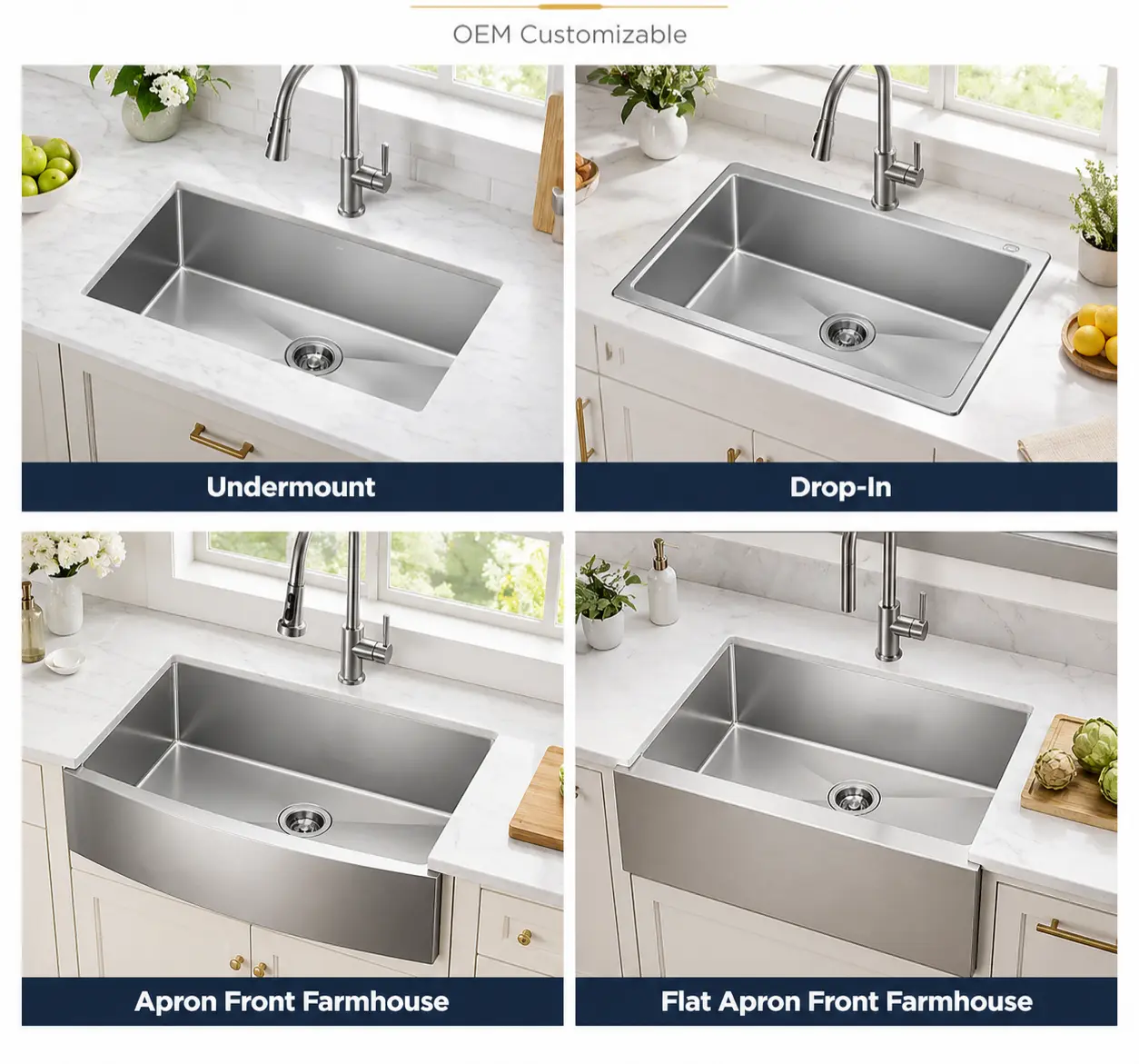
A 30-inch sink is not necessarily a 30-inch bowl.
Two kitchen sinks can have exactly the same outside dimensions and still provide noticeably different usable space.
The difference comes from how much of the overall footprint is actually converted into bowl volume.
Key factors include:
- rim width
- bowl opening
- bowl depth
- corner radius
- sidewall angle
- workstation ledges
- bowl divider
- drainboard
- installation structure
For buyers, the more useful comparison is not:
“Are both sinks 30 inches?”
It is:
“How much usable bowl space does each design actually provide?”
Quick Answer
Two sinks with the same overall length and width can have different bowl capacity because the outside dimensions include more than the usable bowl.
For example:
Overall Size
− Rim / Flange
− Workstation Ledge
− Divider
− Drainboard
− Corner Geometry
determines the space left for the actual bowl.
Then:
Bowl Length × Bowl Width × Bowl Depth
still does not tell the complete story, because corner radius and wall angle also affect usable volume.
Overall sink size describes the product envelope. It does not describe usable bowl capacity.
1. Overall Size and Bowl Size Are Different Measurements
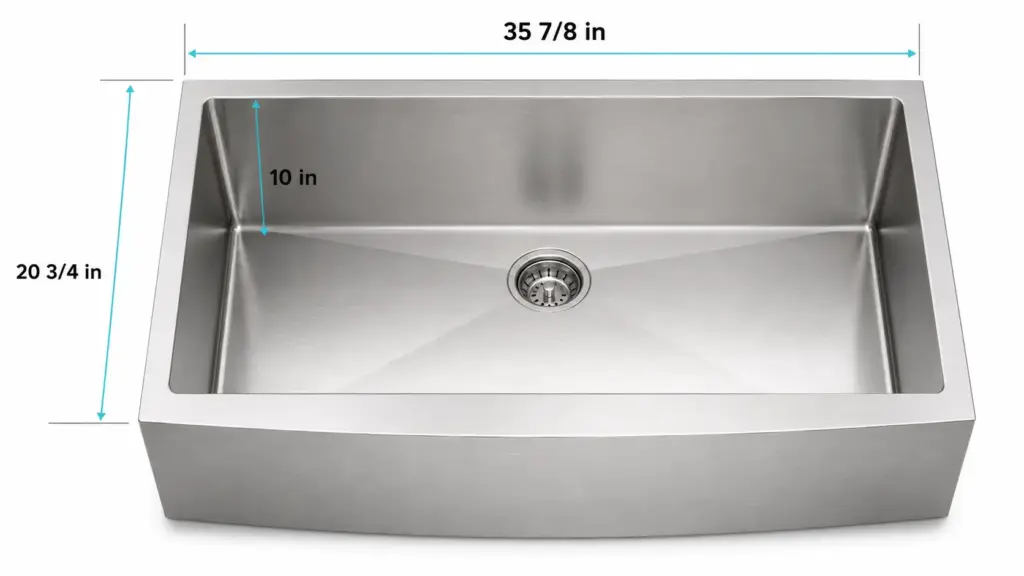
Consider two sinks:
Sink A
Overall size:
30″ × 18″
Bowl opening:
28″ × 16″
Sink B
Overall size:
30″ × 18″
Bowl opening:
27″ × 15″
Both can be sold as:
30-inch kitchen sinks
but Sink A has a larger usable bowl footprint.
For OEM comparison, the buyer should therefore separate:
- overall sink dimensions
- bowl dimensions
- bowl depth
rather than comparing only the nominal model size.
2. Rim Width Can Consume a Significant Amount of Space
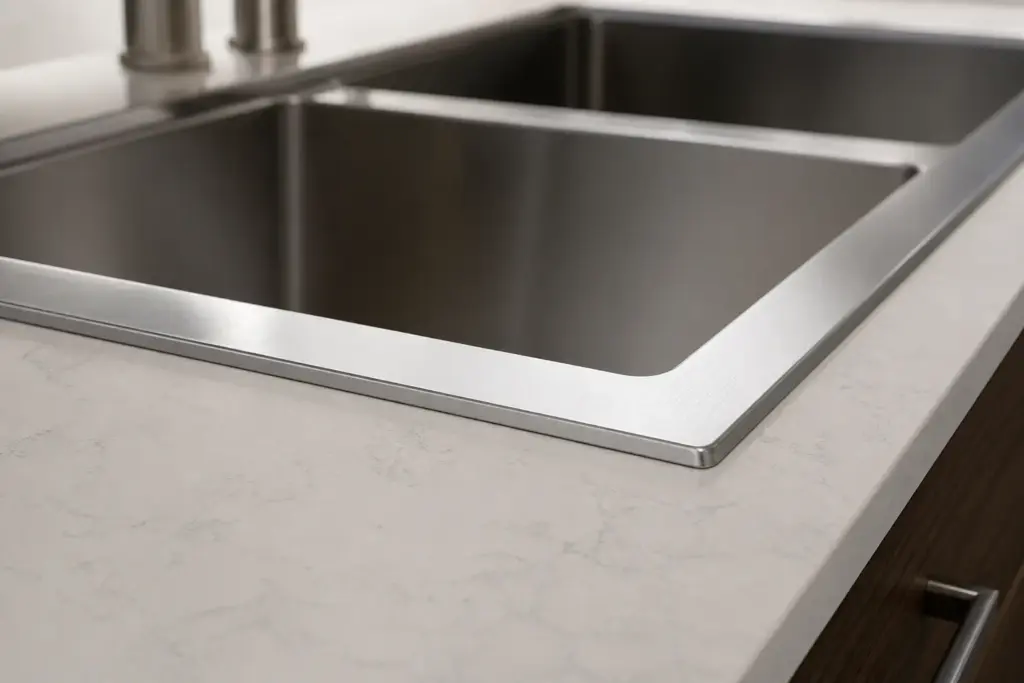
The sink rim or flange occupies part of the overall footprint.
A wider rim may be required because of:
- installation method
- structural support
- faucet deck
- mounting design
- product styling
But every additional millimeter used by the rim is no longer available to the bowl.
This becomes especially important when comparing:
- compact sinks
- RV sinks
- replacement sinks
- narrow-base-cabinet projects
3. Top-Mount and Undermount Designs Can Use the Same Footprint Differently
Installation type influences rim geometry.
A Top-Mount Kitchen Sink needs a visible supporting rim that sits on the countertop.
An undermount design can use a different flange structure because the sink is mounted below the countertop.
Therefore, two products with the same overall size do not necessarily have the same:
- bowl opening
- rim width
- cut-out
- usable internal space
This is one reason overall dimensions should never be used alone when replacing one installation type with another.
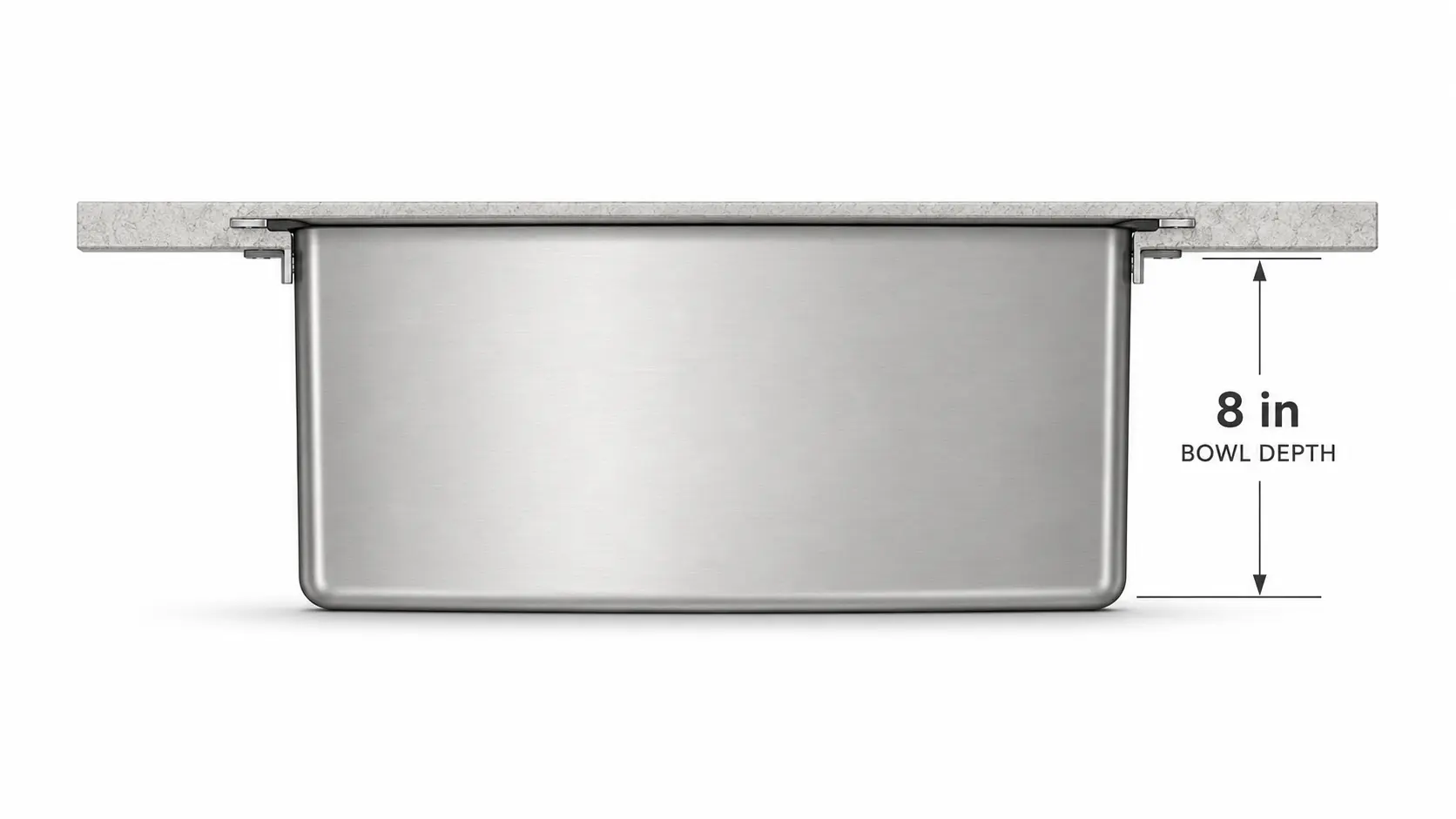
4. Bowl Depth Changes Capacity Without Changing the Footprint
Two sinks may have the same:
length × width
but different depths.
For example:
Sink A
30″ × 18″ × 8″ deep
Sink B
30″ × 18″ × 10″ deep
Sink B provides more vertical bowl volume.
But deeper is not automatically better.
Greater depth also changes:
- user reach
- cabinet clearance
- drain height
- garbage-disposal clearance
Matrix’s Deep Kitchen Sinks are a useful example of why bowl depth should be evaluated together with installation geometry rather than treated only as additional capacity.
5. Corner Radius Changes Usable Space
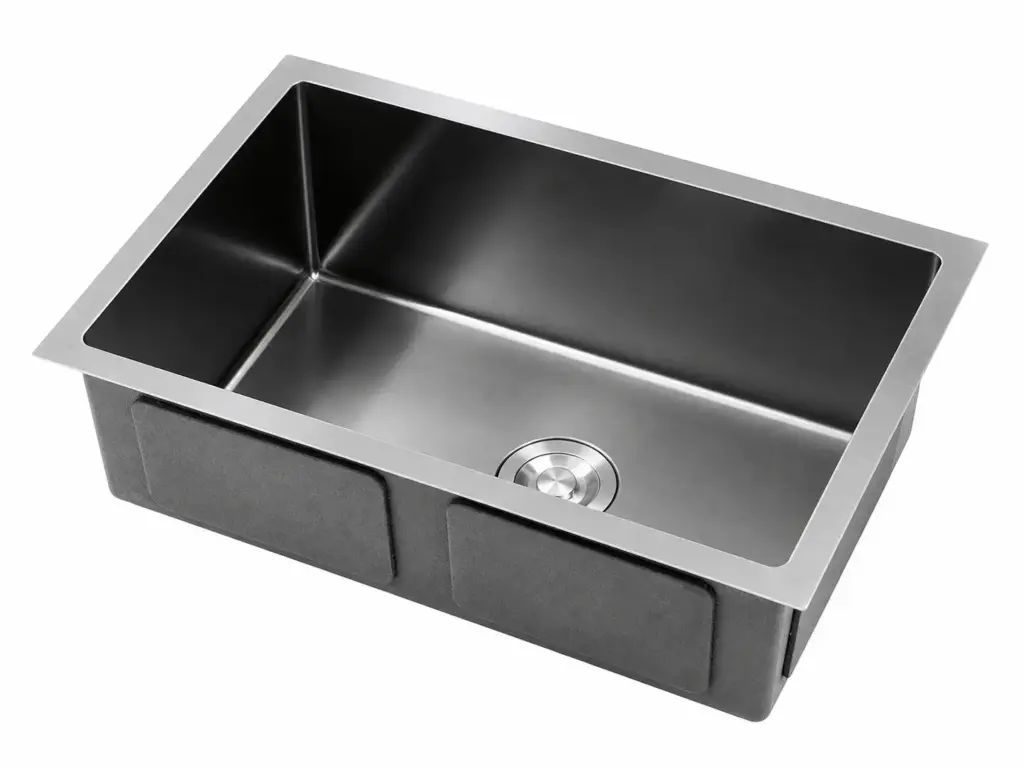
Corner radius is often discussed as a visual design feature.
But it also changes internal bowl geometry.
A tighter-radius sink usually carries the bowl walls farther toward the corners.
A larger-radius sink removes more corner volume.
Compare:
R10 corner
with:
R25 or larger radius
on otherwise similar bowl dimensions.
The nominal bowl length and width may look close on a specification sheet, but the actual usable corner area can still be different.
6. Wall Angle Also Changes Real Bowl Volume
Not every sink wall is perfectly vertical.
Pressed sinks especially may have tapered sidewalls because of:
- forming geometry
- release from tooling
- product design
That means:
top bowl opening
can be larger than:
bowl floor area.
So a buyer comparing only the top opening can overestimate how much usable space exists near the bottom of the sink.
This distinction matters when the product is intended for:
- large cookware
- trays
- bottom grids
- commercial-use containers
7. Handmade and Pressed Sinks Can Use Space Differently
Production route can influence bowl geometry.
Handmade Sink
Handmade sinks can typically use:
- straighter sidewalls
- tighter corner radii
- more rectangular internal geometry
depending on the design.
See Matrix’s Handmade Kitchen Sinks for custom bowl dimensions and configuration options.
Pressed Sink
Pressed sinks are formed through tooling, so:
- corner radius
- sidewall angle
- bowl depth
- bottom transition
are strongly influenced by mold geometry and formability.
See Matrix’s Pressed Kitchen Sinks for the alternative production route.
Neither route automatically provides “more capacity.”
The correct comparison is the finished bowl geometry.
8. Workstation Ledges Use Internal Width
A workstation sink adds integrated ledges for accessories such as:
- cutting boards
- colanders
- drying racks
These features improve functionality.
But the ledge itself occupies part of the sink cross-section.
So two sinks with the same outside size may have:
Standard Single Bowl
More open internal width
versus
Workstation Bowl
Slightly reduced internal width but additional accessory functionality
This is a trade-off, not automatically a disadvantage.
Matrix’s Workstation Kitchen Sinks illustrate how bowl geometry and accessory support should be evaluated together.
9. Double-Bowl Dividers Consume Bowl Volume
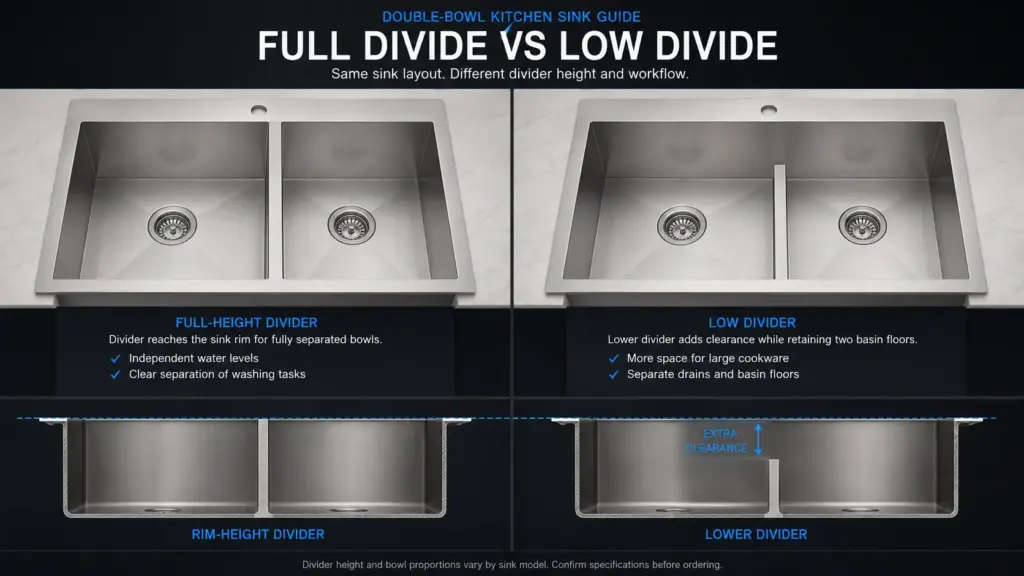
Two sinks can share the same overall dimensions:
33″ × 19″
but one may be:
- single bowl
and another:
- double bowl
The divider occupies space inside the total footprint.
It can also change:
- individual bowl width
- usable bottom area
- cookware fit
So overall dimensions are especially weak as a capacity comparison between single- and double-bowl designs.
10. Drainboards Can Reduce Bowl Space Substantially
A drainboard sink may use part of its total width for:
- integrated draining surface
- side platform
- preparation area
For example:
1000 mm overall sink
does not mean:
1000 mm bowl.
A large portion may belong to the drainboard.
That is why drainboard products should be compared using:
- overall dimension
- actual bowl dimension
- bowl depth
- drainboard dimension
separately.
11. Faucet Decks Also Consume the Product Footprint
Some sink designs integrate a rear deck for:
- faucet holes
- soap dispenser
- accessories
That deck can reduce the front-to-back bowl dimension.
Two sinks may both be:
18 inches front-to-back
while one offers a noticeably narrower bowl because part of that depth is reserved for the faucet platform.
12. Nominal Size Is Mainly a Product Category
Terms such as:
- 30-inch sink
- 33-inch sink
- 750 mm sink
are useful for categorization.
But they should not be treated as complete engineering specifications.
For OEM sourcing, the drawing should distinguish at least:
- overall length
- overall width
- bowl length
- bowl width
- bowl depth
- rim width
- corner radius
- drain position
A Simple Comparison
Consider two 30-inch sinks.
| Specification | Sink A | Sink B |
|---|---|---|
| Overall Size | 30″ × 18″ | 30″ × 18″ |
| Bowl Opening | 28″ × 16″ | 27″ × 15″ |
| Bowl Depth | 9″ | 10″ |
| Corner Radius | Smaller | Larger |
| Workstation Ledge | No | Yes |
Which one has more capacity?
There is no reliable answer from the overall size alone.
Sink A has:
- a larger bowl opening
- less internal structure
Sink B has:
- more depth
- workstation functionality
The buyer has to decide which geometry better matches the target application.
Capacity and Usable Space Are Not Exactly the Same Thing
This distinction is important.
A sink can have high theoretical volume but still be less useful for certain items.
For example:
A very deep bowl with:
- narrow bottom area
- large corner radii
may have considerable water volume.
But a shallower rectangular bowl with:
- straighter walls
- larger bottom footprint
may fit a large baking tray better.
So Buyer evaluation should distinguish:
Liquid Capacity
from:
Usable Bowl Space
What Should Buyers Compare on the Drawing?
For an OEM sink project, compare:
| Drawing Item | What It Tells You |
|---|---|
| Overall Size | Product / countertop envelope |
| Bowl Opening | Upper usable space |
| Bowl Bottom Size | Lower usable space |
| Bowl Depth | Vertical capacity |
| Corner Radius | Corner space |
| Wall Angle | Taper from top to bottom |
| Rim Width | Space outside the bowl |
| Workstation Ledge | Accessory interface / lost width |
| Divider | Single-bowl vs divided volume |
| Drainboard | Bowl vs utility-area allocation |
Why This Matters for Private-Label Product Selection
When a buyer compares existing supplier models, two sinks can look almost identical in a catalogue.
For example:
30″ × 18″ × 10″
SUS304
Single Bowl
Undermount
But one design may provide:
- larger bowl opening
while another provides:
- wider rim
- tighter workstation structure
- different bottom footprint
If the product is being matched to an existing retail SKU, cabinet program or countertop cut-out, those differences become commercially important.
Matrix’s Private-Label Product Programs allow the product specification, sample and repeat-order reference to be defined around the actual target SKU rather than relying only on nominal catalogue size.
Common Misunderstandings
“Two 30-inch sinks have the same amount of space.”
No.
30 inches usually describes the overall sink width, not the bowl.
“The deeper sink always has more usable space.”
Not necessarily.
Depth increases volume, but bowl footprint and wall geometry still matter.
“A larger corner radius is only a design difference.”
No.
Corner radius also changes usable bowl geometry.
“Workstation ledges make the sink smaller.”
They can reduce some open internal width, but they add another type of usable workspace through supported accessories.
“Overall dimensions are enough for an OEM quotation.”
They may be enough for an initial reference, but they are not enough to freeze the final product geometry.
What Should Be Confirmed Before Sample Approval?
For a custom or private-label sink, confirm:
- overall dimensions
- bowl opening
- bowl bottom geometry
- bowl depth
- corner radius
- rim / flange
- drain position
- workstation ledge where applicable
- accessory interface
- installation method
Matrix’s Kitchen Sink RFQ Checklist can be used to define these project requirements before quotation and sampling.
Buyer Takeaway
Do not compare kitchen sink capacity using:
Overall Size
alone.
A better comparison is:
Overall Size
→ Bowl Opening
→ Bottom Geometry
→ Depth
→ Corner Radius
→ Wall Angle
→ Ledge / Divider / Drainboard
The key distinction is:
Overall dimensions tell you how much space the sink occupies. Bowl geometry tells you how much of that space the user can actually use.
Frequently Asked Questions
Do two 30-inch kitchen sinks have the same bowl size?
No. Rim width, bowl geometry, workstation ledges and other features can result in different internal dimensions.
Does a deeper sink always have more capacity?
It usually increases vertical volume, but usable space also depends on bowl length, width, corner radius and wall geometry.
Do workstation sinks have smaller bowls?
The integrated ledge can reduce some internal width, but it adds accessory functionality. The actual difference depends on the sink design.
Does corner radius affect sink capacity?
Yes. Larger radii remove more usable space from the bowl corners.
Are handmade sinks more spacious than pressed sinks?
Not automatically. Handmade construction can allow straighter walls and tighter geometry in some designs, but actual capacity depends on the finished dimensions.
What dimensions should I compare before choosing an OEM sink?
Compare overall size, bowl size, depth, bottom geometry, corner radius, rim, drain position and any workstation or divider structure.
Comparing Sink Designs for an OEM Program?
Matrix supplies both Handmade Kitchen Sinks and Pressed Kitchen Sinks, including custom bowl dimensions, installation types and workstation configurations.
For accessory-led models, review Workstation Kitchen Sinks, or use the Kitchen Sink RFQ Checklist to define the geometry before sampling.