A sink bottom grid can reduce direct impact and contact scratches, keep dishes above standing water and make a sink more functional. However, it cannot guarantee a scratch-free sink. A poorly fitted grid, missing rubber feet, trapped grit, rough welds or repeated movement can create scratches of its own.
The best grid is a model-specific design that sits level, keeps metal away from the bowl, clears the sidewalls and aligns accurately with the drain.
For consumers, the practical question is not simply, “Do sink grids work?” It is:
Does this grid fit this exact sink, and will it be removed and cleaned often enough to remain protective?
For brands, wholesalers and project buyers, a grid should be treated as a precision-fit sink component—not a generic promotional accessory.
Quick Verdict: Are Sink Bottom Grids Worth It?
| Situation | Recommendation | Why |
|---|---|---|
| Stainless steel sink used with heavy cookware | Usually useful | Reduces direct impact and sliding contact with the bowl bottom |
| Household that regularly cleans removable accessories | Good fit | Benefits are maintained when grit and residue are removed |
| Grid matches the exact sink model | Recommended | Better drain alignment, stability and wall clearance |
| Generic grid is “approximately” the right size | Use caution | It may rock, slide, block the drain or touch the bowl walls |
| Rubber feet or side bumpers are missing | Do not use until repaired | Exposed metal can rub directly against the sink |
| PVD or colored stainless steel sink | Use only a verified compatible grid | Movement and trapped grit may create highly visible finish damage |
| User dislikes cleaning underneath accessories | Consider no grid or a simpler protector | Food and moisture can collect beneath a neglected grid |
Bottom line: a correctly fitted and maintained grid is useful protection, not invisible armor.
What Is a Sink Bottom Grid?
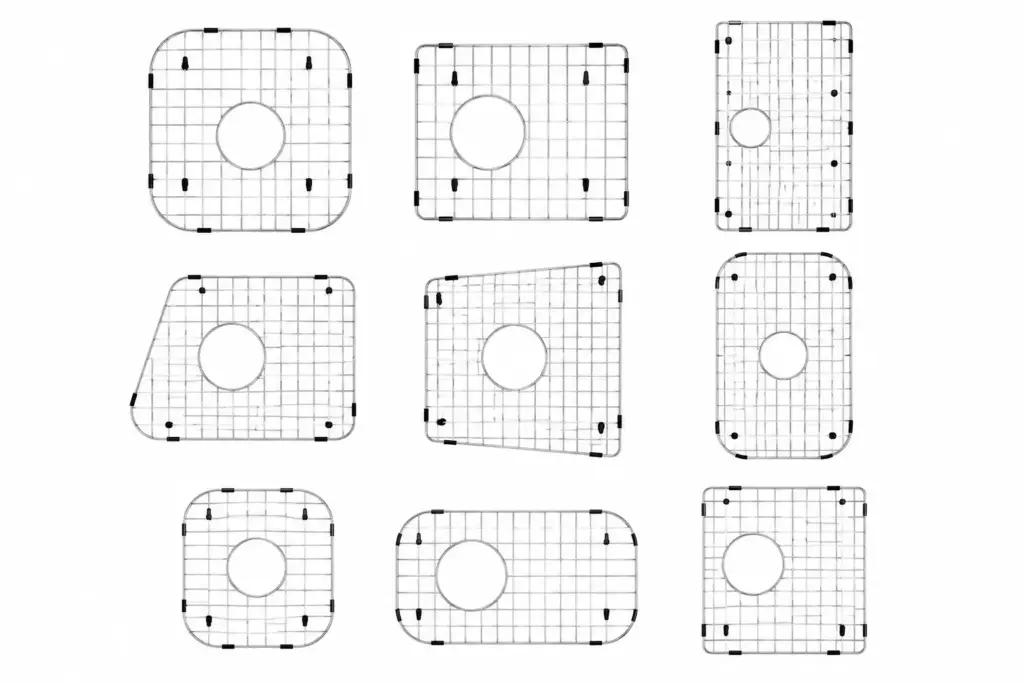
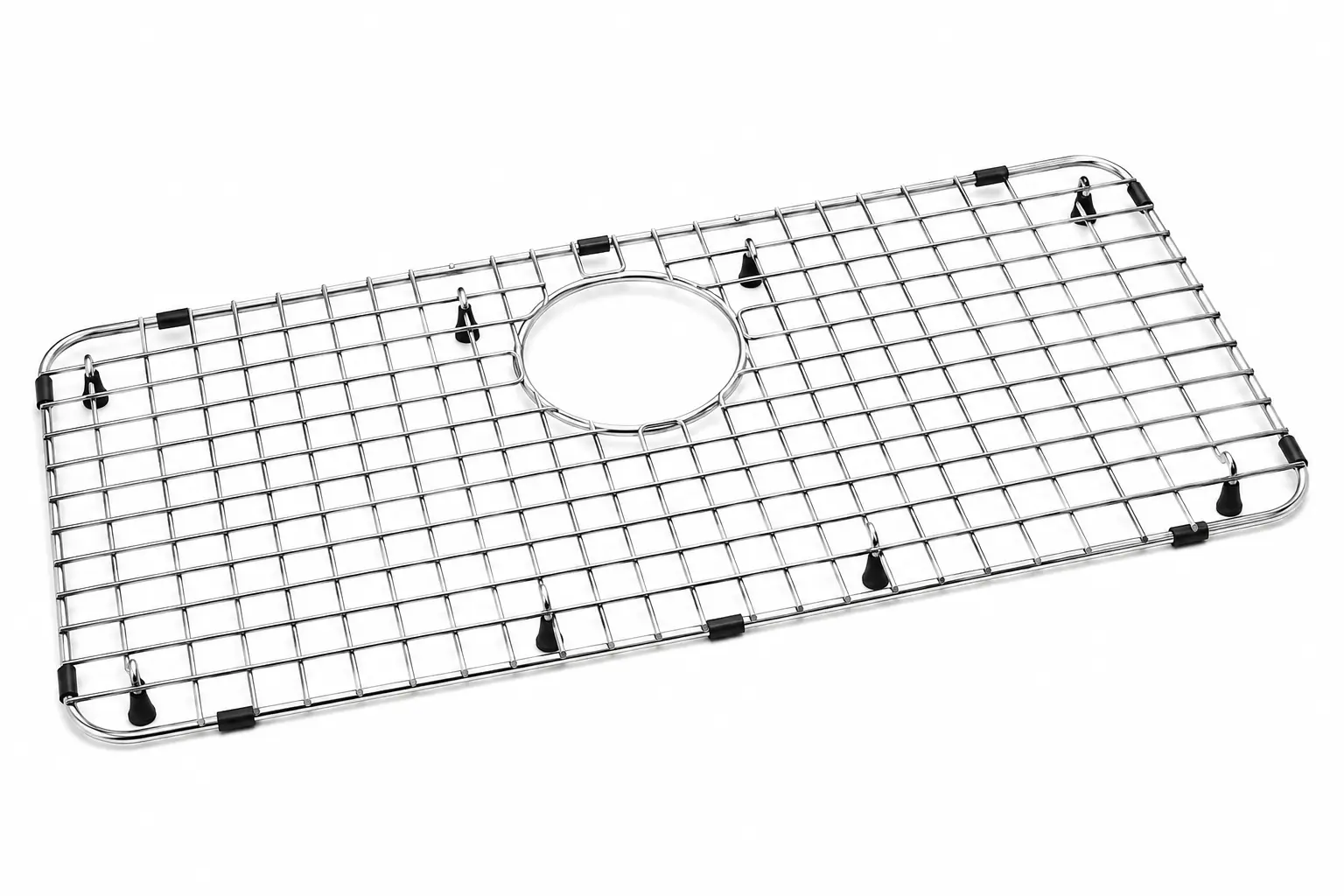
A sink bottom grid is a removable rack placed inside the bottom of a sink bowl. Most premium versions use stainless steel wire with non-metal feet and, where required, side bumpers.
Its raised structure can:
- Separate cookware and dishes from the sink bottom
- Reduce direct impact on the bowl surface
- Allow water to pass beneath stored items
- Keep dishes above minor residual water
- Provide temporary support while rinsing or draining items
- Make a sink-and-accessory package feel more complete
A grid is not the same as a roll-up rack. A bottom grid sits near the bowl floor, while a roll-up rack normally spans the sink ledge or countertop opening.
Matrix supplies custom sink bottom grids matched to bowl geometry, drain position, foot layout and OEM accessory requirements.
The Main Benefits of a Kitchen Sink Grid
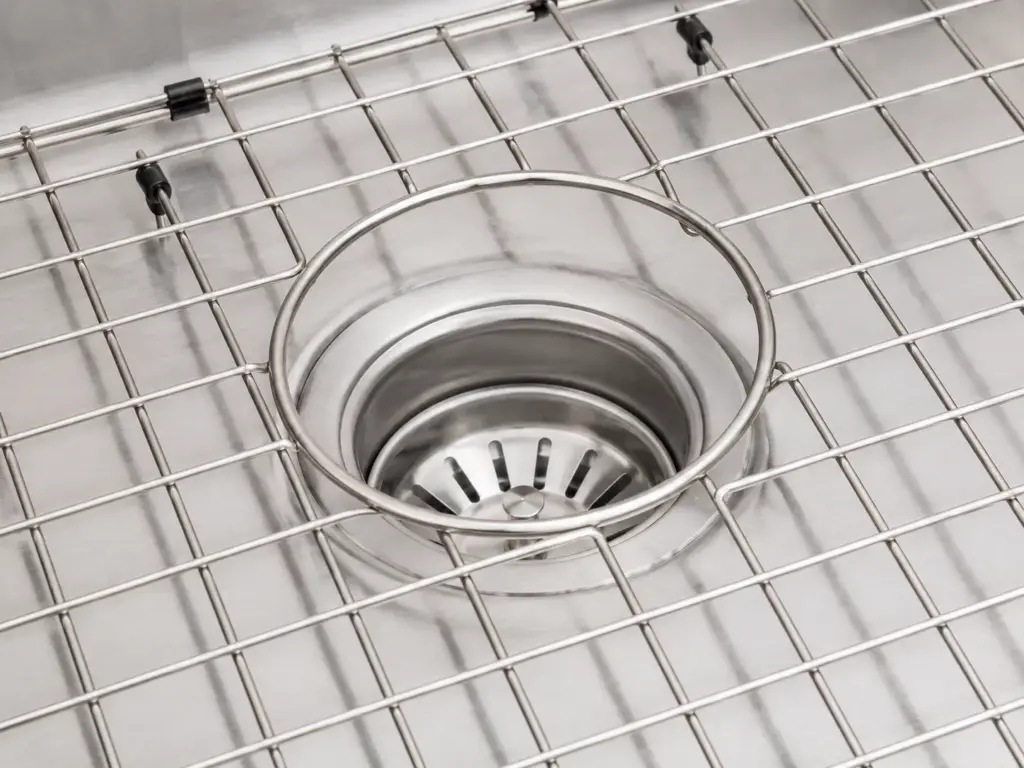
1. It Reduces Direct Contact Scratches
Pots, pans, dishes and utensils no longer rest directly on most of the sink floor. This can reduce the number and severity of marks caused by sliding hard objects across the bowl.
The correct claim is “helps reduce scratches,” not “prevents all scratches.”
2. It Reduces Impact on the Sink Bottom
A raised grid distributes some contact through multiple wires and padded feet. It can reduce direct impact from cookware, although it cannot make a sink dent-proof or chip-proof.
3. It Keeps Dishes Above Residual Water
Water can move below the grid while dishes remain elevated. This is useful in large, relatively flat-bottomed sinks where a small amount of water may remain after use.
However, a grid does not change the bowl’s slope. It cannot repair poor drainage, a high drain flange or an incorrectly leveled sink.
4. It Improves Drain Access During Daily Use
When the opening is correctly aligned, users can reach the strainer or garbage-disposal inlet without removing the complete grid.
5. It Can Protect Fragile Sink Finishes from Direct Cookware Contact
A compatible grid can reduce contact marks on stainless steel, composite and enameled surfaces. The feet and grid edges must remain intact, clean and appropriate for the finish.
6. It Adds Perceived Value to a Sink Package
For retail, wholesale and OEM programs, a model-matched grid can make the sink package look more complete. This value disappears quickly if the grid rocks, arrives bent or does not align with the drain.
The Disadvantages Buyers Often Discover Later
1. More Cleaning Is Required
Food particles, grease, coffee grounds and mineral residue can collect:
- Under the grid
- Around the feet
- At wire intersections
- Around the drain opening
- Between bumpers and the bowl wall
The grid must be removed regularly so both the accessory and sink can be cleaned.
2. A Grid Can Hide the Sink Bottom
Water spots, residue, utensils and early surface damage may remain unnoticed beneath the rack.
3. Small Items Can Fall Through
Cutlery, peelers, bottle caps and food scraps can pass between the wires. A bottom grid is not a garbage-disposal safety guard.
4. Hard Objects May Sound Louder on Metal Wire
Plates and cookware contacting a stainless grid can create a sharper sound than contact with a soft mat.
5. Incorrect Grids Can Move or Rock
Movement is commonly caused by:
- Incorrect overall dimensions
- Wrong corner radius
- Feet placed on a curved or sloped area
- Uneven feet
- A bent frame
- Drain or flange interference
- Weld distortion
6. Replacement Feet Can Be Difficult to Match
Feet vary in bore size, shape, hardness and attachment method. A generic replacement may fit loosely, sit at the wrong height or use a material unsuitable for the sink finish.
7. It Occupies Bowl Depth
Although usually low, the raised grid reduces usable depth slightly and can make it harder to clean very large cookware inside a shallow bowl.
Can a Sink Bottom Grid Scratch the Sink?
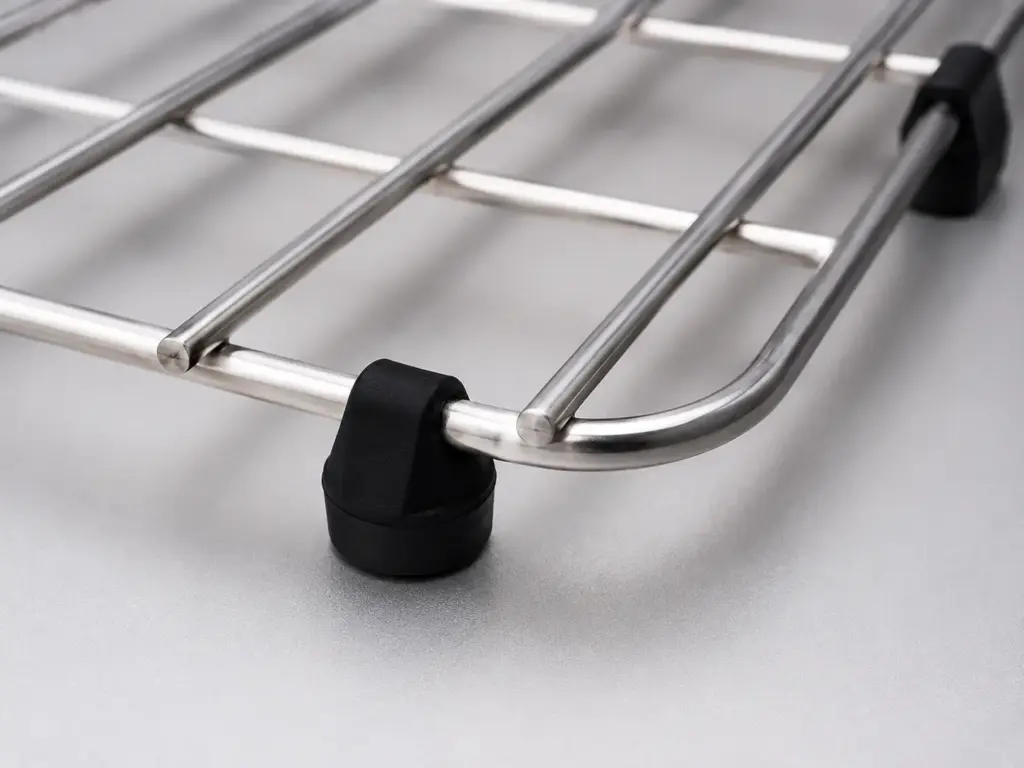
Yes. A bottom grid can scratch a sink when metal contacts the bowl or abrasive particles become trapped beneath moving feet.
This does not mean the grid is defective in every case. The scratch pattern often reveals the actual cause.
| Scratch or mark pattern | Likely cause | Corrective action |
| Small marks directly below the feet | Grit trapped beneath the feet or worn foot material | Remove the grid, clean the bowl and inspect every foot |
| Parallel lines near a sidewall | Grid is too large, lacks side protection or moves laterally | Stop using it and verify dimensions and bumpers |
| Circular or repeated rub marks | Grid rocks or rotates during use | Check flatness, foot height and fit |
| Rust-colored marks near welds | Contamination, transferred iron or corrosion on a low-quality component | Clean and inspect the grid material and weld finish |
| Long scratches after moving the grid | Grid was dragged during removal or cleaning | Lift the grid vertically instead of sliding it |
| Random fine scratches across exposed areas | Normal cookware contact or abrasive cleaning—not necessarily the grid | Review use and cleaning method |
The Most Common Scratch Mechanisms
Missing or Damaged Feet
If one foot falls off, the exposed wire or foot pin may contact the sink directly. Stop using the grid until the correct part is replaced.
Trapped Grit
Sand, ceramic particles, metal fragments and dried food can become abrasive when a loaded grid moves over them.
The rubber foot is not the abrasive in many cases—the particle trapped beneath it is.
Incorrect Edge Clearance
A grid that touches the sidewall may rub against the finish every time cookware is placed on it.
Rough Welds or Unfinished Wire Ends
Sharp projections, welding spatter and poorly finished edges can damage the bowl or injure the user.
Bent or Twisted Structure
A distorted grid places more load on fewer feet and may rock during use.
Dragging During Removal
Even a correctly fitted grid should be lifted, not pulled across the sink bottom.
Normal Wear or a Product Problem?
Stainless steel is durable but not immune to cosmetic scratching. Fine marks from normal use do not automatically indicate poor steel quality.
The following conditions deserve closer investigation:
- The same deep mark appears below every foot.
- A wire end or weld touches the bowl.
- The grid arrived bent.
- Feet repeatedly detach.
- The grid cannot sit level in the intended sink.
- Rust-colored residue repeatedly originates from the grid.
- The drain opening is visibly misaligned.
- The grid touches a PVD or colored surface during normal use.
The first step is to remove and inspect the grid. Do not polish a scratch aggressively before identifying its cause, especially on a brushed or coated finish.
How Should a Sink Bottom Grid Fit?
A correct fit is defined by more than length and width.
1. The Grid Must Match the Usable Bowl Footprint
Sink walls often taper and corners are curved. The internal dimension near the top of the bowl is therefore not the same as the usable dimension near the bottom.
A grid selected from the sink’s outside dimensions will usually be wrong.
2. It Must Clear the Bowl Walls
The grid should not scrape or wedge against the sidewalls during placement, removal or ordinary movement.
There is no universal clearance that fits every sink. The required value depends on:
- Bowl taper
- Corner radius
- Grid height
- Wire-end design
- Side-bumper layout
- Manufacturing tolerances
Use the approved drawing or a physical fit sample instead of applying one generic gap to all models.
3. All Feet Must Land on Stable Areas
Feet should rest on the intended supporting surface—not across a drain slope, embossed feature, tight corner or curved transition.
Every foot should share load without making the grid rock.
4. The Corner Radius Must Match
A rectangular grid with sharp corners will not fit properly inside a bowl with larger rounded corners, even when the nominal length and width seem correct.
5. The Drain Opening Must Align
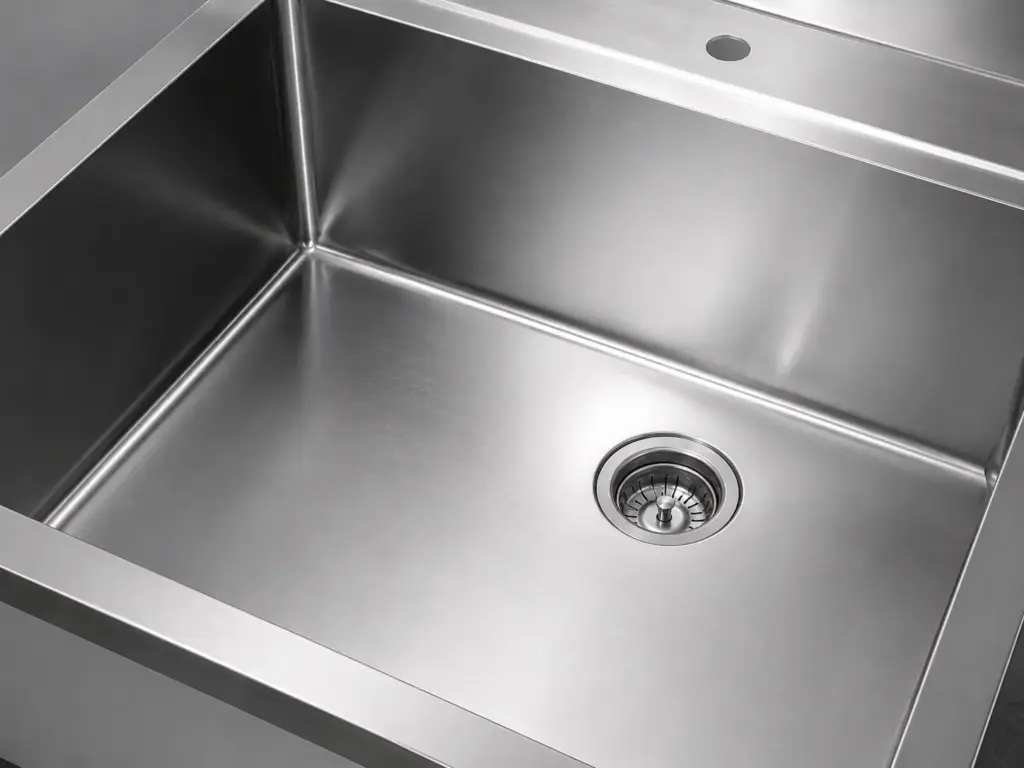
Confirm:
- Drain center position
- Center, rear or offset layout
- Opening diameter and shape
- Strainer access
- Garbage-disposal splash-guard access
- Clearance for drain accessories
A partially blocked drain opening is not an acceptable fit.
6. The Grid Must Sit Level
An empty grid should rest without visible rocking. After ordinary items are placed on it, it should remain stable without shifting into the bowl walls.
7. It Must Be Removable
The user should be able to lift the grid out for cleaning without forcing, bending or scratching the sink.
The Best Way to Find the Correct Grid
Use this selection order:
- Exact sink model and matching grid part number
- Approved sink drawing and grid drawing
- Physical sink sample and prototype fit test
- Careful field measurement for a replacement grid
The sink model is more reliable than a description such as “30-inch sink.” Two sinks with the same exterior size may have different bowl dimensions, radii and drain positions.
How to Measure for a Replacement Sink Grid
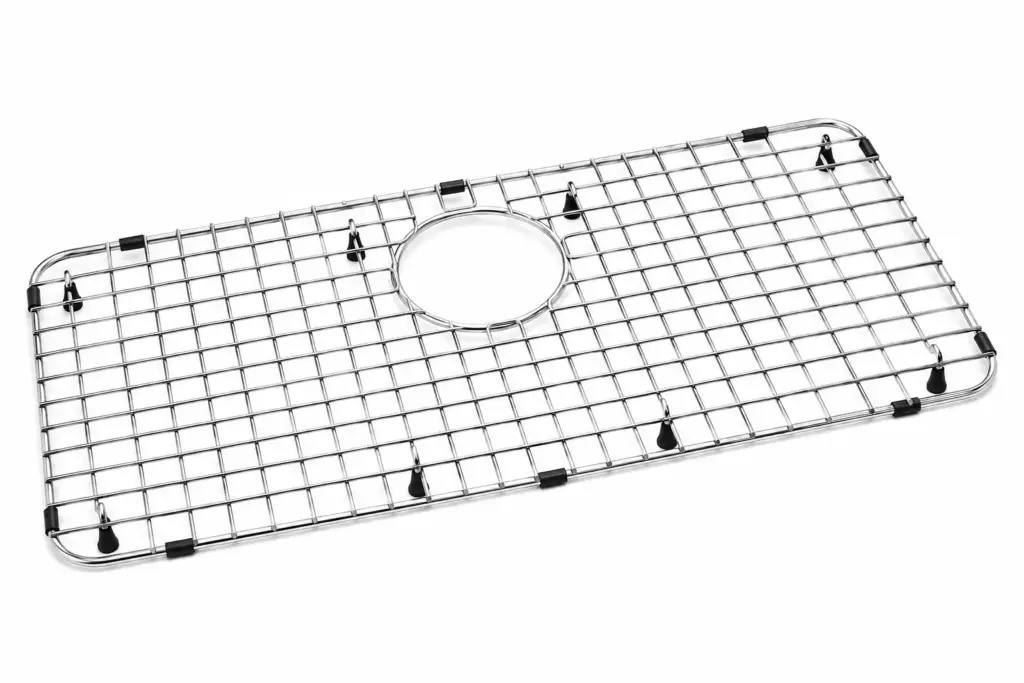
Step 1: Identify the Sink Model
Check the original invoice, packaging, product label, specification sheet or supplier records. Search for the matched accessory before measuring for a generic replacement.
Step 2: Measure the Usable Area Near Grid Height
Measure inside the bowl where the grid will actually sit—not across the countertop opening and not only at the top of the bowl.
Record:
- Usable left-to-right dimension
- Usable front-to-back dimension
- Height above the bowl floor
- Wall taper
Step 3: Record the Corner Shape
Note whether the bottom corners are square, gently rounded or strongly curved. A paper or cardboard template can help document the usable footprint, but it should not scratch the bowl.
Step 4: Locate the Drain Center
Measure the drain center from two fixed bowl references:
- Drain center from the left or right usable edge
- Drain center from the front or rear usable edge
Also record the required clear opening around the strainer or disposal inlet.
Step 5: Check Bowl Features
Document grooves, embossed logos, slope changes, ledges and drain recesses that may interfere with the feet.
Step 6: Confirm Foot and Bumper Positions
Feet must land on stable areas. Side bumpers should prevent metal contact without making the grid too tight.
Step 7: Test a Sample Before Bulk Purchase
For B2B orders, a drawing review alone is not enough when tolerances, bowl taper or drain geometry are uncertain. Fit a production-representative sample in the actual sink.
Copyable Sink Grid Measurement Record
Sink Information
- Sink brand or program:
- Sink model/SKU:
- Sink material and finish:
- Bowl quantity:
- Sink drawing revision:
Bowl Measurements
- Usable grid length:
- Usable grid width:
- Planned grid height:
- Bottom corner radius/profile:
- Bowl taper notes:
Drain Measurements
- Drain layout: center/rear/offset
- Drain center from left reference:
- Drain center from front reference:
- Required drain opening diameter:
- Strainer/disposal access requirement:
Support Details
- Number of feet:
- Foot locations:
- Foot material:
- Side-bumper locations:
- Restricted contact areas:
Validation
- Grid sits level: yes/no
- No metal-to-bowl contact: yes/no
- Drain fully accessible: yes/no
- Grid removable without scraping: yes/no
- Approved sample reference:
How to Use a Sink Grid Without Causing Scratches
- Install it with the protective feet facing downward.
- Confirm that every foot and side bumper is present.
- Lift the grid when removing it; do not drag it.
- Rinse away sand, ceramic fragments and food particles.
- Remove the grid regularly to clean underneath.
- Do not overload one small area with unusually heavy objects.
- Do not drop cast-iron cookware or sharp tools onto the grid.
- Stop using a bent, rocking or damaged grid.
- Replace missing feet with the correct size and material.
- Inspect coated and colored sink finishes more frequently.
How to Clean a Stainless Steel Sink Grid
Routine Cleaning
- Lift the grid out of the sink.
- Remove food scraps from both sides.
- Wash it with warm water, mild dish soap and a soft brush or non-scratch cloth.
- Clean around each foot, bumper and weld intersection.
- Rinse thoroughly.
- Clean the sink surface underneath.
- Dry or allow both components to drain before reinstalling.
Avoid
- Steel wool
- Harsh metal brushes
- Chlorine bleach left in contact with stainless steel
- Strong abrasive powders
- Cleaners not approved for rubber or plastic feet
- Aggressive scraping around welds
Do not assume the complete grid is dishwasher-safe. High heat and detergent may affect rubber feet, coatings or plastic components. Follow the care instructions for the exact product.
Sink Grids for Different Sink Materials
| Sink material or finish | Potential benefit | Special risk |
| Brushed stainless steel | Reduces direct cookware contact and impact | Trapped grit, missing feet and dragging can create scratches |
| Polished stainless steel | Limits direct contact marks | Fine scratches may be more visually obvious |
| PVD or colored stainless steel | Separates cookware from the decorative finish | Grid movement or incompatible feet may damage the coating |
| Granite composite | Reduces direct impact and keeps cookware elevated | Residue can collect under feet; a grid is not a universal heat shield |
| Fireclay or ceramic | Reduces some contact from heavy cookware | Hard metal contact may mark or chip the glazed surface |
| Enameled cast iron | Separates cookware from the enamel | Missing feet or heavy impact can damage the coating |
For PVD, colored, coated or specialty finishes, use only an accessory and care method confirmed for that surface.
Stainless Grid vs Silicone Mat vs No Protector
| Option | Main advantage | Main disadvantage | Best suited to |
| Stainless steel grid with feet | Strong, raised and allows water below | More wire joints to clean; can scratch if damaged or dirty | Heavy cookware and matched sink programs |
| Silicone or soft mat | Cushioned, quiet contact | May trap water and food; drainage depends on design | Users prioritizing softness and noise reduction |
| Plastic grid or mat | Lightweight and lower metal-contact risk | Can discolor, deform or retain residue | Light-duty use with verified material compatibility |
| No protector | Easiest access for cleaning | Cookware contacts the sink directly | Users who accept normal wear and prefer minimal maintenance |
Neither a grid nor a mat is automatically better. Fit, drainage, temperature limits, cleaning habits and sink finish determine the right choice.
What a Bottom Grid Cannot Do
A sink bottom grid cannot:
- Guarantee a scratch-free sink
- Correct poor sink slope
- Eliminate standing water
- Prevent every dent or chip
- Protect a finish when its feet are missing
- Make hot cookware safe for every sink material
- Stop cutlery from entering a disposal
- Replace cleaning and maintenance
- Fit every sink with the same nominal size
Claims that exceed these limits often create avoidable after-sales disputes.
B2B Buyers: What Should Be Specified?
“Stainless steel grid included” is not a complete specification.
A professional product file should define:
- Matched sink model and drawing revision
- Grid overall length and width
- Grid corner profile
- Drain opening size and coordinates
- Grid height
- Wire material
- Wire diameter and spacing
- Main-frame construction
- Weld location and finish
- Foot quantity, position and material
- Side-bumper quantity and position
- Surface finish
- Flatness or rocking acceptance
- Load and deformation evaluation method
- Edge-clearance requirement
- Packaging protection
- Replacement-foot availability
- Grid-to-sink SKU mapping
The grid drawing and sink drawing should use the same references. Otherwise, both drawings may be dimensionally correct while the parts still fail to align.
B2B Sample Approval Checklist
| Check | Pass condition |
| Model matching | Grid SKU maps to the correct sink SKU and revision |
| Overall fit | Grid enters and exits without scraping or forcing |
| Wall clearance | No metal edge contacts the bowl during normal use |
| Corner match | Grid follows the usable bowl footprint |
| Drain alignment | Opening provides the required strainer or disposal access |
| Foot position | Every foot lands on a stable intended surface |
| Stability | Grid sits level without rocking |
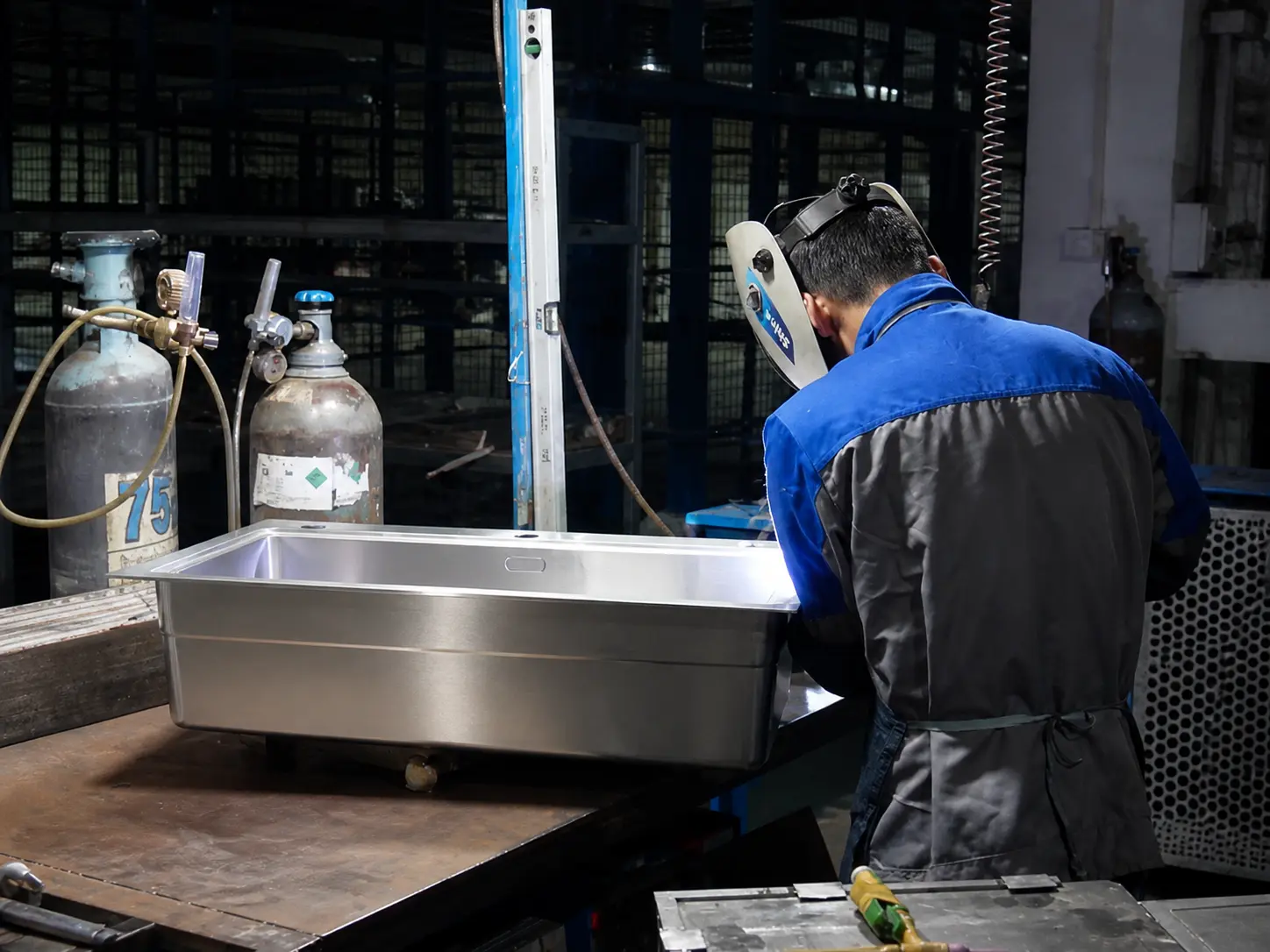
| Weld quality | No sharp projection, loose joint or visible spatter |
| Surface | No unacceptable scratches, contamination or unfinished wire ends |
| Feet and bumpers | Correct quantity, secure fit and consistent height |
| Load behavior | No unacceptable permanent deformation under the defined test condition |
| Cleaning access | Grid can be removed and cleaned practically |
| Packaging | Grid cannot bend, rub against the sink or lose feet in transit |
| Repeat order | Approved dimensions and component materials are revision-controlled |
Common B2B Complaints and Their Likely Causes
| Customer complaint | Likely root cause |
| “The grid scratches the sink” | Missing feet, insufficient clearance, trapped grit, rough weld or wrong model |
| “The drain hole is off-center” | Incorrect coordinates, wrong sink revision or SKU mixing |
| “The grid rocks” | Bent frame, unequal feet, weld distortion or feet on the bowl slope |
| “It does not fit my 30-inch sink” | Selection based on exterior sink size rather than bowl geometry |
| “The feet keep falling off” | Incorrect bore fit, unsuitable material or poor assembly control |
| “The grid arrived bent” | Insufficient packing support or excessive carton load |
| “Water still pools” | Sink slope, drain flange or leveling issue—not necessarily the grid |
| “The grid is difficult to clean” | Wire spacing, weld density or foot layout did not consider maintenance |
Root-cause classification is more useful than simply replacing the grid with another part from the same incorrect specification.
Packaging Matters More Than It Appears
A grid that passes inspection can fail before the consumer opens the carton.
Potential shipping damage includes:
- Bent frames
- Scratched polished wire
- Detached feet
- Grid-to-sink abrasion
- Mixed accessories between models
- Pressure marks on the sink bowl
For sink-and-grid packages, use separation materials and secure positioning so the grid cannot move against the sink during transport. Model labels should remain visible after packing to reduce warehouse SKU errors.
Frequently Asked Questions
Are sink bottom grids worth it?
They are useful for reducing direct cookware contact and keeping dishes elevated, provided the grid fits correctly and is cleaned regularly.
Do sink grids prevent all scratches?
No. They reduce some contact scratches but cannot prevent all normal wear. A damaged, dirty or poorly fitted grid can also cause scratches.
Can a stainless steel grid scratch a stainless steel sink?
Yes. This may happen when feet are missing, abrasive grit is trapped underneath, the grid touches the sidewalls or the grid is dragged during removal.
How much smaller should a sink grid be than the bowl?
There is no reliable universal deduction. Bowl taper, corner radius, grid height, bumpers and production tolerances all affect the required clearance. Use the matched part or an approved fit sample.
Should the grid touch the sides of the sink?
Its metal structure should not rub against the bowl walls. Correctly positioned non-metal bumpers may control movement where the design requires them.
Which way does a sink grid go?
The protective feet face down. The grid should sit raised above the sink bottom with its drain opening aligned correctly.
Why does my sink grid rock?
The grid may be bent, its feet may have unequal height, one foot may be missing, or the feet may be positioned on a sloped area of the bowl.
Can a sink grid improve drainage?
It allows water to pass below dishes and cookware. It does not change the sink slope or fix standing water caused by the bowl, drain flange or installation.
Can I put a hot pan on a sink grid?
Do not treat a bottom grid as a universal trivet. Heat tolerance depends on the sink finish, grid material, feet and cookware temperature.
Are sink grids dishwasher-safe?
Only when the instructions for the exact grid permit it. Heat and detergents may affect feet, bumpers, coatings or plastic parts.
How often should I clean under the grid?
Clean whenever food, grit or residue is visible and often enough that debris does not remain trapped. High-use kitchens may need cleaning much more frequently than occasional-use sinks.
Can I use a universal grid?
A universal grid may work only when its complete dimensions, radius, feet and drain access match the bowl. Nominal sink width alone is not enough.
What should I do if a rubber foot is missing?
Remove the grid from service until the correct replacement is installed. Exposed metal may contact and scratch the sink.
Can I use a sink grid in a PVD or black sink?
Only use a verified compatible design with intact feet and adequate clearance. Scratches and coating damage may be more visible on colored finishes.
Final Answer
Sink bottom grids are worth considering when users want to reduce direct cookware contact, keep items above residual water and add functionality to a kitchen sink.
Their performance depends on five factors:
- Correct model and bowl fit
- Accurate drain-opening alignment
- Stable foot and bumper placement
- Smooth wire and weld finishing
- Regular removal and cleaning
The most important limitation is simple: a sink grid can reduce scratches, but it cannot promise a scratch-free sink.
If it is too tight, rocks, touches the walls, loses a foot or traps grit, the protector can become the source of the damage it was intended to prevent.
For B2B sink programs, approve the grid and sink as one matched system. Control the drawing revision, drain coordinates, corner geometry, foot layout, weld quality, fit sample, packaging and replacement components before bulk production.
Develop Sink and Bottom Grid Programs with Matrix
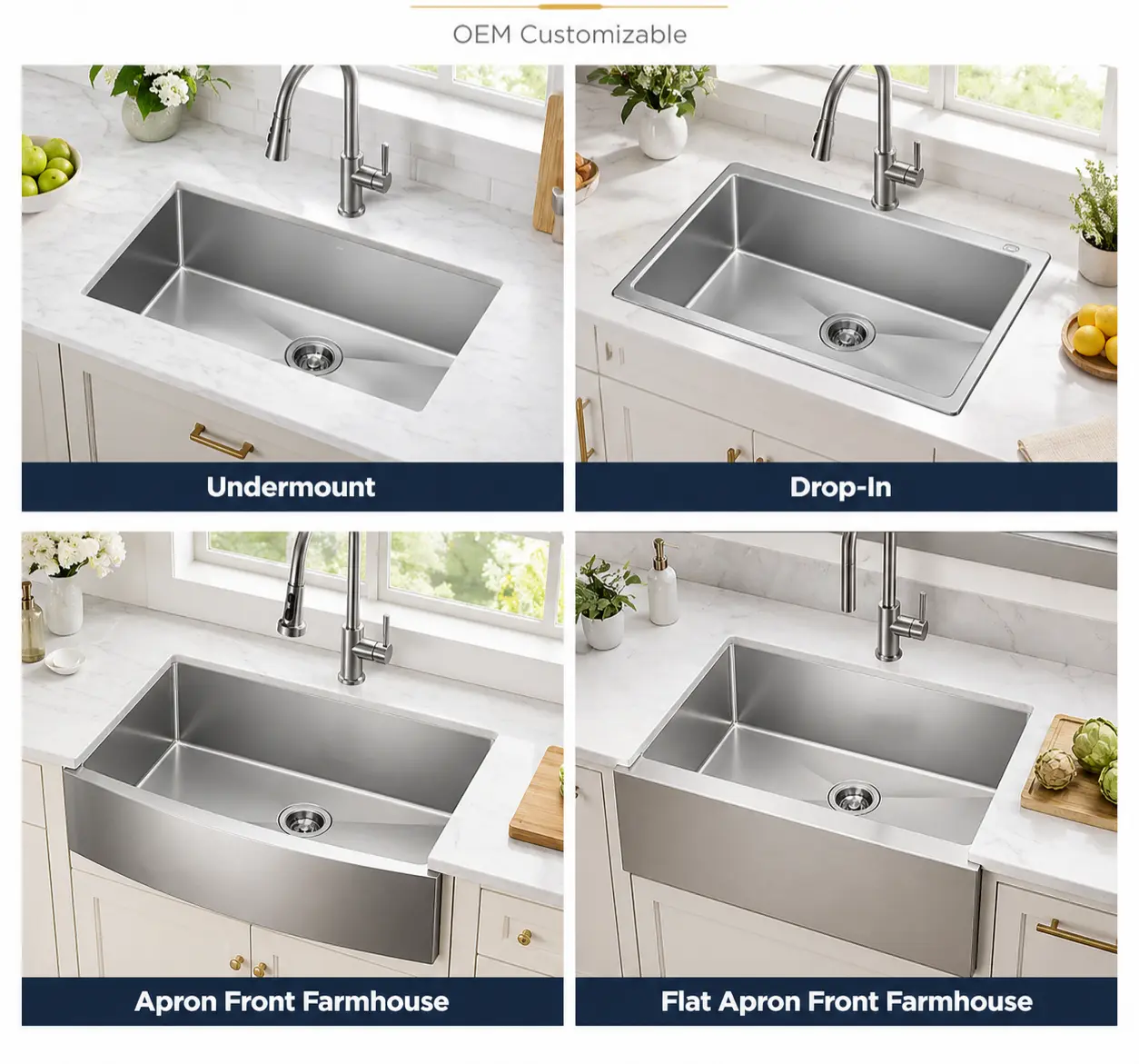
Matrix supports sink bottom grids for handmade, pressed, workstation, undermount, top-mount, laundry and commercial sink programs.
Support can include:
- Standard and custom grid dimensions
- Center, rear and offset drain layouts
- Bowl radius and edge-clearance matching
- Wire structure and spacing review
- Rubber-foot and bumper planning
- Stainless steel finish coordination
- Sink-and-accessory SKU mapping
- OEM/private-label packaging
- Sample fit approval
- Batch inspection and repeat-order control
To review a project, provide the sink model, bowl drawing, internal dimensions, radius, drain position, finish, planned grid structure, packaging method and order volume.
Contact Matrix to discuss a matched sink bottom grid, sample or OEM accessory program.