Quick Answer
“SUS304” tells you the stainless steel grade.
It does not tell you:
- actual thickness
- handmade or pressed construction
- finished thickness after forming
- bowl depth
- rim flatness
- welding quality
- surface finish
- sound-pad coverage
- undercoating
- drain and accessory fit
- packing protection
Two sinks can both be made from SUS304 and still be very different products.
Material grade is one specification. It is not a complete quality specification.
1. SUS304 Does Not Tell You the Thickness
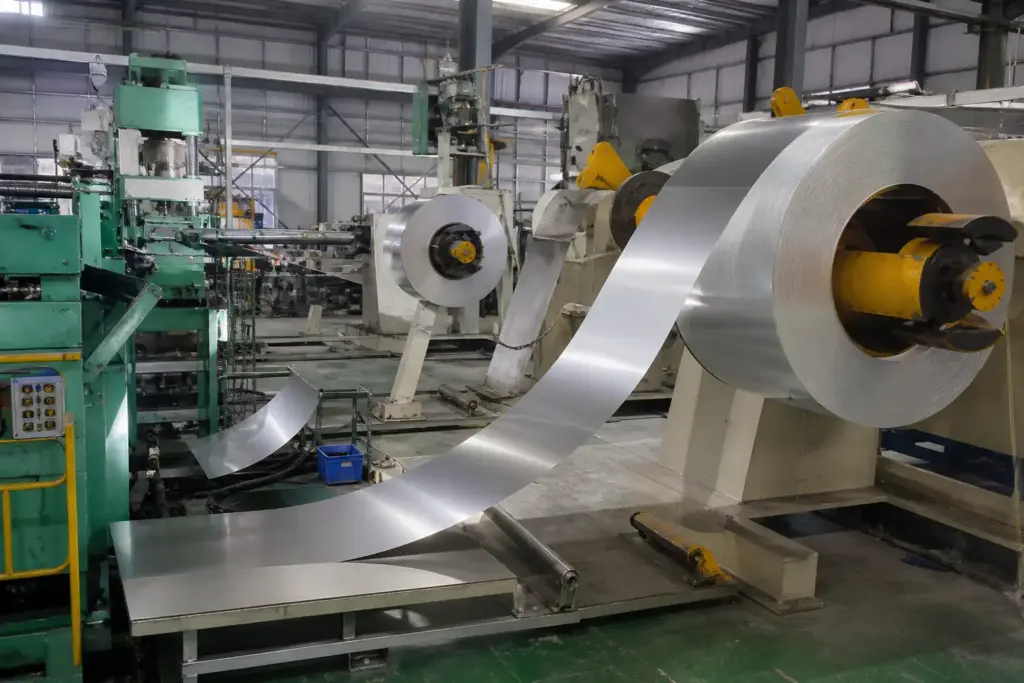
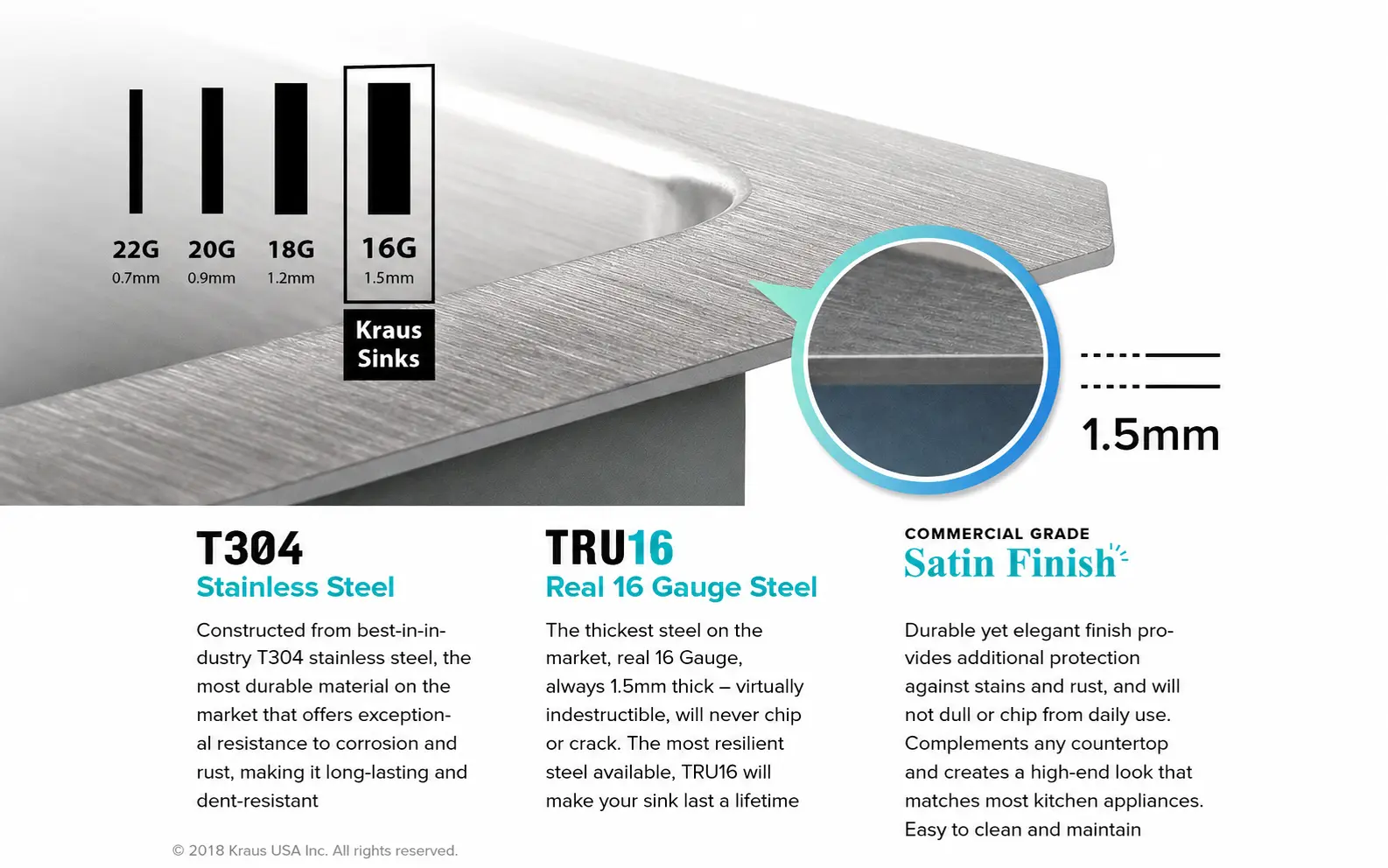
A supplier can quote:
SUS304 sink
without telling you whether the steel is:
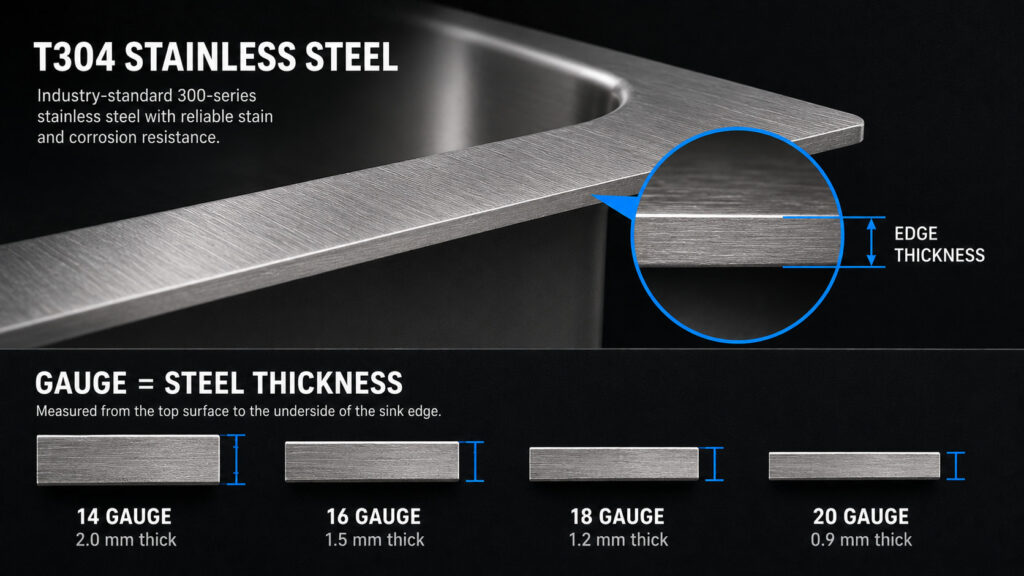
- 0.7 mm
- 0.8 mm
- 1.0 mm
- 1.2 mm
- 1.5 mm
Those products can have very different:
- material cost
- rigidity
- weight
- fabrication requirements
- market positioning
For an RFQ, always define:
SUS304 + actual thickness in mm
rather than SUS304 alone.
See How to Specify Stainless Steel Sink Thickness in an RFQ.
2. SUS304 Does Not Tell You Whether the Sink Is Handmade or Pressed
The same material can be used for two completely different manufacturing routes.
Handmade
Typically:
cut
→ bend
→ weld
→ grind
→ polish
Pressed / Drawn
Typically:
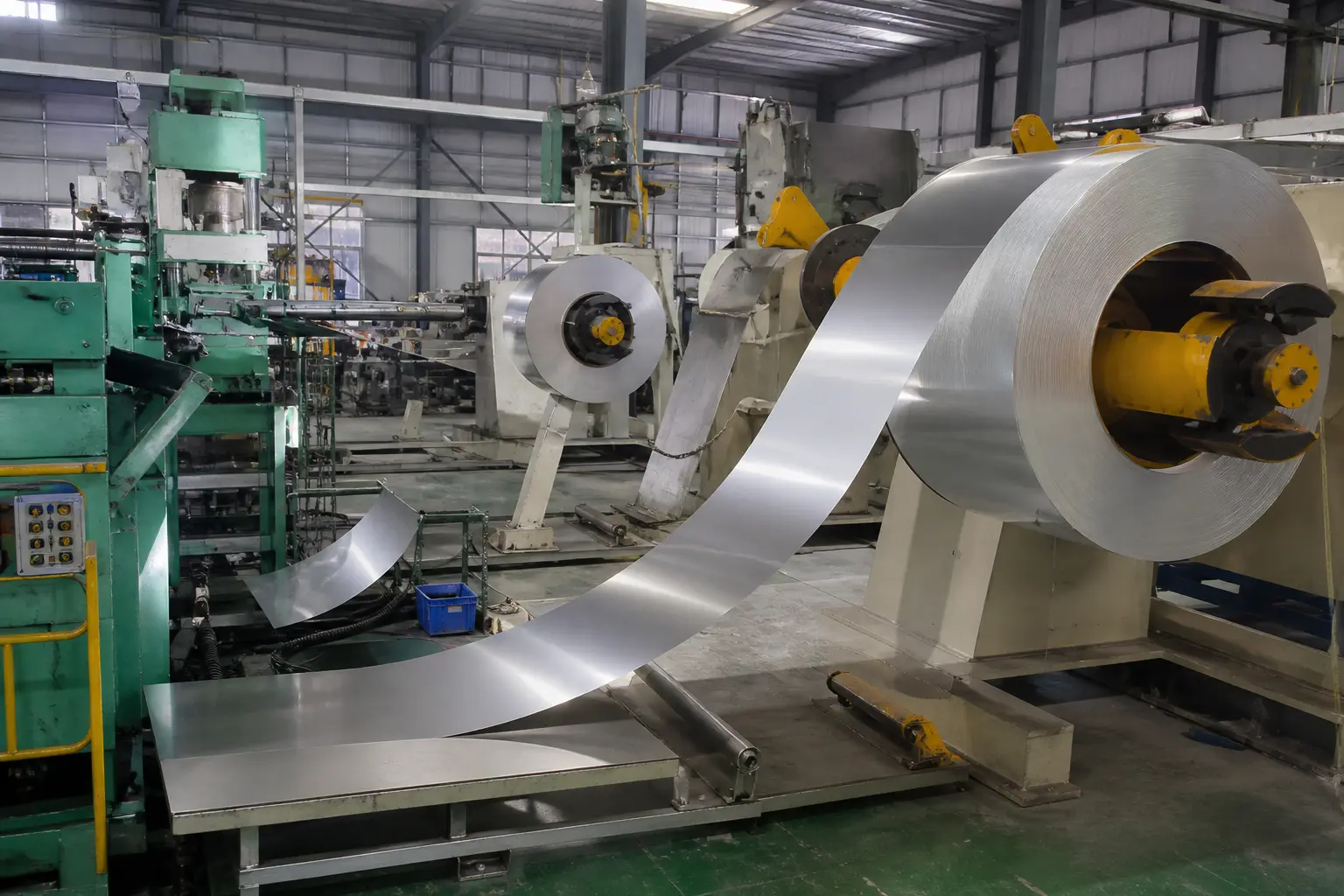
sheet
→ hydraulic drawing
→ forming
→ trimming
→ finishing
The production method affects:
- customization
- MOQ
- tooling
- bowl geometry
- thickness distribution
- unit cost
So this:
SUS304, 800 × 500 mm
is still not enough to compare two quotations.
Review Handmade Kitchen Sinks and Pressed Kitchen Sinks when comparing production routes.
3. SUS304 Does Not Tell You the Finished Thickness of a Pressed Sink
This is especially important for drawn products.
A pressed sink may start with:
1.0 mm SUS304 sheet
but after deep drawing, the thickness can vary across:
- flange
- sidewall
- lower radius
- bowl bottom
The starting sheet grade remains SUS304.
The finished thickness profile does not remain automatically uniform.
So buyers should separate:
material grade
from:
finished material distribution.
4. SUS304 Does Not Tell You Bowl Depth
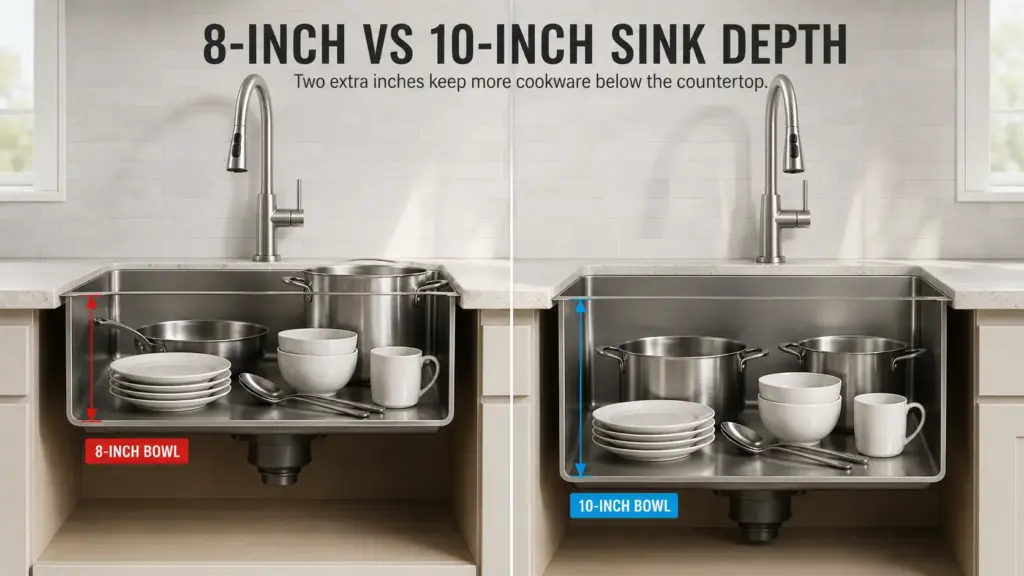
Consider two SUS304 sinks:
Sink A
800 × 500 × 180 mm
Sink B
800 × 500 × 220 mm
They use the same steel grade.
They do not require the same product structure.
A deeper bowl can affect:
- stainless steel area
- drawing difficulty
- welding structure
- cabinet clearance
- sink weight
Material grade alone tells you none of this.
5. SUS304 Does Not Tell You Whether the Rim Is Flat
This matters especially for installation.
A sink can use correct SUS304 material and still have:
- distorted rim
- uneven flange
- poor countertop contact
- inconsistent mounting surface
For top-mount sinks, poor rim flatness can create visible gaps.
For undermount sinks, inconsistent flange geometry can complicate installation.
That is a fabrication and QC issue, not a material-grade issue.
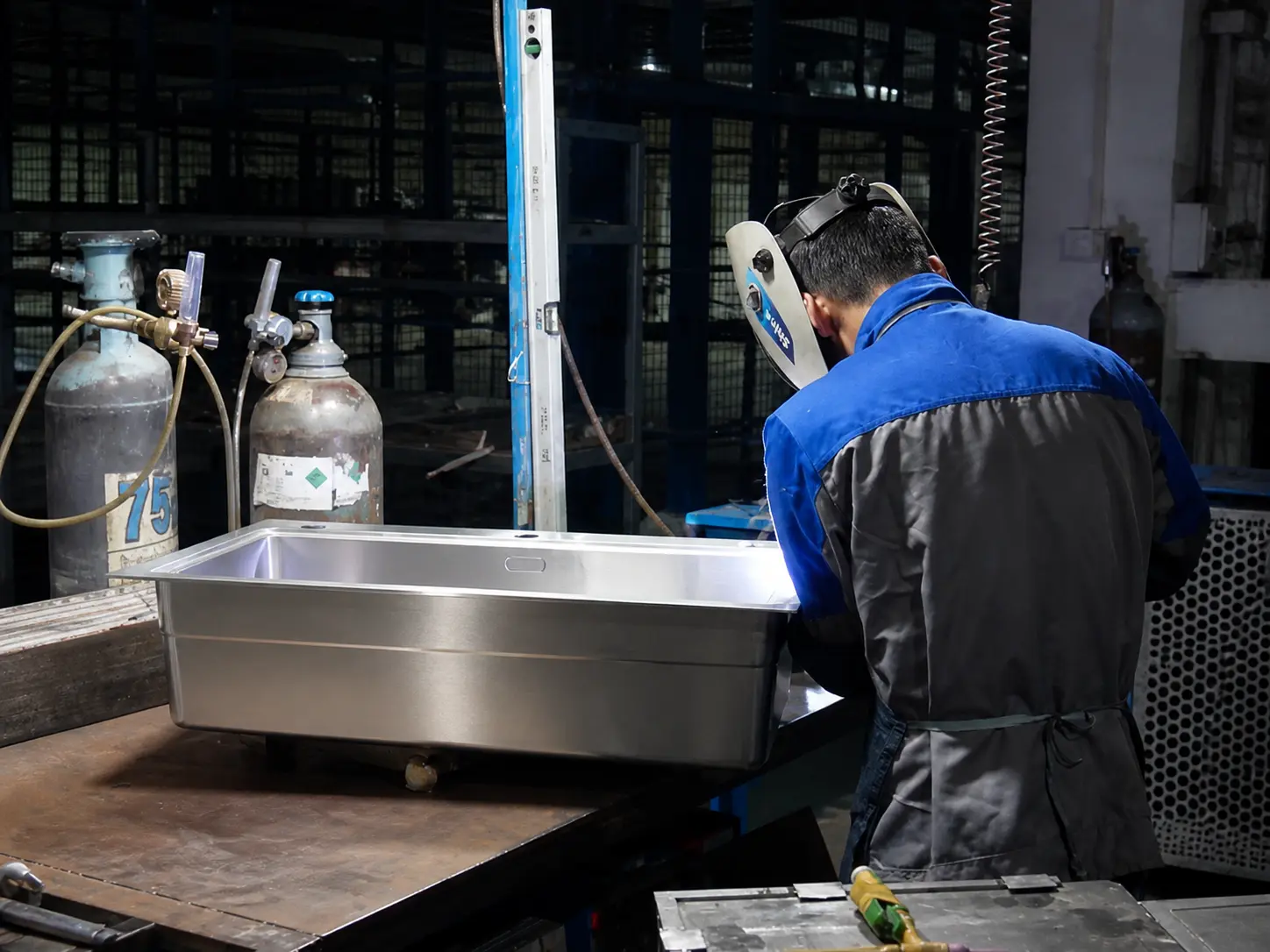
6. SUS304 Does Not Tell You the Welding Quality
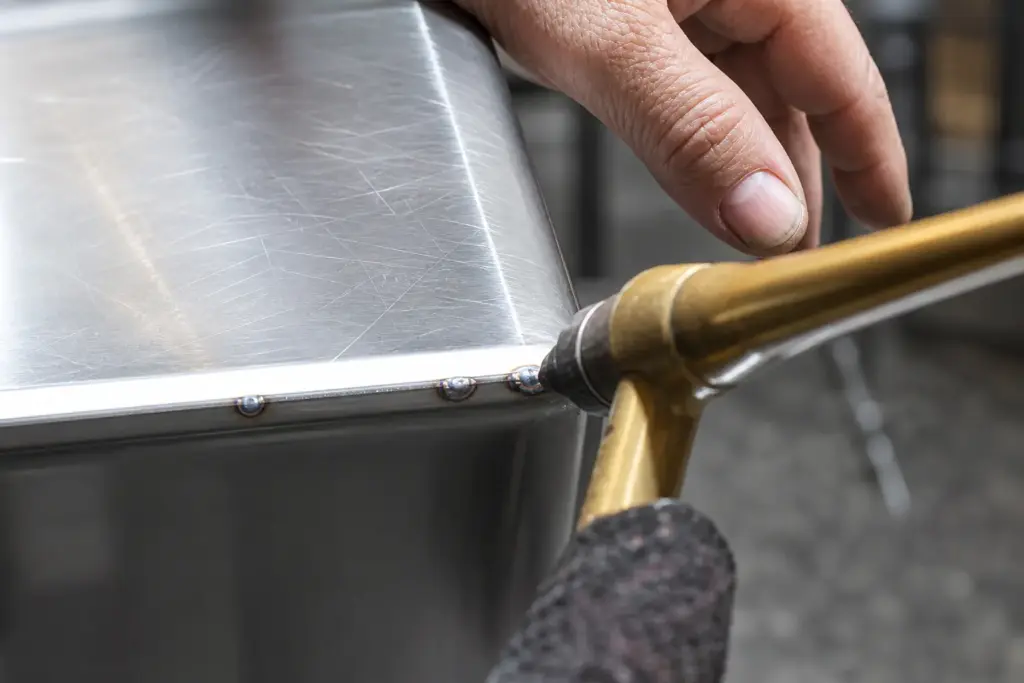
For handmade sinks, welding remains a critical manufacturing step.
Inspect:
- seam continuity
- corner transition
- grinding
- visible weld marks
- deformation around the seam
Correct material cannot compensate for poor fabrication.
A well-specified SUS304 sheet can still become a poor sink if welding and finishing are inconsistent.
7. SUS304 Does Not Tell You the Surface Finish
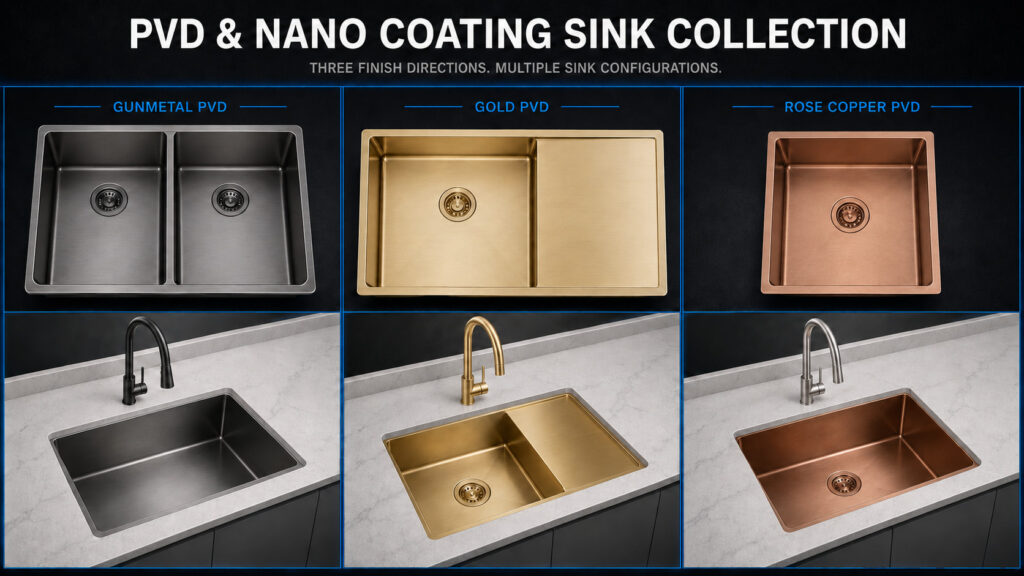
“SUS304 brushed sink” can still cover many different appearances.
Differences can come from:
- brushing direction
- brushing depth
- polishing
- surface preparation
- scratch control
For colored products, there may also be:
- PVD
- nano coating
- other decorative finishes
The base steel grade remains SUS304, but the visible result can differ significantly.
8. SUS304 Does Not Tell You Anything About Sound Pads
Turn the sink over.
Two SUS304 sinks may use:
- different pad sizes
- different pad quantities
- different coverage
- different adhesive
- no pads in some areas
This affects cost and product construction without changing the stainless steel grade.
9. SUS304 Does Not Tell You the Undercoating Specification
The underside may also differ in:
- coating area
- thickness
- application consistency
- visible coverage
Again:
both sinks can still correctly be described as SUS304.
10. SUS304 Does Not Tell You Whether the Drain Fits
The sink body may be correct while the complete SKU still has problems.
Check:
- drain-hole size
- drain fitting
- flange compatibility
- disposal requirement
- grid clearance
A material certificate cannot tell you whether the selected drain works with the sink.
11. SUS304 Does Not Tell You Whether Workstation Accessories Fit
For workstation sinks, product quality also depends on:
- ledge dimensions
- cutting-board fit
- colander clearance
- bottom-grid geometry
- drain position
- rack width
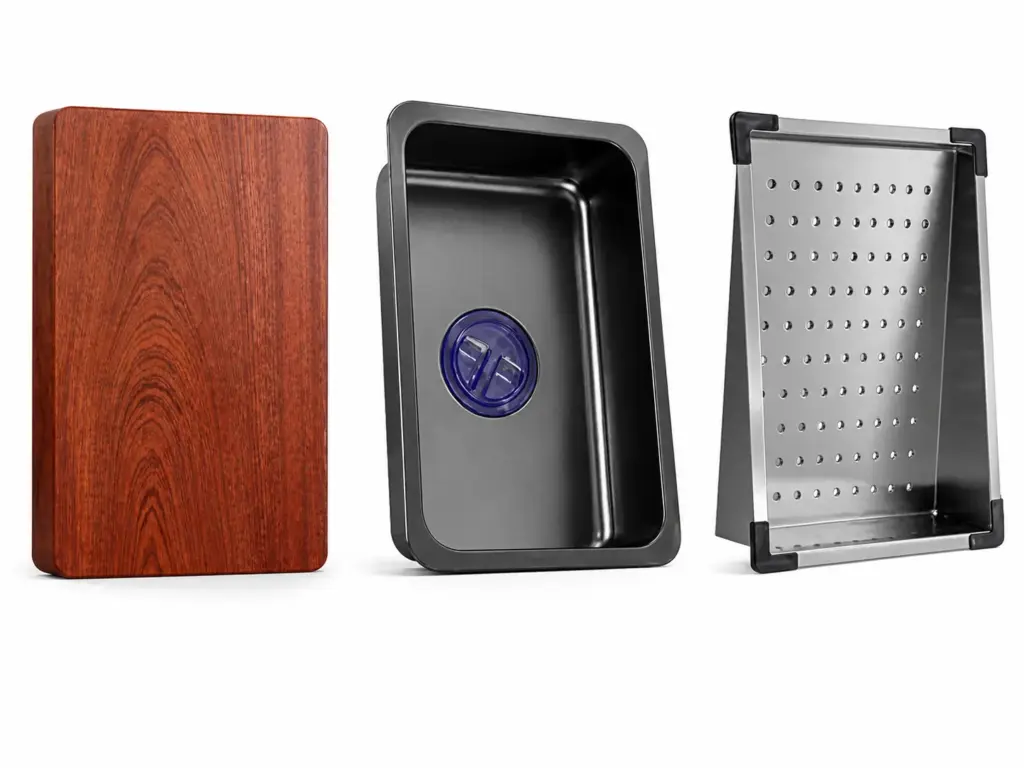
The steel grade can be correct while the accessory system is wrong.
See Workstation Kitchen Sinks for how the sink body and accessories need to work together.
12. SUS304 Does Not Tell You How the Sink Is Packed
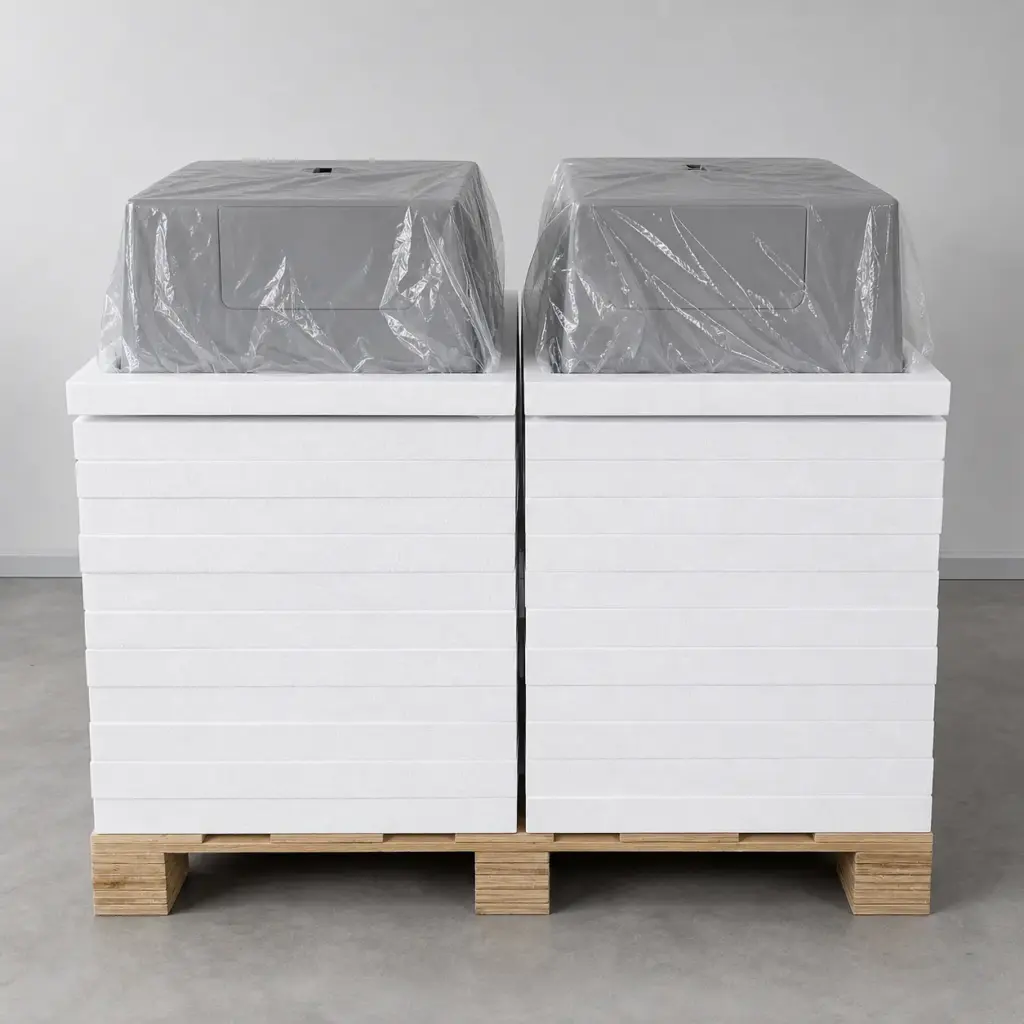
Two identical SUS304 sinks can arrive in very different condition.
Compare:
Packing A
High-density foam
Individual carton
Accessory separation
Packing B
Basic foam
Multiple sinks per carton
Loose accessories
The material grade has not changed.
The shipment risk has.
13. What Should Buyers Specify Beyond SUS304?
A more complete RFQ should define:
| Item | Example |
|---|---|
| Material | SUS304 |
| Manufacturing | Handmade |
| Thickness | 1.2 mm |
| Overall Size | 800 × 500 mm |
| Bowl Depth | 220 mm |
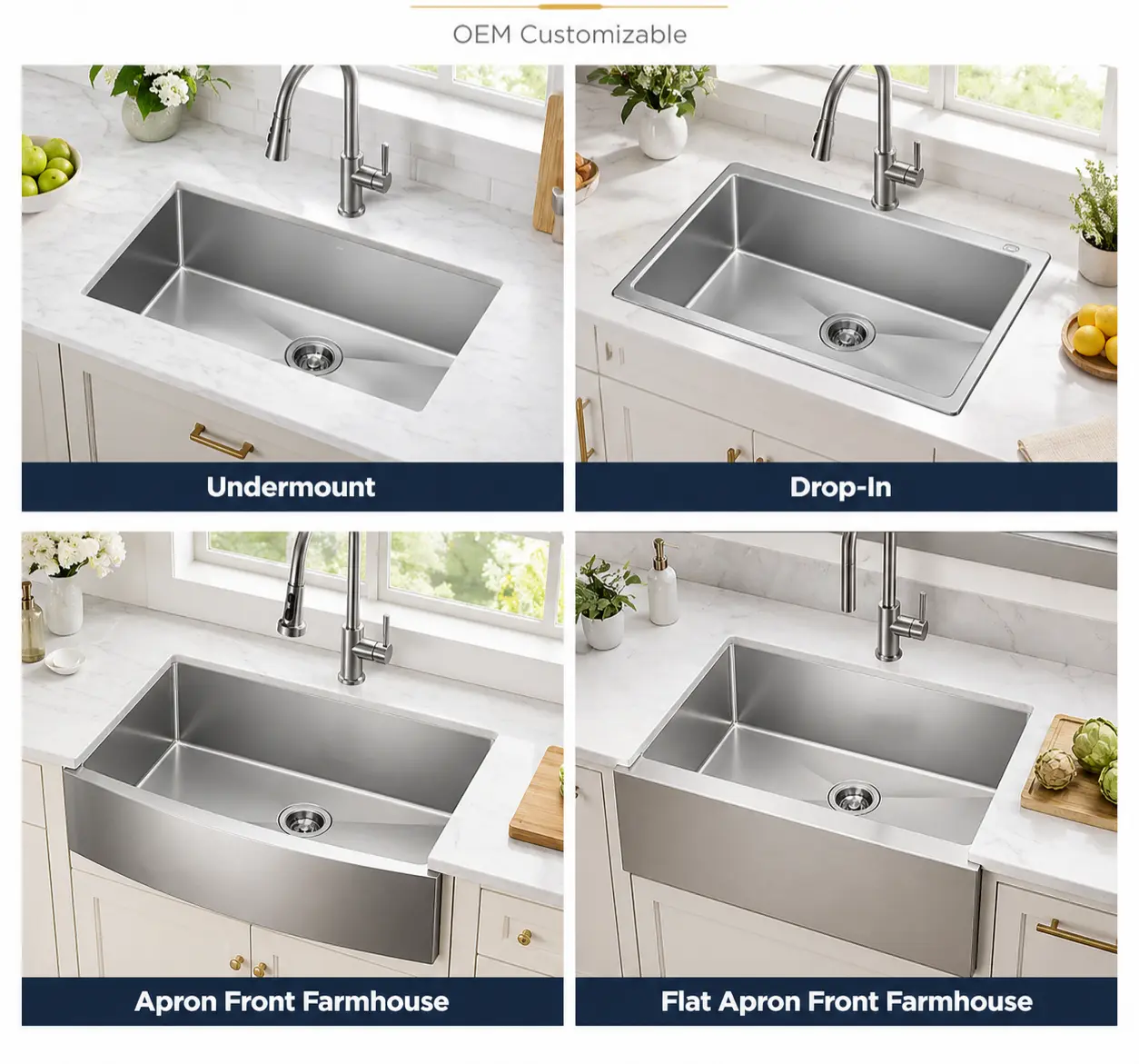
| Installation | Undermount |
| Radius | R10 |
| Drain | Rear Center |
| Finish | Brushed |
| Accessories | Drain + Grid |
| Packing | 1 pc / carton |
| Quantity | 300 pcs |
The Kitchen Sink RFQ Checklist can be used to structure these requirements before quotation.
14. What Should QC Check Beyond the Material Grade?
Once the material is confirmed, inspection should continue with:
- thickness
- overall dimensions
- bowl dimensions
- depth
- rim flatness
- welding
- drain position
- finish
- accessories
- sound pads
- undercoating
- packing
Matrix’s Kitchen Sink Quality Control & Inspection explains these inspection points in more detail.
Buyer Takeaway
SUS304 answers:
What stainless steel grade is being used?
It does not answer:
Is this the sink specification I actually want to buy?
A better sourcing decision looks at:
Material → Thickness → Manufacturing → Geometry → Finish → Accessories → QC → Packing
So when comparing two quotations, do not stop when both suppliers write:
SUS304.
That is where the comparison starts.
FAQ
Does SUS304 mean a sink is high quality?
Not by itself. SUS304 is a material grade. Finished quality also depends on thickness, manufacturing, dimensions, welding, finish, accessories and packing.
Can two SUS304 sinks have different thickness?
Yes. The same material grade can be supplied in many different sheet thicknesses.
Can two SUS304 sinks have different corrosion performance?
Surface condition, environment, contamination, cleaning and processing can affect real-world performance even when the base material grade is the same.
Is SUS304 enough for a kitchen sink RFQ?
No. Buyers should also define dimensions, thickness, installation, production type, finish, drain, accessories, packing and quantity.
What is the best way to compare two SUS304 sink quotations?
Send both suppliers the same complete RFQ and compare the full product specification rather than the material grade alone.
Specifying an OEM Sink?
Start with the Kitchen Sink RFQ Checklist and define the product beyond material grade.
For manufacturing differences, review the Stainless Steel Sink Manufacturing Process and Matrix Factory Capabilities.