Kraus is an American kitchen and bath brand, but its kitchen sinks are not generally manufactured in the United States.
Public customs information confirms that selected Kraus stainless steel sinks are fabricated in Thailand.
The concise answer is:
Kraus manages its brand and US market operations in America, while at least part of its stainless steel sink production is based in Thailand and supported by a Chinese component supply chain. The exact origin may vary by product.
Kraus Manufacturing at a Glance
| Question | Answer |
|---|---|
| Is Kraus an American brand? | Yes. Kraus operates in the US market and is affiliated with Delta Faucet Company. |
| Who owns Kraus? | Kraus became part of Masco Corporation in 2020 and operates as an affiliate of Delta Faucet Company. |
| Are Kraus sinks made in the USA? | Kraus does not present US manufacturing as the main origin of its kitchen sink range. |
| Are Kraus sinks made in Thailand? | Selected stainless steel sinks are confirmed as fabricated in Thailand. |
| Does China participate in the supply chain? | Yes. Chinese-made components have been documented in Kraus sink kits assembled and packaged in Thailand. |
| Are all Kraus sinks made in Thailand? | This should not be assumed. Origin may vary by material, collection and production period. |
Kraus Is a US Brand, Not Primarily a US Sink Manufacturer
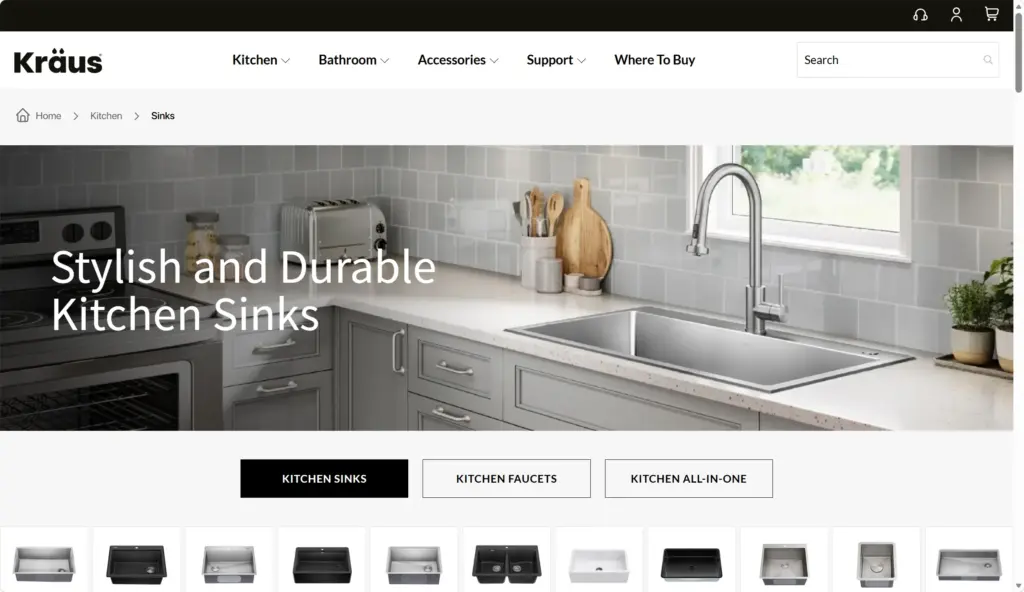
Kraus built its position through modern design, online retail, workstation sinks and accessible premium pricing.
In December 2020, Kraus became part of Masco Corporation and began operating as an affiliate of Delta Faucet Company.
This business model differs from companies that operate large domestic stainless steel sink factories.
Kraus primarily functions as:
- A product and design brand
- A US sales and distribution company
- An online retail specialist
- A manager of international manufacturing and sourcing
Calling Kraus an American brand is correct. Describing all Kraus sinks as American-made is not.
Thailand Is a Confirmed Production Location
A 2023 US Customs and Border Protection ruling examined two Kraus stainless steel kitchen sink kits.
According to the submitted manufacturing information:
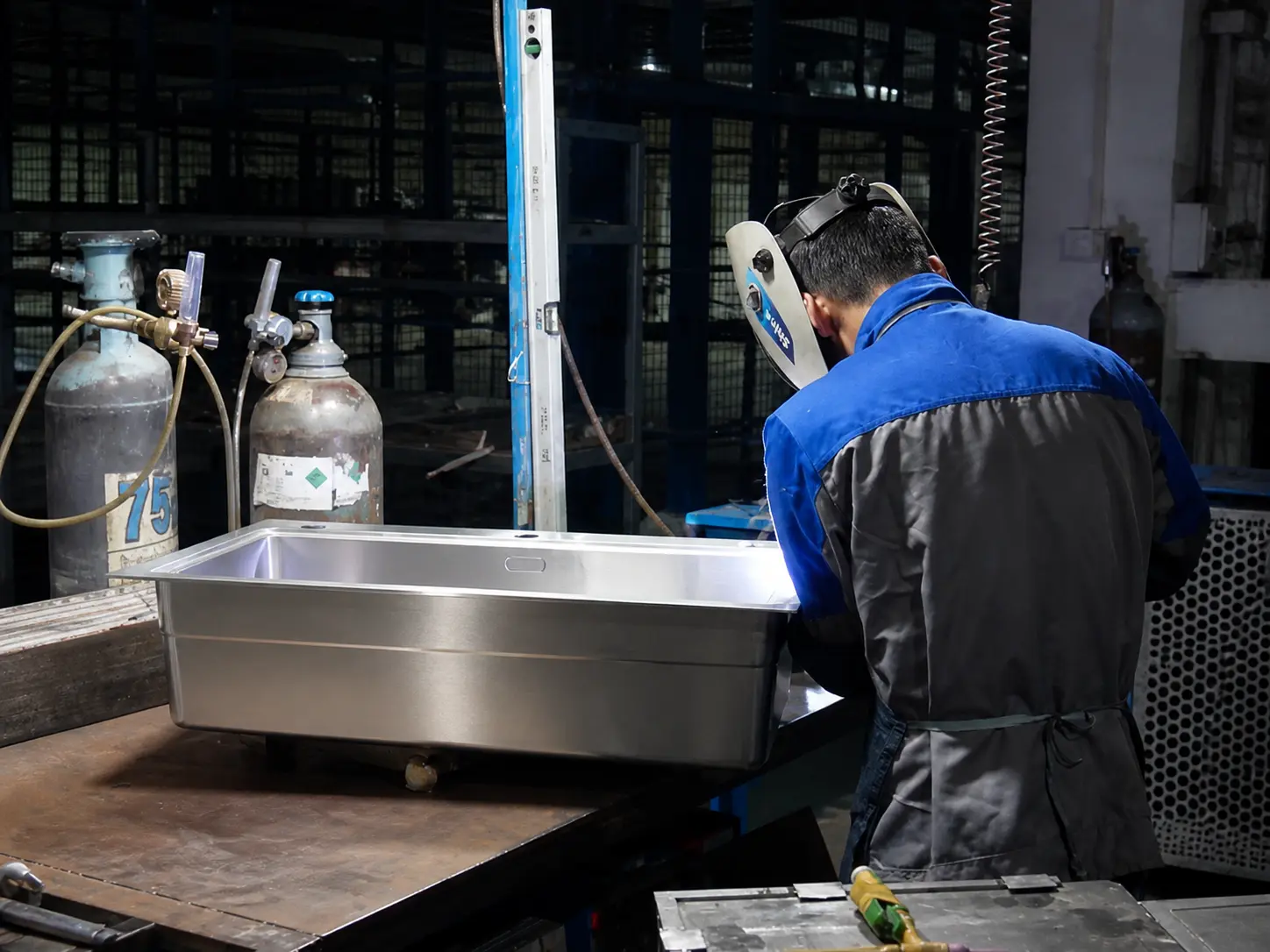
- The handmade stainless steel sinks were fabricated in Thailand.
- Other components were manufactured in China.
- The Chinese components were shipped to Thailand.
- The complete kits were packaged in Thailand.
- The finished products were exported from Thailand to the United States.
For those products, Thailand was treated as the country of origin because the sink itself provided the essential character of the complete kit.
This gives a more accurate answer than older online statements that describe every Kraus sink as made in China.
Kraus demonstrates how a modern supply chain can use Thai sink fabrication and Chinese component sourcing in the same finished product.
This does not prove that every current Kraus sink follows the same route, but it confirms that Thailand is an important Kraus production location.
China Still Plays an Important Role
Moving sink fabrication to Thailand does not necessarily remove China from the supply chain.
China remains highly competitive in the production of:
- Drain components
- Stainless steel grids
- Mounting hardware
- Packaging components
- Workstation accessories
- Faucet components
- Specialized surface treatments
- Custom metal parts
A product labelled with Thailand as its country of origin may therefore still contain multiple Chinese-made components.
This is not unusual. Country of origin and complete supply-chain origin are not always the same thing.
Why Thailand Works for Kraus
Thailand has become a strong production base for stainless steel sinks serving the US market.
It is especially suitable for:
- Established handmade sink designs
- Stable standard dimensions
- Large repeat orders
- Mature production specifications
- Conventional brushed finishes
- Products with limited customization
- Supply chains designed around US import conditions
For a retail brand such as Kraus, Thailand can provide a useful balance between production cost, consistency and access to surrounding Asian component suppliers.
The factory does not need to reinvent the product for every order. It produces an established specification under the brand’s requirements.
The Counterintuitive Part: Southeast Asia Still Depends on China
It is often said that sink manufacturing is “moving from China to Southeast Asia.”
That is only partly true.
Final sink fabrication may move to Thailand or Vietnam, while China continues to supply components, accessories, tooling, packaging or specialist processing.
The result is not a complete replacement of China. It is a more distributed Asian supply chain:
- Thailand or Vietnam handles stable sink production.
- China supplies components and development support.
- The US brand controls design, marketing, distribution and warranty.
Kraus is a useful example of this structure.
What B2B Buyers Can Learn from Kraus
Kraus shows that a brand does not need to own a US factory to build a strong position in the American sink market.
Its value comes from combining:
- Market-focused product design
- Workstation functionality
- Consistent brand presentation
- International production
- Efficient e-commerce distribution
- Retail-ready packaging
For private-label buyers, the sourcing decision should follow the product strategy:
- Choose Southeast Asia for stable, conventional and higher-volume sink programs.
- Choose China when custom development, special finishes or more complex product coordination is required.
- Choose domestic manufacturing when local origin and shorter regional supply justify the higher cost.
Where Matrix Fits
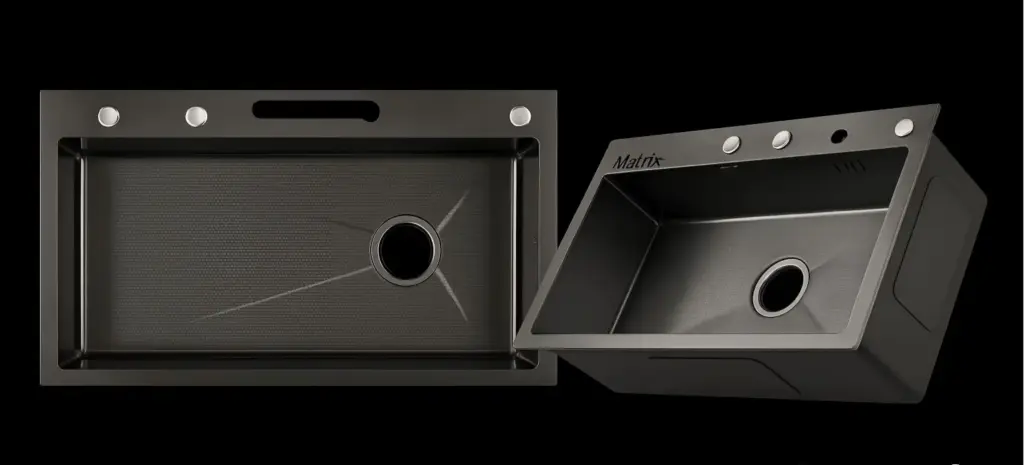
Matrix does not operate a factory in Thailand, Vietnam or another Southeast Asian country.
Matrix is therefore not positioned to compete for the lowest-cost production of common, stable sink designs that are already well suited to Southeast Asian mass manufacturing.
Matrix focuses on China-based, higher-value custom development, including:
- Custom handmade sinks
- Premium workstation concepts
- Special dimensions and bowl layouts
- Custom corner and drainage design
- PVD and decorative finishes
- Differentiated private-label collections
- Coordinated product and packaging development
For buyers developing their own premium product line, the Matrix custom kitchen sink program provides a different sourcing path from purchasing an established retail brand.
Matrix is not affiliated with Kraus and does not claim to manufacture Kraus products.
For a broader market comparison, see the guide to stainless steel kitchen sink manufacturers and suppliers in the USA.
Frequently Asked Questions
Are Kraus sinks made in the USA?
Kraus is an American brand, but it does not identify US manufacturing as the primary origin of its stainless steel sink range.
Are Kraus kitchen sinks made in Thailand?
Selected Kraus stainless steel sinks are confirmed as fabricated in Thailand. This should not automatically be applied to every Kraus product.
Are Kraus sinks made in China?
China remains part of the Kraus supply chain. Documented sink kits used Chinese-made components that were sent to Thailand for packaging with Thai-fabricated sinks.
Who owns Kraus?
Kraus became part of Masco Corporation in 2020 and operates as an affiliate of Delta Faucet Company.
Is a Thailand-made sink better than a China-made sink?
Neither country guarantees quality. Material specification, fabrication, welding, finishing, drainage, inspection and packaging control are more important than the country name alone.
Final Answer
Kraus is an American brand supported by an international manufacturing network.
The strongest public evidence confirms that selected Kraus stainless steel sinks are fabricated in Thailand, while components are sourced from China and consolidated in Thailand before export to the United States.
Kraus therefore represents a growing US sink-industry model:
American brand management, Southeast Asian sink production and Chinese component support.
For B2B buyers, the lesson is not that Thailand has completely replaced China. It is that manufacturing has become more specialized: Southeast Asia handles stable production, while China remains important for components, development and high-end customization.