An accessory can be the correct size and still stop fitting if the sink geometry changes slightly.
This is one of the most common misunderstandings in workstation sink programs.
A buyer may approve:
- cutting board
- colander
- roll-up rack
- bottom grid
with the sample.
Then the repeat order arrives and the same accessory:
- feels too tight
- moves too much
- sits unevenly
- hits the corner
- drops below the ledge
- no longer aligns correctly
The problem is not always the accessory.
Sometimes the real change is in the sink.
For OEM buyers, the key question is:
“Which interface changed: the accessory dimension, the sink geometry, or both?”
Quick Answer
Workstation sink accessories can fit the approved sample but fail in repeat orders because compatibility depends on several dimensions working together.
The most important are:
- ledge width
- ledge-to-ledge distance
- bowl opening
- corner radius
- sidewall geometry
- accessory length and width
- accessory locating features
- production tolerance
- drawing revision
- repeat-order reference control
A workstation accessory should not be approved only as:
“600 mm cutting board”
or:
“fits this sink model.”
The real control is:
Sink Interface Dimension + Accessory Dimension + Allowance + Approved Sample
Accessory fit is an interface-control problem, not only an accessory-size problem.
1. Workstation Accessories Depend on the Sink Ledge
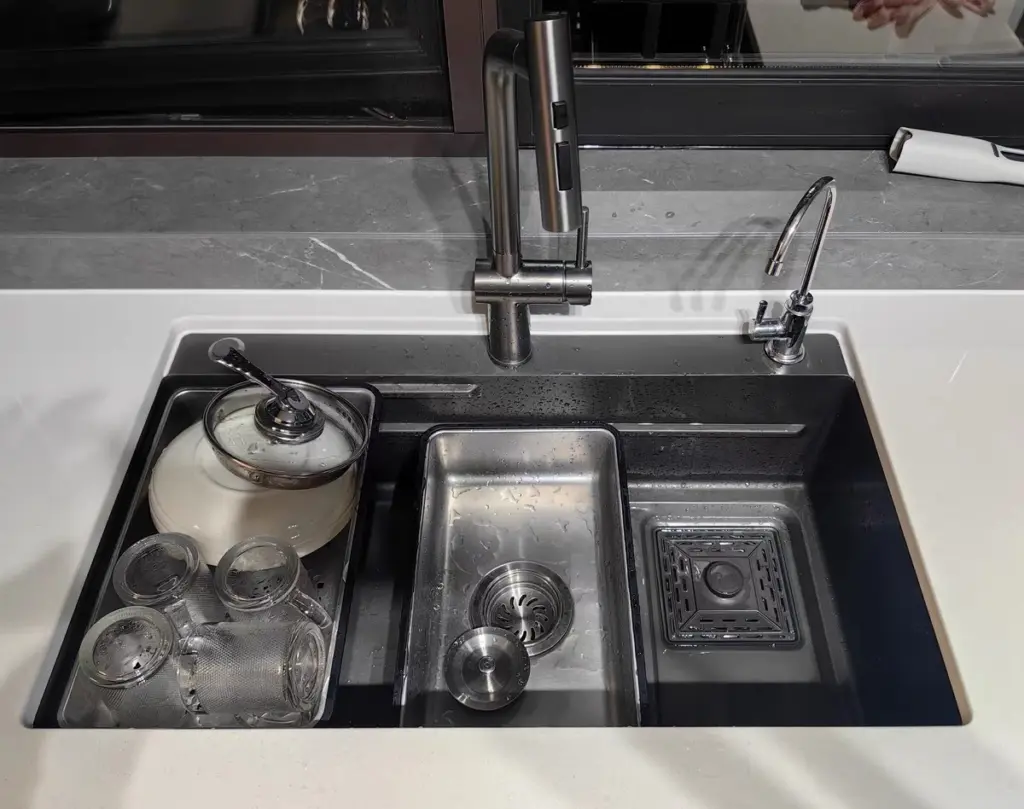
The integrated workstation ledge is the main support interface for:
- cutting boards
- colanders
- racks
- trays
If the ledge position changes even slightly, the accessory may:
- sit too high
- sit too low
- become loose
- become difficult to insert
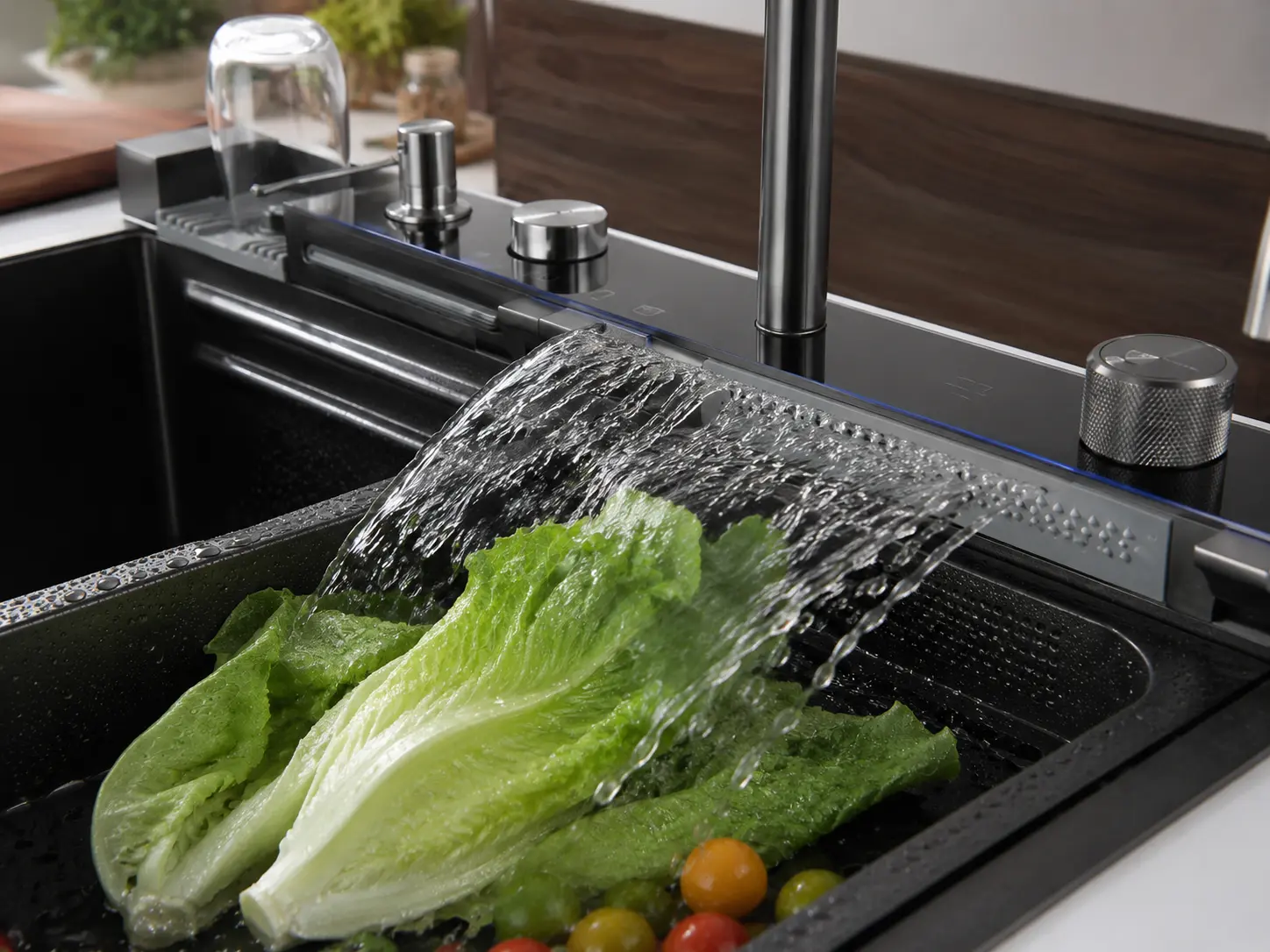
Matrix’s Workstation Kitchen Sinks are designed around integrated accessory ledges, which means ledge geometry should be treated as a critical interface rather than a decorative feature.
2. Ledge-to-Ledge Distance Is More Important Than Overall Sink Size
Two workstation sinks may both be:
30-inch
or:
750 mm overall width
but the accessory fit depends much more on the internal support distance.
For example:
Sink A
Ledge-to-ledge distance:
420 mm
Sink B
Ledge-to-ledge distance:
424 mm
That 4 mm difference may be enough to change how a rigid cutting board or colander fits.
This is why overall sink size cannot be used as the only accessory reference.
3. Bowl Opening Can Change Even When Overall Dimensions Pass
A repeat-order sink may still meet:
- overall length
- overall width
- depth
while the bowl opening shifts slightly because of:
- bending
- welding
- forming
- grinding
- rim geometry
If the accessory depends on the bowl opening or ledge position, the fit can change even though the main drawing dimensions still pass.
4. Corner Radius Can Interfere With Accessories
Accessories often look rectangular in drawings.
But workstation sinks rarely have perfectly square internal corners.
If the sink corner radius changes, an accessory may:
- touch the corner earlier
- fail to sit flat
- lose lateral clearance
This is particularly important for:
- rigid cutting boards
- stainless steel colanders
- trays with square corners
So the fit should not be checked only by:
accessory length × width.
Corner interface also matters.
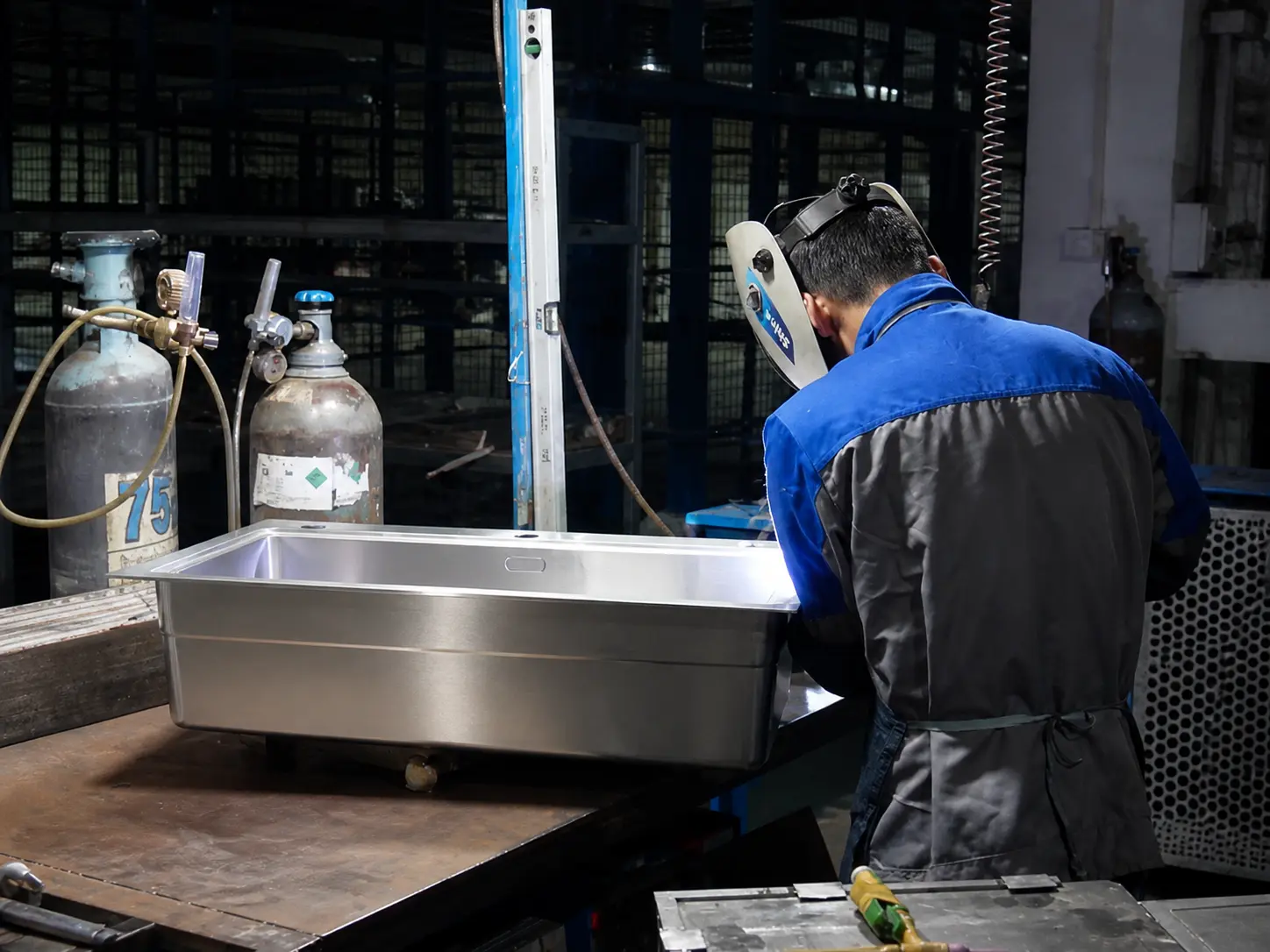
5. Handmade Sink Geometry Can Shift After Welding and Finishing
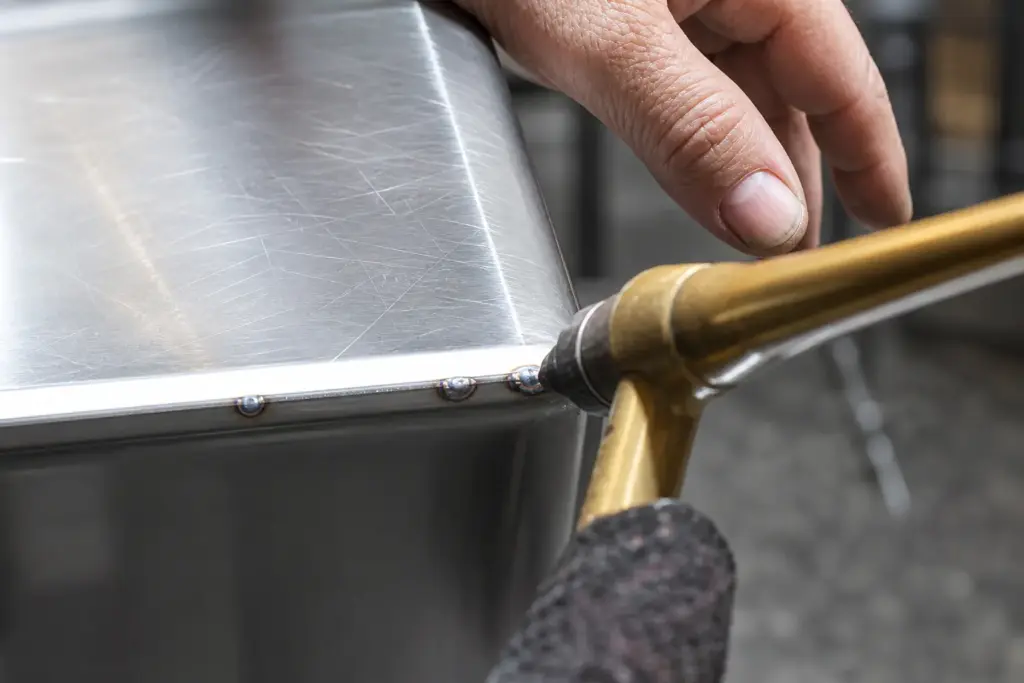
Handmade workstation sinks often go through:
Bending
→ Welding
→ Grinding
→ Polishing
→ Brushing
Each stage can slightly influence the final geometry around:
- ledges
- bowl opening
- corners
- rim
Matrix’s Handmade Kitchen Sinks use this fabrication route, so workstation fit should be checked on the finished sink rather than only from the pre-weld drawing.
6. Pressed Workstation Sinks Depend on Tool Geometry
Pressed sinks behave differently.
Their:
- bowl opening
- ledge
- corner radius
- sidewall angle
are strongly influenced by the tooling.
If:
- tooling changes
- mold insert changes
- trim operation changes
- formed geometry shifts
the accessory interface can also change.
For pressed programs, see Matrix’s Pressed Kitchen Sinks.
7. The Accessory Itself Can Also Change
Not every fit problem comes from the sink.
Accessory variation may come from:
- material thickness
- cutting tolerance
- bending
- welding
- wood movement
- plastic molding
- supplier change
For example:
Stainless Steel Colander
May vary because of bending or welding.
Cutting Board
May vary because of machining, moisture or material movement.
Bottom Grid
May vary because of wire bending and welded feet position.
The correct investigation compares:
sink + accessory
together.
8. A Sample Can Fit Because Both Parts Are From the Same Development Batch
This is a common OEM trap.
The sample sink and sample accessory may be developed together.
So even if both have slight dimensional deviation, they may still fit each other.
For example:
- sink ledge slightly wider
- cutting board slightly longer
The two deviations happen to match.
But in repeat production:
- sink returns closer to nominal
- accessory stays long
and the fit becomes too tight.
That means:
one successful sample fit does not automatically prove the tolerance system is robust.
9. Fit Should Be Controlled by Interface Dimensions
For a workstation program, do not define only:
Sink
overall size
and:
Accessory
overall size
Also define the interface.
Typical interface dimensions may include:
- ledge-to-ledge distance
- ledge width
- ledge height
- corner clearance
- accessory overall width
- locating feature position
The exact CTQs depend on the design.
Matrix’s Quality Control & Inspection separates dimensional checks from accessory and function checks, which is important because dimensions alone do not always prove actual fit.
10. Functional Fit Test Is Stronger Than Dimension Check Alone
A caliper can confirm dimensions.
But a functional fit test answers:
Does the actual accessory work with the actual sink?
For repeat production, practical fit checks can include:
- insert the cutting board
- slide the colander
- place the rack
- check rocking
- check excessive looseness
- check corner interference
This is especially useful for critical accessories.
11. Too Tight and Too Loose Are Both Problems
Buyers often focus only on:
“Does it fit?”
But fit has two failure directions.
Too Tight
Possible results:
- difficult installation
- scratching
- customer complaint
- accessory cannot slide
Too Loose
Possible results:
- rocking
- rattling
- unstable use
- accessory dropping from ledge
The goal is not simply:
fits / does not fit.
The goal is:
stable functional fit within the approved clearance range.
12. Finish Can Also Affect Perceived Fit
Surface finishing can slightly affect how an accessory moves across the ledge.
For example:
- rougher brushed surface
- coating
- PVD finish
- edge finishing
may change:
- friction
- sliding feel
- local thickness
Usually these effects are smaller than dimensional variation, but they can matter when the clearance is already very tight.
13. Why Repeat Orders Are More Difficult Than Samples
A sample normally involves:
- one sink
- one accessory set
- close manual checking
Mass production involves:
- many sinks
- many accessories
- production variation on both sides
So the real requirement is:
interchangeability
not:
one matched pair.
A robust workstation program should allow:
Accessory A from carton 1
to fit:
Sink B from carton 20
within the same approved model.
14. Interchangeability Is the Real OEM Standard
This is the core B2B issue.
If every sink needs its own hand-matched cutting board, the system is not truly repeatable.
For OEM and private-label products, the better standard is:
parts should be interchangeable within the defined specification.
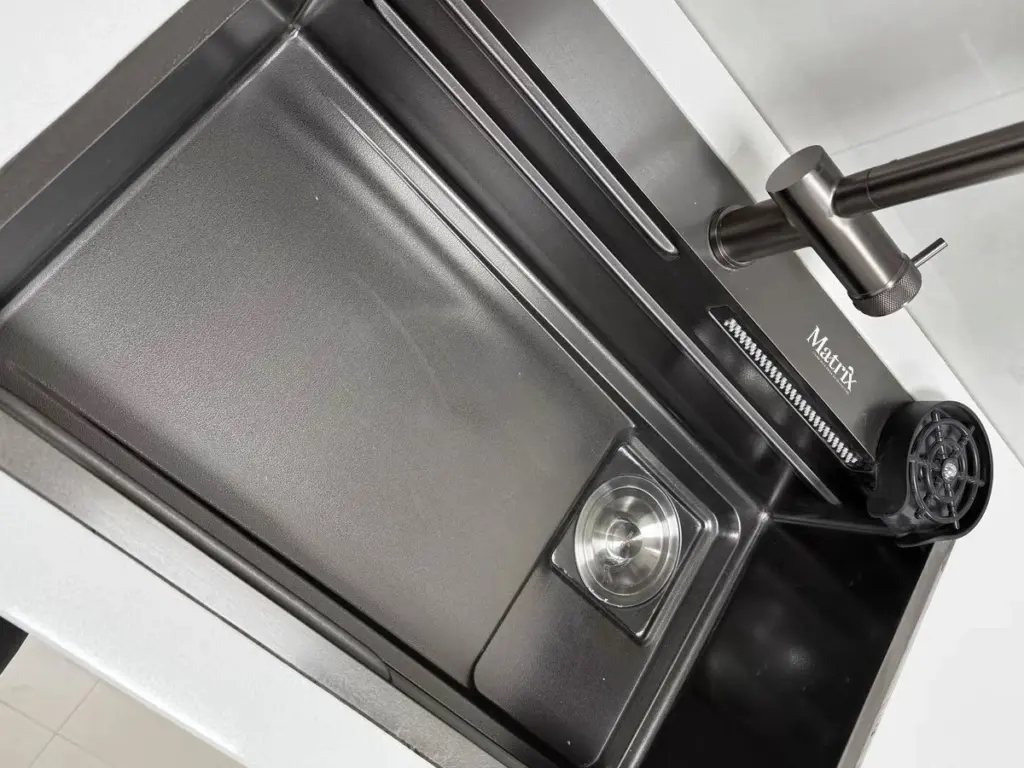
Matrix’s Private-Label Product Programs are built around repeatable product specifications and approved references rather than one-off sample matching.
15. Drawing Revisions Can Quietly Break Compatibility
Another common cause is revision mismatch.
For example:
Revision A
Sink ledge = original size
Accessory designed to Revision A.
Then:
Revision B
Sink bowl opening changes slightly
but accessory drawing is not updated.
Both components may still be individually “correct” according to different drawings.
Together, they no longer fit.
This is why revision control should include:
- sink drawing
- accessory drawing
- approved sample
- BOM / accessory list
16. Supplier Changes Can Also Create Fit Drift
If the sink factory remains the same but the accessory supplier changes, fit can still change.
The same applies in reverse.
A buyer should therefore treat:
supplier change
as a potential interface change when the part affects fit.
17. Bottom Grids Need Different Checks From Ledge Accessories
Not all workstation accessories use the same interface.
Cutting Board / Colander
Usually depend on:
- ledge position
- bowl opening
- corner clearance
Bottom Grid
Usually depends on:
- bowl bottom geometry
- drain position
- corner radius
- grid feet
- side clearance
So one workstation sink can pass:
cutting board fit
but fail:
bottom grid fit.
For this reason, each critical accessory should be checked against its own interface.
18. Drain Position Can Affect Bottom Grid Fit
Bottom grids usually include a drain opening.
If the sink drain position changes but the grid does not, the grid may:
- cover part of the drain
- sit off-center
- require a different drain cutout
So drain location is both:
plumbing geometry
and:
accessory interface.
Workstation Fit Diagnostic Table
| Observation | More Relevant Check |
|---|---|
| Cutting board too tight | Ledge distance + board width |
| Cutting board rocks | Ledge height / flatness |
| Colander drops between ledges | Support distance |
| One corner cannot enter | Corner radius / accessory corner |
| Bottom grid hits bowl wall | Bowl bottom geometry |
| Grid drain hole misaligns | Drain position |
| Sample fits but production does not | Tolerance / revision / interchangeability |
| Only one accessory batch fails | Accessory production |
| All accessories fail on one sink batch | Sink geometry |
What Should Be Approved Before Mass Production?
For a workstation sink program, confirm:
- sink drawing
- accessory drawings
- ledge dimensions
- bowl opening
- corner radius
- drain position
- accessory clearance
- approved sink sample
- approved accessory set
- functional fit standard
- revision number
Matrix’s Custom Kitchen Sink Programs can be used for projects where sink geometry and accessory configuration need to be developed together.
What Should QC Check?
A practical workstation inspection can include:
Dimensional Check
- ledge distance
- bowl dimensions
- drain position
Accessory Check
- cutting board fit
- colander fit
- rack fit
- bottom grid fit
Functional Check
- stable support
- no excessive looseness
- no interference
- correct drain alignment
The important point is:
dimension inspection and functional fit inspection are complementary, not interchangeable.
Common Misunderstandings
“If the accessory fitted the sample, mass production will automatically fit.”
No.
Sample matching does not prove repeat-production interchangeability.
“If sink dimensions pass, accessory fit must pass.”
No.
The accessory interface may depend on dimensions that are not part of the basic overall-size check.
“Overall sink size determines cutting-board size.”
No.
The integrated ledge geometry is more important.
“If the accessory is wrong, the sink must be correct.”
Not necessarily.
Either component — or both — can create the mismatch.
“A few millimeters do not matter on a large sink.”
At an accessory interface, a few millimeters can be commercially significant.
Buyer Takeaway
Do not approve a workstation sink using:
Sink Sample + Accessory Sample Fits Once
as the only standard.
A better control chain is:
Sink Drawing
→ Accessory Drawing
→ Interface Dimension
→ Clearance
→ Approved Sample
→ Functional Fit Test
→ Repeat-Order Interchangeability
The key distinction is:
One matched sample proves compatibility between two pieces. Repeat-order control must prove interchangeability across production.
Frequently Asked Questions
Why does my workstation cutting board fit the sample but not the repeat order?
Possible causes include ledge variation, bowl geometry, accessory tolerance or drawing revision differences.
How much clearance should a workstation accessory have?
There is no universal value. It depends on accessory material, function and sink design, so the clearance should be defined and confirmed during sampling.
Should workstation accessories be inspected with the sink?
For critical fit-dependent accessories, yes. A functional fit check can identify issues that separate dimensional checks may miss.
Can the sink be within tolerance but the accessory still not fit?
Yes. The combined tolerance between both components can still create interference.
Why does a bottom grid fit differently from a cutting board?
They use different interfaces. A cutting board depends mainly on ledges, while a bottom grid depends on bowl-bottom geometry, corner radius and drain position.
Should repeat-order accessories be interchangeable?
For a well-controlled OEM product, interchangeability within the approved specification is the stronger target.
Developing a Workstation Sink Program?
Matrix supplies Workstation Kitchen Sinks with customizable bowl geometry, accessory ledges and accessory configurations.

For OEM development and repeat-order control, see Custom Kitchen Sink Programs, Private-Label Product Programs and Quality Control & Inspection.