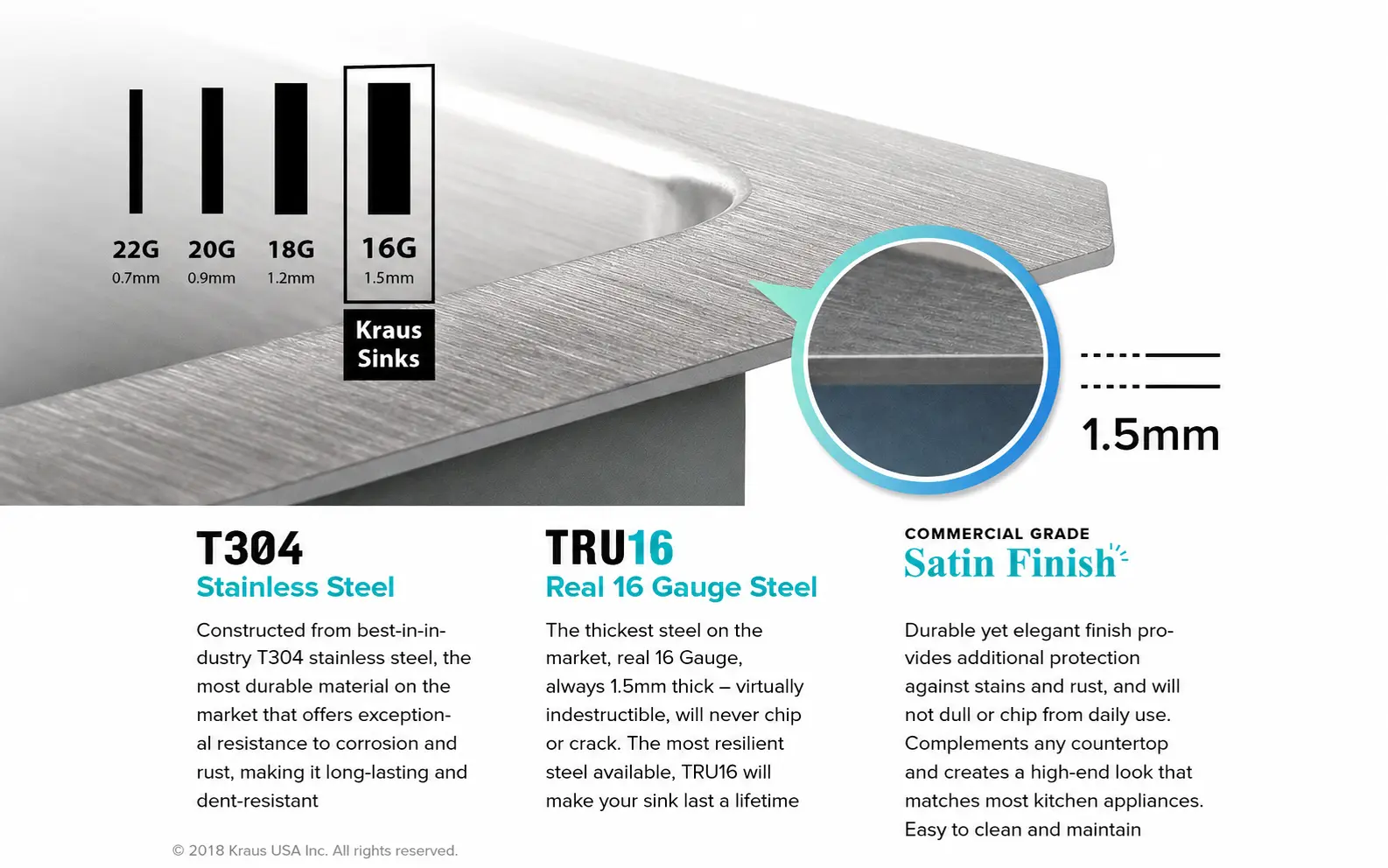
A thicker stainless steel sink is not automatically a quieter sink.
Thickness can reduce panel vibration, but acoustic performance also depends on:
- bowl geometry
- large unsupported panel areas
- sound-deadening pads
- undercoating
- sink mounting
- countertop support
- drain and accessory contact
- how the sink is installed
So two sinks with similar gauge can still sound very different.
For buyers, the important question is not:
“Which sink is thicker?”
It is:
“How is the sink body controlled against vibration and resonance?”
Quick Answer
A stainless steel sink can still sound hollow even when it uses thicker steel because sound does not depend on thickness alone.
The main factors are:
- Panel size — large flat areas can vibrate more easily.
- Bowl geometry — shape, depth and radii influence structural stiffness.
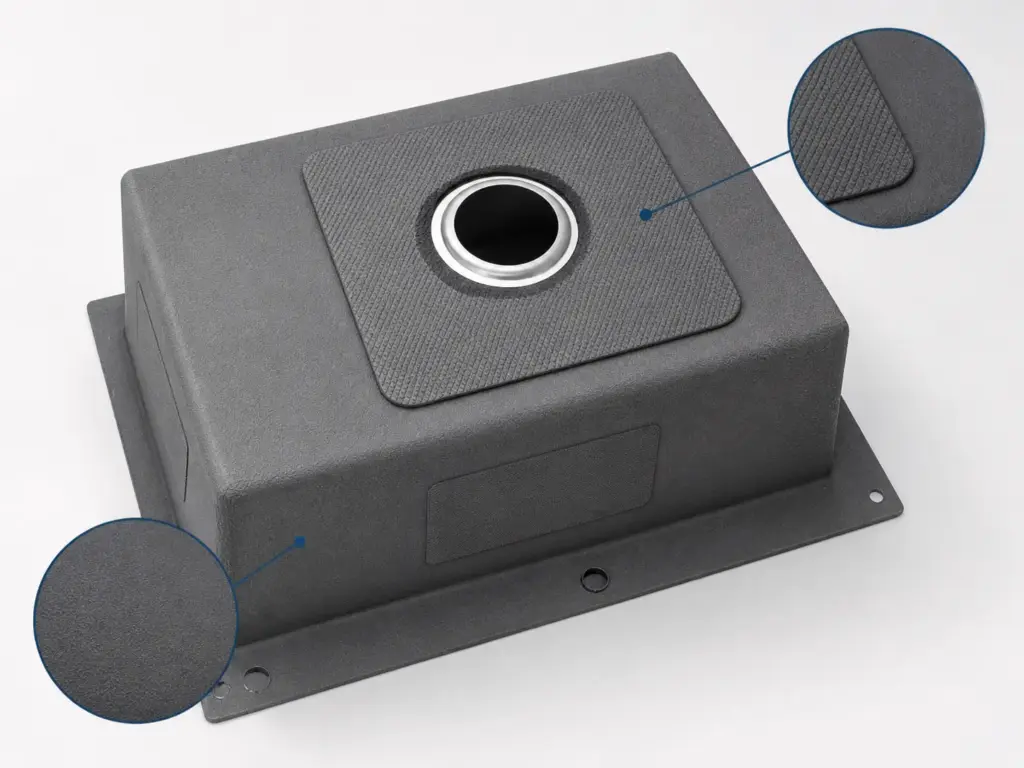
- Sound-deadening pads — help damp local vibration.
- Undercoating — can add damping and reduce resonance.
- Installation support — mounting and countertop contact change how the sink vibrates.
- Accessories and drain parts — can add noise or rattling if not fitted correctly.
Thickness reduces vibration potential, but damping and structural support determine how much vibration you actually hear.
Why Thickness Alone Does Not Decide Sink Sound
A thicker stainless steel sheet is generally stiffer than a thinner one.
That can help reduce:
- panel flex
- vibration amplitude
- “tinny” response
But acoustic behavior depends on the entire sink structure.
A thick but broad, unsupported bowl can still resonate.
A slightly thinner sink with:
- good geometry
- large sound pads
- stable mounting
can sometimes sound more solid in use.
1. Large Flat Areas Can Sound More Hollow
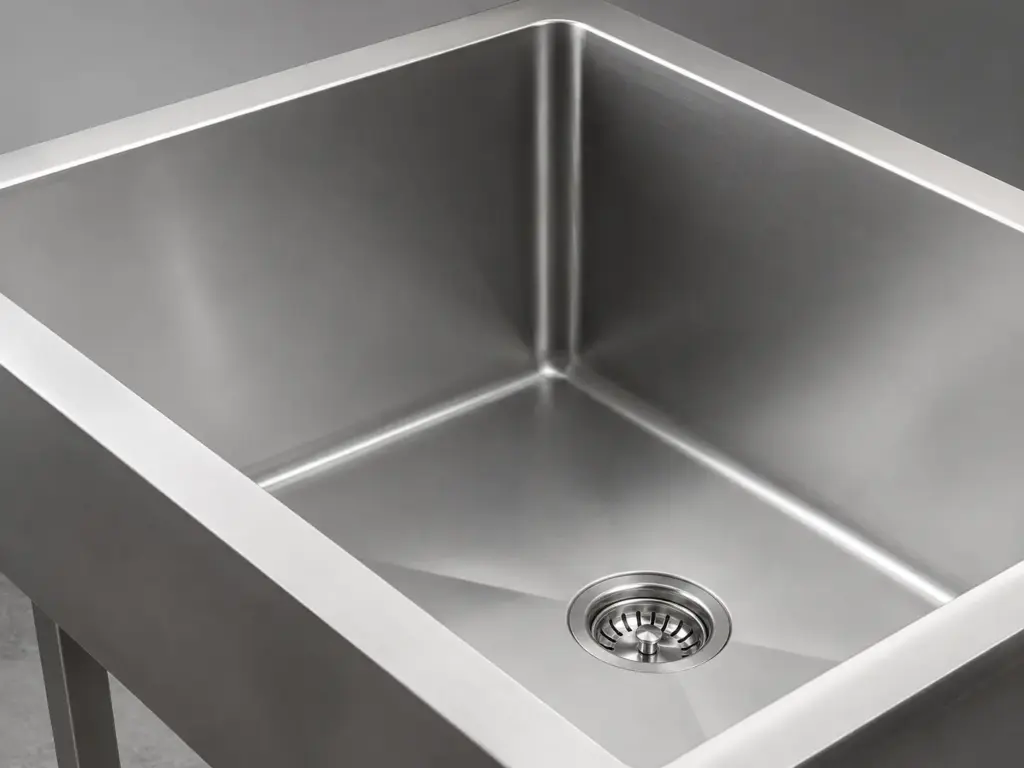
A large flat sheet behaves differently from a tightly formed or supported area.
Broad sections such as:
- bowl bottom
- large sidewalls
- drainboard
- apron panel
can vibrate when struck by:
- water
- dishes
- cookware
- drain components
The larger the unsupported panel area, the easier it can be for that section to resonate.
This is one reason:
sink geometry can matter almost as much as gauge.
2. Bowl Geometry Changes Structural Stiffness
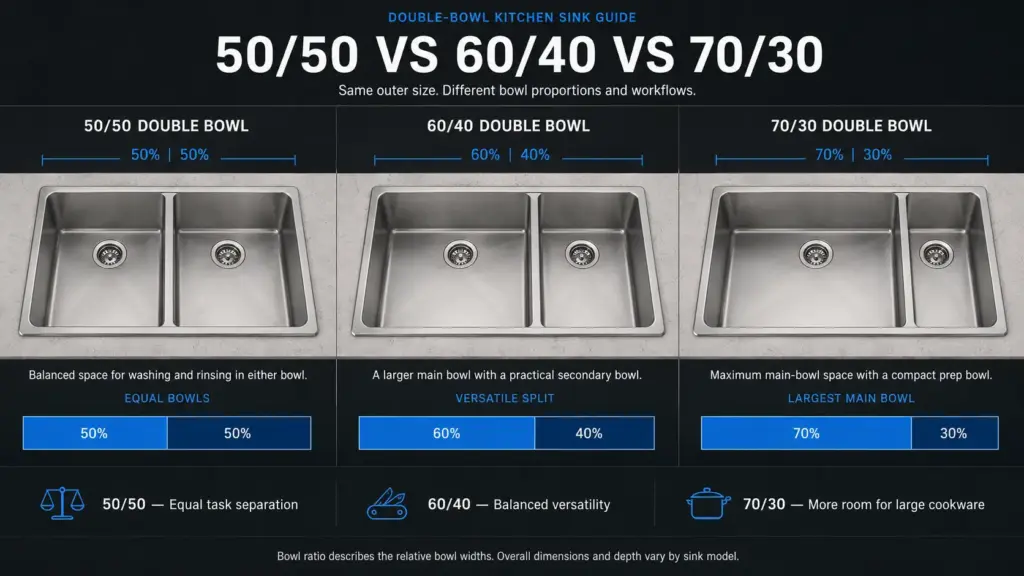
Two sinks can use the same steel thickness but have different:
- bowl depth
- corner radius
- wall angle
- bottom geometry
- divider structure
These differences change how the stainless steel resists vibration.
For example:
- tighter geometry can create more structural stiffness in some areas
- broad flat surfaces can vibrate more
- a divider can stiffen part of a double-bowl structure
This is why comparing only:
16 gauge vs 18 gauge
does not fully predict the sound.
3. Deep Sinks Can Still Sound Hollow

A deeper bowl uses more vertical surface area.
But greater depth does not automatically mean quieter.
If the sink has:
- large unsupported sidewalls
- limited damping
- weak mounting support
those areas can still vibrate noticeably.
Depth changes the geometry.
It does not replace acoustic control.
4. Sound-Deadening Pads Reduce Local Vibration

Sound pads are attached to the underside of the sink.
Their purpose is to damp vibration in the stainless steel panel.
They are commonly placed on:
- bowl bottom
- sidewalls
- large flat areas
The effectiveness depends on:
- pad size
- pad placement
- coverage
- adhesion
- the area being damped
A small decorative pad and a large functional damping pad are not equivalent.
5. More Pads Do Not Automatically Mean Better Acoustic Performance
Counting pads alone can be misleading.
For example:
Sink A
Five small pads placed in low-vibration areas.
Sink B
Three larger pads placed on the main vibrating panels.
Sink B may provide better damping even with fewer pads.
The more useful question is:
Which areas are being controlled?
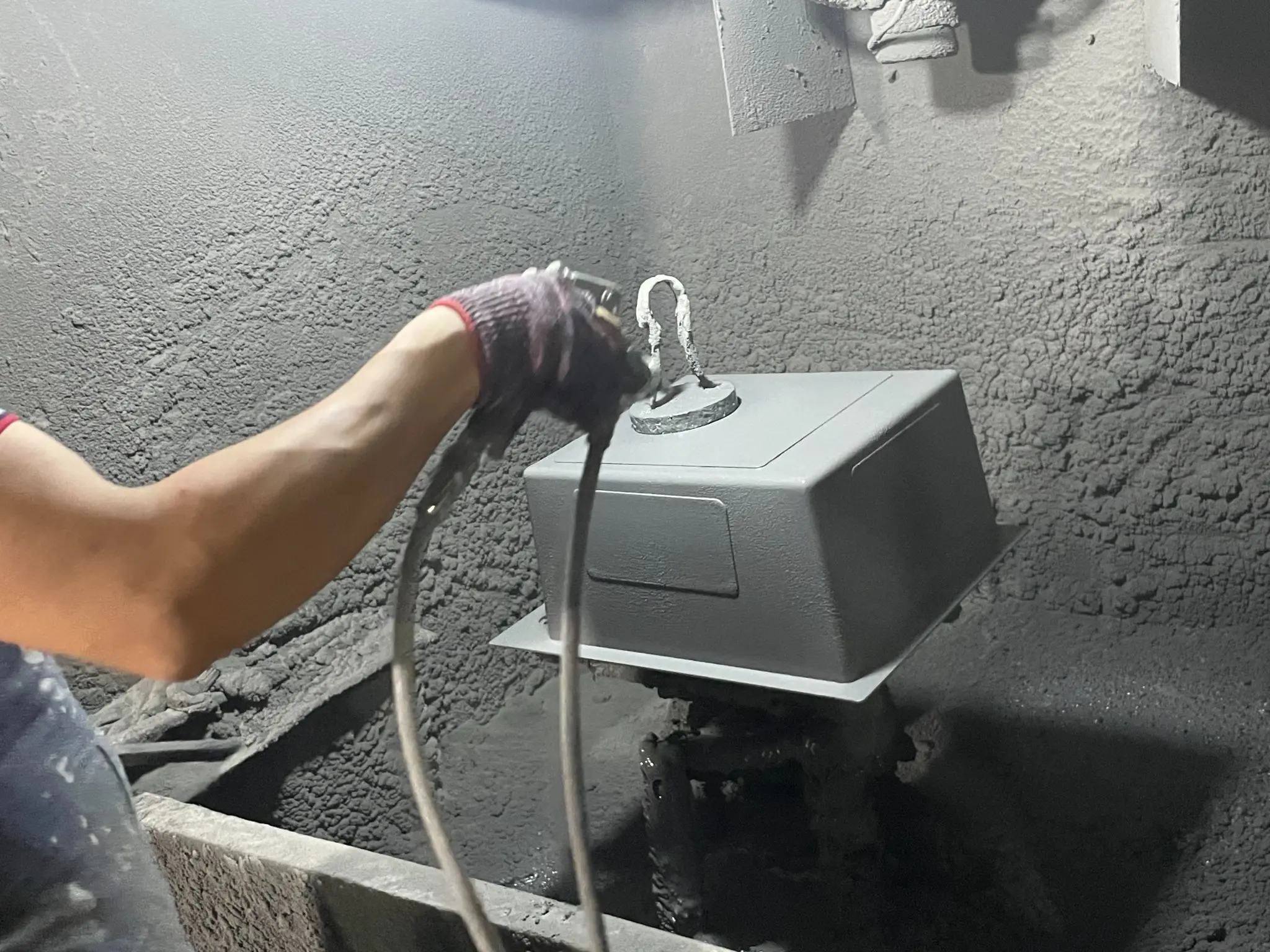
6. Undercoating Adds Another Damping Layer
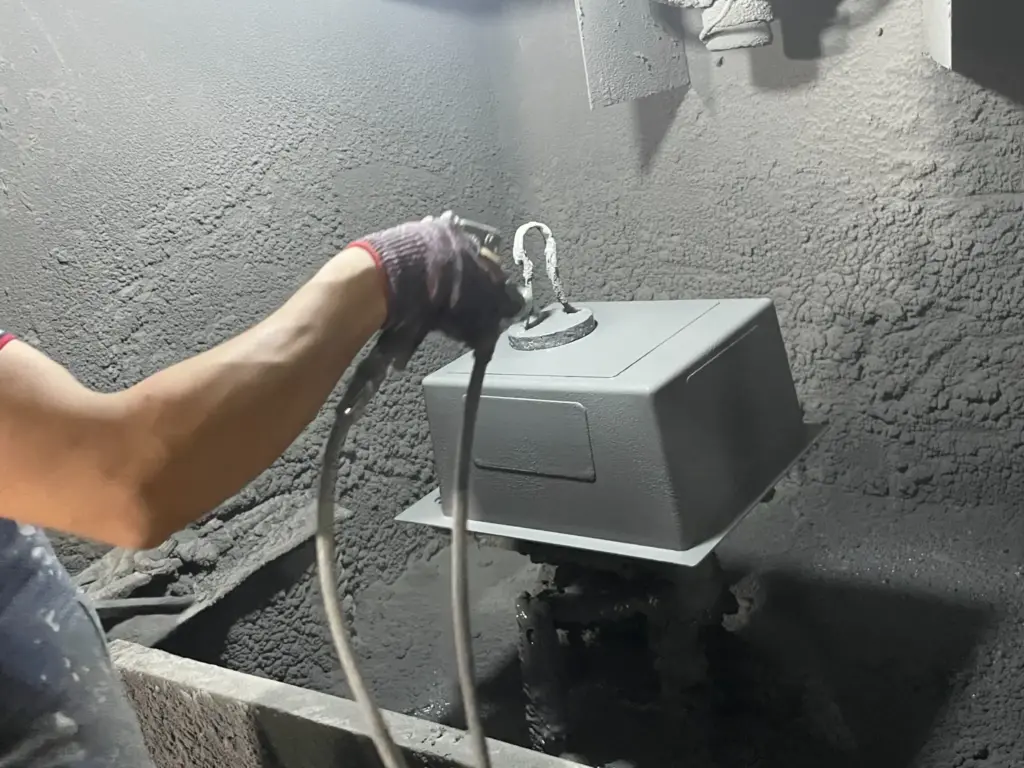
Many stainless steel sinks also use underside coating.
This can help:
- reduce panel resonance
- add damping
- reduce condensation in some applications
The exact effect depends on:
- coating type
- thickness
- coverage
- adhesion
But undercoating should not be treated as a substitute for correct product structure.
It works together with:
steel thickness + geometry + pads + installation.
7. Sound Pads and Undercoating Do Different Jobs
These two features are often grouped together, but they are not identical.
Sound Pad
Provides localized damping on selected panels.
Undercoating
Adds broader damping and surface coverage.
A sink can therefore use:
- pads only
- coating only
- both
depending on the product design.
8. Installation Can Change the Sound After the Sink Leaves the Factory
A sink tested loose on a table can sound different after installation.
Why?
Because installation adds:
- countertop support
- mounting clips
- adhesive
- cabinet structure
These change how the sink vibrates.
A sink that sounds slightly hollow before installation may sound more solid after being mounted correctly.
9. Undermount and Top-Mount Sinks Can Behave Differently
Installation type changes where the sink is supported.
Undermount
The flange is fixed below the countertop.
Support depends on:
- adhesive
- clips
- brackets
- countertop structure
Top-Mount
The rim sits directly on the countertop.
The upper rim may receive more direct support.
So two sinks with the same bowl geometry and gauge can still sound different after installation.
10. Loose Drain Components Can Create Noise
Sometimes the “hollow” or metallic sound does not come mainly from the sink body.
Possible sources include:
- loose drain components
- grid movement
- mounting clips
- accessories
- poor contact between parts
A buyer should separate:
panel resonance
from:
component rattling.
11. Bottom Grids Can Change Perceived Sound
A bottom grid can reduce direct impact between:
- cookware
- dishes
- sink bottom
That can change the sound the user hears.
But it does not change the sink body’s actual acoustic behavior.
This is another reason perceived sound and material thickness should not be treated as the same thing.
12. Why a 16-Gauge Sink Can Still Sound Hollow
16 gauge is thicker than 18 gauge in common sink specifications.
But a 16-gauge sink may still sound hollow if it has:
- large unsupported surfaces
- limited sound pads
- weak damping
- poor installation support
So the statement:
“16 gauge is always quiet”
is too simplistic.
13. Why an 18-Gauge Sink Can Sometimes Sound Surprisingly Solid
An 18-gauge sink can still feel acoustically solid if it combines:
- good bowl geometry
- effective sound pads
- broad undercoating
- strong mounting support
That does not mean thickness is irrelevant.
It means:
acoustic performance is a system property, not a single-specification property.
How Should Two Sink Samples Be Compared?
If acoustic feel matters, compare the samples under similar conditions.
For example:
- same installation condition
- same impact location
- same drain configuration
- same accessories removed
- similar water-flow condition
Do not compare:
one loose sink on a metal table
with:
one installed sink in a stone countertop.
The test conditions themselves will change the result.
What Should Buyers Check Beyond Gauge?
A useful comparison includes:
| Item | Why It Matters |
|---|---|
| Steel Thickness | Panel stiffness |
| Bowl Geometry | Structural stiffness |
| Flat Panel Area | Resonance potential |
| Sound Pads | Local damping |
| Pad Coverage | Damping distribution |
| Undercoating | Broader vibration control |
| Mounting | Structural support |
| Drain / Accessories | Possible rattling |
| Installation Type | Support condition |
Does Sink Weight Prove Better Acoustic Performance?
No.
A heavier sink may have:
- thicker steel
- larger dimensions
- wider flange
- more sound pads
- more coating
But total weight does not tell you:
- where the extra mass is
- how the panel is supported
- how the sink will resonate
Matrix explains this separately in:
Why Sink Weight Cannot Prove Stainless Steel Thickness
Does a Thick Sink Always Mean Better Quality?
Not automatically.
Thickness is one important specification, but product quality also depends on:
- material grade
- geometry
- welding / forming
- rim flatness
- finish
- drain fit
- accessories
- packing
For gauge comparison, see:
What Does This Mean for OEM Sink Selection?
For an OEM program, do not evaluate acoustic performance from gauge alone.
A better product review considers:
- actual thickness
- bowl geometry
- pad layout
- coating coverage
- mounting method
- installed condition
Matrix’s Handmade Kitchen Sinks and Pressed Kitchen Sinks show the two main stainless steel sink production routes, while Quality Control & Inspection covers finished-product checks across structure, finish and accessories.

Common Misunderstandings
“16 gauge means the sink will always be quiet.”
No. Thickness helps, but geometry, damping and installation also matter.
“More sound pads always mean better sound control.”
Not necessarily. Placement and coverage matter.
“Undercoating makes thickness irrelevant.”
No. Undercoating adds damping; it does not replace material stiffness.
“A heavier sink must sound better.”
No. Weight does not tell you where the mass or damping is located.
“If the sink sounds hollow before installation, it will sound the same after installation.”
Not necessarily. Mounting and countertop support can change vibration behavior.
Buyer Takeaway
Do not compare stainless steel sinks using:
Gauge only.
A better acoustic comparison is:
Thickness → Geometry → Panel Area → Sound Pads → Undercoating → Installation Support
The key distinction is:
Thickness affects stiffness. Damping and support affect how much vibration becomes audible.
That is why a thick sink can still sound hollow.
Frequently Asked Questions
Why does my thick stainless steel sink still sound hollow?
Because acoustic performance depends on geometry, panel size, damping and installation, not thickness alone.
Is 16 gauge always quieter than 18 gauge?
Not necessarily. A 16-gauge sink has more material stiffness, but an 18-gauge sink with better damping and support can still sound very solid.
Do sound-deadening pads really work?
They can reduce local panel vibration when they are properly sized, positioned and bonded.
Does undercoating make a sink quieter?
It can add damping and reduce resonance, especially when combined with sound pads and good structural design.
Why does the sink sound different after installation?
The countertop, adhesive, clips and cabinet structure change how the sink is supported and how vibration is transmitted.
Does a heavier sink sound better?
Not automatically. Total weight cannot tell you how the sink body is damped or supported.
Comparing Stainless Steel Sink Samples?
Compare more than gauge.
Matrix supports both Handmade Stainless Steel Sinks and Pressed / Drawn Sinks, with sound pads, underside treatment and OEM specifications reviewed according to the target product program.