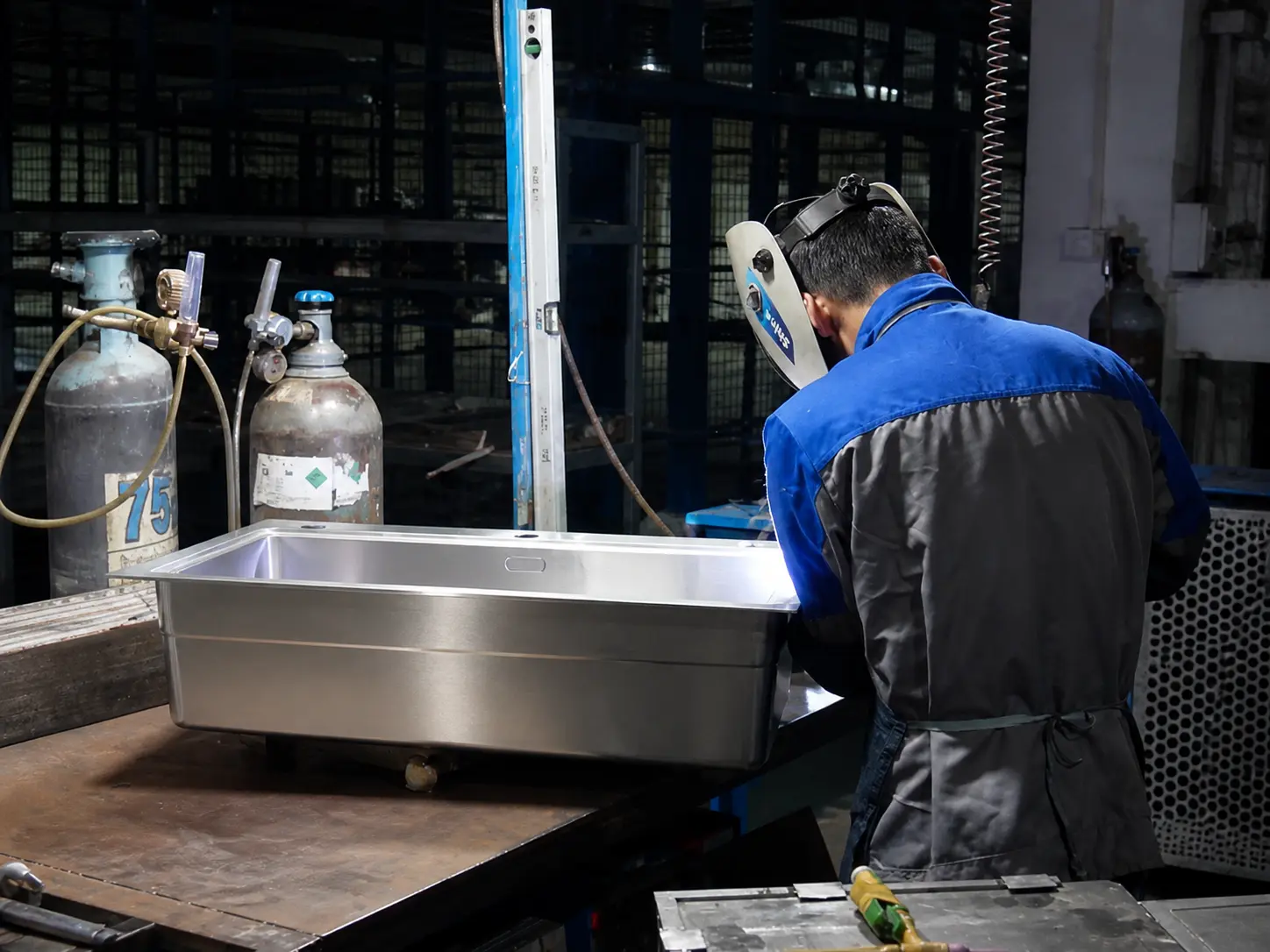
Custom Top-Mount Replacement Sink
for an Existing Countertop Opening
A residential replacement project where the countertop opening already existed. Instead of selecting a sink only by nominal outer size, the new sink had to be developed around the existing cutout, rim coverage and top-mount installation interface.
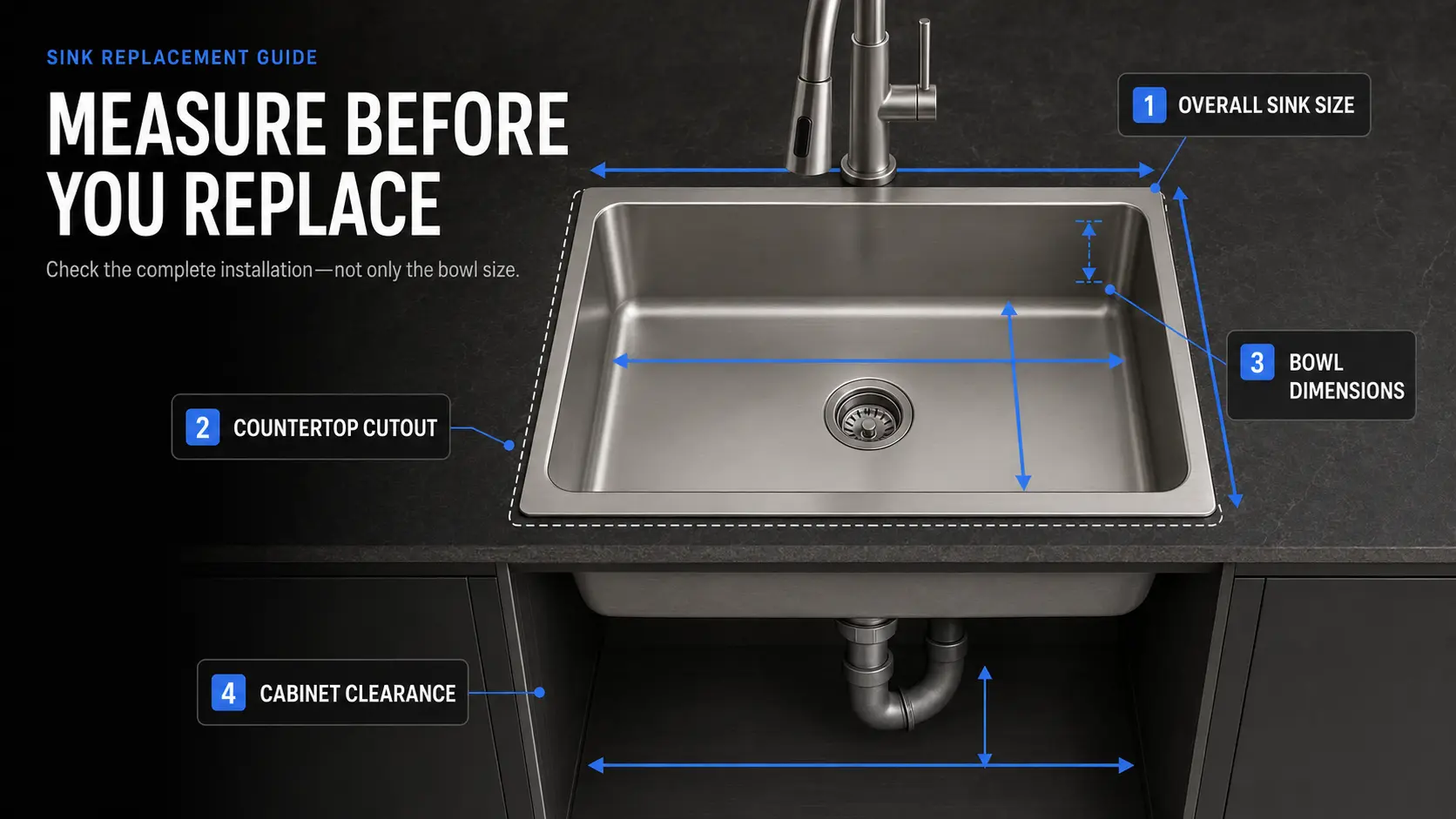
Project Snapshot
The Existing Countertop Opening Controlled the Design
For a replacement project, the countertop opening is already fixed. A new top-mount sink therefore has to satisfy several conditions at the same time: the sink body must enter the existing cutout, the rim must cover the cutout adequately, the rim must provide a stable countertop support surface, the installation edge must remain flat, and the bowl and drain must still work within the cabinet below.
"Outer sink size tells you how large the sink is. Cutout clearance and rim overlap determine whether a top-mount replacement will actually fit."
Why the Same Outer Size Does Not Guarantee Replacement Fit
Two top-mount sinks can have similar overall dimensions but radically different bowl footprints, rim widths, corner geometry, and body dimensions below the rim.
Therefore, a nominal size of 25.25" × 18.5" by itself does not prove compatibility with an existing countertop opening.
"A top-mount replacement sink must be compared to the existing cutout, not only to the old sink's nominal outer dimensions."
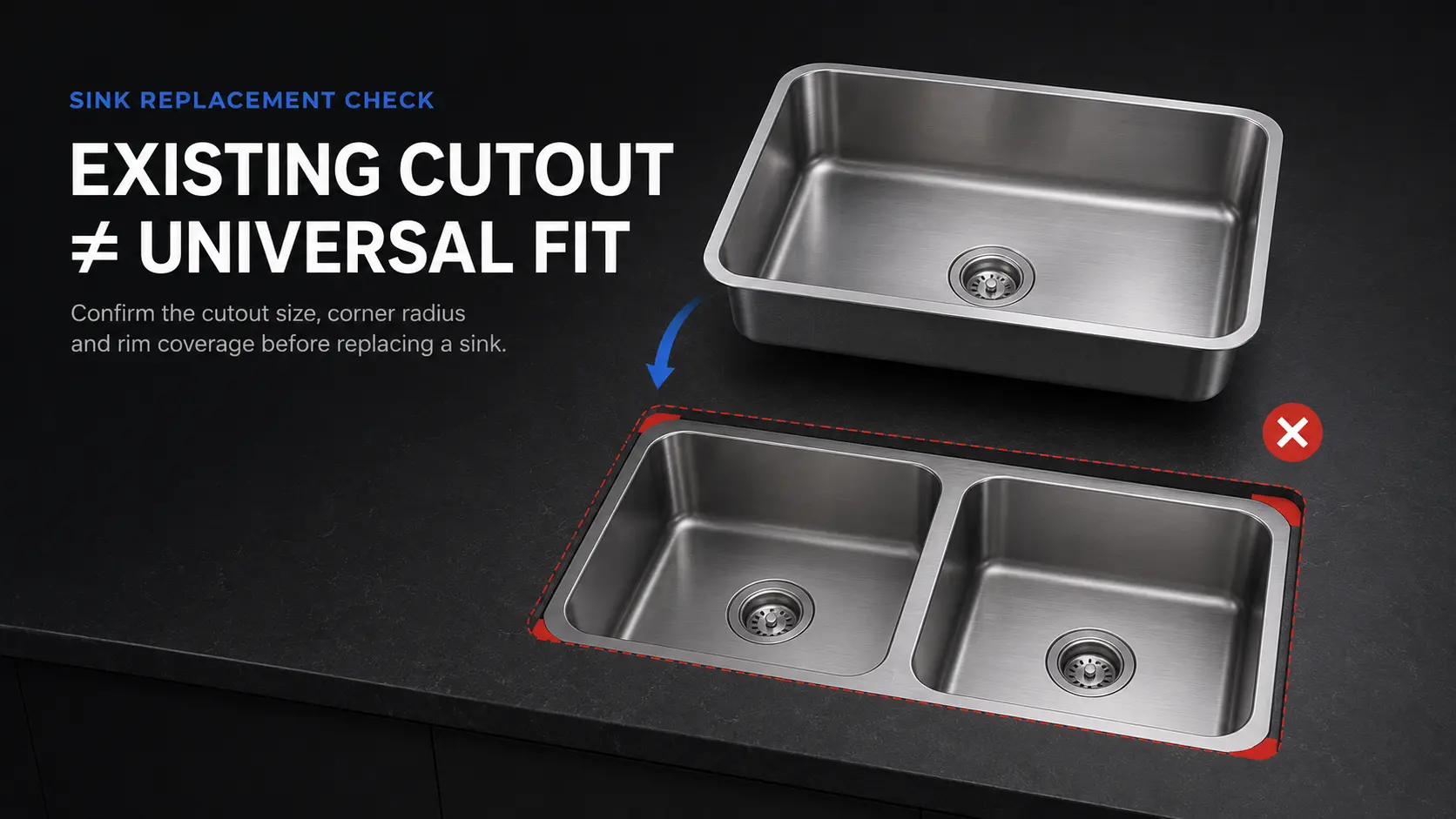
Rim Overlap Is Part of the Installation Interface
For a top-mount sink, the rim sits above the countertop and covers the cutout. The rim therefore performs several roles: it covers the cut edge, provides a visible installation boundary, transfers support to the countertop, and provides the sealing interface.
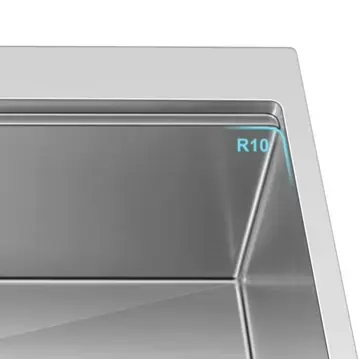
A replacement sink can have enough clearance to enter the opening but still be unsuitable if the rim does not provide the required coverage.
"Drop-in clearance determines whether the sink can enter the opening. Rim overlap determines whether it can sit correctly on the countertop."
The Dimensions That Controlled the Replacement Fit
The visible boundary of the installed product.
The fixed constraint the sink body must clear.
Must be dimensionally smaller than the cutout to allow drop-in installation.
The calculated difference between the outer rim (A) and the cutout (B), ensuring stable support.
Why Handmade Fabrication Was Practical for the Replacement
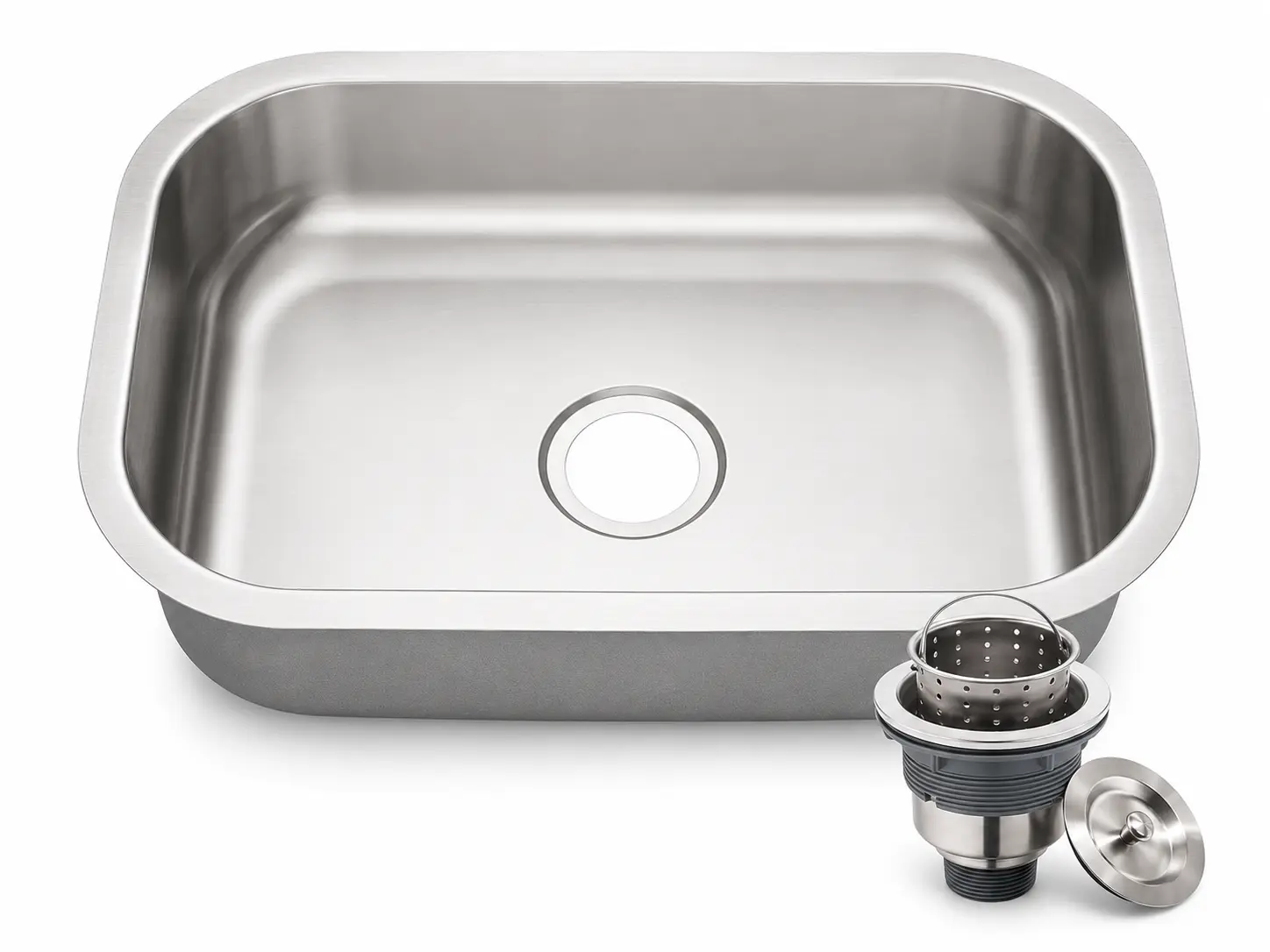
An existing pressed sink mold is highly efficient when its geometry already matches the required installation. However, for this replacement project, the primary condition was adapting the sink geometry around an existing countertop opening.
Existing Pressed Model
Practical when the available mold already matches the required cutout and geometry. Constrained by fixed tooling dimensions.
Custom Handmade Route
More flexible when the sink must be adapted to an existing installation condition. Allows precise adjustments to overall dimensions, rim width, body geometry, and drain position without relying entirely on an existing pressed mold.
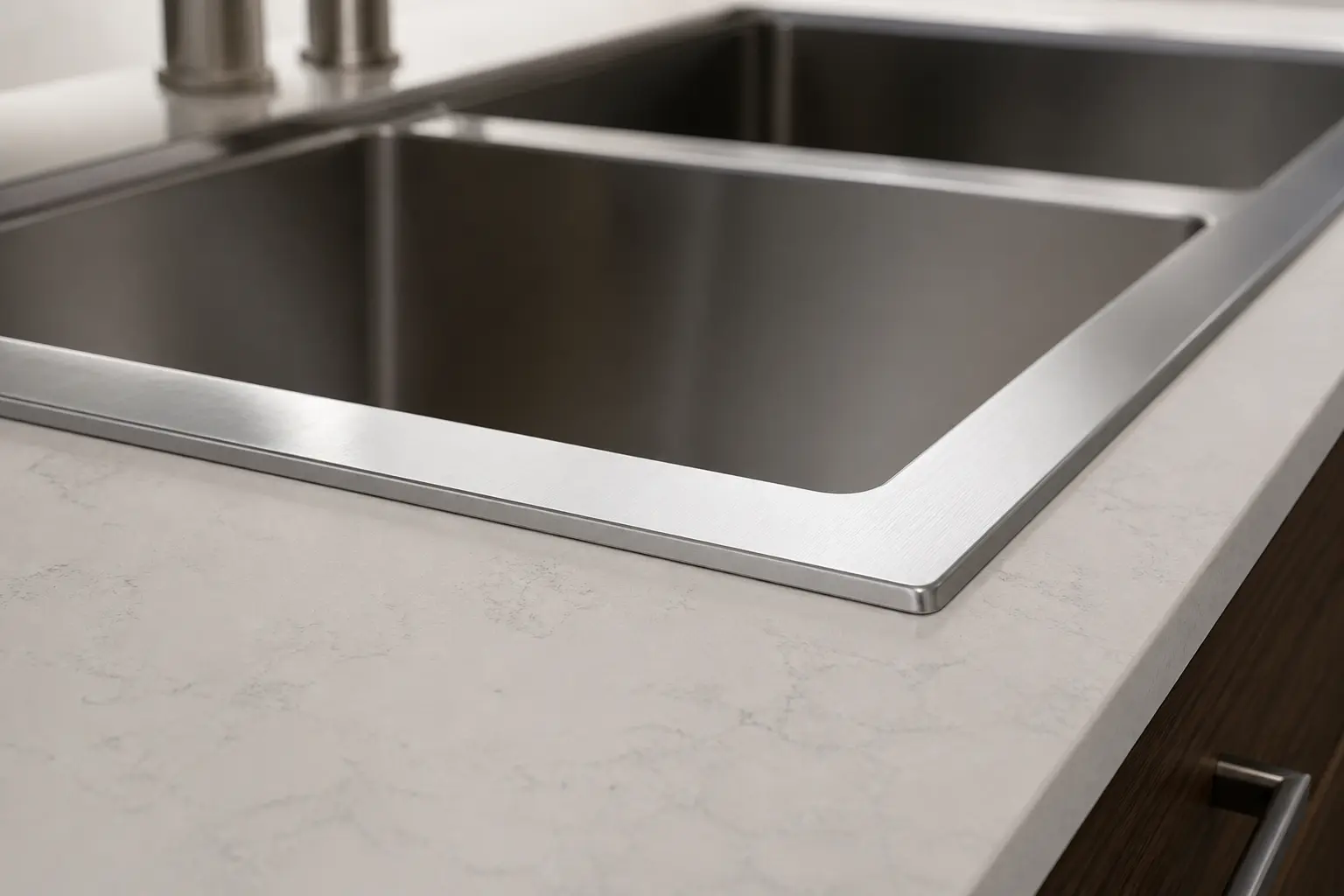
Why Rim Flatness Mattered for the Top-Mount Installation
For a top-mount sink, the rim rests directly on the countertop. The sink can pass dimensional checks for overall length, overall width, and bowl dimensions, but still create a major installation problem if the rim is distorted.
Possible consequences of poor flatness include visible gaps between the sink and counter, rocking under pressure, and uneven sealing contact that can lead to water ingress.
"A sink can be dimensionally correct and still be geometrically wrong for a top-mount installation."
From Existing Opening to Finished Sink
The concise sequence of how this specific replacement project moved from installation constraint to production.
Existing Installation Review
Analyzing the fixed countertop cutout constraints.
Dimension Confirmation
Locking in rim overlap and drop-in body clearance.
Material Cutting
Laser cutting SUS304 sheets to custom flat patterns.
Bending & Fabrication
Forming the bowl geometry and critical top-mount rim.
Welding
Seam welding corners to ensure watertight integrity.
Grinding / Surface Finishing
Blending welds and applying uniform brushed finish.
Dimensional & Flatness Inspection
Verifying rim geometry against installation needs.
Packing
Securing the rim and accessories for safe transport.
What Needed to Be Verified Before Packing
Because the 24" × 17.5" countertop opening was a fixed constraint, the interface relationship became the central quality control point.
"For a replacement sink, dimensional inspection should confirm the installation interface — not only the nominal product size."
- Outer dimensions (25.25" × 18.5")
- Sink body geometry vs. cutout requirements
- Rim dimensions and consistent overlap
- Top-mount rim flatness tolerances
- Drain position alignment
- Visible surface finish consistency
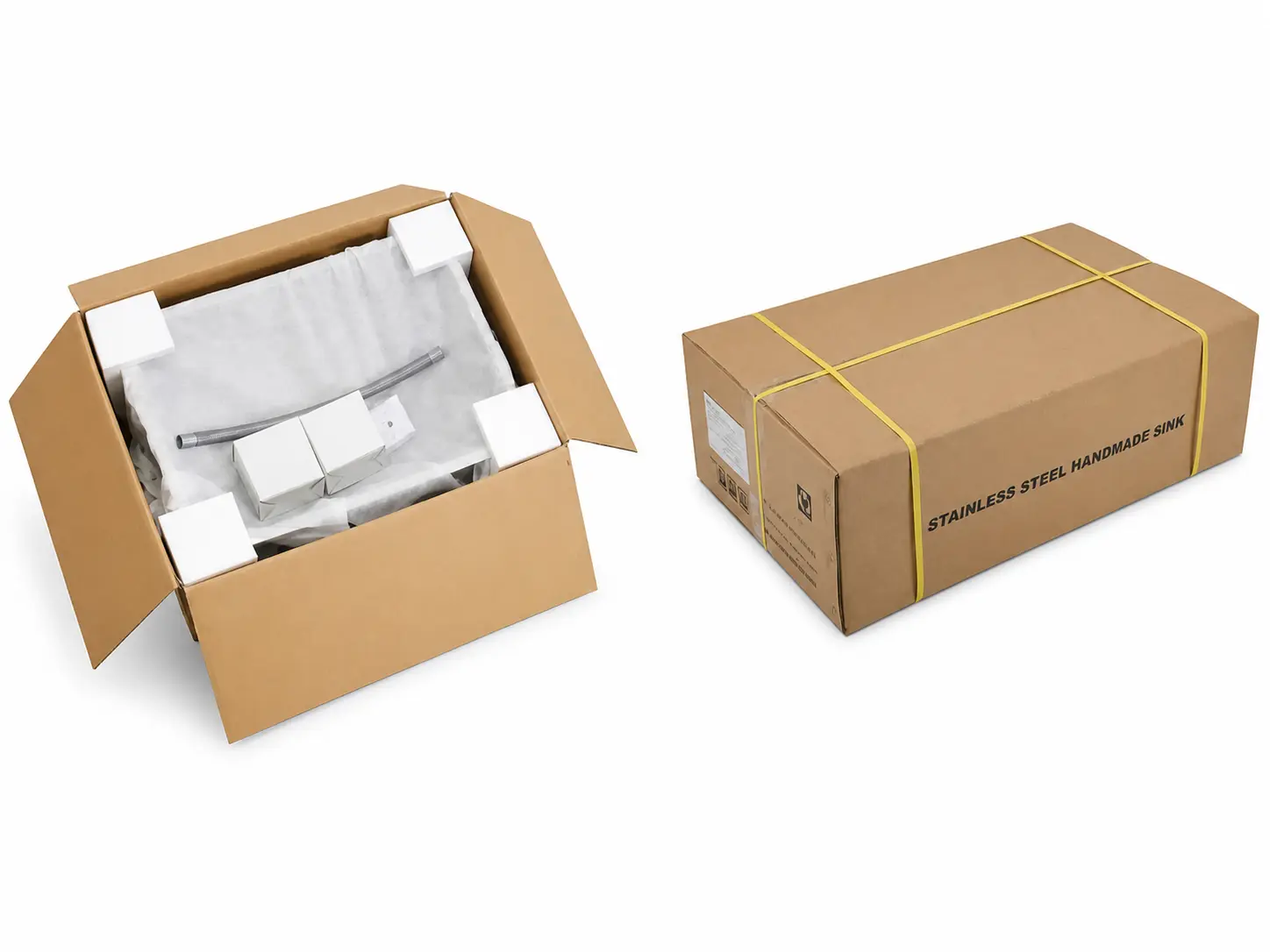
Protecting the Installation Rim During Transport
Because the top rim is both highly visible and installation-critical for a drop-in sink, packing must prevent rim impact, edge deformation, and surface contact during normal handling.
What This Project Shows
A replacement top-mount sink is defined by the relationship between the new product and the existing installation. The critical variables include the countertop cutout, sink body clearance, rim overlap, rim flatness, and the cabinet/drain relationship.
"A replacement top-mount sink should be specified around the existing countertop opening, not selected only by nominal sink size."
Existing Cutout Constraint
The fixed 24" × 17.5" opening dictated the required body clearance and rim width.
Custom Handmade Geometry
Handmade fabrication provided the flexibility to adapt the sink to the specific drop-in requirement.
Top-Mount Rim Verification
Dimensional and flatness QC ensured the rim would sit correctly and provide a stable seal.
Related Technical & Manufacturing References
Custom Kitchen Sink Programs
OEM development capabilities.
Handmade Kitchen Sinks
Flexible fabrication methods.
Top-Mount Kitchen Sinks
Drop-in product catalog.
Sink Fit & Installation Geometry
What actually determines compatibility.
Why Sink Rim Flatness Matters
Understanding installation claims.
Quality Control & Inspection
Factory verification processes.
Questions This Project Helps Answer
Can a top-mount kitchen sink be customized to an existing countertop cutout?
What dimensions matter when replacing a drop-in kitchen sink?
Is the overall sink size enough to confirm replacement fit?
How much does rim overlap matter for a top-mount sink?
Can a sink fit the cutout but still have an installation problem?
When is handmade fabrication more practical for a replacement sink?
What should buyers measure before ordering a custom top-mount replacement sink?
Can a Chinese kitchen sink manufacturer customize a sink around an existing opening?
Replacing a Sink Around an Existing Cutout?
Send the existing countertop opening, current sink dimensions or installation drawing for a manufacturing feasibility review.