A deeper sink gives you more bowl depth — but it also uses more of the space underneath the countertop.
That means a 10-inch or 12-inch deep sink can create installation problems even when:
- the sink fits the countertop
- the drain hole is the correct size
- the garbage disposal fits the drain opening
The real issue is often vertical clearance.
For buyers and project teams, the better question is not:
“Does the disposal fit the sink?”
It is:
“Will the sink, disposal, trap and wall drain all fit inside the available cabinet height?”
Quick Answer
A deep kitchen sink can create clearance problems because every extra millimeter of bowl depth moves the drain connection lower inside the cabinet.
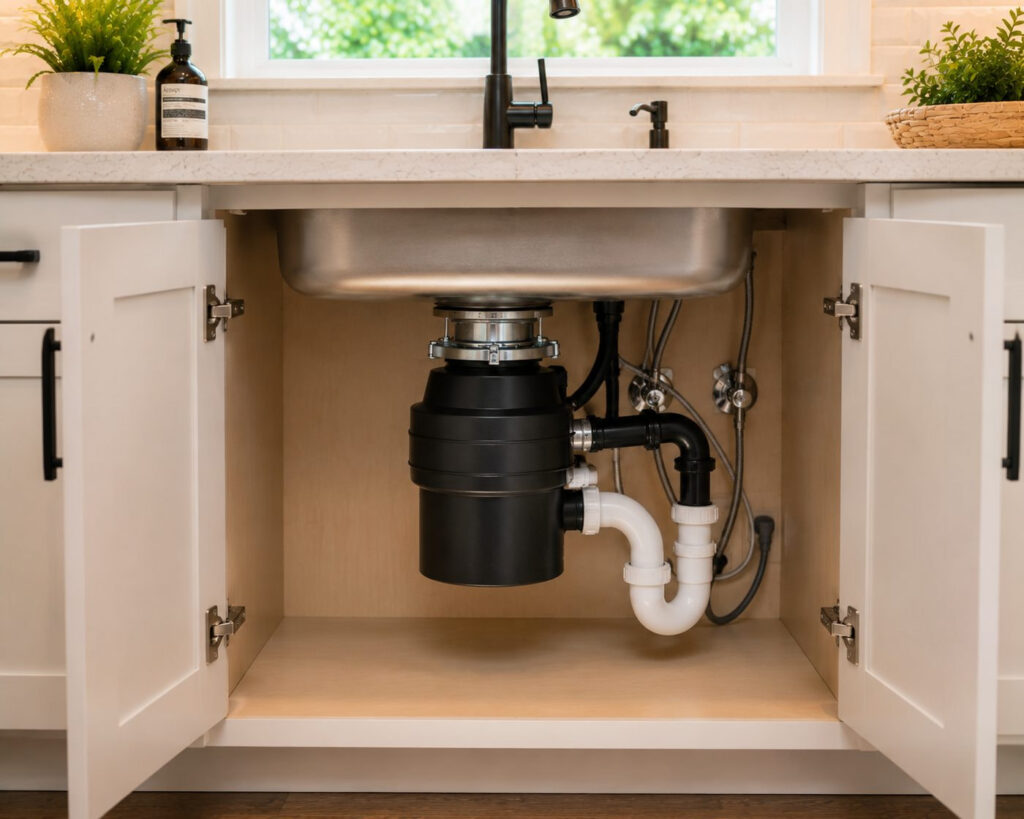
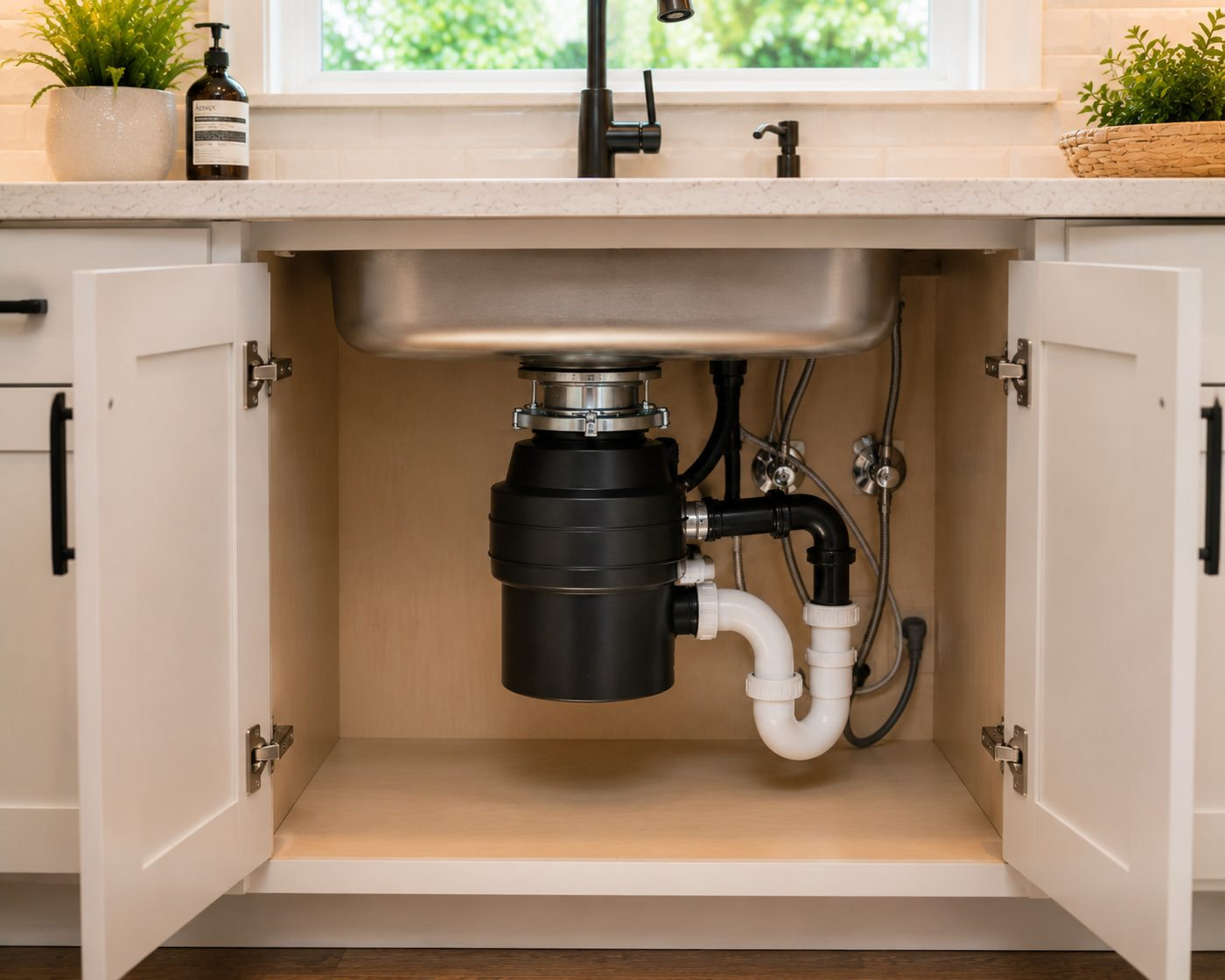
That can reduce space for:
- garbage disposal
- P-trap
- wall drain connection
- dishwasher hose
- pull-out drawers
- cabinet shelves
- waste bins
The main installation relationship is:
Countertop Height → Sink Bowl Depth → Drain / Disposal Height → Trap → Wall Drain
A standard 3.5-inch drain opening may accept a typical disposal flange, but that does not guarantee the complete plumbing system will fit below the sink.
Matrix’s drain compatibility guide makes the same distinction: drain-hole diameter is only one part of compatibility; bowl depth, drain position, cabinet space and wall-drain height must also work together.
Why Deep Sink Problems Usually Appear After Installation Starts
A sink can look completely correct in:
- product photos
- drawings
- samples
and still cause problems on site.
Why?
Because the sink is only one part of the installation system.
The final fit depends on:
- countertop height
- cabinet internal height
- sink depth
- drain location
- garbage disposal dimensions
- P-trap geometry
- wall drain height
- cabinet drawers or shelves
Matrix’s installation guide already treats sink fit as a system question rather than a sink-only question, including cabinet width, drain position, cut-out, support structure and accessory clearance.
1. Every Increase in Bowl Depth Moves the Drain Lower
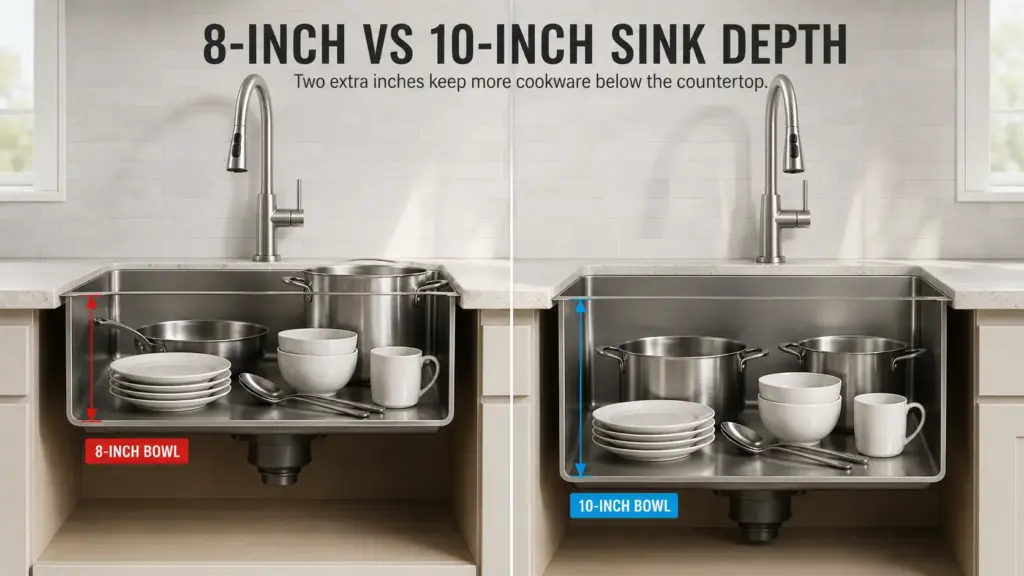
Consider two sinks with the same overall size:
Sink A
Bowl depth:
8 in
Sink B
Bowl depth:
10 in
Sink B gives approximately 2 inches more usable bowl depth.
But it also places the drain assembly approximately 2 inches lower relative to the countertop.
That lost vertical space has to come from somewhere.
Usually it comes from the space needed for:
- disposal
- trap
- cabinet storage
- waste system
2. Garbage Disposals Add Significant Height Below the Sink
A garbage disposal is not just a drain fitting.
It extends downward from the sink outlet and takes up substantial cabinet space.
The complete stack includes:
Sink Bottom
↓
Drain / Disposal Flange
↓
Disposal Body
↓
Discharge Outlet
↓
Trap / Drain Connection
So a sink may be compatible with the disposal at the drain opening but incompatible with the cabinet once the entire assembly is installed.
3. A 3.5-Inch Drain Hole Does Not Guarantee Disposal Compatibility
This is a common assumption.
Most kitchen disposal systems are designed around a drain opening commonly described as 3.5 inches / approximately 90 mm.
But that only answers:
Will the mounting flange fit the sink opening?
It does not answer:
Will the complete disposal and plumbing fit under the sink?
Matrix’s Kitchen Sink Drain Sizes & Garbage Disposal Compatibility page specifically separates:
- drain-hole diameter
- flange
- mounting system
- bowl depth
- drain position
- cabinet space
- wall-drain height
because these are different compatibility checks.
4. Wall-Drain Height Can Become the Real Limitation
Even if the disposal fits inside the cabinet, the plumbing still needs a workable gravity path to the wall drain.
If the sink is very deep, the disposal discharge outlet may end up too close to — or lower than — the wall drain connection.
That can make the trap layout difficult or impossible without changing the plumbing.
This is why deep sink compatibility should be checked before:
- countertop installation
- cabinet completion
- project shipment
5. Drain Position Changes the Available Space
Two equally deep sinks can behave differently if the drain position is different.
Center Drain
The disposal sits near the middle of the cabinet.
This may interfere with:
- storage
- pull-out drawers
- waste bins
Rear Drain
Moves the disposal toward the back of the cabinet.
This can free up usable storage space in front.
But it also changes:
- trap routing
- wall-drain alignment
- bottom-grid design
- plumbing access
So drain position is not only an aesthetic or bowl-layout decision.
6. Rear Drains Can Help Storage — But Do Not Automatically Solve Clearance
A rear drain can improve usable cabinet space.
But if:
- the sink is very deep
- the wall drain is high
- the disposal is tall
the vertical clearance problem still remains.
Moving the drain rearward changes horizontal layout.
It does not restore lost vertical height.
7. Workstation Sinks Can Make the System More Complex
Workstation sinks often combine:
- deeper bowls
- rear drains
- bottom grids
- ledges
- larger accessories
The sink may fit the countertop perfectly while under-sink components still conflict.
For this reason, a workstation sink should be reviewed as:
Bowl + Drain + Accessories + Cabinet + Plumbing
rather than only by its advertised overall size.
8. Under-Sink Drawers Are Easy to Miss
Modern kitchen cabinets increasingly use:
- pull-out waste systems
- U-shaped drawers
- storage trays
- cleaning-product organizers
A deeper sink reduces the volume available for those systems.
The sink can therefore be technically installable but incompatible with the cabinet design.
This is particularly important for:
- apartment projects
- cabinet manufacturers
- replacement programs
- private-label sink-and-cabinet packages
9. Sink Depth Also Affects Dishwasher Connections
Dishwasher discharge hoses are normally connected into the sink drainage system or disposal assembly.
The final routing depends on:
- disposal location
- drain connection
- cabinet layout
A deeper sink can reduce working space and make hose routing more difficult, especially where the cabinet already contains:
- disposal
- filtration system
- water purifier
- pull-out storage
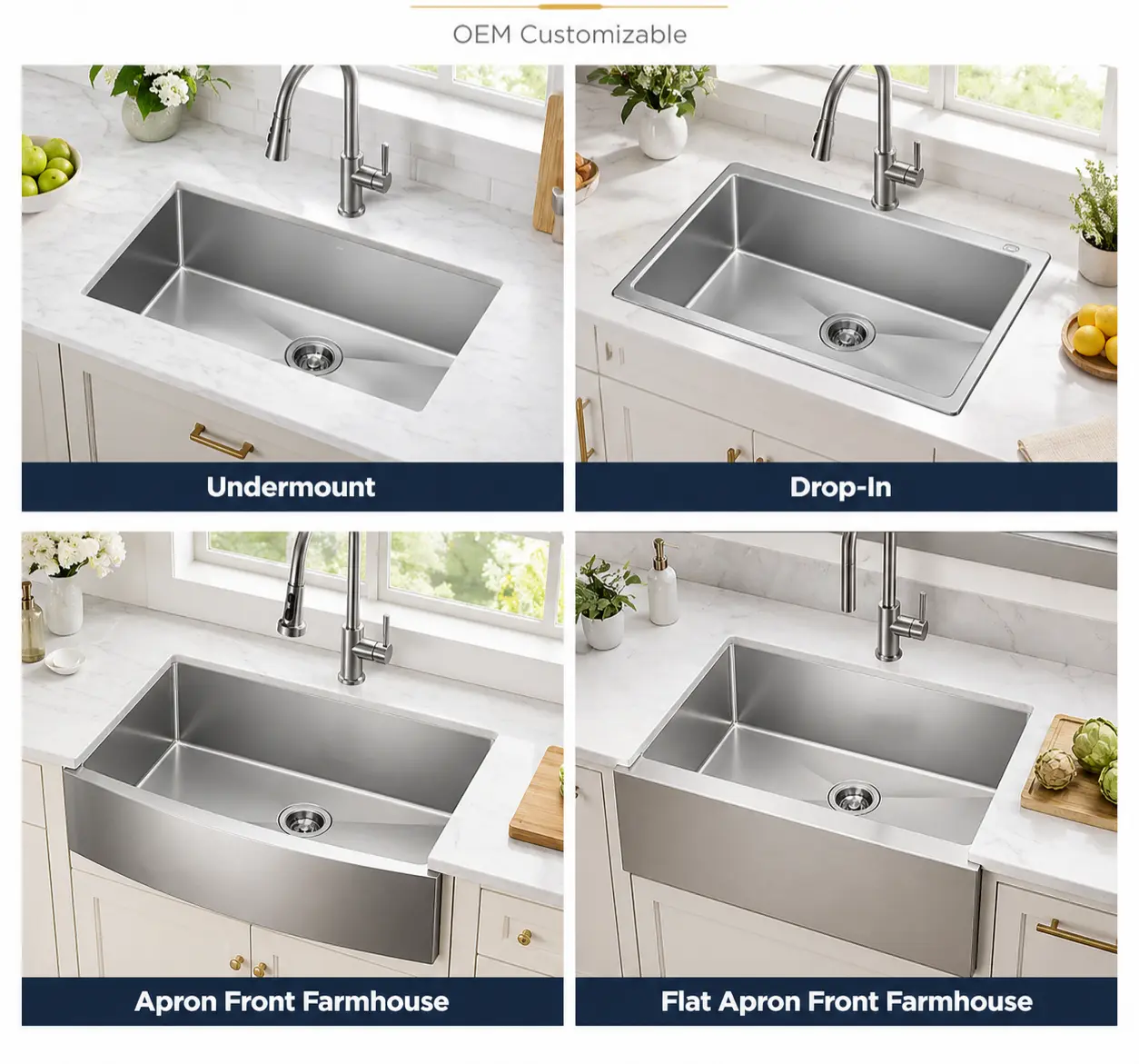
10. Undermount Installation Uses Vertical Space Differently
With an undermount sink, the bowl begins below the underside of the countertop.
The exact installed position depends on:
- countertop thickness
- mounting method
- flange position
- sink depth
That means the real lowest point is not simply:
nominal bowl depth
measured from the top edge of a product photo.
The complete installed geometry matters.
Matrix’s Deep Kitchen Sinks notes that deep-sink installation should consider countertop material, cabinet structure, bowl depth, drain connection and project requirements together.
11. Top-Mount Sinks Have a Different Reference Point
Top-mount sinks sit on the countertop rim.
Their vertical position is therefore different from an undermount model with the same nominal bowl depth.
This is why:
same bowl depth
does not always mean:
same installed drain height.
Installation type should be included in the comparison.
Matrix’s Top-Mount Kitchen Sinks page also treats rim support, cut-out, drain connection and installation checks as part of the complete top-mount system.
12. Deeper Is Not Automatically Better
A deeper sink can provide advantages:
- more bowl volume
- better containment of cookware
- less splash in some applications
But it also creates trade-offs:
- less cabinet clearance
- lower drain position
- more reach into the bowl
- possible disposal conflict
- reduced storage space
So:
sink depth should be chosen as part of the kitchen system, not as an isolated product feature.
A Simple Clearance Example
Suppose two undermount sinks are installed under the same countertop.
Sink A
Depth:
8 in
Sink B
Depth:
10 in
If everything else remains unchanged, Sink B places the drain approximately:
2 inches lower
inside the cabinet.
If the original installation already had limited clearance between:
- disposal discharge
- P-trap
- wall drain
that extra depth may create a problem.
The important point is not the exact 2-inch number by itself.
It is that:
every increase in bowl depth consumes the same amount of vertical installation space below the countertop.
What Should Be Measured Before Approval?
For a deep sink project, check at least:
| Dimension / Item | Why It Matters |
|---|---|
| Countertop height | Defines total system height |
| Countertop thickness | Changes undermount reference |
| Bowl depth | Moves drain lower |
| Drain position | Changes plumbing layout |
| Disposal overall height | Determines cabinet clearance |
| Disposal discharge height | Affects trap connection |
| Wall-drain height | Controls gravity drainage |
| Cabinet internal height | Defines available space |
| Drawers / shelves | May interfere |
| Water filter / other equipment | Competes for cabinet space |
Do Not Check Only the Sink Drawing
A sink drawing may show:
- overall size
- bowl size
- depth
- drain center
but it normally cannot know the buyer’s:
- wall drain
- disposal model
- cabinet drawer
- plumbing arrangement
That is why project compatibility requires both:
Product Drawing
and:
Site / Cabinet Information
What Should Buyers Send in an RFQ?
For a standard sink quotation, bowl depth and drain position may be enough initially.
For a project with:
- deep bowl
- garbage disposal
- replacement cabinet
- limited plumbing space
provide:
- installation type
- target bowl depth
- drain position
- cabinet dimensions
- wall-drain height where known
- disposal model or dimensions where relevant
Matrix’s Kitchen Sink Installation Guides already recommends checking sink size, bowl size, cut-out, cabinet, drain position and installation method before project delivery.
Common Misunderstandings
“If the sink has a 3.5-inch drain hole, any disposal will fit.”
No.
The flange may fit while the disposal body or discharge outlet conflicts with the cabinet or wall drain.
“A deeper sink is always an upgrade.”
Not necessarily.
Depth increases bowl capacity but reduces under-sink vertical clearance.
“If the sink fits the countertop, installation is confirmed.”
No.
Countertop fit does not prove plumbing clearance.
“Rear drain solves garbage-disposal clearance.”
It can improve horizontal cabinet space, but it does not recover vertical clearance.
“The same 10-inch depth gives the same installation result on top-mount and undermount sinks.”
Not necessarily.
Their installed reference positions differ.
Deep Sink Clearance Diagnostic Table
| Problem | More Relevant Check |
|---|---|
| Disposal touches cabinet bottom | Bowl depth + disposal height |
| Trap will not align | Disposal outlet + wall-drain height |
| Drawer cannot close | Drain position + disposal body |
| Sink fits countertop but plumbing does not | Under-sink system geometry |
| Rear drain still has poor clearance | Vertical height |
| Disposal flange fits but unit cannot install | Cabinet / plumbing clearance |
| Replacement sink causes new drain problem | New bowl depth vs old sink geometry |
Buyer Takeaway
Do not approve a deep sink using:
Overall Size + Bowl Depth
alone.
The real installation chain is:
Countertop → Bowl Depth → Drain Position → Disposal → Trap → Wall Drain → Cabinet
The key distinction is:
Drain-hole compatibility does not equal under-sink installation compatibility.
A deeper bowl can be useful, but every extra unit of depth also consumes under-counter space.
Frequently Asked Questions
Can a 10-inch deep sink work with a garbage disposal?
Yes, often it can, but compatibility depends on cabinet height, disposal dimensions, drain position and wall-drain height.
Does a 3.5-inch drain hole mean the sink is disposal-compatible?
It usually addresses the flange opening, but it does not guarantee the complete disposal and plumbing assembly will fit.
Can a deep sink make the P-trap too low?
Yes. If the sink and disposal move the discharge point too low relative to the wall drain, plumbing connection can become difficult.
Is a rear drain better for garbage disposals?
A rear drain can improve usable cabinet space, but vertical clearance still depends on sink depth and disposal height.
Are undermount deep sinks more likely to have clearance issues?
Their installed position should be reviewed carefully because countertop thickness and undermount geometry affect the final drain height.
What should be checked before ordering a deep sink?
Check bowl depth, installation type, cabinet space, drain position, disposal dimensions and wall-drain height where relevant.
Planning a Deep Sink or Disposal-Compatible Program?
Matrix supports custom Deep Kitchen Sinks for top-mount and undermount applications.
For disposal and drain-system details, see Kitchen Sink Drain Sizes & Garbage Disposal Compatibility and Kitchen Sink Installation Guides.