Most standard kitchen garbage disposals are designed for a 3.5-inch sink drain opening, commonly described as approximately 90 mm.
That does not mean every sink with a 3.5-inch hole is automatically ready for every disposal.
The opening diameter is only the first compatibility check. The disposal flange, mounting system, sink thickness, cabinet space, bowl depth, drain position, dishwasher connection and wall-drain height must also work together.
For a normal residential stainless steel kitchen sink, a round 3.5-inch or approximately 90 mm drain opening is the most practical starting point. For an actual installation or B2B product specification, confirm the exact drawing and the selected disposal model before cutting, ordering or approving production.
Quick drain-hole and disposal compatibility chart
| Item | Common description | What it actually means | Garbage disposal relevance |
|---|---|---|---|
| 3.5-inch sink opening | Standard kitchen sink drain hole | Approximately 88.9 mm across the sink opening | Common residential disposal size, subject to flange and installation checks |
| 90 mm sink opening | Common metric kitchen waste size | Approximately 90 mm, often treated as the metric market equivalent | Often compatible, but exact flange range and drawing still matter |
| 1.5-inch drain pipe | Common kitchen waste-pipe size in some markets | Pipe or disposal discharge size, not the sink opening | Does not mean the sink needs a 1.5-inch hole |
| Drain flange diameter | Visible metal ring at the bottom of the bowl | Larger outer lip that covers and seals around the hole | Must not be mistaken for the cut-hole diameter |
| Non-standard or decorative opening | Small, square or unusual drain design | May use a proprietary waste kit or cover | Do not assume a standard disposal will fit |
The exact disposal instructions and local plumbing requirements take priority over a general size chart.
What is the standard kitchen sink drain-hole size?
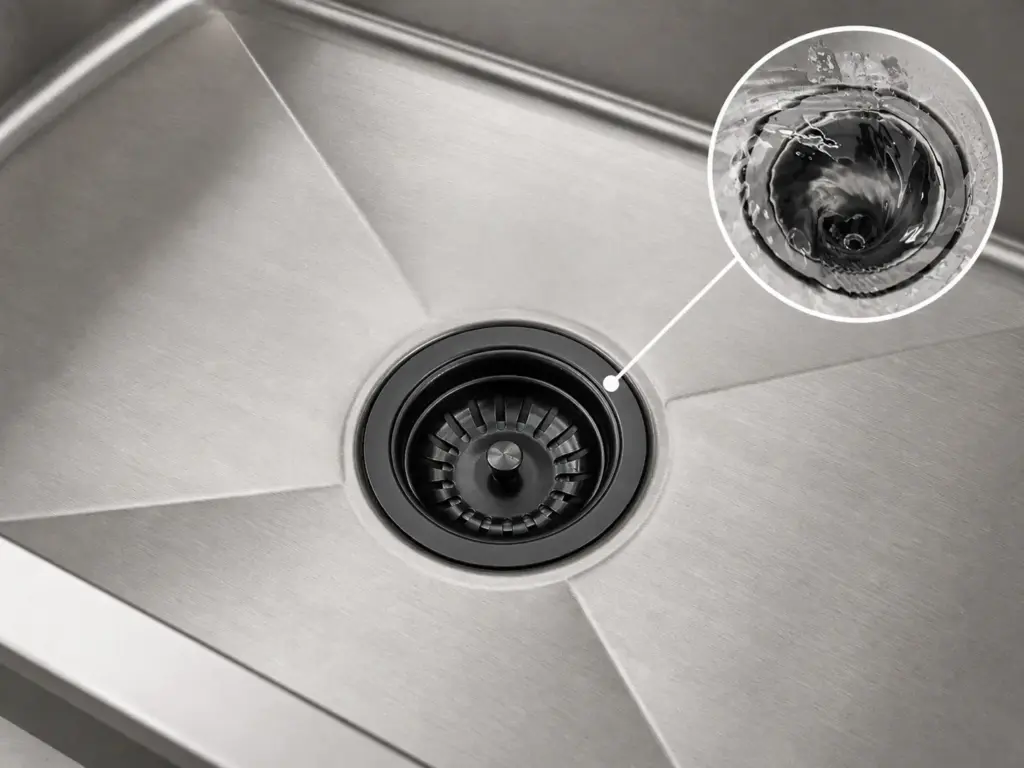
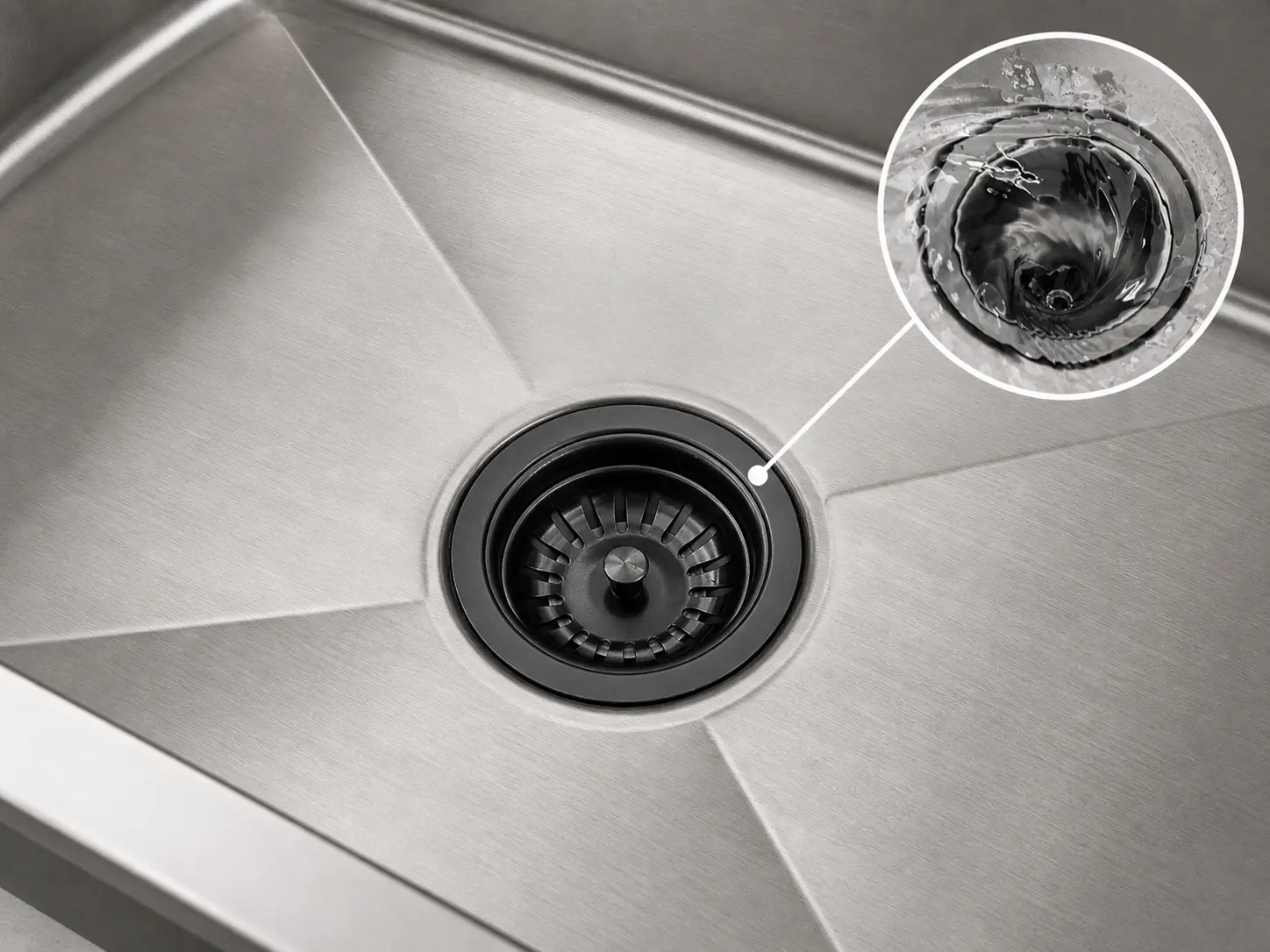
In many North American residential kitchens, the common sink opening for a basket strainer or garbage disposal is 3.5 inches in diameter.
In metric product descriptions, a similar opening is frequently listed as 90 mm. This size is widely used on stainless steel single-bowl, double-bowl and workstation sinks.
Matrix lists the standard 3.5-inch or 90 mm option among its stainless steel kitchen sink specifications.
However, not every sink uses this opening. Smaller or different drain sizes may appear on:
- bar and preparation sinks;
- compact RV or camper sinks;
- laundry and utility sinks;
- commercial hand-wash basins;
- older sinks;
- sinks designed for a specific regional waste kit;
- decorative sinks with proprietary drain assemblies.
Do not identify the hole size from the sink category alone. Check the technical drawing or measure the actual opening.
Is 3.5 inches the same as 90 mm?
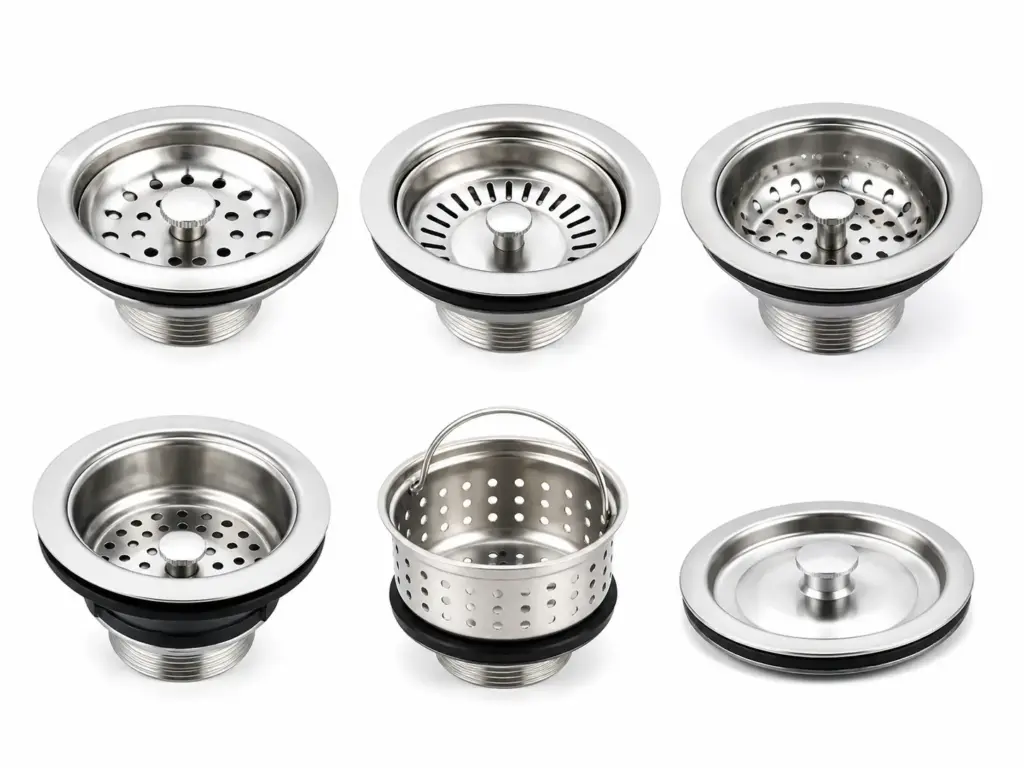
They are close, but they are not mathematically identical.
- 3.5 inches = 88.9 mm
- 90 mm = approximately 3.54 inches
The difference is only 1.1 mm, so the terms are often used as market equivalents. Many drain and disposal flanges have enough designed coverage or mounting range to work with openings in this general size class.
But a product title is not a manufacturing tolerance.
For household replacement, “3.5 inch / 90 mm” often provides a useful compatibility indication. For an OEM drawing, inspection standard or private-label specification, the buyer should state:
- nominal hole diameter;
- permitted dimensional tolerance;
- measurement method;
- flange or waste-kit model;
- sealing-land dimensions;
- sample-fit requirement.
Writing “3.5 inch / 90 mm” on a drawing without clarifying which value controls can create an avoidable disagreement during inspection.
Four drain dimensions people commonly confuse
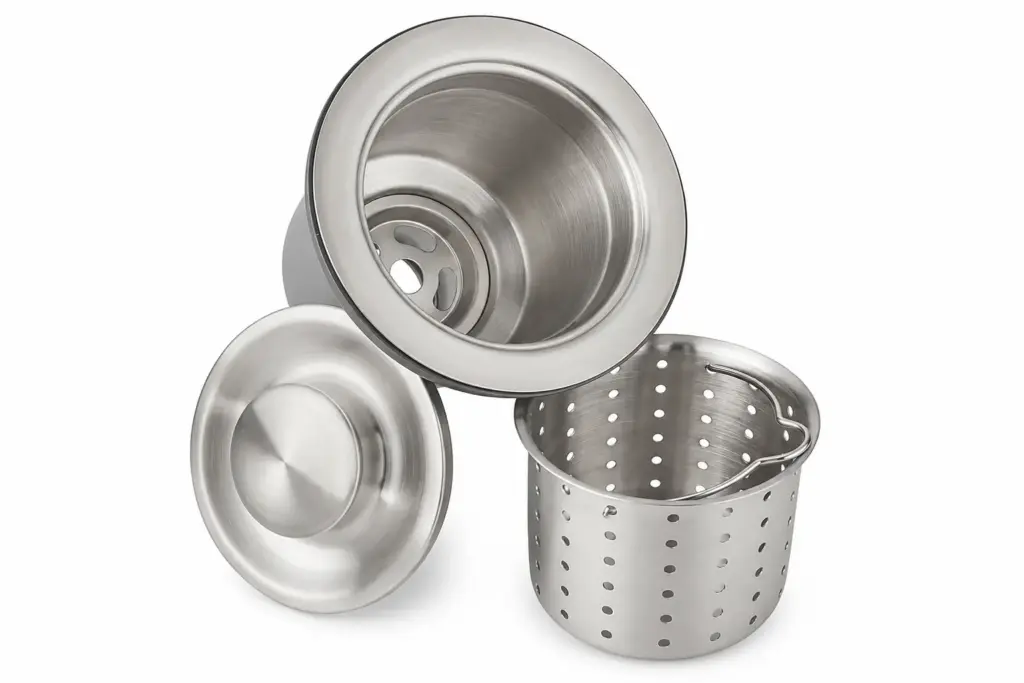
A kitchen sink can be described with several drain-related measurements. They are not interchangeable.
1. Sink drain-hole diameter
This is the diameter of the opening formed in the sink bowl.
It is the first dimension to compare with a basket strainer or disposal flange.
2. Flange outside diameter
The flange has a visible upper lip that overlaps the sink surface around the hole. Its outside diameter is larger than the opening it passes through.
Measuring across this visible lip does not give you the sink-hole size.
3. Drain-body or threaded connection size
A basket strainer has a body below the sink that connects to the waste plumbing. This dimension can be described differently from the upper opening.
4. Waste-pipe diameter
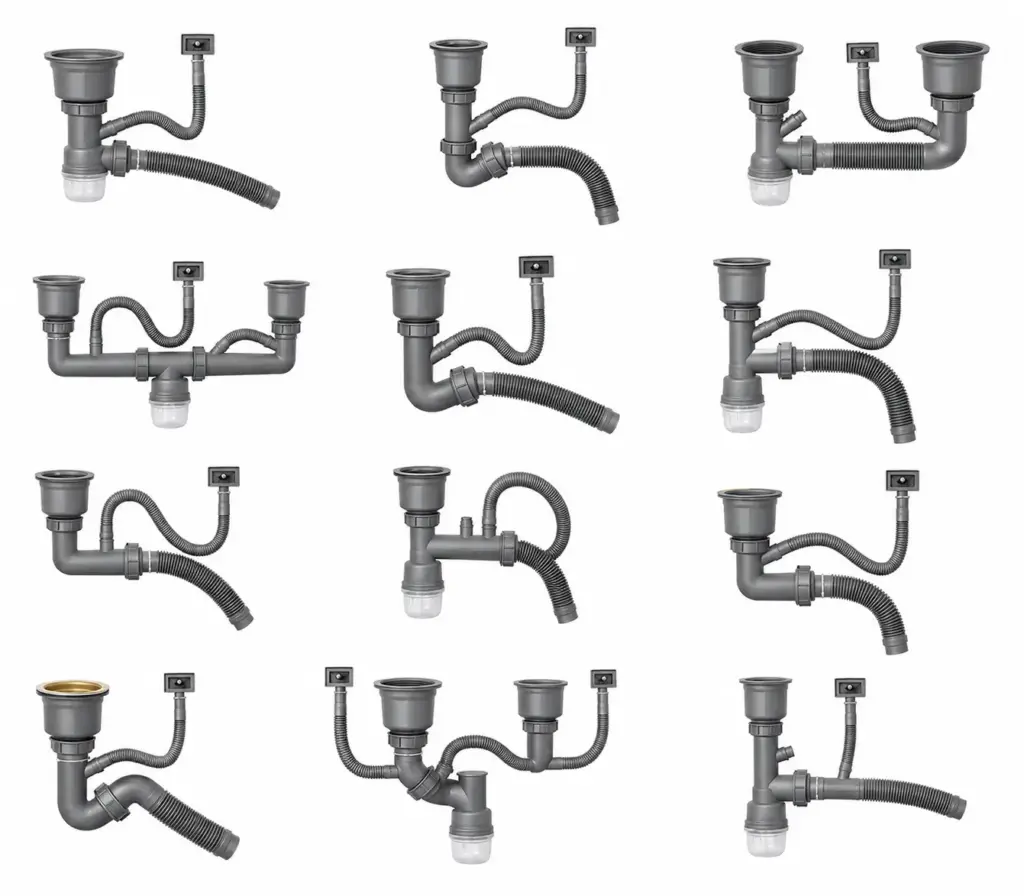
The drain pipe carries water from the strainer or disposal toward the trap and wall connection. A common 1.5-inch waste-pipe description refers to the plumbing connection—not to a 1.5-inch sink hole.
This distinction explains why a sink can have a 3.5-inch opening but connect to a much smaller waste pipe.
Counterintuitive truth: a standard drain hole does not guarantee disposal compatibility
A standard-size opening answers only one question: can a suitable flange pass through and seal around the hole?
It does not confirm that:
- the disposal mounting ring matches the flange;
- the sink is thin or thick enough for the supplied hardware;
- the disposal body clears the cabinet floor and walls;
- the discharge outlet sits above the wall drain;
- the trap can be arranged with the required slope;
- the dishwasher hose can connect correctly;
- the electrical supply and switch arrangement are suitable;
- local rules allow the planned installation.
This is why “fits a 3.5-inch opening” and “fits this kitchen” are not the same statement.
How a garbage disposal attaches to the sink
A garbage disposal is not normally attached to the basket strainer supplied with a standard sink.
The disposal uses its own compatible sink flange and mounting assembly. In a typical installation:
- the disposal flange enters the sink opening from above;
- a seal is formed between the flange and sink surface;
- the mounting components are secured below the sink;
- the disposal body locks or bolts into the matching mount;
- the discharge connects to the trap and waste plumbing.
If a new sink includes a conventional basket strainer, that strainer is normally used only when no disposal is installed in that bowl. It is removed and replaced by the disposal-compatible flange when a disposal is added.
Do not assume the sink’s decorative strainer can remain in place above the disposal. The flange and mount form part of the disposal support system and should follow the disposal manufacturer’s instructions.
Are garbage disposal mounting systems universal?
No. The sink-opening size may be widely shared, but the mounting interface is not completely universal.
Different disposals may use:
- a three-bolt mounting assembly;
- a quick-lock or twist-lock style mount;
- model-specific rings, gaskets or flanges;
- extended hardware for thicker sinks;
- special flanges for non-standard openings.
A flange that fits the sink hole may still fail to connect to the selected disposal body.
The safest approach is to use the mounting components supplied or specifically approved for that disposal model. When replacing only the disposal, verify whether the existing sink flange and mount are compatible with the new unit instead of assuming they can be reused.
How to measure a kitchen sink drain hole
Measure the sink opening itself, not the visible top of the installed strainer.
If the drain assembly has already been removed
- Clean residue from the opening edge.
- Measure straight across the internal opening through its center.
- Take a second measurement at 90 degrees to check whether the hole is round.
- Record the narrowest and widest readings if the opening is not perfectly uniform.
- Measure the thickness and flat sealing area around the hole when fitting a special flange.
A caliper is more useful than a flexible tape for checking the opening accurately.
If the strainer or disposal is still installed
Do not estimate the hole from the exposed flange diameter. Find the sink or drain model drawing, or remove the assembly safely before measuring.
Before removing an existing disposal, disconnect its power at the breaker and support the unit because it can be heavy. Plumbing and electrical work should be completed by a qualified installer when required.
What makes a 3.5-inch sink disposal-ready?
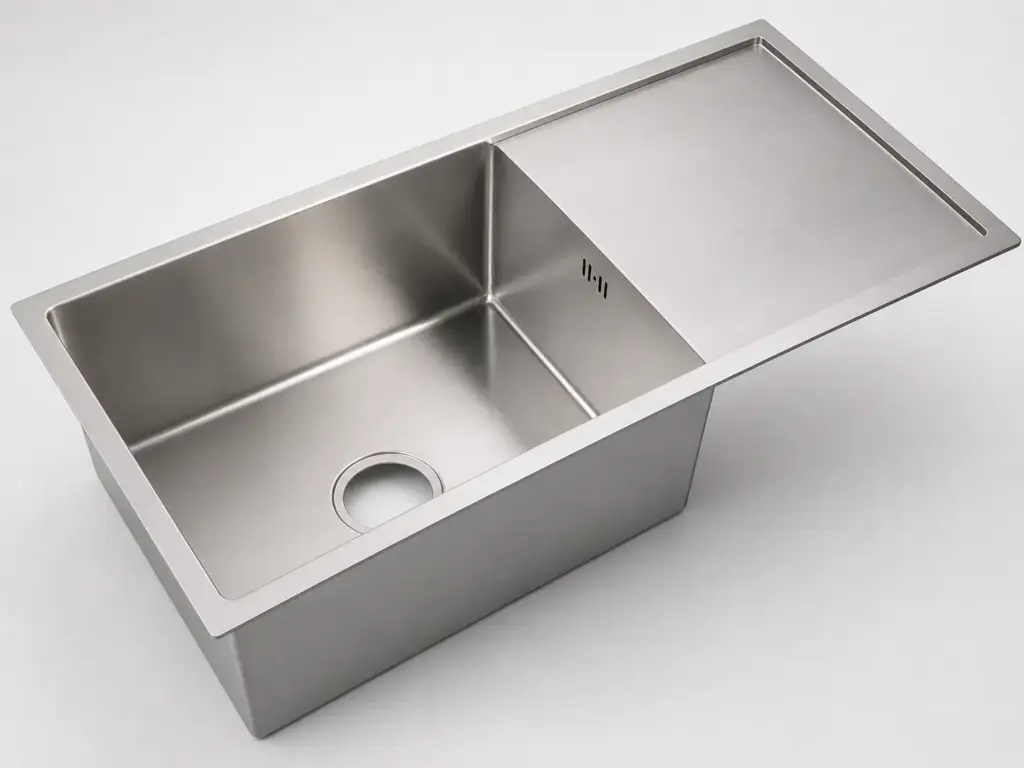
A disposal-ready sink needs more than the nominal hole diameter.
Check the following.
1. A round, accurately formed opening
The hole should be round enough for the flange to sit centrally. Excessive ovality, burrs or an irregular cut edge can interfere with sealing and alignment.
2. A flat sealing land
The area immediately around the drain should provide a stable surface for the flange.
Deep embossing, sharp decorative channels or an uneven depression close to the opening can prevent uniform contact.
3. Compatible sink thickness
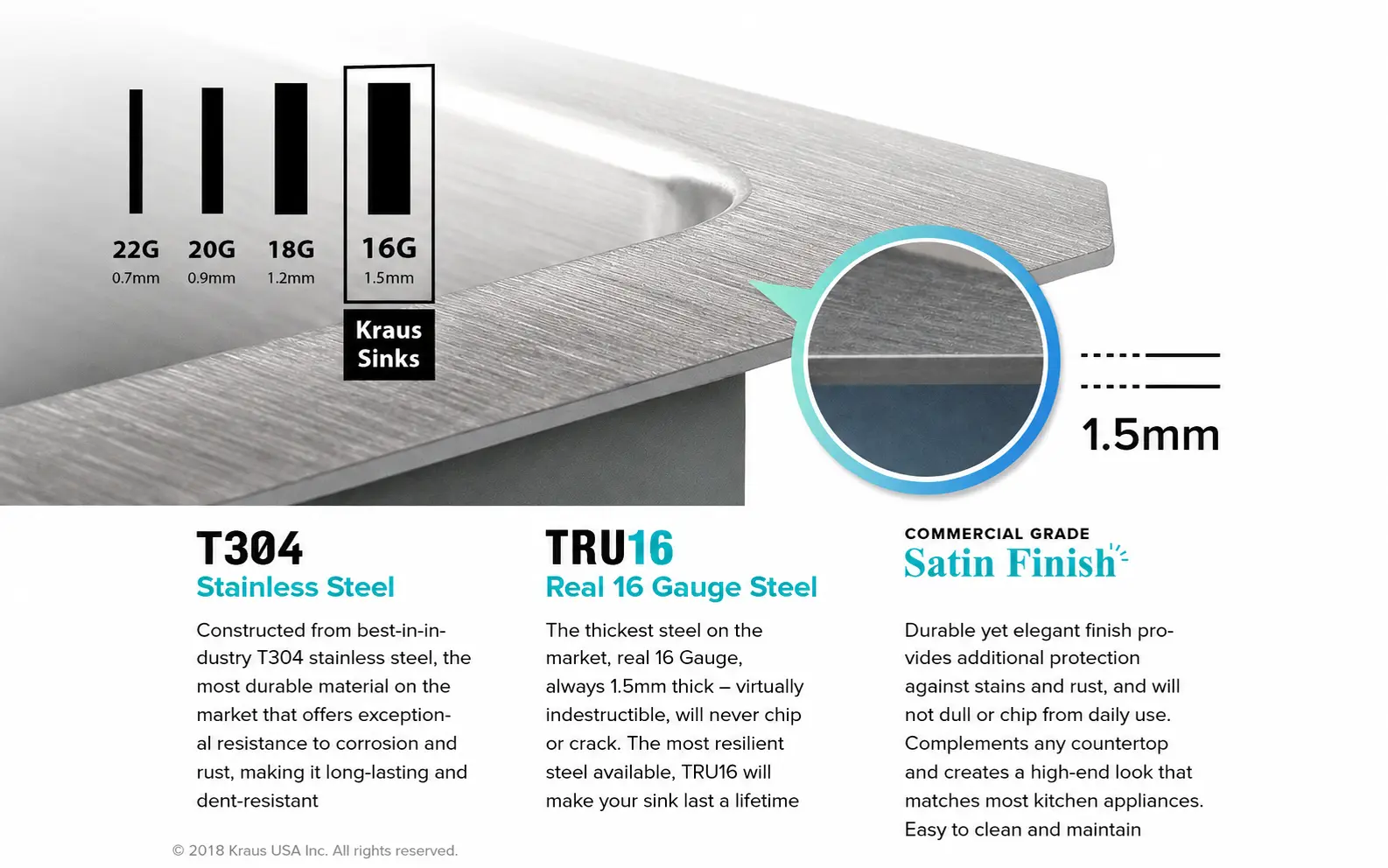
Standard stainless steel sinks are relatively thin at the drain area, but composite, stone, fireclay or heavily built sinks may require a longer flange or extended mounting hardware.
Do not compare only the visible bowl material. Measure the actual mounting thickness at the opening.
4. Enough space below the bowl
The disposal body must clear:
- the cabinet floor;
- cabinet sidewalls and face frame;
- drawers or pull-out organizers;
- water filters and storage systems;
- sink supports;
- plumbing and shutoff valves.
5. A workable discharge height
The disposal outlet must connect to the trap and wall drain without forcing wastewater uphill.
This is one of the most frequently missed checks when replacing a shallow sink with a deeper model.
6. Correct plumbing and electrical preparation
The cabinet needs a suitable waste connection, trap arrangement and electrical supply. If a dishwasher connects through the disposal, the selected unit must provide the correct inlet and the installation must follow its instructions.
Counterintuitive truth: bowl depth can matter more than drain-hole size
A deep sink moves the drain opening—and therefore the disposal—lower inside the cabinet.
For example, replacing an 8-inch-deep bowl with a 10-inch-deep bowl lowers the entire disposal connection by approximately 2 inches if the countertop height remains unchanged.
That can create a problem even when both sinks have the same 3.5-inch opening.
If the disposal discharge becomes level with or lower than the wall-drain connection, the trap may not drain correctly without plumbing changes. A larger disposal body can also reduce storage or touch the cabinet floor.
Before buying a deep kitchen sink, check:
- countertop underside to cabinet floor;
- sink bowl depth;
- disposal height;
- vertical position of the disposal outlet;
- wall-drain centerline height;
- trap space;
- required drainage slope.
Do not use a generic clearance rule when the actual disposal drawing is available. Model dimensions and the existing plumbing should control the decision.
Center drain vs rear drain for a garbage disposal
Both center-drain and rear-drain sinks can support a disposal when the complete layout is compatible.
Center drain
A center drain can provide a symmetrical bowl and straightforward water flow. The disposal occupies the central area of the base cabinet, which may divide the remaining storage space.
Rear drain
A rear or rear-offset drain can leave more usable cabinet space toward the front. It can also move the disposal closer to the wall plumbing.
However, a rear drain is not automatically easier. The disposal body may conflict with the cabinet back, wall connection, faucet hoses or other equipment.
The best drain position depends on the cabinet and plumbing plan, not only on bowl appearance.
Single-bowl sink disposal compatibility
A single-bowl kitchen sink usually provides a simple disposal layout because there is only one bowl outlet.
Before installation, confirm:
- the drain opening and flange;
- the disposal body clearance;
- the wall-drain height;
- dishwasher connection if required;
- access to the reset control and electrical connection;
- space for maintenance.
The main tradeoff is that all sink drainage passes through the disposal opening. If the unit is removed later, the bowl will need a compatible replacement strainer and plumbing connection.
Double-bowl sink disposal compatibility
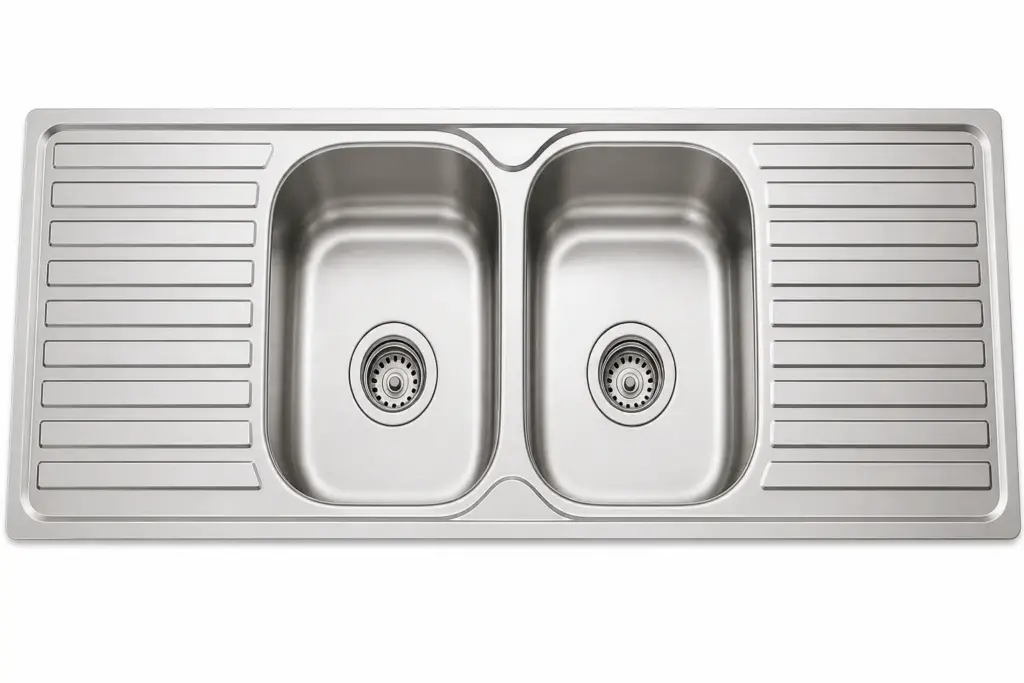
A double-bowl kitchen sink can normally use a disposal on one bowl and a basket strainer on the other, provided that the two waste outlets can be connected correctly.
The disposal side should be chosen after checking:
- dishwasher position;
- wall-drain location;
- bowl depths;
- available cabinet space;
- continuous-waste or separate-connection layout;
- user preference for food preparation and washing.
Do not select the disposal side from habit alone. A rear-offset drain or unequal bowl arrangement can make one side much easier to plumb than the other.
Workstation sink disposal compatibility
A standard round drain opening in a workstation kitchen sink can be compatible with a disposal.
The workstation ledges do not normally determine disposal fit, but matched accessories may affect usability around the drain. Check whether:
- the bottom grid aligns with the disposal opening;
- a decorative drain cover can still be removed easily;
- the stopper works with the disposal flange;
- the drain remains accessible below cutting boards or colanders;
- the disposal body clears the deeper workstation bowl.
A square decorative drain cover does not necessarily mean the sink has a square drain hole. Some designs hide a conventional round opening below the cover. Confirm the drawing instead of judging from the visible cover.
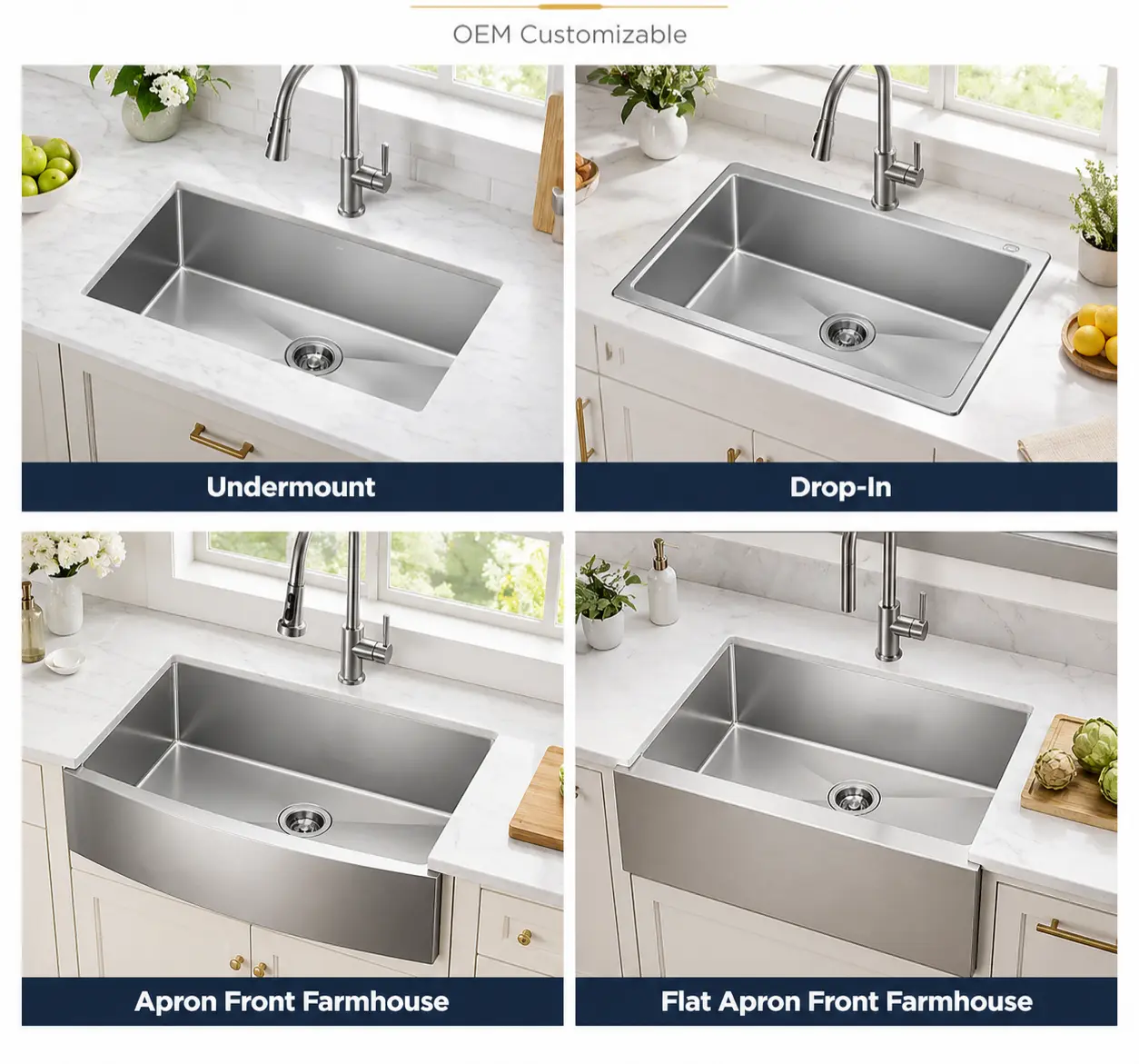
Can a garbage disposal fit an undermount or top-mount sink?
Yes. Installation type alone does not prevent disposal use.
Both undermount and top-mount sinks can accept a disposal when the drain opening, flange, thickness and cabinet layout are compatible.
What changes is the total vertical position:
- an undermount bowl begins below the countertop;
- a top-mount bowl sits from the countertop opening and rim;
- an apron-front sink may require a special support frame;
- a thick composite or fireclay sink may need extended mounting components.
The disposal must not be used as structural support for the sink. Heavy sinks and apron-front models require their own proper cabinet support.
Can colored stainless steel sinks use a garbage disposal?
The hole-size and mounting principles are the same, but the visible flange becomes part of the design.
For black, gold, grey or other colored sinks, buyers may want a matching disposal flange and stopper. Confirm:
- flange compatibility with the disposal mount;
- color and gloss match;
- resistance of the visible finish to routine cleaning;
- sealing contact around the coated sink surface;
- availability of replacement components.
A visually matching flange should never be selected on color alone. It still needs to fit the opening and disposal system.
What if the sink has a non-standard drain opening?
Do not enlarge or modify the sink before checking available options.
Depending on the sink and disposal, a compatible adapter or special flange may exist. In other cases, the opening, sealing area or sink construction may make a standard disposal unsuitable.
Possible situations include:
- opening slightly smaller or larger than the standard range;
- square or rectangular opening;
- unusually thick sink base;
- integral drain structure;
- deep decorative drain recess;
- insufficient flat area around the opening.
Modification can damage the finish, distort stainless steel, weaken the drain area or remove the flat sealing surface. Ask the sink supplier, disposal supplier or qualified installer to review the actual dimensions first.
B2B drain-hole specification checklist
For brands, importers, wholesalers and project buyers, “standard drain” is not a complete purchase specification.
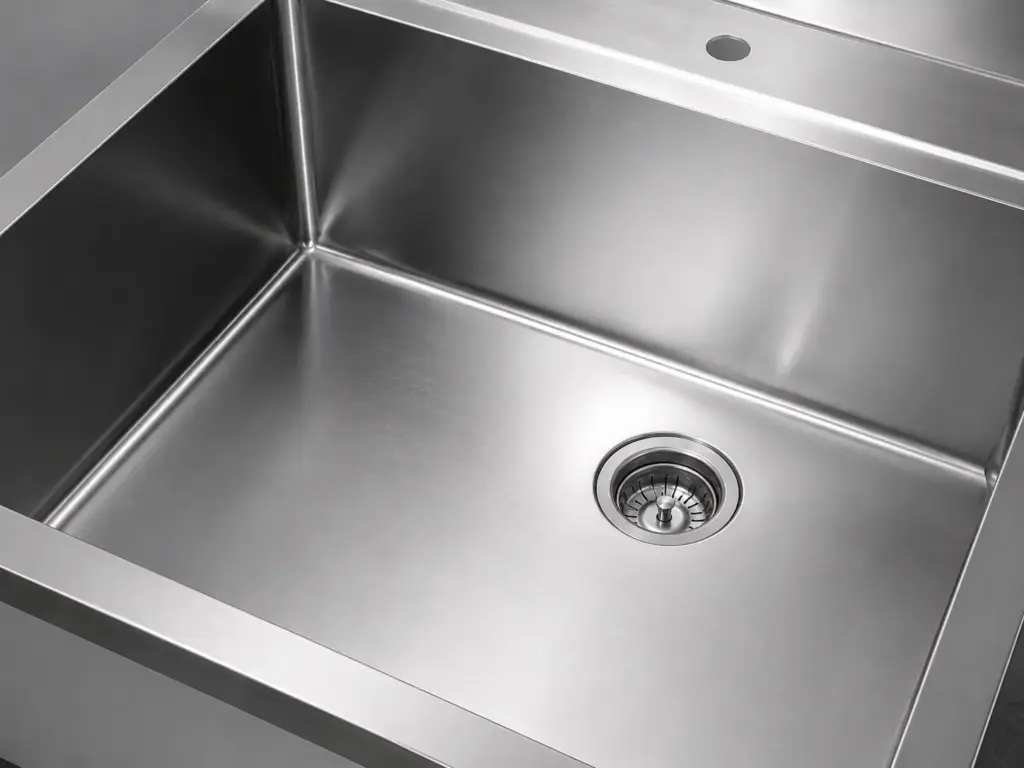
The product drawing should define:
- nominal drain-hole diameter;
- diameter tolerance;
- hole center position;
- drain emboss or recess dimensions;
- flat sealing-land width;
- finished thickness at the opening;
- edge condition and burr requirement;
- bowl slope toward the drain;
- specified strainer or disposal flange;
- bottom-grid and drain-cover clearance.
The accessory list should also state whether the sink is supplied with:
- basket strainer;
- waste-pipe components;
- stopper;
- decorative drain cover;
- disposal-compatible flange;
- no drain assembly.
Without this distinction, a buyer may assume that an included “drain” is a disposal mounting flange when it is only a normal basket strainer.
How to test disposal compatibility on a sample
For a product line marketed as disposal-compatible, do not rely only on a caliper reading.
Use the intended flange or a controlled reference component and check:
- whether it passes through the opening correctly;
- whether the upper flange sits flat and centered;
- whether the gasket and lower mount have enough engagement;
- whether drain embossing interferes with the assembly;
- whether the sink distorts when the mount is tightened correctly;
- whether the seal remains dry during a water test;
- whether the disposal locks into the mount;
- whether the bottom grid and stopper remain usable;
- whether the final installation clears the cabinet and plumbing.
Record the flange model used during approval. A statement such as “tested with standard flange” is difficult to repeat if no reference part or dimensional range is identified.
The Matrix stainless steel sink quality inspection checklist covers additional checks for dimensions, drainage, accessories and batch consistency.
Counterintuitive truth: the included strainer is not proof of disposal compatibility
A high-quality basket strainer proves that the sink can be assembled with that strainer. It does not prove that a disposal flange has the same mounting depth, sealing profile or lower connection.
Similarly, a disposal can fit the drain opening but still fail the cabinet-clearance or plumbing test.
For a reliable retail claim, verify three separate layers:
- Sink interface — opening, sealing land and thickness;
- Disposal interface — flange and mounting system;
- Kitchen interface — cabinet, plumbing, dishwasher and power.
Only when all three work together is the installation genuinely compatible.
Recommended approach for private-label sink programs
For a residential sink program targeting markets where food-waste disposals are common, a round 3.5-inch-class opening is the logical baseline.
The buyer should still decide whether the product will be sold as:
- compatible with a defined disposal flange or mounting range;
- supplied with a normal basket strainer only;
- supplied with an optional disposal flange;
- not evaluated for disposal installation.
Avoid an unsupported “universal garbage disposal compatible” claim. A more accurate specification states the tested drain opening, sink thickness and reference flange while reminding the installer to confirm cabinet and plumbing clearance.
For markets where disposals are uncommon, prioritize compatibility with the local waste kit rather than copying a North American accessory set without review.
Final compatibility checklist for homeowners
Before buying a sink or disposal, confirm:
- The sink has a round 3.5-inch or compatible approximately 90 mm opening.
- The disposal flange fits the actual opening and sink thickness.
- The flange and mount are approved for the selected disposal.
- The disposal body fits inside the cabinet.
- The discharge outlet remains above a workable trap and wall-drain connection.
- The bowl depth has been included in the height calculation.
- The dishwasher connection is available if needed.
- The electrical supply and switch arrangement are suitable.
- Bottom grids, stoppers and drain covers remain usable.
- Local installation requirements have been checked.
If any of these items is unknown, obtain the sink drawing and disposal installation dimensions before ordering.
Develop drain-compatible sink programs with Matrix
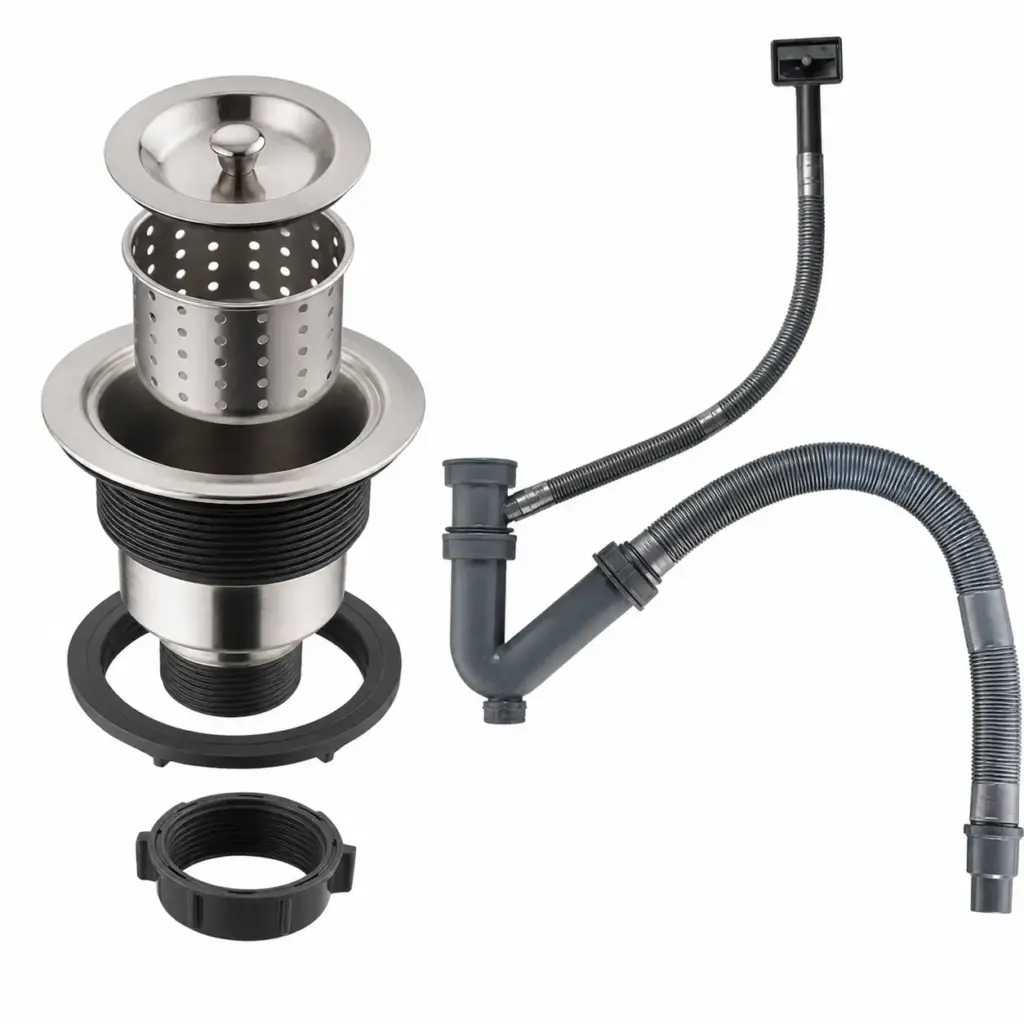
Matrix supports brands, wholesalers and project buyers with custom stainless steel kitchen sinks, including drain-hole size, drain position, bowl depth, installation structure and matched accessory options.
For a disposal-compatible sink inquiry, provide:
- target country and sales channel;
- sink type and overall dimensions;
- bowl depth and drain position;
- required opening diameter and tolerance;
- reference waste kit or disposal flange;
- sink material and thickness;
- bottom grid or drain-cover design;
- packaging and private-label requirements;
- expected order quantity.
Contact Matrix to review a sink drawing, sample-fit requirement or private-label product specification.
Frequently asked questions
What is the standard kitchen sink drain-hole size?
A 3.5-inch round opening is common for residential kitchen sinks in North America. It is frequently described as approximately 90 mm in metric product information. Check the actual drawing because non-standard sizes also exist.
Is a 90 mm drain hole compatible with a garbage disposal?
Often, but not automatically. A standard disposal flange may be designed for an opening in this size class, but the exact flange range, mounting system, sink thickness and cabinet layout must still be confirmed.
Is 3.5 inches exactly 90 mm?
No. Three and a half inches equals 88.9 mm. The two descriptions are often treated as market equivalents, but an engineering drawing should state one controlling dimension and its tolerance.
Can I use the strainer supplied with the sink above a garbage disposal?
Normally no. A garbage disposal generally requires its own compatible flange and mounting assembly. The conventional basket strainer is removed from the bowl where the disposal will be installed.
Do all garbage disposals use the same mounting flange?
No. Different mounting systems exist. Even when several disposals fit the same standard sink opening, their flange-to-disposal connections may differ.
Does a deep sink work with a garbage disposal?
It can, but a deeper bowl lowers the disposal and its discharge outlet. Confirm cabinet height, wall-drain position and trap layout before installation.
Can a double-bowl sink have a garbage disposal?
Yes. A disposal can commonly be installed on one bowl while the other uses a basket strainer. The connection between both bowls, the trap and the wall drain must be planned correctly.
Does a square drain cover prevent disposal installation?
Not necessarily. Some square covers hide a standard round opening. Remove the cover or check the technical drawing to identify the real hole shape and size.
Is a 1.5-inch drain the same as a 1.5-inch sink hole?
No. A 1.5-inch dimension often refers to the waste pipe or disposal discharge. The sink opening above it may still be approximately 3.5 inches.
What should B2B buyers confirm before approving production?
Confirm the exact hole diameter and tolerance, drain position, sealing land, finished thickness, reference flange, accessory list, water-test result and batch inspection method.