Many bathroom sinks have a small opening near the top of the bowl, while many kitchen sinks do not.
This raises an obvious question:
Does a kitchen sink need an overflow hole to prevent flooding?
Not necessarily.
Kitchen sink overflow requirements and buying preferences vary by region, product standard, project specification and drainage system. A visible overflow opening is common in some European markets, while many North American kitchen sinks are manufactured without one.
The more accurate answer is:
- A kitchen sink does not universally require a visible overflow hole.
- Some markets or product specifications require overflow protection.
- An open, non-closeable drain may sometimes serve as the overflow-protection method.
- A sink overflow reduces risk but cannot guarantee that the kitchen will never flood.
- The sink, overflow fitting, waste kit and garbage disposal must be designed as one compatible system.
Quick Decision Table
| Situation | Is an overflow hole usually useful? |
|---|---|
| Sink frequently filled with a stopper | Yes, it provides a secondary water path |
| North American sink with garbage disposal | Often omitted unless a compatible system is available |
| European-market domestic sink | Overflow protection is commonly expected |
| Sink with a permanently open outlet | A separate hole may provide limited additional benefit |
| Commercial food-preparation sink | Follow the project and local hygiene specification |
| Double-bowl sink | Depends on whether the bowls are hydraulically interconnected |
| Custom B2B product program | Decide from the target market before production |
| Sink with an unconnected overflow opening | No—the opening creates a leak risk |
What Is a Kitchen Sink Overflow?
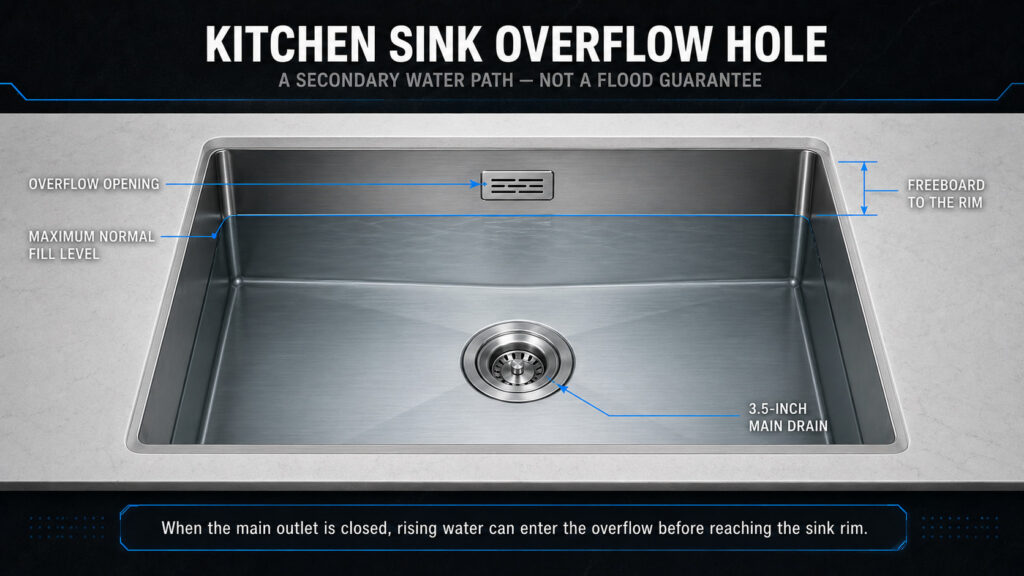
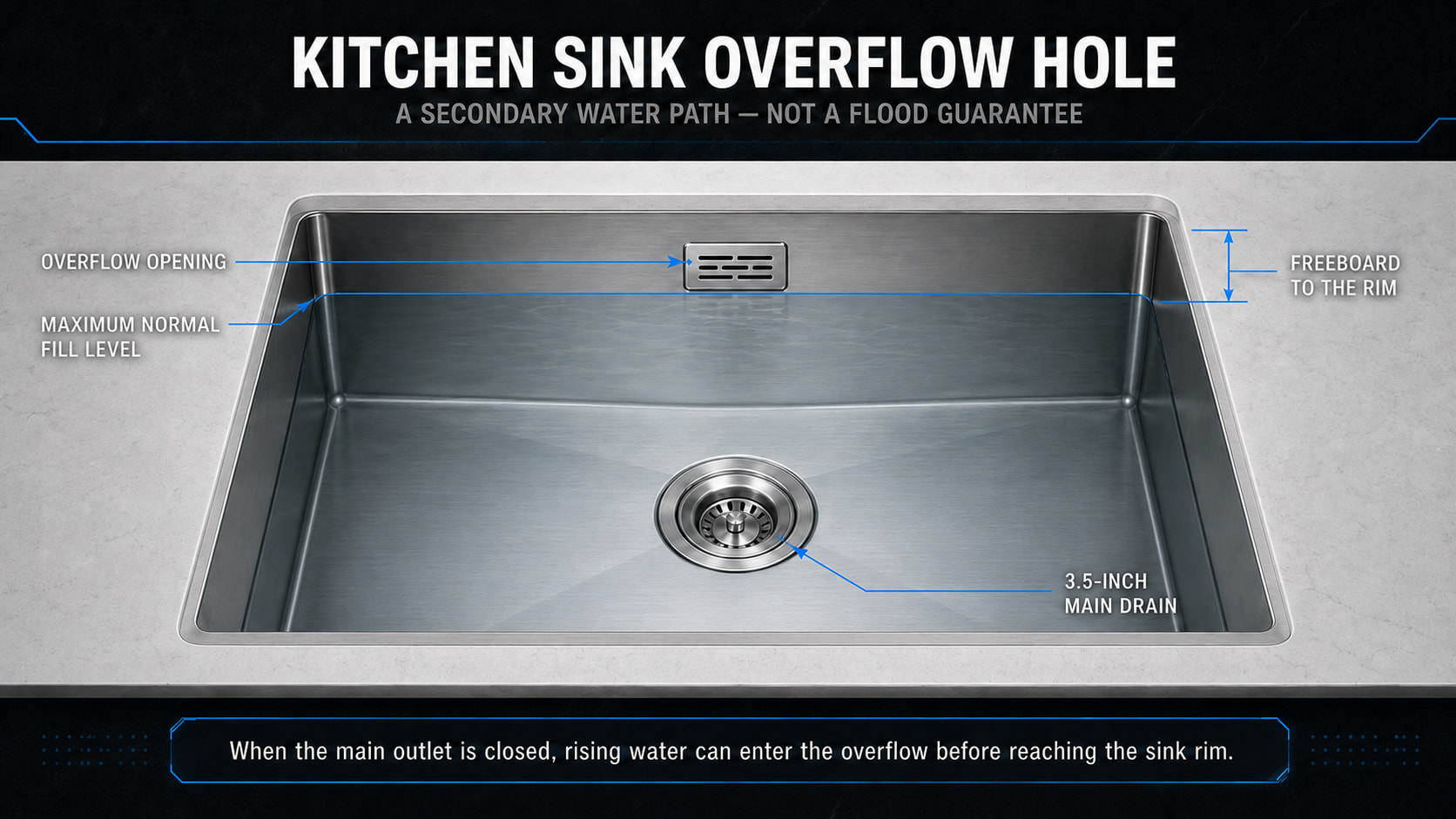
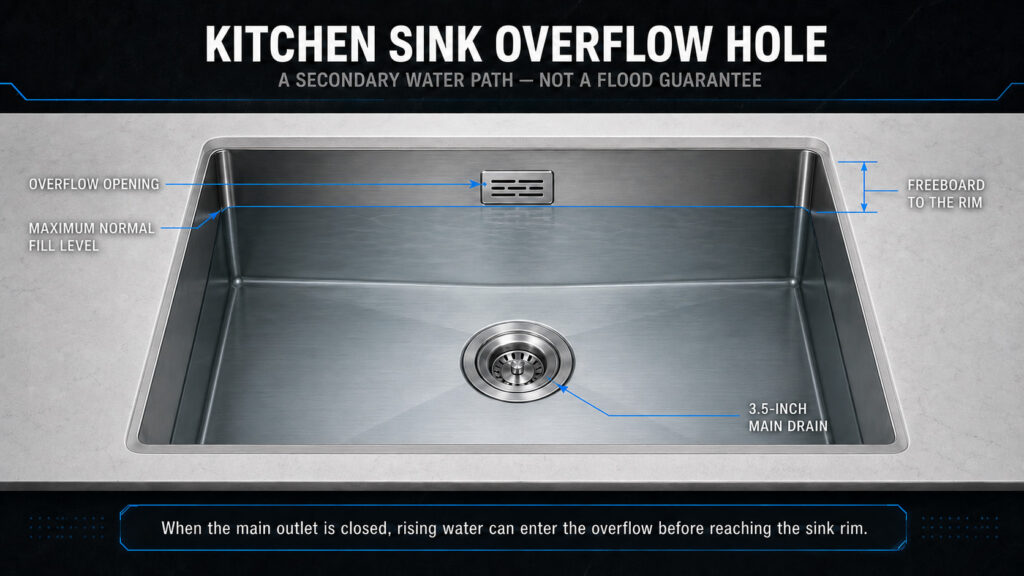
A kitchen sink overflow is a secondary opening positioned below the upper rim of the bowl.
When the normal drain is closed and the water reaches the overflow opening, water enters the overflow channel and is directed back into the waste system.
A typical overflow system includes:
- An opening in the sink wall
- A visible overflow cover or grille
- A gasket behind the bowl
- A rigid or flexible overflow channel
- A connection to the sink waste fitting
- A discharge path on the sink side of the P-trap
The overflow normally joins the same drainage system as the main sink outlet. It is not a completely independent emergency drain.
That limitation is important.
What an Overflow Can—and Cannot—Do
An overflow may help when:
- The sink stopper is closed
- The faucet is accidentally left running
- The main drain opening is temporarily blocked by a plug
- Water rises slowly enough for the overflow to carry it away
- The overflow channel and downstream drain remain clear
An overflow may not prevent flooding when:
- The faucet supplies water faster than the overflow can discharge
- Food residue has restricted the overflow channel
- A cloth, container or accessory covers the opening
- The blockage is downstream of both the main drain and overflow connection
- The overflow hose is kinked or incorrectly installed
- The overflow fitting leaks into the cabinet
- Both bowls of a double sink are filled or blocked
- Water is splashing over the rim rather than rising gradually
An overflow is therefore a secondary risk-reduction feature—not a guaranteed flood-prevention system.
Why Many Kitchen Sinks Do Not Have Overflow Holes
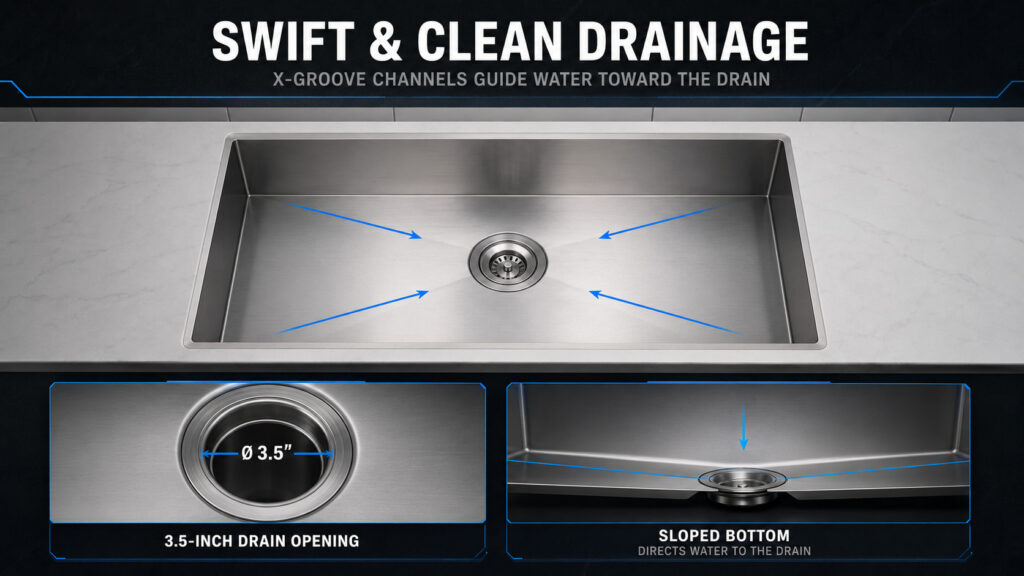
Several practical factors explain why overflow-free kitchen sinks are common.
1. Kitchen sinks often use a large basket-strainer outlet
Many kitchen sinks use a nominal 3½-inch drain opening. When the basket is open, this provides a large route for water and food particles.
Bathroom basins generally use smaller waste openings and are more frequently filled with a stopper, making a built-in overflow more common.
2. Garbage disposals complicate the overflow connection
A garbage disposal mounts directly beneath the sink drain. A standard disposal flange may not provide a connection for the sink overflow hose.
The overflow cannot simply be connected to any available port. In particular, a dishwasher inlet on a disposal is not automatically an approved overflow connection.
The installation requires a waste fitting, adapter or disposal system specifically designed for the overflow arrangement.
For more information about drain and disposal dimensions, read the Matrix Kitchen Sink Drain Hole Sizes and Garbage Disposal Compatibility Guide.
3. Kitchen sink overflows require additional cleaning
Grease, detergent, food residue and dirty water can enter the overflow opening.
Because the channel is normally hidden behind the bowl, residue may remain unnoticed and contribute to:
- Odors
- Biofilm
- Discoloration around the cover
- Reduced overflow capacity
- Blocked or slow overflow drainage
A sink without an overflow has fewer hidden surfaces and connections to maintain.
4. The hole reduces maximum usable water depth
The overflow determines the highest normal water level when the drain is closed.
Placing it lower provides more freeboard against flooding but reduces the usable filling depth. Placing it very close to the rim increases bowl capacity but leaves less time for the overflow to react.
5. Some markets normally leave the main outlet open
Where buyers rarely fill the complete sink bowl, a separate overflow may have less practical value.
This is partly a regional user habit rather than a universal engineering rule.
Regional Differences
The presence of an overflow should not be judged from appearance alone. Different markets use different standards and interpretations.
United States and Canada
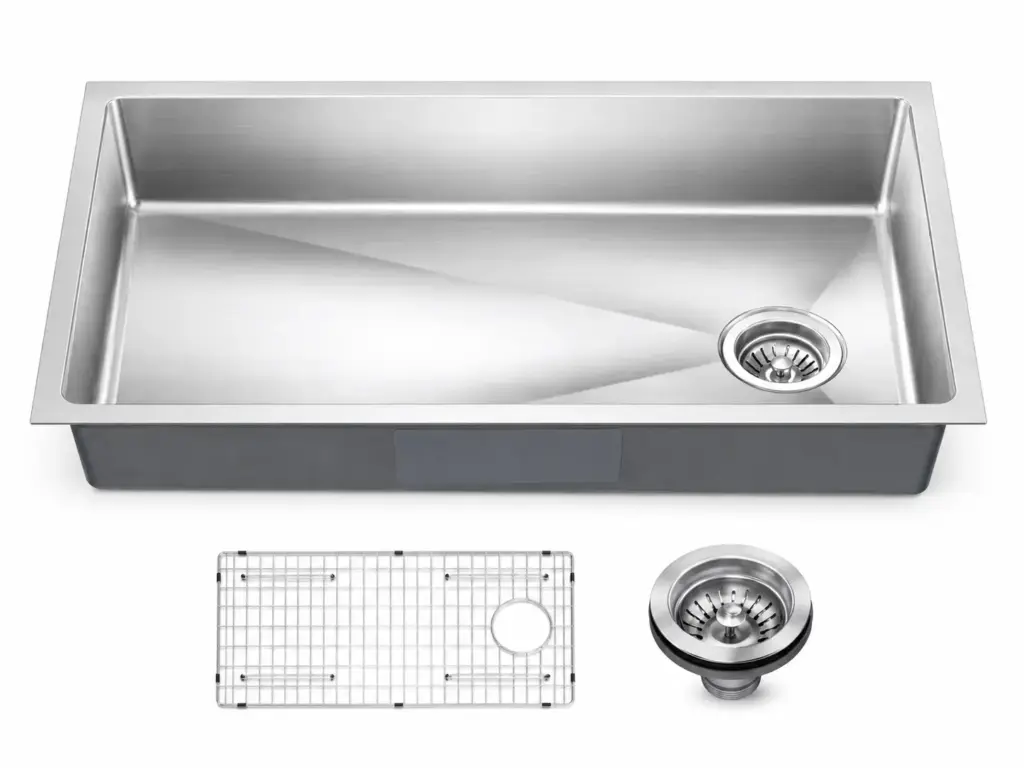
Many North American kitchen sinks are supplied without a visible overflow hole.
The 2024 International Plumbing Code requires sinks to have an appropriately sized waste outlet, but it does not state that every kitchen sink must have a separate overflow opening. Its overflow provisions apply when an overflow is provided.
This indicates that, under this model-code approach, the overflow is not a universal requirement for every kitchen sink. However:
- States, provinces and local authorities may adopt different code editions.
- Project specifications may impose additional requirements.
- The approved sink and waste fitting must still be installed according to their instructions.
- An overflow, when provided, must connect to the drainage system on the fixture side of the trap.
North American garbage-disposal use is another reason buyers should verify compatibility before specifying an overflow sink.
United Kingdom and European Markets
For domestic sinks specified to EN 13310 or its national versions, overflow protection is treated as a functional performance requirement.
The standard requires a kitchen sink to be protected against overflowing and specifies a minimum overflow flow rate of 0.20 litres per second under its test conditions.
However, this does not mean that every conforming sink must have the same visible overflow hole.
The standard allows different protection methods, including:
- A dedicated overflow opening
- Interconnection between bowls
- A non-closeable outlet functioning as the overflow path
For a multi-bowl sink, one overflow may be sufficient when the bowls are interconnected in a way that allows the water to reach it.
The correct B2B conclusion is not “Europe always requires a visible hole.” It is:
Products specified to EN 13310 require an overflow-protection solution with defined performance, but the solution may vary by sink design.
The United Kingdom uses BS EN 13310 for applicable domestic kitchen sink specifications. Individual retail, construction and housing-project requirements should still be checked separately.
Australia and New Zealand
Australia and New Zealand have their own building, plumbing and product frameworks. Their requirements should not be assumed to be identical to either North America or Europe.
Australian construction provisions also distinguish between:
- A fixture having its own built-in overflow
- Overflow protection for the room or wet area
- Water-resistant construction around an inset kitchen vessel
- Floor wastes and other building-level measures
These are related flood-control concepts, but they are not the same as requiring every kitchen sink to have a visible overflow hole.
B2B buyers should confirm:
- The applicable national and local requirements
- The plumbing consultant’s project specification
- The selected waste and overflow assembly
- Whether a garbage disposal will be installed
- Any state or territory variation
The same caution applies to New Zealand projects, where the Building Code, acceptable solutions and project documentation may affect the final specification.
Middle East, Asia, Africa and Latin America
Requirements and customer expectations vary widely across these markets.
Some projects follow European-style specifications and expect an overflow. Others use North American-style sinks with 3½-inch basket strainers and garbage disposals. Retail buyers may also have preferences based on historic import sources.
The destination country alone is not always enough to make the decision.
Confirm the actual:
- Project specification
- Plumbing standard
- Retail-channel expectation
- Drain component
- Disposal requirement
- Installation method
A Visible Hole Is Not Always a Working Overflow
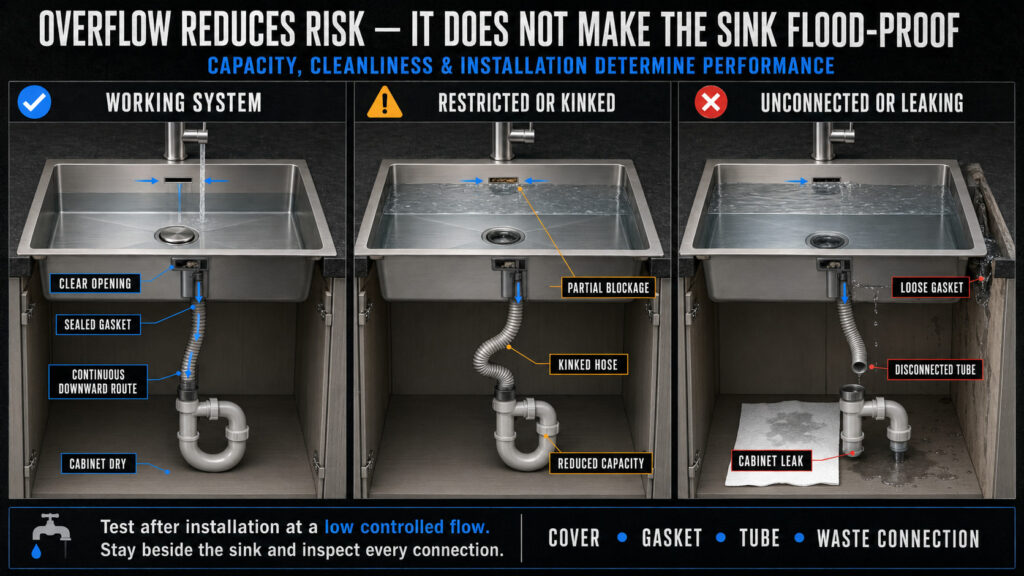
An overflow hole is useful only when every part behind it is installed and connected.
A sink may have a decorative overflow cover but still fail because:
- No overflow tube was supplied
- The tube was not connected
- The rear gasket is missing
- The cover screw is loose
- The waste fitting has no overflow inlet
- The hose has been folded or crushed
- The overflow connection is positioned after the trap
- The fitting does not match the hole shape
An unconnected overflow opening is worse than having no opening at all. When water reaches the hole, it can flow directly into the sink cabinet.
How an Overflow Should Connect
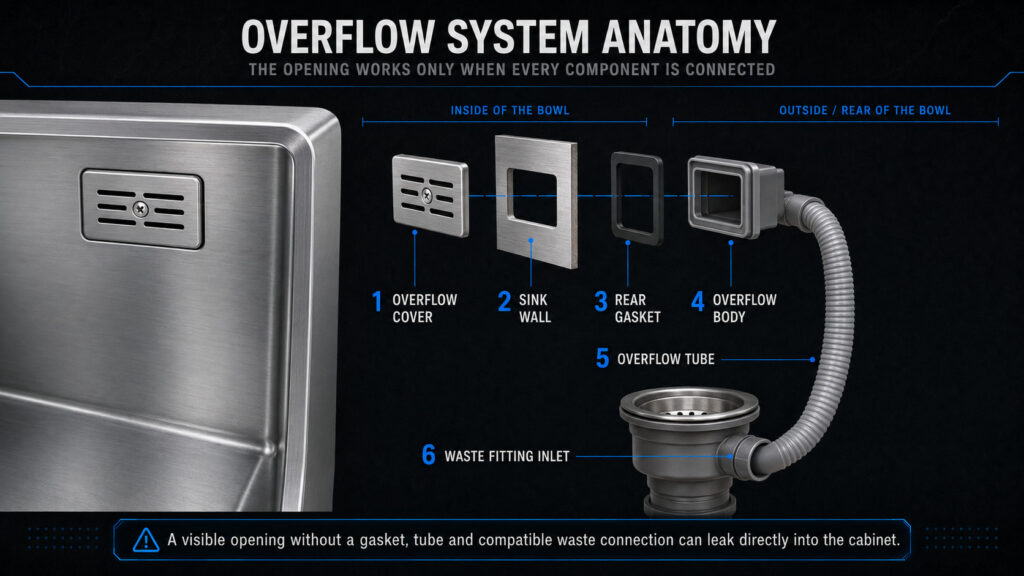
The overflow path should normally join the waste assembly before the P-trap.
This allows overflow water to enter the trapped drainage system without creating an open path for sewer gases.
A typical arrangement is:
Overflow opening → overflow tube → waste fitting inlet → P-trap → wall drain
The connection should:
- Drain completely when the sink is empty
- Avoid a low sag that holds dirty water
- Remain accessible for inspection
- Use the intended gasket and fastening method
- Avoid sharp kinks
- Remain watertight during a controlled test
Do not connect the overflow tube directly to a random hole in the drainpipe or garbage disposal.
Overflow Hole and Garbage Disposal Compatibility
A sink with an overflow can sometimes be used with a garbage disposal, but compatibility must be confirmed before purchase.
There are three common possibilities.
1. Compatible overflow-disposal system
A manufacturer-approved adapter or waste assembly provides a proper route from the overflow to the disposal-side drainage system.
This is the preferred solution where both features are required.
2. Sink overflow with no suitable disposal connection
The overflow opening is present, but the selected disposal flange and waste fittings do not accept it.
The buyer must change the disposal system, waste assembly or sink specification.
The overflow should not be left disconnected.
3. Overflow-free sink with standard disposal flange
This is a common North American arrangement.
The design is simpler, but the sink has no secondary route if the stopper is closed and the faucet is left running.
Before combining a disposal with an overflow sink, check:
- Sink drain-hole diameter
- Disposal flange dimensions
- Available overflow adapter
- Overflow inlet location
- Dishwasher connection
- P-trap layout
- Cabinet clearance
- Installation instructions
Never assume that the disposal’s dishwasher inlet can also serve as the sink overflow inlet.
Single-Bowl vs Double-Bowl Overflow Design
Single-bowl sink
A single bowl normally needs either:
- Its own overflow system
- A permanently open/non-closeable outlet
- Another accepted protection arrangement required by the applicable specification
Double-bowl sink with separate high dividers
If the bowls can be independently filled, each bowl may need its own protection unless the design safely transfers overflow water to the protected bowl.
Double-bowl sink with an interconnected overflow path
One overflow may protect both bowls if rising water from one bowl can reach the other bowl’s overflow before crossing the sink rim.
This must be part of the designed and tested structure. Two bowls sharing a P-trap does not automatically mean one overflow protects both.
Low-divide sink
A low divider may allow one bowl to spill into the second bowl before water reaches the external rim.
This can provide additional usable volume, but it does not guarantee protection if both drain outlets are blocked or the faucet flow exceeds the drainage capacity.
Does a Workstation Sink Need an Overflow?
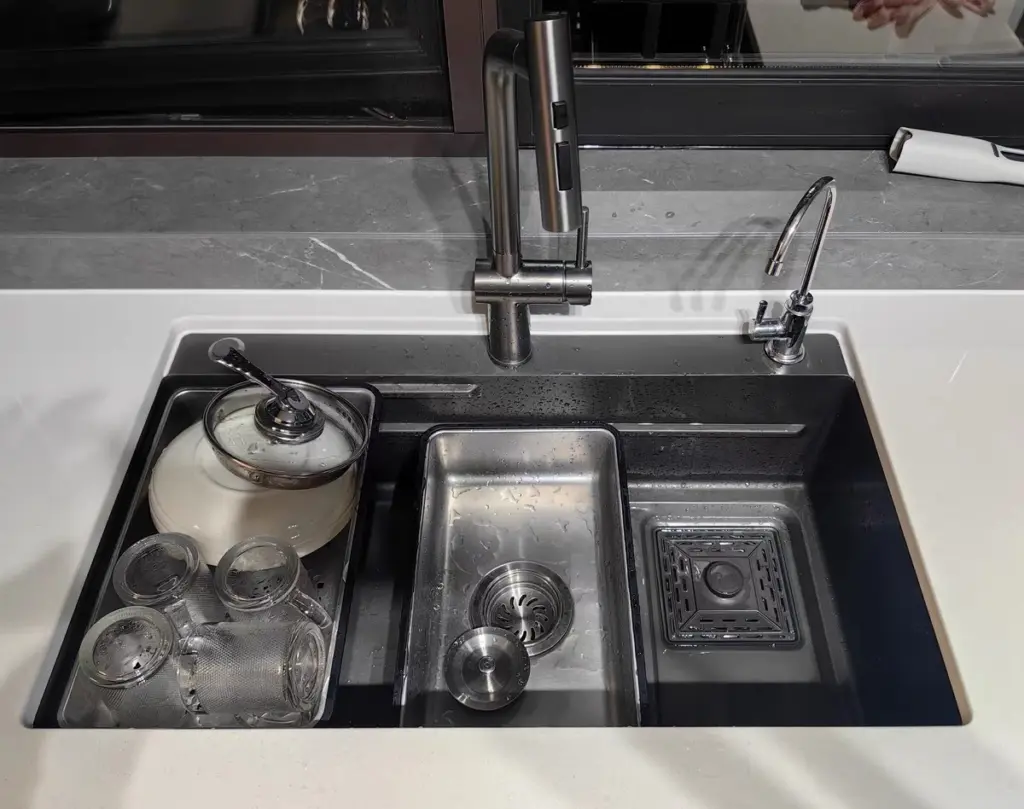
A workstation sink does not automatically need or exclude an overflow.
However, the overflow location requires additional attention because accessories can change access to the bowl wall.
Check whether the overflow can be obstructed by:
- A cutting board
- A colander
- A roll-up rack
- A large pot
- A dishcloth
- A removable inner basin
The overflow should remain visible, cleanable and capable of accepting water during normal use.
Accessory ledges should not interfere with installation of the rear overflow body or hose.
Advantages of a Kitchen Sink Overflow
Provides a secondary water route
If the stopper is closed, water can bypass it through the overflow.
Reduces some unattended-faucet risk
A clean and correctly sized overflow may delay or prevent water from reaching the sink rim under suitable flow conditions.
Supports certain market specifications
Overflow protection is expected in some European product and construction programs.
Controls maximum filling level
The opening creates a predictable water level below the rim.
Adds buyer reassurance
Some users prefer seeing a physical overflow opening, especially when they regularly fill the bowl for washing.
Disadvantages and Risks
It cannot guarantee flood prevention
The overflow capacity may be lower than the faucet flow, especially when partially blocked.
It creates a hidden cleaning area
Grease and food residue can accumulate in the cover and channel.
It adds possible leak points
The cover, rear gasket, tube and waste connection can all leak.
It may be incompatible with a disposal
A market-specific adapter or waste kit may be required.
It reduces usable filling depth
Water begins entering the overflow before it reaches the upper bowl rim.
It adds components and packaging complexity
B2B programs must manage extra fittings, replacement parts and assembly instructions.
It can create customer complaints if poorly explained
Buyers may expect the overflow to handle any faucet flow or downstream blockage. That expectation is unrealistic.
How to Test a Sink Overflow Safely
A controlled test should be performed after installation.
- Inspect the overflow cover, rear fitting, hose and waste connection.
- Place absorbent paper beneath every connection.
- Close the main sink outlet.
- Begin filling the sink at a low, controlled flow rate.
- Remain beside the sink throughout the test.
- Observe whether water enters the overflow before reaching the rim.
- Check whether the water discharges through the waste system.
- Inspect the cabinet immediately for leaks.
- Stop the test if the water level continues rising.
- Open the main drain and confirm that water does not remain in the overflow tube.
Do not leave the faucet unattended during testing. A domestic overflow should not be treated as an invitation to intentionally flood the sink at maximum faucet flow.
How to Clean a Kitchen Sink Overflow
Clean the overflow periodically, especially if odors or slow overflow drainage develop.
A basic cleaning process is:
- Remove accessible debris around the cover
- Use warm water and mild dish detergent
- Clean the opening with a small non-scratching brush
- Flush the channel carefully
- Inspect the overflow hose for sagging
- Check the rear gasket and waste connection for moisture
- Follow the waste-fitting manufacturer’s care instructions
Avoid forcing sharp metal tools into the opening or using chemicals that may damage seals, coatings or plastic tubing.
Persistent odor can indicate trapped residue, an incorrectly sloped hose or a plumbing problem that requires professional inspection.
Can You Add an Overflow Hole Later?
Adding an overflow to an existing sink is usually not a simple modification.
A complete conversion requires:
- A correctly positioned hole
- Finished and protected cut edges
- A compatible cover
- A rear gasket and body
- An overflow tube
- A compatible waste or disposal adapter
- Enough cabinet clearance
- A verified watertight installation
Drilling a finished stainless steel, PVD-coated or granite composite sink can damage the surface and may not produce a reliable seal.
For B2B programs, the overflow decision should be made during product development rather than after production.
B2B Overflow Specification Checklist
Importers, wholesalers, kitchen brands and project suppliers should confirm the following before sample approval.
Market requirement
- Destination country
- Applicable product standard
- Local plumbing requirements
- Project or tender specification
- Retailer expectation
- Garbage-disposal usage
Sink design
- Overflow required or not required
- Hole position
- Hole shape and dimensions
- Height below the rim
- Maximum usable water level
- Single- or double-bowl protection
- Access behind the bowl
Waste system
- Drain-hole diameter
- Basket-strainer specification
- Overflow inlet location
- Tube length and material
- Connection before the trap
- Garbage-disposal compatibility
- Dishwasher connection requirements
Testing
- Overflow flow test
- Leakage test
- Drain-down test
- Hose-kink inspection
- Multi-bowl transfer test
- Test with the supplied waste kit
- Sample approval record
Packaging and after-sales
- Overflow components packed by sink model
- Clear parts identification
- Installation diagram
- Replacement gasket availability
- Replacement cover and hose
- Protection for fittings during shipping
- Warning against leaving the opening unconnected
The sink and overflow kit should be approved as a complete product system. Approving the sink bowl separately can result in missing or incompatible components during installation.
Matrix supplies stainless steel kitchen sinks for brands, wholesalers and project buyers. Overflow position, drain specification, bowl configuration, waste kits and accessory packages can be reviewed during product development.
For market-specific dimensions or drainage requirements, Matrix also supports custom kitchen sink programs.
Common Overflow Claims That Need Qualification
“An overflow makes the sink flood-proof”
Incorrect. Its capacity and condition determine whether it can keep up with the incoming water.
“All European sinks need a visible overflow hole”
Too broad. European domestic-sink performance requirements address overflow protection, but a dedicated visible hole is not the only possible method.
“Kitchen sinks never need overflows in North America”
Too broad. A model code may not universally require the hole, but individual projects, local rules and buyer preferences can still specify one.
“A second bowl acts as an overflow”
Only when the bowl geometry and interconnection allow water to reach a protected outlet before crossing the external rim.
“The dishwasher port can be used for the sink overflow”
Not unless the complete system is specifically designed and approved for that connection.
“The overflow does not need cleaning”
Incorrect. Kitchen grease, food residue and detergent can restrict a hidden channel.
Frequently Asked Questions
Do all kitchen sinks need an overflow hole?
No. There is no universal global requirement for every kitchen sink to have a visible overflow hole. The correct specification depends on the regional standard, local code, project requirement and drainage design.
Why do bathroom sinks have overflows but kitchen sinks often do not?
Bathroom sinks commonly use smaller closable drains and are frequently filled. Kitchen sinks often use larger basket strainers, garbage disposals and different waste systems.
Will an overflow stop the kitchen from flooding?
It may prevent or delay flooding under certain conditions, but it cannot guarantee protection against high faucet flow, blocked overflow channels or downstream drain blockages.
Can a sink overflow work if the drainpipe is blocked?
It depends on where the blockage is located. If the stopper blocks only the main sink outlet, the overflow may bypass it. If the blockage is downstream of the point where both paths join, neither can drain.
Can I use a garbage disposal with an overflow sink?
Possibly, but a compatible overflow adapter or waste system is required. Confirm the exact sink, disposal and waste-fitting combination before purchase.
Does an overflow hole cause odors?
The hole itself does not create odor, but grease and food residue can accumulate in the hidden channel. Regular cleaning and correct tube routing help prevent this.
Where should the overflow connect?
It should normally connect to the sink waste system on the fixture side of the P-trap, using the intended waste or overflow fitting.
Is an overflow the same as a dishwasher air gap?
No. A sink overflow controls the water level inside the sink. A dishwasher air gap is a backflow-protection component for the dishwasher discharge system.
Can I leave an unused overflow hole unconnected?
No. Water entering the hole may drain directly into the cabinet. Use the correct overflow assembly or select a sink without the opening.
Is a kitchen sink safer with or without an overflow?
Neither design is automatically safer.
A correctly installed and maintained overflow provides additional protection. A poorly connected overflow introduces new leak and hygiene risks. The best choice is the system that matches the market, drain components and user behavior.
Final Verdict
Kitchen sinks do not universally need a visible overflow hole.
In North American-style installations, overflow-free sinks are common, especially where garbage disposals and large basket strainers are used.
In UK and European product programs, overflow protection is more commonly expected under domestic kitchen sink performance standards. That protection may come from a dedicated opening, an interconnected bowl arrangement or a non-closeable outlet.
The correct buying question is therefore not simply:
“Does this sink have an overflow hole?”
It is:
“What prevents the sink from overflowing, how much water can that system discharge, and is it compatible with the specified waste kit and garbage disposal?”
For consumers, a working overflow is a useful secondary safeguard—not a flood guarantee.
For B2B buyers, overflow design must be confirmed together with the destination market, sink structure, waste fitting, disposal system, testing method, packaging and replacement parts.
To review a market-specific sink and drainage package, contact the Matrix team before approving the final drawing or production sample.