
A component can change without changing the sink drawing — and still change the finished SKU.
In an OEM kitchen sink program, the main sink body may remain exactly the same while another part changes:
- drain
- bottom grid
- cutting board
- colander
- roll-up rack
- mounting clips
- sound pads
- undercoating
- carton
- foam
- stainless steel source
- surface-finishing supplier
The drawing revision may still show:
Rev. A
But the commercial product may no longer be identical to the approved sample.
For buyers, the correct question is not:
“Did the sink drawing change?”
It is:
“Did the changed component affect fit, function, appearance, installation, protection or repeat-order consistency?”
Quick Answer
A component change should be re-approved according to what that component controls.
A practical rule is:
Geometry Change
→ re-check dimensions and fit
Functional Change
→ re-test function
Appearance Change
→ re-approve visual reference
Material Change
→ re-verify material requirement
Packaging Change
→ re-check shipment protection
No Critical Interface Change
→ document approval may be enough
The level of re-approval should follow the impact of the change, not simply the fact that a supplier or component changed.
1. Not Every Change Requires a Completely New Sink Sample

This distinction matters.
Suppose the carton supplier changes but the:
- carton dimensions
- board grade
- internal foam
- accessory position
- printing
remain unchanged.
A completely new sink engineering sample may not add much value.
Document and packaging verification may be enough.
But if the change is:
new cutting-board supplier with different dimensions
then the sink body may not need re-approval — but the:
- accessory dimensions
- ledge fit
- sliding clearance
- interchangeability
do.
So:
re-approval should target the affected interface.
2. Start by Asking What the Component Actually Controls
A useful way to classify any change is:
Does it affect geometry?
Examples:
- bottom grid
- cutting board
- drain flange
- mounting clip
Does it affect function?
Examples:
- drain
- garbage-disposal interface
- mounting hardware
- accessory support
Does it affect appearance?
Examples:
- PVD drain
- brushed accessory
- cutting-board color
- finish supplier
Does it affect protection?
Examples:
- foam
- carton
- corner protector
- accessory packing
Does it affect material compliance?
Examples:
- stainless steel source
- drain material
- grid material
The answer determines what should be re-approved.
3. Drain Changes Usually Require More Than a Visual Check
A drain may appear to be a simple accessory.
But it interfaces directly with:
- drain-hole diameter
- flange
- gasket
- sink thickness
- disposal
- plumbing
If the drain supplier or model changes, buyers should consider re-checking:
- flange fit
- sealing surface
- gasket
- installation
- finish match
- disposal compatibility where relevant
Matrix’s Kitchen Sink Drain Hole Sizes & Garbage Disposal Compatibility explains why drain-hole diameter alone does not prove complete compatibility.
4. A Drain With the Same Nominal Size Can Still Be Different
Two drains may both be described as:
3.5-inch kitchen sink drain
while differing in:
- flange diameter
- flange profile
- thread length
- gasket
- basket
- finish
- mounting design
So replacing:
Drain A
with:
Drain B
should not automatically be treated as:
equivalent component.
5. Workstation Accessories Need Interface Re-Approval
This is especially important for:
- cutting boards
- colanders
- roll-up racks
- trays
These components depend on the sink’s integrated ledge.
If a new accessory supplier changes:
- length
- width
- thickness
- corner radius
the accessory may no longer:
- sit correctly
- slide correctly
- remain stable
- fit every sink in production
Matrix’s Workstation Kitchen Sinks use integrated accessory interfaces, so fit should be approved as a system rather than approving the sink and accessory independently.
6. One Successful Fit Is Not Enough for a Supplier Change
Suppose the new cutting board fits one sink sample.
That proves:
one accessory fits one sink.
It does not automatically prove:
repeat-order interchangeability.
A stronger check is:
- multiple accessory samples
- multiple production sinks
- defined fit / clearance
- repeatable installation
This is the same reason Matrix separates dimensional inspection from functional accessory fit in Quality Control & Inspection.
7. Bottom Grid Changes Need a Different Check
Bottom grids do not use the workstation ledge.
Their fit depends more on:
- bowl-bottom geometry
- drain position
- corner radius
- grid dimensions
- feet location
So when a bottom-grid supplier changes, re-check:
- side clearance
- corner clearance
- drain alignment
- stability
- scratching risk
The re-approval method should follow the actual interface.
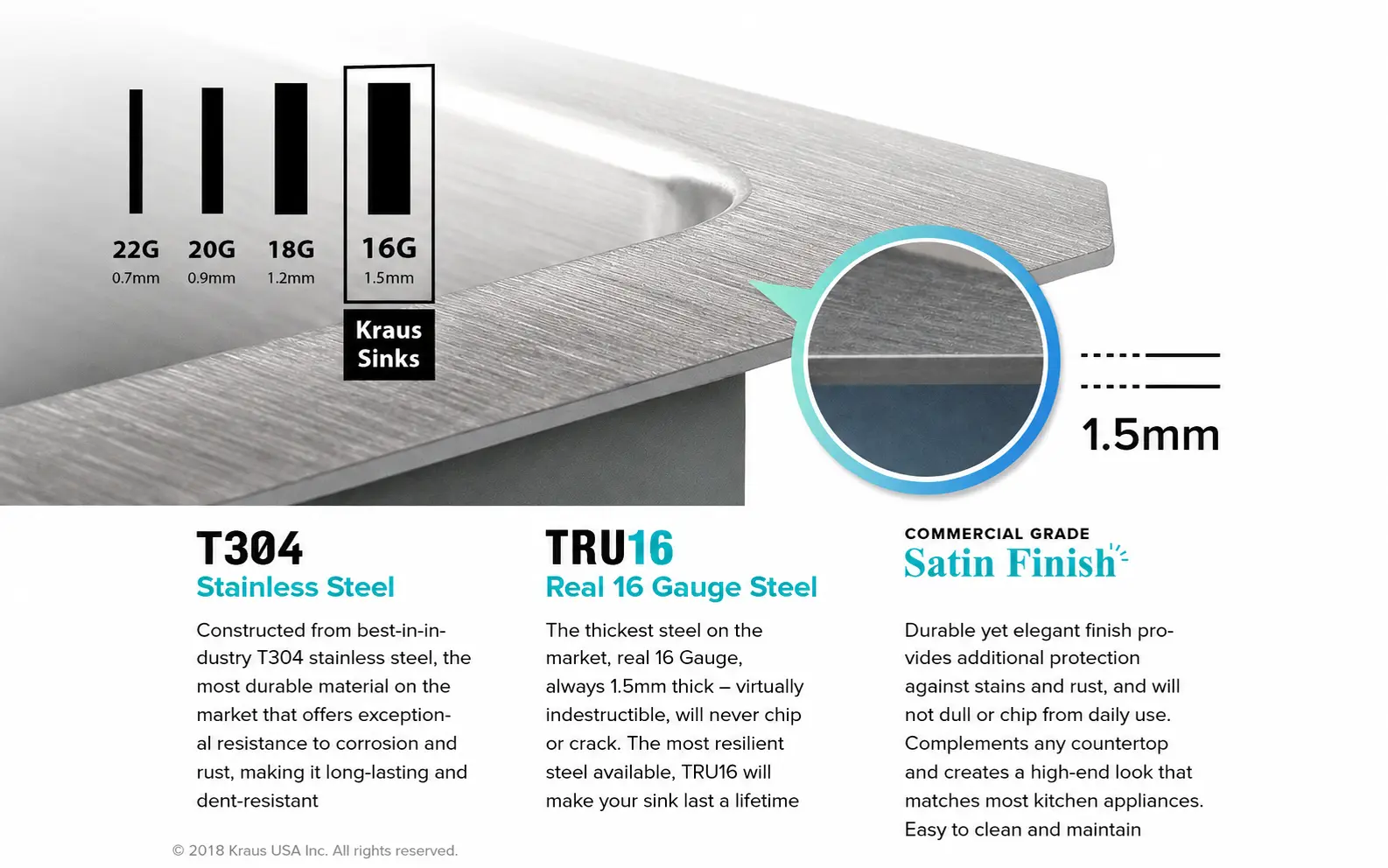
8. Material Supplier Change Does Not Automatically Mean Product Re-Design
If the stainless steel supplier changes but the required:
- grade
- thickness
- surface condition
remain the same, the sink drawing may not need to change.
But the material itself may still need verification.
For example:
- SUS304 confirmation
- incoming thickness
- surface condition
- traceability where required
The key distinction is:
Supplier identity and material specification are different controls.
9. The Same “SUS304” Still Needs the Same Acceptance Standard
A new material source should not be accepted only because the invoice also says:
SUS304.
The buyer’s approved requirement may include:
- grade
- nominal thickness
- actual thickness range
- finish condition
For specification-sensitive programs, those requirements should remain unchanged even when the upstream material source changes.
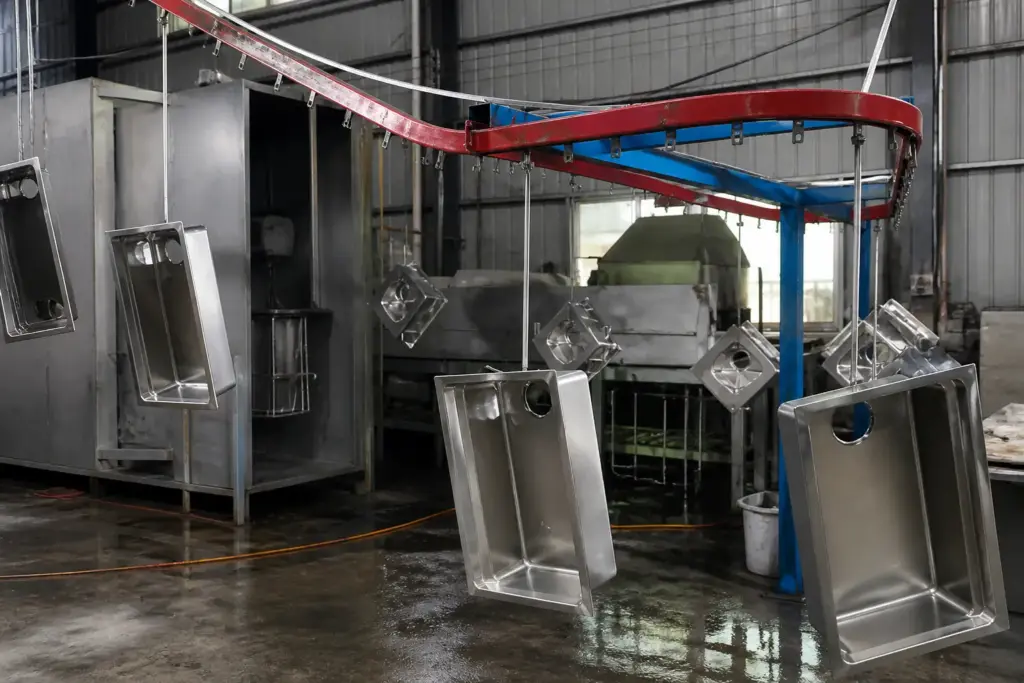
10. Surface-Finishing Supplier Changes Need Visual Re-Approval
A sink may still be:
SUS304 / Satin
after changing the finishing supplier.
But the result can change in:
- grain
- brightness
- roughness
- reflection
- corner transition
This is why:
same finish name does not guarantee same appearance.
For this issue, see:
Why Can Brushed Stainless Steel Sink Finishes Look Different Between Batches?
A finish-supplier change should normally be compared against the approved physical or visual reference.
11. PVD Component Changes Need Color Matching
This becomes more obvious on:
- black
- gunmetal
- gold
- other colored finishes
A new drain or accessory supplier may use the same color name while producing a different:
- hue
- brightness
- gloss
- surface texture
So:
Gunmetal
does not automatically mean:
identical gunmetal.
For appearance-sensitive private-label SKUs, re-approval should include actual component-to-sink comparison.
12. Sound Pad Changes Can Affect More Than Cost
A sound pad may change in:
- size
- thickness
- density
- adhesive
- placement
If a supplier substitutes a smaller pad but the sink drawing stays unchanged, the commercial SKU may still change in:
- acoustic behavior
- appearance underneath
- adhesion reliability
If sound treatment is part of the approved product specification, it should be controlled as such.
13. Undercoating Changes May Need Process Approval
A change in:
- coating material
- coverage
- application method
may not alter the sink’s dimensions.
But it can alter the finished product configuration.
So a coating change should be checked against whatever was actually approved:
- coverage
- appearance
- product requirement
rather than assuming:
undercoating is undercoating.
14. Packaging Changes Can Affect a Perfectly Good Sink
A packaging change is often underestimated because:
“the sink itself did not change.”
But the delivered product depends on:
- foam thickness
- foam position
- carton strength
- accessory isolation
- corner protection
A packaging change can create:
- rim dents
- corner damage
- scratches
- accessory movement
even when the sink leaves production correctly.
So packaging should be part of change control when it affects shipment protection.
15. Carton Supplier Changes Do Not Always Require a New Product Sample
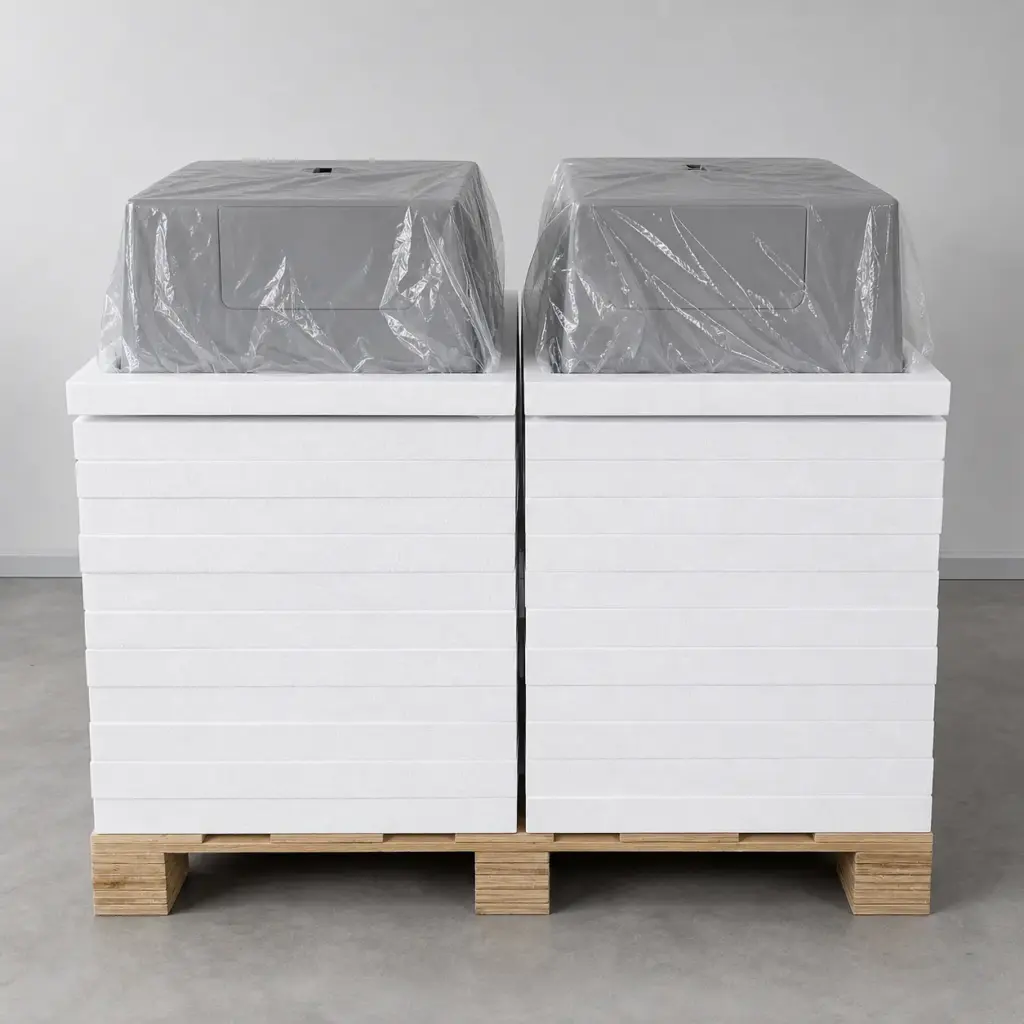
If the new carton matches the approved:
- dimensions
- structure
- material specification
- artwork
then a full engineering re-sample may not be necessary.
But the first production batch should still confirm:
- product fit in carton
- accessory position
- internal protection
- packing appearance
This is a good example of:
re-approval without full product redevelopment.
16. Logo and Artwork Changes Are a Different Type of Approval
A logo change normally does not require:
- sink geometry approval
- drain fit test
But it may require:
- artwork approval
- position approval
- size approval
- print / laser result approval
Again, approval should follow the affected attribute.
17. Mounting Hardware Changes Can Become an Installation Issue
Clips and mounting hardware can affect:
- installation
- countertop compatibility
- support
- assembly
If a clip supplier changes, buyers should check:
- dimensions
- material
- mounting fit
- installation method
A component that looks minor in the BOM may still control a critical installer interface.
18. Component Change and Drawing Change Are Different Questions
This is one of the most important OEM principles.
A sink drawing may remain unchanged while:
- drain changes
- accessory changes
- finish changes
- carton changes
So the complete controlled SKU should include more than:
one sink drawing.
Matrix discusses the broader issue in:
Why Can Repeat-Order Kitchen Sinks Differ Even When the Drawing Has Not Changed?
19. A Useful Change-Control Hierarchy
A practical review can classify changes into three levels.
Level 1 — Documentation Change
Examples:
- supplier name changes
- carton print supplier changes
- equivalent component with no interface change
Possible approval:
- document review
- BOM update
- first-batch confirmation
Level 2 — Interface / Appearance Change
Examples:
- new drain
- new grid
- new cutting board
- new PVD accessory
- new finish supplier
Possible approval:
- sample
- fit test
- visual approval
- dimensional check
Level 3 — Product-Critical Change
Examples:
- stainless steel grade
- material thickness
- bowl geometry
- drain position
- ledge geometry
- installation structure
Possible approval:
- revised drawing
- new sample
- functional verification
- QC update
Re-Approval Matrix
| Component Change | Re-Approval Focus |
|---|---|
| Stainless steel source | Material grade + thickness |
| Stainless steel grade | Material + drawing/specification |
| Drain model | Fit + gasket + sealing + finish |
| Bottom grid | Geometry + drain alignment + stability |
| Cutting board | Ledge fit + clearance |
| Colander | Ledge fit + stability |
| PVD drain | Fit + color match |
| Sound pad | Size + position + approved configuration |
| Undercoating | Coverage + appearance |
| Mounting clip | Installation fit |
| Carton | Dimensions + protection |
| Foam | Protection + contact points |
| Logo | Artwork + position |
| Finish supplier | Surface reference + appearance |
20. What Changes Usually Require a New Physical Sample?
A new physical sample becomes more useful when the change affects:
- visible appearance
- product fit
- installation
- accessory interface
- important geometry
Examples:
- new drain profile
- new cutting board size
- new grid
- new finish
- new bowl geometry
The reason is simple:
some changes cannot be fully evaluated from a document.
21. What Changes May Only Need Document Approval?
Examples may include:
- supplier code
- packaging artwork text
- unchanged equivalent raw-material source
provided that all approved:
- dimensions
- materials
- performance
- appearance
remain unchanged.
But the exact decision depends on the importance of the component.
22. Do Not Re-Approve More Than the Change Requires
This is just as important as avoiding under-approval.
If only the:
barcode artwork
changes, there is little value in re-validating:
- bowl depth
- drain position
- corner radius
A good change-control system is targeted.
It asks:
What could this change realistically affect?
23. Do Not Re-Approve Less Than the Change Requires
The opposite mistake is more expensive.
For example:
“The cutting board supplier changed, but dimensions are almost the same.”
If that component sits on a workstation ledge, “almost the same” may create:
- rocking
- interference
- excessive looseness
So critical interfaces should be re-checked physically.
24. Repeat-Order Reference Should Be Updated After Approval
Once the new component is approved, update the controlled reference.
Depending on the program, this may include:
- BOM
- component drawing
- approved sample
- accessory list
- finish reference
- packaging instruction
Otherwise the next repeat order may accidentally revert to the old component.
25. Why This Matters for Private-Label SKUs
A private-label buyer sells a complete SKU.
The end customer does not care whether:
only the drain changed.
They experience:
the whole product.
So if a component change affects:
- appearance
- installation
- function
- packaging
then commercially:
the SKU changed in a way the customer can notice.
Matrix’s Private-Label Product Programs treat the sink, accessories, branding and repeat-order references as parts of the same product program.
What Should Buyers Ask When a Supplier Proposes a Change?
Instead of asking only:
“Is it the same?”
ask:
- What exactly changed?
- Why was it changed?
- Does the dimension change?
- Does the material change?
- Does the finish change?
- Does it affect sink fit?
- Does it affect installation?
- Does it affect packaging?
- Does it affect the approved sample?
- What should be re-approved?
Common Misunderstandings
“If the main sink drawing did not change, no re-approval is needed.”
Incorrect.
A component can affect the finished SKU without changing the bowl drawing.
“Any supplier change requires a completely new sink sample.”
No.
Approval should follow the impact of the change.
“If two components have the same nominal size, they are interchangeable.”
Not automatically.
Fit depends on the complete interface and tolerance.
“Packaging changes do not affect the product.”
They can affect the delivered condition of the product.
“The same PVD color name means the same appearance.”
Not necessarily.
Color and surface appearance should be compared physically where they matter.
“Once a replacement component is approved, nothing else needs updating.”
The controlled BOM, accessory list or relevant reference should also be updated for repeat orders.
Buyer Takeaway
Do not control OEM sink changes using:
Main Drawing Changed / Main Drawing Unchanged
alone.
Use:
What Changed
→ What Interface It Controls
→ What Product Result It Can Affect
→ What Needs Re-Approval
→ Update the Controlled Reference
The key distinction is:
A component change does not automatically require full product re-approval — but any change that affects fit, function, appearance, installation or protection should be re-approved at that interface.
Frequently Asked Questions
Does changing a kitchen sink drain require a new sample?
Not always, but flange fit, gasket, installation, finish and compatibility should be re-checked if the drain model changes.
Should a new workstation cutting-board supplier be re-approved?
Yes, if the board interfaces with the sink ledge. Fit, clearance and interchangeability should be checked.
Does changing the stainless steel supplier require a new sink drawing?
Not necessarily, but the approved grade, thickness and material requirements should remain verified.
Does a carton supplier change require full sink re-approval?
Usually not if the approved packaging specification remains unchanged, but packaging fit and protection should still be confirmed.
What changes normally require a new physical sample?
Changes affecting appearance, fit, function, installation or critical geometry are the strongest candidates.
Should component changes be recorded for repeat orders?
Yes. Once approved, the relevant BOM, component specification or controlled reference should be updated.
Managing an OEM or Private-Label Sink Program?
Matrix supports Custom Kitchen Sink Programs and Private-Label Product Programs where sink geometry, accessories, finishes, packaging and repeat-order references need to remain aligned.
For verification logic, see Quality Control & Inspection and Workstation Kitchen Sinks for accessory-dependent configurations.