Quick Answer
The cheapest kitchen sink quote can become the more expensive option when the lower unit price comes from a different specification or excludes costs that appear later.
Check whether the quote includes the same:
- stainless steel grade and thickness
- bowl depth and structure
- manufacturing method
- finish
- drain and accessories
- logo and labels
- carton and protection
- tooling
- sample cost
- MOQ
- Incoterm
Also consider costs that may appear after shipment:
- surface damage
- accessory mismatch
- installation problems
- replacement goods
- rework
- customer claims
The lowest unit price matters only after the product and commercial scope are the same.
1. A Lower Price May Simply Be a Different Sink
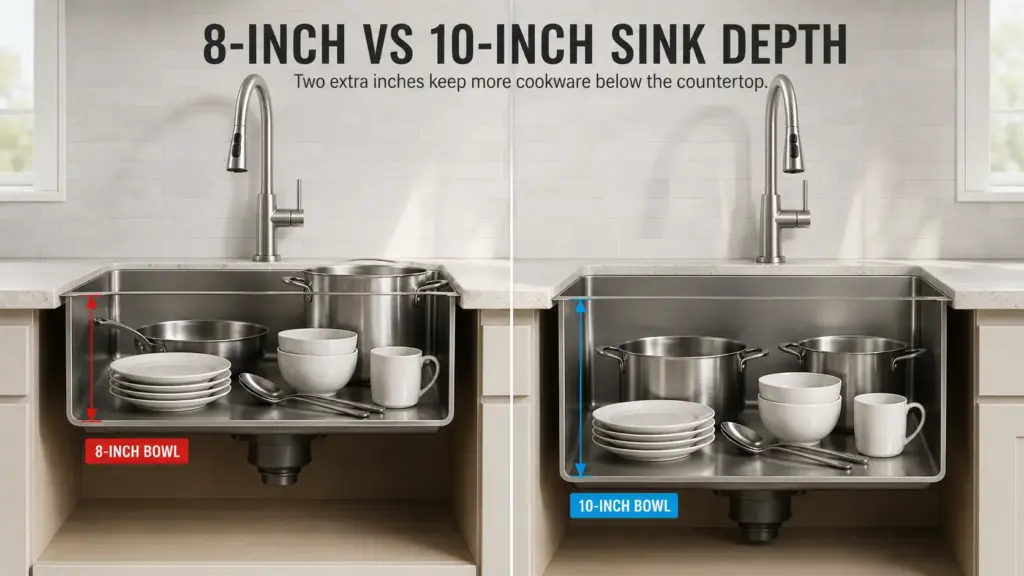
Suppose two suppliers quote the same:
800 × 500 mm SUS304 sink
That still does not tell you whether both products have the same:
- bowl size
- depth
- thickness
- radius
- rim structure
- installation
- finish
A 200 mm-deep sink and a 220 mm-deep sink are not the same product.
Neither are:
1.0 mm starting sheet
and:
1.2 mm specified construction.
Before calling one quote cheaper, confirm what was actually priced.
2. Thickness Is One of the Easiest Places to Lose the Comparison
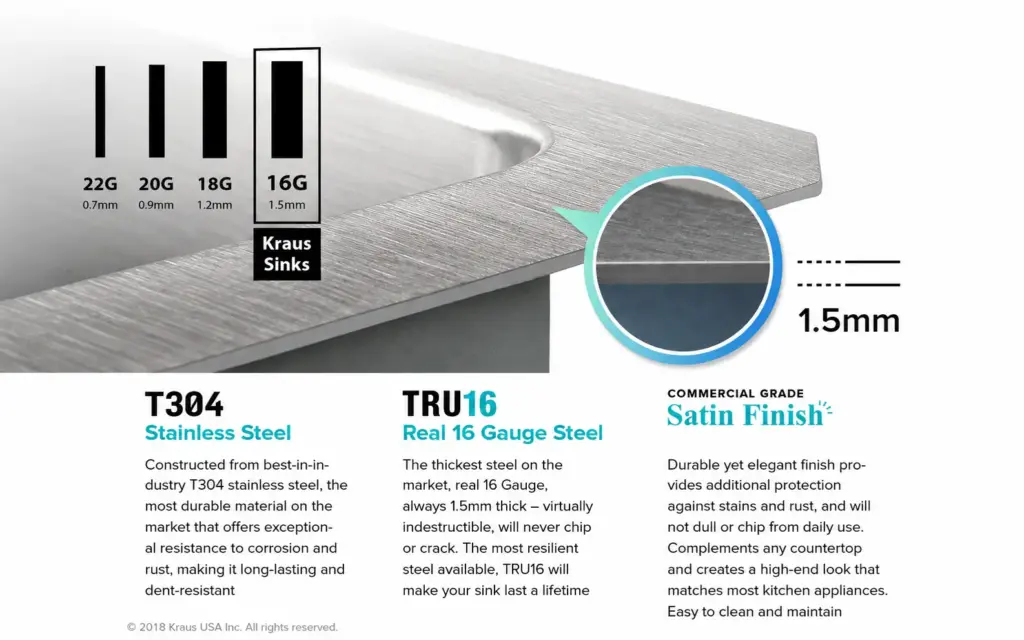
A quotation may say:
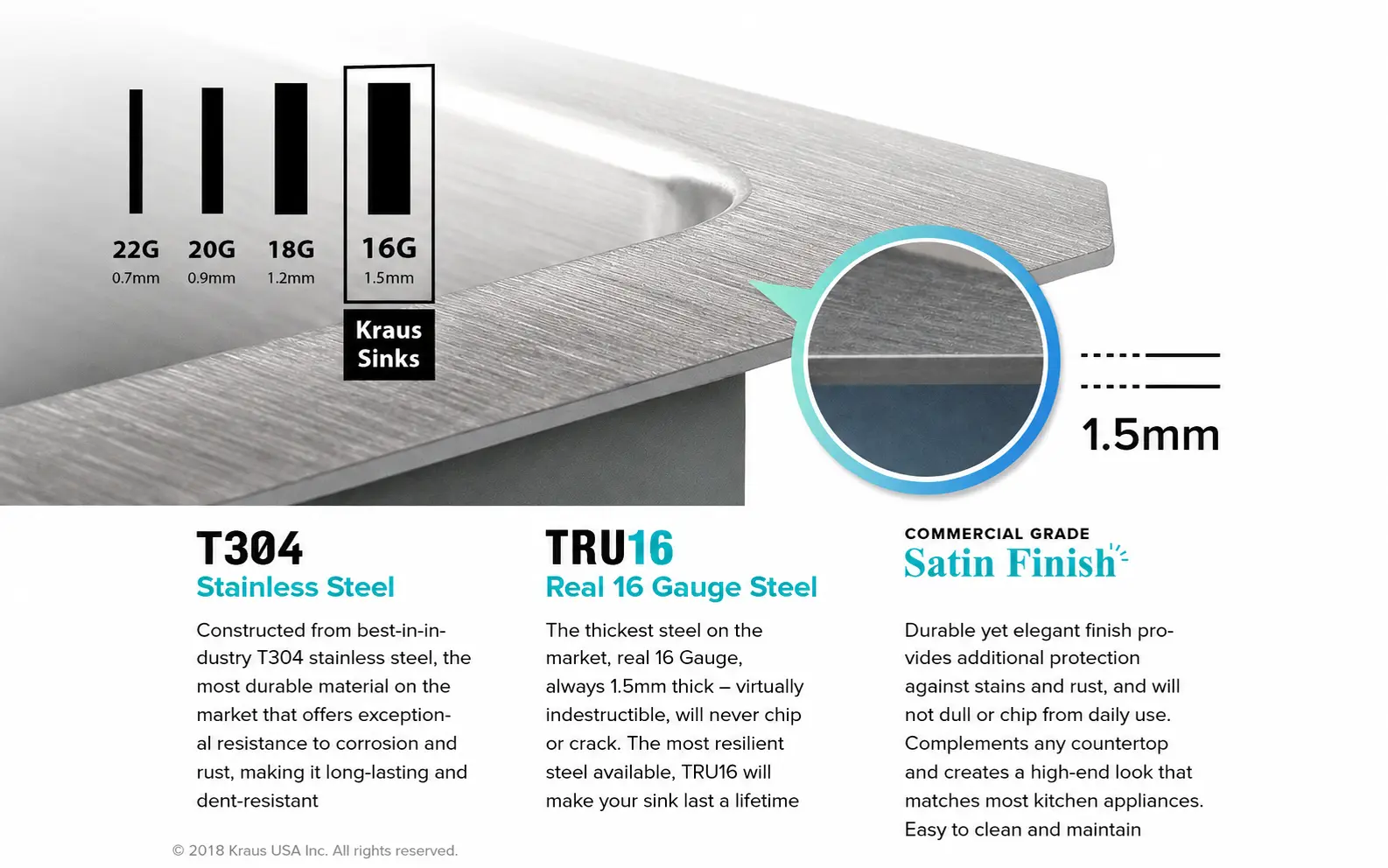
18 Gauge
but the buyer still needs to know:
- actual thickness in mm
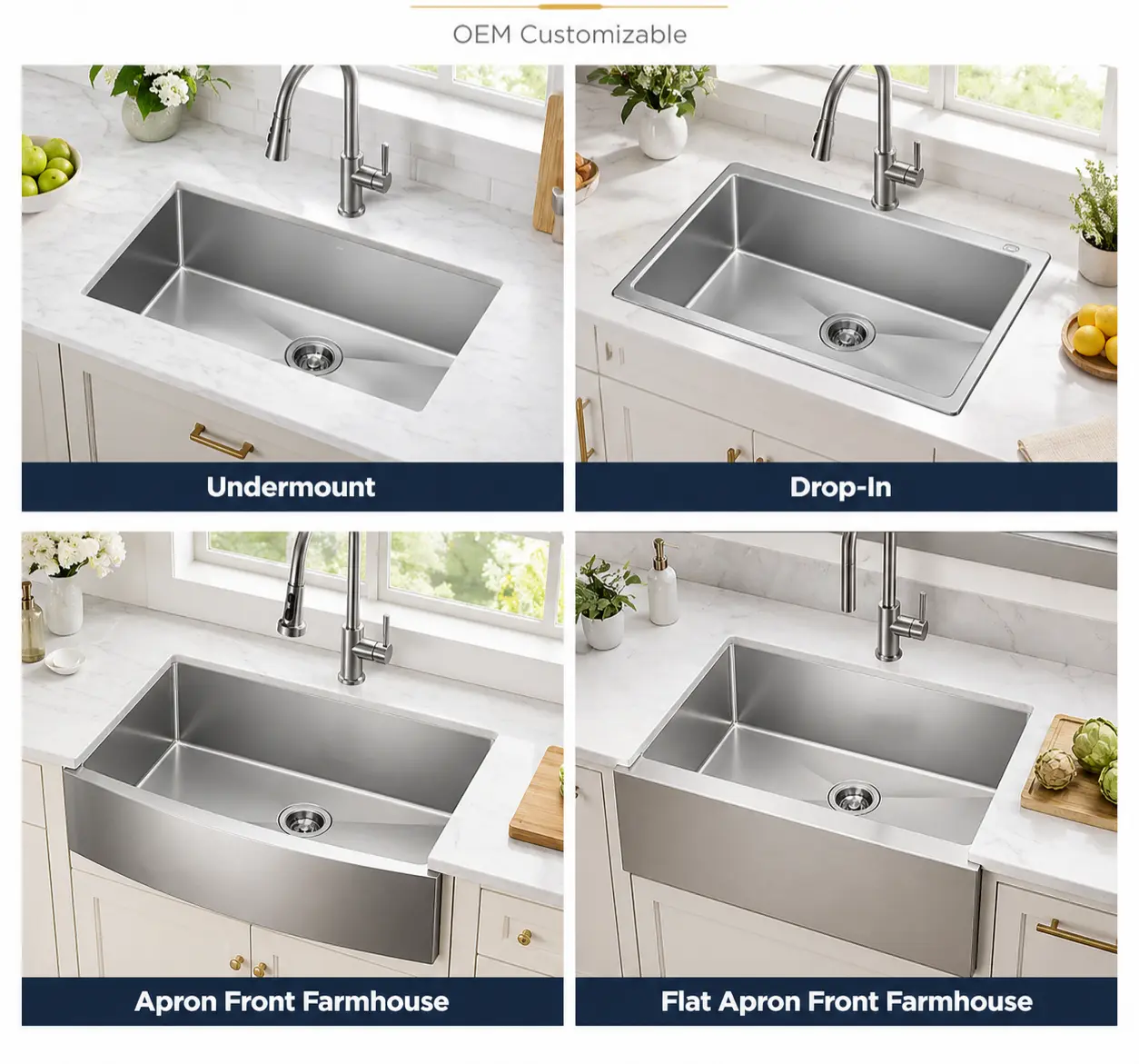
- handmade or pressed
- starting or finished thickness
- rim and bowl thickness if different
- measurement basis
For pressed sinks, a nominal starting thickness does not automatically tell you the finished thickness at the sidewall or lower radius.
A few dollars saved on material can make two quotations look similar on paper while describing different products.
See How to Specify Stainless Steel Sink Thickness in an RFQ.
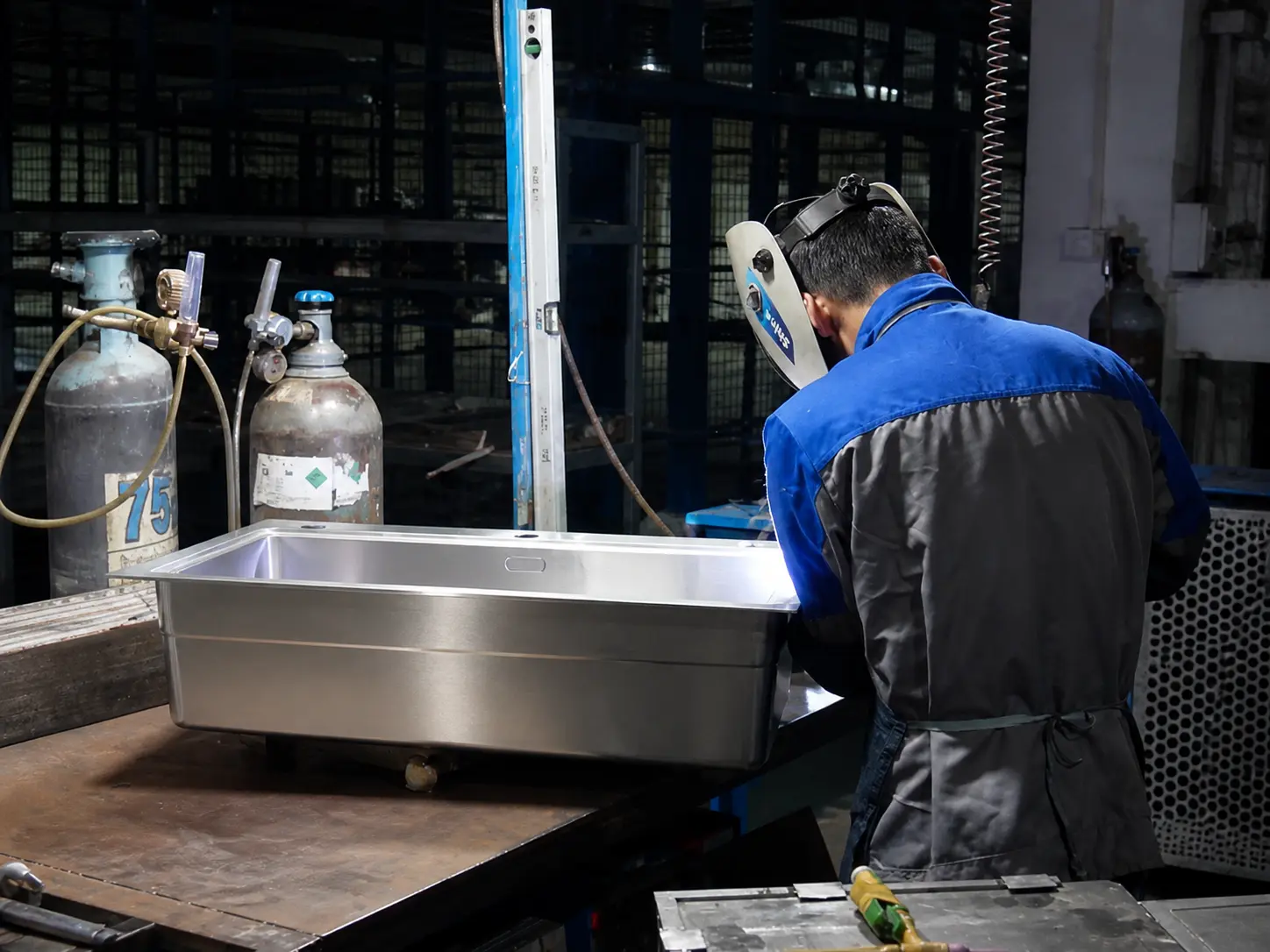
3. Handmade and Pressed Prices Should Not Be Mixed Together
One supplier may quote:
handmade fabrication
while another chooses:
existing pressed mold.
The pressed option may have a lower unit cost at volume.
The handmade option may offer:
- custom dimensions
- lower development commitment
- greater drain flexibility
- no new deep-drawing mold
These are different production strategies.
The sourcing decision should consider:
unit price + MOQ + tooling + customization + expected volume
rather than unit price alone.
4. Accessories Can Easily Hide $5–$20 of Difference
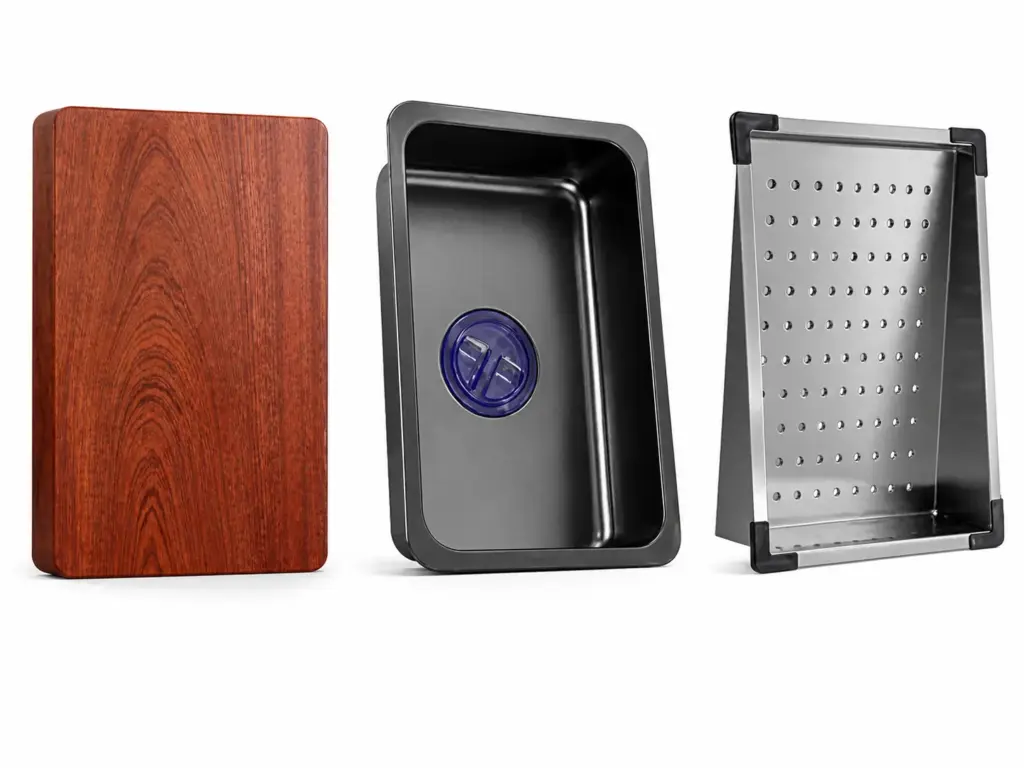
This is especially common with workstation sinks.
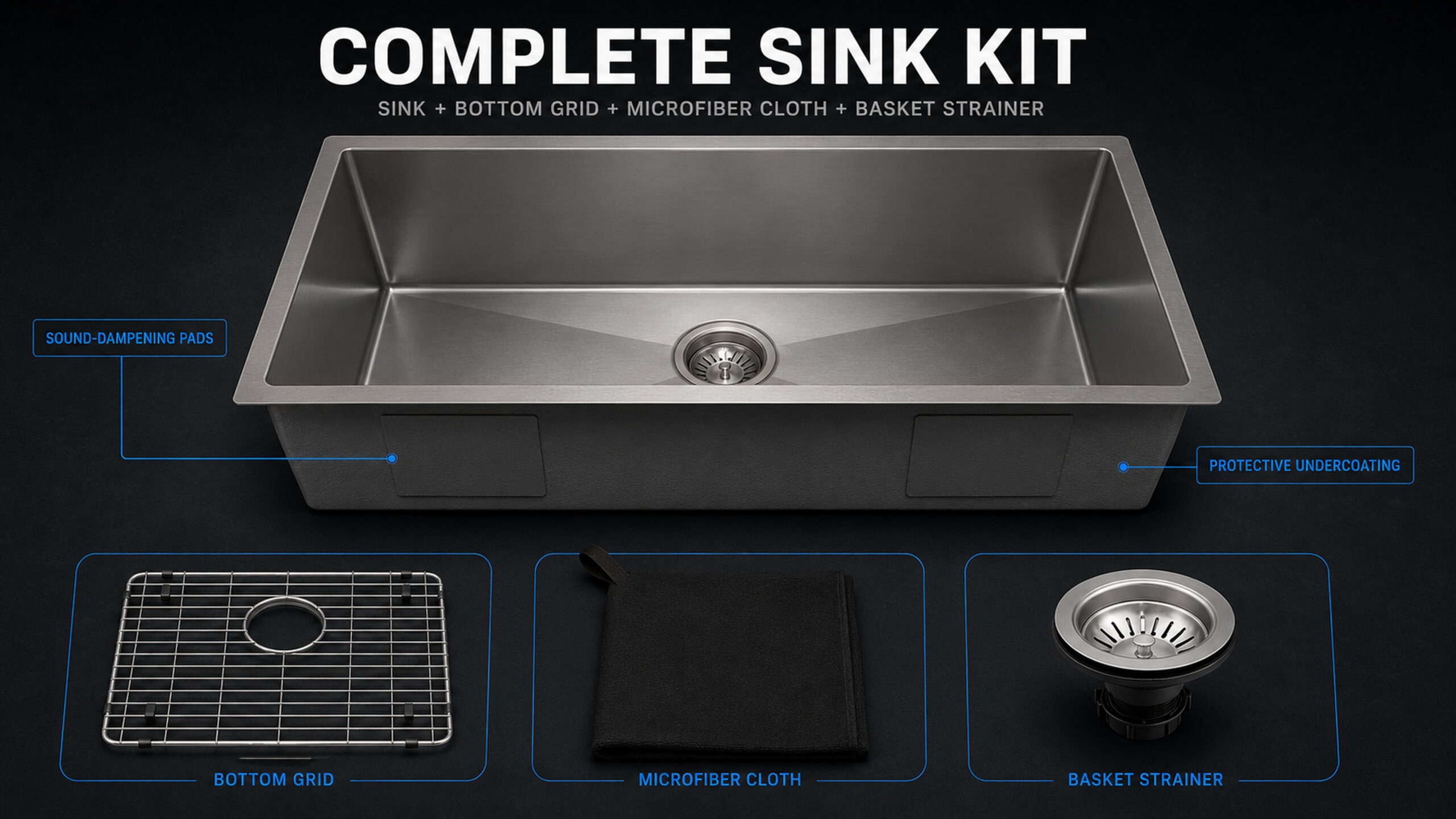
Supplier A may include:
- drain
- bottom grid
- cutting board
- roll-up rack
- colander
Supplier B may include:
- drain only
If the quotation just says:
Workstation Sink
the prices will look very different.
Normalize the accessory set before comparing suppliers.
5. “OEM Included” Can Mean Very Different Things
One supplier may include only:
laser logo.
Another may include:
- laser logo
- product label
- barcode
- instruction
- private-label carton
- custom SKU mark
Both may write:
OEM available.
Ask what is actually included in the quoted price.
Matrix’s Private Label Product Programs shows the areas buyers should define before treating two OEM quotations as equivalent.
6. Packing Is Part of the Cost
Compare:
Quote A
1 pc / carton
High-density foam
Rim protection
Separated accessories
Quote B
3 pcs / carton
High-density foam
Standard export carton
The second quote may be cheaper.
But it is not the same packing specification.
Packing affects:
- unit cost
- CBM
- freight
- surface protection
- damage risk
- warehouse handling
For decorative or multifunction sinks, this difference can be commercially significant.
7. A Cheap PVD Quote May Be Quoting a Different Finish System
“Black” or “gunmetal” is not enough.
Compare:
- coating / finish process
- substrate preparation
- brushing
- accessory finish
- surface protection
- color reference
If the appearance must remain stable across repeat orders, also consider the cost of controlling the finish reference.
See How to Control PVD Sink Color Between Repeat Orders.
8. Tooling Can Make the Lower Unit Price Misleading
Consider:
Supplier A
Existing mold
Unit price: USD 12
Tooling: USD 0
Supplier B
New mold
Unit price: USD 9
Tooling: USD 8,000
At 200 pcs:
Supplier B’s lower unit price does not compensate for the tooling investment.
At much higher repeat volume, the calculation may change.
So compare:
program cost
not just:
first quoted unit cost.
For pressed projects, review Existing Sink Mold vs New Tooling.
9. MOQ Can Create Hidden Inventory Cost
A pressed sink may have a lower unit cost but require:
500 pcs/model
while a handmade option may start at a much smaller quantity.
If demand is uncertain, the lower unit price may create:
- more inventory
- more cash tied up
- more warehouse space
- higher SKU risk
That does not mean low MOQ is always better.
It means MOQ should be treated as part of the commercial cost.
10. Freight Can Reverse the Decision Again
Packaging affects CBM.
CBM affects how many sinks fit into:
- LCL
- 20GP
- 40HQ
A cheaper sink with inefficient carton dimensions can lose part of its price advantage in freight.
Compare:
product cost per unit
and:
delivered cost per unit
separately.
11. Claims Cost More Than Replacement Product
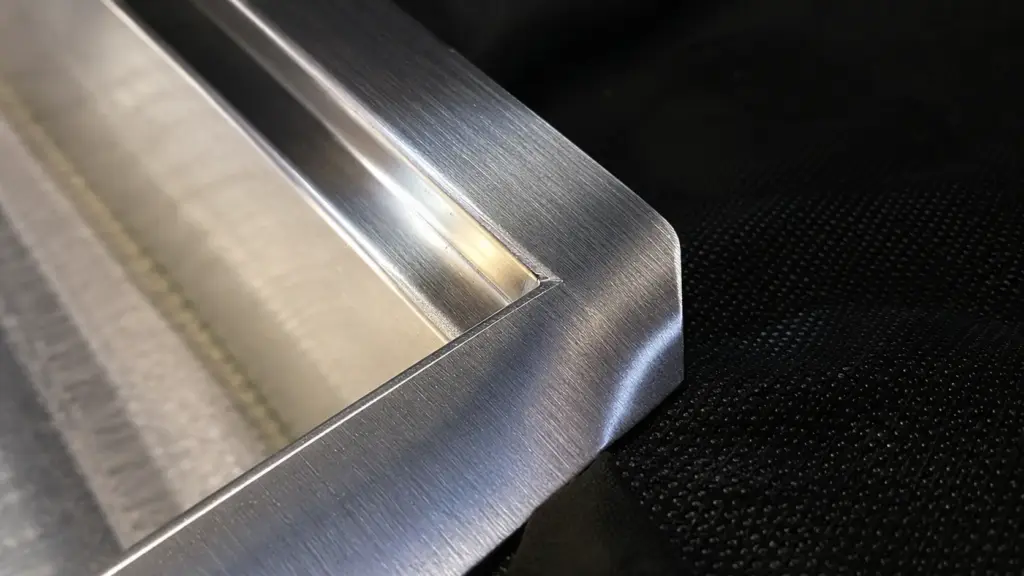
Suppose a sink has:
- warped rim
- wrong drain
- grid mismatch
- PVD scratch
The factory replacement cost is only one part of the loss.
The importer may also face:
- customer service
- re-delivery
- installer labor
- retailer deduction
- warehouse handling
- reputation damage
For project supply, installation-related claims can cost far more than the sink itself.
12. Installation Errors Are Especially Expensive
A wrong sink dimension discovered at the factory is a QC issue.
The same mistake discovered after the countertop has been cut can become a project issue.
That is why dimensions such as:
- flange
- countertop opening
- drain
- installation edge
should be frozen before production.
See What Should Be on a Kitchen Sink Production Drawing?.
13. Repeat-Order Drift Has a Cost Too
A cheap first order is not especially valuable if:
- finish changes next order
- accessory changes
- carton changes
- thickness interpretation changes
A stable OEM program needs:
- approved drawing
- golden sample
- accessory list
- finish reference
- packing record
See Why a Sink Sample Can Pass but the Repeat Order Still Fails.
14. Build a Normalized Cost Comparison
Before choosing a supplier, compare:
| Cost / Risk | Supplier A | Supplier B |
|---|---|---|
| Sink Unit Price | ||
| Material / Thickness | ||
| Accessories | ||
| Logo / Label | ||
| Packing | ||
| Tooling | ||
| Sample | ||
| MOQ | ||
| Freight / CBM | ||
| Incoterm | ||
| Inspection Scope | ||
| Replacement Risk |
The point is not to assign a fake dollar value to every risk.
The point is to make the differences visible before negotiating.
15. A Better Question Than “Can You Match This Price?”
Instead of immediately asking:
Can you match Supplier B’s price?
ask:
What specification difference is creating the price gap?
The answer might be:
- thinner steel
- different production method
- fewer accessories
- simpler packing
- existing mold
- different finish
- different Incoterm
Once the difference is visible, the buyer can decide whether it matters.
Buyer Takeaway
The cheapest sink quote is only useful when it is cheaper for the same product, same scope and acceptable risk.
Compare:
Specification → Accessories → Packing → Tooling → MOQ → Logistics → Repeat-Order Control
before comparing the last line:
Unit Price.
A professional sourcing decision is not:
Which supplier gave the lowest number?
It is:
Which supplier gives the lowest comparable cost for the product we actually need?
FAQ
Why can the cheapest sink quotation become more expensive?
Because the quote may exclude accessories, tooling, packaging or branding, or use a different material and product specification.
Should I choose a higher-priced supplier to reduce risk?
Not automatically. First normalize the specification and identify what is creating the price difference.
How does MOQ affect total sourcing cost?
A larger MOQ may reduce unit cost but increase inventory, cash commitment and SKU risk.
Should packaging be included when comparing sink prices?
Yes. Packing affects both product cost and freight, as well as the risk of surface or transport damage.
How can I get more comparable quotations?
Send the same RFQ and accessory / packing requirements to every supplier, then ask them to identify any deviations before quoting.
Comparing Sink Suppliers?
Use the Kitchen Sink RFQ Checklist to give each supplier the same specification.
For factory capability and inspection evidence, review Matrix Factory Capabilities and Kitchen Sink Quality Control & Inspection.