A leaking sink does not automatically mean the sink body is defective.
If water appears around the drain area, the leak may come from the interface between:
- sink
- drain flange
- gasket
- sealant
- mounting hardware
rather than from the stainless steel bowl itself.
For buyers, installers and QC teams, the useful question is not:
“Does the sink leak?”
It is:
“Which sealing interface is actually failing?”
Quick Answer
A kitchen sink can leak around the drain even when the sink body passes dimensional and workmanship inspection.
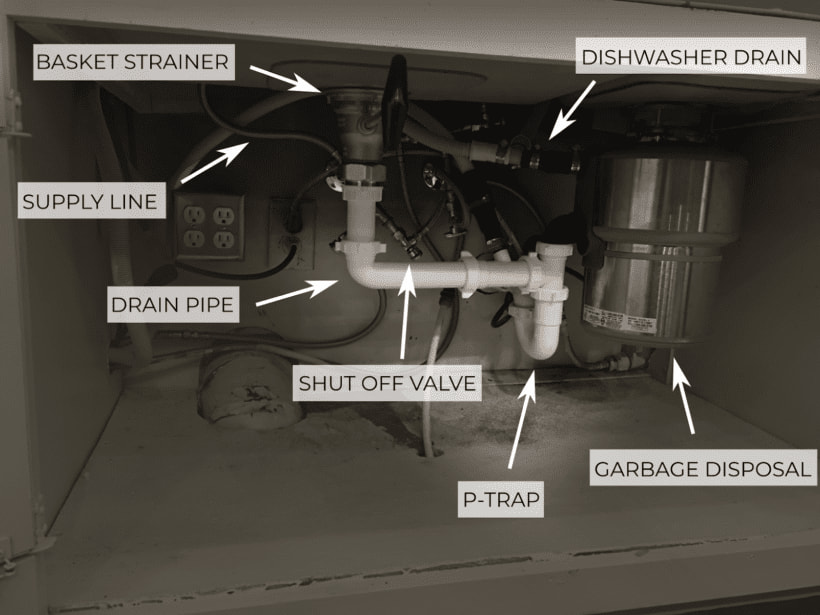
Common causes include:
- drain flange not sitting flat
- incorrect gasket position
- insufficient or uneven gasket compression
- drain-hole geometry mismatch
- unsuitable sealant or plumber’s putty
- loose drain assembly
- over-tightening
- damaged sealing surface
- incompatible drain components
- installation movement
The correct diagnosis should separate:
Sink Body
→ Drain Opening
→ Flange
→ Gasket
→ Sealant
→ Installation
A watertight sink body and a watertight drain connection are two different quality checks.
1. The Sink Body and Drain Connection Are Separate Systems
A stainless steel sink bowl can be completely watertight and still leak after installation.
The sink body is responsible for containing water.
The drain assembly is responsible for creating a sealed connection where water exits.
So the system contains at least two different checks:
Sink Body Integrity
- no cracks
- no welding leak
- no perforation
Drain Interface Integrity
- flange sits correctly
- gasket seals correctly
- drain is tightened correctly
- sealing surface is clean and flat
Passing one does not automatically prove the other.
2. The Drain Flange Must Sit Flat Against the Sink
The upper drain flange should contact the sink around the drain opening.
If the flange does not sit evenly, the seal can become inconsistent.
Possible reasons include:
- distorted flange
- uneven sink surface around the drain
- debris under the flange
- incompatible flange profile
- incorrect drain component
A small gap at one point can become a leak path.
3. Drain-Hole Diameter Is Only One Compatibility Check
A buyer may confirm:
3.5-inch drain hole
and assume the drain system is fully compatible.
But drain fit also depends on:
- opening profile
- flange diameter
- sealing surface
- sink thickness
- mounting system
- gasket geometry
Matrix’s Kitchen Sink Drain Hole Sizes & Garbage Disposal Compatibility explains why drain-hole diameter alone does not define complete compatibility.
4. The Area Around the Drain Hole Must Be Flat Enough to Seal
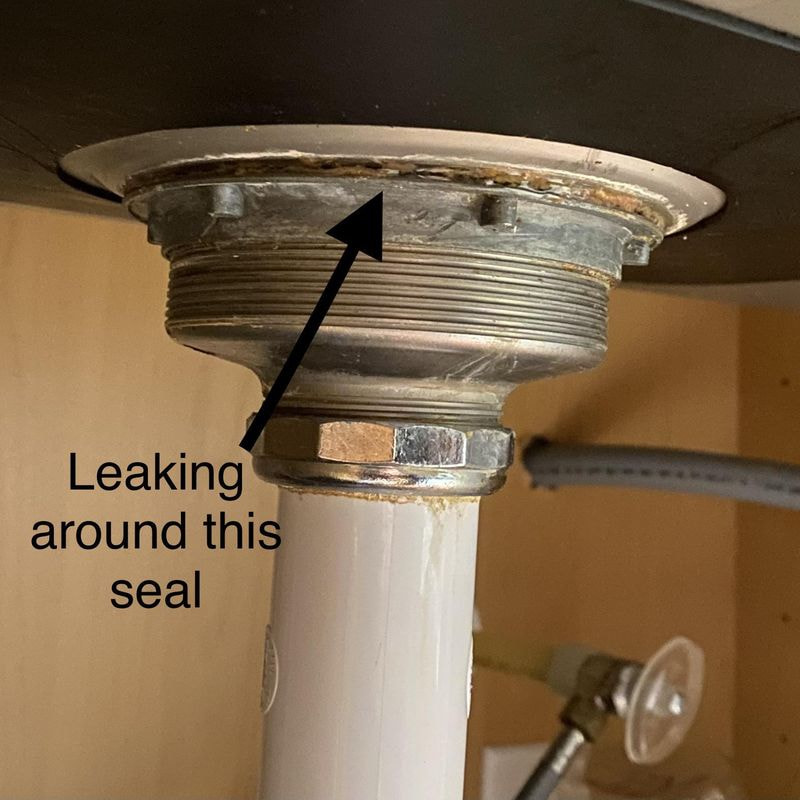
Even if the drain-hole diameter is correct, the surrounding surface still matters.
A flange needs a reasonably consistent sealing surface.
Problems can occur if the area is:
- locally distorted
- excessively curved
- damaged
- uneven after forming
- contaminated by debris
This is especially important on pressed sinks where the drain area is formed as part of the bowl geometry.
5. Gasket Position Can Cause Leaks
Drain assemblies often use one or more gaskets.
If a gasket is:
- reversed
- misaligned
- twisted
- folded
- damaged
the seal may fail.
This can happen even when both the sink and the drain component are dimensionally correct.
6. Gasket Compression Must Be Even
A gasket works by being compressed between mating surfaces.
Too little compression can leave a leak path.
But excessive tightening can also create problems by:
- deforming the gasket
- squeezing it out of position
- distorting thin components
- creating uneven contact
So:
tighter is not automatically better.
7. Over-Tightening Can Make the Problem Worse
When a leak appears, the first reaction is often:
tighten the drain more.
Sometimes that works.
Sometimes it makes the seal worse.
Over-tightening may:
- distort a rubber gasket
- deform a thin flange
- shift the drain off-center
- damage the sealant layer
The correct assembly torque depends on the drain system.
8. Sealant and Plumber’s Putty Are Not Interchangeable in Every System
Some drain systems are designed around:
- plumber’s putty
- silicone
- gasket-only sealing
The correct method depends on:
- flange material
- sink finish
- drain design
- manufacturer’s installation instructions
Using the wrong sealing material can create:
- poor adhesion
- incomplete sealing
- staining on some surfaces
- difficult future disassembly
9. PVD and Colored Sinks Need More Care at the Drain Interface
Colored finishes can add another consideration.
The sealing surface may include:
- PVD coating
- decorative finish
- protective treatment
The installer should avoid damaging the finish around the drain while:
- tightening
- positioning
- cleaning excess sealant
Matrix’s PVD / Colored Kitchen Sinks are relevant where the finish itself is part of the approved product specification.
10. The Drain Component Can Be the Real Problem
A leak is not always caused by the sink.
Possible drain-component issues include:
- warped flange
- damaged gasket
- thread problem
- incorrect washer
- cracked plastic part
- poor casting
- wrong component combination
If several sinks leak only when used with the same drain batch, the accessory should be investigated separately.
11. Accessory Compatibility Matters in Private-Label Programs
In an OEM sink program, the drain may come from:
- the sink factory
- another supplier
- the buyer’s nominated supplier
If the sink and drain are developed independently, the interface should still be checked together.
Matrix’s Private-Label Product Programs can include accessory combinations as part of the approved product configuration rather than treating the sink body as an isolated item.
12. Welding Leaks and Drain Leaks Should Not Be Confused

On a handmade sink, a welding leak usually appears at:
- welded corner
- seam
- joint
A drain leak usually appears:
- around flange
- below drain opening
- around gasket
- around drain nut
The location gives the first clue.
Matrix’s Handmade Kitchen Sinks use welded fabrication, so weld integrity and drain-interface sealing should be treated as separate inspection items.
13. A Water Test Should Identify the Leak Location
Simply seeing water under the sink is not enough.
A useful test should determine where the water first appears.
For example:
Test A
Fill the sink but keep the drain closed.
If water appears from the sink body:
investigate bowl / weld integrity.
Test B
Release water through the drain.
If leakage appears only during drainage:
investigate flange, gasket or drain assembly.
Test C
Water appears only when disposal runs.
investigate disposal mounting and discharge connection.
14. Dry the Area Before Testing
Tracing a leak is difficult if all components are already wet.
Before diagnosis:
- dry the sink underside
- dry the drain assembly
- run a controlled test
- observe the first point where water appears
The first wet point is more useful than where the water eventually drips.
15. Do Not Diagnose From the Lowest Drip Point
Water can travel along:
- drain threads
- pipes
- sink underside
- mounting components
before falling.
So the place where water drips onto the cabinet floor may not be the original leak location.
Always trace upward to the first wet interface.
16. Drain Position and Sink Geometry Can Affect Installation Access
A rear drain may improve cabinet storage, but it can make installation access more constrained near:
- cabinet wall
- backsplash
- plumbing
Restricted access can make proper tightening more difficult.
This is another reason drain position affects more than bowl appearance.
17. Sink Thickness Can Affect Drain Assembly Fit
Drain systems need enough thread engagement and gasket compression for the actual sink structure.
A handmade sink may use a different local construction from a pressed sink.
For example, the drain area may differ in:
- material thickness
- geometry
- reinforcing structure
So compatibility should be confirmed using the finished product, not only a nominal drain-hole diameter.
18. Pressed and Handmade Sinks Can Have Different Drain-Area Geometry
Pressed Sink
The drain area may be integrated into the formed bowl geometry.
Handmade Sink
The bowl bottom is fabricated from sheet and may have a flatter local drain area.
That means the same drain component can interact differently with different sink structures.
Matrix supplies both Pressed Kitchen Sinks and Handmade Kitchen Sinks, so drain fit should be confirmed against the actual production route and sink model.
Drain Leak Diagnostic Table
| Observation | More Relevant Check |
|---|---|
| Leak only when sink is full | Sink body / weld / overflow where applicable |
| Leak starts when drain opens | Flange / gasket |
| Leak around upper flange | Sealant / flange seating |
| Leak below drain nut | Gasket / tightening |
| Leak only with disposal | Disposal mounting / connection |
| Same drain leaks on several sinks | Drain component |
| Same sink model leaks with different drains | Sink drain-area geometry |
| Leak begins after installation movement | Assembly / tightening |
| Water appears far from drain | Trace first wet point |
How Should Buyers Investigate a Batch Complaint?
If multiple units show drain leakage, compare:
- sink model
- drain model
- drain batch
- gasket
- assembly method
- installation team
- leak location
For example:
Same Sink + Same Drain + Same Leak Location
Investigate the interface specification.
Same Sink + Different Drain + No Leak
Drain-component compatibility becomes more relevant.
Random Installations Only
Installation method deserves closer review.
What Should Be Confirmed During Sample Approval?
For a sink supplied with drain accessories, confirm:
- drain-hole diameter
- drain model
- flange fit
- gasket
- drain position
- assembled appearance
- functional drainage
- leak condition where testing is part of the approved QC requirement
- accessory list
- approved configuration
Matrix’s Quality Control & Inspection provides the broader framework for checking dimensions, workmanship and accessories against the approved project specification.
What Should Be Defined in the RFQ?
If the sink is expected to ship with a drain assembly, define:
- drain type
- drain-hole size
- waste-disposal requirement
- finish
- accessory material
- target market
- whether the buyer supplies a nominated drain
For project requirements, see the Kitchen Sink RFQ Checklist.
Common Misunderstandings
“If the sink leaks, the stainless steel bowl must be defective.”
No.
The leak may come from the drain interface.
“A 3.5-inch drain hole means every 3.5-inch drain will seal correctly.”
No.
Flange, gasket, geometry and assembly still matter.
“More tightening always fixes a leaking drain.”
No.
Over-tightening can distort the gasket or flange.
“If water drips from one point, that is where the leak started.”
Not necessarily.
Water can travel before it falls.
“If the sink passed dimensional QC, the drain connection must pass.”
No.
Drain sealing is a separate functional interface.
Buyer Takeaway
Do not diagnose a drain-area leak using:
Sink Body = Defective
Start with:
Leak Location
→ Drain Flange
→ Gasket
→ Sealing Surface
→ Assembly
→ Component Compatibility
The key distinction is:
A sink body can be watertight while the drain connection is not.
That is why drain leakage should be investigated as an interface problem, not automatically as a stainless steel defect.
Frequently Asked Questions
Why does my kitchen sink leak around the drain?
Common causes include poor flange seating, gasket problems, insufficient sealing or incorrect drain installation.
Can a sink pass factory QC and still leak after installation?
Yes. The sink body may pass inspection while the drain assembly later develops an installation or compatibility issue.
Does a 3.5-inch drain fit every kitchen sink?
No. Drain-hole diameter is only one compatibility factor.
Can over-tightening cause a sink drain to leak?
Yes. It can distort gaskets or other sealing components.
How can I tell whether the sink body or drain is leaking?
Test the sink body separately from the drain flow and identify the first point where water appears.
Should the drain be tested together with the sink?
For OEM programs where the drain is supplied as part of the approved configuration, a combined functional check can be useful.
Reviewing a Drain-Compatible Sink Program?
Matrix supplies Handmade Kitchen Sinks, Pressed Kitchen Sinks and custom sink programs with different drain configurations.

For compatibility details, see Kitchen Sink Drain Hole Sizes & Garbage Disposal Compatibility, Installation Guides and Quality Control & Inspection.