Two suppliers can quote the same words and still be quoting different sinks.
For example:
SUS304
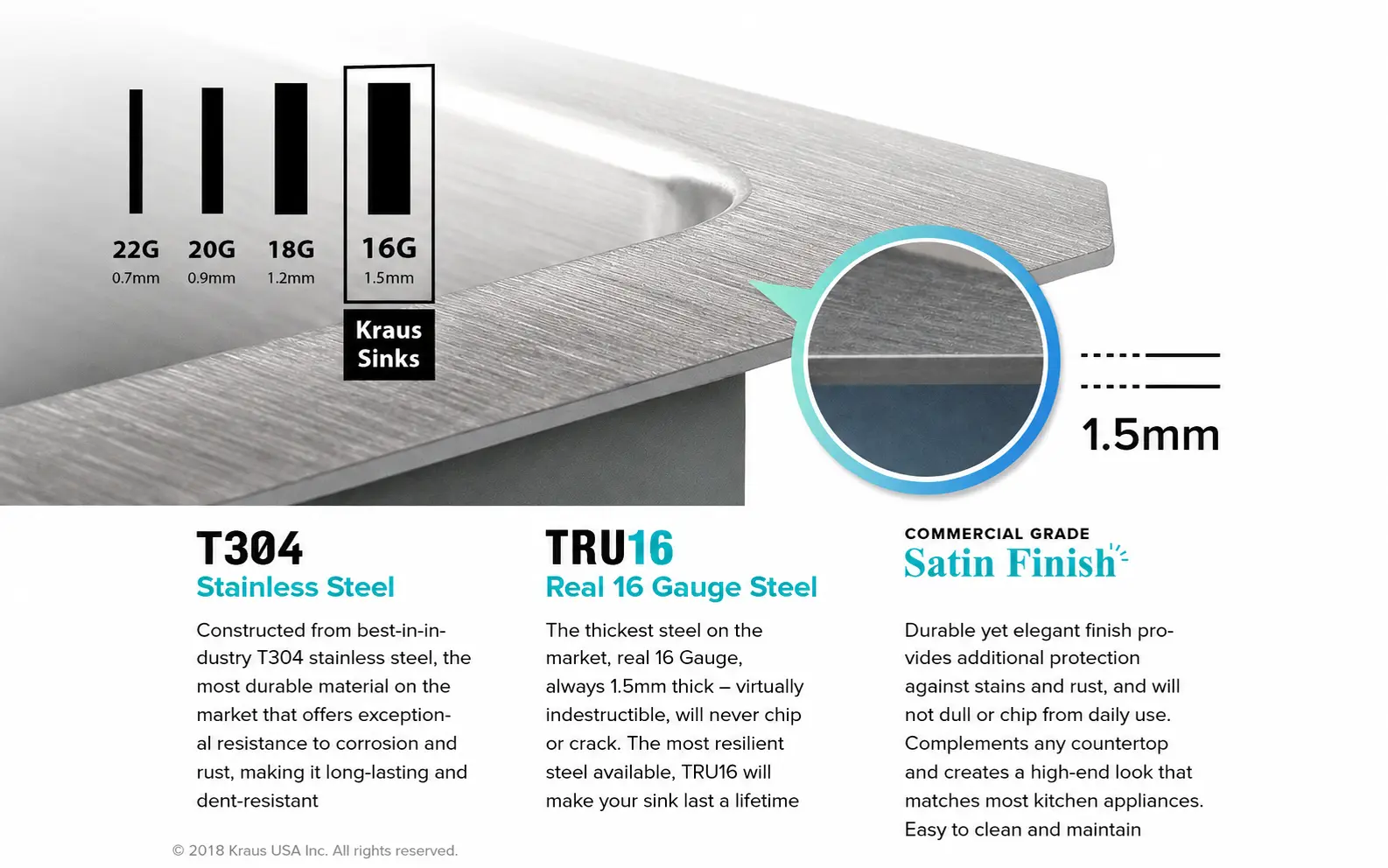
18 Gauge
Satin Finish
30″ Single Bowl
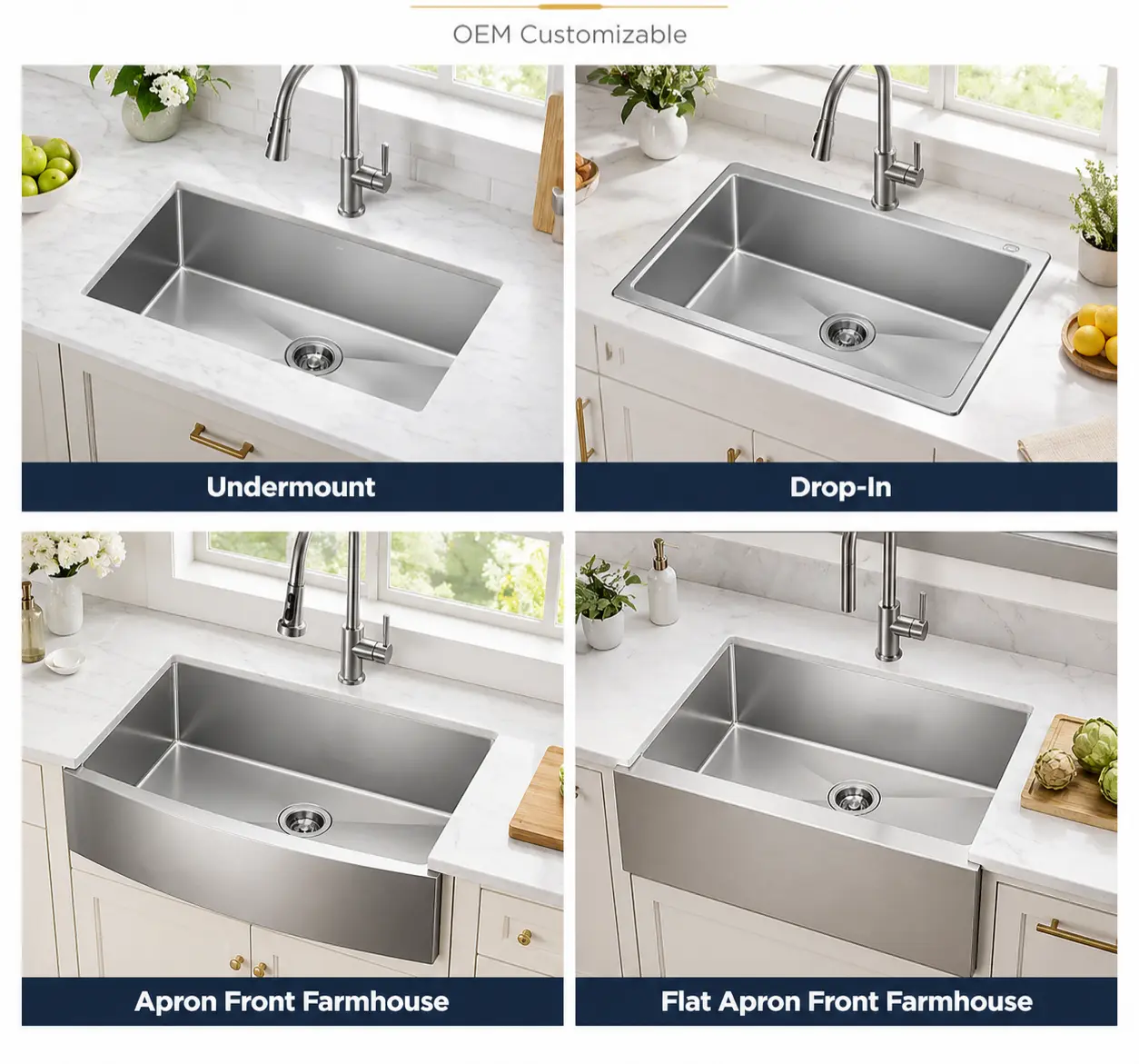
Undermount
At first glance, the quotations look comparable.
But those five lines still do not tell you:
- the actual thickness range being supplied
- whether thickness refers to incoming sheet or finished sink
- how the satin surface is produced
- how much polishing or brushing is involved
- the actual bowl geometry
- the production route
- the sound-deadening treatment
- the drain and accessories
- the packaging
- the inspection standard
So the price difference may not come from one supplier simply taking more margin.
The more useful question is:
“Are these suppliers actually quoting the same finished product?”
Quick Answer
Two kitchen sink quotations with the same headline specification can have different prices because many commercially important details sit underneath the wording.
Typical differences include:
- stainless steel thickness tolerance
- incoming vs finished thickness
- handmade vs pressed construction
- bowl geometry
- satin / brushed surface process
- polishing level
- sound pads and undercoating
- drain and accessories
- packaging
- QC and repeat-order requirements
A quotation can match the RFQ wording while still interpreting the product specification differently.
1. “18 Gauge” Does Not Always Mean Exactly the Same Material Thickness
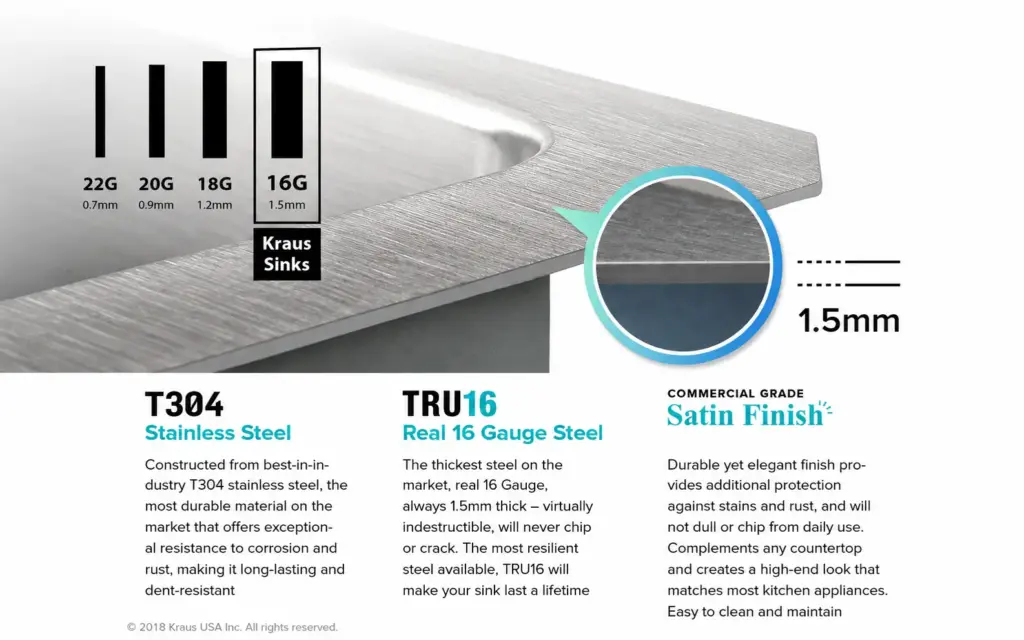
This is one of the most important reasons.
Stainless steel sheet is supplied with manufacturing tolerances.
So when two suppliers both quote:
18 gauge
the actual incoming material thickness may not be identical.
One supplier may work around the lower side of the agreed material range.
Another may use material closer to the nominal target.
That difference can affect:
- steel consumption
- sink weight
- stiffness
- forming behavior
- material cost
For buyers, the key point is:
Gauge is a nominal category. Actual sheet thickness is a measurable value.
2. Thickness Tolerance Should Be Defined, Not Assumed
A Buyer may write:
18 Gauge
but Supplier A interprets this as:
nominal gauge according to its normal material purchasing standard.
Supplier B may quote against:
a more tightly controlled incoming thickness range.
Both can say:
18 gauge
while their actual material consumption differs.
For OEM sourcing, it is better to define:
- nominal gauge
- expected incoming thickness
- acceptable tolerance where commercially important
rather than assuming every factory uses the same internal standard.
3. Pressed Sinks Add Another Thickness Question
For pressed sinks, even identical incoming sheet does not guarantee identical finished thickness.
Deep drawing redistributes material.
Highly stretched areas can become thinner, especially around:
- lower sidewalls
- bottom radii
- rectangular corners
Matrix explains this in:
How Pressed Sink Forming Changes Stainless Steel Thickness
So two quotations can both say:
18 Gauge
but one supplier may be quoting only:
incoming sheet thickness
while another may also control:
finished thickness at critical locations.
These are not the same acceptance standard.
4. “Satin Finish” Is Not One Universal Surface Process
This is another major source of quotation differences.
The words:
satin finish
do not define one exact manufacturing method.
Different suppliers may achieve a satin appearance using different combinations of:
- grinding
- polishing
- brushing
- abrasive grade
- brushing passes
- surface preparation
- manual corner finishing
So two sinks can both be described as:
Satin
while the actual:
- grain
- roughness
- reflectivity
- uniformity
- corner transition
are different.
5. Satin Can Mean Different Visual Targets
Supplier A may interpret satin as:
a softer, lower-reflection brushed surface.
Supplier B may interpret satin as:
a finer brushed finish after more polishing.
Both descriptions may be commercially acceptable within their own product systems.
But they do not necessarily create the same appearance.
That is why:
finish name and finish reference are not the same thing.
6. Surface Preparation Before Satin Finishing Changes the Result
The final satin appearance depends partly on what happens before the final brushing step.
For a handmade sink, the surface may go through:
Welding
→ Grinding
→ Blending
→ Polishing
→ Satin / Brushing
If one supplier performs more corrective grinding and polishing, the labor cost can be higher.
It may also create a more uniform:
- corner transition
- weld area
- reflection
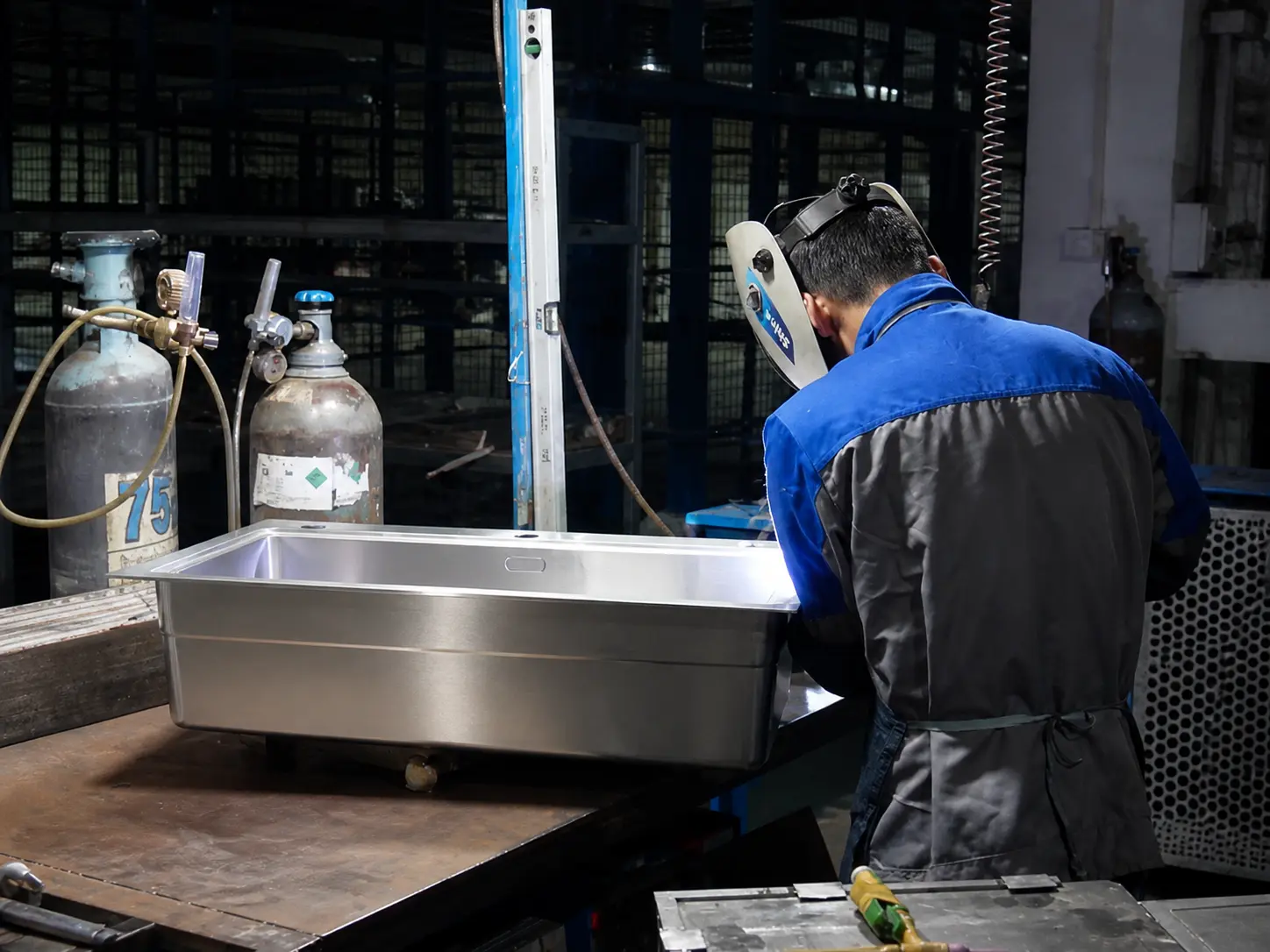
Matrix’s Handmade Kitchen Sinks use a fabricated route where welding, grinding and polishing are part of the finished surface process.
7. The Same Satin Finish Can Still Differ Around Handmade Corners
Large flat surfaces are relatively straightforward to brush consistently.
Handmade corners are more difficult because they have already gone through:
- welding
- grinding
- blending
If the buyer expects:
- very clean corner transition
- minimal grinding trace
- consistent brushing
more finishing time may be required.
That can change both:
appearance
and:
unit cost.
8. Bowl Geometry Changes Steel Consumption
Two sinks can both be:
30″ single bowl / SUS304 / 18 gauge
while having different:
- bowl opening
- depth
- corner radius
- rim width
- bottom footprint
These differences affect how much stainless steel the sink actually uses.
For example:
Sink A
- wider bowl
- deeper bowl
- narrower rim
Sink B
- smaller bowl
- shallower depth
- wider rim
Both may fit the same catalogue category.
Their steel consumption and fabrication difficulty can still differ.
9. Same Overall Size Does Not Mean Same Product Geometry
This is why comparing only:
30″ × 18″ × 10″
is often insufficient.
The buyer should also check:
- bowl length
- bowl width
- bowl depth
- flange
- corner radius
- drain position
Matrix explains this separately in:
Why Can Two Kitchen Sinks With the Same Overall Size Have Different Bowl Capacity?
10. Production Route Can Create a Large Cost Difference
Two quotations may describe similar finished dimensions but use different manufacturing routes.
Handmade Sink
Main processes can include:
- cutting
- bending
- welding
- grinding
- polishing
- brushing
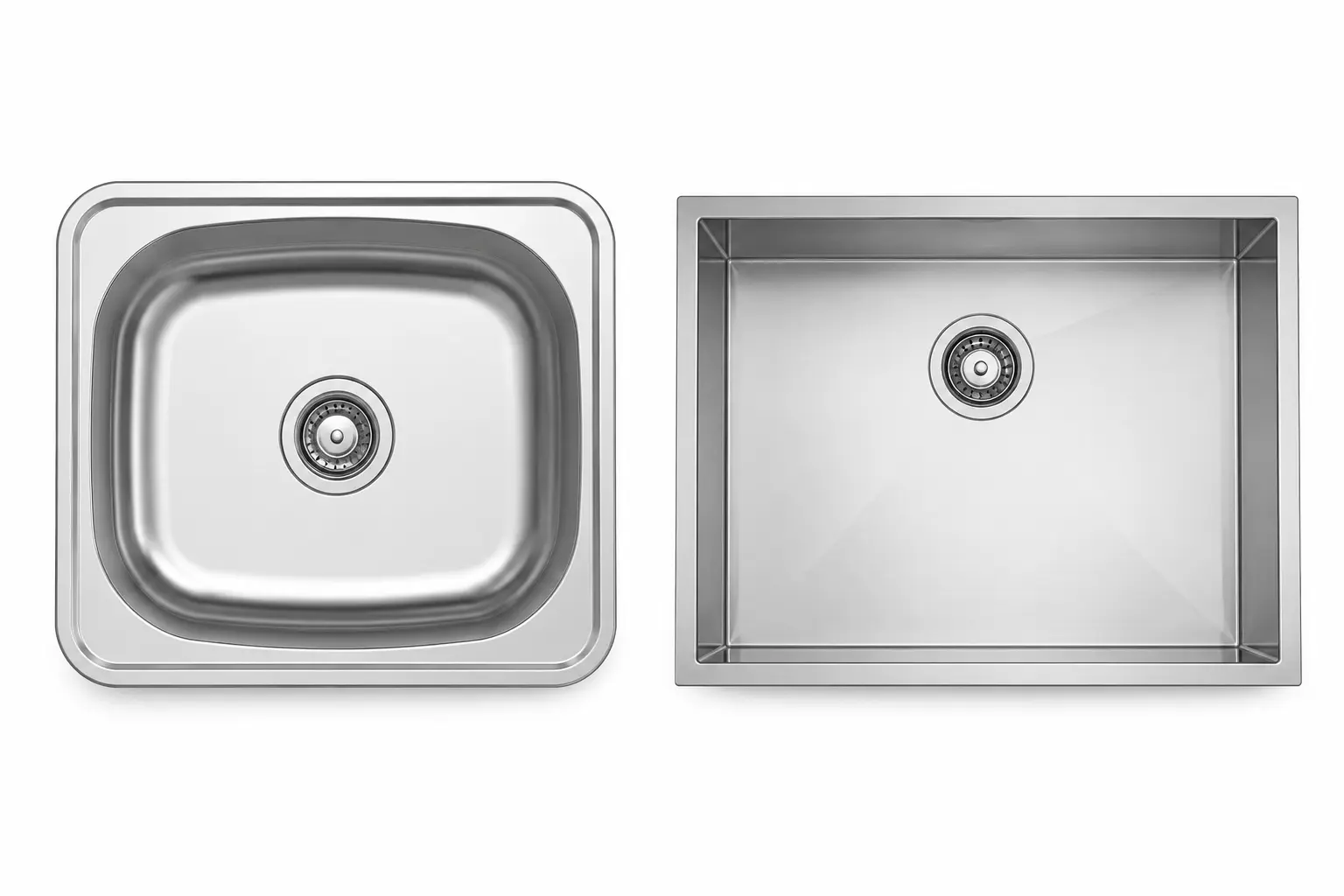
Pressed Sink
Main cost structure may involve:
- tooling
- forming
- trimming
- punching
- higher-volume production
Matrix supports both Handmade Kitchen Sinks and Pressed Kitchen Sinks.
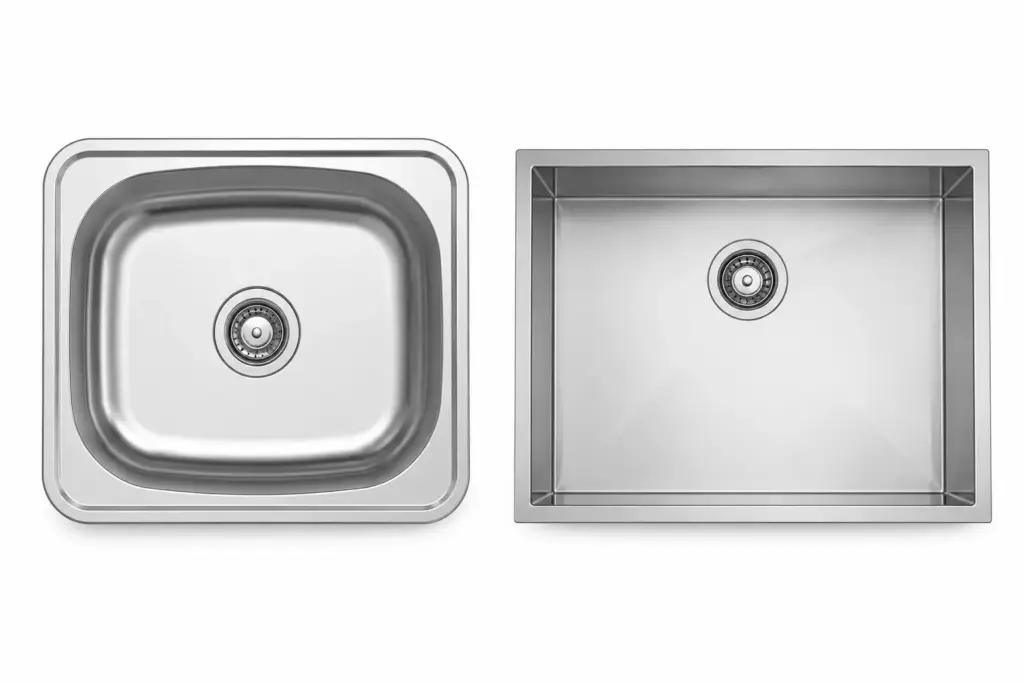
Neither route is automatically better.
But they have different economics.
11. Existing Tooling Can Reduce the Quoted Cost
For pressed sinks, Supplier A may already have a mold close to the buyer’s target design.
Supplier B may need:
- new tooling
- mold modification
- new trimming setup
Even if the final specification looks similar on paper, the project economics are different.
This is why buyers should ask:
Is this quotation based on an existing mold or new tooling?
12. Sound Pads Can Look Similar but Cost Differently
A quotation may simply say:
sound-deadening pads included.
But that does not tell you:
- pad size
- pad quantity
- coverage
- placement
- material
- adhesive quality
Two suppliers can both include pads while using very different configurations.
A small standard pad setup and a broader defined damping layout are not commercially identical.
13. Undercoating Can Also Vary
The wording:
undercoating
can refer to different:
- materials
- coverage
- thickness
- application methods
So the buyer should not compare two prices only from:
“both have coating.”
The actual configuration should be confirmed if it matters to the target SKU.
14. Drain and Accessory Packages Can Change the Price Significantly
A workstation quotation may include:
- drain
- bottom grid
- cutting board
- colander
- roll-up rack
But the accessory package can vary in:
- material
- thickness
- finish
- dimensions
- supplier
- packaging
Two quotations that both say:
workstation accessories included
may still describe very different commercial packages.
See Matrix’s Workstation Kitchen Sinks for how accessories form part of the overall sink configuration.
15. Even a Drain Is Not One Standard Cost Item
Two drains may differ in:
- stainless steel grade
- size
- flange
- basket structure
- finish
- disposal compatibility
- branding
So if Supplier A includes a basic standard drain and Supplier B includes a buyer-specified drain, the headline sink specification can still look identical while the total quoted value differs.
16. Packaging Can Be a Hidden Price Difference
Packaging is often overlooked during quotation comparison.
Supplier A may quote:
- standard carton
- basic foam
Supplier B may quote:
- stronger carton
- thicker protection
- corner protection
- accessory isolation
- private-label printing
The sink itself may be nearly identical.
The delivered-risk profile is not.
17. Private-Label Requirements Add Cost Outside the Sink Body
An OEM program may include:
- logo
- barcode
- instruction sheet
- custom carton
- product label
- accessory label
These requirements may not appear in the product headline but still affect the quotation.
Matrix’s Private-Label Product Programs treat the complete SKU — not only the stainless steel bowl — as part of the program.
18. QC Standard Can Change the Effective Product Cost
This is another hidden difference.
Suppose both suppliers quote the same sink.
Supplier A controls:
- overall length
- overall width
- visual surface
Supplier B also checks:
- bowl depth
- rim flatness
- drain position
- critical thickness
- workstation fit
- surface reference
- packing
The product description may be the same.
The inspection effort is not.
Matrix’s Quality Control & Inspection separates material, dimensions, workmanship, finish, accessories and packing because each affects the finished product.
19. A Tighter Tolerance Usually Costs More to Control
A drawing may define a dimension, but the tolerance around that dimension matters.
For example:
500 mm
is not a complete dimensional requirement.
There is a difference between:
500 mm with a broad production tolerance
and:
500 mm with a tighter CTQ tolerance.
Tighter control can require:
- more process control
- more inspection
- more rejection or rework
So:
same nominal dimension does not always mean same manufacturing requirement.
20. Repeat-Order Control Can Also Be Included — or Not
Supplier A may treat every order mainly as:
produce to drawing.
Supplier B may also maintain:
- approved sample
- finish reference
- accessory specification
- packaging standard
- revision control
The first batch may look similar.
The difference becomes more visible in:
repeat orders.
Matrix discusses this in:
Why Can Repeat-Order Kitchen Sinks Differ Even When the Drawing Has Not Changed?
Same Specification, Different Quotation — Example
Consider two quotations:
| Item | Supplier A | Supplier B |
|---|---|---|
| Material | SUS304 | SUS304 |
| Thickness | 18 Gauge | 18 Gauge |
| Actual Thickness Basis | Nominal | Defined incoming range |
| Finish | Satin | Satin to approved reference |
| Geometry | Standard model | Buyer-confirmed bowl geometry |
| Sound Pads | Standard | Defined coverage |
| Drain | Generic | Approved model |
| Accessories | Standard | Confirmed set |
| Packaging | Standard carton | Defined foam + carton |
| QC | Basic | CTQ + finish + fit |
| Repeat Reference | Drawing | Drawing + approved sample |
Both quotations can legitimately contain:
SUS304 / 18 Gauge / Satin
but they are not necessarily quoting the same commercial product.
How Should Buyers Compare Two Sink Quotations?
Start by checking whether the following are truly aligned:
Material
- grade
- actual thickness basis
- tolerance
Geometry
- overall size
- bowl size
- depth
- radius
- flange
- drain
Finish
- satin / brushed definition
- physical reference
- corner workmanship
Construction
- handmade or pressed
- existing mold or new tooling
Components
- drain
- grid
- cutting board
- colander
Acoustic Treatment
- pad configuration
- undercoating
Packaging
- carton
- foam
- branding
QC
- inspection points
- tolerance
- finish reference
- accessory fit
The Cheapest Quote May Be Correct — for a Different Product Definition
This distinction is important.
A lower quotation does not automatically mean:
poor quality.
It may simply be based on:
- wider material tolerance
- standard finish
- existing tooling
- generic accessories
- simpler packing
- broader QC requirement
That may be exactly what the buyer needs.
The problem occurs when:
two different product definitions are compared as if they were identical.
What Should Buyers Ask Before Negotiating the Price?
Before asking:
“Can you match the other supplier’s price?”
first ask:
“Are both quotations based on the same product definition?”
Useful questions include:
- What actual incoming thickness is quoted?
- What tolerance is used?
- Is this handmade or pressed?
- Is the pressed price based on existing tooling?
- What exactly does “satin” mean in this quotation?
- Is there an approved finish reference?
- What drain and accessories are included?
- What sound treatment is included?
- What packaging is included?
- What inspection criteria are included?
What Should Be Frozen Before Final Price Comparison?
For a meaningful supplier comparison, confirm:
Material
→ Thickness
→ Geometry
→ Finish
→ Production Route
→ Accessories
→ Packaging
→ QC
Then compare price.
Not the other way around.
Common Misunderstandings
“Both suppliers quoted SUS304 + 18 gauge, so the material is identical.”
Not necessarily.
Actual thickness and tolerance may still differ.
“Satin finish is a standard appearance.”
No.
Different surface-preparation and brushing methods can create different satin results.
“The same overall size means the same amount of steel.”
No.
Bowl depth, radius, rim and geometry affect steel consumption.
“If both suppliers include sound pads, that item is equal.”
Not necessarily.
Pad size, placement and coverage can differ.
“A higher quotation means the supplier has a higher margin.”
Not necessarily.
The product definition, process, components, QC or packaging may be different.
“The lowest quotation is risky.”
Not automatically.
A lower-cost configuration can be completely appropriate if it matches the buyer’s actual requirement.
Buyer Takeaway
Do not compare kitchen sink quotations using:
Headline Specification + Unit Price
only.
Use:
Material Tolerance
→ Finished Thickness
→ Geometry
→ Finish Method
→ Production Route
→ Components
→ Packaging
→ QC
The key distinction is:
The same RFQ wording does not always create the same manufacturing requirement.
And for common specifications such as:
SUS304 + 18 Gauge + Satin
the biggest hidden differences are often not in the words themselves, but in:
how each supplier defines and executes them.
Frequently Asked Questions
Why do two SUS304 18-gauge sink quotations have different prices?
Because actual thickness tolerance, product geometry, production route, finish, accessories, packaging and QC may differ even when the headline specification is the same.
Can two 18-gauge sinks use different actual thickness?
Yes. Gauge is a nominal category and actual sheet thickness can vary within the agreed material tolerance.
Is satin finish the same from every sink manufacturer?
No. Different polishing, brushing and surface-preparation methods can create different satin appearances.
Does a deeper bowl increase sink cost?
It can increase material usage or manufacturing difficulty depending on the design and production route.
Does existing tooling reduce pressed sink price?
It can reduce or eliminate new tooling cost when the existing mold matches the project requirement.
Should buyers compare unit price before approving the sample?
It is better to align the product definition first so that the quotations being compared actually refer to equivalent products.
Comparing OEM Kitchen Sink Quotations?
Matrix supports both Handmade Kitchen Sinks and Pressed Kitchen Sinks for different product, volume and tooling requirements.