Quick Answer
Before comparing two sink prices, make sure both suppliers are quoting the same:
- dimensions
- bowl depth
- handmade or pressed construction
- SUS grade
- thickness basis
- finish
- accessories
- private-label scope
- packing
- MOQ
- tooling
- Incoterm
If one supplier quotes a 1.2 mm handmade sink with a complete workstation accessory set and individual foam packing, while another quotes a pressed sink with drain only, the lower price tells you very little.
Normalize the specification first. Compare price second.
1. Start with Dimensions
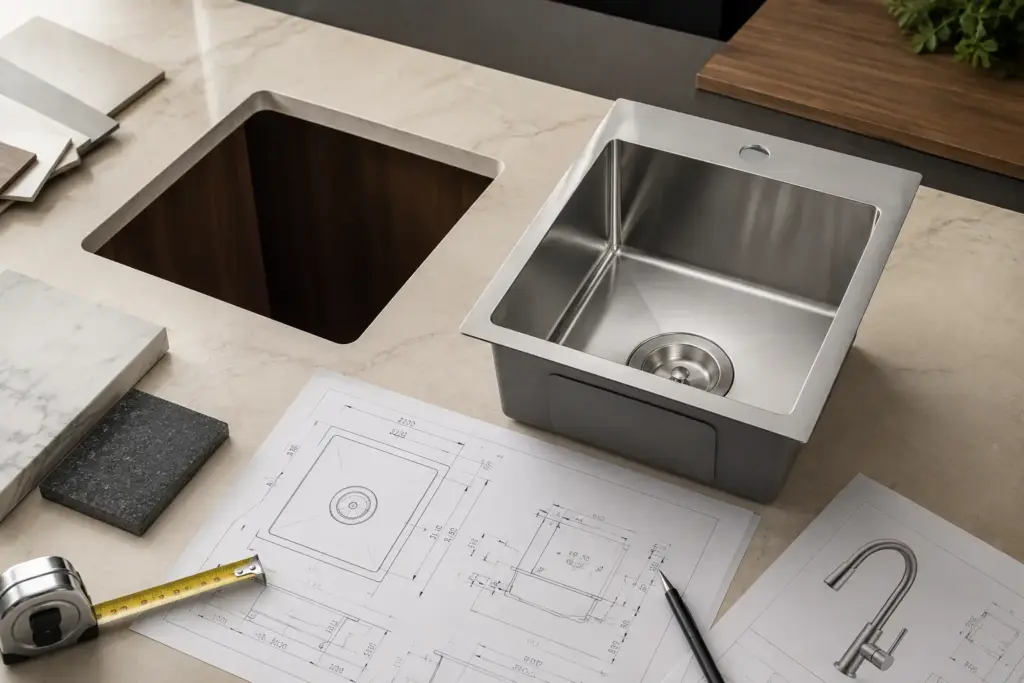
Do not compare quotations based only on:
30-inch sink
or:
800 × 500 sink.
Also check:
- bowl size
- depth
- rim width
- radius
- drain position
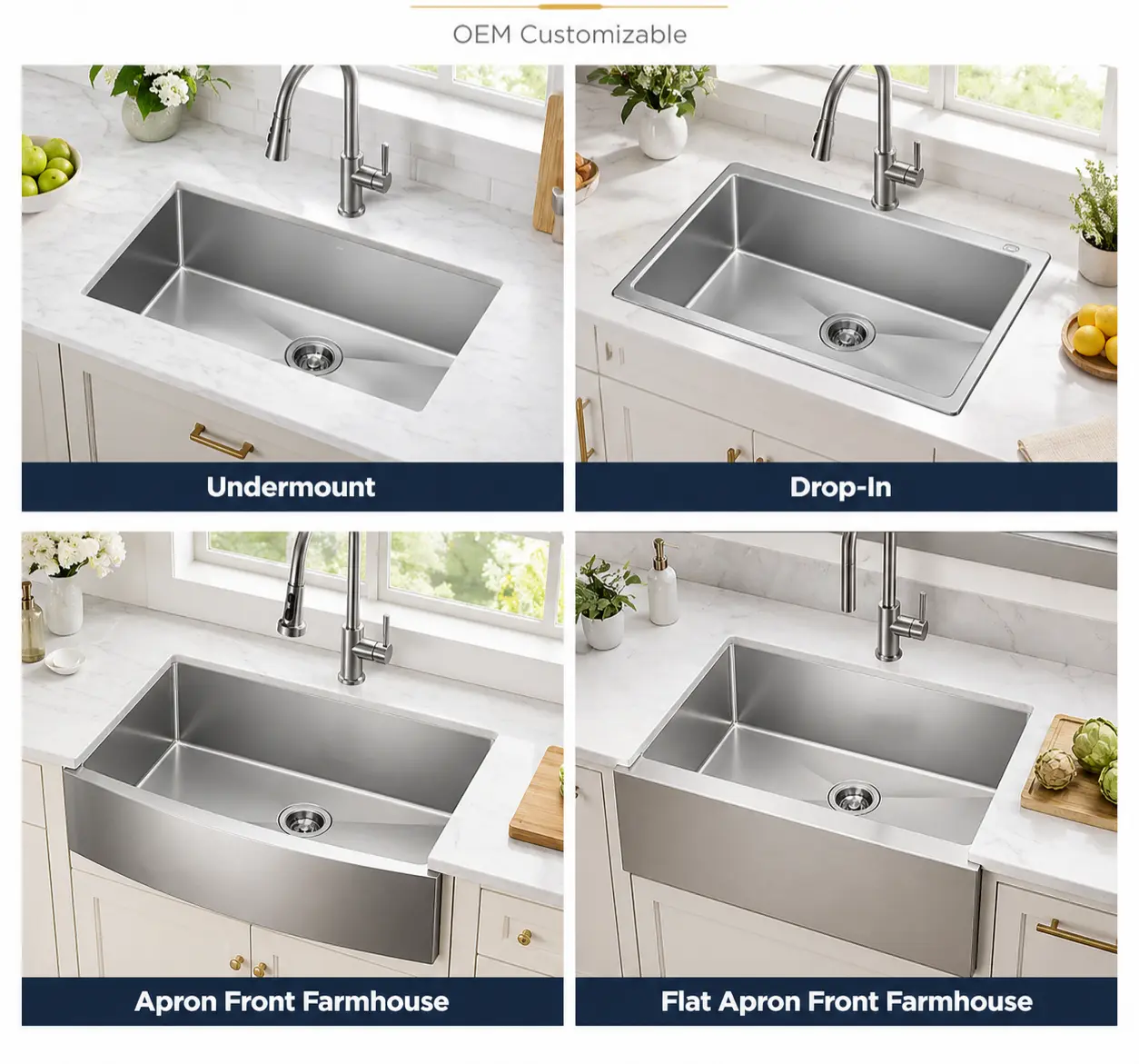
- installation
- workstation ledge
Two sinks with the same outside dimensions can use different amounts of material and require different production work.
2. Confirm Handmade vs Pressed
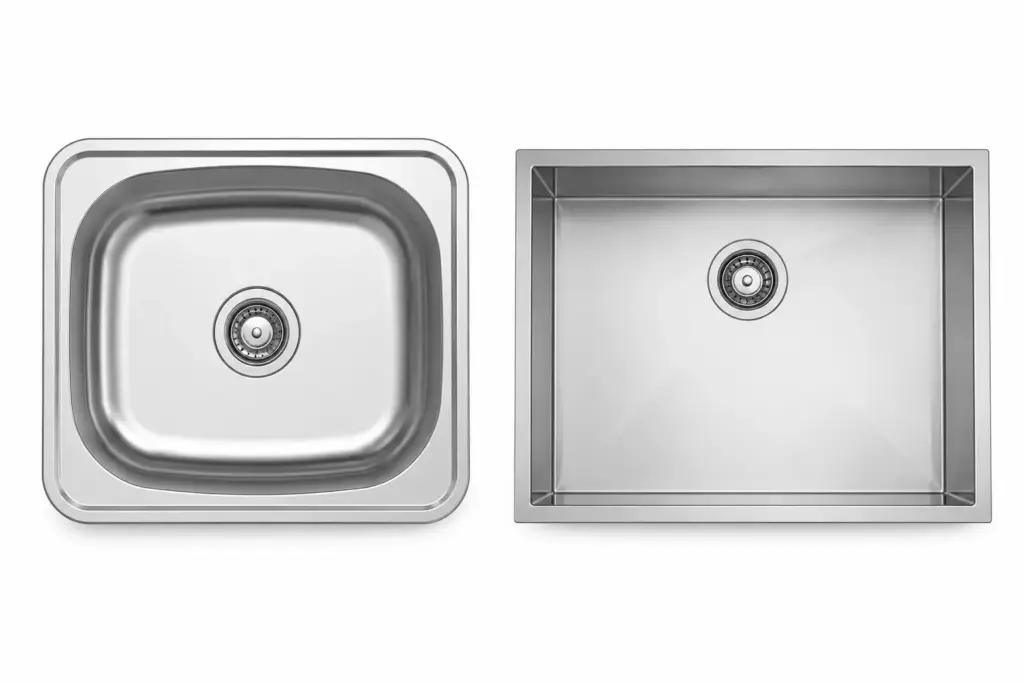
This is one of the biggest quotation differences.
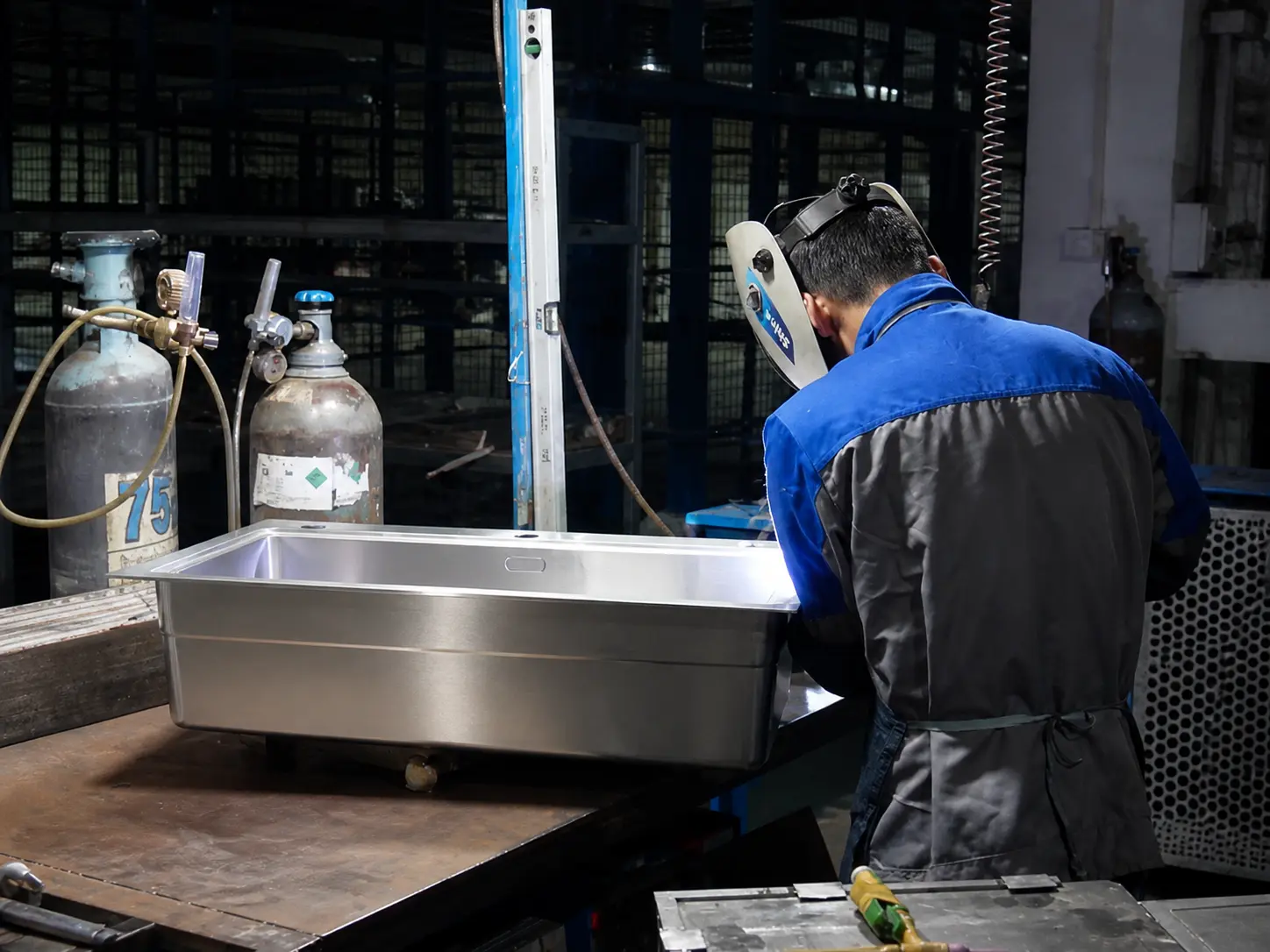
A handmade sink is typically:
cut
→ bent
→ welded
→ ground
→ polished
A pressed sink is:
blanked
→ hydraulically drawn
→ formed
→ trimmed
→ finished
These production routes have different:
- labor
- tooling
- MOQ
- customization
- unit-cost behavior
Do not assume two visually similar sinks are quoting the same manufacturing method.
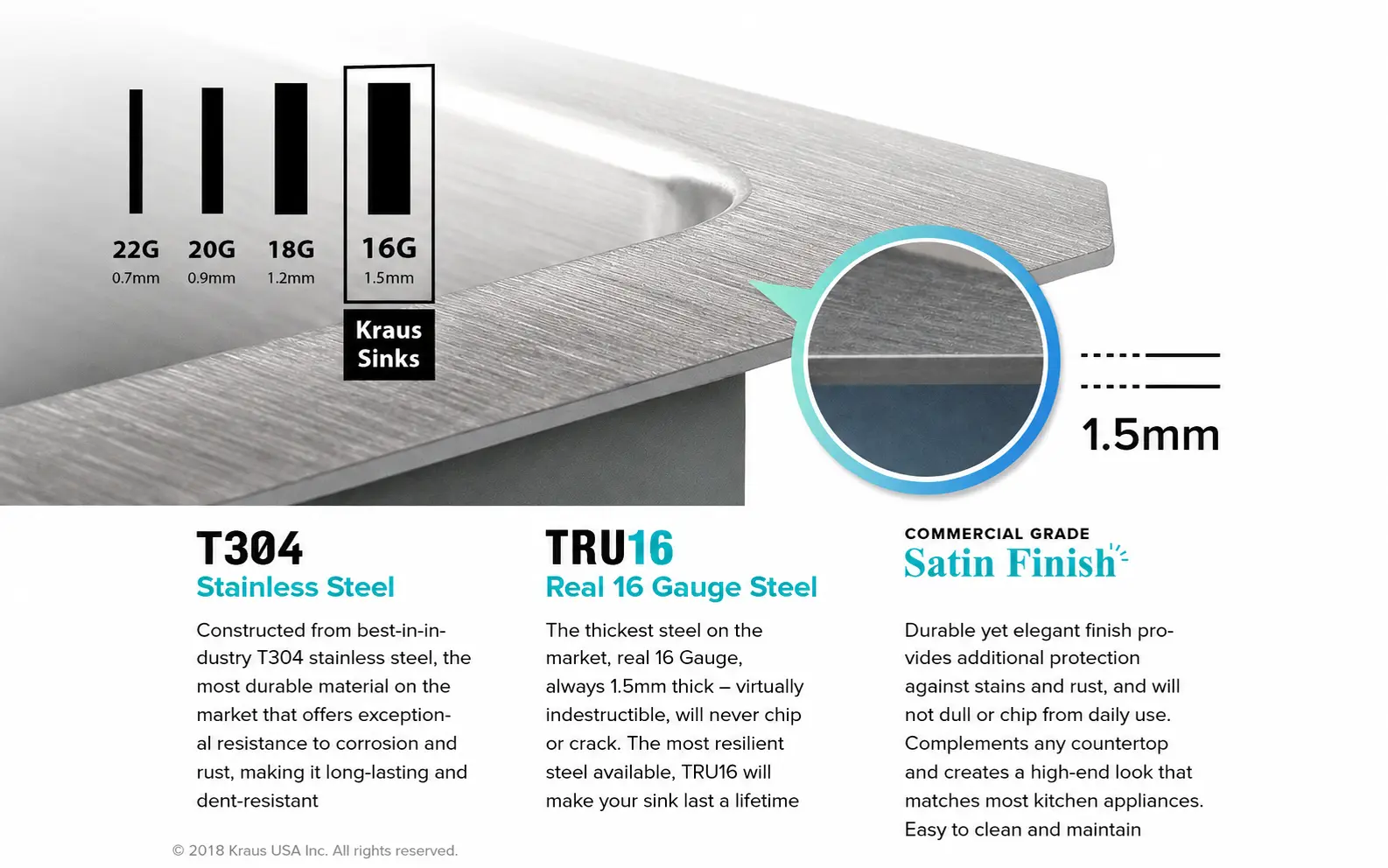
3. Normalize the Thickness Basis
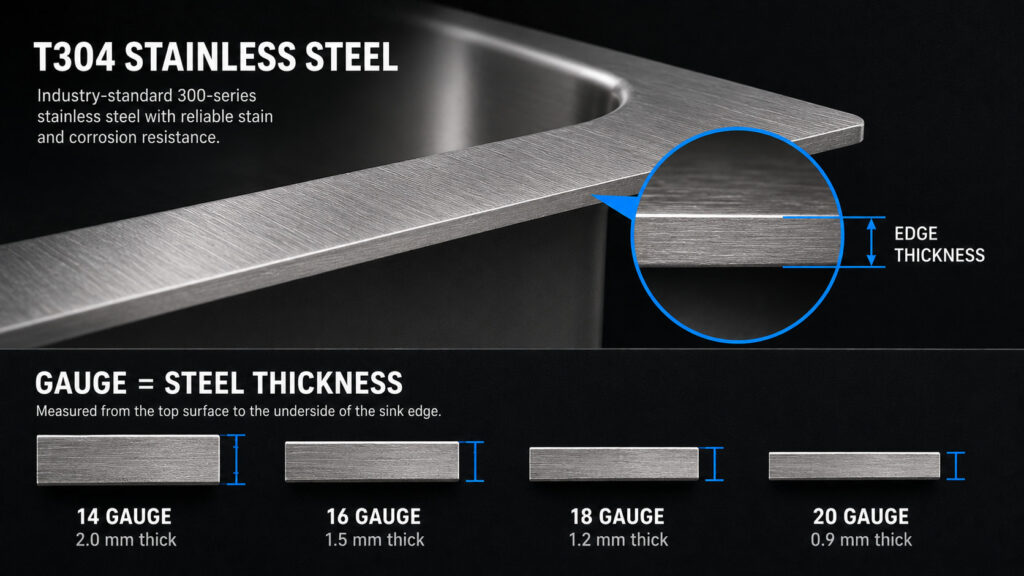
Do not stop at:
SUS304, 16 Gauge
Ask:
- What is the actual thickness in mm?
- Is it incoming sheet thickness?
- Is it finished thickness?
- Is the rim the same thickness as the bowl?
- For pressed sinks, where is the finished thickness measured?
For example:
1.2 mm starting sheet
and:
minimum 1.2 mm finished thickness
are not equivalent specifications.
See How to Specify Stainless Steel Sink Thickness in an RFQ.
4. Compare Bowl Depth
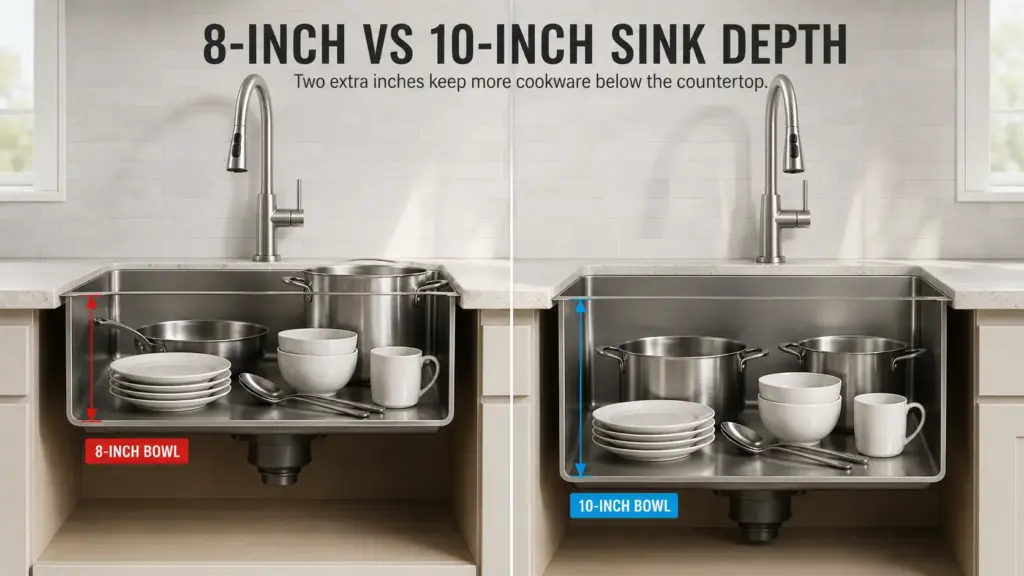
A deeper sink generally uses more material and can require more fabrication or forming work.
Compare:
180 mm
vs:
220 mm
before deciding one quote is expensive.
Also check whether the depth is measured to the same reference point.
5. Compare the Rim and Structure
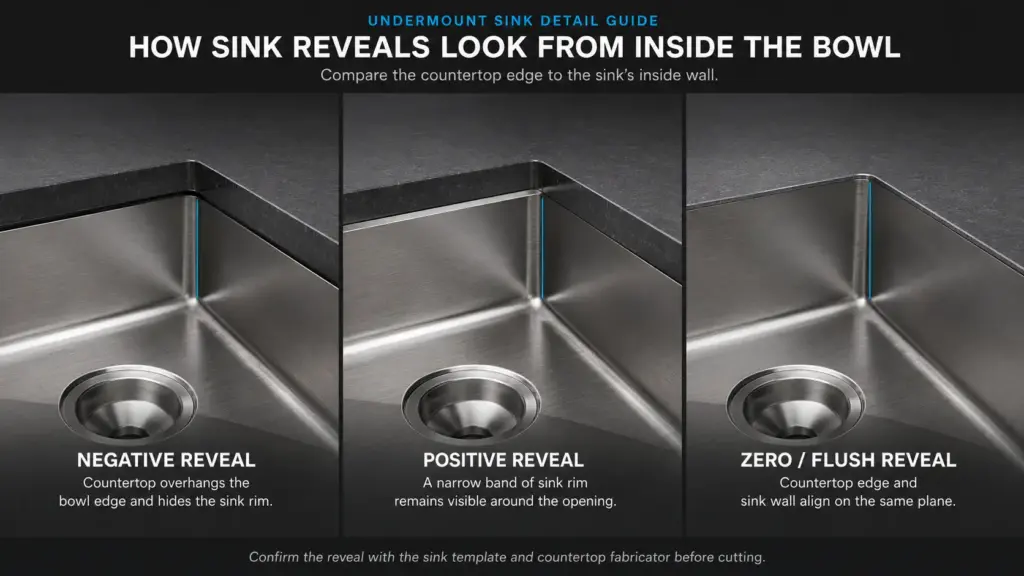
Look for differences such as:
- narrow undermount flange
- wide top-mount rim
- reinforced edge
- workstation ledge
- thick upper plate
- apron structure
These details change material use and manufacturing cost even when the bowl looks similar.
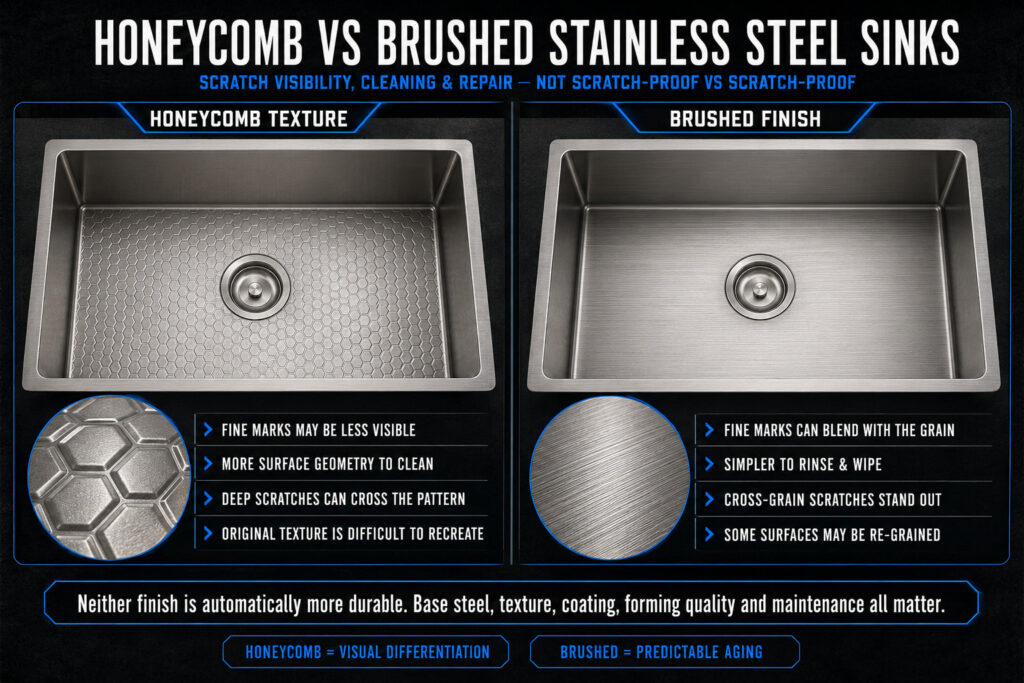
6. Define the Finish Properly
Do not compare:
Black
with:
Black
without knowing the process.
Confirm:
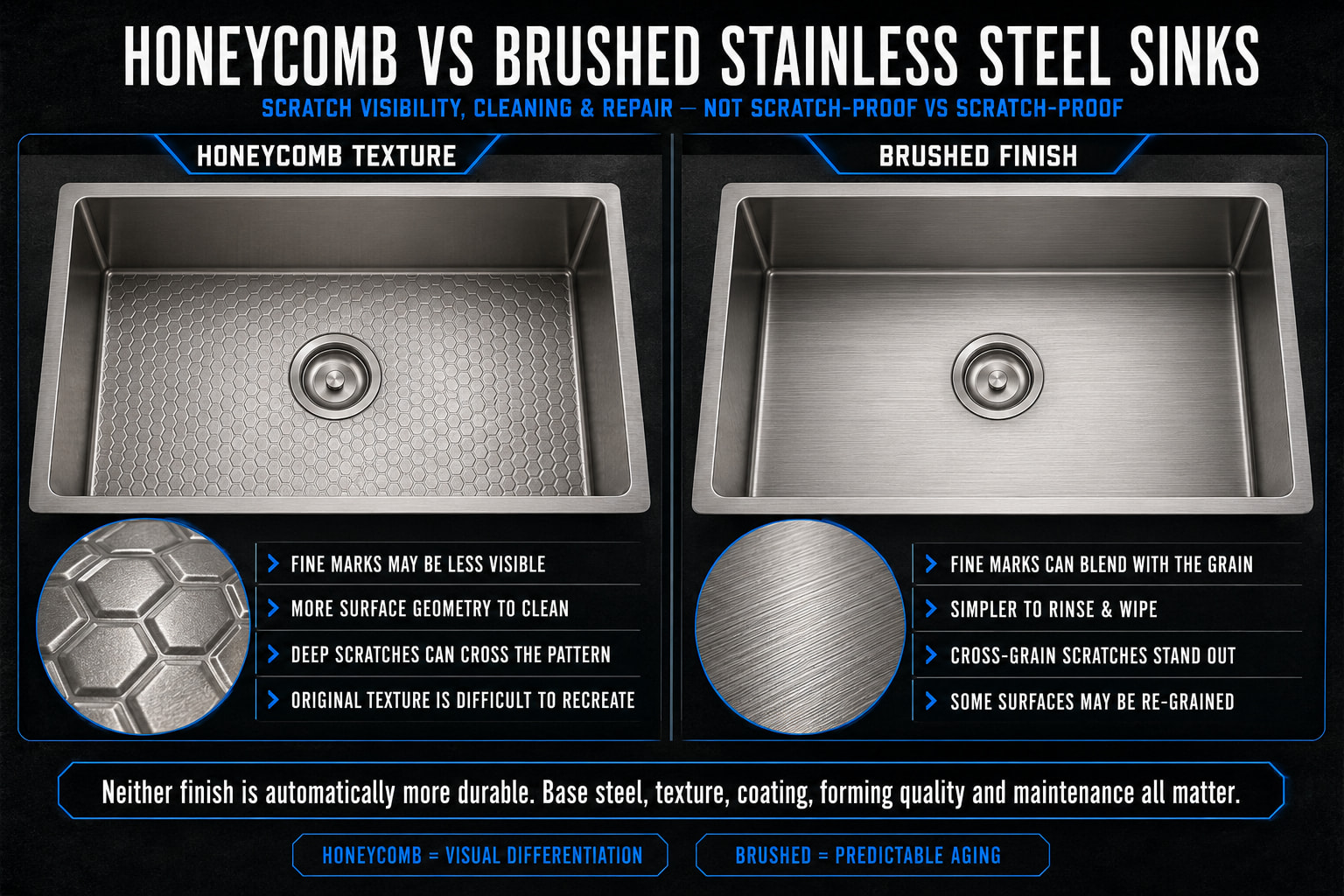
- brushed / satin
- PVD
- nano / coated finish
- color reference
- accessory color matching
- protective treatment
Different finish systems can create very different costs.
7. Normalize the Accessory Set
This is where workstation sink quotations often become misleading.
Supplier A:
Sink + drain
Supplier B:
Sink + drain + grid + rack + colander + cutting board
The second quote is not expensive simply because the unit price is higher.
First compare the same accessory configuration.
| Item | Supplier A | Supplier B |
|---|---|---|
| Drain | Included | Included |
| Grid | Included | Not Included |
| Rack | Included | Included |
| Colander | Included | Not Included |
| Cutting Board | Included | Included |
Also verify:
- accessory material
- finish
- dimensions
- packing
8. Check What “Private Label” Includes
OEM can mean very different things.
One quote may include only:
laser logo.
Another may include:
- logo
- SKU label
- barcode
- instruction sheet
- branded carton
- accessory labels
Compare the actual scope rather than the word “OEM.”
See Private Label Product Programs for the typical elements that should be defined.
9. Packaging Can Easily Hide a Price Difference
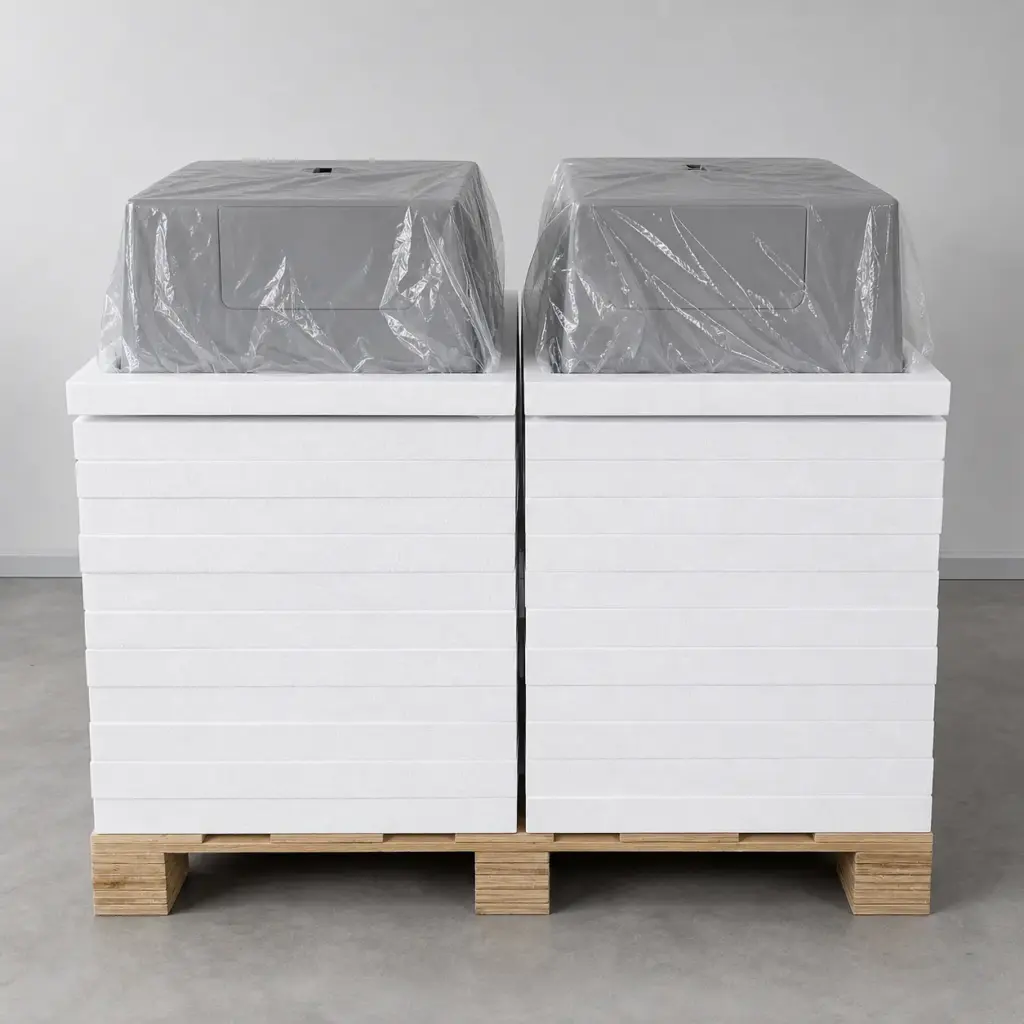
Ask each supplier to specify:
- pcs / carton
- foam type
- surface protection
- rim protection
- accessory separation
- carton structure
- pallet requirement
- printed carton
- labels
For example:
1 pc + high-density foam + individual carton
is not equivalent to:
3 pcs + basic foam + master carton.
Packaging changes:
- product cost
- CBM
- freight
- damage risk
10. Separate Tooling from Unit Price
For pressed sinks, compare:
- existing mold
- new mold
- tooling cost
- sample cost
- development cost
Example:
Supplier A
Existing mold
Unit price: USD 30
Tooling: USD 0
Supplier B
Custom mold
Unit price: USD 27
Tooling: USD 8,000
Supplier B is not automatically cheaper.
You need to know the expected volume.
See Existing Sink Mold vs New Tooling before comparing the two options.
11. Compare MOQ with the Production Route
A lower MOQ does not necessarily mean a better quotation.
MOQ can be driven by:
- handmade vs pressed
- mold setup
- material batching
- finish
- accessories
- carton printing
A small handmade project and a high-volume pressed program solve different sourcing problems.
See Why Pressed Sink MOQ Is Usually Higher Than Handmade Sink MOQ.
12. Compare Lead Time in Stages
Avoid one vague line:
Lead time: 30 days.
Ask separately:
- sample development
- tooling
- sample approval
- bulk production
- packing completion
A supplier with a fast existing-model sample may not have the same timeline for a new pressed mold.
13. Compare the QC Reference
Do not compare:
Strict QC
with:
Strict QC.
Ask what each supplier will actually inspect.
Useful references include:
- approved drawing
- thickness requirement
- finish reference
- golden sample
- accessory list
- packing specification
The important question is:
What will the production batch be checked against?
See Kitchen Sink Quality Control & Inspection.
14. Separate Product Cost from Incoterm
Do not compare:
EXW USD 38
with:
FOB USD 41
or:
DDP USD 55
as if they are the same number.
Separate:
Product
What does the manufactured SKU cost?
Export
What local export charges are included?
Freight
What transportation is included?
Import
Are duties and destination charges included?
Normalize the product first.
Then compare logistics.
15. Build One Normalized Comparison Sheet
Use the same structure for every supplier.
| Item | Supplier A | Supplier B |
|---|---|---|
| Manufacturing | ||
| Overall Size | ||
| Bowl Size | ||
| Bowl Depth | ||
| Material | ||
| Thickness Basis | ||
| Installation | ||
| Radius | ||
| Drain Position | ||
| Finish | ||
| Accessories | ||
| Logo | ||
| Labels | ||
| Packing | ||
| MOQ | ||
| Sample Time | ||
| Bulk Time | ||
| Tooling | ||
| Incoterm | ||
| Unit Price |
If most of the rows above the unit price are different, the unit prices are not yet comparable.
Why Is One Sink Quote Cheaper?
Usually one or more variables are different:
Thickness
Same gauge wording, different thickness basis.
Production Method
Handmade vs pressed.
Structure
Different depth, rim or radius.
Accessories
Sink-only vs complete SKU.
Finish
Different surface treatment.
Packaging
Basic bulk packing vs individual protected carton.
Tooling
Included vs quoted separately.
Buyer Takeaway
Do not begin with:
Supplier A: USD 42
Supplier B: USD 37
Begin with:
Are Supplier A and Supplier B quoting the same sink?
Normalize:
Dimensions → Production → Material → Thickness → Finish → Accessories → Branding → Packing → Tooling → MOQ → Incoterm
Then compare price.
That turns quotation comparison from price shopping into an actual sourcing decision.
FAQ
Why can two SUS304 sink quotations differ so much?
Because SUS304 defines the steel grade, not the complete product. Thickness, production, dimensions, accessories, finish and packing may all differ.
Should I always choose the lowest quotation?
Not until the specifications and commercial terms are normalized.
Can handmade and pressed quotations be compared?
Yes, but treat them as different production strategies and compare tooling, MOQ, customization and expected volume.
Why does one supplier have a higher MOQ?
The difference may come from mold setup, material batching, finish, packaging or accessory requirements.
What is the easiest way to get comparable quotations?
Send every supplier the same RFQ and ask them to confirm any deviations before quoting.
Preparing a Supplier Comparison?
Start with the Kitchen Sink RFQ Checklist and send the same product definition to every supplier.
You can also use Matrix’s Kitchen Sink Factory Capabilities and OEM Kitchen Sink Case Studies as references for evaluating manufacturing fit.