Not every product change needs a new physical sample.
But some changes cannot be validated reliably through:
- a revised drawing
- a supplier specification
- a photo
- an email confirmation
If a change affects:
- fit
- installation
- visible appearance
- user interaction
- accessory compatibility
- critical geometry
a physical sample may provide information that documents cannot.
For OEM buyers, the useful question is not:
“Did something change?”
It is:
“Can the effect of this change be fully verified without handling the actual product?”
Quick Answer
A new kitchen sink sample is most useful when a change affects:
- bowl or rim geometry
- countertop or cabinet fit
- drain position or drain interface
- workstation accessory fit
- visible surface finish
- handmade corner workmanship
- PVD color matching
- new tooling or mold geometry
- installation hardware
- multiple interacting changes at once
Document approval may be sufficient when the change affects only:
- artwork
- labels
- supplier codes
- non-critical documentation
- an equivalent component with no change to approved fit, material, appearance or function
Use documents to approve information. Use physical samples to approve interfaces and real-world outcomes.
1. Start With the Result the Change Can Affect
Do not decide whether to sample based only on:
major change / minor change
as a label.
Instead ask:
Can the change affect geometry?
Can it affect fit?
Can it affect appearance?
Can it affect installation?
Can it affect function?
Can it affect the approved customer-facing result?
If the answer is yes, physical validation becomes more valuable.
2. Bowl Geometry Changes Usually Deserve a New Sample
Changes to:
- bowl length
- bowl width
- depth
- corner radius
- wall angle
can affect more than the drawing dimension itself.
They may change:
- usable bowl space
- cabinet clearance
- drain position relationship
- bottom-grid fit
- workstation accessory fit
- visual proportion
A revised drawing tells the Buyer what the geometry should be.
A physical sample shows:
what the geometry becomes after real manufacturing.
3. Rim or Flange Changes Should Be Treated Carefully
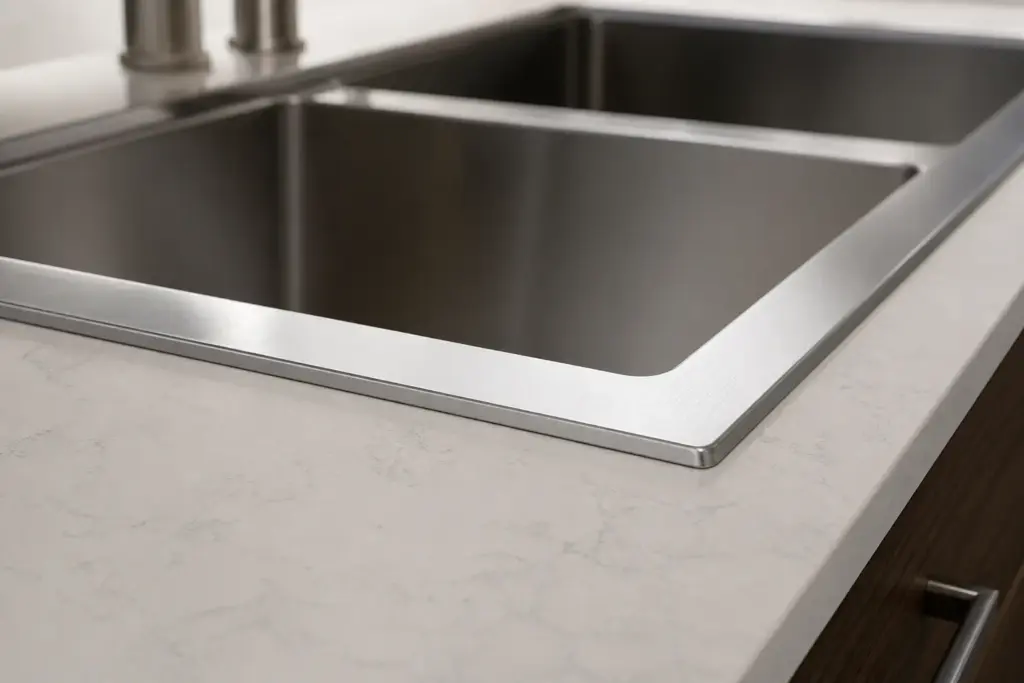
Changes to:
- rim width
- flange width
- top-mount lip
- undermount flange
can affect:
- countertop fit
- cut-out coverage
- mounting
- sealing
- reveal
This is especially important for:
- replacement sinks
- existing countertops
- custom cut-outs
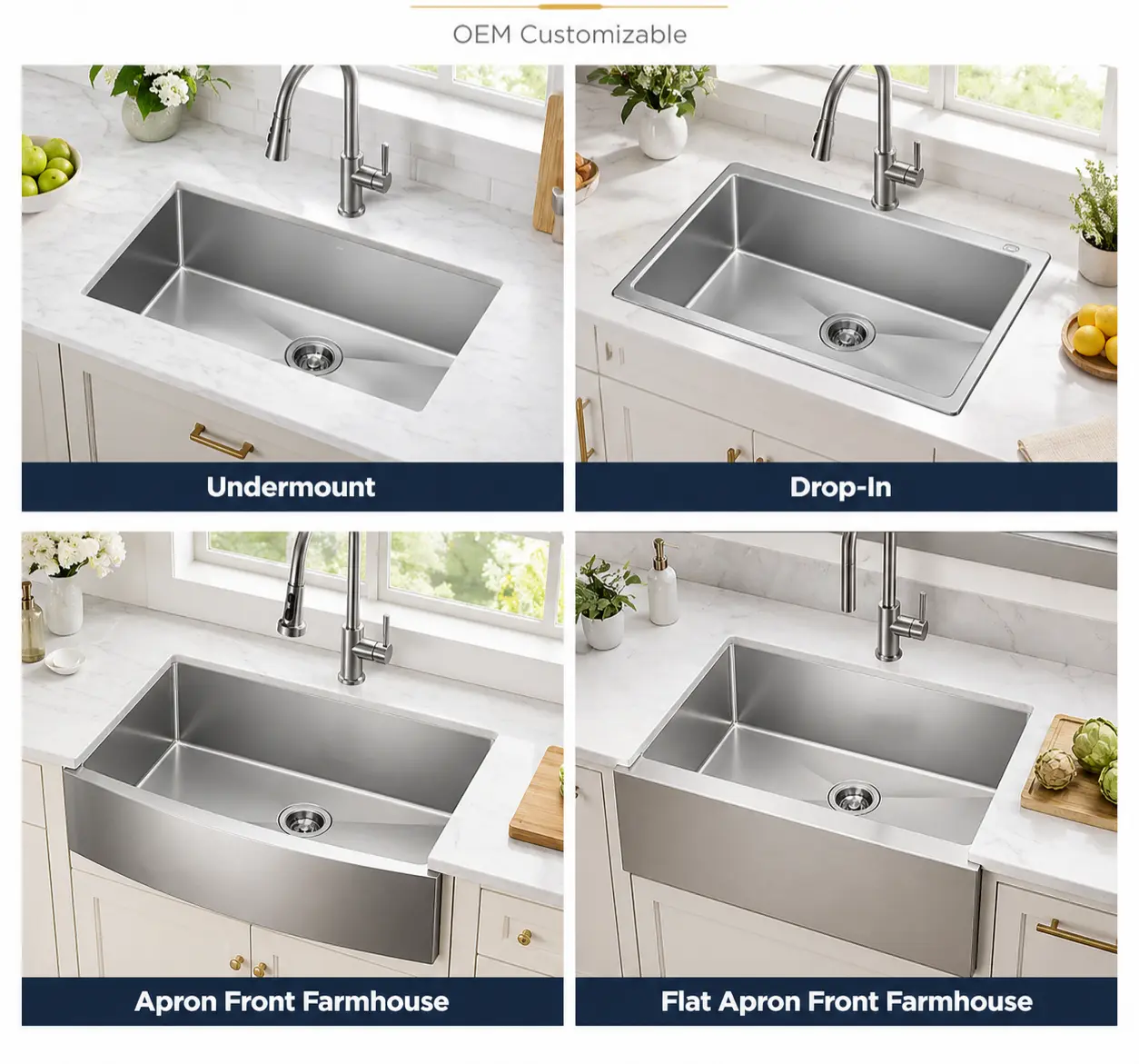
Matrix’s Top-Mount Kitchen Sinks and Undermount Kitchen Sinks show why rim geometry is an installation interface rather than only an outer dimension.
4. A Drain-Position Change Usually Needs More Than a Drawing Review
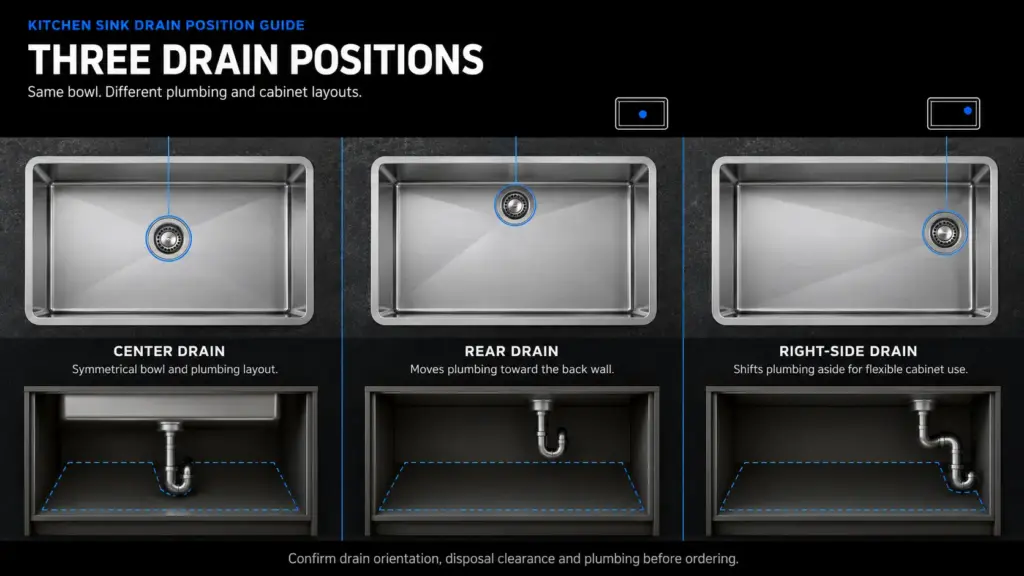
Changing the drain position can affect:
- plumbing
- garbage disposal
- bottom grid
- cabinet storage
- workstation layout
The new position may look acceptable on a drawing but still create a practical problem in the actual sink system.
So when drain position changes significantly, re-sampling is usually worth considering.
5. Drain Model Changes May Need a Functional Sample
If only the drain supplier changes, a new full sink sample may not always be necessary.
But if the drain model changes in:
- flange profile
- gasket
- thread length
- finish
- disposal interface
the new drain should be checked on an actual sink.
For compatibility logic, see:
Kitchen Sink Drain Hole Sizes & Garbage Disposal Compatibility
6. Workstation Accessory Changes Are Strong Candidates for Physical Re-Approval
A cutting board or colander can be dimensionally correct on paper and still:
- feel too tight
- rock on the ledge
- slide poorly
- interfere with a corner
- sit too loose
This is because workstation fit is an interface problem.
Matrix’s Workstation Kitchen Sinks rely on integrated ledges, so actual accessory fit should be evaluated on the physical sink when critical dimensions change.
7. A Bottom Grid Change Needs the Actual Bowl
A bottom grid interacts with:
- bowl bottom
- corner radius
- drain position
- feet
- wall clearance
A grid drawing alone cannot fully show:
- rocking
- rattling
- local contact
- scratching risk
So a new grid geometry should normally be physically checked against the sink.
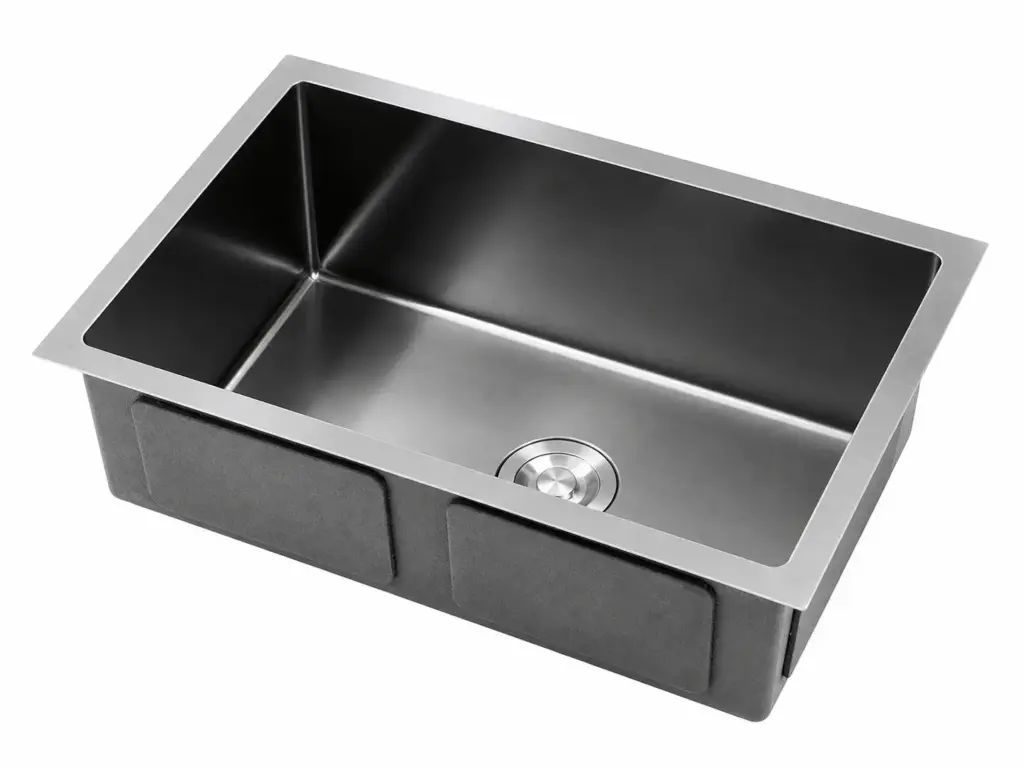
8. Surface Finish Changes Are Difficult to Approve on a Screen
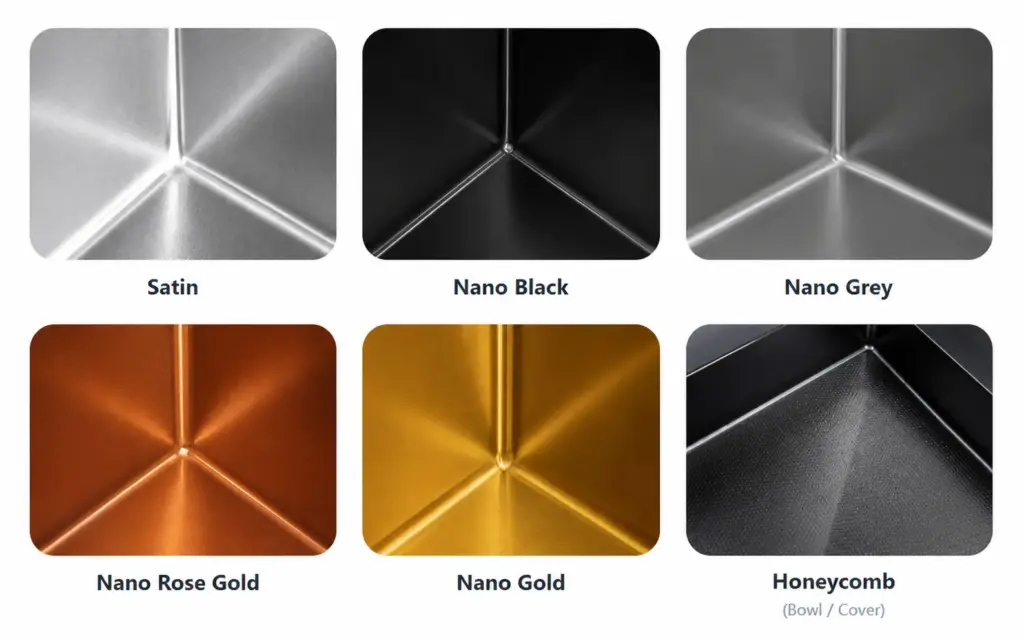
This is one of the clearest cases.
Terms such as:
- satin
- brushed
- matte
do not define one exact visual result.
Photos are affected by:
- lighting
- camera white balance
- reflection
- viewing angle
If the surface-finishing method, supplier or target appearance changes, a physical sample is much stronger than a photo alone.
See:
Why Can Brushed Stainless Steel Sink Finishes Look Different Between Batches?
9. PVD Color Changes Are Even More Sensitive
A color name such as:
gunmetal
or:
gold
does not guarantee identical:
- hue
- gloss
- reflectivity
- texture
If a PVD supplier, coating process or accessory supplier changes, the Buyer should consider physical color matching.
This is particularly important where the SKU includes:
- sink
- drain
- grid
- soap dispenser
in one coordinated finish.
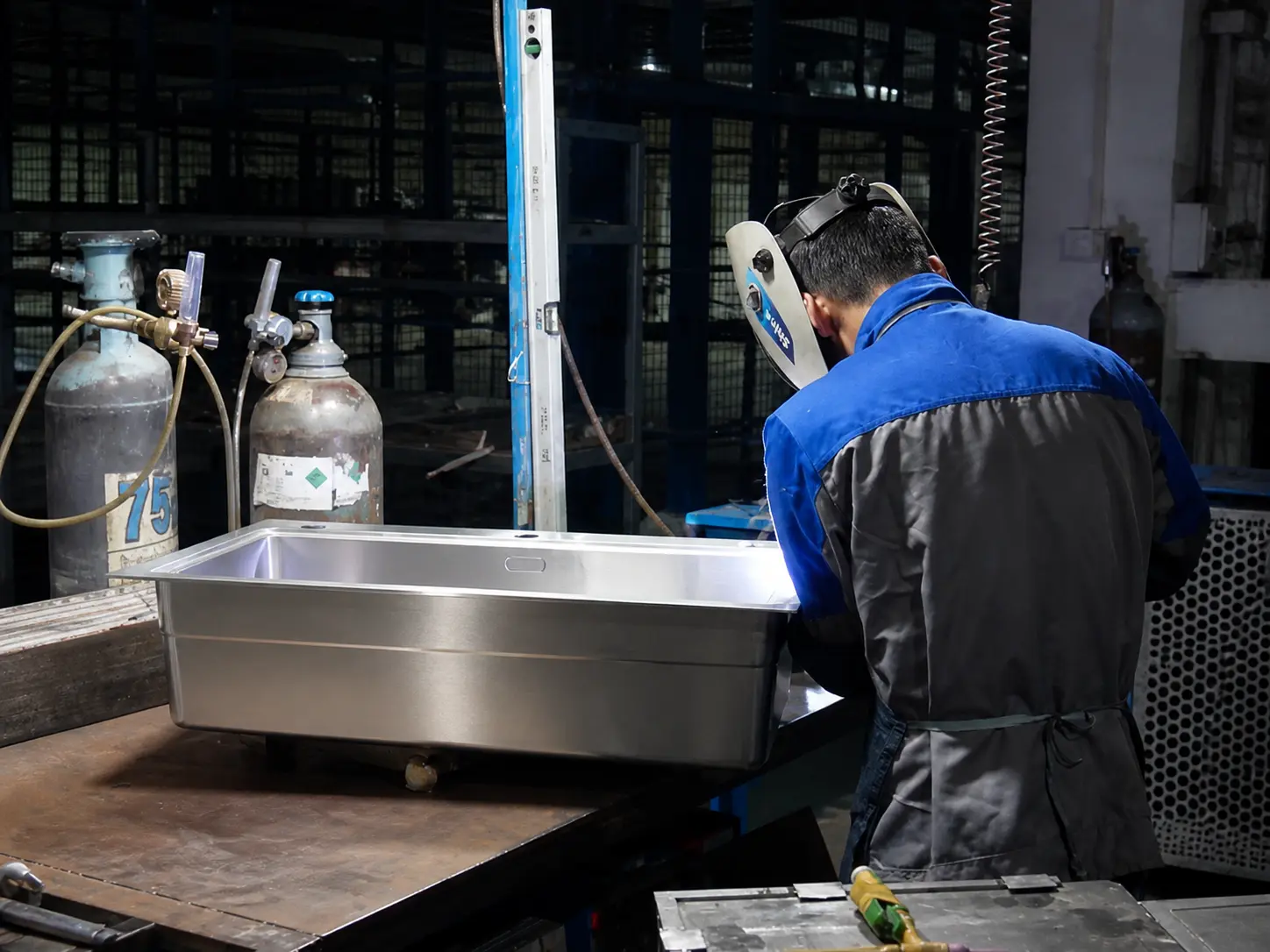
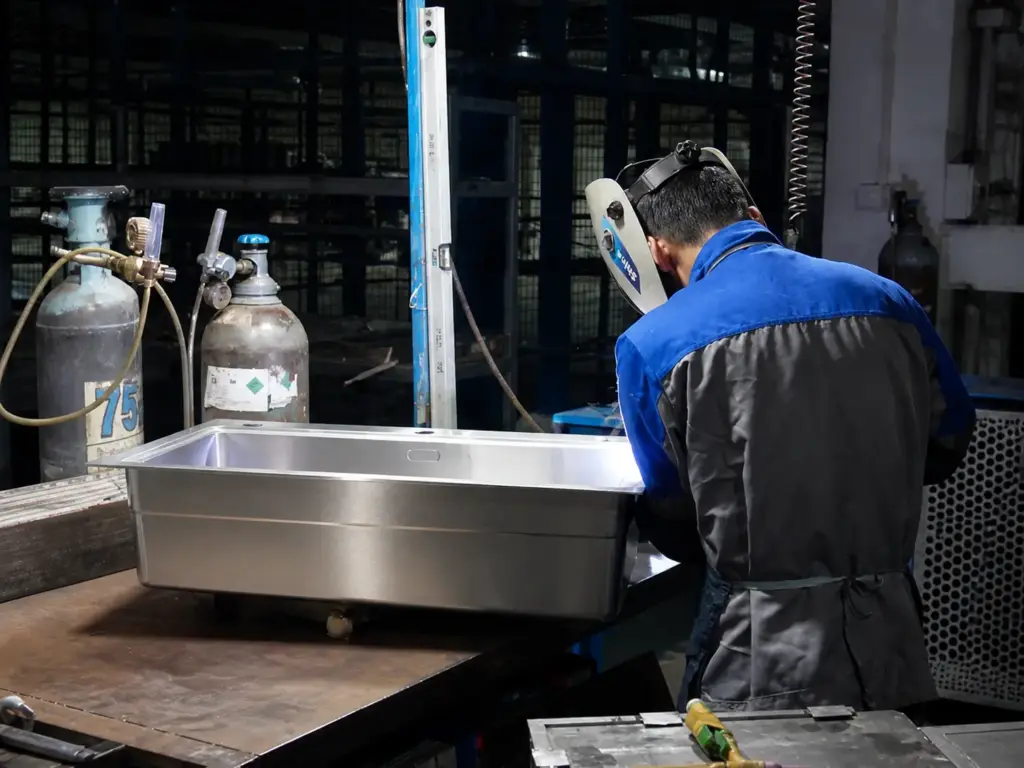
10. Handmade Corner Changes Are Better Approved Physically
Handmade corners depend on:
- welding
- grinding
- blending
- polishing
- brushing
A drawing can specify:
R10
but it cannot fully show:
- transition softness
- polish width
- reflection
- visual symmetry
If corner workmanship is customer-visible and the fabrication method changes, a physical sample is useful.
Matrix’s Handmade Kitchen Sinks use this fabricated production route.
11. New Pressed Tooling Should Normally Produce a Physical Sample
If a project introduces:
- new bowl mold
- new rim tooling
- new workstation geometry
the first sample is important because the Buyer needs to see the actual formed result.
A drawing cannot fully predict:
- formed corner appearance
- local thinning
- wall geometry
- flange behavior
- surface stretch
Matrix’s Pressed Kitchen Sinks are tooling-dependent, so a new tooling program should be validated through actual production samples before mass production.
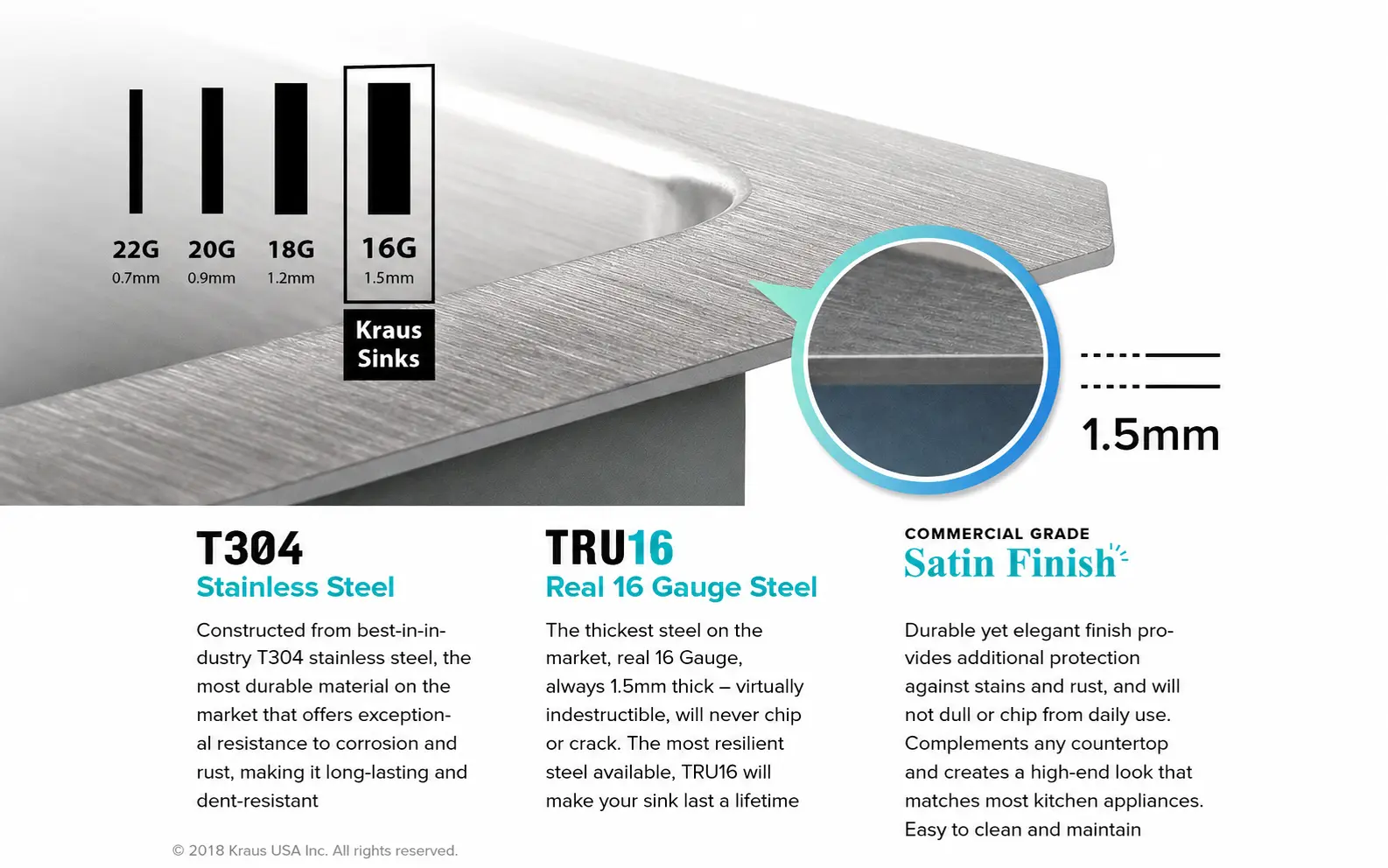
12. Material Supplier Change Does Not Always Require a New Finished Sample
If the supplier changes but the approved:
- grade
- thickness
- surface condition
remain unchanged, material verification may be more relevant than producing a new sink sample.
Possible controls include:
- material documentation
- incoming thickness
- material verification where required
This is an example where:
testing the changed input may be more useful than re-sampling the complete product.
13. Material Grade Change Is Different
Changing:
SUS304 → SUS316
or:
SUS304 → SUS201
is not simply a supplier change.
It changes the material specification itself.
Depending on the project, the Buyer may need to re-confirm:
- material requirement
- cost
- finish
- fabrication
- sample
especially if the new grade affects the commercial positioning of the SKU.
14. Thickness Changes Often Deserve a New Sample
Changing thickness can affect:
- sink weight
- stiffness
- welding behavior
- forming
- acoustic feel
- flange behavior
For pressed sinks, thickness also interacts with forming geometry.
So a change from one thickness specification to another should usually be evaluated beyond a drawing revision.
Matrix explains the distinction between incoming and finished thickness in:
How Pressed Sink Forming Changes Stainless Steel Thickness
15. Sound-Pad Changes May Not Need a Full Development Sample — but Need Physical Verification
If sound pads change only in:
- supplier
while:
- size
- position
- adhesive
- material
remain equivalent, a document check plus first-article confirmation may be enough.
If the pad layout changes significantly, physical verification becomes more useful because the acoustic configuration has changed.
16. Packaging Changes Need a Packing Sample, Not Necessarily a Sink Engineering Sample
This distinction is important.
If the sink geometry is unchanged but the Buyer changes:
- foam
- carton
- corner protection
- accessory position
the relevant sample is:
packed product
not a new engineering sink.
The correct question becomes:
Does the new packaging protect the approved sink configuration?
17. Custom Carton Artwork Usually Does Not Need a New Sink Sample
If only:
- logo
- barcode
- text
- artwork
changes, a digital proof or printed carton approval may be enough.
There is little value in re-validating:
- sink geometry
- bowl depth
- drain position
unless the packaging structure itself also changes.
18. Mounting Hardware Changes Can Require Installation Re-Check
Changing:
- clips
- brackets
- fasteners
can affect the installer interface.
If the geometry or installation method changes, test the hardware with the actual sink and countertop condition where relevant.
This is more useful than approving the clip drawing in isolation.
19. Multiple Small Changes Can Justify a New Full Sample
This is easy to underestimate.
Suppose one repeat order changes:
- drain
- cutting board
- carton
- finish
Each change alone might look minor.
Together, they can create a materially different SKU.
When several customer-facing components change at once, a complete re-sample may be more efficient than approving each change independently.
20. One Change Can Affect Several Interfaces
For example:
Wider Workstation Ledge
This changes:
- bowl opening
- cutting-board fit
- colander fit
- usable space
- appearance
So even though the drawing change appears to be:
one dimension
the commercial effect is broader.
This is why sampling decisions should follow the impact, not the number of revised drawing dimensions.
A Practical Sample Decision Matrix
| Change | Document Approval | Physical Check | New Full Sample |
|---|---|---|---|
| Barcode / artwork | ✓ | Optional | Usually No |
| Supplier code only | ✓ | No | No |
| Equivalent material supplier | ✓ | Incoming QC | Usually No |
| Material grade | ✓ | ✓ | Often Useful |
| Thickness change | ✓ | ✓ | Usually Useful |
| Drain supplier/model | ✓ | ✓ | Depends on interface |
| Cutting board size | ✓ | ✓ | Usually Useful |
| Bottom grid geometry | ✓ | ✓ | Usually Useful |
| Finish supplier | ✓ | ✓ | Often Yes |
| PVD color | ✓ | ✓ | Often Yes |
| Bowl geometry | ✓ | ✓ | Yes |
| Rim / flange geometry | ✓ | ✓ | Yes |
| New pressed mold | ✓ | ✓ | Yes |
| Carton artwork | ✓ | Print proof | No |
| Packaging structure | ✓ | Packing test | Not sink sample |
| Mounting hardware geometry | ✓ | Installation check | Depends |
21. Sample Approval Should Match the Type of Change
There is no reason to use one universal approval process.
A more efficient approach is:
Document Change
→ document approval
Material Change
→ material verification
Visual Change
→ physical appearance approval
Interface Change
→ fit / installation test
Geometry Change
→ new product sample
Packaging Change
→ packing validation
The approval method should match the risk created by the change.
22. What Should Be Updated After a New Sample Is Approved?
This is critical.
Once the new sample is approved, update the controlled reference:
- drawing revision
- BOM
- accessory list
- finish reference
- approved sample ID
- packaging instruction
- QC criteria where affected
Otherwise the factory may still use the old reference in the next repeat order.
23. A New Sample Without Version Control Solves Only One Order
A Buyer can approve the perfect replacement sample.
But if the new sample is not linked to:
- the correct drawing
- the correct BOM
- the correct finish
- the correct accessories
the next order can still revert.
So:
sampling and revision control must work together.
24. Why This Matters More for Private-Label SKUs
A private-label SKU is expected to remain consistent across:
- samples
- first mass order
- repeat orders
The end customer sees one product.
They do not see:
- supplier revisions
- component changes
- internal BOM updates
Matrix’s Private-Label Product Programs are therefore better controlled when changes are evaluated against the complete approved SKU rather than only the main sink drawing.
What Should Buyers Ask Before Requesting a New Sample?
Ask:
- What changed?
- What does the change affect?
- Can the effect be measured on documents?
- Does it affect a physical interface?
- Does it affect appearance?
- Does it affect installation?
- Does it affect the approved customer experience?
- Can the change be verified on a component only?
- Is a full sink sample actually necessary?
- What reference must be updated after approval?
Common Misunderstandings
“Any change requires a new sink sample.”
No.
Some changes can be controlled through documents, material verification or component-level checks.
“If the drawing is approved, a physical sample adds no value.”
Incorrect when fit, finish, workmanship or installation are involved.
“Photos are enough to approve a satin or PVD finish.”
Not always.
Lighting and camera conditions can significantly change perceived appearance.
“If only an accessory changes, the sink does not need to be involved.”
Not necessarily.
If the accessory interfaces with the sink, actual fit may need to be checked.
“Packaging changes require a new engineering sample.”
Usually the relevant approval is a packed-product validation rather than redevelopment of the sink.
“Once the new sample is approved, the change-control process is complete.”
No.
The controlled drawing, BOM or other reference should also be updated.
Buyer Takeaway
Do not decide on a new sample using:
Change = Sample
or:
Drawing Approved = No Sample
Use:
What Changed
→ What It Can Affect
→ Can It Be Verified on Paper?
→ Does It Need Physical Fit / Appearance / Installation Validation?
→ Update the Approved Reference
The key distinction is:
Documents are strongest at defining what the product should be. Physical samples are strongest at showing what the product actually becomes.
Frequently Asked Questions
What kitchen sink changes normally require a new sample?
Changes to critical geometry, rim/flange, workstation interfaces, visible finish, PVD color or new tooling are strong candidates.
Does a new drain supplier require a new sink sample?
Not always, but the drain should be checked with the sink if flange, gasket, fit or installation interface changes.
Does changing stainless steel supplier require a new sample?
Not necessarily if the material specification remains unchanged. Material verification may be more relevant.
Does changing sink thickness require a new sample?
Usually it deserves physical verification because thickness can affect fabrication, geometry and product feel.
Can buyers approve satin finish from photos?
Photos are useful references, but a physical sample is stronger for appearance-sensitive private-label programs.
Does packaging change require a new sink sample?
Usually the better validation is a packed-product test rather than a new engineering sink sample.
Managing Sample Changes in an OEM Sink Program?
Matrix supports Custom Kitchen Sink Programs and Private-Label Product Programs where drawings, finishes, accessories and repeat-order references need to stay aligned.
For inspection and approval logic, see Quality Control & Inspection and the Kitchen Sink RFQ Checklist.