Quick Answer
Changing a kitchen sink supplier is not simply transferring a drawing from one factory to another.
A drawing defines the product design, but it does not automatically transfer the complete manufacturing process behind the product.
Before starting mass production with a new OEM kitchen sink manufacturer, buyers should re-validate:
- Product specifications
- Manufacturing route
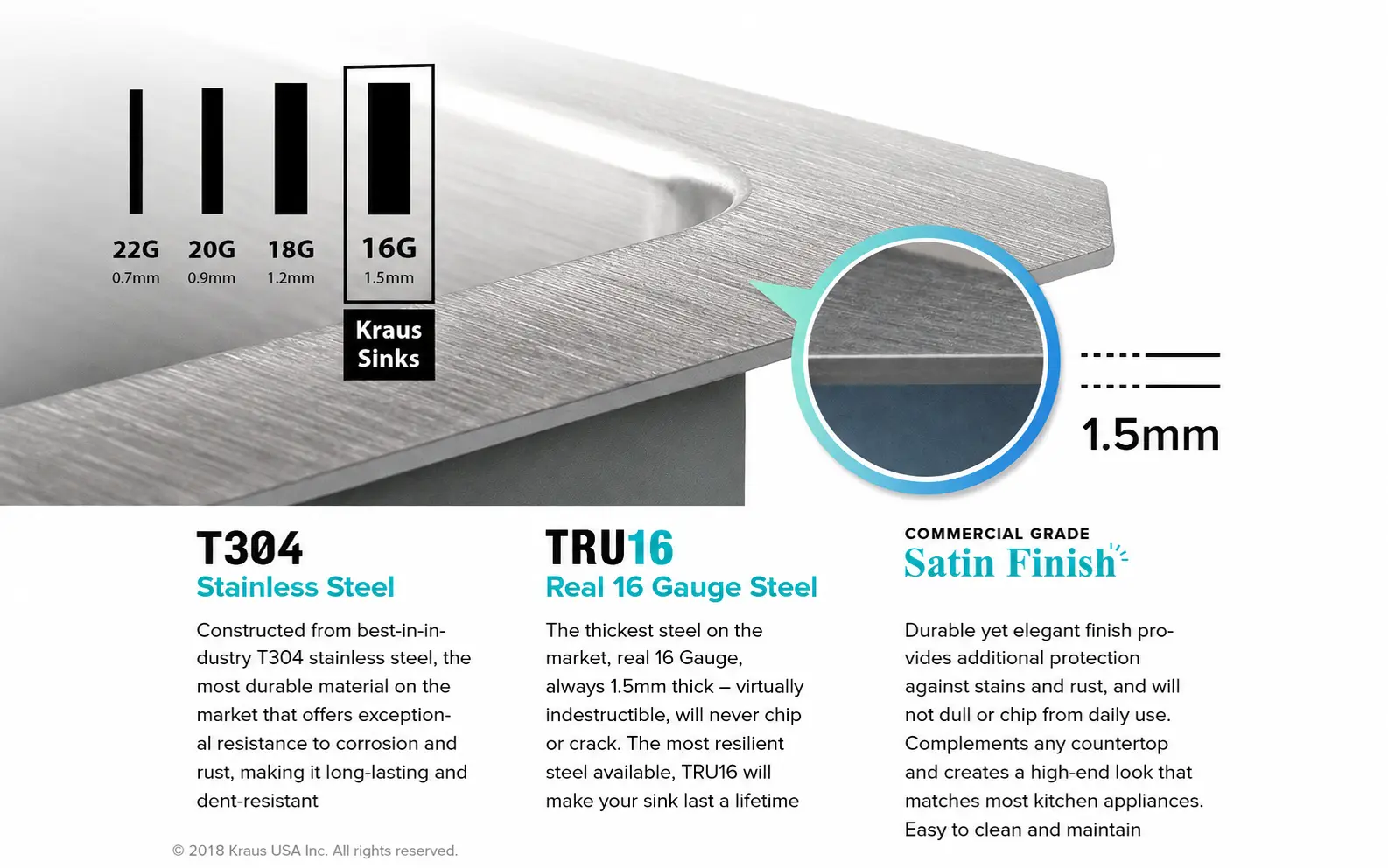
- Stainless steel material and thickness control
- Surface finish standards
- Accessory compatibility
- Approved samples
- Quality inspection requirements
A successful supplier transition is not about producing one acceptable sink.
It is about producing the same approved sink repeatedly.
The Same Kitchen Sink Drawing Does Not Always Mean The Same Finished Product
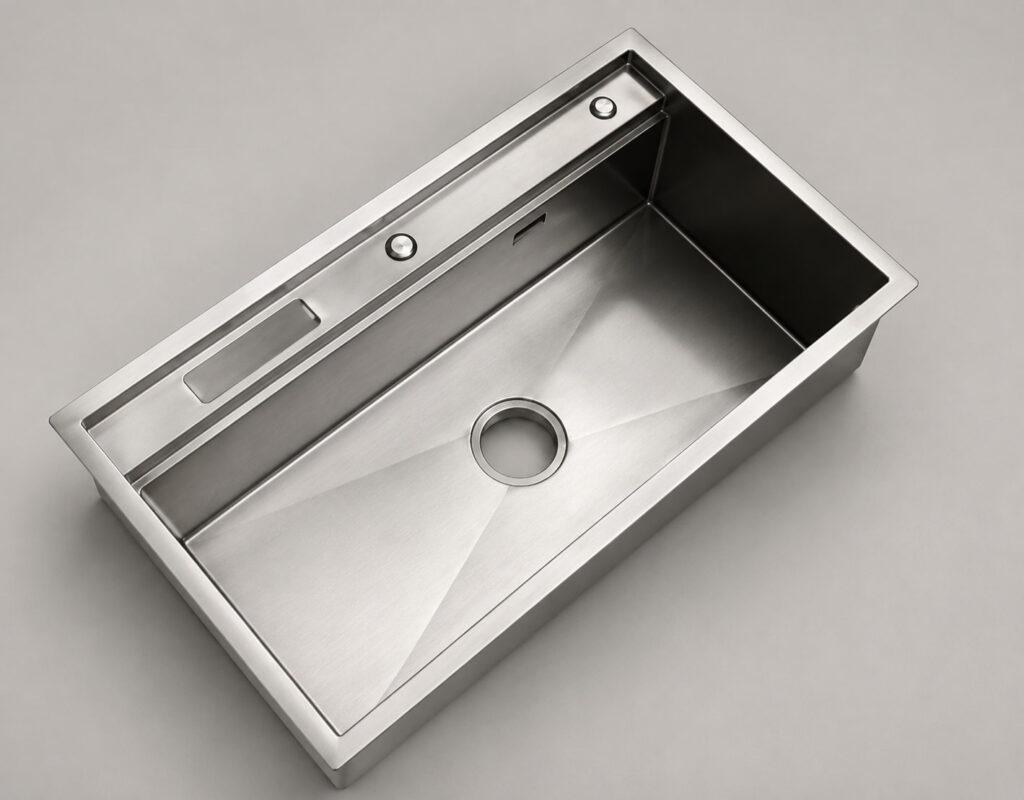
Many buyers assume changing a kitchen sink supplier is a simple process:
Send the existing drawing.
Confirm the stainless steel grade.
Compare quotations.
Approve production.
However, experienced OEM buyers understand that supplier replacement involves hidden risks.
A new supplier can follow the same drawing and still produce a different sink.
Why?
Because a technical drawing mainly transfers design intent.
It does not automatically transfer:
- Manufacturing capability
- Production method
- Material control
- Forming process
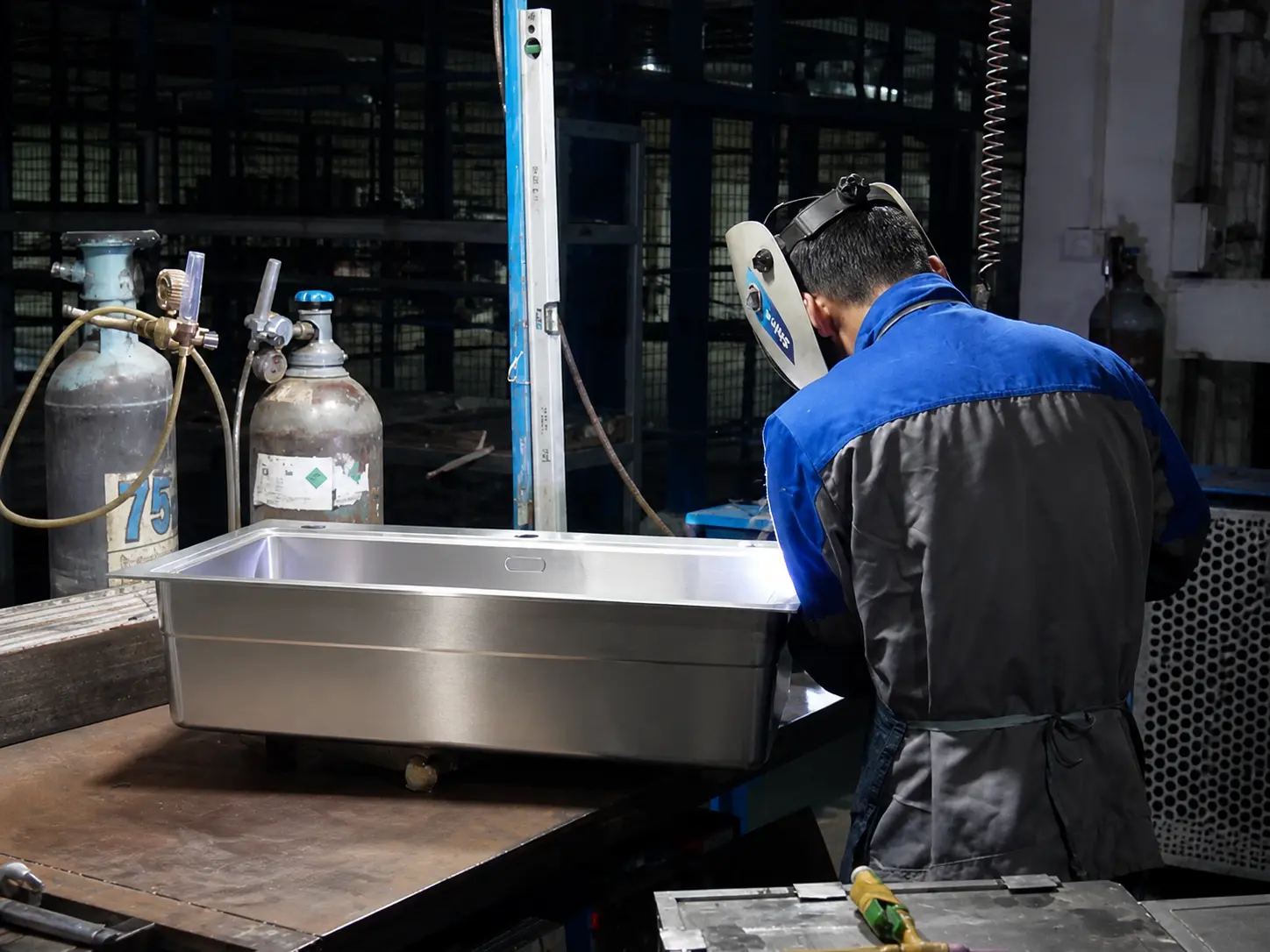
- Welding workmanship
- Surface finishing standard
- Accessory tolerance
- Quality inspection method
- Repeat-order consistency
For OEM kitchen sink programs, changing suppliers should be treated as a product re-validation process, not only a factory replacement.
Why Can Two Factories Produce Different Kitchen Sinks From The Same Drawing?
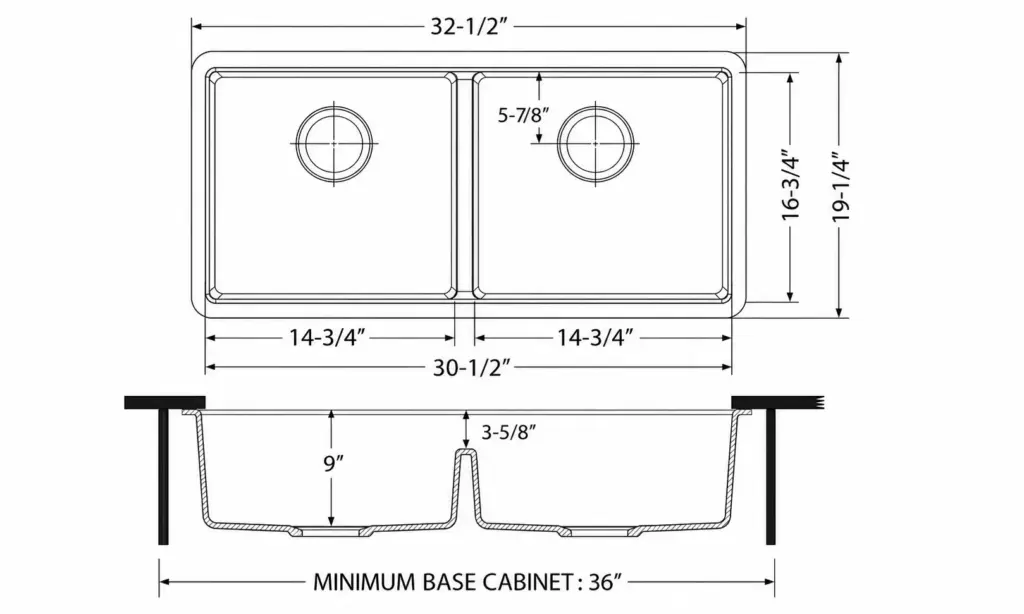
A kitchen sink drawing normally defines:
- Overall dimensions
- Bowl configuration
- Drain position
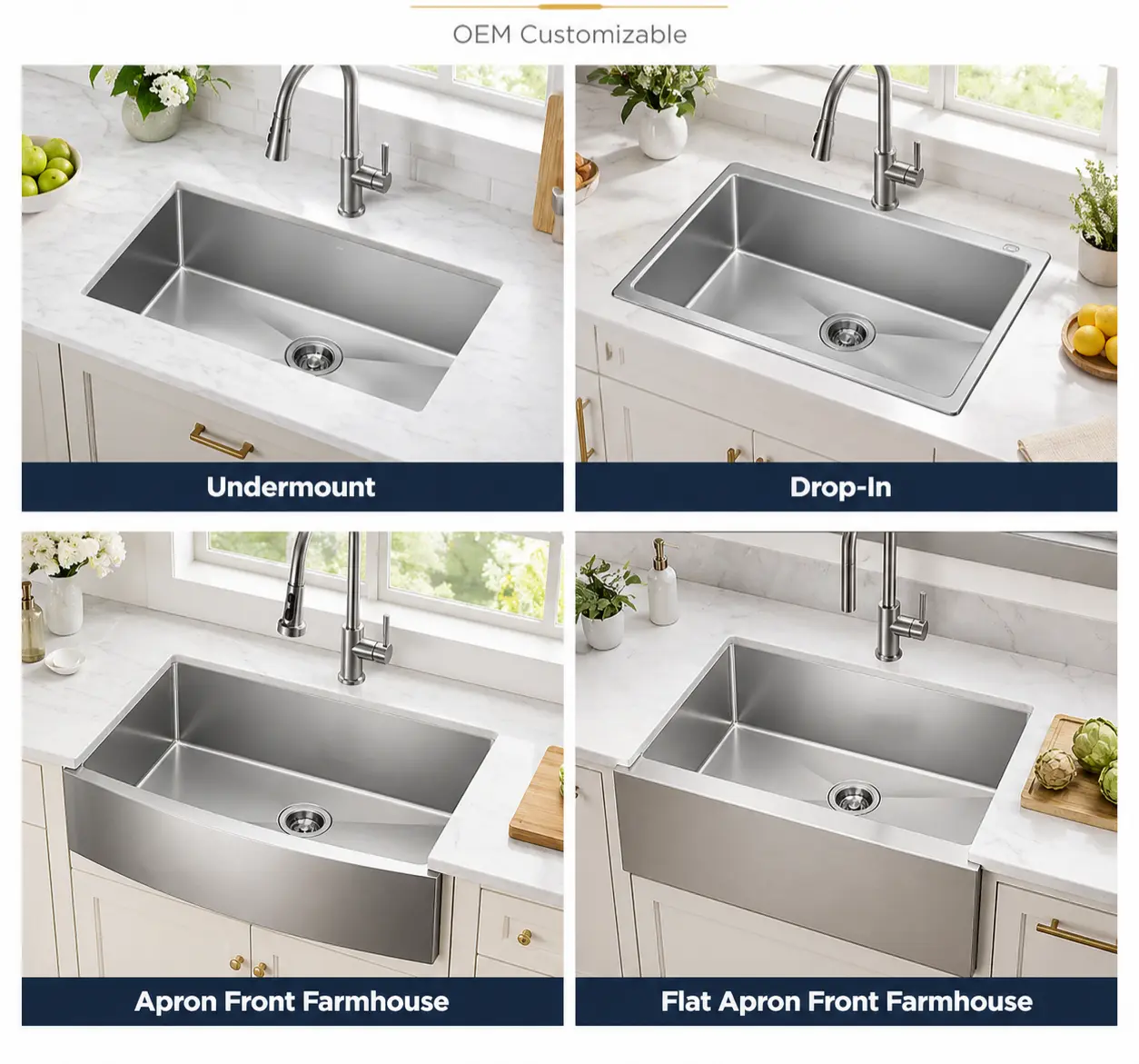
- Installation method
- Basic structure
However, a sink is not only a drawing.
The final product is also determined by manufacturing decisions behind the drawing.
For example:
Two factories receive the same stainless steel sink drawing.
Factory A produces the sink through handmade fabrication.
Factory B produces the sink through pressed forming.
Both factories may achieve similar external dimensions.
However, differences can still appear in:
| Area | Possible Difference |
|---|---|
| Corner radius | Different forming or welding method |
| Bowl transition | Different manufacturing process |
| Rim flatness | Different fabrication control |
| Thickness distribution | Different forming result |
| Surface finish | Different polishing process |
| Accessory fitting | Different tolerance control |
This leads to an important principle:
A drawing defines the product design, but not the complete manufacturing process behind the product.
For OEM buyers, the real question is not:
“Can this supplier make the drawing?”
The real question is:
“Can this supplier consistently reproduce the approved product?”
What Should Be Re-Validated When Changing Kitchen Sink Suppliers?
A professional supplier transition should review five key areas:
- Complete product definition
- Manufacturing capability
- Physical approval reference
- Quality control standard
- Repeat production consistency
1. Re-Validate The Complete Product Definition
One common mistake during supplier changes is transferring only:
- CAD drawing
- Product photos
- Basic specifications
However, an OEM kitchen sink SKU contains much more information than a drawing.
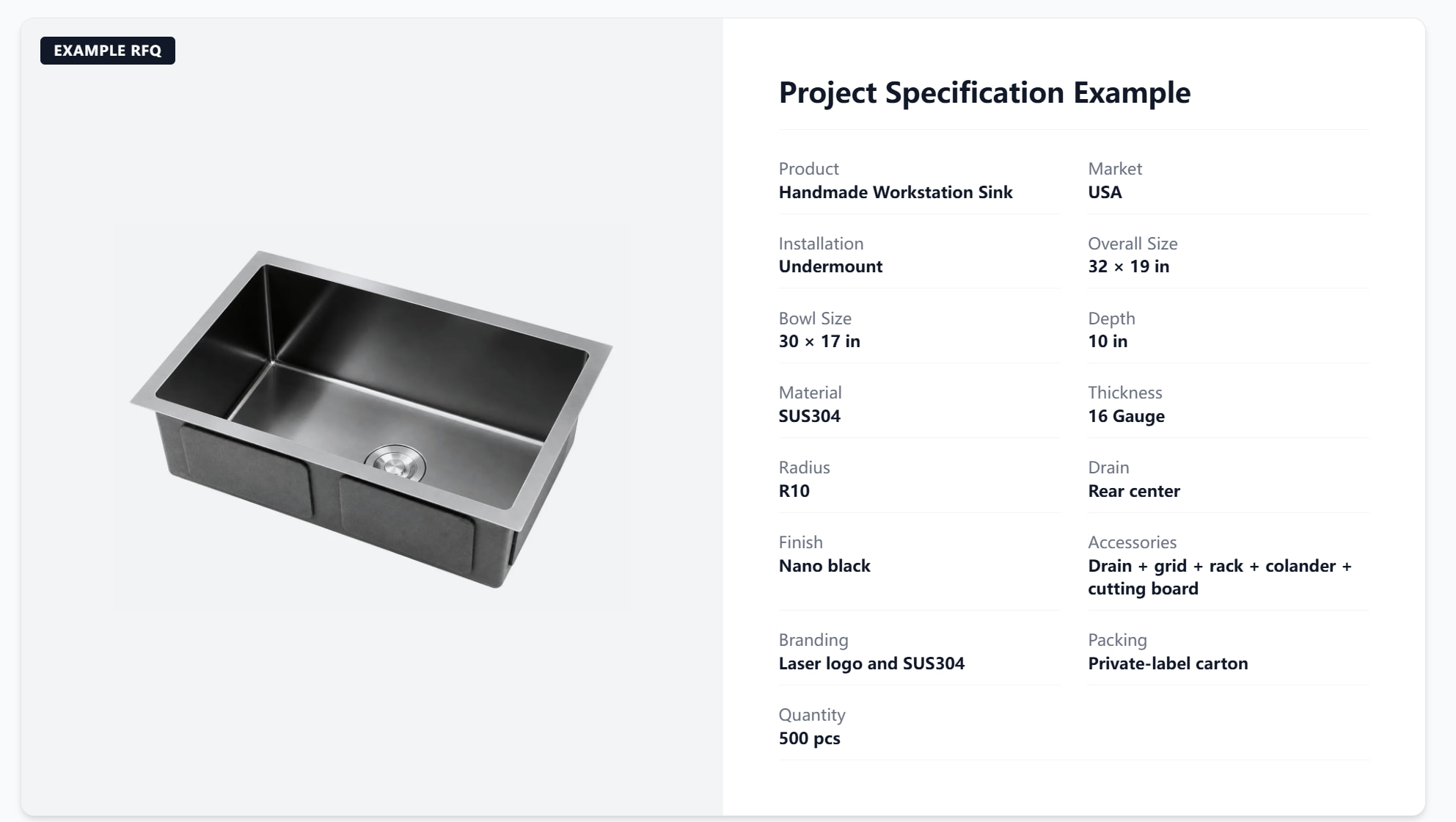
A controlled product definition may include:
| Product Information | Why It Matters |
|---|---|
| Latest drawing revision | Ensures the correct product version |
| Material specification | Controls stainless steel requirement |
| Thickness requirement | Defines product expectation |
| Installation method | Ensures countertop compatibility |
| Drain specification | Controls accessory matching |
| Finish reference | Controls visual appearance |
| Accessory list | Defines complete sink system |
| Packaging standard | Protects product during shipment |
| Approved sample | Provides physical reference |
| QC standard | Defines acceptance criteria |
A common misunderstanding is:
Same drawing = same product.
In reality:
Same drawing with different manufacturing control can create different finished products.
A complete OEM product specification package should be transferred together with the drawing.
Related:
2. Re-Validate The Manufacturing Route
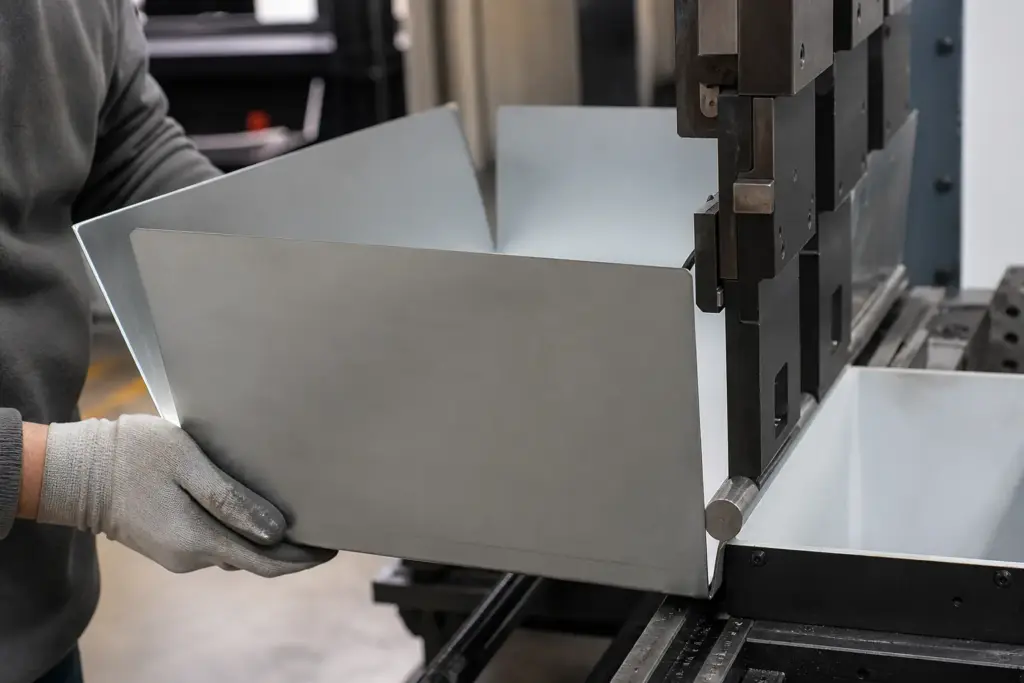
Changing suppliers may also mean changing the production method.
This is especially important for stainless steel kitchen sinks.
The same design may be produced through:
- Handmade fabrication
- Pressed forming
- Existing mold modification
- New tooling development
Different manufacturing routes influence:
- Product geometry
- Production consistency
- Corner radius
- Thickness distribution
- Tooling investment
- MOQ
For example:
A customized workstation sink with complex geometry may require handmade production because flexibility is more important.
A high-volume standard sink may benefit from pressed production because tooling improves efficiency.
The correct manufacturing route depends on:
- Product complexity
- Expected quantity
- Required consistency
- Target market requirements
Not only the drawing.
Related:
Kitchen Sink Factory Capabilities
3. Re-Validate Stainless Steel Material And Thickness Control
Many buyers compare suppliers based on simple specifications:
“SUS304”
“18 Gauge”
However, these descriptions alone do not fully define a finished stainless steel sink.
Especially for pressed sinks, incoming sheet thickness and final formed thickness may not always be identical.
During forming, stainless steel can experience material redistribution in areas such as:
- Sidewalls
- Corners
- Bottom radius
- Drain area
Therefore, when changing suppliers, buyers should confirm:
- Incoming material specification
- Forming process
- Critical measurement locations
- Inspection method
The important question is not only:
“What material is quoted?”
The more important question is:
“How is the finished product controlled?”
Related:
How Pressed Sink Forming Changes Stainless Steel Thickness
4. Re-Validate Surface Finish Standards
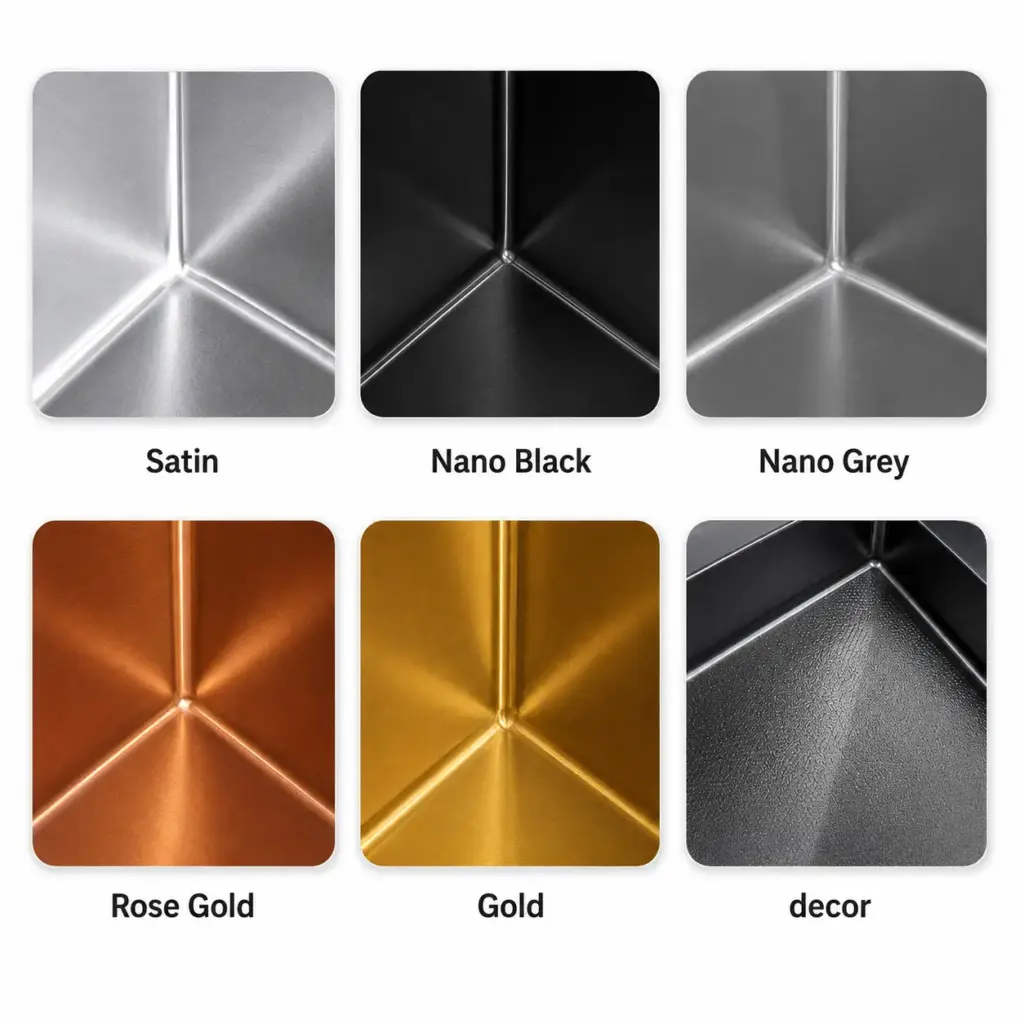
Surface finish is one of the easiest areas to underestimate during supplier transition.
Many specifications simply mention:
“Brushed stainless steel”
However, different manufacturers may interpret this differently.
Differences can come from:
- Brushing process
- Polishing sequence
- Surface treatment method
- Inspection conditions
Two suppliers can both quote:
“SUS304 brushed sink”
but still produce different visual results.
For OEM programs, surface finish should be controlled through:
- Approved physical sample
- Reference photos
- Inspection conditions
- Acceptance criteria
A finish description is not the same as a finish standard.
5. Re-Validate Accessories And Product Interfaces
Modern kitchen sinks are often complete systems rather than individual stainless steel bowls.
This is especially true for workstation sinks.
The complete product may include:
- Cutting board
- Colander
- Bottom grid
- Basket
- Drain assembly
When changing suppliers, accessory compatibility should be reviewed again.
Small differences in:
- Ledge width
- Corner radius
- Opening size
- Manufacturing tolerance
can affect final fitting.
A workstation sink is not only a sink body.
It is a complete accessory interface system.
Related:
6. Transfer The Approved Sample, Not Only The Drawing
A common supplier transition mistake is transferring only digital documents.
Many OEM programs depend on:
- Approved sink sample
- Finish sample
- Accessory sample
- Packaging reference
A drawing explains dimensions.
A physical sample communicates:
- Surface appearance
- Workmanship expectation
- Product details
However:
A sample proves one production result. It does not automatically prove production repeatability.
The approved sample should be connected with:
- QC standards
- Inspection methods
- Production requirements
This creates a clear reference for future repeat orders.
Related:
Kitchen Sink Golden Sample Approval Checklist
7. Re-Validate Quality Control Standards
Different factories may have different internal inspection methods.
For example:
One supplier may focus mainly on:
- Appearance inspection
Another supplier may also control:
- Dimension
- Flatness
- Thickness
- Accessory fit
- Packing condition
Before mass production, buyers should align:
- Inspection items
- Acceptance criteria
- Measurement method
- Reference sample
Quality control is not only about finding defects.
The purpose of QC is ensuring the approved product can be reproduced consistently.
Related:
Kitchen Sink Quality Control Inspection
Common Mistakes When Changing Kitchen Sink Suppliers
Mistake 1: Comparing Quotations Before Aligning Product Definition
Two suppliers may quote different products even when descriptions look similar.
Different assumptions may exist regarding:
- Material
- Thickness
- Accessories
- Packaging
- Inspection requirements
A quotation comparison is only meaningful after product requirements are aligned.
Mistake 2: Assuming Manufacturing Capability Is Transferable
A supplier experienced in standard sink production may not automatically be suitable for:
- Custom geometry
- Workstation sinks
- Special finishes
- Complex installation requirements
Manufacturing capability should be verified, not assumed.
Mistake 3: Skipping Sample Re-Approval
A supplier transition without sample approval creates unnecessary risk.
The final product may differ in:
- Installation fit
- Surface appearance
- Accessory compatibility
- Workmanship
A new supplier should prove the product before mass production.
A Practical Supplier Transition Process For OEM Kitchen Sinks
Step 1 — Transfer Complete Product Information
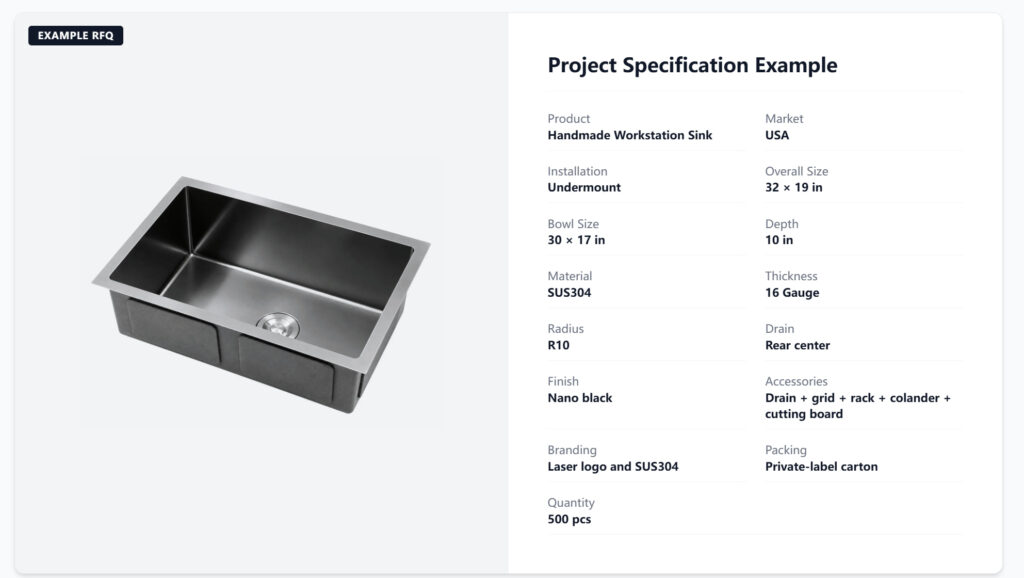
Confirm:
- Latest drawing
- Product specification
- Accessories
- Packaging requirements
↓
Step 2 — Review Manufacturing Capability
Confirm:
- Production method
- Tooling situation
- Customization capability
↓
Step 3 — Produce Approval Sample
Verify:
- Dimensions
- Installation
- Finish
- Accessories
- Workmanship
↓
Step 4 — Freeze Production Standard
Confirm:
- Approved sample
- QC requirement
- Inspection method
↓
Step 5 — Start Mass Production
Monitor:
- Product consistency
- Process control
- Production records
How OEM Buyers Can Reduce Supplier Transition Risk?
The goal of changing suppliers is not simply finding a lower quotation.
The goal is maintaining the same approved product quality with a new manufacturing partner.
A successful transition requires controlling:
Product Definition
Manufacturing Process
Approved Reference
Quality Standard
Repeat Production
Because producing one acceptable sink is different from producing the same approved sink repeatedly.
How Matrix Supports OEM Kitchen Sink Programs
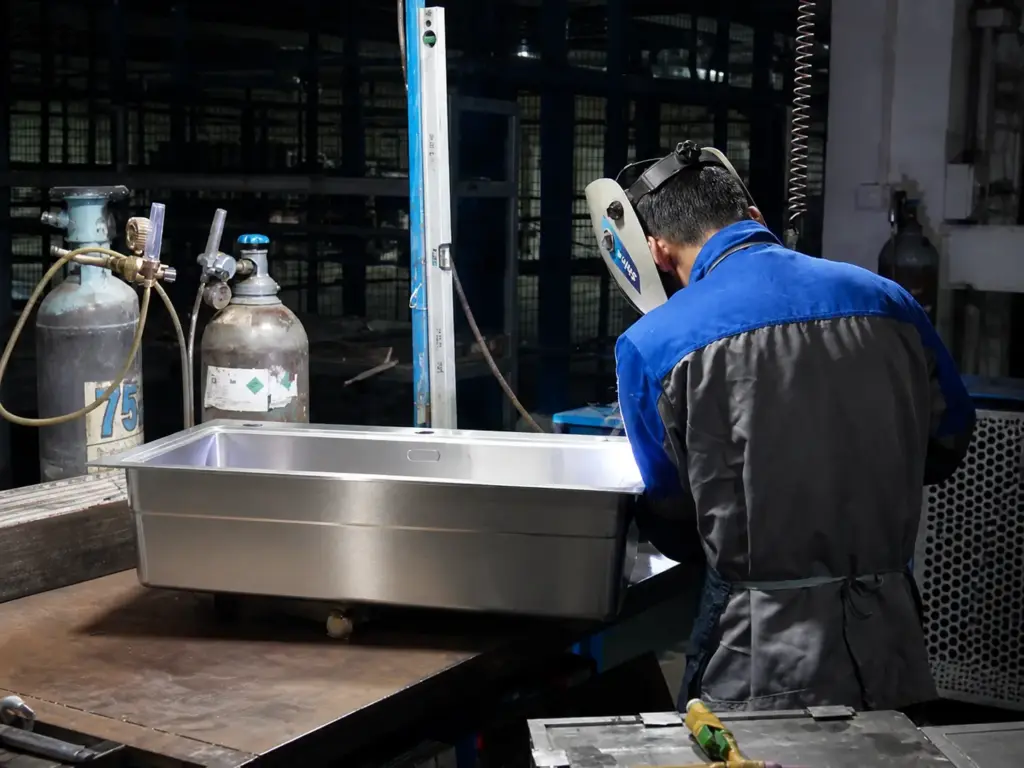
Matrix approaches OEM stainless steel sink projects by focusing on complete product control.
The process connects:
Buyer Requirement
↓
Product Specification
↓
Manufacturing Route
↓
Sample Approval
↓
Quality Control
↓
Repeat-Order Consistency
For OEM buyers evaluating a new stainless steel sink manufacturer, understanding how a factory controls the complete product process is often more important than comparing quotation prices alone.
Related:
FAQ
Can I change kitchen sink suppliers without changing the drawing?
Changing suppliers requires more than transferring drawings. Product specifications, manufacturing process, approved samples and QC standards should also be re-validated.
Does the same kitchen sink drawing guarantee the same product?
No. The drawing defines design requirements, but manufacturing methods and quality controls also affect the final product.
What should buyers check when changing stainless steel sink suppliers?
Buyers should review:
- Product specification
- Material requirement
- Manufacturing route
- Finish standard
- Accessories
- Approved sample
- QC standard
- Packaging requirement
How do brands qualify a second kitchen sink supplier?
A second supplier should be evaluated through capability review, sample validation and production approval before replacing the original supplier.
Buyer Takeaway
Changing a kitchen sink supplier is not simply moving production from one factory to another.
The real challenge is transferring the complete product definition.
Because producing one acceptable sink is different from producing the same approved sink repeatedly.
For OEM kitchen sink programs, supplier transition success depends on controlling:
Design + Manufacturing Process + Approval Reference + Quality Standard + Repeat Production