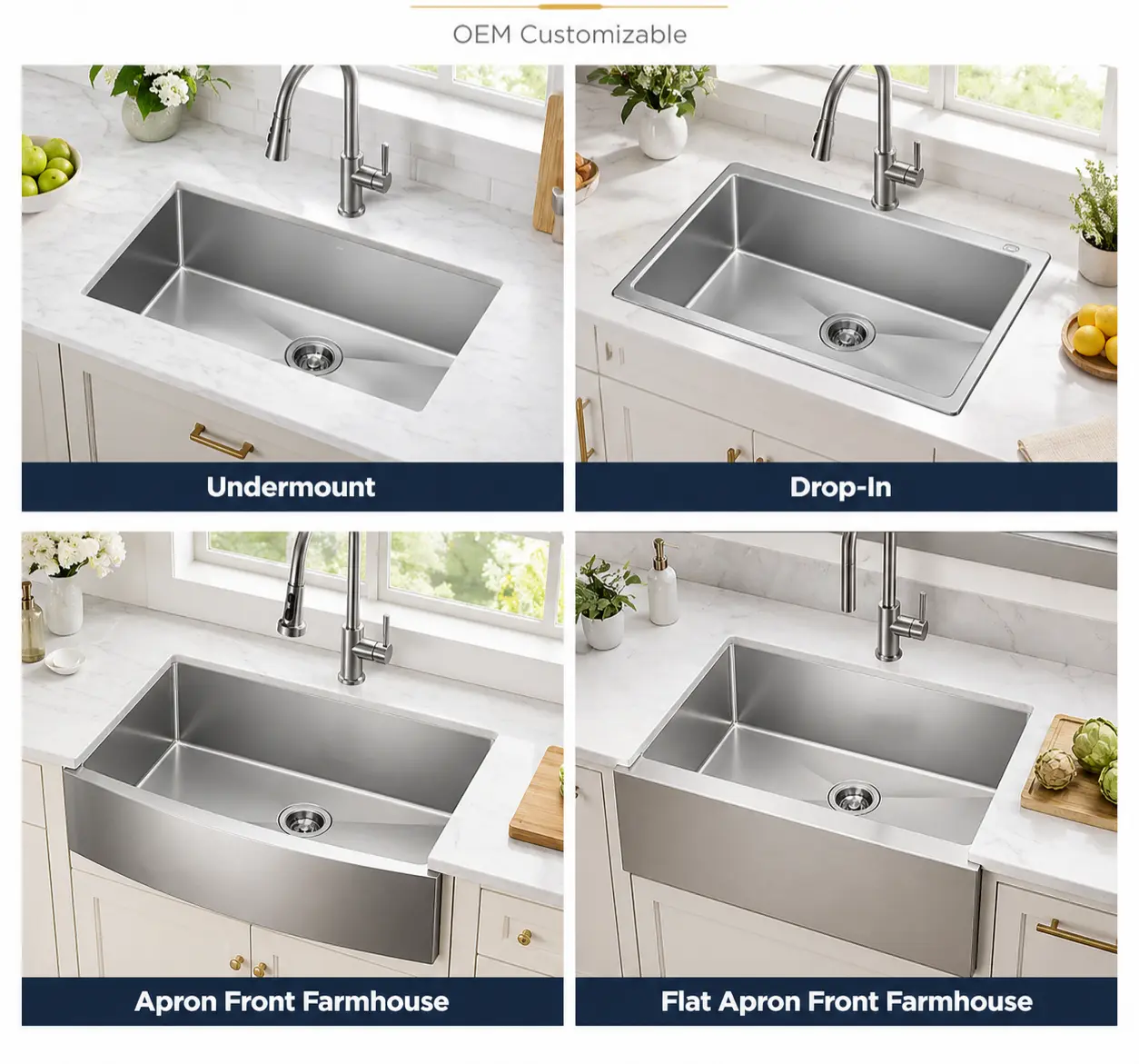
Black PVD kitchen sinks can be durable, but no working sink is scratch-proof.
PVD creates a very thin, hard colored layer on stainless steel. It can resist everyday wear better than some decorative coloring methods, but a sharp knife, dragged cast-iron pan, ceramic base, trapped grit or moving bottom grid can still mark or penetrate the surface.
Black also contrasts strongly with the silver stainless steel underneath. A deep scratch may therefore look more serious on a black sink even when the same contact would also scratch a standard brushed sink.
The right question is not simply, “Does PVD scratch?” It is:
What is the complete surface system, what type of damage can it resist, and which claims have been verified on the finished sink?
Quick answers
- Are black PVD sinks scratch-proof? No. They can be scratch-resistant under defined conditions.
- Do black sinks scratch more easily? Not necessarily. Scratches can be easier to see because the substrate is silver.
- Is PVD the same as black paint? No. PVD is a vacuum-deposited thin film. Some black sinks use other coatings or combined systems.
- Is nano black the same as PVD? Not automatically. “Nano” does not identify one standardized finish.
- Does 9H mean the sink cannot be scratched? No. A hardness result does not reproduce every knife, pan, grid or abrasive-cleaner contact.
- Can a PVD scratch be polished out? Usually not without changing or removing more of the colored layer.
- Does PVD stop rust? It does not replace the correct stainless steel grade, clean fabrication and suitable maintenance.
- What should B2B buyers approve? The finished sink, finish structure, physical color sample, test methods, accessories, care instructions and packaging.
First identify what type of black sink you are buying
“Black kitchen sink” describes a color, not a material or manufacturing process.
| Black sink type | Basic construction | Typical surface behavior | What buyers must confirm |
|---|---|---|---|
| PVD stainless steel sink | Thin vacuum-deposited colored layer over stainless steel | Metallic appearance; useful wear resistance; deep scratches may reveal silver steel | Coating process, substrate, finish texture, test method and care instructions |
| Nano black stainless steel sink | May be PVD plus a top layer, another coating system or a market-specific finish | Water, fingerprint, scratch and chemical behavior vary by formulation | What “nano” refers to and which claimed function has been tested |
| Painted or powder-coated steel sink | Thicker opaque organic film over metal | Different chipping, peeling, wear and repair behavior from PVD | Coating type, adhesion, chemical resistance and heat limitations |
| Electrochemical or plated colored sink | Color created through an electrochemical or deposited process | Can provide metallic tones, but abrasion and color control depend on the system | Process name, master sample and durability data |
| Black granite composite sink | Molded composite material rather than colored stainless steel | Color and scratch behavior belong to a different material system | Do not use PVD claims or tests to evaluate it |
If the supplier cannot explain what creates the black color, the finish is not sufficiently defined for a B2B purchase specification.
The Matrix PVD and colored stainless steel sink overview also recommends confirming the actual finish process instead of describing every colored steel sink as PVD.
How a black PVD sink is built
It is easier to understand durability when the sink is treated as a layered system.
Layer 1: the stainless steel body
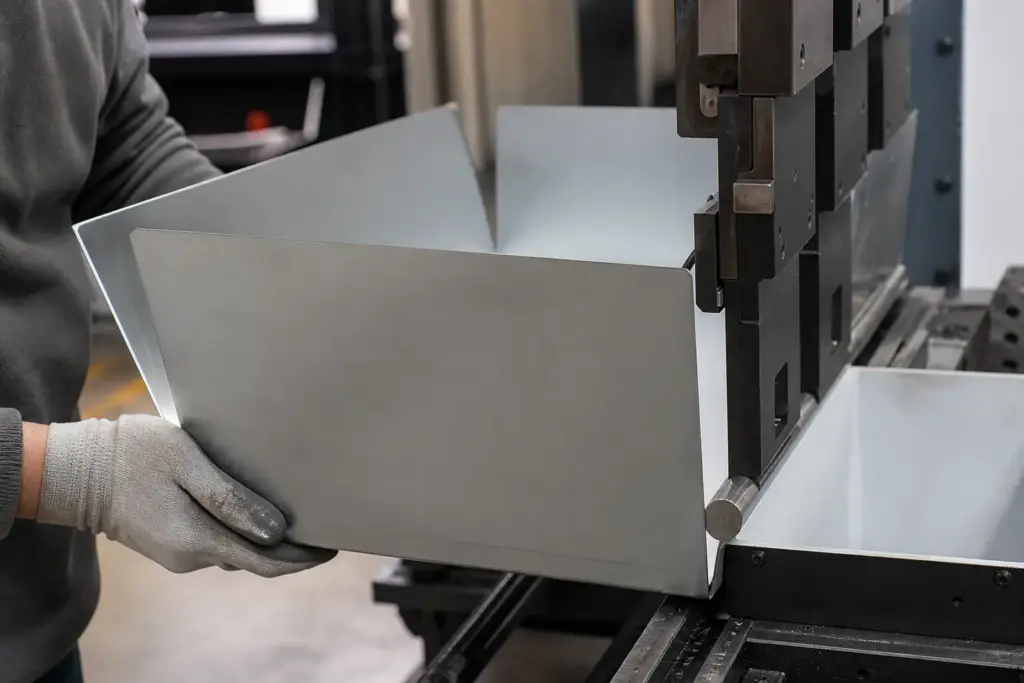
The bowl may use 201, 304, 316 or another specified stainless steel. The base material controls forming behavior, structural support and underlying corrosion resistance.
Layer 2: the mechanical surface finish
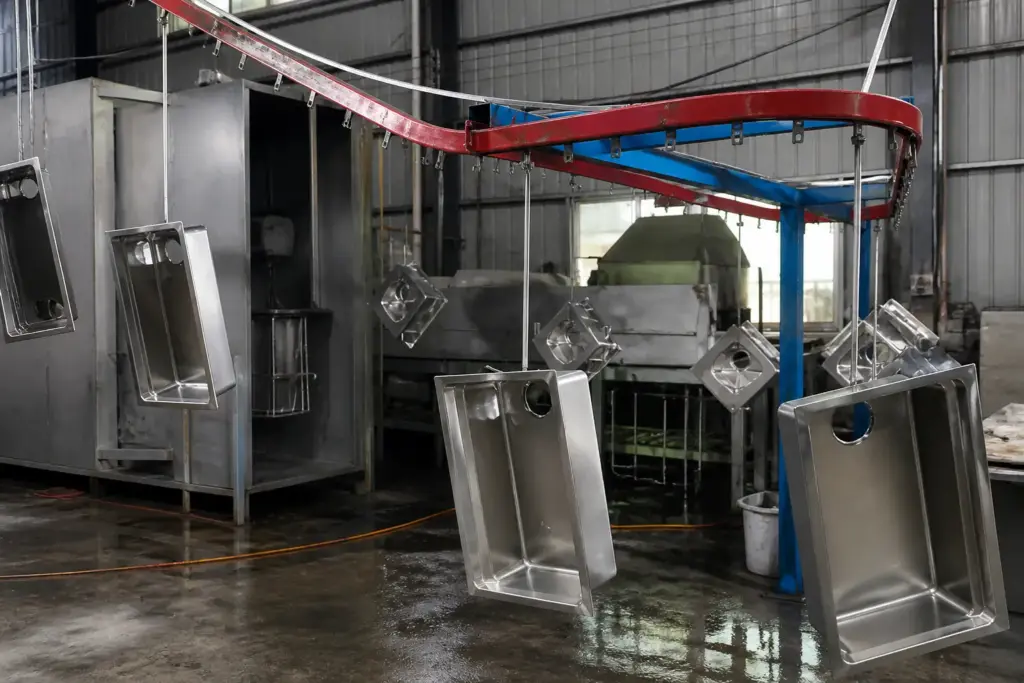
Before coloring, the sink may be brushed, satin-finished, polished, textured or embossed. PVD is thin, so the grain, roughness, weld quality and surface defects below it still influence the finished appearance.
Layer 3: the PVD color layer
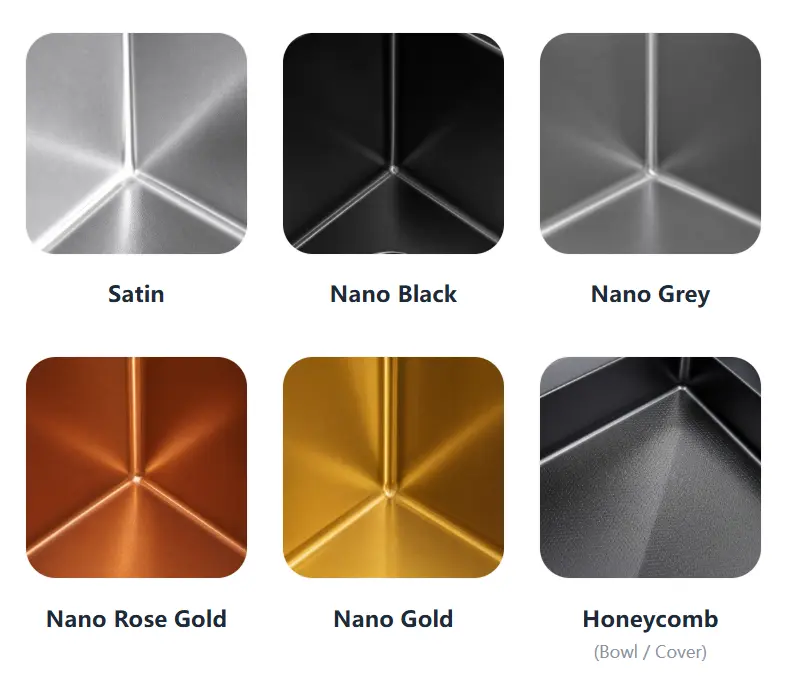
PVD deposits a thin film of metal or metal compound in a vacuum process. Decorative stainless steel PVD systems often use titanium- and nitrogen-based coating directions, although the exact chemistry and layer design can vary.
This layer creates color and may improve surface hardness and wear behavior. It does not make the entire sink as hard as the coating.
Layer 4: an optional functional top layer
Some colored sinks include an additional layer intended to influence fingerprints, water behavior, cleaning or chemical resistance. Not every PVD sink has the same top layer, and not every “nano” claim refers to one.
The durability of the finished sink depends on how these layers interact. A hard PVD film cannot compensate for an oily surface, weak pretreatment, an unsuitable topcoat or a soft substrate that deforms under impact.
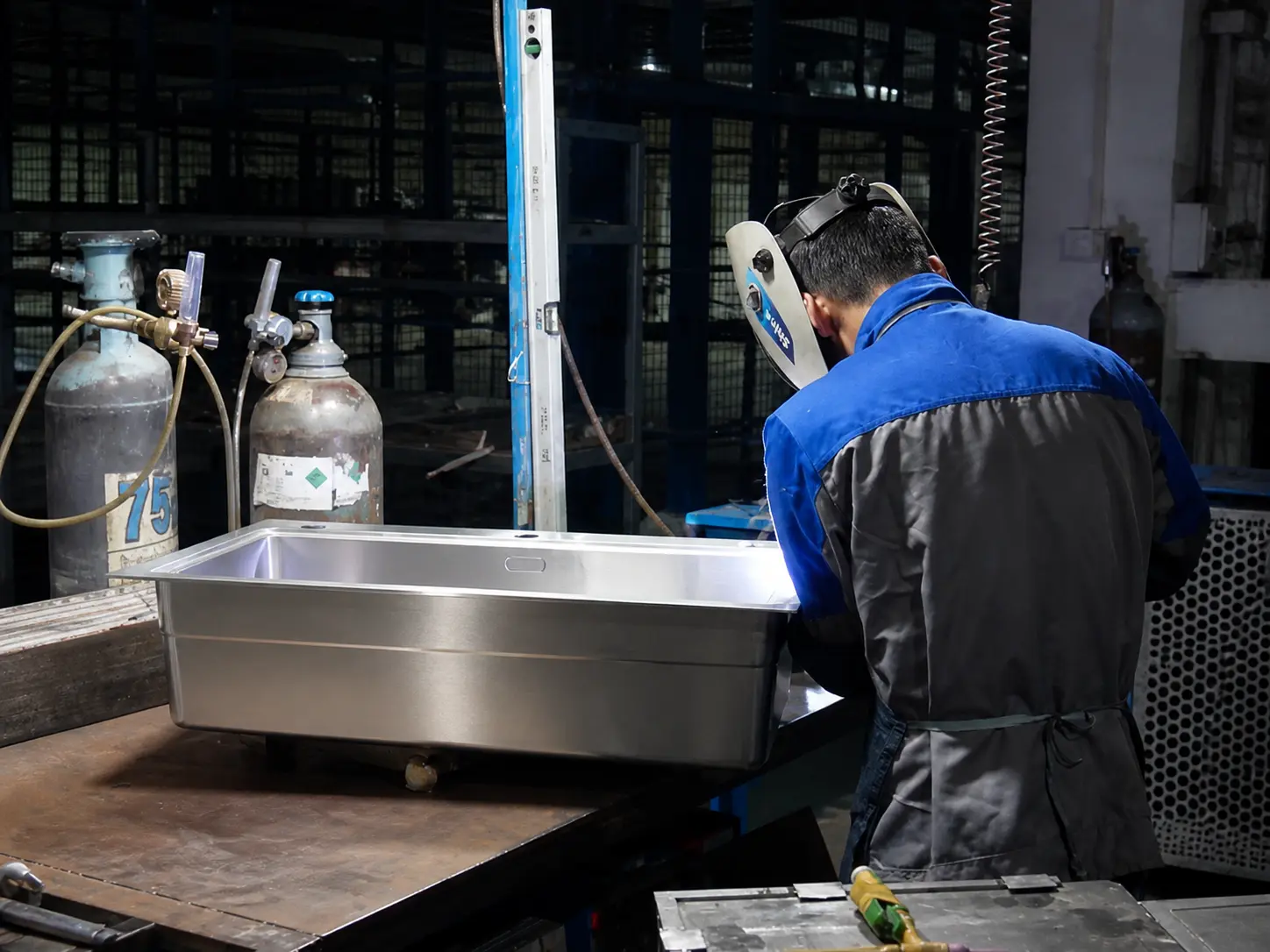
Why forming and welding must be completed before PVD
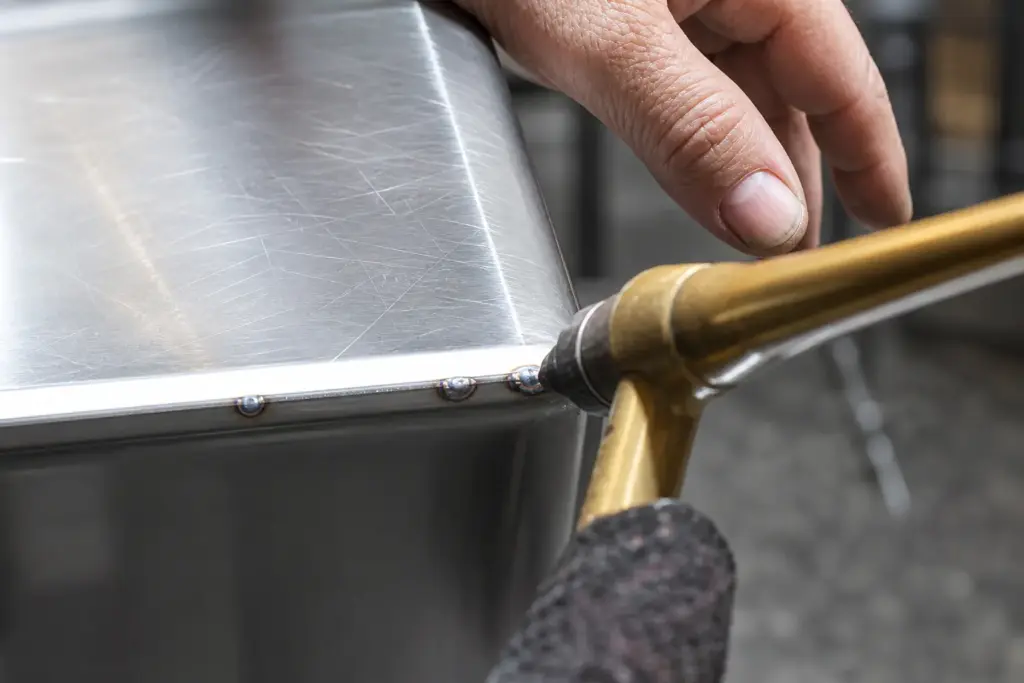
PVD color is a finished decorative surface. Welding, aggressive grinding and major forming after coloring can destroy or visibly change it.
For a handmade colored sink, the normal development logic is:
- cut and bend the stainless steel;
- weld the bowl and corners;
- grind and refine the welds;
- create the final brushed or textured finish;
- clean and prepare the surface;
- apply the PVD or colored finish;
- inspect, protect and pack the completed sink.
This is why a flat PVD sheet sample cannot fully represent a finished sink. It does not show coating behavior at:
- welded corners;
- tight radii;
- drain openings;
- workstation ledges;
- folded rims;
- apron edges;
- embossed or honeycomb textures.
B2B buyers should approve both a finish reference and a completed sink sample.
Are PVD sinks scratch-resistant?
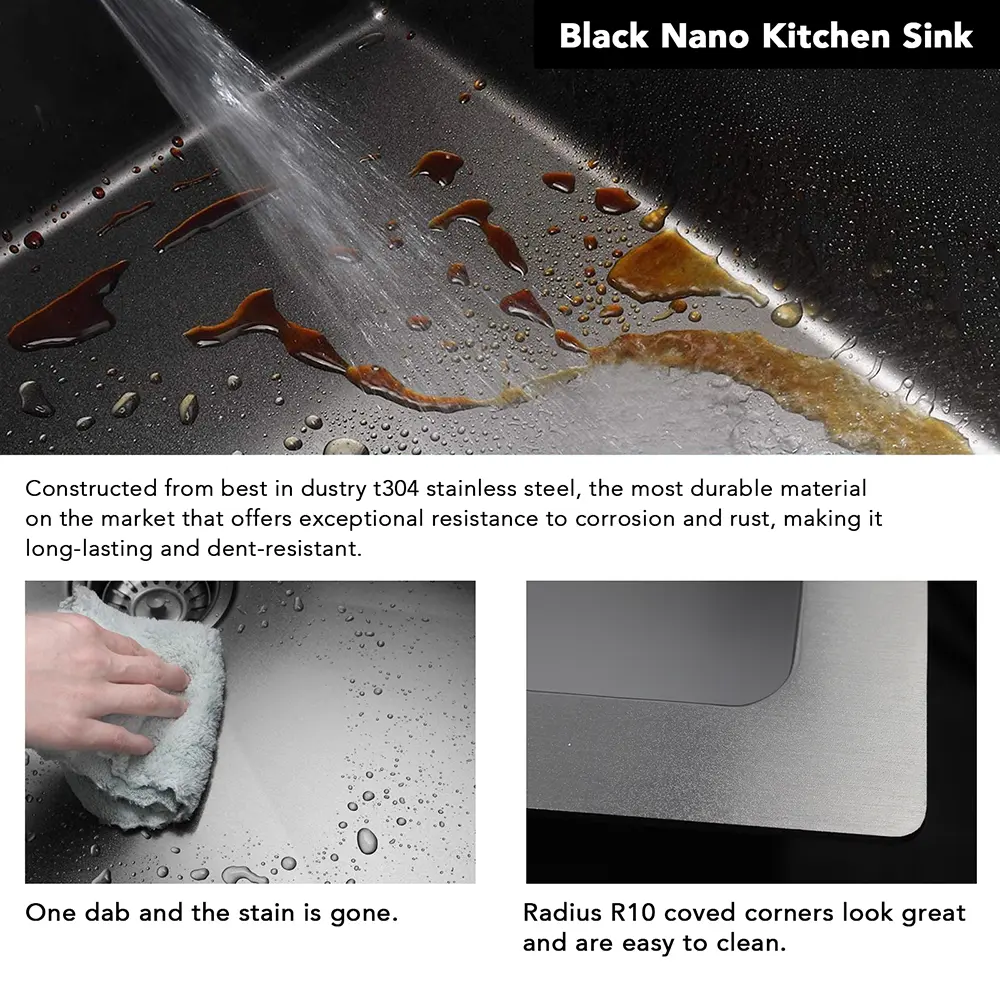
Yes—but only as a relative and testable statement.
PVD coatings can be hard and wear-resistant. A scratch still forms when the contact stress exceeds what the coating and substrate can tolerate.
The result depends on:
- hardness and shape of the object;
- contact force;
- impact, sliding or repeated rubbing;
- coating composition and thickness;
- coating adhesion and toughness;
- surface texture;
- hardness and support of the steel below;
- sand, ceramic particles or metal grit trapped at the contact point.
A plastic bowl placed gently in the sink is different from a cast-iron pan dragged over trapped grit. No single “scratch-resistant” label can describe both situations.
Hardness, scratch resistance, wear and adhesion are different
These properties are related, but they do not mean the same thing.
| Property | What it describes | What it does not prove |
| Hardness | Resistance to localized indentation or penetration | That the coating cannot crack, detach or expose a softer substrate |
| Scratch resistance | Response to a moving point or edge under defined conditions | Performance against every possible kitchen object |
| Abrasion resistance | Response to repeated rubbing or wear | Resistance to one deep knife or impact mark |
| Adhesion | How the coating remains attached to the substrate | That the surface will never wear through |
| Impact resistance | Response to sudden loading and substrate deformation | Long-term resistance to repeated rubbing |
| Chemical resistance | Response to stated cleaners or chemicals | Resistance to physical scratching |
This distinction explains why one hardness number is not enough to predict sink life.
Why a 9H claim is incomplete
“9H” normally refers to a pencil-hardness result for a film under a specified method. It does not mean the sink has the hardness of a gemstone, and it does not mean knives or cast-iron cookware cannot damage it.
Before accepting a 9H claim, ask:
- Which layer was tested—the PVD film, an organic topcoat or the complete system?
- Which test method was used?
- Was the test performed on a flat coupon or a finished sink?
- What substrate and surface texture were below the coating?
- What counted as failure: a visible line, film rupture or exposed metal?
- Was the result independently repeated across production samples?
A number without the test conditions is a marketing statement, not a purchasing specification.
Why black sinks make scratches more visible
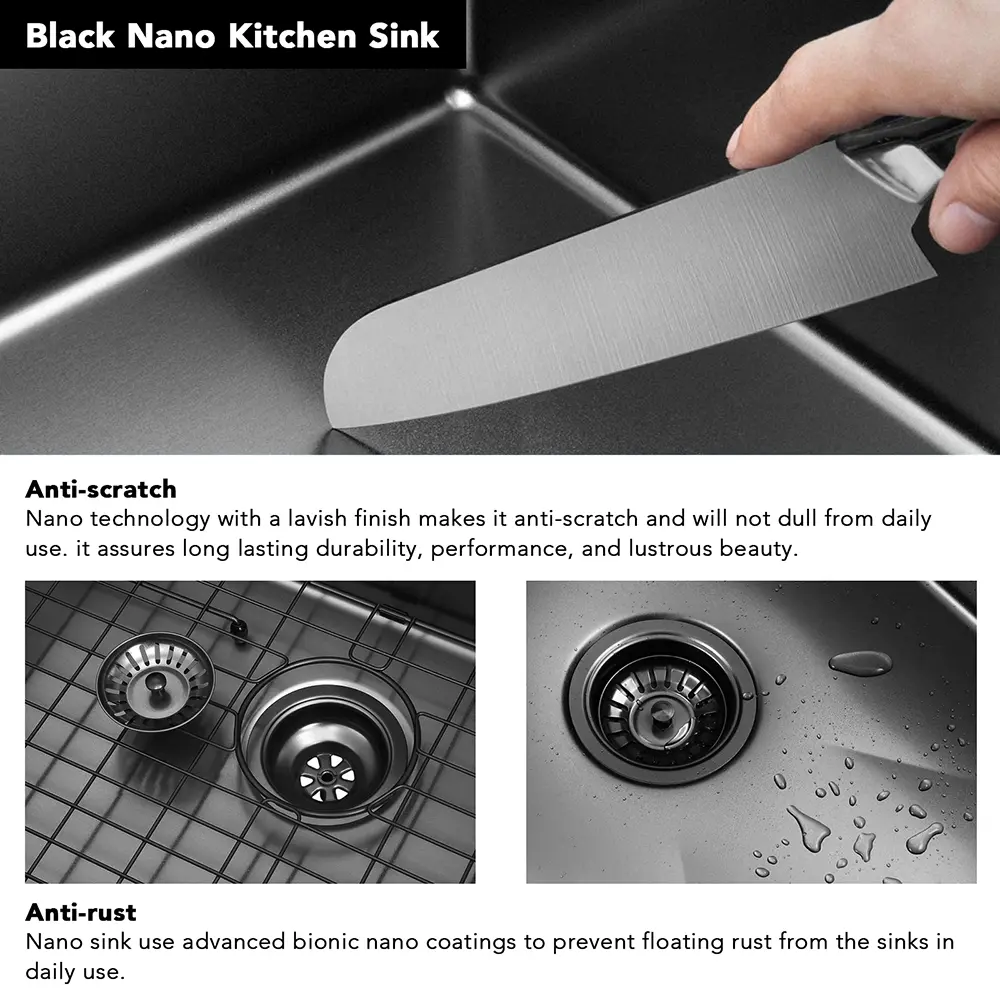
Standard stainless steel is silver throughout its visible surface. A new scratch changes the grain and reflected light, but it may gradually blend with other use marks.
On a black PVD sink, a deep scratch can pass through the color and reveal a bright silver line. The contrast—not necessarily lower scratch resistance—makes the damage more obvious.
Visibility also depends on:
- black, gunmetal or grey color depth;
- matte, satin or glossy appearance;
- brushed direction;
- texture or embossing;
- viewing angle;
- direct lighting;
- mineral deposits inside the mark.
The most accurate consumer expectation is:
A black sink can resist normal use, but dark color may make deep scratches easier to notice.
Not every white or silver mark is coating damage
Diagnose the mark before trying to repair it.
| What you see | Possible explanation | How to check |
| White cloudy line | Hard-water mineral or dried cleaner | Wash gently with the approved cleaner and dry |
| Grey metallic streak | Material transferred from a pan, grid or utensil | Check whether it lifts without abrasive polishing |
| Fine line visible only under strong light | Micro-mar in the outer layer | Inspect under the agreed normal viewing conditions |
| Bright sharp silver line | PVD color may have been penetrated | Check whether base metal remains visible after cleaning |
| Dull patch | Abrasive cleaner or repeated rubbing changed the gloss | Compare texture and reflectivity with an unused area |
| Bubble or lifting edge | Possible layer-adhesion failure | Stop aggressive cleaning and request supplier assessment |
| Dent with intact color | Stainless steel body deformed below the finish | Evaluate impact and substrate condition |
| Orange or brown point | Iron contamination or corrosion | Diagnose the steel, water and components separately |
Do not begin with metal polish. A compound designed to blend scratches in bare stainless steel may remove more of the PVD color.
For brown or orange staining, see the Matrix guide explaining why stainless steel sinks show rust.
Five surface conditions that should not be confused
1. Removable deposit or material transfer
Minerals, cleaner residue and material rubbed from cookware can sit above the coating. The finish may remain undamaged below the mark.
2. Micro-marring
Very fine lines may form in the outer surface through repeated cleaning or light contact. They may be visible only from certain angles.
3. Wear-through
Repeated rubbing can gradually remove color at a grid foot, ledge or other contact point. Wear-through is different from one deep scratch, although both can expose silver steel.
4. Deep scratch
A sharp or hard object can cut through the colored layer in one event. The exposed substrate creates a high-contrast line.
5. Delamination
Delamination means the coating or top layer separates from the substrate. Lifting edges, bubbles or expanding flakes are not the same as ordinary use scratches and should trigger a process review.
How the base stainless steel affects durability
PVD changes color and surface behavior; it does not change the declared steel grade.
| Base material | Typical use direction | What PVD does not change |
| 201 stainless steel | Cost-controlled or market-specific colored sink programs | It remains 201 and should not be marketed as 304 |
| 304 stainless steel | Mainstream indoor residential and premium colored sinks | It can still be affected by chlorides, contamination and poor fabrication |
| 316 stainless steel | Coastal, outdoor or higher-chloride applications where justified | The colored finish still needs separate outdoor and chemical validation |
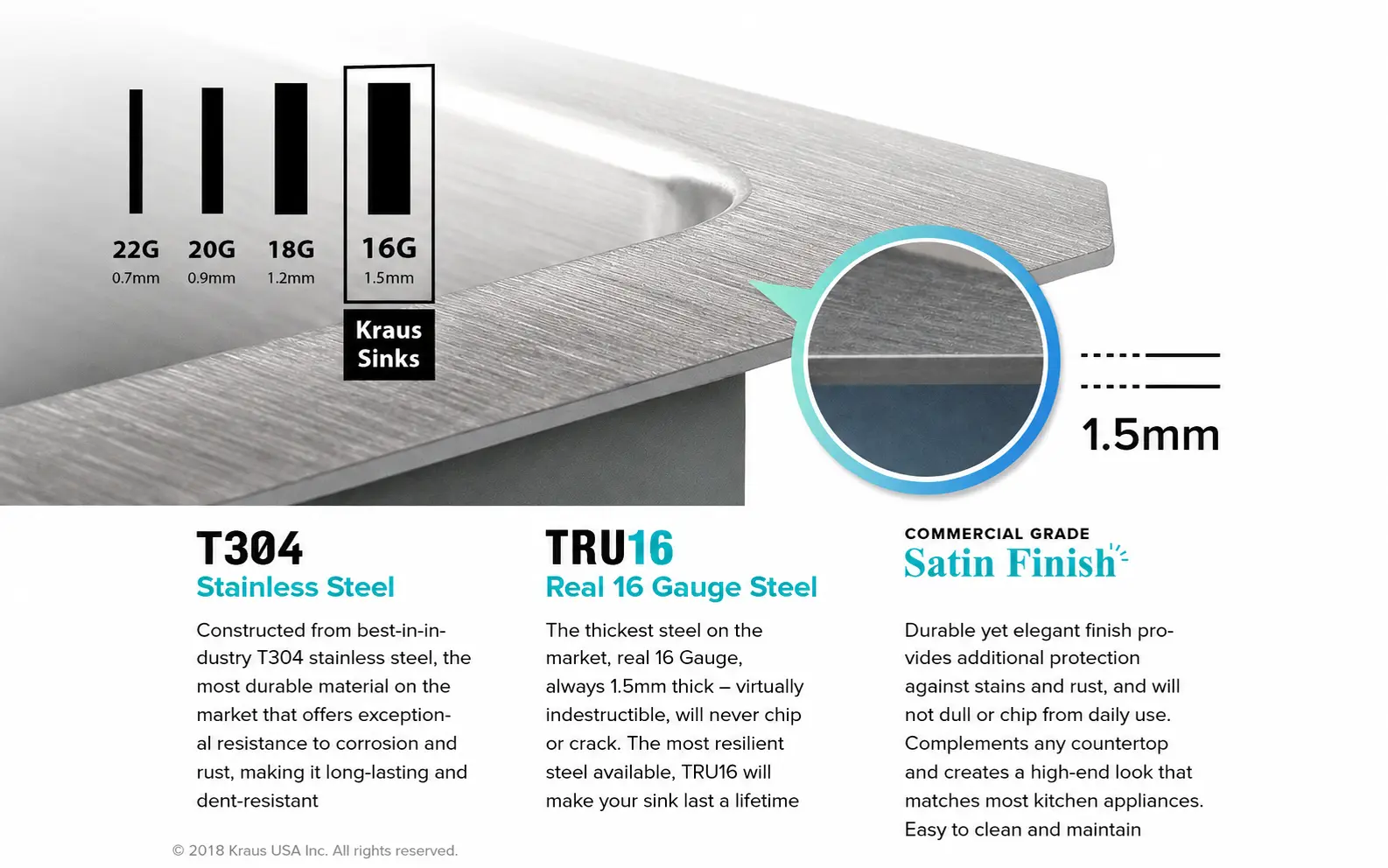
Does 16 gauge make PVD more scratch-resistant?
Not directly. Gauge describes sheet thickness. A 16-gauge sink may resist denting and deformation differently from an 18-gauge sink, but the PVD surface does not automatically become harder.
Buyers should specify steel grade, actual thickness and finish system as separate requirements. The Matrix guide to 201 vs 304 vs 316 stainless steel sinks explains the base-material selection logic.
Which sink areas are most vulnerable?
Bowl bottom
The bottom receives cookware, cutlery, grids and trapped grit. It is the main wear zone in everyday use.
Drain opening
Strainers, disposal flanges and installation tools can contact the colored edge. Tightening an unsuitable part may scrape the surface.
Workstation ledges
Cutting boards, colanders and racks repeatedly slide along the ledge. Dimensional fit and accessory edge quality directly affect wear.
Rim
A top-mount rim remains visible and exposed. An undermount rim can be damaged during countertop fitting, sealant removal and installation.
Apron front and external edges
These areas may receive less cookware wear but are highly visible. Packaging movement and installer tools can create immediate cosmetic rejection.
Corners and embossed textures
Tight corners and honeycomb surfaces are more difficult to finish, coat, measure and inspect consistently than a flat coupon.
Do honeycomb black sinks resist scratches better?
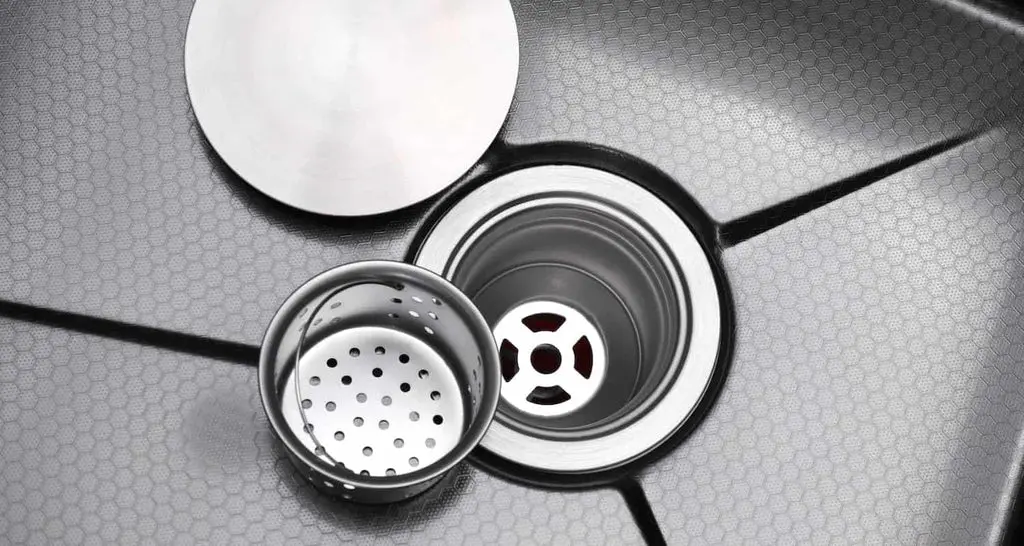
Honeycomb or embossed texture can reduce broad surface contact and visually break up fine wear marks. It may therefore help some scratches appear less obvious.
It is not scratch-proof. Raised points still carry load, deep scratches can cross the pattern, and coating coverage must remain consistent across peaks and recesses.
Buyers should compare:
- contact area with cookware;
- coating coverage;
- drain flow and residue retention;
- cleaning difficulty;
- bottom-grid compatibility;
- appearance after controlled abrasion.
Texture is a design and wear-management tool, not a substitute for coating quality.
Should a black sink use a bottom grid?
A correctly fitted grid can reduce direct pan impact and protect the main bowl floor. It can also create wear if it moves or traps grit.
Check:
- stable, non-marking feet;
- smooth grid welds and edges;
- clearance from the bowl walls;
- correct drain alignment;
- no repeated rubbing at one point;
- easy removal for cleaning.
Lift the grid out for cleaning instead of dragging it across the surface. Clean underneath it regularly.
How to clean a black PVD sink
Recommended routine
- Remove loose grit before wiping.
- Rinse food, salt and cleaner residue.
- Wash with mild dish soap and a soft cloth or non-scratch sponge.
- Follow the brushed direction where visible.
- Rinse completely.
- Dry with a clean soft cloth to reduce water marks.
- Lift heavy cookware instead of sliding it.
Avoid
- steel wool and metal scouring pads;
- abrasive powders;
- hard or contaminated brushes;
- bare-stainless polishing compounds;
- knives used directly against the bowl;
- dragging cast iron or ceramic cookware;
- chlorine bleach left standing;
- aggressive drain, oven, toilet or masonry cleaners;
- unknown acid mixtures;
- cloths containing sand or metal grit.
Always use the care guidance for the actual finish. A PVD layer, nano top layer and painted coating may have different cleaner limitations.
Can scratches on a black PVD sink be repaired?
First determine whether the mark is removable residue or actual coating damage.
- Mineral or cleaner deposit: use the approved cleaning method.
- Transferred metal: remove gently without aggressive polishing.
- Fine micro-mar: leaving it may be safer than enlarging it through correction.
- Through-color scratch: a touch-up may reduce contrast but will rarely reproduce the original PVD color, texture and gloss.
- Delamination: request supplier assessment; refinishing or replacement may be necessary.
- Dent or impact: evaluate both the coating and the steel body.
PVD is applied in a vacuum process. A household pen or paint cannot reproduce that process. Avoid promising an invisible field repair unless a repair system has been tested on the exact finish.
How long does a black PVD sink last?
There is no honest universal number of years.
Service appearance depends on:
- coating system and process control;
- substrate preparation;
- use frequency;
- cookware and accessory contact;
- cleaner exposure;
- water chemistry;
- outdoor or coastal exposure;
- care routine;
- what the owner considers acceptable wear.
A lightly used bar sink and a family workstation sink do not experience the same conditions. A valid durability statement should define the tested exposure and failure criteria rather than promise a fixed life for every kitchen.
Claims that should be challenged
| Marketing claim | What is missing |
| 100% scratch-proof | No working sink can exclude every sharp object, force and abrasive |
| 9H means no scratches | Test method, layer tested, substrate and failure definition |
| Nano coating is permanent | Actual coating chemistry, function and wear data |
| Salt-spray result proves scratch resistance | Corrosion exposure and mechanical scratching are different tests |
| Never fades | Chemical, light, temperature, cleaning and time conditions |
| Fingerprint-proof | Test method, viewing conditions and maintenance requirements |
| Any scratch can be polished away | Polishing may remove more color and expose additional silver steel |
| PVD prevents rust | Base material, exposed edges, contamination and chloride conditions |
Why a coin or key test is not professional evidence
Hand scratching with a coin or key is not repeatable. The result changes with:
- contact edge;
- object material;
- hand force;
- angle;
- travel speed;
- number of passes;
- test location;
- interpretation of the mark.
Such a demonstration may be useful for informal screening, but it cannot support a precise numerical product claim or compare suppliers fairly.
How B2B buyers should validate PVD durability
1. Define the finish system
Record:
- stainless steel grade and thickness;
- handmade or pressed construction;
- substrate texture and grain direction;
- actual color process;
- PVD layer and optional top layer;
- coated and excluded areas;
- approved cleaners;
- matched drain, grid, faucet and accessories.
2. Approve a completed sink and physical master sample
Digital images do not accurately reproduce metallic color, gloss and angle-dependent appearance. Approve the physical finish under agreed lighting.
Retain:
- one protected master sample;
- an identified completed sink;
- upper and lower visual limit samples where variation is expected;
- color and process records for repeat orders.
3. Define the visual inspection method
The specification should state:
- lighting type and intensity direction;
- viewing distance and angle;
- inspection time;
- visible zones;
- permitted spots, streaks, pinholes and scratches;
- treatment of concealed external surfaces;
- acceptance of normal texture variation at corners and radii.
Without these conditions, one inspector may accept a surface that another rejects.
4. Control color and gloss
Instrumental measurement can support repeat-order control. Buyer and supplier should agree on:
- color measurement system;
- instrument geometry;
- grain direction during measurement;
- reading locations and quantity;
- permissible color difference;
- gloss measurement method where relevant;
- visual confirmation under agreed lighting.
Curvature, metallic reflection, texture and brushed direction affect readings. A tolerance used for flat paint should not automatically be copied to a formed metallic sink.
5. Use a controlled scratch-adhesion test
An instrumented method should define:
- stylus material and tip geometry;
- progressive or fixed load;
- loading and movement rate;
- scratch length;
- flat or formed test location;
- failure mode;
- optical inspection method;
- acceptance criteria.
The output may identify first cracking, cohesive damage, adhesion failure or substrate exposure. It does not create a universal “scratch-proof” rating.
The method must suit the actual coating. A tape or pencil method developed for an organic film may not describe a thin ceramic-like PVD layer correctly.
6. Test abrasion separately
Repeated grid movement or cleaning wear is different from one sharp scratch. Define the abrasive material, load, cycle count, contact path and evaluation method.
Assess:
- gloss change;
- color change;
- visible wear-through;
- coating transfer;
- delamination;
- exposed steel.
7. Test cleaning chemicals
Use cleaners relevant to the target market, stated concentrations and controlled contact times. After rinsing and drying, inspect color, gloss, adhesion, staining and texture.
Testing only water does not support a broad chemical-resistance claim.
8. Test high-risk locations on the finished sink
Do not rely only on flat coupons. Inspect:
- drain edge;
- welded corners;
- bowl bottom;
- radius transitions;
- workstation ledges;
- rim and apron edges;
- honeycomb peaks and recesses;
- grid-foot contact zones.
9. Validate accessories and packaging
The sink can pass coating inspection and still arrive scratched because a grid, drain, clip or cutting board moved inside the carton.
Packaging approval should include:
- protective film or bag suitability;
- non-abrasive separators;
- isolated metal accessories;
- grid-foot protection;
- movement control;
- edge and apron protection;
- unpacking inspection after a shipment simulation.
The Matrix stainless steel sink quality inspection checklist provides additional controls for material, finish, welding, dimensions, drainage, accessories and packing.
PVD sink approval checklist
| Control point | Required decision |
| Base steel | Grade, thickness and manufacturing method |
| Finish identity | PVD, nano, topcoat or other confirmed process |
| Process sequence | Forming, welding and polishing completed before coloring |
| Master sample | Physical color, texture and gloss reference |
| Visual inspection | Lighting, distance, angle and defect limits |
| Color control | Measurement method, locations and tolerance |
| Scratch behavior | Test tool, load, path and failure criteria |
| Adhesion | Method appropriate to the coating system |
| Abrasion | Wear test for repeated contact where required |
| Chemical exposure | Approved cleaners and contact conditions |
| High-risk zones | Drain, corners, ledges, rim, texture and bowl bottom |
| Accessories | Fit, surface contact and color matching |
| Packaging | Separation and movement control |
| Repeat orders | Master record, limit samples and change control |
More accurate scratch-resistant claims
Avoid
- scratch-proof;
- never scratches;
- maintenance-free black finish;
- permanent color in every environment;
- nano means indestructible;
- any scratch can be polished away.
Use when supported
- PVD colored finish developed for improved wear resistance;
- scratch-resistant under the stated test conditions;
- dark surfaces may make deep scratches more visible;
- lift heavy cookware and avoid abrasive cleaning;
- use the matched bottom grid and clean beneath it regularly;
- physical color and texture should be approved before production;
- performance depends on the complete coating and stainless steel system.
Numerical claims should be published only when the marketed production sink has been tested using a defined and repeatable method.
Who should choose a black PVD sink?
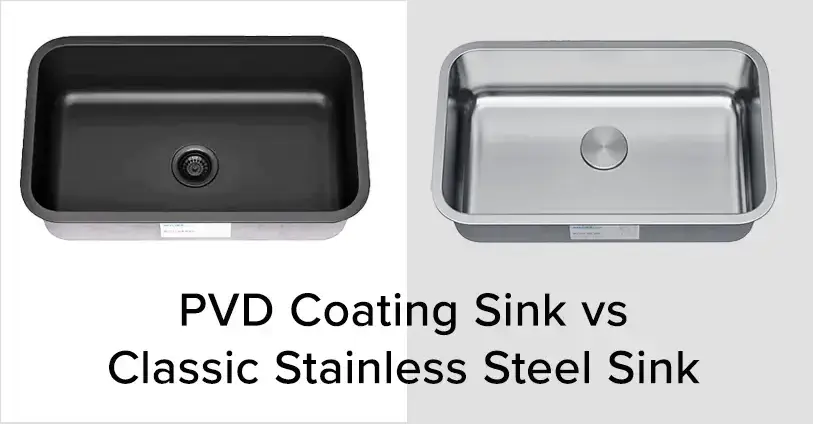
Black and PVD sinks can add clear value to:
- premium kitchen brands;
- sink-and-faucet color collections;
- workstation sink programs;
- private-label retail sets;
- showrooms and design-led projects;
- hospitality interiors;
- apartment upgrade packages.
They are less suitable for programs that expect a maintenance-free surface, use aggressive commercial cleaning or classify every visible use mark as a manufacturing defect.
The finish promise must match the sales channel and after-sales policy.
Final recommendation
PVD is a valuable surface technology, not a guarantee against every scratch.
A professional black sink program combines:
- the correct 201, 304 or 316 base material;
- completed forming, welding and polishing before coloring;
- clean surface preparation;
- a defined PVD and optional top-layer system;
- physical sample and finished-sink approval;
- separate scratch, abrasion, adhesion and cleaner tests;
- controlled color, gloss and visual inspection;
- compatible drains, grids and workstation accessories;
- protective packaging;
- realistic consumer care and warranty language.
The honest claim is not “scratch-proof.” It is scratch-resistant under defined conditions, with normal wear expectations clearly explained.
Develop black and PVD sink programs with Matrix
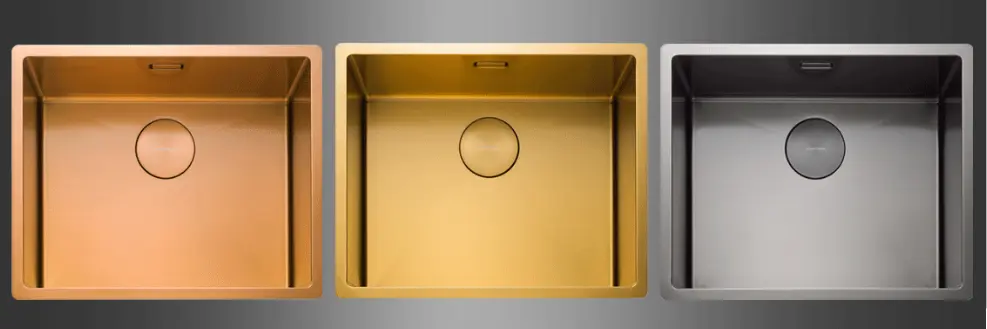
Matrix supports brands, wholesalers and project buyers with PVD and colored stainless steel sink programs, including black, gunmetal, gold and other finish directions.
Buyers can review the sink model, stainless steel base, physical finish sample, drain and faucet matching, workstation accessories, surface expectations, packaging and repeat-order requirements as one program. Matrix also supports selected custom finish options for coordinated kitchen product lines.
For a useful review, provide:
- target market and product position;
- sink model, size and installation type;
- stainless steel grade and thickness;
- required color, gloss and texture;
- intended PVD, nano or other finish direction;
- drain, grid, faucet and accessory requirements;
- target test methods;
- packaging format;
- expected order quantity.
Contact Matrix to discuss a black sink sample, finish direction or private-label colored sink program.
Frequently asked questions
Are black PVD sinks scratch-proof?
No. PVD can provide useful scratch and wear resistance, but hard, sharp or heavily loaded objects can still mark or penetrate the finish.
Do black sinks scratch more easily than stainless steel sinks?
Not necessarily. Deep scratches can be more visible because they reveal silver stainless steel beneath the black surface.
What is PVD coating on a sink?
PVD is a thin film deposited onto a prepared stainless steel surface in a vacuum process. The coating, substrate finish and optional top layer work as one system.
Is nano black the same as PVD?
No universal definition makes them the same. “Nano” may refer to a top layer, easy-clean function or another colored finish. Confirm the actual process.
What does 9H mean on a black sink?
It normally refers to a film-hardness test result. It does not prove resistance to every knife, ceramic dish, pan or piece of trapped grit.
Why does my black sink have white marks?
They may be mineral deposits, cleaner residue, transferred material or scratches. Clean gently using the approved method before diagnosing damage.
Can a scratched PVD sink be polished?
Polishing can remove more color and enlarge the silver area. Do not use bare-stainless polishing compounds unless specifically approved for the finish.
Can a black PVD sink be repaired?
Deposits may be removable, but a deep through-color scratch is difficult to restore invisibly. Touch-up color is not the same as the original vacuum-deposited finish.
How long does a PVD sink last?
There is no universal service-life number. Appearance depends on coating quality, use, cleaning, water, accessories, environment and the acceptable level of normal wear.
Does PVD prevent rust?
No. PVD does not replace correct stainless steel selection, clean fabrication and suitable care. Damage, exposed steel and contamination still require attention.
Is 304 or 316 better for a PVD sink?
304 is suitable for most indoor residential sinks. 316 offers improved chloride-pitting resistance for higher-exposure conditions, but the complete colored finish must also be validated.
Does a bottom grid prevent scratches?
It can reduce direct cookware contact, but a moving grid or trapped grit can create wear. Use a correctly fitted grid with stable non-marking feet and clean beneath it.
What should B2B buyers specify?
Specify the base steel, thickness, completed-sink construction, finish process, physical master sample, color and defect tolerances, scratch and adhesion methods, abrasion, cleaner compatibility, accessories, packaging and repeat-order control.