The best sink corner radius is not always the sharpest one.
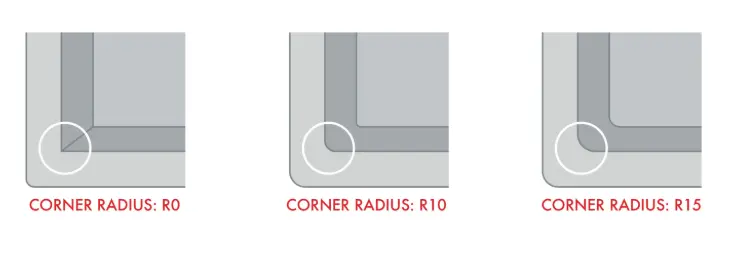
R0, R10 and R15 are common market terms for the internal corner geometry of a stainless steel sink. A smaller stated radius normally creates a squarer appearance, while a larger radius creates a softer curve.
In the handmade sink industry, R10 is one of the most common practical specifications for modern residential bowls. It keeps the square handmade look while making the corners easier to finish and clean. R0 is also correct industry terminology, but it usually describes a zero-radius or vertical-angle appearance rather than proving that every transition in the bowl is literally 0 mm. R15 is a slightly rounder alternative used when easier maintenance is the priority.
That is the short answer. The correct choice also depends on bowl geometry, bottom slope, finish quality, installation and how the sink will actually be used.
R0 vs R10 vs R15 at a glance
| Market term | Typical appearance | Cleaning tendency | Position in handmade sinks | Important qualification | Best suited to |
|---|---|---|---|---|---|
| R0 / zero radius | Square or vertical-angle corners | Usually needs the most detailed cleaning | Established design option, but not the default for every residential line | May describe the vertical corners only; the bottom transition can still have a small radius | Design-led kitchens and buyers who specifically want strong square lines |
| R10 | Tight modern curve | Practical for regular cleaning | Common mainstream handmade-sink specification | The drawing should still define which corner is R10 | Family kitchens, workstation sinks and broad retail programs |
| R15 | Slightly softer curve | Usually the easiest of the three | Valid alternative, but not necessarily as universal as R10 | Benefits depend on whether R15 is used vertically, at the bottom, or both | Maintenance-focused homes, rental projects and practical collections |
These are market tendencies, not a universal standard or quality ranking. A well-made R15 sink can be more premium and perform better than a poorly made R0 sink.
What does sink corner radius mean?
The letter R means radius. R10 and R15 normally indicate 10 mm and 15 mm at the corner identified on the drawing.
- R0: zero-radius, straight-corner or vertical-angle market terminology;
- R10: approximately 10 mm at the specified internal corner;
- R15: approximately 15 mm at the specified internal corner.
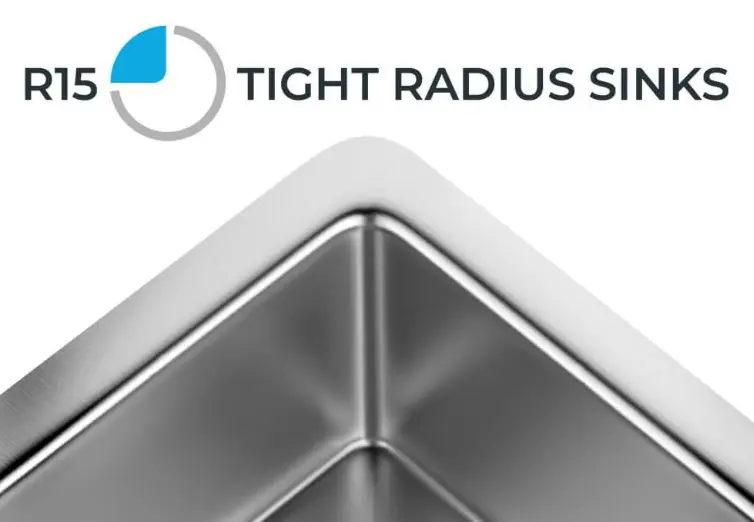
When the labels refer to the same location, R15 is rounder than R10 and R0 has the tightest-looking corner. They should not be compared as exact engineering values until the radius location is confirmed.
However, product descriptions often simplify the geometry. A sink has more than one type of corner:
- Vertical corner radius — where two sidewalls meet when viewed from above;
- Bottom corner radius — where the sidewall transitions into the bowl floor;
- External or rim radius — the outside geometry that may affect the countertop cut-out and reveal.
A listing that says only “R10” may not tell you which of these dimensions it describes. Some sinks also combine different values—for example, square vertical welds with a small coved radius where the wall meets the floor.
For accurate selection, especially for an OEM or project order, use the product drawing rather than the marketing name alone.
Is R0 correct for a handmade sink?
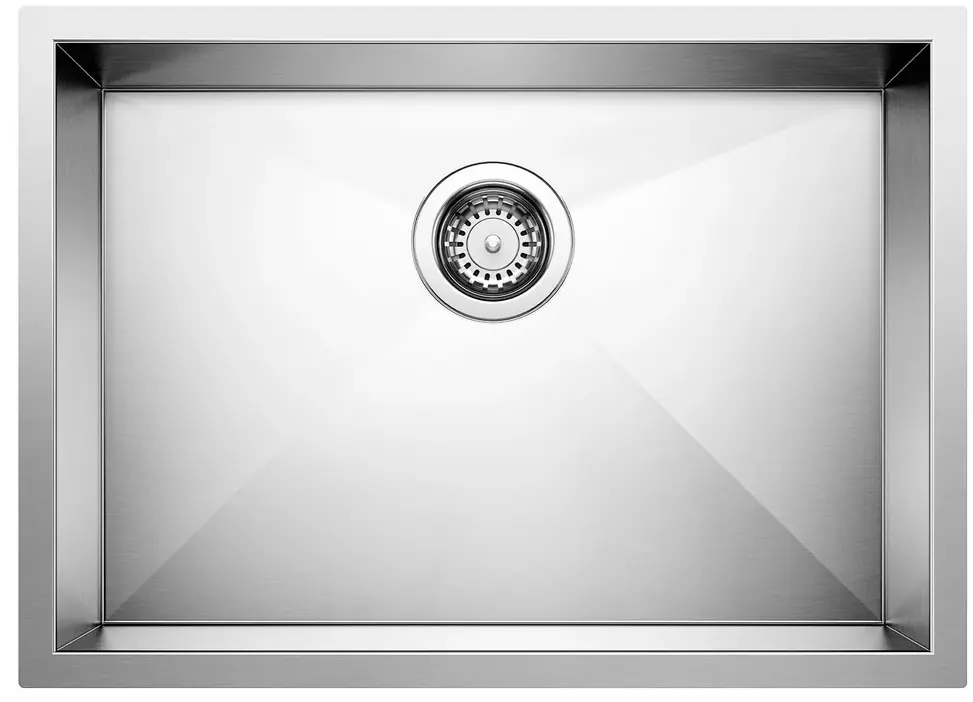
Yes, R0 is correct as an established industry and product term—but it is incomplete as a production specification.
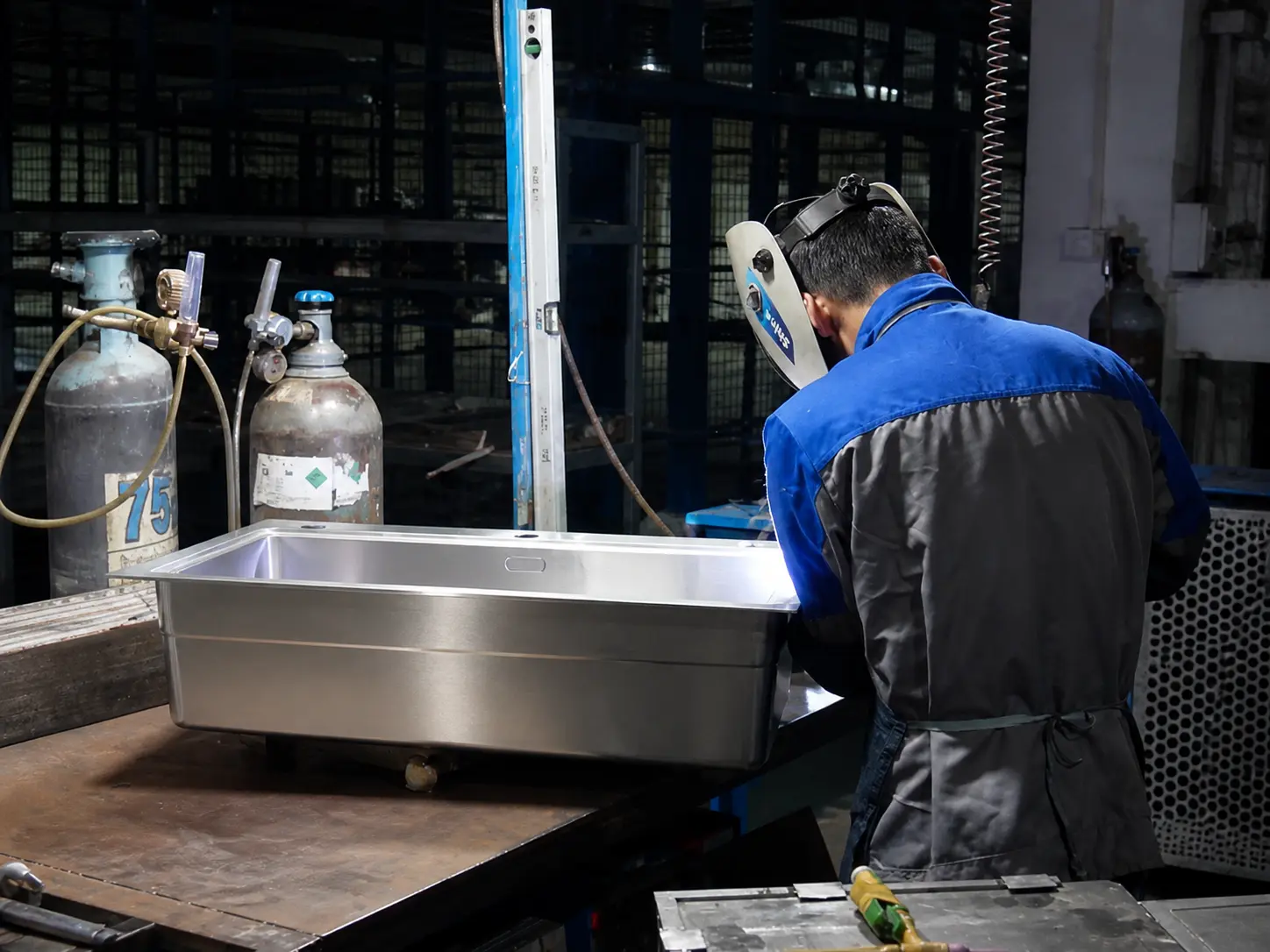
Handmade sinks are built from cut, bent and welded stainless steel sheets. This process can create straight walls and visually square welded corners that are widely sold as R0 or zero radius.
However, an R0 product name does not always mean:
- every vertical and horizontal transition is a literal 0 mm radius;
- the wall-to-bottom corner is identical to the vertical wall corner;
- two different R0 models have exactly the same internal geometry;
- the polishing process leaves a mathematically sharp point.
For consumer-facing content, “R0” or “zero-radius sink” is normal and understandable language. For drawings, quotations and quality inspection, it should be replaced by location-specific dimensions.
Is R10 the normal handmade-sink specification?
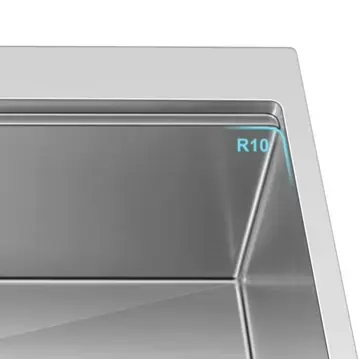
R10 is a very common specification for contemporary handmade sinks, especially those designed for normal household use. It offers the visual character buyers expect from a handmade rectangular bowl while reducing the cleaning and finishing difficulties associated with sharper corners.
It is better to call R10 a common market convention or mainstream specification, not a mandatory industry standard. Handmade sinks can also be made with R0, R15, R25 or other custom transitions. The normal choice depends on the product series, target market and factory construction method.
Counterintuitive truth: an R0 sink can still contain a rounded transition
“Zero-radius” is commonly used to describe a square-looking sink, but the label may apply primarily to the vertical corners. The wall-to-bottom transition can still use a small radius to support cleaning, finishing or the intended bowl geometry.
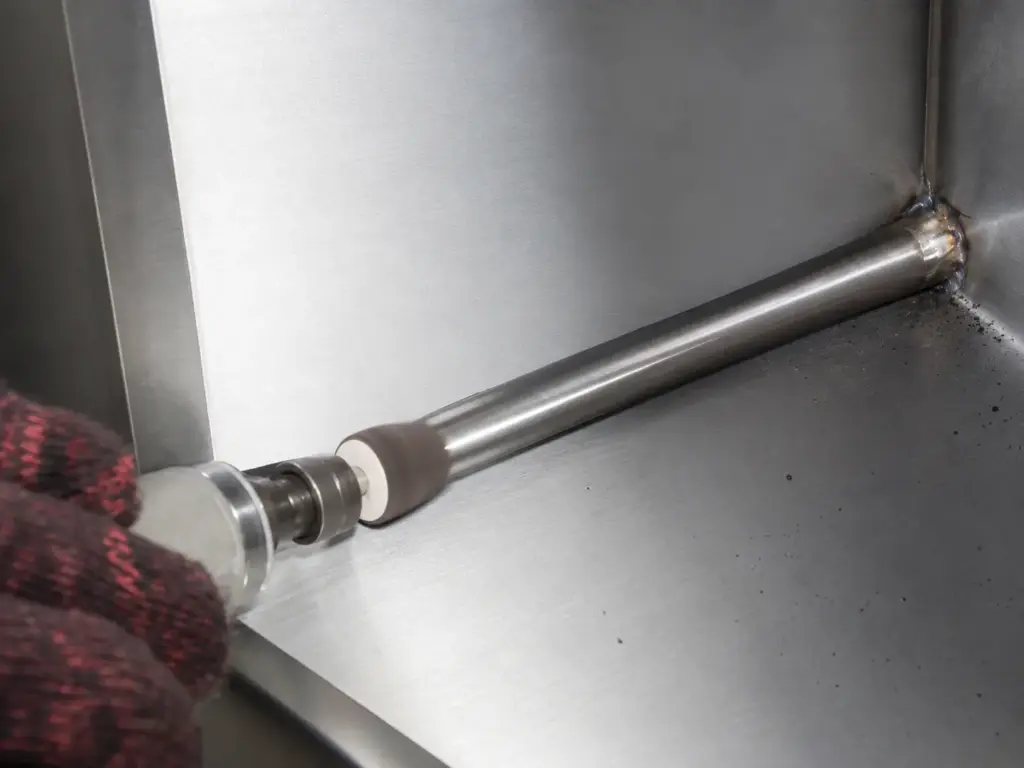
The completed weld also changes during grinding and polishing. The visible result can look square without every point in the finished bowl sharing a literal zero radius.
This distinction matters for two reasons:
- two sinks both sold as R0 can have noticeably different corner profiles;
- the word R0 alone is not precise enough for a custom drawing or repeat order.
If the exact visual line matters, confirm the inside vertical radius, bottom transition and approved sample.
Which corner radius is easiest to clean?
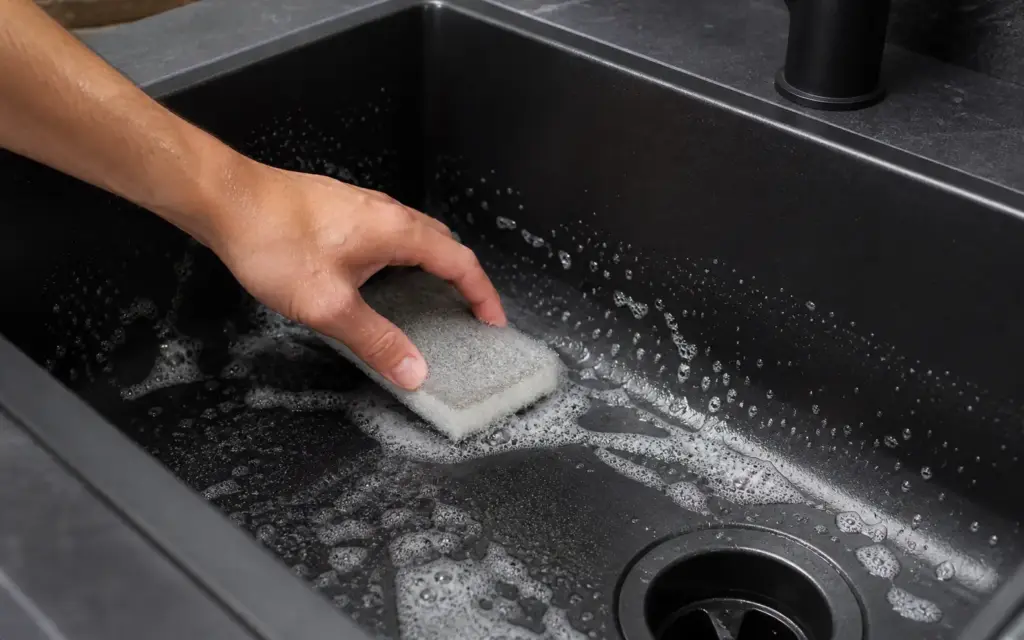
When R0, R10 and R15 refer to the same internal corner locations, R15 is generally the easiest to wipe, followed closely by R10. A fully tight R0 design requires the most attention.
The reason is simple: a sponge, cloth or fingertip can follow a wider curve more easily than a tight internal corner. Food particles and mineral residue are also easier to see and remove from a smooth transition.
R0 cleaning
R0 vertical corners create crisp lines, but the tightest weld points may not be reached by the flat face of a sponge. A small brush or folded cloth can be helpful.
This does not make every R0 sink unhygienic or impractical. An R0 vertical corner combined with a small rounded bottom transition may be easier to maintain than a fully square-looking bowl. The real cleaning experience should be judged from the complete geometry.
R0 is less forgiving in homes where:
- food residue is often left in the sink overnight;
- hard water leaves visible mineral deposits;
- the sink is cleaned infrequently;
- a low-maintenance bowl is expected.
R10 cleaning
R10 retains a tight, contemporary appearance while giving a cloth or sponge enough room to enter most corners.
For this reason, it is often the practical middle ground. It satisfies consumers who dislike the look of a traditional round bowl but do not want the maintenance associated with an extremely sharp corner.
R15 cleaning
R15 provides a slightly wider wiping path when it is applied to the same location as R10. The visual difference can be modest, but the wider curve may be noticeable during cleaning.
R15 is well suited to busy kitchens, rental properties and product lines where ease of care is a stronger selling point than an ultra-square interior.
Does a smaller corner radius give you more bowl space?
Sometimes—but only when the compared radius applies to the bowl-floor transition and the rest of the geometry is genuinely the same.
In two bowls with the same dimensions, wall angles and radius locations, a tighter bottom radius can preserve slightly more flat area. But an R0 label used only for the vertical corners tells you very little about the size of the bowl floor.
It is therefore inaccurate to claim that every R0 sink has more usable floor space than every R10 or R15 sink. Compare the technical drawing and internal bowl measurements instead.
Corner radius is only one part of usable capacity. These details can have a greater effect:
- internal bowl length and width;
- sidewall angle;
- bowl depth;
- workstation ledges;
- drain position;
- divider shape in a double-bowl sink.
Do not choose a sink from the radius alone. Compare the actual internal bowl dimensions. The Matrix guide to standard kitchen sink sizes and cabinet compatibility explains the measurements that should be checked before installation.
Does R0, R10 or R15 drain better?
Corner radius alone does not determine drainage.
A common assumption is that a sharper sink must drain poorly because its corners are square. Another assumption is that a more rounded sink will automatically drain well. Neither is reliable.
Water movement depends on the complete bowl geometry, including:
- bottom slope toward the drain;
- drain position;
- flatness of the bowl floor;
- transitions between the floor and sidewalls;
- drain embossing or channel geometry;
- installation level;
- manufacturing distortion.
An R15 sink with an uneven floor can hold water. A properly designed R0 or R10 sink can drain effectively. Decorative drain lines may guide the eye, but their presence alone does not prove that the bowl will empty without residual droplets.
The most useful evaluation is a real water test on the installed sink or approved sample. Stainless steel surfaces can retain scattered droplets because of surface tension, so “good drainage” should not be interpreted as a promise that every drop disappears without wiping.
Which radius looks more modern?
R0 creates the strongest architectural statement. Its straight walls and tight corners suit minimalist, industrial and commercial-inspired kitchens.
R10 still looks distinctly modern but feels less severe. For many kitchens, it pairs more naturally with flat-panel cabinetry, stone countertops and workstation accessories.
R15 has a subtle softness. It does not automatically look traditional. In a well-proportioned rectangular bowl, a 15 mm radius can still appear clean and contemporary.
The total design matters more than one number. Rim shape, bowl proportions, finish, drain cover, faucet and countertop reveal all influence the final appearance.
R0: when should you choose it?
Choose R0 when the square interior is a deliberate design priority.
It can work well for:
- architectural or industrial-style kitchens;
- premium display models where visual differentiation is important;
- commercial-inspired residential collections;
- rectangular bowls where strong square visual lines are desired;
- users who are comfortable cleaning corners with a small brush.
Do not choose R0 only because it looks more expensive in photographs. Tight corners make welding, grinding and brushing quality more visible.
If those processes are not controlled, the same sharp geometry intended to look premium can expose inconsistent seams or polishing marks.
R0 is a design choice, not proof of higher quality.
R10: when is it the best choice?
R10 is usually the best all-around option for a modern handmade stainless steel kitchen sink and is a common choice across mainstream residential ranges.
It is appropriate for:
- everyday family kitchens;
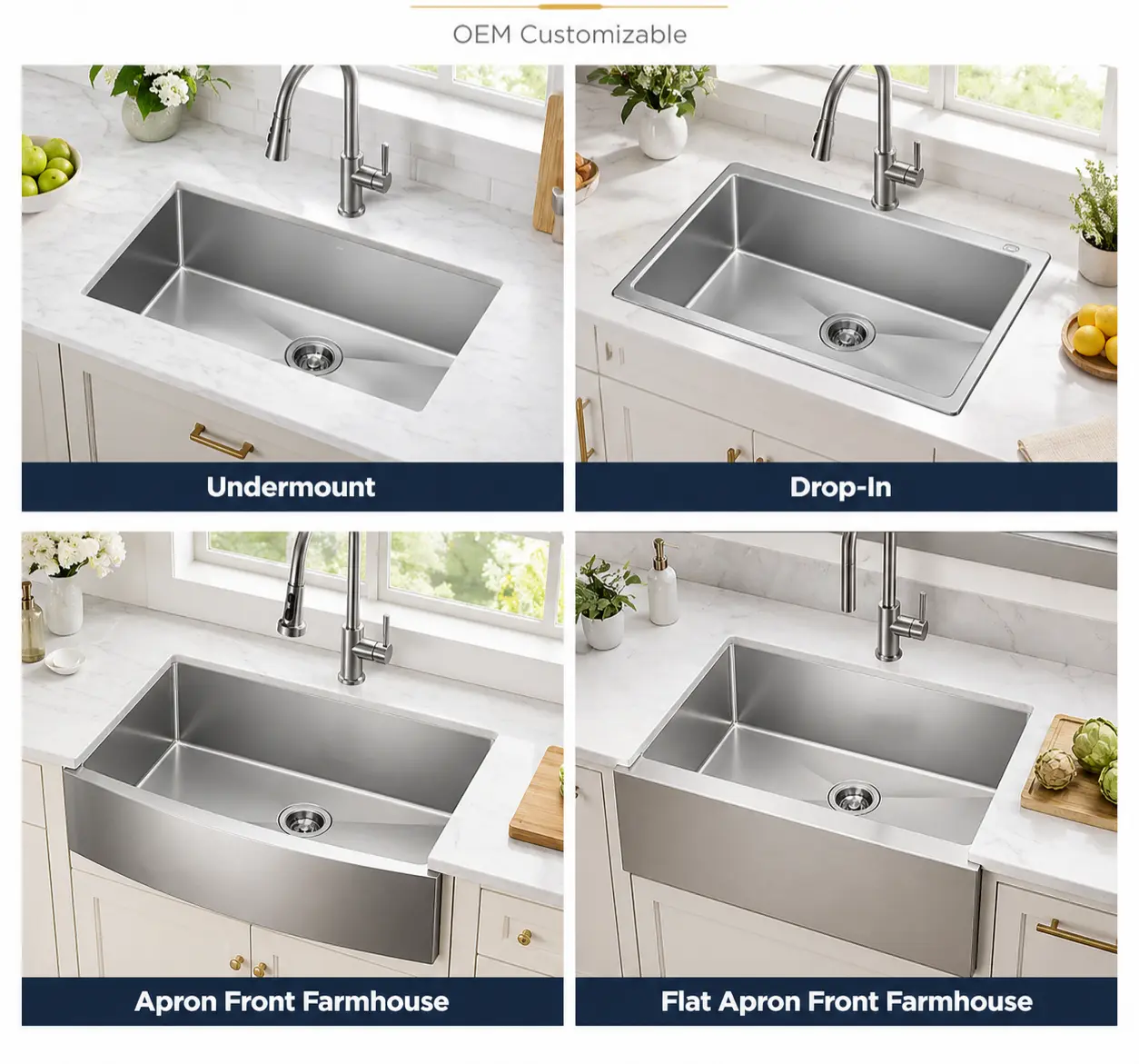
- undermount and top-mount sink collections;
- workstation sinks;
- single- and double-bowl models;
- retail programs serving a broad customer group;
- buyers who want a modern look with manageable cleaning.
Its advantage is balance. R10 remains visually tight, preserves useful bowl space and is more accessible during cleaning than R0.
For a brand building one main square-bowl series, R10 is normally the most logical starting point. It is familiar to the supply chain, visually modern and easier to position for everyday household use than R0.
R15: when should you choose it?
Choose R15 when practical maintenance has priority but the product should still look modern.
It is a strong fit for:
- busy households;
- apartment and multifamily projects;
- rental kitchens;
- family-oriented retail collections;
- users concerned about residue in square corners;
- buyers moving from traditional round bowls to a more contemporary shape.
When R10 and R15 are applied to the same locations in otherwise comparable bowls, the difference in usable space is normally modest, while the wider R15 curve can make routine wiping more comfortable.
R15 should not be treated as a lower-tier specification. When bowl proportions and finish are well executed, it can support a refined, practical product position.
Best radius for a workstation sink
R10 is usually the most logical starting point for a workstation sink intended for regular home use. R15 can be considered when a softer, maintenance-focused bowl is required.
A workstation is used for food preparation, washing and drying, so the bowl may receive more food particles than a basic sink. Accessible corners help with cleanup. At the same time, both radii retain the rectangular shape needed for a modern workstation appearance.
R0 can still be used when the collection is design-led. The buyer should evaluate:
- how easily the corner can be wiped below the accessory ledges;
- whether the bottom grid follows the bowl shape;
- whether cutting boards and colanders fit their ledges correctly;
- whether the drain and bowl slope work together;
- whether corner finishing is consistent across the sample.
See Matrix workstation kitchen sinks for the relationship between bowl design, ledges and matched accessories.
Does corner radius affect undermount installation?
The internal bowl radius affects the visible shape of an undermount opening, but it does not by itself define the countertop cut-out.
The countertop fabricator needs the actual sink, approved template or technical drawing. The installer must also know the intended reveal:
- positive reveal leaves a small part of the sink rim visible;
- zero reveal aligns the countertop edge with the bowl opening;
- negative reveal allows the countertop to extend slightly over the bowl.
Do not assume an R10 bowl uses a universal R10 countertop cut-out. The rim, wall angle, outside bowl shape and reveal can change the opening.
The same principle applies to R0. A square-looking bowl does not mean the countertop should be cut from a marketing description. Always follow the exact model template and the countertop fabricator’s requirements.
For a broader comparison, read undermount vs top-mount sinks.
Corner radius and sink manufacturing quality
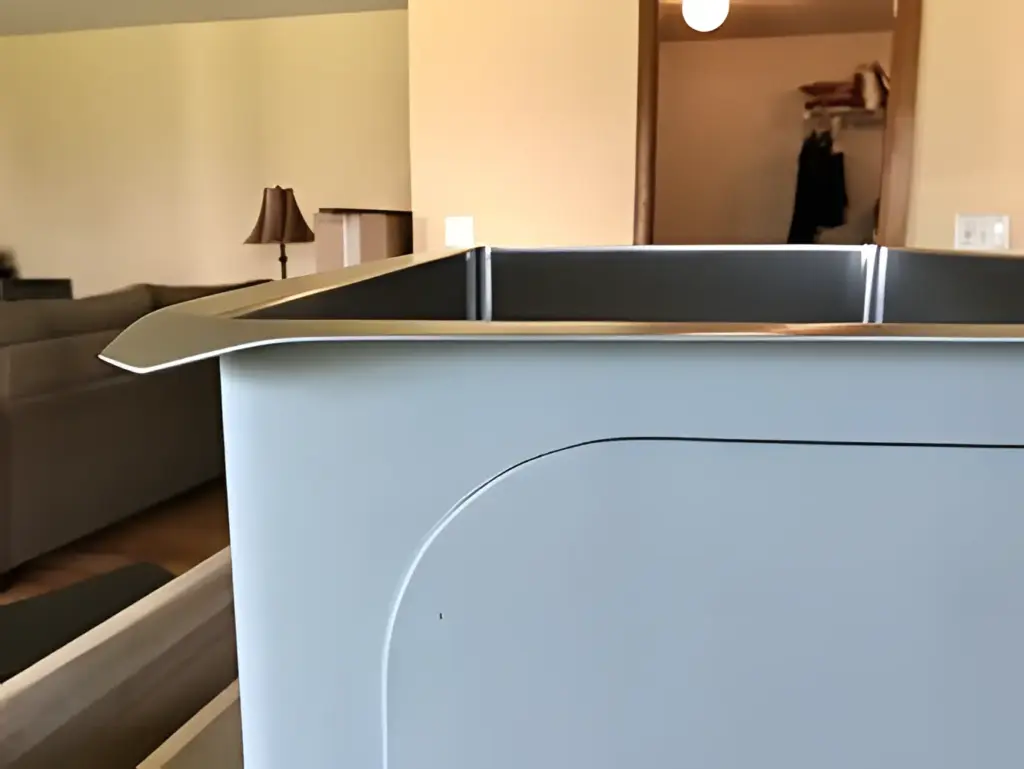
Handmade sinks with R0 or small-radius corners require careful control during bending, welding, grinding and polishing.
The tighter the corner, the more easily the eye notices:
- uneven weld transitions;
- excessive grinding;
- inconsistent corner width;
- distorted straight lines;
- rough or sharp areas;
- brushing that changes direction around the corner;
- different corner profiles within the same bowl.
R15 is somewhat more forgiving visually, but it is not automatically easy to manufacture well. The corner still needs a smooth, repeatable transition and a finish consistent with the rest of the bowl.
Pressed or drawn sinks use different forming methods, and their achievable geometry depends on tooling and material flow. Handmade construction generally offers more flexibility for vertical-angle, R10, R15 and other custom rectangular designs.
Matrix describes these differences in its handmade vs pressed sink guide.
What B2B buyers should specify on the drawing
For a wholesale, project or private-label order, “R10 sink” is not a complete specification.
The product drawing should clarify:
- internal vertical corner radius;
- wall-to-bottom radius;
- external bowl or rim radius where relevant;
- overall sink and bowl dimensions;
- bowl depth and sidewall geometry;
- drain position and bottom slope;
- rim and installation structure;
- finish direction and approved appearance;
- matching bottom-grid geometry;
- agreed dimensional tolerances.
If multiple radii are used in one bowl, label each location. A radius note without an arrow or reference point can create different interpretations between the buyer, drawing team and production line.
What to inspect on the approval sample
The first sample should be reviewed as a functional sink, not only photographed from above.
Check:
- whether all four corners look consistent;
- whether the radius matches the drawing and intended market position;
- whether welded transitions are smooth;
- whether grinding has weakened or visually flattened one corner;
- whether brushing remains consistent around the bowl;
- whether a cloth or sponge can reach the internal transitions;
- whether water moves toward the drain without major local pooling;
- whether the rim remains flat for installation;
- whether the bottom grid follows the radius without rubbing;
- whether the countertop template matches the actual sink.
Use the approved sample, drawing and finish reference together when checking mass production.
The stainless steel sink quality inspection checklist covers the additional material, dimension, drainage, accessory and packaging checks needed before shipment.
Counterintuitive truth: the sharpest radius should not automatically be the flagship model
R0 can look premium in a catalog, but a flagship product must also satisfy the customer’s daily expectations.
If the target buyer values simple maintenance, an R10 or R15 sink may earn better reviews and create fewer cleaning complaints. If the target market prioritizes architectural styling and understands the care requirement, R0 may be the stronger differentiator.
For a multi-model product line, the radius can support clear positioning:
- R15 for practical, family-oriented and project collections;
- R10 for the core modern range;
- R0 for a design-led square series.
This is not a fixed good-better-best hierarchy. The right lineup should follow customer behavior, price position, channel and manufacturing capability.
How to compare two sinks with the same radius
If two sinks are both described as R10, compare more than the label.
Look at:
- actual internal bowl dimensions;
- vertical and bottom corner profiles;
- consistency across all corners;
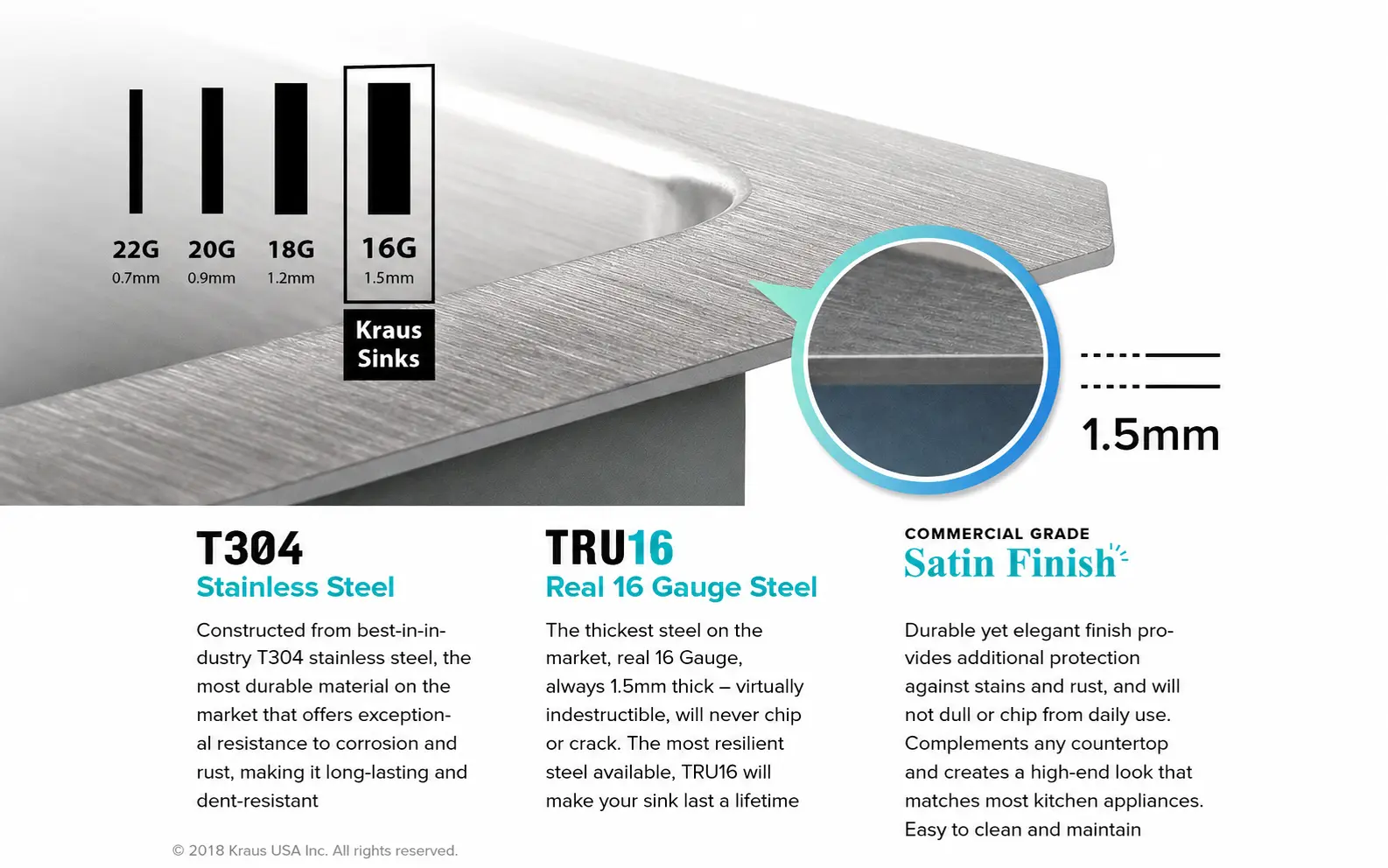
- steel grade and finished thickness;
- rim flatness;
- surface finish;
- bottom slope and drain position;
- sound-control treatment;
- accessory fit;
- packaging protection;
- technical drawing quality.
The radius can shape the user experience, but it cannot compensate for weak drainage, rough finishing or incorrect installation dimensions.
For a full household selection framework, use the Matrix guide on how to choose the right stainless steel kitchen sink.
Final recommendation
Choose based on the user, not the showroom photograph.
- Choose R0 for a deliberate vertical-angle or zero-radius appearance, provided that the drawing defines the bottom transition and detailed corner cleaning is acceptable.
- Choose R10 as the mainstream handmade-sink choice for balancing modern appearance, practical cleaning and repeatable product development.
- Choose R15 for easier cleaning and a slightly softer modern profile, especially in busy homes and project applications.
For most households and broad retail programs, R10 is the safest all-around answer and the most logical core specification.
For maintenance-focused users, R15 may be the better real-world choice. R0 is valid, but should be treated as a design-specific option rather than the normal default.
Develop R0, R10 or R15 sink programs with Matrix
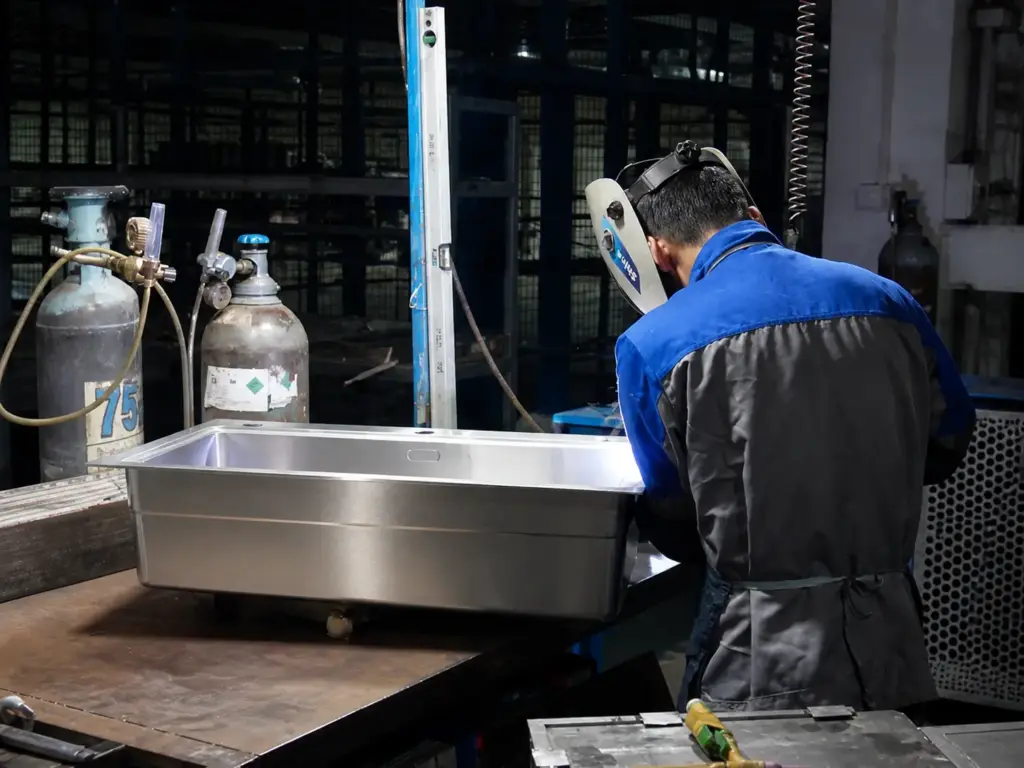
Matrix supports brands, wholesalers and project buyers with custom handmade kitchen sink programs.
Available design variables include overall size, bowl depth, installation type, drain position, finish, workstation ledges, accessories and corner-radius options such as R0, R10, R15, R25 or custom requirements.
For an accurate quotation or sample review, prepare:
- target market and sales channel;
- installation type;
- overall and bowl dimensions;
- preferred vertical and bottom radii;
- steel grade and thickness;
- finish and drain position;
- accessory set;
- packaging and private-label requirements;
- expected order quantity.
Contact Matrix to review a sink drawing, compare radius options or develop a repeatable product specification.
Frequently asked questions
What does R10 mean on a kitchen sink?
R10 normally means that a specified internal corner has a radius of approximately 10 mm. Check the drawing to confirm whether it refers to the vertical bowl corners, the wall-to-bottom transition or both.
Is R0 the same as a zero-radius sink?
R0 and zero radius are commonly used for the same square-looking style. The term may refer mainly to the vertical welded corners.
A real R0 model can still use a small wall-to-bottom radius, and the finished weld will also be affected by grinding and polishing.
Is R10 or R15 easier to clean?
R15 is generally slightly easier to wipe because its curve is wider. R10 is still relatively easy to maintain and keeps a tighter modern appearance.
Do R0 sink corners collect dirt?
Tight R0 corners can hold visible food or mineral residue if they are not cleaned deliberately. A small brush or folded cloth makes them easier to maintain. Finish quality and corner smoothness also matter.
Does R15 reduce sink capacity?
If R15 and R10 apply to the same bottom-corner location in otherwise identical bowls, R15 uses slightly more corner area.
An R0 label that describes only the vertical corners cannot be used to calculate bowl-floor capacity. Internal dimensions, depth, wall angle and the full drawing matter more.
Does a larger radius improve drainage?
Not automatically. Drainage depends on the complete bowl slope, drain position, floor geometry, installation level and manufacturing accuracy.
Which radius is best for a family kitchen?
R10 is a strong all-around choice. R15 may be better when easy cleaning is the top priority, while R0 suits users who strongly prefer square architectural lines.
Can a stainless steel sink corner radius be customized?
Handmade stainless steel sinks can often be developed with different radius options, subject to the design, material thickness, construction method and sample approval. The exact geometry should be confirmed on a technical drawing.