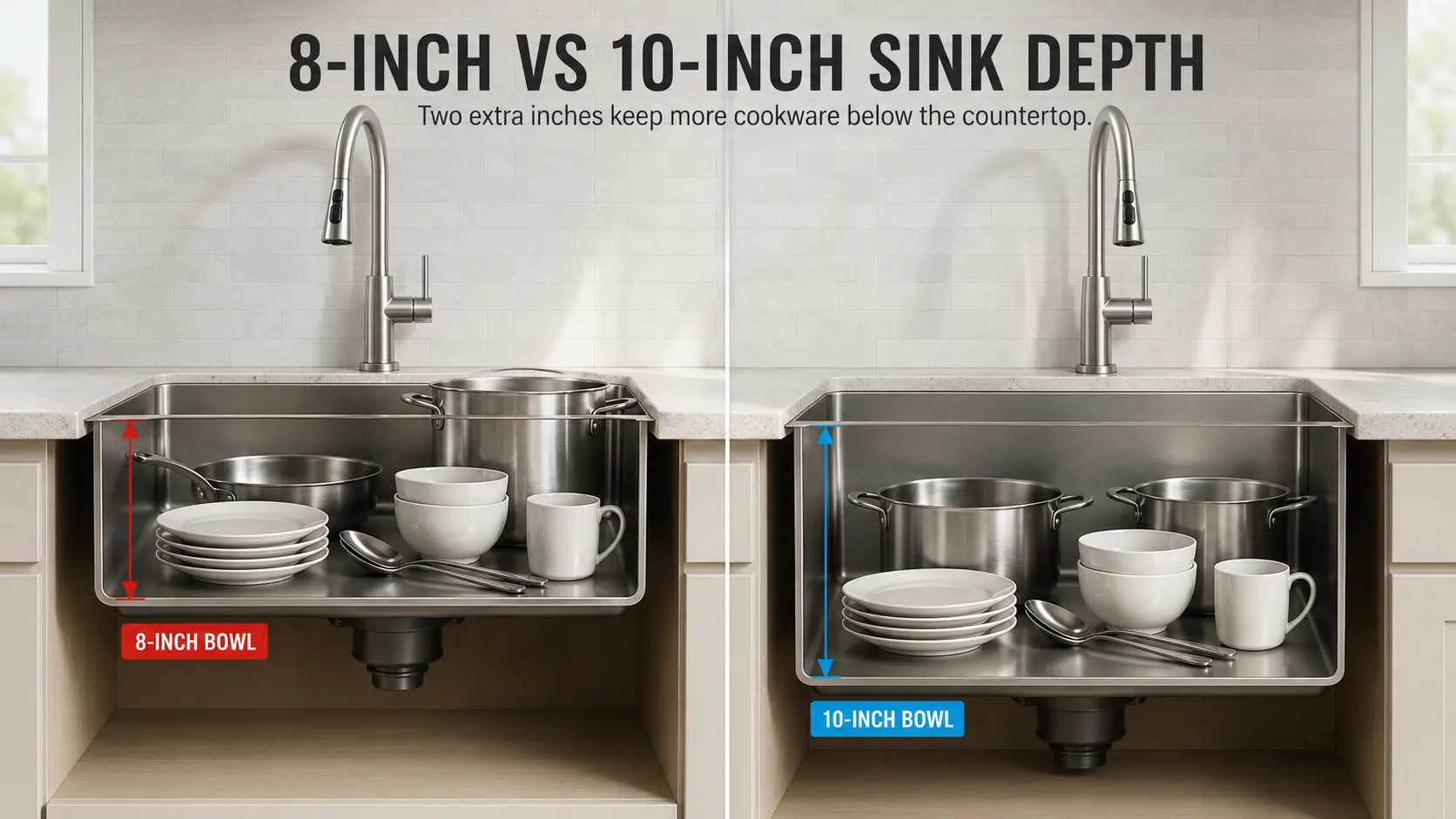
For most household kitchens, a 9-inch-deep sink offers the best overall balance.
An 8-inch sink is easier to reach into and leaves more room below the bowl. A 10-inch sink provides more vertical capacity for large cookware and helps contain splashing, but it also requires more bending and can create cabinet or plumbing conflicts.
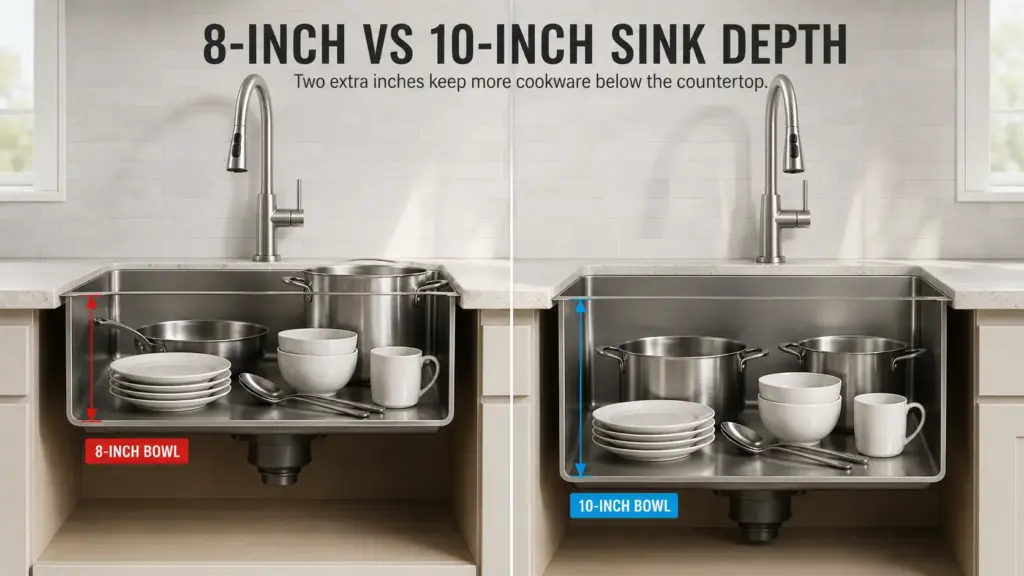
The best depth is not simply the deepest sink that fits the cabinet. It depends on the user’s reach, countertop height, installation type, cookware, cleaning habits, drain position, garbage disposal and under-sink storage.
8 vs 9 vs 10 inch sink depth at a glance
| Bowl depth | Approx. metric depth | Main advantage | Main tradeoff | Best suited to |
|---|---|---|---|---|
| 8 inches | 203 mm | Comfortable reach and easier cabinet fit | Less vertical capacity and splash containment | Light-to-normal washing, frequent dishwasher use, compact cabinets and replacement projects |
| 9 inches | 229 mm | Best balance of capacity, reach and installation flexibility | Uses more cabinet space than an 8-inch bowl | Most family kitchens, standard residential lines and mixed-use sinks |
| 10 inches | 254 mm | More room for large pots, trays and heavy washing | Deeper reach, less storage and higher plumbing risk | Large cookware, workstation sinks, design-led kitchens and high-capacity product lines |
This comparison assumes similar bowl width, length, wall angle and installation. A wide 8-inch bowl can be more useful than a narrow 10-inch bowl.
Quick recommendation
- Choose 8 inches when comfortable reach, easier installation and under-sink space matter most.
- Choose 9 inches when you want the safest all-around depth for a family kitchen.
- Choose 10 inches when you regularly wash oversized cookware and have already confirmed cabinet and drain clearance.
If you are undecided, 9 inches is normally the most practical starting point.
What does kitchen sink depth mean?
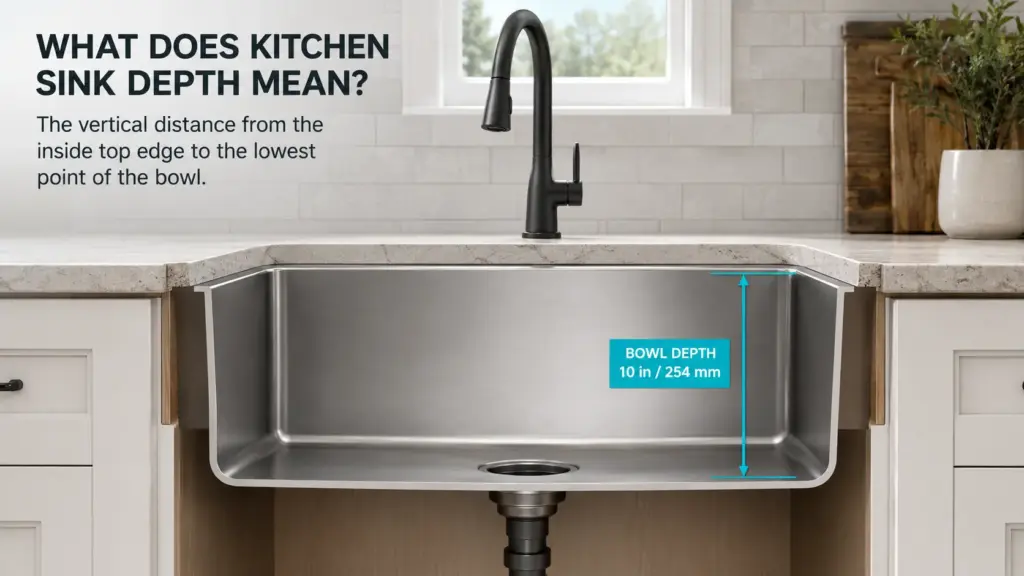
Sink depth usually refers to the vertical measurement from the upper reference point of the bowl or rim to the lowest internal area of the sink.
But product drawings do not always use the same reference point. Depending on the sink construction, depth may be measured from:
- the top of the sink rim;
- the top of the undermount flange;
- the bowl opening plane;
- the deck surface of a top-mount sink;
- a specified point before the drain emboss or recess.
This matters when comparing sinks from different product lines. A product title that says “9-inch deep” may be rounded, while the technical drawing could show a slightly different finished dimension.
For B2B orders, bowl depth should always be defined on the drawing with a measurement line and tolerance.
Counterintuitive truth: nominal depth is not always the real working reach
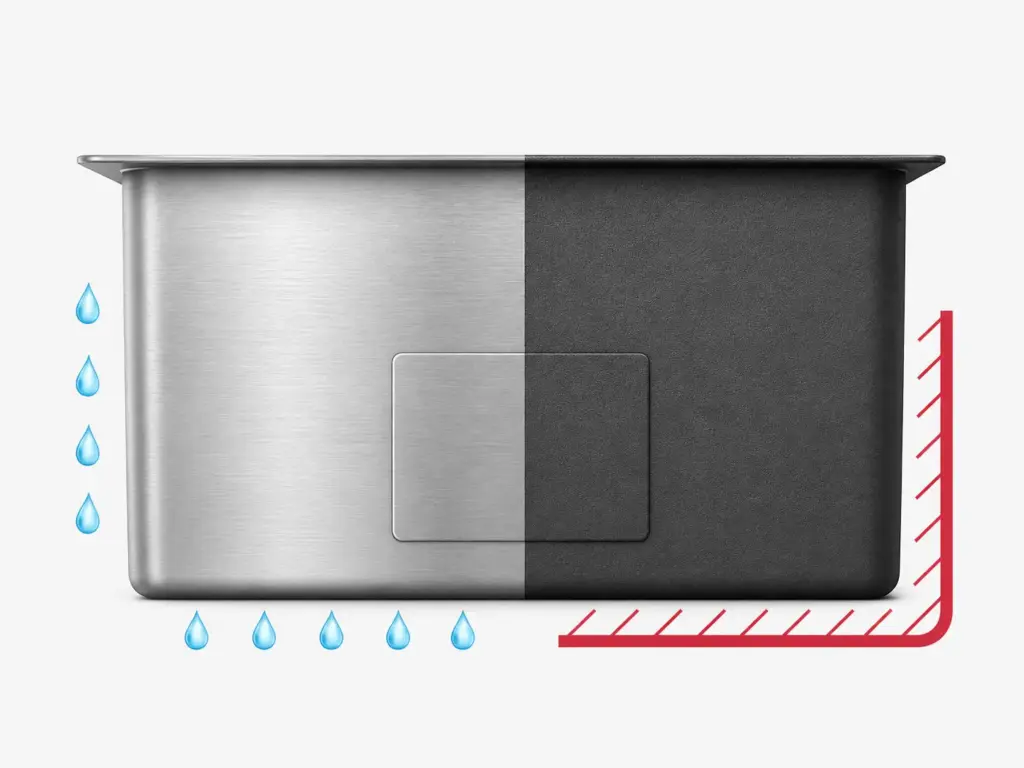
The user’s hand does not start at the sink flange. It starts above the finished countertop.
With a top-mount sink, the rim sits on the countertop, so the practical reach from the counter surface to the bowl floor is usually close to the stated bowl depth.
With an undermount sink, the bowl begins below the countertop. The practical reach can include both:
- the nominal bowl depth; and
- part or all of the countertop thickness above the sink opening.
This means a 9-inch undermount sink below a thick countertop can feel deeper than a 9-inch top-mount sink.
The exact difference depends on the rim, reveal, countertop thickness and how the manufacturer measures bowl depth. Compare the installed cross-section, not only the product title.
Read the Matrix comparison of undermount vs top-mount sinks when planning the final working height.
Is an 8-inch-deep kitchen sink deep enough?
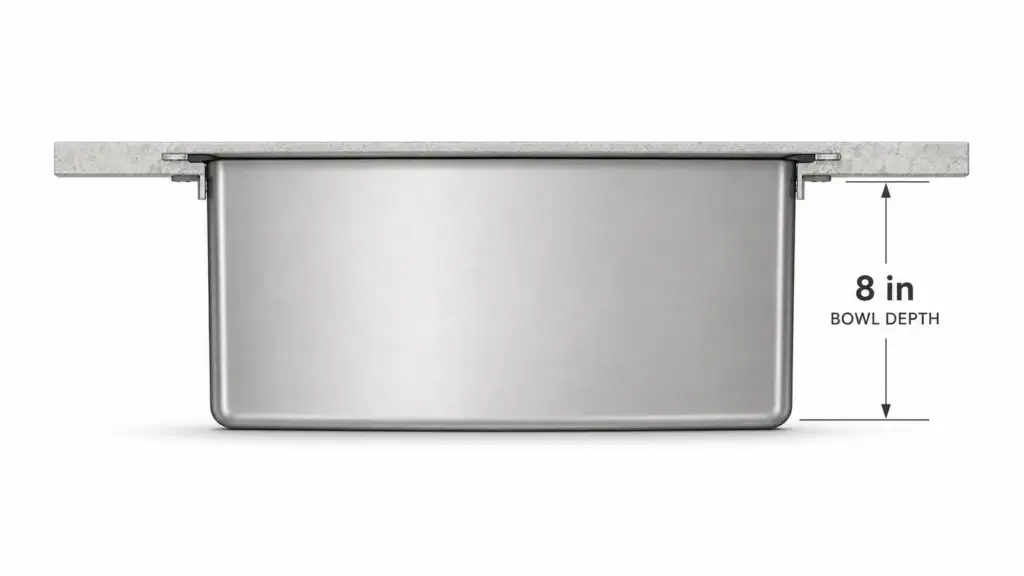
An 8-inch bowl is deep enough for many normal household kitchens.
It can handle everyday plates, cups, food preparation and medium cookware while keeping the bowl floor relatively easy to reach. It also leaves more vertical space for plumbing, storage and waste systems below the sink.
Advantages of an 8-inch sink
- easier to reach into during long washing tasks;
- less bending compared with a deeper bowl;
- more cabinet space below the sink;
- easier garbage-disposal and trap clearance;
- useful for replacement projects with a high wall drain;
- lighter visual proportion in compact kitchens;
- often practical when most dishes go into a dishwasher.
Disadvantages of an 8-inch sink
- large pots may rise above the rim;
- tall cookware can be harder to soak fully;
- a high faucet stream may splash more easily;
- stacked dishes become visible sooner;
- less vertical room for washing large trays or vases.
An 8-inch sink is not automatically a basic or low-quality option. In the right kitchen, shallower depth can provide better ergonomics and fewer installation problems.
When should you choose an 8-inch sink?
Choose an 8-inch bowl when:
- you use a dishwasher for most plates and utensils;
- the sink is mainly used for food preparation and light washing;
- the existing wall drain is relatively high;
- a garbage disposal already occupies significant cabinet height;
- under-sink storage is important;
- the countertop is thick and the sink will be undermounted;
- the user prefers a shorter reach to the bowl floor;
- you are replacing an existing shallow sink without major plumbing work.
Check the internal length and width before deciding. A broad 8-inch single bowl may still accommodate large baking sheets better than a deeper but narrower double bowl.
Is a 9-inch kitchen sink the best all-around depth?
For many households, yes.
A 9-inch bowl adds useful capacity over an 8-inch sink without creating the full reach and cabinet-space tradeoffs of a 10-inch bowl. It can hold large pots, reduce visible clutter and contain normal splashing while remaining practical for everyday use.
Advantages of a 9-inch sink
- balanced reach and washing capacity;
- suitable for most family cookware;
- better splash containment than many shallower bowls;
- works well for single-bowl and double-bowl layouts;
- appropriate for many undermount, top-mount and workstation designs;
- easier to position across broad retail and project markets;
- normally less demanding on cabinet space than a 10-inch bowl.
Disadvantages of a 9-inch sink
- can still feel deep below a thick countertop;
- reduces under-sink space compared with an 8-inch model;
- requires a plumbing check when replacing a shallower sink;
- may be more capacity than a small preparation sink needs.
Nine inches should not be treated as a universal answer. It is the strongest general-purpose option because it sits in the middle of the main tradeoffs.
When should you choose a 9-inch sink?
Choose a 9-inch bowl when:
- the sink handles both food preparation and daily washing;
- you regularly use medium-to-large pots;
- you want a large single bowl without an extreme reach;
- the kitchen needs a broadly suitable family sink;
- the cabinet and wall drain provide normal clearance;
- you are developing a core retail or private-label model;
- you want a workstation sink with balanced bowl capacity.
For buyers who cannot test several depths in person, 9 inches is normally the lowest-risk general recommendation.
Is a 10-inch kitchen sink too deep?
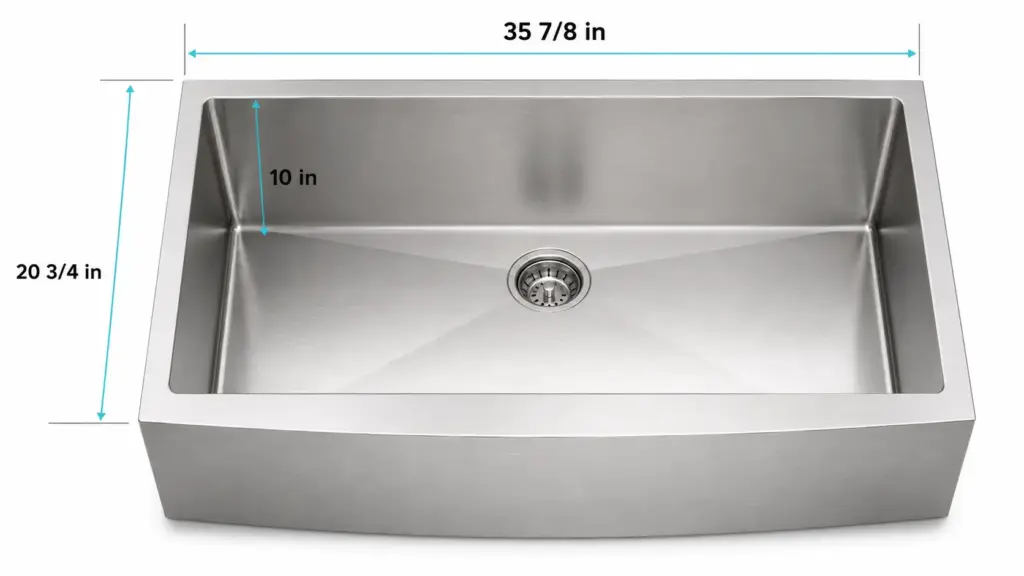
Not necessarily. A 10-inch sink is useful when the household genuinely needs more vertical washing space.
It can hold large stockpots, roasting pans, baking trays and more dishes below the countertop line. The deeper walls can also help keep water inside the bowl.
But the extra inch compared with a 9-inch sink is not free. It lowers the bowl floor, drain assembly and any attached garbage disposal.
Advantages of a 10-inch sink
- more vertical room for oversized cookware;
- better containment for heavy washing;
- keeps stacked dishes below the rim more effectively;
- suitable for large single-bowl and workstation designs;
- creates a substantial, premium-looking bowl;
- useful in kitchens where large trays and pots are washed by hand.
Disadvantages of a 10-inch sink
- requires a longer reach and potentially more bending;
- can feel particularly deep as an undermount installation;
- removes more cabinet storage;
- increases garbage-disposal and trap-clearance risk;
- can conflict with drawers, filters or pull-out systems;
- adds unnecessary depth if the bowl is used mainly for rinsing cups and produce.
A 10-inch depth should be selected because the kitchen workflow needs it, not because a deeper specification appears more premium.
When should you choose a 10-inch sink?
Choose a 10-inch bowl when:
- oversized cookware is washed frequently;
- the sink is the primary dishwashing area;
- splash containment is a major concern;
- the user has tested and accepts the deeper reach;
- the cabinet has enough vertical clearance;
- the garbage disposal and wall drain have been measured;
- the product is intended for a large workstation or premium single-bowl line;
- under-sink storage is not the main priority.
Before ordering, recreate the installed reach from the countertop surface. A showroom sink displayed without a countertop may feel different after undermount installation.
Does a deeper sink prevent splashing?
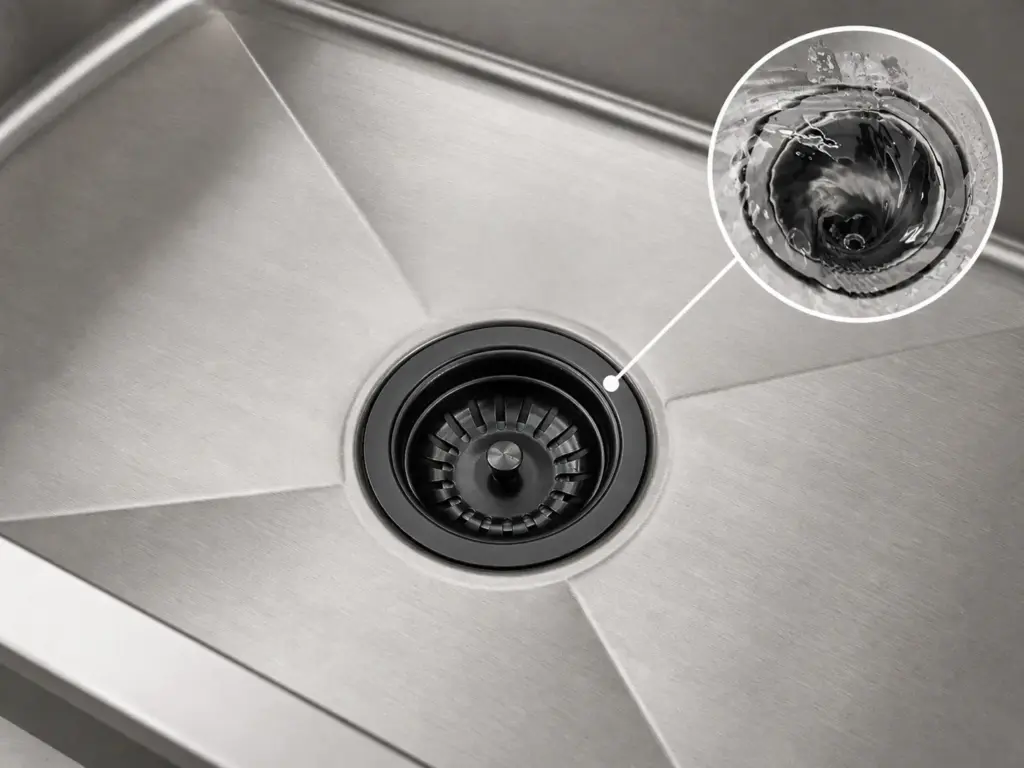
A deeper bowl can help contain splashing, but depth is not the only factor.
Splash behavior also depends on:
- faucet height;
- water flow and aeration;
- distance from the spout to the bowl floor;
- where the water stream lands;
- drain position;
- bottom-grid height;
- bowl width and wall angle;
- cookware placed under the stream.
A very high faucet above an empty stainless steel bowl can still create splash. A shallower sink with a well-positioned faucet may perform better than a deep sink with poor faucet alignment.
The stream should normally land near the drain area without striking a steep wall or the edge of the drain flange. Test the faucet and sink as a system.
Counterintuitive truth: a bottom grid changes how deep the sink feels
A bottom grid raises dishes and cookware above the actual bowl floor.
This can make a deep sink easier to use because the user does not reach all the way to the stainless steel bottom during every task. The grid also protects the visible floor and allows water to move below cookware.
However, it reduces the clear vertical space available inside the bowl and may increase splash if the faucet stream strikes the grid or an item resting on it.
For workstation and private-label sets, evaluate effective depth with the bottom grid installed—not only the empty-bowl depth.
How sink depth affects posture and reach
There is no universal sink depth for every body height.
Comfort depends on:
- finished countertop height;
- user height and arm length;
- front-to-back bowl position;
- countertop edge thickness;
- undermount or top-mount installation;
- bowl depth;
- duration of washing tasks;
- bottom-grid height.
A tall user may bend more to reach the bottom of a deep bowl. A shorter user may need to reach over a relatively high counter and down into the sink. Both situations can be uncomfortable for different reasons.
The most reliable test is practical: recreate the finished countertop height and bowl floor, then reach toward the center and rear corners as if cleaning the sink.
Do not choose depth from the user’s height alone. Counter height and installation method can change the result significantly.
How installation type changes effective depth
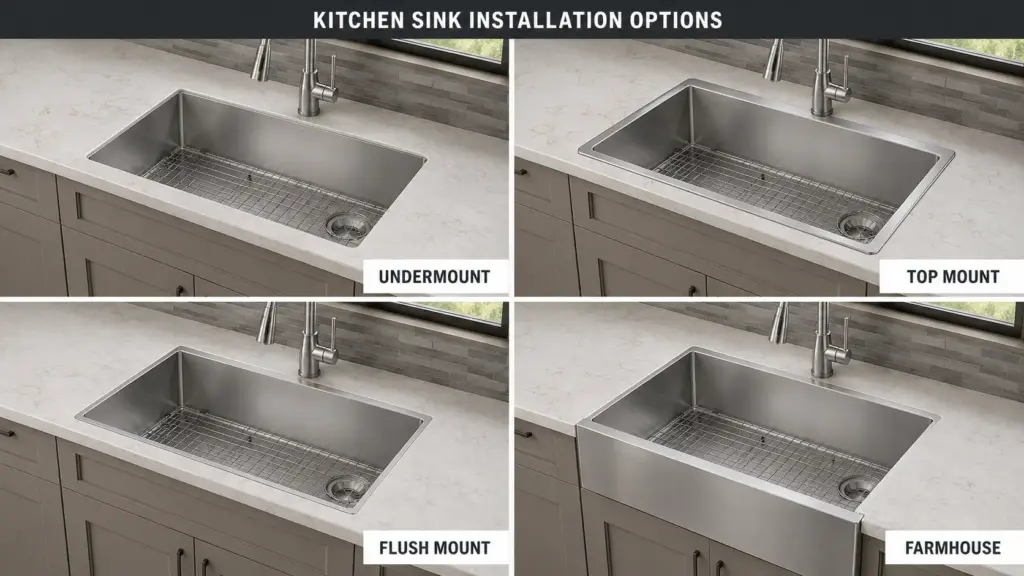
Top-mount sink
A top-mount sink sits with its rim on the countertop. An 8-, 9- or 10-inch bowl will usually feel closer to its stated depth because the top reference is near the counter surface.
Top-mount installation can be practical for replacement projects where the existing plumbing should remain unchanged.
Undermount sink
An undermount sink attaches below the counter. The countertop adds distance above the bowl, so the installed reach may feel deeper.
This should be considered before selecting a 10-inch undermount bowl, especially with a thick stone countertop.
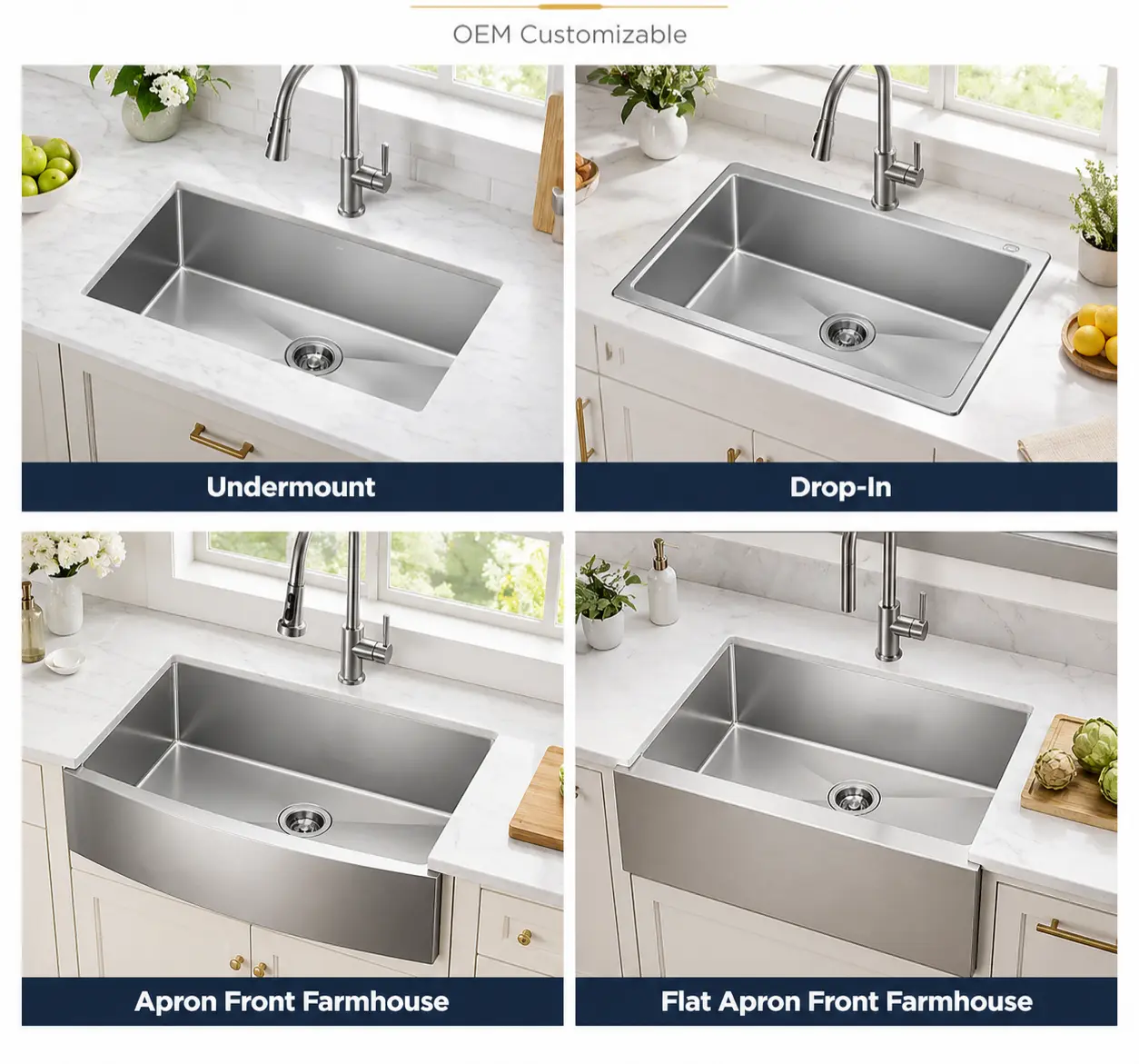
Apron-front sink
The working depth depends on how the apron-front sink aligns with the countertop and cabinet. Its bowl may be large and deep, but installation height can sometimes be adjusted through cabinet planning.
The sink requires proper structural support independent of the drain plumbing.
How depth affects cabinet and plumbing space
Every additional inch of bowl depth removes approximately one inch of vertical space below the sink when other conditions remain the same.
This space may already be needed for:
- drain and trap;
- garbage disposal;
- water filter;
- hot-water system;
- pull-out waste bins;
- cleaning-supply storage;
- sink supports;
- faucet hoses and valves.
A 10-inch bowl can fit inside a standard sink cabinet while still making the planned plumbing layout impossible. Cabinet width alone does not confirm vertical compatibility.
The Matrix guide to standard kitchen sink sizes and cabinet compatibility explains why overall size, bowl size and minimum cabinet width must be checked separately.
Sink depth and garbage disposal compatibility
Replacing an 8-inch sink with a 10-inch sink lowers the drain and attached garbage disposal by approximately 2 inches, assuming the countertop and installation reference remain unchanged.
That can move the disposal outlet too close to—or below—the existing wall-drain connection. It can also create a collision with the cabinet floor or storage system.
Before selecting a deeper bowl, confirm:
- finished countertop height;
- installed sink depth;
- disposal height;
- disposal-outlet position;
- wall-drain centerline;
- trap layout and drainage slope;
- cabinet-floor clearance.
A standard drain-hole size does not solve a height conflict. See the Matrix guide to kitchen sink drain-hole sizes and garbage-disposal compatibility.
8 vs 9 vs 10 inch depth for a single-bowl sink
A large single bowl benefits more visibly from added depth because the open space can hold large cookware.
- 8 inches works well for lighter washing, compact kitchens and comfortable reach.
- 9 inches provides the strongest balance for most family-size single bowls.
- 10 inches is useful for oversized pots, trays and high-capacity workstation designs.
Width and front-to-back dimensions still matter. A 10-inch-deep bowl that is too narrow for a baking sheet will not solve the user’s main problem.
8 vs 9 vs 10 inch depth for a double-bowl sink
Depth affects both compartments, but a deeper double bowl is not automatically more useful.
The divider and bowl ratio can have a greater effect on workflow. Two narrow 10-inch compartments may hold deep stacks but still fail to accommodate a wide roasting pan.
For double bowls, check:
- main and secondary bowl depths;
- divider height;
- equal or unequal bowl ratio;
- disposal side;
- dual-drain plumbing;
- cabinet clearance below both outlets.
Some designs use different depths for each bowl. This can create a large washing area and a shallower preparation or disposal bowl, but the plumbing drawing must reflect the different outlet heights.
Best depth for a workstation sink
Nine or 10 inches is common for a large workstation-style sink because the deeper bowl provides room below cutting boards, colanders and drying racks.
A 9-inch workstation is usually easier to position for broad household use. A 10-inch workstation provides more clearance below accessories and more containment for heavy preparation, but requires a stronger cabinet and plumbing review.
When comparing workstation kitchen sinks, check:
- depth below the accessory ledge;
- depth from the countertop to the bowl floor;
- bottom-grid height;
- faucet stream location;
- drain and disposal clearance;
- cutting-board and colander fit.
The advertised bowl depth does not describe the working clearance below every accessory.
Does deeper mean more sink capacity?
Deeper normally means more volume when the other dimensions are the same, but depth is only one part of capacity.
Capacity is also shaped by:
- internal bowl length;
- internal bowl width;
- corner radius;
- sidewall angle;
- drain emboss;
- divider geometry;
- workstation ledges.
A deep sink with heavily sloped walls may have less usable floor area than a shallower handmade bowl with straighter walls.
Compare internal dimensions and geometry instead of using depth as the only capacity number.
Handmade vs pressed sink depth
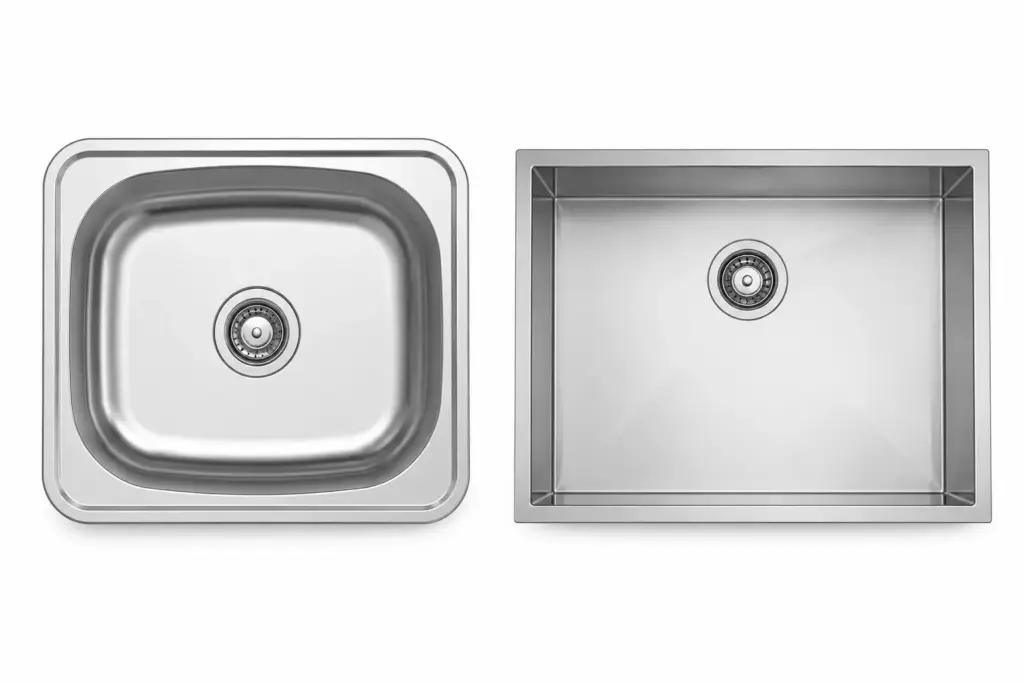
Manufacturing method affects which depths are practical.
Pressed or drawn sinks
Pressed sinks are formed from sheet using a mold. The available depth is controlled by the mold, forming geometry, material flow and finished-thickness requirements.
Many pressed programs use a depth around 180 mm, although the exact dimension depends on the model. That is approximately 7.1 inches and should not be marketed as 8 inches unless the drawing supports the claim.
Handmade sinks
Handmade sinks are cut, bent, welded and finished from stainless steel panels. This provides more flexibility for depths such as 8, 9 or 10 inches when the design and installation allow.
Custom depth still requires control of:
- wall straightness;
- corner welding;
- rim flatness;
- drain position;
- sound-pad placement;
- coating coverage;
- carton and stacking dimensions.
Matrix explains these options on its deep kitchen sinks and handmade kitchen sinks pages.
What B2B buyers should specify on the drawing
“10-inch deep sink” is not a complete production specification.
The drawing should define:
- depth reference point;
- nominal depth in millimeters;
- permitted depth tolerance;
- overall and internal bowl dimensions;
- wall angle and corner radius;
- drain emboss and hole position;
- rim or deck structure;
- installation type;
- workstation ledge height if used;
- bottom-grid and accessory clearances.
For inch-market products, decide whether the metric value is an exact conversion or a rounded manufacturing dimension.
- 8 inches equals 203.2 mm;
- 9 inches equals 228.6 mm;
- 10 inches equals 254 mm.
A factory may manufacture to a practical metric value such as 200, 230 or 250 mm while the market description rounds it to an inch category. That can be acceptable if the technical drawing and product listing communicate the dimension consistently.
What to inspect on a deep-sink sample
Before approving an 8-, 9- or 10-inch sink, check:
- actual depth at the agreed measurement point;
- consistency across multiple bowls;
- rim flatness;
- wall straightness and geometry;
- corner forming or welding quality;
- drain position and drainage;
- disposal and trap clearance in the target cabinet;
- sound-pad adhesion;
- undercoating coverage;
- bottom-grid and workstation-accessory fit;
- carton strength and bowl protection.
For pressed sinks, review finished thickness in formed areas. For handmade sinks, inspect welded corners, polishing and sidewall distortion.
The Matrix stainless steel sink quality inspection checklist provides a broader pre-shipment review framework.
Recommended depth strategy for B2B product lines
A brand does not always need all three depths in every size.
A practical product structure could be:
- 8-inch models for compact kitchens, renovation, apartments and installation-sensitive programs;
- 9-inch models as the core residential range;
- 10-inch models for large single bowls, workstation sets and capacity-led premium collections.
This is not a fixed quality ladder. An 8-inch sink should not be presented as inferior when its real value is easier reach and installation. A 10-inch sink should not be marketed as universally better when it needs more clearance.
For distributors, the most useful sales material explains who each depth is for and what the installer should measure before purchase.
Final recommendation
For most homes, choose 9 inches.
Choose 8 inches if you prioritize comfortable reach, under-sink storage, easier disposal clearance or a low-risk replacement installation.
Choose 10 inches if you frequently wash large cookware, want stronger splash containment and have confirmed that the installed reach and plumbing layout are suitable.
The correct depth is the one that improves the whole kitchen—not merely the bowl capacity.
Develop custom-depth kitchen sink programs with Matrix
Matrix supports brands, wholesalers and project buyers with custom kitchen sink programs, including bowl depth, overall dimensions, installation type, drain position, corner radius, finish and matched accessories.
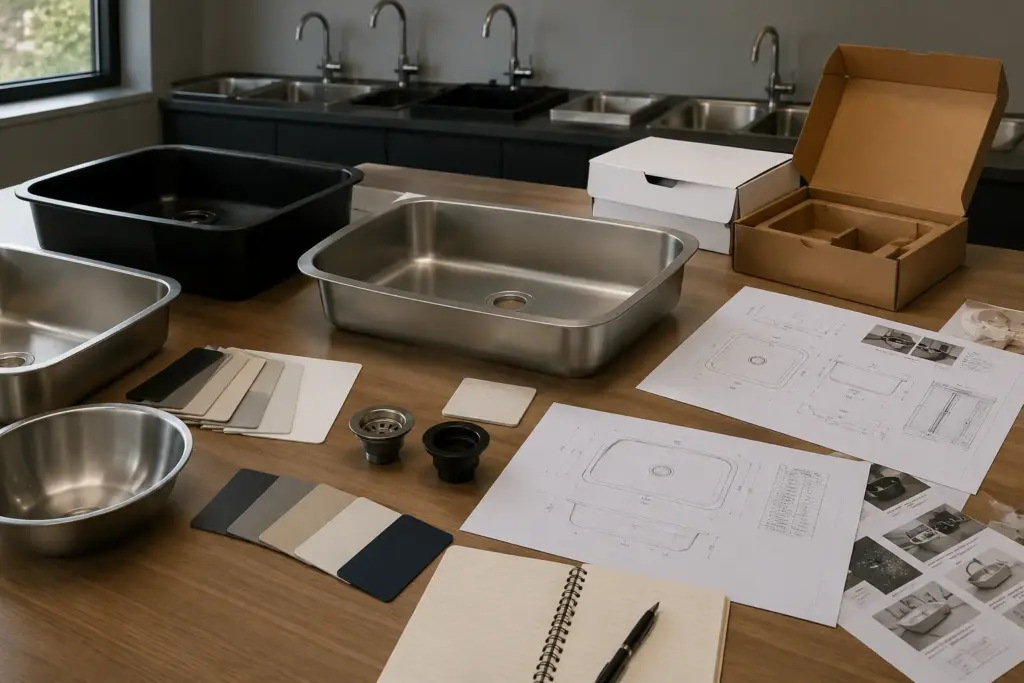
For an 8-, 9- or 10-inch sink inquiry, provide:
- target market and user group;
- sink size and bowl layout;
- nominal depth and tolerance;
- undermount, top-mount or apron-front installation;
- drain position and disposal requirements;
- cabinet and plumbing constraints;
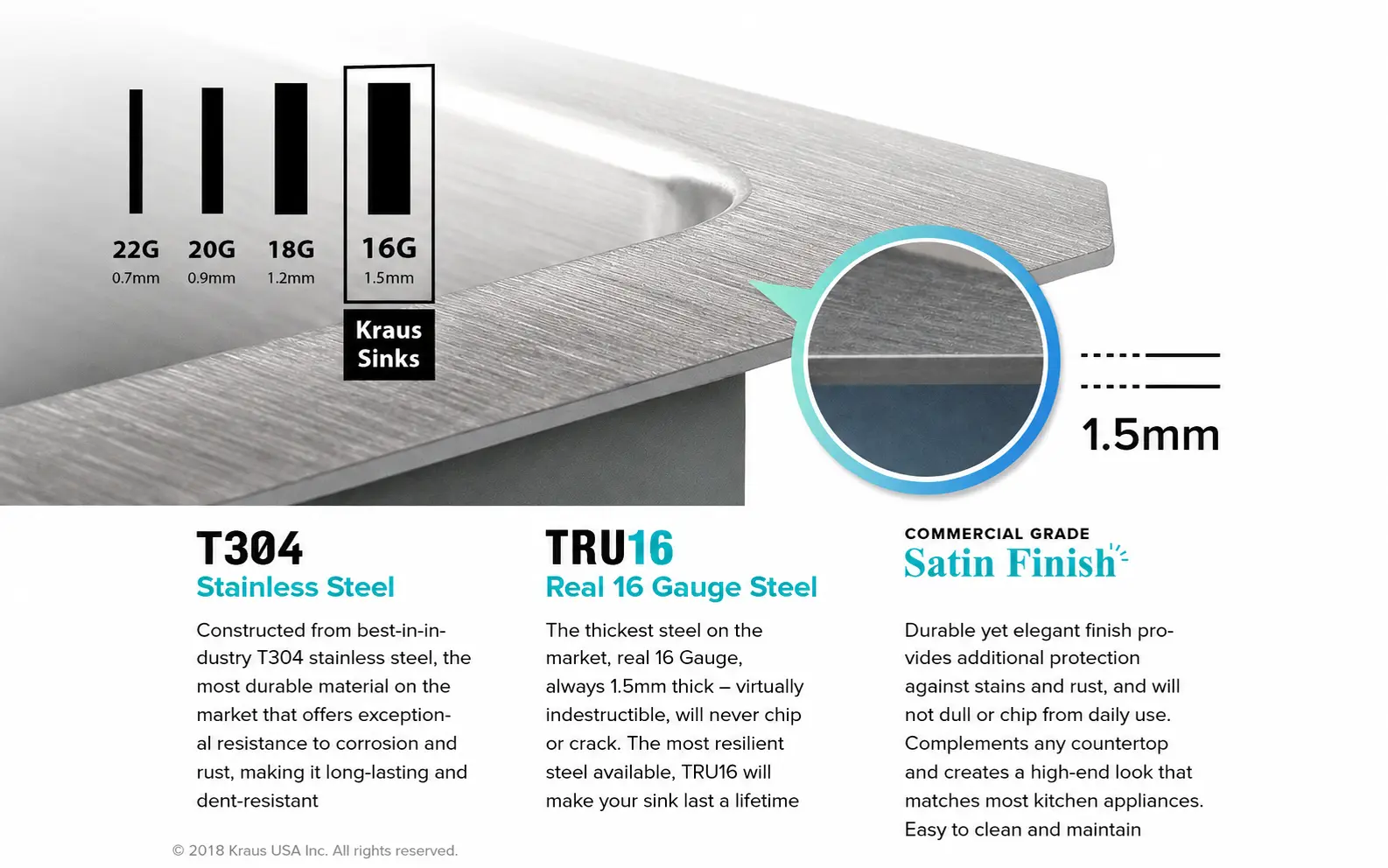
- steel grade and thickness;
- accessory set;
- packaging and private-label requirements;
- expected order quantity.
Contact Matrix to review a sink drawing, depth range or sample-development requirement.
Frequently asked questions
What is the standard kitchen sink depth?
Many residential kitchen sinks fall within an approximately 8- to 10-inch range, but there is no single depth that fits every kitchen. Nine inches is a common all-around choice.
Is an 8-inch sink too shallow?
Not for many households. It can handle normal washing while providing easier reach and more cabinet space. It may feel limited for oversized cookware or heavy hand-washing.
Is a 10-inch sink too deep?
It can be too deep when installed below a thick countertop or used by someone who finds the bowl floor difficult to reach. It is useful when large cookware and high washing capacity justify the extra depth.
Is a 9-inch sink deep enough for large pots?
Usually, provided that the bowl is also wide and long enough. Internal width and corner geometry can matter as much as the extra inch of depth.
Does an undermount sink feel deeper?
It can. The sink begins below the countertop, so the practical reach may include the countertop thickness in addition to the nominal bowl depth.
Does a deeper sink reduce splashing?
Often, but faucet height, water flow, stream location, bowl width and bottom-grid height also affect splashing.
Can a 10-inch sink use a garbage disposal?
Yes, if the disposal, cabinet, trap and wall-drain positions provide enough clearance. The standard drain-hole size alone does not confirm compatibility.
Is a deeper sink better for a workstation?
Nine- and 10-inch bowls can both work well. Check the depth below the accessory ledge, bottom-grid height and installed reach rather than choosing by total depth alone.
How should sink depth be measured for a B2B order?
The technical drawing should show the upper reference point, lowest bowl point, nominal metric dimension and permitted tolerance. Do not rely only on a rounded inch description.