
Sink Sourcing Knowledge Hub
Practical articles for buyers comparing stainless steel sinks, manufacturing methods, installation types, accessories, OEM programs, packing, and project supply.
Use these guides to understand what matters before choosing a sink model, approving an OEM sample, matching accessories, or placing a wholesale or project order.
Featured Guide

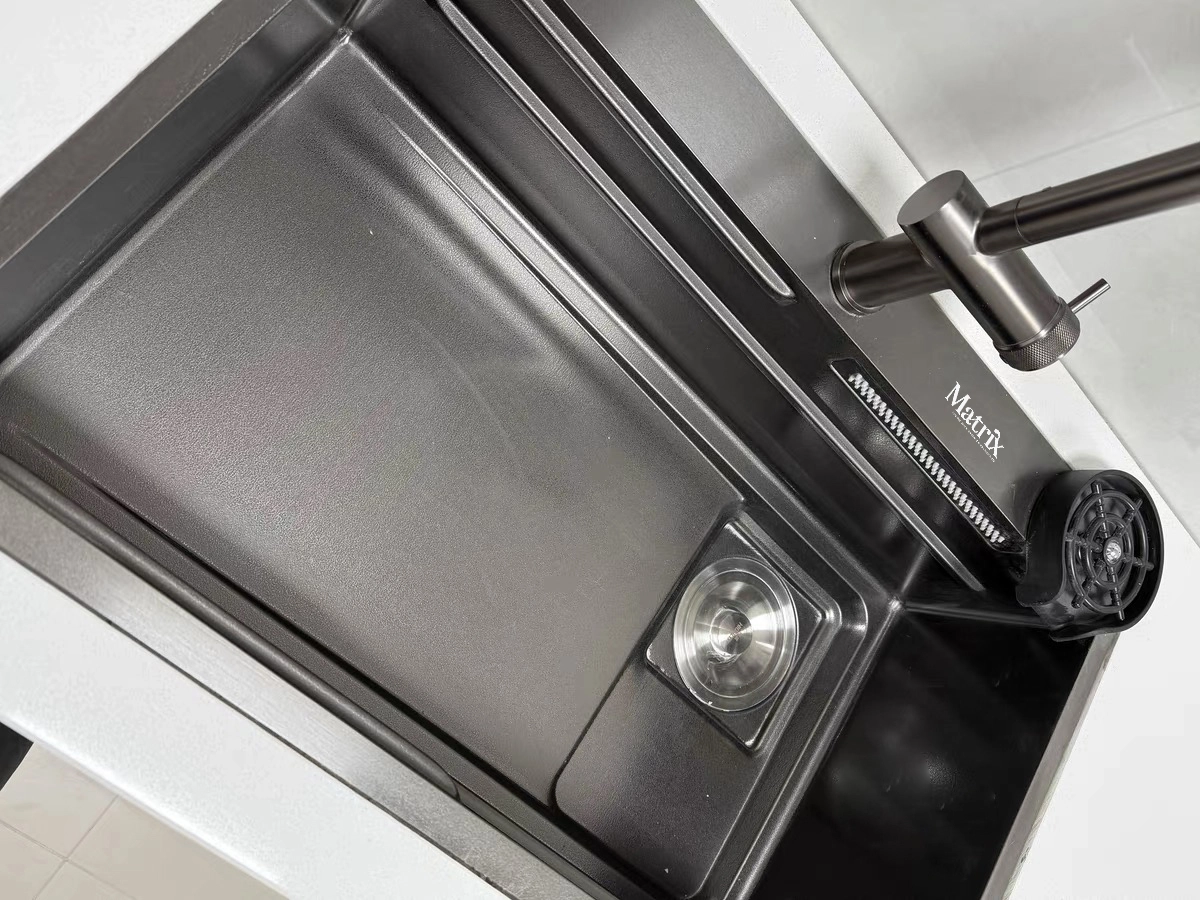
How to Choose the Right Stainless Steel Kitchen Sink
A practical guide for buyers comparing sink type, installation method, material gauge, bowl depth, drain position, accessories, packing, and target market before sourcing.
- Start with application and installation type
- Review material gauge, bowl depth, and drain position
- Confirm accessories and packing before ordering
Latest Sourcing Guides
Read practical guides on sink selection, manufacturing details, OEM supply, accessories, packing, and project sourcing.
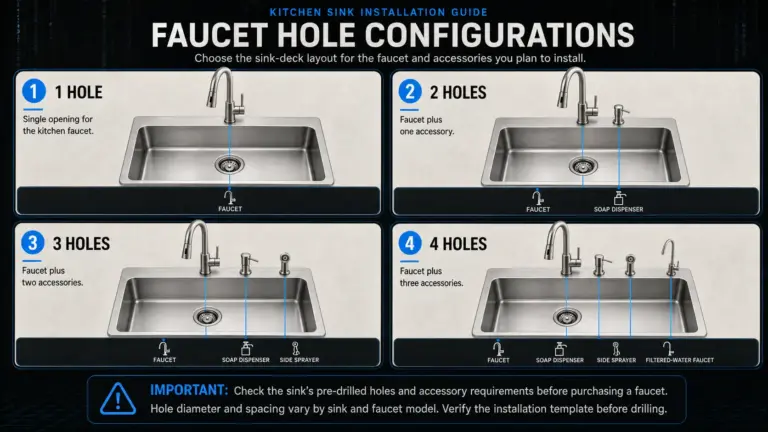
Kitchen Sink Faucet Hole Guide: Size, Spacing and Compatibility
Many kitchen faucets use a mounting hole of approximately 1-3/8 inches, or 35 mm. But 35 mm is not a universal faucet-hole standard—and matching the diameter alone does not guarantee a successful installation. A kitchen faucet can pass through the hole and still be incompatible because: The correct way to match a kitchen sink and […]
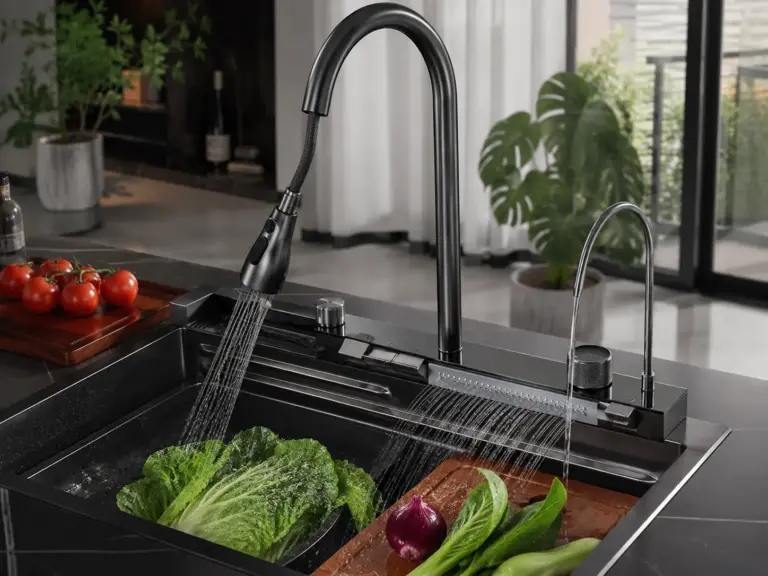
Workstation Sink Accessory Fit Guide: How to Measure and Match Accessories
Workstation sink accessories are not universally interchangeable. A cutting board, colander or roll-up rack may look approximately the right size and still rock, jam, rub the finish or fall into the bowl. Correct fit depends on the workstation ledge—not simply the sink’s advertised width. To match an accessory correctly, confirm: The most reliable replacement is […]
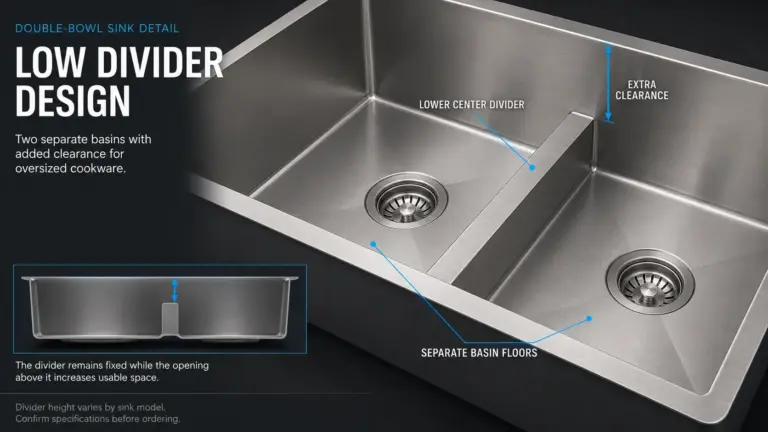
Low-Divide Kitchen Sinks: Pros, Cons and Bowl Ratios
A low-divide kitchen sink has two bowls separated by a center divider that stops below the sink rim. It preserves separate washing and rinsing zones while allowing pans, trays and other long items to extend across both bowls. The concept sounds like the perfect compromise between a single bowl and a conventional double bowl. Sometimes […]
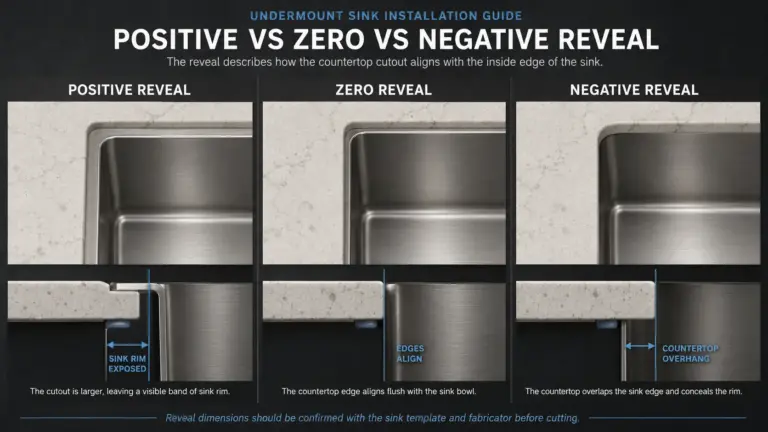
Positive vs Zero vs Negative Undermount Sink Reveal
Positive, zero and negative reveal describe where the countertop edge finishes relative to the inside edge of an undermount sink bowl. The best undermount sink reveal is not automatically the one that looks cleanest in a product photo. It is the one that works with the sink geometry, countertop material, cleaning preference, accessories, support system […]
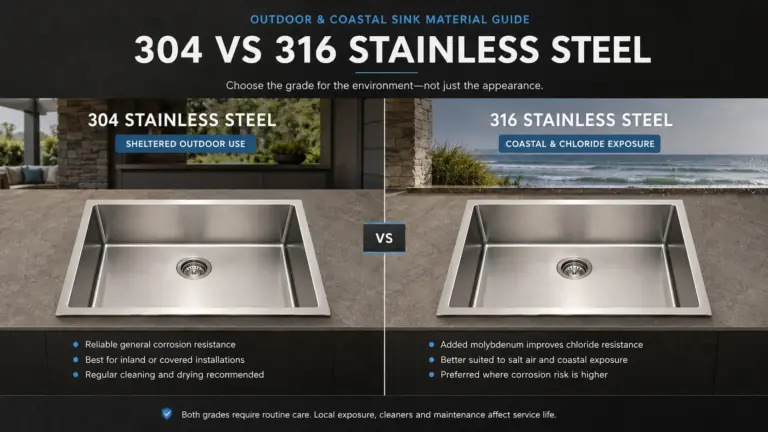
304 vs 316 Stainless Steel for Outdoor and Coastal Kitchen Sinks
304 stainless steel is usually the best balance of performance and cost. For a coastal, salt-air, humid or poolside kitchen, 316 is generally the safer starting grade because its molybdenum improves resistance to chloride-related pitting and crevice corrosion. For direct seawater splash, warm brine or continuously wet salt exposure, do not assume 316 is sufficient […]
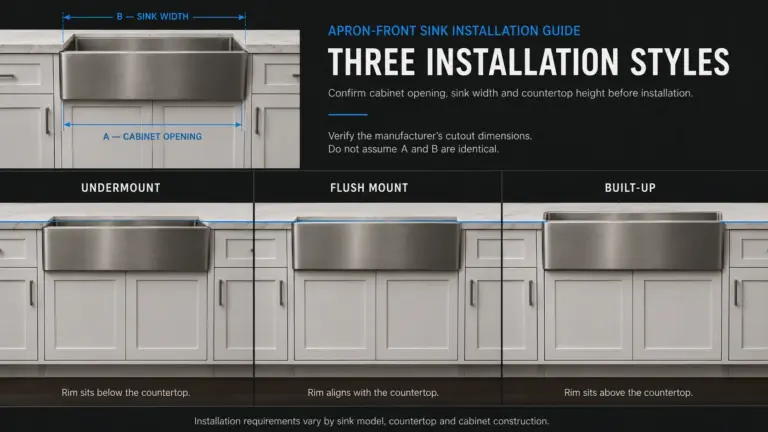
Farmhouse Sink Cabinet Support and Apron Projection Guide
A farmhouse sink should normally rest on a structural support system inside the cabinet rather than depend on the countertop, adhesive, apron panel or drain pipe. The support must be designed for the sink body, water, cookware, garbage disposal and expected use. Apron projection is model- and installation-specific: some sinks project beyond the cabinet face, […]
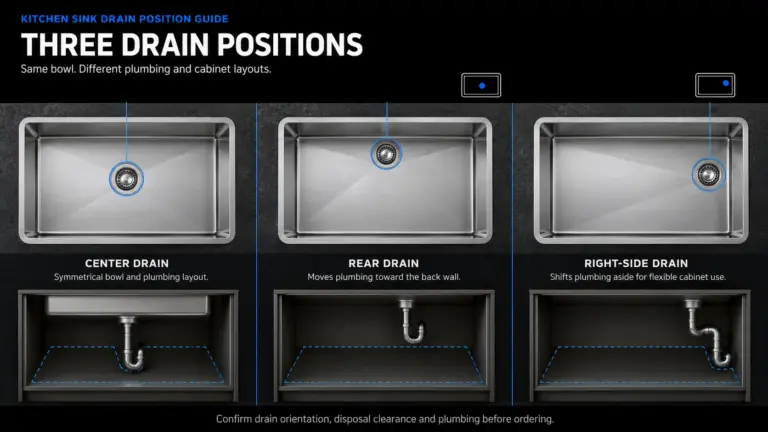
Rear Drain vs Center Drain Kitchen Sinks: Which Is Better?
A rear drain is usually the better choice when you want more usable cabinet space, room for a pull-out waste bin or less plumbing near the front of the cabinet. A center drain is often better for straightforward replacement, easy strainer access and existing plumbing located near the cabinet center. Neither drain position is inherently […]
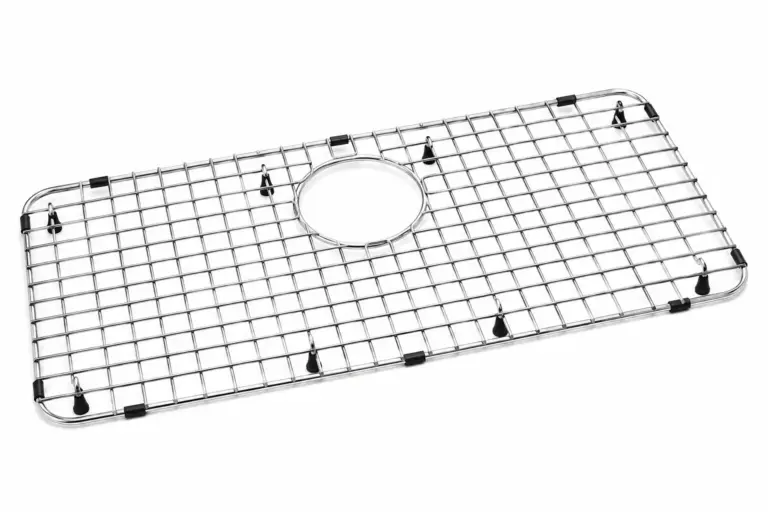
Sink Bottom Grids: Pros, Cons, Correct Fit and Scratch Risks
A sink bottom grid can reduce direct impact and contact scratches, keep dishes above standing water and make a sink more functional. However, it cannot guarantee a scratch-free sink. A poorly fitted grid, missing rubber feet, trapped grit, rough welds or repeated movement can create scratches of its own. The best grid is a model-specific […]
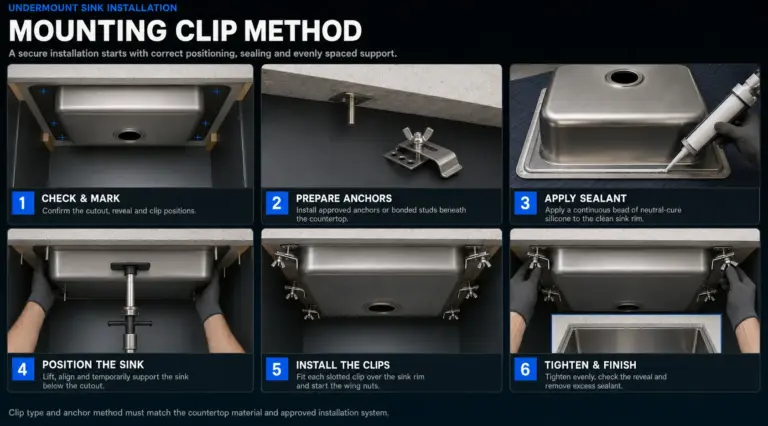
Can an Undermount Sink Fall? Support, Clips, Adhesive and Warning Signs
Yes, an undermount sink can loosen, sag or fall when its support system is missing, incorrectly installed, incompatible with the countertop or weakened over time. The earliest signs are usually a growing gap, cracked sealant, uneven reveal, loose hardware, sink movement or plumbing under strain. Stop filling or heavily loading a loose sink and arrange […]
Need Help Choosing the Right Sink?
If you are comparing sink types, materials, installation methods, accessories, or OEM options, send us your requirement. Matrix can help review the practical next step for your market.
Subscribe to Sink Sourcing Notes
Get practical sink sourcing notes from Matrix Sink — product guides, OEM reminders, packing details, accessory tips, and manufacturing insights for kitchen & bath buyers.
No noisy emails. Just useful updates when we publish guides that help buyers compare products, avoid unclear specifications, and prepare better sourcing decisions.